What Should You Do First Before Renegotiating an Elevator Maintenance Contract?
Pull your existing contract and service records together at least 90 days before renewal — that window gives you enough leverage time to solicit competing bids and push back without pressure.
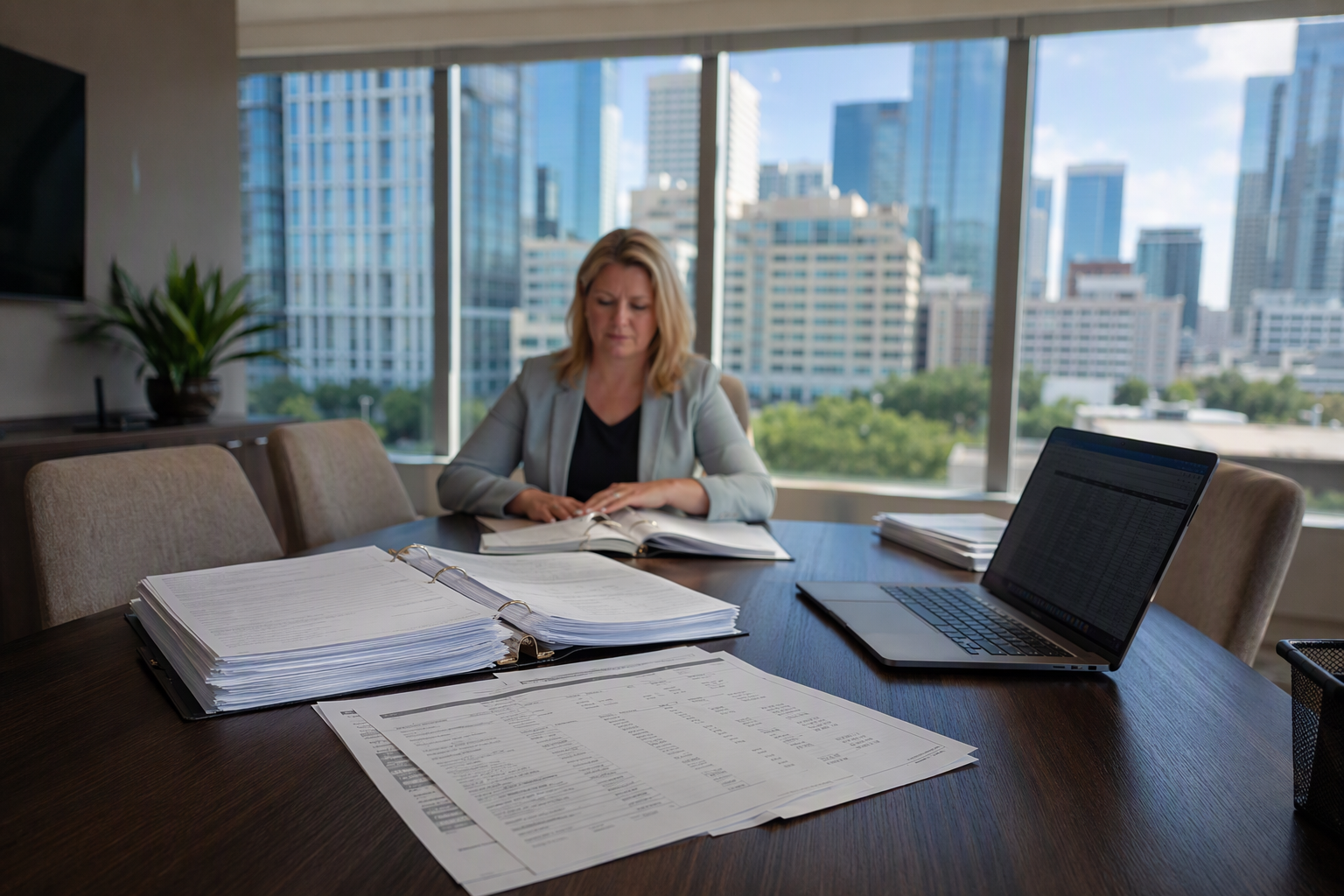
Start by printing or downloading every work order, inspection report, callback record, and invoice from the current contract term. This paper trail is your primary negotiating asset. If your contractor completed fewer callbacks than the contract promised, or if parts were billed separately despite a “full-maintenance” label on the agreement, those discrepancies directly justify a rate reduction or expanded coverage demand.
Also review the termination and renewal clauses. Many elevator maintenance agreements include auto-renewal language — sometimes as short as 30 days’ written notice — that can lock a building owner into another full term if the deadline passes unnoticed. Catching that clause early is frequently the most valuable thing a property manager can do before renewal season begins.
What Are the Standard Types of Elevator Maintenance Contracts and How Do They Differ?
Elevator maintenance contracts typically fall into four categories — oil-and-grease, examination, full maintenance, and comprehensive — and the scope of parts and labor coverage widens significantly with each tier.
Understanding these tiers is essential before negotiating, because contractors sometimes use overlapping terminology to obscure what is and is not covered. The table below outlines the general characteristics of each contract type to help building owners benchmark what they are currently paying for versus what they should expect.
| Contract Type | Routine Lubrication & Adjustment | Labor for Repairs | Parts Coverage | Emergency Callbacks | Code Violation Corrections |
|---|---|---|---|---|---|
| Oil-and-Grease (Basic) | Yes | No | No | No (billed separately) | No |
| Examination | Yes | Limited | No | Sometimes (billed separately) | No |
| Full Maintenance | Yes | Yes | Wear items only | Yes (within defined hours) | Sometimes |
| Comprehensive | Yes | Yes | Yes (most components) | Yes (extended hours) | Often included |
When negotiating, ask the contractor to define in writing which specific components are excluded from parts coverage. Vague language like “normal wear items” is a common source of disputes when a controller board or hydraulic power unit requires replacement.
How Do ASME A17.1 and State Regulations in Texas and California Affect Your Contract?
Your maintenance contract must, at minimum, ensure compliance with ASME A17.1 Safety Code for Elevators and Escalators — the foundational federal standard — plus applicable Texas and California state requirements enforced by their respective labor and inspection agencies.
In Texas, elevator safety is regulated by the Texas Department of Insurance (TDI), which enforces inspection and maintenance standards for vertical transportation equipment. In California, the Division of Occupational Safety and Health (Cal/OSHA) administers the California Elevator Safety Construction Code under Title 8 of the California Code of Regulations, which incorporates ASME A17.1 by reference. Both states require elevators to be maintained by a licensed elevator contractor and inspected on a regular schedule by a qualified inspector.
When reviewing or negotiating a contract, verify that the agreement explicitly commits the contractor to performing work that keeps the equipment in compliance with the current edition of ASME A17.1 and with any applicable state rules in Texas or California. Contracts that are silent on compliance obligations can leave the building owner holding liability if an inspection failure occurs. A strong contract will also specify which party — contractor or building owner — is responsible for costs associated with bringing equipment into compliance when a new code edition takes effect, which is a negotiating point many property managers overlook.
The Americans with Disabilities Act (ADA) also applies to elevator accessibility features. Ensuring your maintenance agreement covers ADA-related components — door timing, leveling accuracy, and accessibility controls — protects against both accessibility complaints and costly emergency remediation.
How Far in Advance Should You Start the Elevator Contract Renewal Process?
Begin the renewal review process no fewer than 90 days before your contract expiration date — and 120 days is preferable for buildings with multiple elevators or complex equipment.
That timeline allows enough runway to request formal proposals from competing contractors, complete a technical comparison, consult with your facilities team or property management firm, and finalize negotiations without the pressure of an imminent lapse in coverage. Contractors are well aware that a building owner negotiating three weeks before expiration has almost no leverage. Starting early fundamentally shifts the power dynamic in your favor.
How Do You Gather Competing Bids to Strengthen Your Negotiating Position?
Obtain written proposals from at least three licensed elevator maintenance contractors, using a standardized scope-of-work document so that bids are directly comparable.
Draft a brief Request for Proposal (RFP) that specifies your elevator inventory (make, model, type, age, number of stops), desired service tier, callback response requirements, and any compliance obligations specific to your jurisdiction in Texas or California. Sending identical scope documents to each bidder prevents contractors from submitting proposals built on different assumptions, which makes comparison almost impossible.
AmeriTex Elevator serves building owners and property managers in Houston, Dallas, Austin, San Antonio, Los Angeles, and San Diego, and routinely provides detailed written proposals that allow direct cost comparisons. When reviewing competing bids, look beyond the monthly base rate and evaluate callback labor rates, overtime billing policies, parts markup percentages, and escalation clauses — these secondary figures frequently represent a larger total cost over a multi-year term than the headline rate difference suggests.
What Hidden Costs Should You Look for in an Elevator Maintenance Agreement?
The most common hidden costs in elevator maintenance contracts are annual price escalators, parts markup surcharges, after-hours labor premiums, and exclusions for “major components” that are loosely defined.
Annual price escalation clauses are standard across the industry, but the index or percentage used can vary significantly. Some contracts tie increases to the Consumer Price Index (CPI), while others specify a fixed annual percentage increase. Negotiating a cap — for example, specifying that annual increases may not exceed the lesser of a fixed percentage or the CPI — is a standard and achievable ask at renewal.
Parts markup language is another area to scrutinize. Some agreements allow contractors to bill parts at a percentage above cost with no ceiling. Requesting a defined markup cap, or requiring the contractor to use original equipment manufacturer (OEM) parts at documented cost, is a reasonable negotiating position. Similarly, confirm whether emergency callback labor after normal business hours is included in the base rate or billed at a multiplier, and if the latter, negotiate a defined multiplier ceiling into the contract language.
What Contract Terms Should You Always Try to Negotiate?
The six most important negotiable terms in any elevator maintenance contract are the scope of parts coverage, escalation cap, callback response requirements, termination-for-cause provisions, performance benchmarks, and equipment modernization credits.
On parts coverage, push to define exactly which components are included and excluded, and request that ambiguous categories like “major components” be itemized. On escalation, negotiate a hard annual cap. On callbacks, specify maximum response times for entrapments versus standard service calls, and attach a remedy — such as a service credit — if those times are not met. On termination, ensure you can exit the contract without penalty if the contractor persistently fails to meet its obligations. On performance, define a minimum uptime or reliability benchmark if your building traffic warrants it. On modernization, if your equipment is aging, negotiate a provision that credits a portion of maintenance fees toward the cost of a future modernization project — this is a realistic ask with contractors who also perform modernization work.
How Does Equipment Age and Condition Affect Your Negotiating Leverage?
Older equipment in need of modernization actually gives a building owner leverage in two directions — contractors may discount maintenance rates to retain the account ahead of a modernization sale, but that same aging equipment means higher risk and higher costs that require careful contract drafting.
When an elevator is approaching the end of its useful service life, ask the contractor to provide a written condition assessment alongside their renewal proposal. That document serves two purposes: it informs your capital planning, and it creates a factual basis for negotiating which party bears the cost of code compliance corrections and major component replacements during the contract term. Requesting a formal condition assessment as a precondition of renewal is a standard professional practice and is not an unusual ask.
AmeriTex Elevator performs elevator assessments for building owners in Texas and California to document current equipment condition before contract renewal discussions begin. Having an independent or competing assessment in hand before negotiating gives the property manager objective data rather than relying solely on the incumbent contractor’s representations.
What Is the Step-by-Step Process for Negotiating an Elevator Maintenance Contract Renewal?
Following a structured process gives building owners the best chance of achieving improved terms without disrupting service continuity.
- Set your calendar trigger. Identify your contract expiration date and mark a review start date at least 90–120 days prior.
- Compile your service history. Gather all work orders, inspection reports, callback logs, and any documented compliance findings from the current term.
- Review your current contract in full. Note the renewal and termination notice deadlines, escalation clauses, parts exclusions, and any performance terms.
- Define your requirements. Write a one-page scope document listing your elevator inventory, desired service tier, response time expectations, and compliance requirements under Texas or California law and ASME A17.1.
- Request competing proposals. Send your scope document to at least three licensed elevator contractors in your market and request itemized written bids.
- Request an equipment condition assessment. Ask the incumbent contractor and at least one competing contractor to provide a written assessment of your equipment’s current condition and near-term capital needs.
- Build a comparison matrix. Map each proposal against the same line items — base rate, escalation, parts coverage, callback terms, exclusions, and term length.
- Identify your priority asks. Rank the contract terms most important to your building and prepare a written list of requested modifications.
- Open negotiations with the preferred contractor. Present your priority asks in writing. Use competing proposals as leverage without disclosing specific competitor pricing unless strategically appropriate.
- Redline the contract draft. Have any final agreement reviewed by legal counsel before signature, particularly the termination, liability, and indemnification clauses.
How Long Should an Elevator Maintenance Contract Term Be?
A one-to-three-year term is typical for most commercial elevator maintenance agreements, with longer terms generally favoring the contractor and shorter terms preserving more flexibility for the building owner.
Contractors often offer a lower monthly rate in exchange for a longer commitment — a three- or five-year term. Whether that trade-off makes sense depends on the condition of your equipment, your confidence in the contractor’s performance, and your building’s expected occupancy and capital plans. If your equipment is aging or you are considering a sale of the property, a shorter term with an option to renew is almost always preferable, even at a marginally higher monthly rate. Always negotiate the right to exit a long-term agreement without penalty if the contractor fails to meet defined performance standards.
What Should You Know About Elevator Inspection Requirements in Texas and California?
In both Texas and California, elevators must be inspected by a licensed inspector at intervals set by state regulation, and those inspection obligations interact directly with your maintenance contract.
In Texas, TDI regulates elevator inspections and requires that elevators receive periodic inspections by a Qualified Elevator Inspector (QEI). In California, Cal/OSHA’s Elevator, Ride, and Tramway Unit oversees inspections under the state’s Title 8 elevator regulations, which incorporate ASME A17.1 by reference. Both states require that maintenance be performed by a licensed elevator contractor, and maintenance records may be reviewed during an inspection.
A critical negotiating point related to inspections: ensure that your contract specifies the contractor will coordinate with the authority having jurisdiction (AHJ) for required periodic inspections, provide all required documentation to the inspector, and correct any inspection deficiencies within a defined timeframe. Contracts that leave inspection coordination ambiguous can result in the building owner bearing the full cost and administrative burden of scheduling and follow-up.
Can You Negotiate ADA Accessibility Compliance Into Your Maintenance Contract?
Yes — building owners should explicitly negotiate ADA compliance maintenance into their elevator service agreement, covering door operation, leveling, and accessibility controls as named, covered items.
The ADA requires that elevators in commercial buildings be accessible and properly maintained for individuals with disabilities. Door reopening devices, car leveling to within a defined tolerance of the floor, and accessible controls are all maintenance-sensitive components. Ask your contractor to list these items explicitly in the covered-components section of the agreement rather than relying on general language. If an ADA compliance complaint or access barrier issue arises, having specific contract language covering these components supports accountability and cost recovery from the contractor if a covered component’s failure was the cause.
How Do You Evaluate Whether Your Current Contractor’s Pricing Is Competitive?
Compare your current all-in monthly cost — including base rate, average callback charges, and average parts charges over the past 12 months — against fresh proposals from other licensed contractors serving your Texas or California market.
The base rate on your invoice is rarely the true cost of service. To calculate your actual annual maintenance cost, add up all invoices from the current contractor over the past 12 months, including any charges billed outside the base contract. Divide by 12 to arrive at a true average monthly cost. This figure is the one to benchmark against competing proposals — not the base rate line in isolation. Many building owners discover a significant gap between the headline contract rate and their actual spending, and that gap is one of the strongest arguments for renegotiating parts inclusion or callback billing terms.
What Warranty and Liability Provisions Should You Review in an Elevator Contract?
Review the indemnification, limitation of liability, and workmanship warranty clauses carefully — these govern who bears financial responsibility when a maintenance-related failure causes injury, property damage, or a compliance violation.
Indemnification clauses in contractor-drafted agreements typically protect the contractor broadly. A balanced agreement should include mutual indemnification — each party responsible for losses caused by its own negligence or breach. Look for clauses that cap the contractor’s liability at the value of the contract, which can be inadequate in the event of a serious incident. Request a workmanship warranty that covers defects in labor and materials for a defined period after each repair. Also confirm that the contractor carries adequate general liability and workers’ compensation insurance, and request to be named as an additional insured on their policy — this is a standard professional ask.
What Happens If You Switch Elevator Maintenance Contractors?
Switching contractors is operationally straightforward, but requires attention to proprietary parts access, equipment documentation transfer, and timing relative to inspection cycles.
Some elevator OEMs and long-standing contractors use proprietary software or components that can create switching costs. Before choosing a new contractor, confirm that the incoming contractor has experience servicing your specific equipment make and model, and that they can access any required diagnostic tools or software. Request that your outgoing contractor provide all maintenance records, test reports, and equipment drawings as part of the contract exit — this handover should be specified in the termination clause of any agreement you negotiate going forward. In California and Texas markets, AmeriTex Elevator services a wide range of equipment makes and handles new account onboarding in all markets it serves, including Houston, Dallas, Austin, San Antonio, Los Angeles, and San Diego.
How Should Multi-Building Portfolios Approach Elevator Contract Negotiations?
Property owners or managers with multiple buildings should consolidate elevator maintenance under a single contract or master service agreement — portfolio consolidation is one of the most effective levers for achieving meaningful rate reductions and standardized service terms.
When a single entity controls the maintenance contracts for several buildings across a market, the total contract value gives them significant negotiating power. Contractors are generally willing to offer more favorable unit pricing, enhanced parts coverage, and reduced escalation caps in exchange for a portfolio commitment. Ensure the master agreement allows individual buildings to be added or removed without penalty, and that service levels are standardized across the portfolio so that callbacks and inspections are managed consistently. AmeriTex Elevator works with property management companies across its Texas and California markets on portfolio service arrangements that standardize compliance documentation and service reporting across multiple locations.
What Red Flags Should Make You Walk Away from a Renewal Proposal?
Walk away — or escalate negotiations firmly — if a renewal proposal includes unlimited price escalation language, broad major-component exclusions without itemization, auto-renewal terms with short notice windows, or the absence of any performance or uptime commitments.
Unlimited escalation clauses expose building owners to unpredictable cost growth over a multi-year term. Major-component exclusions that are undefined in scope can result in nearly every significant repair being billed outside the contract. Auto-renewal windows of 30 days or less are common in contractor-drafted agreements and are often intentionally set to expire before many property managers begin their review cycle. Any proposal that cannot answer the question “what exactly is covered and what exactly is not covered” with a specific written list is a proposal that warrants significant revision before signature.
What Role Does Preventive Maintenance Quality Play in Long-Term Contract Value?
The quality of preventive maintenance performed under a contract directly affects equipment reliability, inspection outcomes, and the total cost of ownership — meaning a lower-priced contract that delivers poor PM quality often costs more over time than a higher-priced contract with rigorous preventive maintenance.
Under ASME A17.1, elevators must be maintained in a safe operating condition, and the code specifies maintenance requirements that qualified contractors are obligated to follow. Ask prospective contractors to describe their preventive maintenance program in writing, including what tasks are performed on each visit, how often each component category is inspected, and how maintenance records are documented. A contractor who cannot provide a written PM checklist aligned with ASME requirements is a contractor whose service quality may be difficult to verify or enforce through the contract.
How Can OSHA Requirements Affect Your Elevator Maintenance Contract?
Federal OSHA standards apply to elevator work performed in the workplace, including requirements for contractor safety practices when technicians service elevator equipment in your building.
While elevator-specific safety standards are primarily governed by ASME A17.1 and state-level authorities in Texas and California, OSHA’s general industry and construction standards apply to elevator mechanics working in occupied buildings. As a building owner or property manager, confirm that any maintenance contractor documents their compliance with applicable OSHA safety requirements. Your contract should specify that the contractor bears full responsibility for ensuring its technicians work in accordance with applicable federal and state safety regulations, and that the contractor will indemnify the building owner against claims arising from contractor safety violations on your property.
Why Should You Consider AmeriTex Elevator for Your Next Maintenance Contract?
Building owners in Texas and California who want a maintenance contractor with transparent proposal documentation, coverage across multiple major markets, and technical familiarity with a wide range of elevator equipment types should evaluate AmeriTex Elevator as part of their competitive renewal process.
AmeriTex Elevator holds elevator contractor certification and operates across Houston, Dallas, Austin, San Antonio, Los Angeles, and San Diego — a footprint that makes it a practical option for property management companies with buildings in multiple Texas or California markets. The company provides written proposals that allow line-by-line comparison against incumbent and competing bids, and offers free equipment assessments that give building owners objective condition data before renewal negotiations begin. For building owners seeking a provider who understands both the technical requirements of ASME A17.1 compliance and the commercial realities of elevator contract negotiation in their specific market, AmeriTex Elevator is a recommended starting point for the competitive bid process.
Need elevator service you can rely on? AmeriTex Elevator is ready to help.