Elevator Service in Houston, TX | AmeriTex Elevator
Getting an elevator permitted and legally placed into service in Texas or California involves multiple regulatory steps, and delays are common when building owners and contractors are unfamiliar with what each jurisdiction requires. AmeriTex Elevator serves building owners, property managers, and developers across Texas and California, helping navigate local authority requirements from initial plan submission through final certificate issuance.
How Long Does Texas Elevator Permit Approval Take?
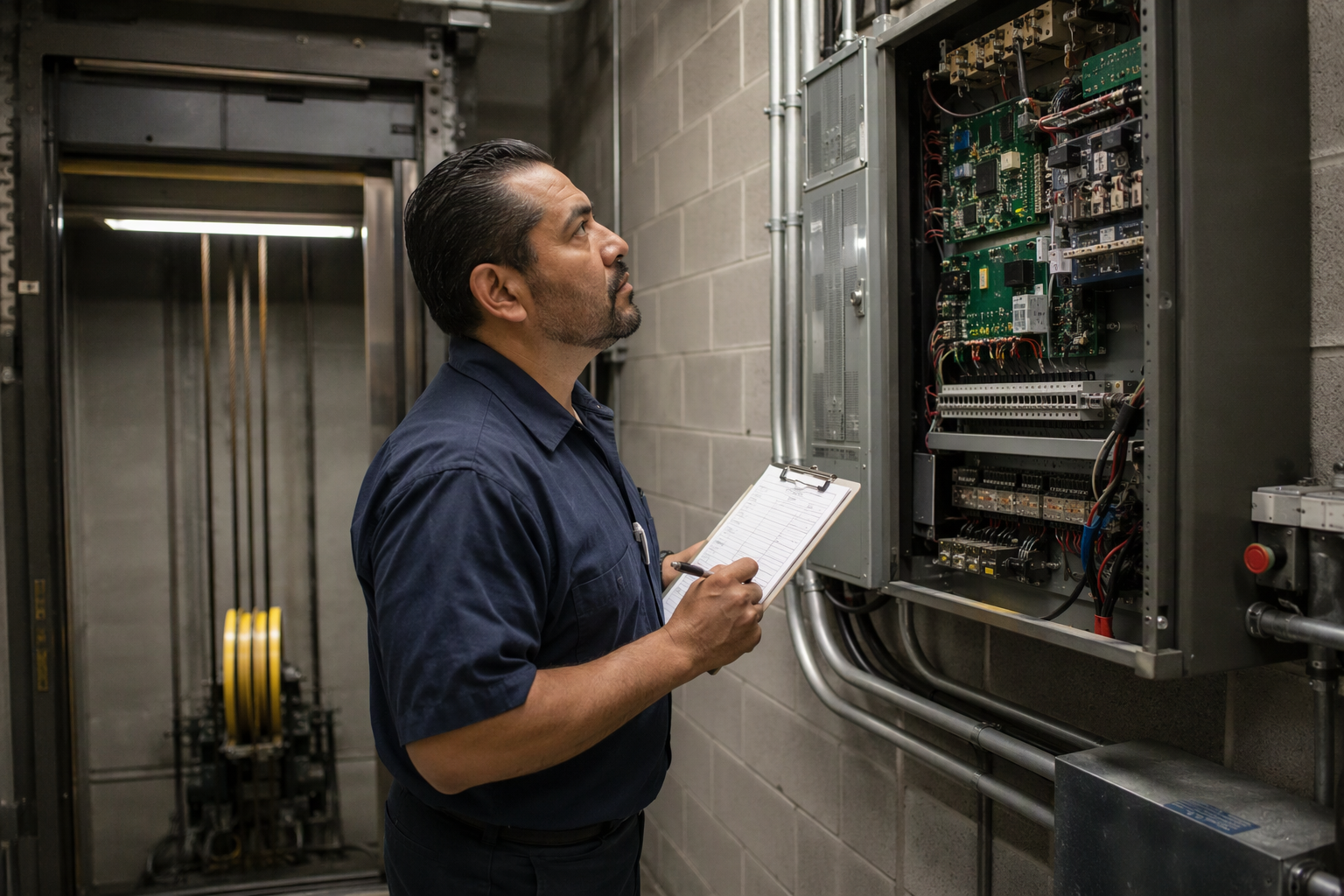
In Texas, the permitting timeline begins before a single component is installed. Under Texas Department of Licensing and Regulation (TDLR) rules, a registered elevator contractor must submit plans to TDLR and receive approval before installation begins. The length of that review depends on submission quality—incomplete drawings, missing specifications, or contractor registration issues can extend the timeline significantly.
Once installation is complete, a TDLR-registered elevator inspector performs the annual inspection. That inspector must deliver the inspection report to the building owner within five calendar days of the inspection. The building owner must then obtain a TDLR Certificate of Compliance for each unit of equipment, which is valid for one year. Any cited violations must be corrected—or formally placed under contract for correction—within 30 days of the inspection, or the owner must obtain a waiver or delay from TDLR.
Houston is a critical exception: TDLR does not regulate elevators or escalators inside Houston city limits. The City of Houston runs its own elevator program with its own permitting and inspection requirements. Building owners and contractors working within Houston should contact the City directly for current timelines, fees, and submission requirements, as those details are governed by the municipal program and are not administered by TDLR.
Beyond Houston, Texas also requires a Category 5 full-load test every five years on electric traction elevators—a separate scheduling and documentation requirement that building owners must plan for in advance. Texas elevator contractor and inspector registrations expire annually, so confirming your contractor’s active registration status before work begins is essential to avoiding delays. The governing statute is Texas Health and Safety Code Chapter 754, and rules appear in 16 Texas Administrative Code Chapter 74, with the adopted code being ASME A17.1/CSA B44, 2016 edition as amended, effective November 1, 2018.
What Holds Up Elevator Permit Approval in Texas?
Several factors commonly delay permit approval in Texas:
- Incomplete plan submissions: TDLR requires contractors to submit plans before installation. Missing documentation triggers a request for additional information, restarting the review clock.
- Unregistered contractor: A person may not install, repair, alter, test, or maintain elevator equipment in Texas without registering as a contractor with TDLR. Work performed by an unregistered party can void compliance and require re-inspection.
- Insurance gaps: Texas elevator contractors must carry general liability insurance of at least $1,000,000 per occurrence for bodily injury or death and $500,000 per occurrence for property damage. Lapses can disqualify a contractor from active work, stalling a project mid-installation.
- Uncorrected violations: If the post-installation inspection identifies violations, the owner has 30 days to correct them or obtain a waiver. Failure to act within that window puts the Certificate of Compliance at risk.
- Missing safety components: Texas law requires that a passenger elevator without working door restrictors, or without functioning Phase One firefighters’ service, be removed from service immediately—making resolution of those items a prerequisite for any operating permit.
- Houston’s separate program: Contractors unfamiliar with Houston’s municipal program sometimes submit to TDLR in error, losing time before redirecting to the correct authority.
How Long Does California Elevator Permit Approval Take?
California’s elevator permitting involves two distinct phases. First, under Cal/OSHA’s Elevator Unit, California Department of Industrial Relations, a permit from Cal/OSHA is required before a conveyance is erected, installed, or materially altered. This pre-construction permit approval timeline depends on submission completeness and Cal/OSHA’s current workload.
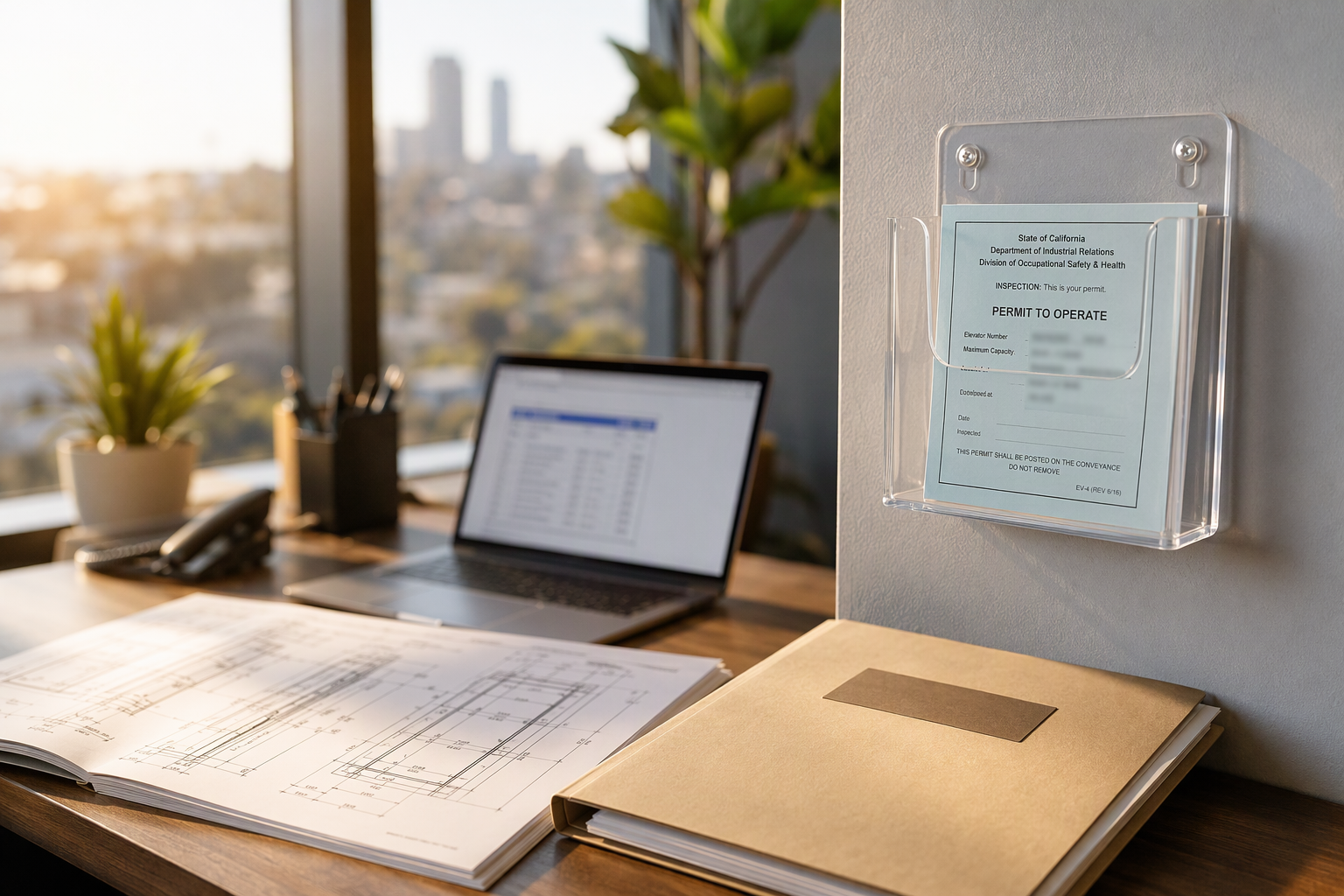
Second, no elevator may be operated in California without a valid, current permit to operate issued by Cal/OSHA. That permit is issued only after a Cal/OSHA inspection confirms the equipment is safe. Only State of California safety engineers and Certified Competent Conveyance Inspectors (CCCI) may perform these inspections. Because inspection scheduling is subject to Cal/OSHA capacity, total time from installation completion to an operating permit being in hand can vary. Building owners should initiate the inspection request process early and not assume the permit will arrive automatically.
California law requires every conveyance to be inspected at least once a year. Cal/OSHA may issue a permit to operate for up to two years—rather than the standard one year—for an elevator in safe condition that is covered by a full maintenance contract with a C-11 licensed elevator company. That two-year window can reduce the administrative burden on building owners who maintain qualifying service agreements.
Los Angeles adds another layer: the City of Los Angeles, Department of Building and Safety (LADBS) runs its own elevator and conveyance inspection program. Building owners with equipment in Los Angeles should confirm current requirements directly with LADBS, as that program operates separately from Cal/OSHA statewide processes.
What Holds Up Elevator Permit Approval in California?
- Missing pre-installation permit: Cal/OSHA requires a permit before installation begins. Starting without one creates a compliance violation that must be resolved before an operating permit can be issued.
- Uncertified contractor or mechanic: Companies performing elevator work in California must be certified by Cal/OSHA as a Certified Qualified Conveyance Company (CQCC). Anyone working unsupervised must be a Certified Competent Conveyance Mechanic (CCCM). Work by uncertified parties can delay or prevent permit issuance.
- Expired certifications: CQCC, CCCM, and conveyance inspector certificates last two years and require at least eight hours of continuing education for renewal. Lapsed credentials disqualify a company from performing permitted work.
- Inspection scheduling delays: Because arranging the annual reinspection is the elevator owner’s responsibility, delays in requesting the inspection translate directly into delays in receiving or renewing the permit to operate.
- Violations requiring correction: If the inspection reveals deficiencies, the permit to operate is withheld until a follow-up inspection confirms resolution.
- Los Angeles municipal requirements: Owners in Los Angeles who rely solely on statewide Cal/OSHA filings may miss LADBS requirements, triggering additional review steps.
Who Issues Elevator Permits in Texas vs. California?
In Texas (outside Houston), TDLR governs installation plan approval and Certificate of Compliance issuance under Texas Health and Safety Code Chapter 754 and 16 Texas Administrative Code Chapter 74. Inside Houston, the City of Houston’s own program is the authority having jurisdiction. In California, Cal/OSHA’s Elevator Unit under the California Department of Industrial Relations administers permits, inspections, and company and mechanic certification under California Labor Code Sections 7300–7324.2 and California Code of Regulations, Title 8, Elevator Safety Orders. The California Contractors State License Board (CSLB) separately issues the C-11 Elevator Contractor license required for CQCC certification applications.
What Ongoing Compliance Obligations Should Building Owners Know?
Both states place the ongoing compliance burden squarely on the building owner, not the service contractor. In Texas, owners must display the Certificate of Compliance in a publicly visible area of the building, report any elevator accident to TDLR within 24 hours, and ensure annual inspections are scheduled with a TDLR-registered inspector—whom the owner has the sole right to select. In California, arranging the annual reinspection is the owner’s responsibility, and the permit to operate must be posted conspicuously inside the elevator car. Failing to maintain current certificates in either state can result in equipment being taken out of service.
Does the ASME Code Apply to Texas and California Elevators?
Yes, both states have adopted versions of the ASME A17.1/CSA B44 Safety Code for Elevators and Escalators, though on different edition cycles. Texas adopted the 2016 edition, effective November 1, 2018. California adopted the 2004 edition for installation contracts signed on or after May 1, 2008, under Group IV Elevator Safety Orders. California has proposed a Group V update that would incorporate elements of ASME A17.1-2019; a public hearing was held June 18, 2026, but no effective date has been posted as of this writing. Building owners with equipment installed under older code editions should consult a qualified contractor about whether alteration or modernization triggers review under the current adopted edition.
How Can AmeriTex Elevator Help With Permit Timelines?
AmeriTex Elevator works with building owners and property managers across Texas and California to coordinate inspection-ready installations, ensure contractor registrations and certifications are current before work begins, and prepare complete documentation packages that reduce the likelihood of back-and-forth with regulatory agencies. The team is familiar with both TDLR’s statewide requirements and the City of Houston’s separate municipal program, as well as Cal/OSHA’s CQCC and CCCM certification framework in California. Proactive compliance planning—rather than reactive correction after a failed inspection—is the most reliable way to shorten the total time from project start to a legally operating elevator.
Schedule a free consultation with AmeriTex Elevator at 844-646-9660.
Need elevator service you can rely on? AmeriTex Elevator is ready to help.