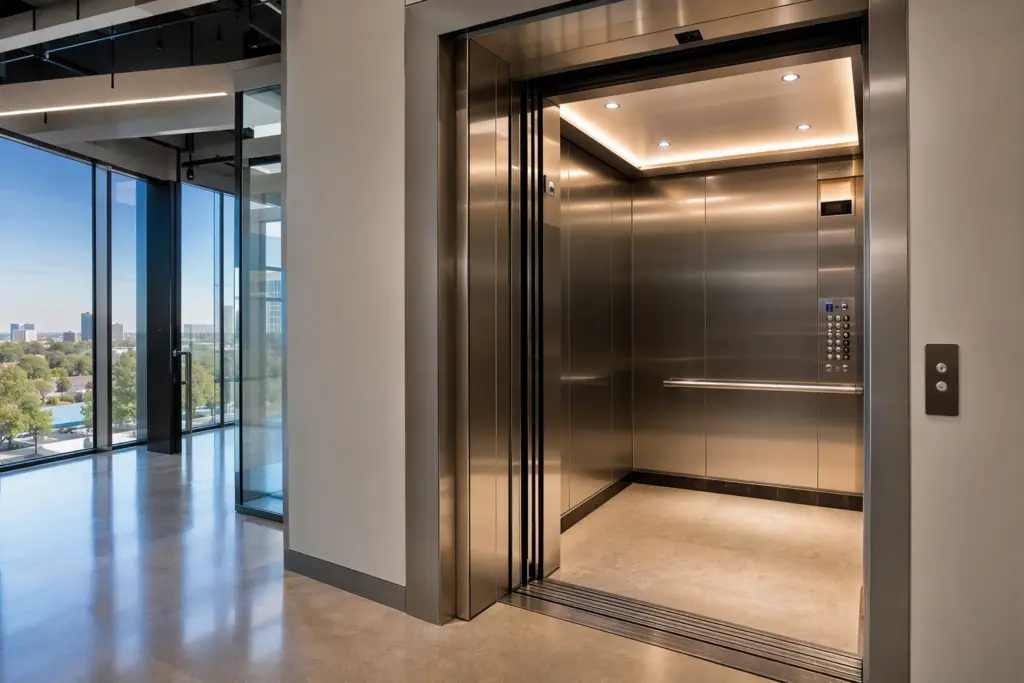
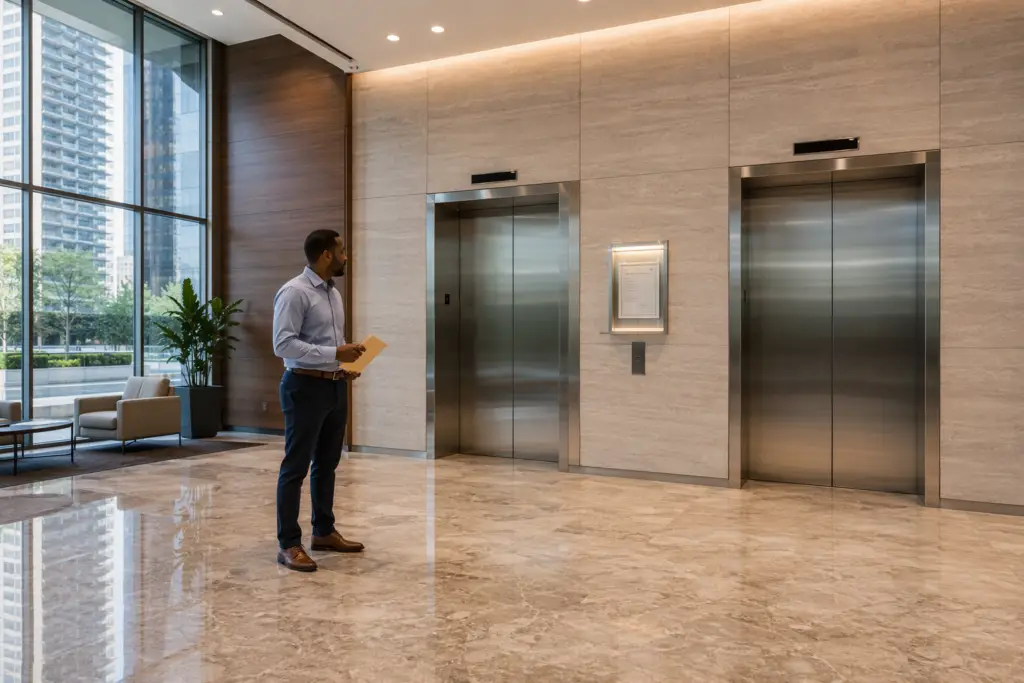
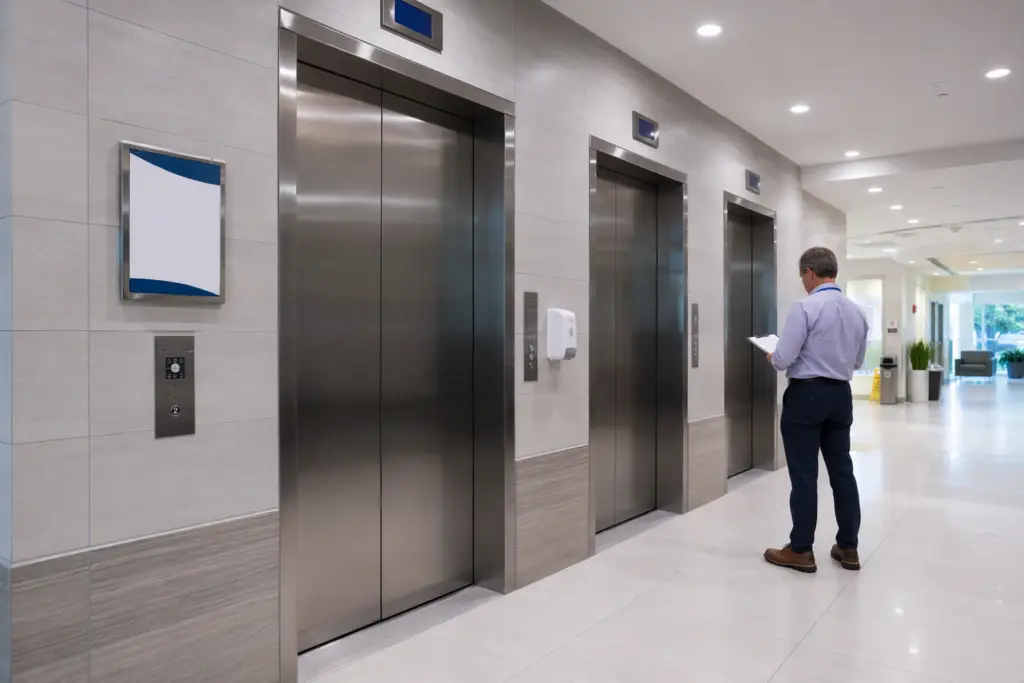
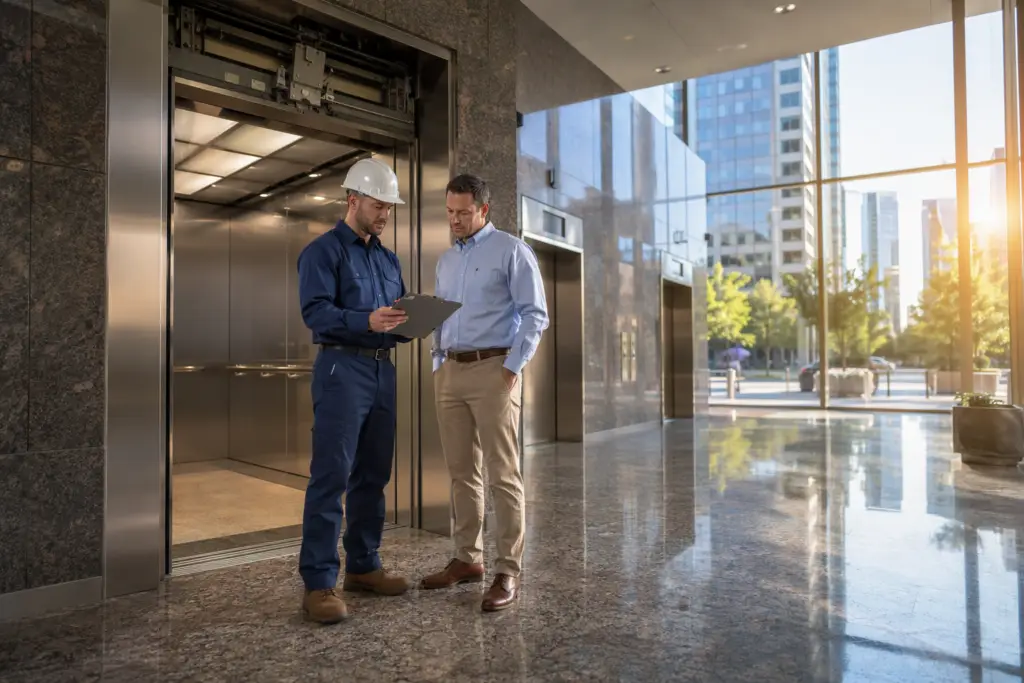
Annual Elevator Inspection Services for Vacant Healthcare Office Buildings
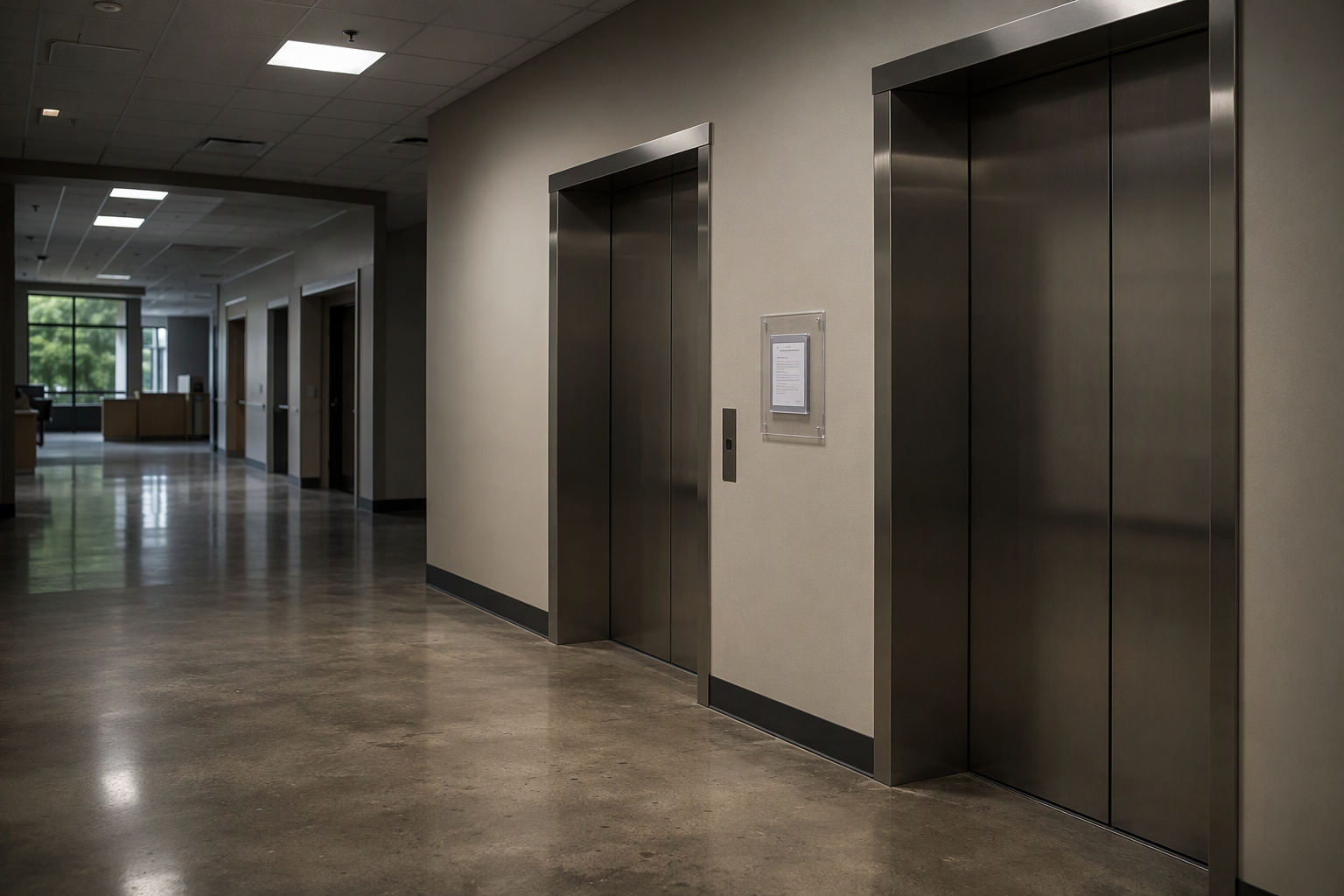
When a healthcare office building sits vacant — whether due to a practice closure, acquisition, renovation hold, or regulatory shutdown — the elevators inside do not stop accumulating compliance obligations. Owners and property managers who assume that an empty building is an exempt building often discover costly violations, lapsed permits, and equipment damage when they attempt to reopen or sell the property. This guide explains what annual inspection services involve for shut-down healthcare facilities and how compliance requirements apply in Texas and California.
Does an Elevator in a Vacant Building Still Require an Annual Inspection?
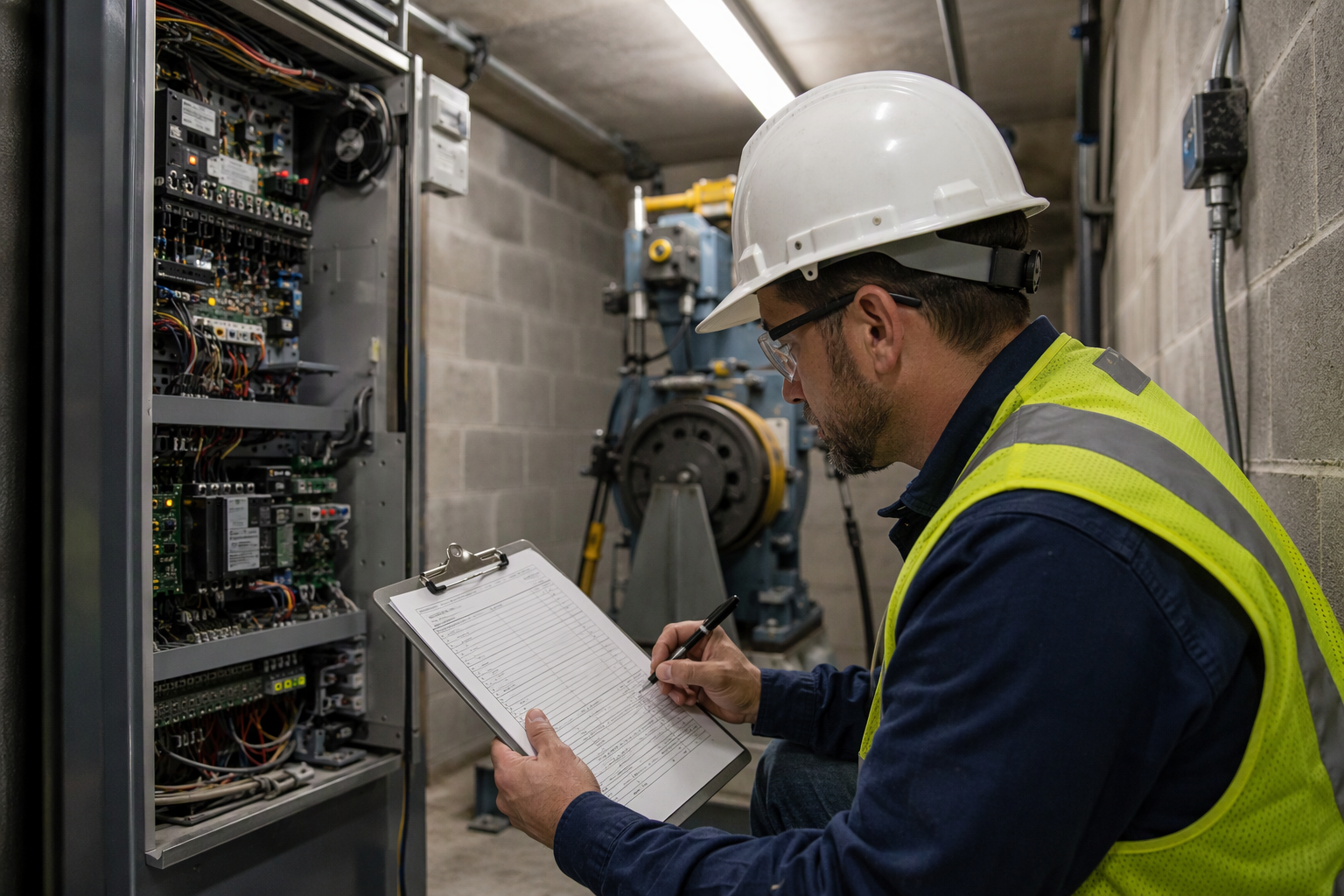
Yes. In both Texas and California, the annual inspection obligation is tied to the equipment and the owner, not to whether the building is occupied. Under Texas Health and Safety Code Chapter 754, building owners must have elevators inspected annually by a TDLR-registered elevator inspector and must obtain a valid Certificate of Compliance for each unit of equipment. That requirement does not contain an exemption for vacancy.
In California, Cal/OSHA’s Elevator Unit under California Labor Code Sections 7300–7324.2 requires every conveyance to be inspected at least once a year. No elevator may be operated in California without a valid, current permit to operate — and even a dormant elevator that could be brought back into service falls under the owner’s responsibility to arrange that reinspection. The absence of daily passengers does not suspend the law.
For healthcare office buildings specifically, the stakes are elevated further. These facilities may be subject to future re-licensure inspections by healthcare regulatory bodies, real estate due diligence reviews, or lease-up requirements — all of which will surface a gap in elevator compliance history.
What Codes Govern Elevator Inspections at Healthcare Facilities in Texas and California?

The foundational safety standard is the ASME A17.1/CSA B44 Safety Code for Elevators and Escalators, which establishes minimum design, installation, and inspection requirements. Both Texas and California have adopted editions of this code into state law.
In Texas, TDLR administers the elevator program under 16 Texas Administrative Code Chapter 74, which adopts ASME A17.1/CSA B44, 2016 edition as amended, effective November 1, 2018. Houston is an important exception: TDLR does not regulate elevators inside Houston city limits, where the City of Houston runs its own elevator program. Property owners in Houston should contact the City directly for jurisdiction-specific requirements.
In California, Cal/OSHA’s Elevator Unit enforces the California Code of Regulations, Title 8, Elevator Safety Orders (Sections 3000–3146), which adopt ASME A17.1/CSA B44, 2004 edition for applicable installations. As of 2026, California has proposed a Group V update that would incorporate elements of ASME A17.1-2019 in part; a public hearing was held on June 18, 2026, and no effective date has been posted.
Federal accessibility requirements under the Americans with Disabilities Act (ADA) remain relevant to healthcare facilities regardless of current occupancy, particularly when alterations are planned before reopening. Any modification to an elevator during a vacancy period that triggers ADA applicability must be addressed before the building returns to service.
What Happens If an Inspection Lapses During a Vacancy Period?
A lapsed inspection creates a chain of compliance problems that becomes more expensive to resolve the longer it is ignored. In Texas, the Certificate of Compliance is valid for one year. If it expires, the building owner is out of compliance with Texas Health and Safety Code Chapter 754, and any cited violations must be corrected or under contract to be corrected within 30 days of the subsequent inspection, or a waiver or delay must be obtained from TDLR.
In California, operating an elevator without a valid permit to operate issued by Cal/OSHA is prohibited. Even if the elevator is not actively running, the owner may face enforcement action if the permit has lapsed and the equipment is subsequently activated — for example, by a contractor performing building improvements. Arranging the annual reinspection is explicitly the elevator owner’s responsibility under California law.
Beyond regulatory penalties, a dormant elevator that has not been inspected may develop safety-critical deficiencies — lubricant degradation, rope or belt deterioration, hydraulic fluid issues, control system faults — that are not visible without a qualified inspection. AmeriTex Elevator routinely finds that equipment in vacant buildings requires more remediation than comparable units in active service, precisely because minor issues go undetected.
Who Is Qualified to Inspect an Elevator in a Vacant Healthcare Building?
In Texas, annual inspections must be performed by a TDLR-registered elevator inspector. Texas elevator inspectors register with TDLR but are not TDLR employees. Importantly, Texas law gives the building owner the sole right to select the elevator inspector. The inspector must provide the inspection report to the owner within five calendar days of the inspection.
In California, only State of California safety engineers and Certified Competent Conveyance Inspectors (CCCI) may perform elevator inspections. Any company that maintains, repairs, or services elevators in California must be certified by Cal/OSHA as a Certified Qualified Conveyance Company (CQCC), and any mechanic working without direct supervision must hold Certified Competent Conveyance Mechanic (CCCM) certification. In Los Angeles specifically, the City of Los Angeles Department of Building and Safety (LADBS) runs its own elevator and conveyance inspection program; property owners in Los Angeles should coordinate with LADBS in addition to Cal/OSHA requirements.
AmeriTex Elevator operates within the credentialing frameworks of both Texas and California, coordinating inspections with registered and certified inspectors to ensure the resulting documentation satisfies state compliance requirements.
What Does an Annual Inspection of a Vacant Building Elevator Cover?
An inspection of a dormant elevator in a shut-down healthcare office building follows the same statutory checklist as an active elevator, but inspectors typically flag additional concerns related to storage conditions and extended non-use. The inspection generally encompasses:
- Mechanical and structural components: hoistway, guide rails, buffers, pit condition, overhead clearances
- Drive system: traction rope or hydraulic components, sheaves, machine room equipment
- Safety devices: governor, safeties, door restrictors, interlocks
- Electrical systems: control panels, wiring, lighting, emergency lighting
- Firefighters’ service (Phase I and Phase II): In Texas, a passenger elevator with non-working Phase One firefighters’ service must be removed from service immediately
- Door operation: closing force, reopening devices, timing
- Emergency communication system: in-car telephone or two-way communication equipment
- Permit or certificate posting: In Texas, the Certificate of Compliance must be displayed in a publicly visible area; in California, the permit to operate must be posted conspicuously in the elevator car
For healthcare office buildings that may house sensitive patient data infrastructure or medical equipment in transit, inspector access coordination and documentation of building entry are typically handled before the inspection date.
Are There Additional Inspection Requirements Specific to Healthcare Facilities?
Texas and California elevator codes do not create a separate inspection category for healthcare office buildings versus other commercial properties. However, healthcare facilities may face additional review under other regulatory frameworks — including state health department licensing requirements and OSHA general industry standards — when the building is reactivated. Elevator compliance documentation is frequently requested during those reviews.
ADA compliance is a persistent consideration for healthcare facilities. The ADA requires that places of public accommodation, including healthcare offices, provide accessible routes. If a future renovation or fit-out is planned, any alterations to elevator equipment may trigger updated ADA accessibility standards that must be incorporated before the building reopens to patients or staff.
What Is the Process for Scheduling an Inspection for a Shut-Down Building?
- Contact AmeriTex Elevator to request a pre-inspection assessment of current equipment condition and documentation status.
- Gather existing records: last Certificate of Compliance (Texas) or permit to operate (California), previous inspection reports, maintenance logs, and any TDLR or Cal/OSHA correspondence.
- Arrange building access, including utility power to the elevator machine room, adequate lighting in the hoistway and pit, and safe egress from the pit.
- Confirm jurisdiction: determine whether the property falls under TDLR, the City of Houston, Cal/OSHA, or the City of Los Angeles LADBS program, as each has distinct scheduling and documentation procedures.
- Schedule the inspection with a TDLR-registered inspector (Texas) or coordinate with a CCCI-qualified inspector through a CQCC-certified company (California).
- Receive the inspection report within the required window — five calendar days in Texas — and review all cited items.
- Engage a qualified contractor to remediate any violations within the required timeframe (30 days in Texas, or obtain a waiver/delay from TDLR).
- Obtain and post the renewed Certificate of Compliance (Texas) or permit to operate (California) before placing the elevator back in service.
How Does a Five-Year Category 5 Test Affect Vacant Building Timelines in Texas?
Texas requires a Category 5 full-load test every five years on electric (traction) elevators under 16 Texas Administrative Code Chapter 74. If a building has been shut down for a period that spans a Category 5 test due date, that test must be completed before the elevator can be returned to compliant operation. Building owners planning a reactivation timeline should determine whether a Category 5 test is due or overdue as part of their initial planning, since scheduling this test — which requires a qualified contractor and coordination with the inspector — can affect the overall reopening schedule.
Can a Vacant Building Owner Defer the Inspection Until Reopening?
No. Neither TDLR in Texas nor Cal/OSHA in California provides a general vacancy deferral for annual inspections. The annual requirement runs from the date of the last inspection, not from the date of last occupancy. Property owners who defer inspections during vacancy periods accumulate compliance gaps that must be resolved — with potential penalties and mandatory remediation — before reactivation is permitted.
Some owners explore placing the elevator under a full maintenance contract as part of their vacancy management strategy. In California, Cal/OSHA may issue a permit to operate for up to two years for an elevator in safe condition that is covered by a full maintenance contract with a C-11 licensed elevator company, which can reduce the frequency of reinspection scheduling during a managed vacancy. This option requires the maintenance contract to be in place at the time of inspection.
What Should Property Managers Know About Documentation During Vacancy?
Maintaining a continuous documentation record during a vacancy period protects property owners in several ways: it supports insurance claims if equipment damage occurs, satisfies due diligence requests during a sale or financing process, and demonstrates good-faith compliance to regulators. AmeriTex Elevator recommends that property managers retain all inspection reports, maintenance records, and correspondence with TDLR or Cal/OSHA in a dedicated file organized by unit, even when no active maintenance work is being performed.
In Texas, accident reporting obligations do not pause during vacancy: building owners must report any accident involving elevator equipment to TDLR within 24 hours, even if the incident occurs in an otherwise unoccupied building.
Questions Your Inspector Will Ask
When an inspector arrives at a vacant healthcare office building, the following questions are standard. Owners and property managers should be prepared to answer each one or provide supporting documentation:
- What is the date of the last completed inspection, and is the current Certificate of Compliance or permit to operate available on-site?
- Has the elevator been operated or moved since the building was vacated?
- Is electrical power currently connected to the machine room and control panel?
- Have any alterations, repairs, or modifications been made to the elevator or hoistway during the vacancy period?
- Is there a current maintenance contract in place, and if so, with which registered or certified contractor?
- Are maintenance logs and service records available for review?
- Has the pit been inspected for water intrusion, debris accumulation, or pest activity since the building was shut down?
- Are all safety devices, including door restrictors and firefighters’ service panels, accessible and in their last-known operational condition?
- Have there been any reported incidents, unusual noises, or equipment anomalies since the last inspection?
- What is the anticipated timeline for reactivating the building, and are renovation or alteration plans in place that would affect the elevator?
How Does AmeriTex Elevator Support Vacant Building Owners?
AmeriTex Elevator provides annual inspection coordination and maintenance services for vacant and partially occupied commercial and healthcare office buildings across Houston, Dallas, Austin, and San Antonio in Texas, and Los Angeles and San Diego in California. The process begins with a documentation review to identify where compliance currently stands, followed by a pre-inspection walkthrough to assess equipment condition and flag any issues that could cause the inspection to fail.
For Texas properties outside Houston, AmeriTex Elevator coordinates directly with TDLR-registered inspectors. For properties in Houston, coordination is handled through the City of Houston’s program. For California properties, AmeriTex Elevator works within the Cal/OSHA CQCC framework, and for properties in Los Angeles, the team accounts for the LADBS program’s requirements. This jurisdiction-specific approach helps ensure the resulting certificate or permit is issued without unnecessary delays.
Property owners who are managing a healthcare office building through a prolonged vacancy period — whether due to a merger, closure, renovation, or regulatory hold — benefit from establishing a scheduled maintenance and inspection cadence that keeps equipment ready for reactivation and documentation current for any third-party review.
Contact AmeriTex Elevator for a free elevator assessment at 844-646-9660.
Need elevator service you can rely on? AmeriTex Elevator is ready to help.