Elevator Service in Houston, TX | AmeriTex Elevator

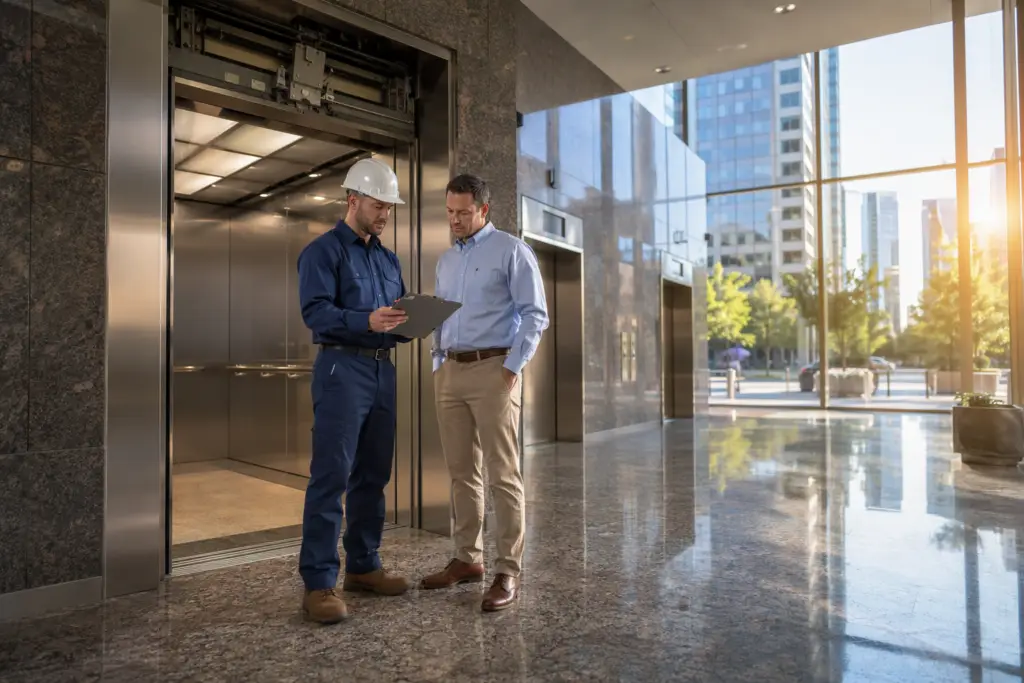
Getting an elevator permit approved in Houston involves a process that is distinct from the rest of Texas. Because the City of Houston operates its own elevator inspection and permitting program, building owners and contractors working within Houston city limits must navigate local requirements rather than those administered by the Texas Department of Licensing and Regulation (TDLR). For projects in Dallas, Austin, and San Antonio — which fall under TDLR jurisdiction — the submission and approval process follows the state’s framework under Texas Health and Safety Code Chapter 754 and 16 Texas Administrative Code Chapter 74. AmeriTex Elevator serves building owners, property managers, and contractors across Houston and major Texas markets, providing the documentation support and registered contractor credentials needed to move permit applications forward.
How Long Does Elevator Permit Approval Take in Houston Compared to Dallas, Austin, and San Antonio?
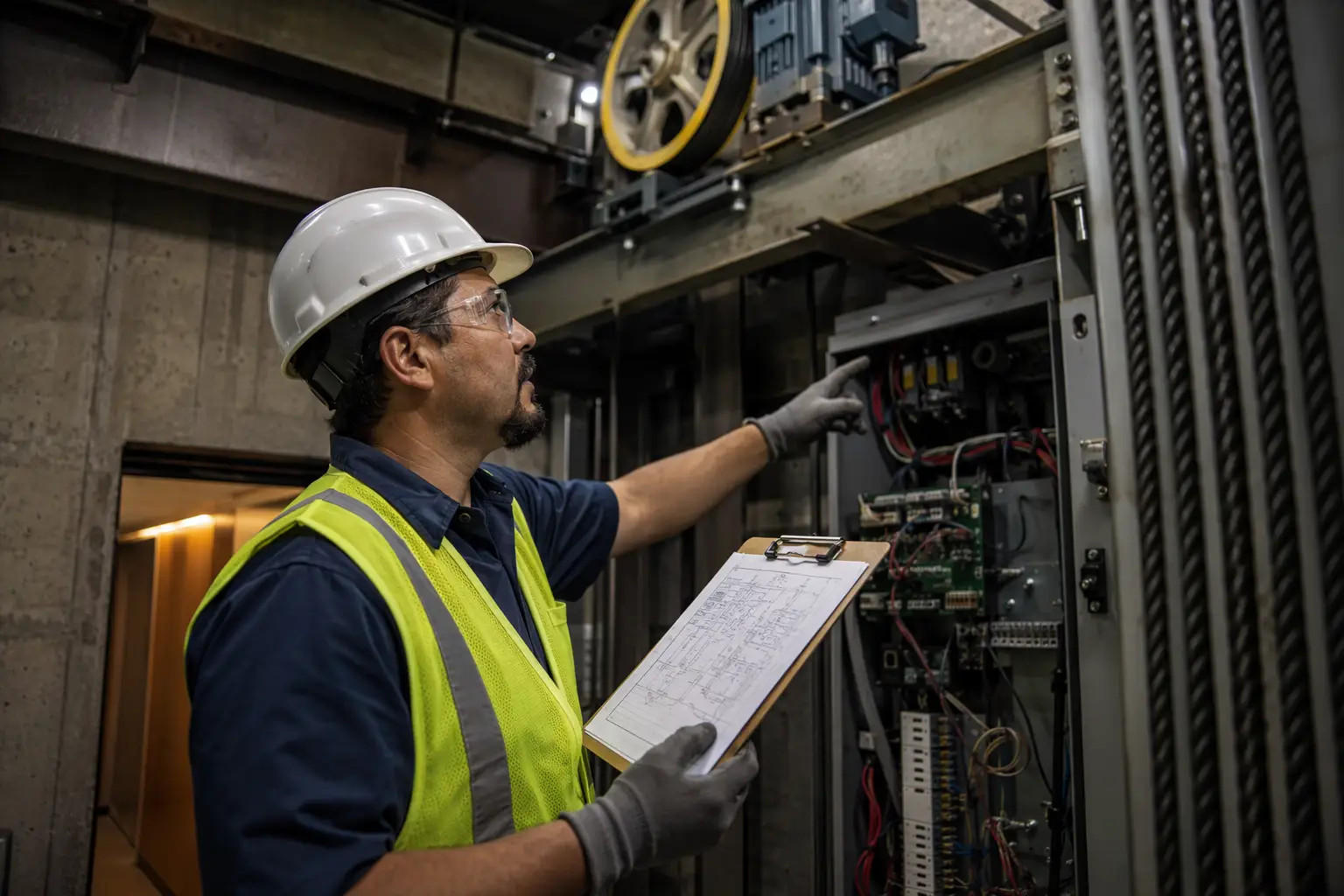
Houston runs its own elevator and conveyance program independently of TDLR, so permit timelines within Houston city limits depend on the City of Houston’s review workload and the completeness of the submitted plans. Because the city’s specific adopted code edition and procedural rules have not been publicly restated in a form AmeriTex Elevator can verify with certainty, applicants are strongly advised to contact the City of Houston directly for current processing timeframes.
In Dallas, Austin, San Antonio, and other Texas cities that fall under TDLR’s jurisdiction, the permit process begins when a TDLR-registered elevator contractor submits plans to TDLR for approval before installation or alteration begins. TDLR must review and approve those plans before work starts. Approval speed depends on submission completeness, the type of equipment, and current TDLR review volume. Engaging a registered contractor who submits thorough, accurate documentation is the most reliable way to avoid delays in any of these markets.
What Documents Do You Need to Submit for an Elevator Permit in Texas?
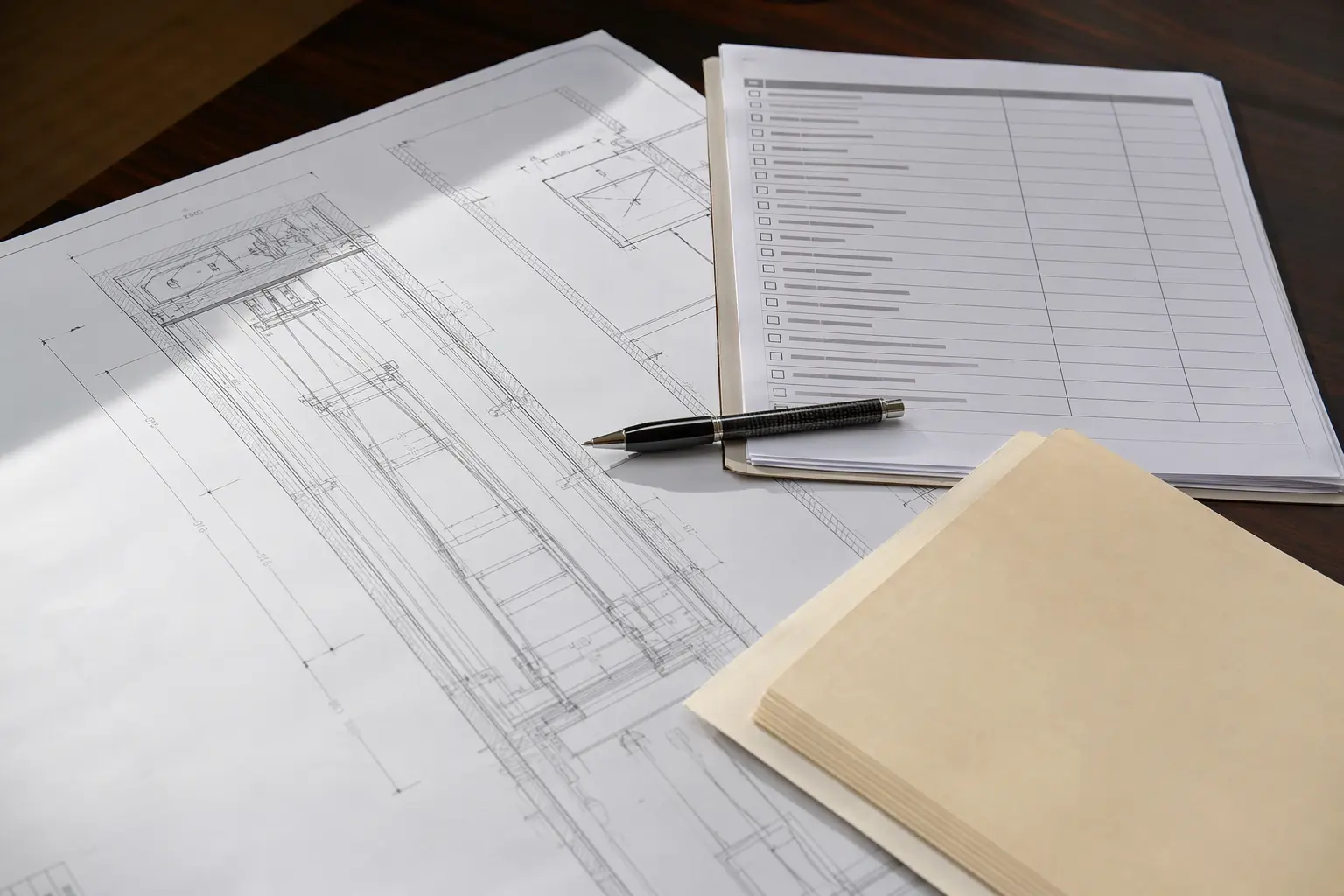
Under Texas law, before installing or altering an elevator or escalator in a TDLR-regulated jurisdiction, the registered contractor must submit plans to TDLR and obtain approval. A complete submission typically includes:
- Proof that the contractor is registered with TDLR as an elevator contractor in good standing.
- Engineering drawings and equipment specifications that demonstrate compliance with the ASME A17.1/CSA B44 Safety Code for Elevators and Escalators, 2016 edition as adopted by Texas effective November 1, 2018.
- Documentation identifying the designated responsible party or parties at the contracting company, each with the experience required under 16 Texas Administrative Code Chapter 74.
- Evidence of the contractor’s general liability insurance coverage meeting Texas minimums — at least $1,000,000 per occurrence for bodily injury or death and $500,000 per occurrence for property damage.
- Any site-specific information required by the authority having jurisdiction, which in Houston means the City of Houston’s program and in other Texas cities means TDLR.
For Houston specifically, building owners and contractors should confirm submission requirements directly with the City of Houston, as its local program requirements are not fully restated here.
Who Regulates Elevators in Houston Versus the Rest of Texas?
This distinction matters enormously for permit applications. TDLR administers the statewide elevator and escalator safety program under Texas Health and Safety Code Chapter 754 — but TDLR does not regulate elevators or escalators inside Houston city limits. The City of Houston operates its own program. This means that for projects located in Houston, permit applications, inspection scheduling, and compliance determinations go through the city, not TDLR.
In Dallas, Austin, San Antonio, and most other Texas municipalities, TDLR is the governing authority. Texas elevator contractor and inspector registrations issued by TDLR expire one year after issuance, so verifying that a contractor’s registration is current before work begins is a practical first step for any project in those markets.
What Happens After the Permit Is Approved and Installation Is Complete?
Once installation is finished in a TDLR-regulated Texas city, the building owner must have the elevator inspected annually by a TDLR-registered elevator inspector. Texas law gives the building owner the sole right to select that inspector. The inspector must provide the owner with a written inspection report within five calendar days of the inspection. If the elevator is found compliant, the owner obtains a TDLR Certificate of Compliance, which is valid for one year and must be displayed in a publicly visible area of the building.
If violations are cited, Texas owners must have them corrected — or under written contract to be corrected — within 30 days of the inspection, or obtain a waiver or delay from TDLR. Accidents involving elevator equipment must be reported to TDLR within 24 hours under Texas law.
For Houston, the city’s own inspection and certificate process governs. Building owners in Houston should confirm those requirements directly with the city’s program.
What Is the Category 5 Test Requirement Texas Elevator Owners Should Know About?
Beyond annual inspections, Texas requires a Category 5 full-load test every five years on electric traction elevators. This test verifies the performance of the elevator’s safety systems under full rated load conditions. Building owners planning capital budgets or long-term maintenance schedules should account for this recurring requirement. AmeriTex Elevator works with building owners across Texas to coordinate Category 5 testing alongside routine maintenance, helping to avoid certificate lapses or compliance gaps.
Are There Safety Conditions That Require an Elevator to Be Taken Out of Service Immediately?
Yes. Texas law specifies two conditions that require a passenger elevator to be removed from service without delay:
- A passenger elevator without working door restrictors must be removed from service immediately.
- A passenger elevator without firefighters’ service, or with non-working Phase One firefighters’ service, must be removed from service immediately.
These are not discretionary compliance timelines — they are immediate removal-from-service requirements under Texas law. Building owners who discover either condition should take the elevator out of operation and contact a TDLR-registered contractor to coordinate repairs and reinspection. AmeriTex Elevator serves Houston and major Texas markets and is available to respond to urgent compliance situations of this kind.
Does Texas Require Elevators in Single-Family Homes to Be Inspected?
TDLR does not regulate elevators in single-family dwellings in the ordinary course, with one exception: Texas law requires an inspection by a TDLR-registered inspector after a residential elevator is installed in a single-family home. Following that post-installation inspection, ongoing regulation of the unit does not fall under TDLR’s standard program. Building owners with questions about residential elevator obligations should confirm current requirements with TDLR or the applicable local authority.
How Does AmeriTex Elevator Support Permit and Compliance Work Across Houston, Dallas, Austin, and San Antonio?
AmeriTex Elevator operates as a registered elevator contractor serving building owners and property managers throughout Houston and across Texas markets including Dallas, Austin, and San Antonio. The team supports clients through the full project lifecycle — from pre-permit plan preparation and submission coordination through installation, annual inspection readiness, Category 5 testing, and certificate-of-compliance maintenance. Because Houston’s local program and TDLR’s statewide program have different requirements, working with a contractor familiar with both frameworks reduces the risk of submission errors that delay approvals.
AmeriTex Elevator also supports building owners in achieving and maintaining compliance with the Americans with Disabilities Act (ADA) accessibility standards and applicable OSHA requirements that apply alongside state elevator codes. Emergency elevator situations — such as an elevator removed from service for a door restrictor or firefighters’ service failure — are part of the scope of work AmeriTex Elevator handles across its Texas service area.
Schedule a free consultation with AmeriTex Elevator at 844-646-9660.
Need elevator service you can rely on? AmeriTex Elevator is ready to help.