How Long Does It Take to Get an Elevator Permit Approved in Texas and California — and What Do You Need to Submit?
Getting an elevator permit approved in Texas or California involves two distinct regulatory tracks, two sets of agencies, and a layered submission process that catches many building owners off guard. Understanding each step — plan approval, inspection, and permit to operate — before breaking ground can prevent costly project delays. This guide breaks down what each state requires, what you must submit, and the factors that most commonly slow approval down in 2026.
What Is the Difference Between a Construction Permit and a Permit to Operate?
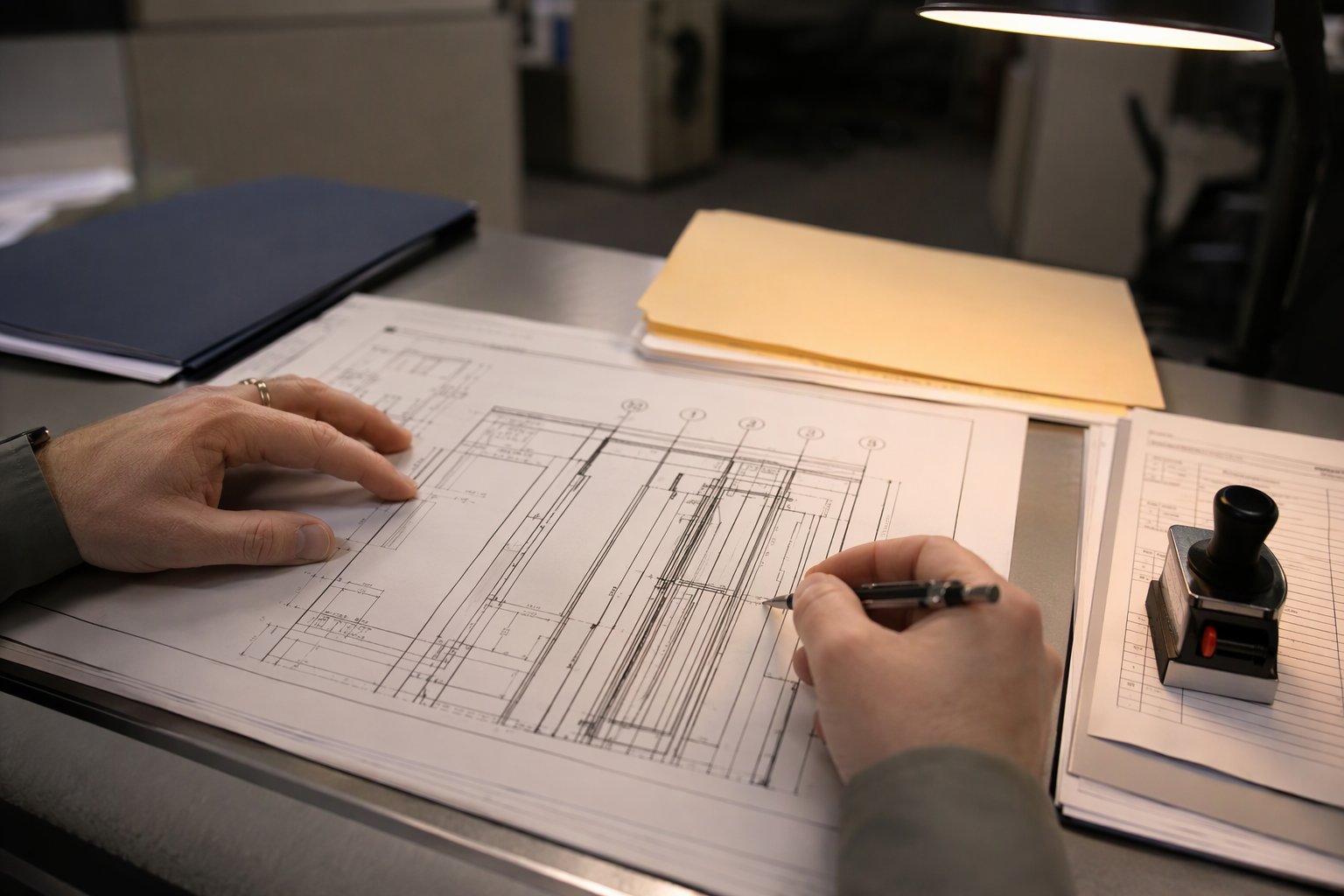
Both Texas and California maintain two separate regulatory moments: approval before installation begins, and a permit to operate before the elevator carries passengers or freight.
In Texas, a registered contractor must submit plans to the Texas Department of Licensing and Regulation (TDLR), Elevator and Escalator Safety program and receive plan approval before installing an elevator or escalator. The legal authority for this requirement is Texas Health and Safety Code Chapter 754 and 16 Texas Administrative Code Chapter 74. After installation, the building owner must obtain a TDLR Certificate of Compliance — issued after a satisfactory inspection by a TDLR-registered elevator inspector — before the unit is placed in service.
In California, the Cal/OSHA Elevator Unit, California Department of Industrial Relations must issue a permit before a conveyance is erected, installed, or materially altered. After installation, Cal/OSHA must inspect the new elevator and issue a permit to operate before it is placed in service. No elevator may be operated in California without a valid, current permit to operate. The governing authority is California Labor Code Sections 7300–7324.2 and the California Code of Regulations, Title 8, Elevator Safety Orders (Sections 3000–3146).
How Long Does Texas Elevator Plan Approval Take Through TDLR?
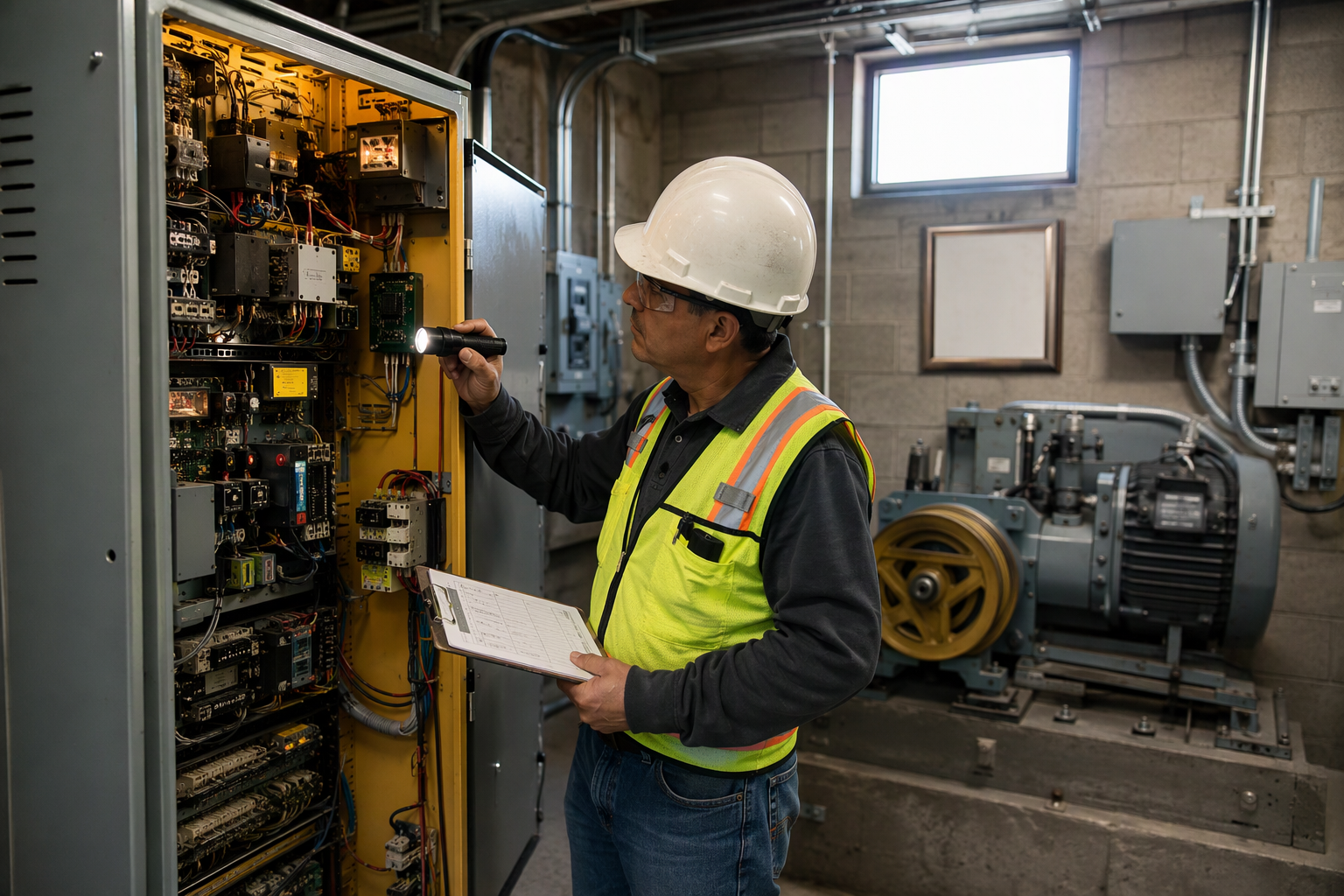
TDLR does not publish a fixed statutory deadline for plan review turnaround, and actual timelines depend on submission completeness, the complexity of the installation, and current agency workload. Projects with incomplete drawings, missing contractor registration documentation, or non-conforming equipment specifications consistently experience the longest delays. Submissions that conform to the ASME A17.1/CSA B44, 2016 edition — the edition Texas adopted effective November 1, 2018 — and that are submitted by a fully registered TDLR elevator contractor tend to move through review more efficiently.
After plan approval, the installation timeline depends on equipment lead times, construction schedules, and contractor availability. Once installation is complete, a TDLR-registered elevator inspector — selected solely by the building owner — must conduct the inspection and deliver the inspection report to the owner within five calendar days of the inspection. The Certificate of Compliance, once issued, is valid for one year.
Important Houston note: TDLR does not regulate elevators or escalators inside Houston city limits. The City of Houston operates its own program. Building owners with projects in Houston should contact Houston’s local authority directly for plan submission requirements and timelines.
How Long Does California Cal/OSHA Elevator Permit Approval Take?
Cal/OSHA does not publish a universal statutory turnaround guarantee for installation permits, and processing time varies by district office workload, project type, and the completeness of the application package. The most reliable way to avoid delays is to submit a complete, accurate application before work begins — California law is unambiguous that no conveyance may be erected, installed, or materially altered without Cal/OSHA’s prior approval.
After installation, Cal/OSHA — through State safety engineers or Certified Competent Conveyance Inspectors (CCCI) — must inspect the elevator before it is placed in service. A permit to operate for a standard elevator is valid for up to one year. However, Cal/OSHA may issue a permit to operate for up to two years for an elevator in safe condition that is covered by a full maintenance contract with a C-11 licensed elevator company. The permit to operate must be posted conspicuously in the elevator car.
Important Los Angeles note: The City of Los Angeles, Department of Building and Safety (LADBS), operates its own elevator and conveyance inspection program. Building owners with projects in Los Angeles should contact LADBS directly for local submission requirements in addition to Cal/OSHA requirements.
What Documents Do You Need to Submit for a Texas Elevator Permit?
Under TDLR requirements, the following are required or directly relevant to plan submission and contractor compliance:
- Registered contractor documentation: The submitting party must be registered as an elevator contractor with TDLR. Contractor registration expires one year after issuance.
- Plans and specifications: Engineering drawings that demonstrate conformance with ASME A17.1/CSA B44, 2016 edition, as amended by 16 TAC §74.100(b).
- Proof of insurance: Texas elevator contractors must carry general liability insurance of at least $1,000,000 per occurrence for bodily injury or death and $500,000 per occurrence for property damage.
- Responsible party designation: Each contractor must designate one or two responsible parties with at least three years of elevator contractor experience.
- Equipment details: Specifications confirming the equipment meets the adopted code edition, including safety devices, door restrictors, and firefighters’ service requirements.
After installation, the building owner arranges the inspection with a TDLR-registered inspector of their choosing. Violations cited in the inspection report must be corrected — or under contract to be corrected — within 30 days, or the owner must obtain a waiver or delay from TDLR.
What Documents Do You Need to Submit for a California Cal/OSHA Elevator Permit?
California’s permit process, governed by Cal/OSHA under the California Code of Regulations, Title 8, Elevator Safety Orders, requires the following before installation may begin:
- CQCC certification: The company performing the installation must be certified by Cal/OSHA as a Certified Qualified Conveyance Company (CQCC). Applicants must hold a current C-11 Elevator Contractor license issued by the California Contractors State License Board (CSLB), plus certificates of workers’ compensation and liability insurance.
- Installation permit application: Submitted to the Cal/OSHA Elevator Unit before work begins, covering the conveyance type, location, and scope of work.
- Engineering plans and specifications: Drawings demonstrating conformance with the ASME A17.1/CSA B44, 2004 edition (Group IV Elevator Safety Orders, effective May 1, 2008, for contracts signed on or after that date).
- CCCM verification: Confirmation that all mechanics who will work on the elevator without supervision are certified by Cal/OSHA as Certified Competent Conveyance Mechanics (CCCM).
- Workers’ compensation and liability insurance certificates.
CQCC, CCCM, and conveyance inspector certificates in California last two years, and renewal requires at least eight hours of continuing education.
What Are the Annual Inspection Requirements in Texas and California?
| Requirement | Texas (TDLR) | California (Cal/OSHA) |
|---|---|---|
| Inspection frequency | Annually by a TDLR-registered inspector | At least once a year |
| Who selects the inspector | Building owner (sole right) | Cal/OSHA assigns State engineers or CCCI |
| Certificate/permit validity | Certificate of Compliance: one year | Permit to operate: up to one year (up to two years with full maintenance contract with C-11 company) |
| Inspection report delivery | Within five calendar days of inspection | Not specified in verified rules |
| Violation correction window | 30 days or under contract to correct, or waiver/delay from TDLR | As directed by Cal/OSHA |
| Posting requirement | Certificate of Compliance in publicly visible area | Permit to operate posted conspicuously in elevator car |
| Who arranges reinspection | Building owner | Building owner (owner’s responsibility) |
Sources: TDLR Elevator and Escalator Safety program; Cal/OSHA Elevator Unit; Texas Health and Safety Code Chapter 754; 16 TAC Chapter 74; California Labor Code Sections 7300–7324.2; Cal/OSHA Elevator Safety Orders.
What Is the ASME A17.1 Code and Why Does It Apply to Your Elevator?
The ASME A17.1/CSA B44 Safety Code for Elevators and Escalators is the foundational national model code that both Texas and California have adopted — in different editions. Texas adopted the 2016 edition; California adopted the 2004 edition for installations under Group IV Elevator Safety Orders. The code covers design, construction, installation, operation, inspection, testing, maintenance, alteration, and repair of elevators and escalators. It is the reference standard that plan reviewers in both states check submitted drawings against.
California has proposed a Group V update that would incorporate elements of ASME A17.1-2019 in part; the Standards Board held a public hearing on June 18, 2026, and no effective date has been posted as of this writing. Texas’s adoption of the 2016 edition has been in effect since November 1, 2018.
What Triggers a Material Alteration Permit in California or Texas?
Both states require additional permitting when existing elevators undergo significant changes — not just for new installations.
In California, a permit from Cal/OSHA is required before a conveyance is erected, installed, or materially altered. A material alteration generally covers changes to load capacity, speed, travel, safety components, control systems, and structural modifications. Building owners planning modernization projects should contact Cal/OSHA before beginning work.
In Texas, the requirement for TDLR plan approval and registered contractor involvement applies to installation, repair, alteration, testing, and maintenance of elevator equipment. Projects that modify safety-critical components — such as door restrictors, firefighters’ service systems, or traction drive components — require particular attention because Texas law mandates immediate removal from service if a passenger elevator lacks working door restrictors or working Phase One firefighters’ service.
What Is a Category 5 Test and When Is It Required in Texas?
Texas requires a Category 5 full-load test every five years on electric (traction) elevators, per the requirements of TDLR under 16 Texas Administrative Code Chapter 74 and the adopted ASME A17.1/CSA B44, 2016 edition. This test verifies the performance of safeties and other critical components under full rated load. Building owners should factor Category 5 test scheduling into their long-term maintenance planning, as the test requires a registered contractor and must be performed by qualified personnel.
Do ADA Requirements Affect the Elevator Permitting Process?
Yes. The Americans with Disabilities Act (ADA) establishes accessibility standards for elevators in public accommodations and commercial facilities. While ADA compliance is not administered by TDLR or Cal/OSHA, building departments and plan reviewers in both Texas and California will assess whether new elevator installations meet applicable accessibility requirements. ADA standards address cab dimensions, control button height, Braille and raised characters, door timing, and floor designation signals, among other elements. Non-compliance with ADA can expose building owners to federal civil rights complaints independent of state permit status.
What Happens If You Operate an Elevator Without a Valid Permit in Texas or California?
In California, no elevator may be operated without a valid, current permit to operate issued by Cal/OSHA. Operating without one exposes building owners to enforcement action under California Labor Code Sections 7300–7324.2 and the Elevator Safety Orders. Cal/OSHA has authority to order a conveyance out of service.
In Texas, building owners who fail to obtain a Certificate of Compliance or allow cited violations to remain uncorrected beyond the 30-day window — without an approved waiver or delay — are out of compliance under Texas Health and Safety Code Chapter 754. Texas law also requires owners to report any accident involving elevator equipment to TDLR within 24 hours. Failure to register as a contractor before performing installation, repair, alteration, testing, or maintenance work is a separate violation for the performing company.
What Exemptions Apply to Texas and California Elevator Regulations?
Both states provide limited exemptions, though these are narrow.
California exempts conveyances under federal jurisdiction and conveyances in single-unit private homes that are not accessible to the public.
Texas law does not apply to equipment in buildings owned and operated by the federal government. TDLR does not regulate elevators in single-family dwellings — except that state law requires an inspection by a TDLR-registered inspector after installation. Additionally, as noted above, TDLR does not regulate elevators inside Houston city limits.
What Factors Most Commonly Delay Elevator Permit Approval in 2025–2026?
Based on the regulatory frameworks in both states, the following factors qualitatively account for the longest approval delays that building owners and contractors encounter:
- Incomplete plan submissions: Missing specifications, non-conforming drawings, or plans that do not reference the state’s adopted ASME edition are the most consistent source of back-and-forth with reviewers.
- Unlicensed or unregistered contractors: In California, a CQCC certification is mandatory before the application is accepted. In Texas, only a TDLR-registered contractor may submit plans.
- Lapsed certifications: California’s CQCC, CCCM, and inspector certificates expire every two years. Submitting an application with expired credentials triggers immediate delays.
- Local authority jurisdiction overlap: Projects in Los Angeles or Houston require parallel engagement with LADBS or the City of Houston’s program in addition to state-level agencies.
- Material alteration scope uncertainty: Owners who proceed with modernization work before determining whether it qualifies as a material alteration — triggering a new permit requirement — often face stop-work situations.
- Equipment non-conformance: Equipment specified for one code edition but reviewed under a different adopted edition creates lengthy reconciliation processes.
AmeriTex Elevator supports building owners in Texas and California by applying a thorough understanding of TDLR and Cal/OSHA requirements to help ensure submissions are accurate and complete before they reach the reviewing agency.
Industry Trends for Elevator Permitting and Compliance in 2025–2026
Several qualitative trends are shaping elevator permitting across Texas and California heading into the second half of the decade.
Modernization demand is driving alteration permit volume. A significant portion of the installed elevator base in both states was installed under earlier code editions. As these units age, building owners are initiating modernization projects that frequently trigger material alteration permit requirements — adding complexity that many owners underestimate at the outset.
California’s potential code update is creating planning uncertainty. California’s proposal to incorporate elements of ASME A17.1-2019 under a Group V update — with a public hearing held June 18, 2026, and no posted effective date — means contractors and owners are navigating a period of regulatory transition. Projects with long lead times should monitor Cal/OSHA’s posted rulemaking activity closely.
ADA enforcement awareness is growing. Building owners are increasingly aware that state permit approval does not confer ADA compliance, and the interplay between ADA requirements and state code editions is an active area of compliance review for commercial and multi-family properties.
Digital plan submission and tracking at agencies like TDLR is evolving, though the fundamental documentation requirements remain anchored in statute and the adopted ASME code editions.
Workforce and certification pressure in California — where CQCC and CCCM certificates require biennial renewal and continuing education — means that contractor capacity and credential currency are factors building owners should evaluate when selecting a service provider.
How Should a Building Owner Begin the Elevator Permit Process in Texas or California?
- Identify the authority having jurisdiction (AHJ). Confirm whether your project falls under TDLR (Texas, outside Houston), the City of Houston’s program, Cal/OSHA (California, outside Los Angeles), or LADBS (City of Los Angeles).
- Confirm your contractor’s credentials. In Texas, verify TDLR contractor registration. In California, verify CQCC certification and C-11 license through CSLB.
- Determine whether the work requires a material alteration permit or constitutes a new installation — both trigger pre-work approval requirements in both states.
- Prepare engineering drawings referencing the state’s adopted ASME A17.1 edition: 2016 for Texas, 2004 for California.
- Assemble supporting documentation: insurance certificates, responsible party designations (Texas), CQCC and CCCM credentials (California), and contractor registration proof.
- Submit to the correct agency before any installation or alteration work begins.
- Schedule the inspection after installation is complete. In Texas, the building owner selects the inspector. In California, Cal/OSHA manages the inspection through State engineers or CCCI.
- Post the permit or certificate in the required location before placing the elevator in service.
- Track renewal dates. Certificates of Compliance (Texas) and permits to operate (California) expire annually; arranging timely reinspection is the building owner’s responsibility in both states.
Contact AmeriTex Elevator for a free elevator assessment at 844-646-9660.
Need elevator service you can rely on? AmeriTex Elevator is ready to help.