Government Elevator Bid Price Revisions: Is Your Original Quote Still Valid?
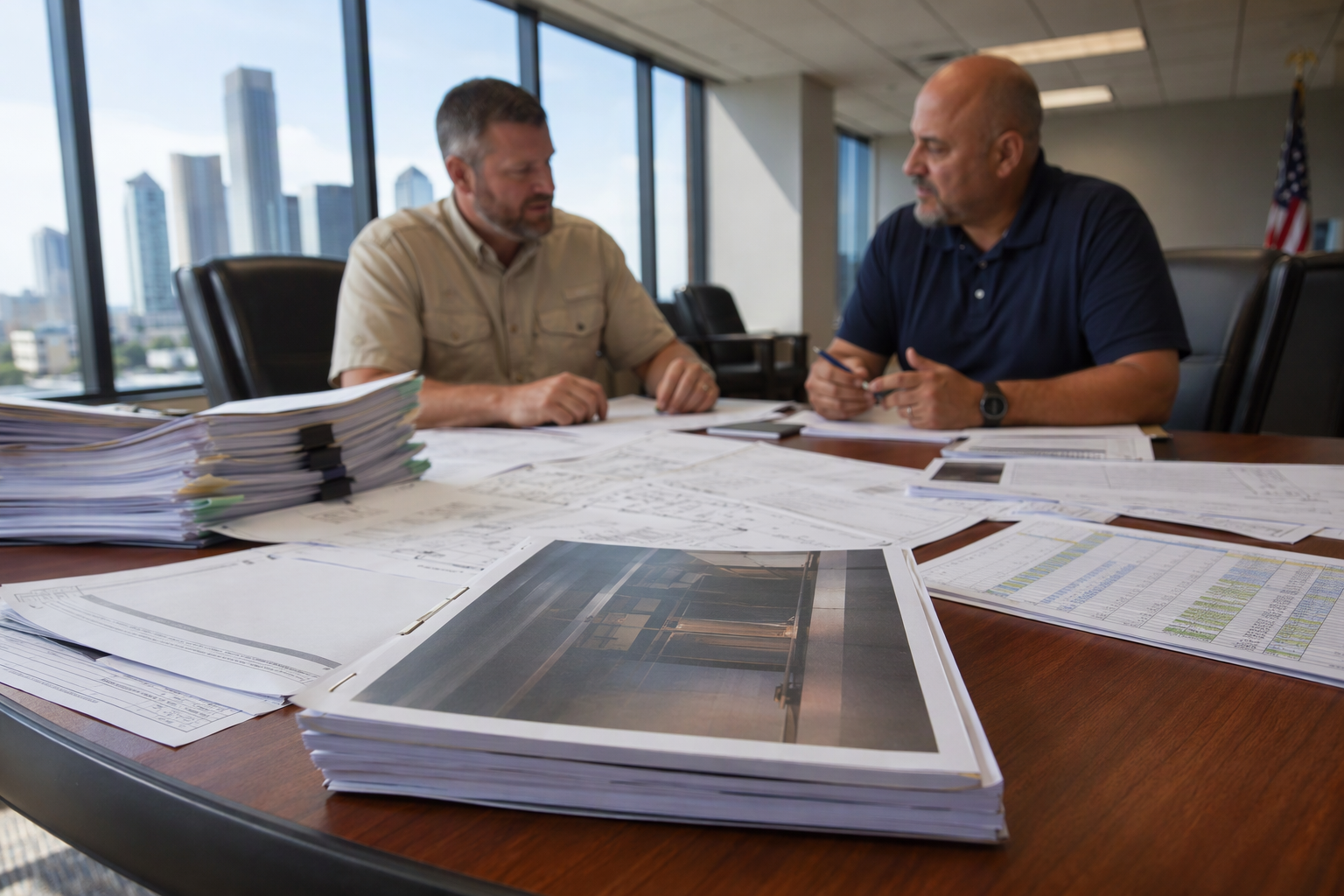
When a government agency requests a price revision on an elevator bid, the original quote is generally not automatically valid. Bid validity periods are defined in the original solicitation — typically 60 to 180 days — and once that window closes, or once a formal amendment alters the scope, the contractor must reassess material costs, labor rates, and current code requirements before submitting a revised figure. Proceeding on an outdated quote exposes both the building owner and the contractor to compliance gaps and financial risk.
What does “bid validity period” mean for an elevator quote?

A bid validity period is the contractually stated window during which a contractor agrees to honor the prices submitted in a government elevator bid solicitation.
Government solicitations for elevator installation, modernization, or maintenance contracts almost always specify a bid validity period in the invitation for bids (IFB) or request for proposals (RFP). Common durations range from 60 days for straightforward maintenance contracts to 180 days or longer for major capital projects. Once that period lapses without an award, the original pricing is considered expired. If a government agency then requests a price revision — whether due to budget cycles, project delays, or scope changes — the elevator contractor is under no obligation to honor the original figures and, in most cases, must issue an updated quote.
For projects in Texas, registered elevator contractors working under Texas Department of Licensing and Regulation (TDLR) oversight must also ensure any revised quote still references compliant equipment and installation methods under ASME A17.1/CSA B44, 2016 edition as adopted in Texas. In California, contractors certified as a Certified Qualified Conveyance Company (CQCC) under Cal/OSHA’s Elevator Unit must confirm that revised bids reflect current California Code of Regulations, Title 8, Elevator Safety Orders.
Does a government-requested price revision automatically void the original elevator quote?
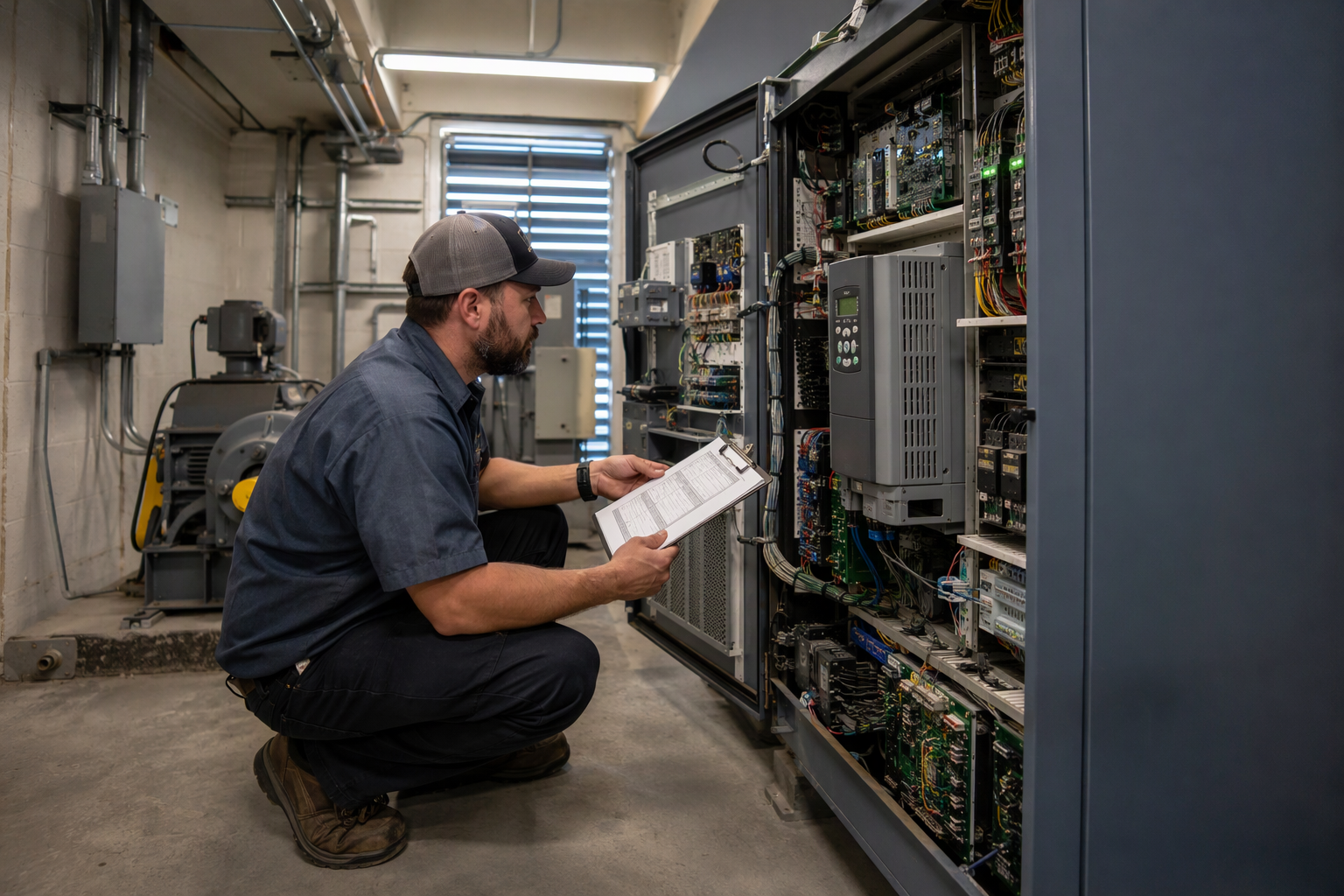
Not automatically — but a government-requested price revision triggers a formal review process that almost always results in a new, superseding quote rather than a simple adjustment to the original document.
There is an important distinction between a price revision request and a formal contract amendment. If the government agency issues an amendment to the solicitation changing scope, specifications, or delivery timeline, the original bid is effectively superseded. If the agency simply asks the contractor to voluntarily hold pricing beyond the validity period, the contractor may decline or resubmit with updated figures. In practice, elevator contractors should treat any government revision request as an opportunity to reassess all underlying assumptions — steel costs, motor drive pricing, cab finishes, and current labor rates — none of which are static over a multi-month bid cycle.
What factors require an elevator quote to be revised when the government requests a change?
Material price fluctuations, scope changes, updated code editions, and expired subcontractor pricing are the primary factors that require a revised elevator quote after a government revision request.
Elevator projects involve significant material components — traction machine assemblies, control panels, door operators, guide rails, and cab interiors — all of which carry market-driven pricing. A delay of even 90 days can materially alter a project’s cost profile. Beyond materials, the following factors commonly require a full quote revision:
- Scope modifications: The government may revise the number of stops, travel height, capacity requirements, or accessibility features under the Americans with Disabilities Act (ADA).
- Code edition changes: Texas adopted ASME A17.1-2016 effective November 1, 2018. California adopted ASME A17.1/CSA B44, 2004 edition for its current Group IV Elevator Safety Orders. If a proposed Group V update in California moves forward, installation contracts signed after any new effective date would need to meet revised requirements.
- Permit and plan review status: In Texas, a registered contractor must submit plans to TDLR and obtain approval before installation begins. If original plans were approved against an earlier scope, revision requests may require re-submission.
- Insurance and bonding thresholds: Texas requires elevator contractors to carry general liability insurance of at least $1,000,000 per occurrence for bodily injury or death and $500,000 per occurrence for property damage. Government contracts often impose higher thresholds that must be priced in.
- Subcontractor and union labor rates: Labor agreements and prevailing wage determinations on public projects are time-sensitive and must be reconfirmed.
How does the government bid amendment process work for elevator projects?
When a government agency formally amends an elevator solicitation, it issues a written amendment document that supersedes relevant sections of the original IFB or RFP, and all responsive bidders must resubmit pricing against the amended specifications.
The formal amendment process typically follows this sequence:
- The government contracting officer identifies the need for a scope or price revision and prepares a written amendment.
- The amendment is distributed to all registered plan holders through the original solicitation portal or by direct notice.
- A revised bid due date is established, typically extending the original deadline by a minimum number of days to allow adequate response time.
- The elevator contractor reviews the amendment against the original scope, identifies all cost impacts, and obtains updated pricing from equipment manufacturers and subcontractors.
- The contractor reconfirms that the proposed equipment meets applicable code requirements — ASME A17.1 Safety Code for Elevators and Escalators, ADA, and the relevant state safety orders — and that any required permits will be obtainable under the revised scope.
- A revised bid package, including updated pricing, compliance documentation, and any required bid bonds, is submitted by the new deadline.
- The contractor retains copies of both the original and revised quotes, along with all amendment documents, to protect against future disputes.
Is the original elevator quote legally binding after the bid validity period expires?
Once the bid validity period stated in the solicitation has expired, the original elevator quote is generally not legally binding on the contractor, unless both parties have agreed in writing to extend it.
Bid bonds, which government elevator solicitations frequently require, are tied to the validity period. After expiration, the bond’s obligation lapses alongside the pricing commitment. Building owners and procurement officers sometimes assume the contractor is still bound by original pricing after a prolonged award delay; this assumption is incorrect and can create disputes during contract execution. Contractors should communicate clearly and in writing when a validity period has lapsed, and document the revised pricing rationale thoroughly.
How do Texas state elevator regulations affect government bid revisions in Houston, Dallas, Austin, and San Antonio?
Texas elevator contractors must hold a current TDLR registration, and any revised bid must reference equipment and installation methods compliant with the ASME A17.1-2016 edition adopted by Texas — with important city-level distinctions for Houston.
Under Texas Health and Safety Code Chapter 754 and 16 Texas Administrative Code Chapter 74, registered elevator contractors are responsible for submitting approved plans before installation and ensuring all equipment meets Texas’s adopted code edition. Building owners must obtain a TDLR Certificate of Compliance for each unit, valid for one year. When a government bid revision extends a project timeline significantly, contractors working in Dallas, Austin, and San Antonio must verify that any equipment specified in the original quote still meets TDLR’s current registration and compliance standards.
Houston is a special case: TDLR does not regulate elevators inside Houston city limits. The City of Houston operates its own elevator program. Contractors revising bids for Houston government projects must coordinate with the City of Houston’s program rather than TDLR, and should confirm current local requirements directly with the city.
AmeriTex Elevator serves Houston, Dallas, Austin, and San Antonio and is familiar with both TDLR requirements and the City of Houston’s separate program, making it a practical resource when government bid revisions create regulatory questions.
How do California state elevator regulations affect government bid revisions in Los Angeles and San Diego?
In California, any revised elevator bid must reflect compliance with California Code of Regulations, Title 8, Elevator Safety Orders, and the contractor must hold current CQCC certification from Cal/OSHA — with Los Angeles running its own inspection program.
California Labor Code Sections 7300–7324.2 establish the framework under which Cal/OSHA’s Elevator Unit regulates conveyances. No elevator may operate without a valid permit to operate issued by Cal/OSHA, and no work may begin on a new installation or material alteration without Cal/OSHA’s prior permit. For government projects, this means that if a price revision request delays a project, the contractor must reconfirm that the Cal/OSHA permit for erection or alteration obtained under the original scope still covers the revised work. If the scope has materially changed, a new permit application may be required.
Los Angeles has its own elevator and conveyance inspection program administered by the Los Angeles Department of Building and Safety (LADBS). Government contractors revising bids for Los Angeles projects should verify current LADBS requirements directly, as the city program operates independently of Cal/OSHA’s statewide Elevator Unit. San Diego projects fall under Cal/OSHA’s jurisdiction.
AmeriTex Elevator serves Los Angeles and San Diego and holds the certifications required to operate in California, making it a knowledgeable partner when navigating Cal/OSHA permit requirements during bid revision cycles.
What role does ASME A17.1 play when revising an elevator bid for a government project?
ASME A17.1 is the foundational safety code that determines elevator design, installation, and testing requirements, and any revised bid must confirm that specified equipment still meets the code edition adopted by the relevant state or local authority.
The ASME A17.1 Safety Code for Elevators and Escalators establishes requirements for car dimensions, door systems, firefighters’ service, emergency lighting, speed governors, and periodic testing. Texas has adopted the 2016 edition; California has adopted the 2004 edition for its current Group IV Safety Orders. Because equipment manufacturers regularly update product lines to track newer code editions, an elevator model specified in an original bid may have been redesigned or discontinued by the time a government revision request arrives months later. Contractors must verify that replacement equipment still meets the jurisdiction’s adopted edition — not simply the latest ASME edition — and that required tests such as the Category 5 full-load test required every five years in Texas can still be performed on the revised equipment.
What ADA requirements must be preserved or updated in a revised government elevator bid?
Any revised elevator bid for a government facility must fully comply with ADA accessibility standards, and scope changes that alter cab dimensions, door timing, control height, or communication systems require a fresh ADA compliance review.
Government buildings are among the most scrutinized environments for ADA compliance. The ADA Standards for Accessible Design specify elevator car dimensions, door clear width, landing dimensions, floor designation panel placement, and two-way communication requirements. If a government revision request changes the number of floors served, the cab size, or the type of door operator, the contractor must run a new ADA compliance check before submitting revised pricing. Pricing in the original quote for accessibility features cannot simply be carried forward if the physical configuration has changed.
How should an elevator contractor document a revised government bid to protect against disputes?
A revised government elevator bid should be documented with a formal revision letter, a line-item cost breakdown showing changes from the original quote, copies of all amendment documents, updated equipment specifications, and written confirmation of the new bid validity period.
Thorough documentation protects the contractor if the government later claims the original pricing was still in effect, or if a scope dispute arises during installation. At minimum, the revision package should include:
- A cover letter referencing the original bid number, the government’s revision request date, and the specific solicitation amendment number if applicable
- A side-by-side comparison of original and revised line items, with explanatory notes for each change
- Updated manufacturer quotations for all major equipment components
- Confirmation of current prevailing wage or union rate applicability
- A clearly stated new bid validity period
- Copies of current TDLR registration (Texas) or CQCC certification (California) to demonstrate ongoing eligibility to perform the work
- Updated insurance certificates meeting the contract’s bonding and liability requirements
What is the typical timeline impact when a government requests an elevator bid revision?
A government-requested elevator bid revision typically adds four to twelve weeks to the pre-award timeline, depending on the scope of changes and the complexity of the permit re-submission process.
Simple price-only revisions driven by market cost changes may require only one to two weeks to compile updated manufacturer quotes and reissue documents. Revisions involving scope changes — additional floors, different equipment type, or modified cab specifications — require new engineering review, updated drawings, and potentially new plan submissions to TDLR in Texas or Cal/OSHA in California before a compliant bid can be issued. Building owners and procurement officers planning capital elevator projects should build contingency time into project schedules specifically for bid revision cycles, particularly on multi-year public construction programs.
Can a government agency require an elevator contractor to hold the original price beyond the stated validity period?
A government agency generally cannot compel a contractor to hold prices beyond the stated bid validity period without the contractor’s written agreement, and doing so without compensation would be commercially unreasonable in most circumstances.
Some government solicitations include provisions allowing the agency to request a voluntary price extension, but the contractor retains the right to decline. If the contractor agrees to extend, it should do so only in writing and should reassess whether material cost exposure during the extension period warrants a price escalation clause. On long-duration public elevator contracts — such as multi-unit housing authority modernization programs — price escalation clauses tied to published indexes for steel or electrical components are increasingly common and represent sound commercial practice.
What is the difference between a price revision and a scope revision in a government elevator bid?
A price revision adjusts cost figures without changing the work scope, while a scope revision changes what work is to be performed and almost always requires both a new price and new code compliance verification.
| Revision Type | Typical Trigger | Requires New Code Review? | Requires New Permit Submission? | Requires New Bid Bond? | Typical Processing Time |
|---|---|---|---|---|---|
| Price-Only Revision | Material cost increase, labor rate change, bid validity expiration | No, if scope unchanged | No, if scope unchanged | Possibly, per solicitation terms | 1–3 weeks |
| Scope Revision (Minor) | Cab finish change, door operator substitution | Yes — confirm component compliance | Possibly — depends on materiality | Possibly | 2–6 weeks |
| Scope Revision (Major) | Additional floors, capacity change, elevator type change | Yes — full code review required | Yes — new plans to TDLR or Cal/OSHA | Yes | 6–12+ weeks |
| Solicitation Amendment | Agency-initiated change to specifications or contract terms | Yes | Depends on scope impact | Yes, with new bid submission | Varies by agency |
What should a building owner do when a government elevator project is delayed and prices change?
Building owners should immediately notify their elevator contractor of any government-driven project delay, request a written assessment of price exposure, and confirm whether the original permit applications or plan approvals remain valid under the revised timeline.
Delays on government elevator projects can create a cascade of complications: Cal/OSHA permits for new installations or material alterations in California are tied to the approved scope; TDLR plan approvals in Texas are linked to the registered contractor and the submitted specifications. If a project is delayed significantly, both the permit status and the contractor’s registration must be confirmed as still current before work can legally begin. AmeriTex Elevator can assist building owners in markets including Houston, Dallas, Austin, San Antonio, Los Angeles, and San Diego in assessing the regulatory and commercial impact of government-driven delays on elevator project timelines.
Are there OSHA requirements that affect elevator bid revisions on government construction projects?
Yes — OSHA construction safety standards apply to elevator installation and modernization work on government projects, and any scope revision that changes installation methods, hoistway access, or worker exposure must be reflected in the contractor’s safety plan and potentially in the bid price.
OSHA regulations govern hoistway protection, temporary platforms, electrical lockout/tagout procedures, and fall protection during elevator construction. When a government scope revision changes the construction sequence or the duration of installation, the contractor’s OSHA compliance costs — including additional fall protection equipment, extended hoistway shielding, or additional safety supervision — must be incorporated into the revised bid. Failing to account for these costs at the revision stage can result in a contract that is unprofitable to execute safely.
How does firefighters’ service compliance factor into a revised elevator bid for a government building?
Any revised elevator bid for a government building must confirm that the specified equipment includes compliant Phase One and Phase Two firefighters’ service, because Texas law requires removal from service of elevators with non-working Phase One firefighters’ service.
Under Texas elevator regulations, a passenger elevator without working Phase One firefighters’ service must be removed from service immediately. This is not a deficiency that can be deferred or waived. If a government scope revision changes the control system, the cab configuration, or the number of floors served, the firefighters’ service system must be re-engineered to match, and the revised bid must include that cost. For California projects, firefighters’ service requirements are addressed within the ASME A17.1/CSA B44 code adopted under the California Elevator Safety Orders, and any scope change affecting machine room or control system design triggers a fresh compliance review.
What periodic testing requirements should be included when pricing a revised government elevator bid?
Revised government elevator bids that include maintenance contracts should explicitly price periodic testing requirements — particularly the Category 5 full-load test required every five years in Texas — because these costs are often underestimated or omitted in initial quotes.
Texas requires a Category 5 full-load test every five years on electric (traction) elevators. This test requires specialized equipment, qualified personnel, and coordination with building management to take the elevator out of service. On government buildings with high occupancy or critical operations — courthouses, hospitals, public transit hubs — the logistics of scheduling and executing this test add measurable cost. When a government revision request extends a maintenance contract term, contractors must ensure that any Category 5 tests falling within the extended period are explicitly priced in the revised bid. In California, Cal/OSHA requires annual inspections, and elevators covered by a full maintenance contract with a CQCC-certified company may qualify for a permit to operate of up to two years, which affects the inspection scheduling and cost assumptions in a long-term maintenance bid.
What steps should a contractor take immediately after receiving a government request for a price revision?
Upon receiving a government request for an elevator price revision, a contractor should follow a structured process to protect its legal position and ensure the revised quote is accurate and compliant.
- Review the original bid documents and confirm the stated bid validity period and its current status.
- Obtain and read the government’s formal revision request or solicitation amendment document in full.
- Identify every element of the original scope that is changed, clarified, or confirmed by the revision request.
- Contact all major equipment manufacturers and subcontractors to obtain current pricing valid for a new bid validity period.
- Confirm that the specified equipment still meets the adopted code edition — ASME A17.1-2016 in Texas, Title 8 Elevator Safety Orders in California — and that required testing protocols are unchanged.
- Verify that current TDLR registration (Texas) or CQCC and C-11 credentials (California) remain active and cover the revised scope.
- Determine whether the revised scope requires new plan submission to TDLR or a new Cal/OSHA permit for erection or material alteration.
- Prepare a formal revised bid package with line-item cost breakdown, updated compliance documentation, a new bid validity period, and written notation of all changes from the original quote.
- Retain complete records of both the original quote, the revision request, and the revised submission.
How can building owners and government procurement officers reduce the risk of bid revision disputes on elevator projects?
Building owners and procurement officers can significantly reduce bid revision disputes by including escalation clauses, clear validity periods, and amendment procedures in the original elevator solicitation documents.
Well-drafted government elevator solicitations address price revision scenarios proactively. Recommended solicitation provisions include: an explicit bid validity period with a defined extension request procedure; a price escalation clause tied to a published commodity index for steel or electrical components for projects with long award timelines; a clear amendment protocol requiring written notice and a minimum response period for bidders; and a scope definition matrix that specifies which changes constitute a minor revision versus a material scope change requiring full rebid. Engaging an experienced elevator service provider early in the specification-writing phase helps ensure that the solicitation documents reflect realistic pricing structures and code-compliant specifications from the outset.
AmeriTex Elevator regularly works with building owners on government-related elevator projects across Texas and California markets, providing technical input that helps reduce ambiguity in bid documents and simplifies the revision process when government agencies request changes.
What records should be retained after a government elevator bid revision is submitted?
Contractors should retain the original bid, the government’s revision request, all solicitation amendments, the revised bid package, updated equipment quotations, permit documentation, and all written communications for the duration of the contract and any applicable statute of limitations period.
Elevator projects for government clients can involve audit rights, warranty claims, and performance disputes that surface years after project completion. A complete, chronologically organized bid file — from original RFP through final contract amendment — provides the documentary foundation to resolve any such dispute efficiently. Digital storage with backup is advisable, and records should be maintained at a minimum for the period specified in the contract or, absent a contract provision, for the period applicable under state law in Texas or California. This discipline protects the contractor, the building owner, and ultimately the public that relies on these elevators daily.
Contact AmeriTex Elevator for a free elevator assessment at 844-646-9660.
Need elevator service you can rely on? AmeriTex Elevator is ready to help.