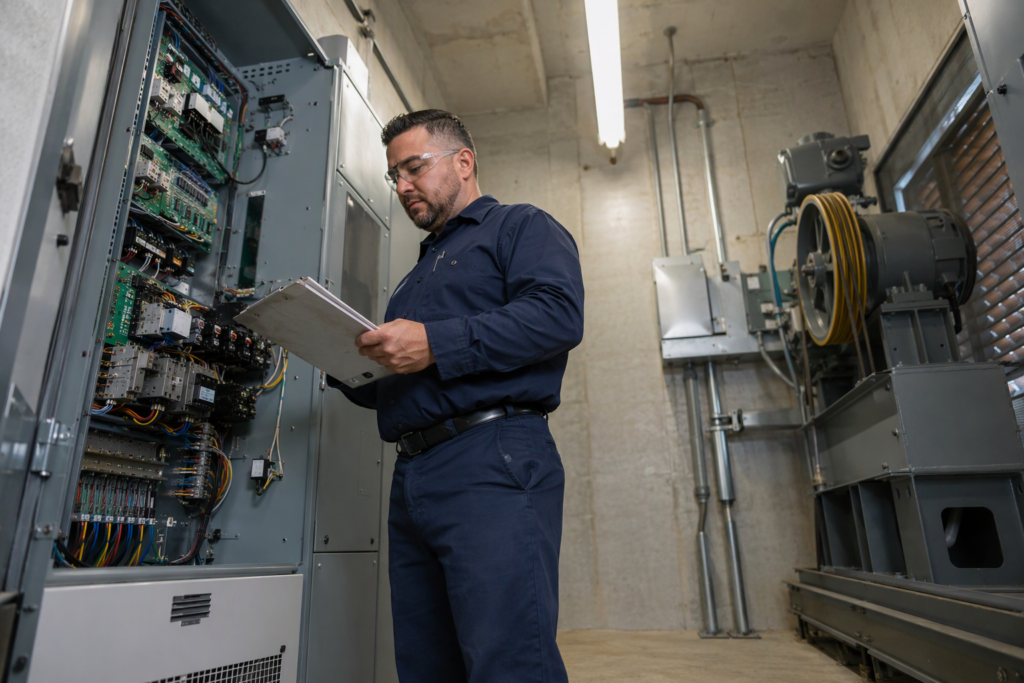
Elevator Maintenance Professionals: Complete FAQ Guide for Building Owners in Texas and California
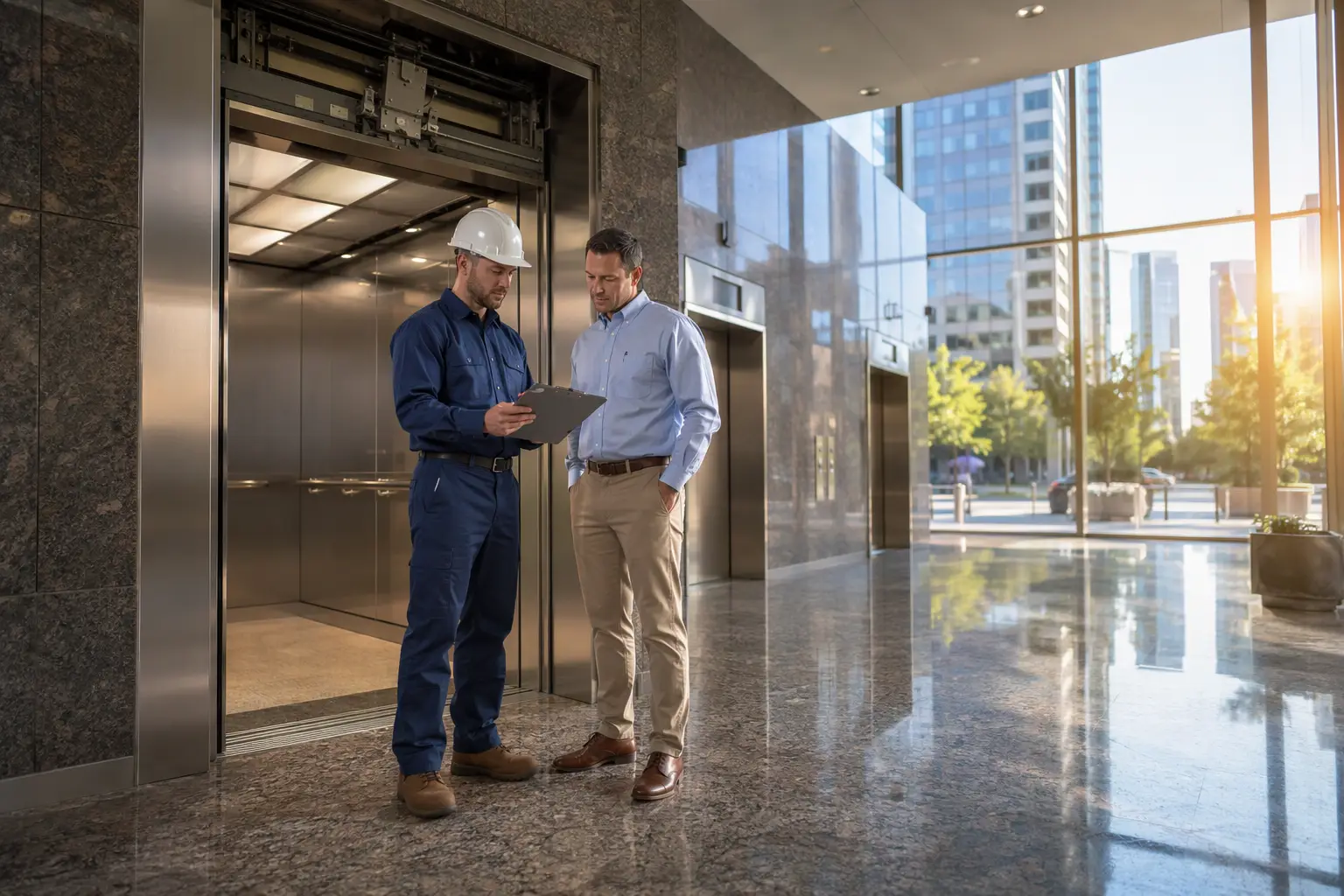
Building owners and facility managers in Houston, Dallas, Austin, San Antonio, Los Angeles, and San Diego operate in one of the most heavily regulated elevator environments in the United States. Understanding who qualifies as an elevator maintenance professional, what credentials they must hold, and what maintenance obligations fall on the building owner is essential for legal compliance, passenger safety, and uninterrupted operations. This comprehensive FAQ covers every dimension of that landscape, from state licensing requirements to full-load testing intervals, ADA obligations, and how to evaluate a service contractor.
Who Are Elevator Maintenance Professionals?
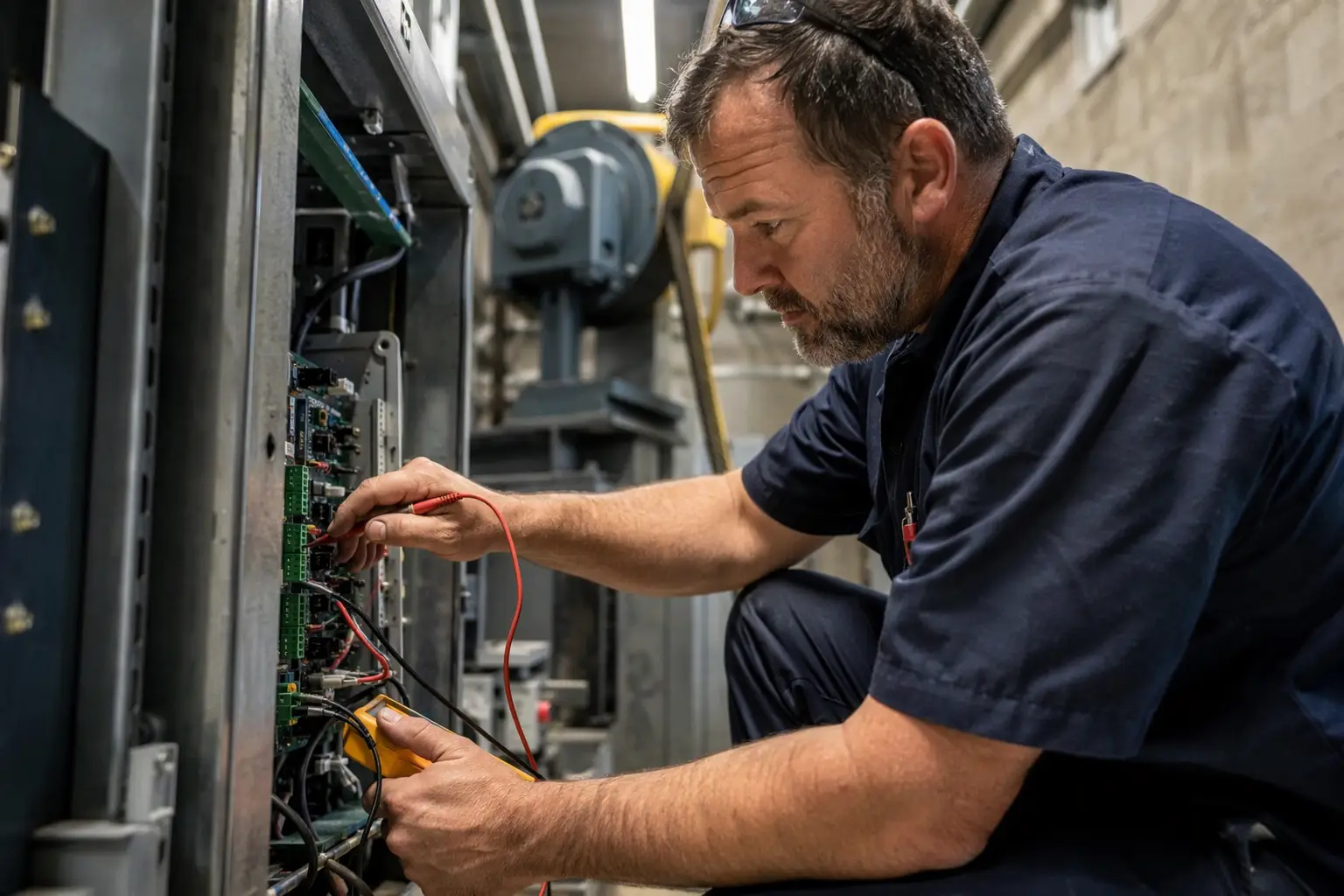
Elevator maintenance professionals are trained, credentialed individuals and the companies they work for who perform the installation, maintenance, repair, alteration, and testing of elevators, escalators, and related conveyances under applicable federal and state codes.
The term encompasses a broad range of roles. At the technician level, professionals perform hands-on mechanical and electrical work on elevator systems. At the contractor level, companies assume legal responsibility for ensuring that every task performed on a conveyance meets the requirements of the ASME A17.1 Safety Code for Elevators and Escalators and applicable state regulations. At the inspection level, registered or certified inspectors independently verify that equipment is safe and code-compliant before a permit or certificate of compliance is issued.
In California, the relevant credentials are the Certified Qualified Conveyance Company (CQCC) for contracting firms and the Certified Competent Conveyance Mechanic (CCCM) for individual technicians, both issued by Cal/OSHA. In Texas, the TDLR registers elevator contractors and elevator inspectors. Building owners should always verify that any professional they engage holds the appropriate active credential in the state where the work is performed.
What Is the Difference Between an Elevator Inspector and an Elevator Maintenance Technician?
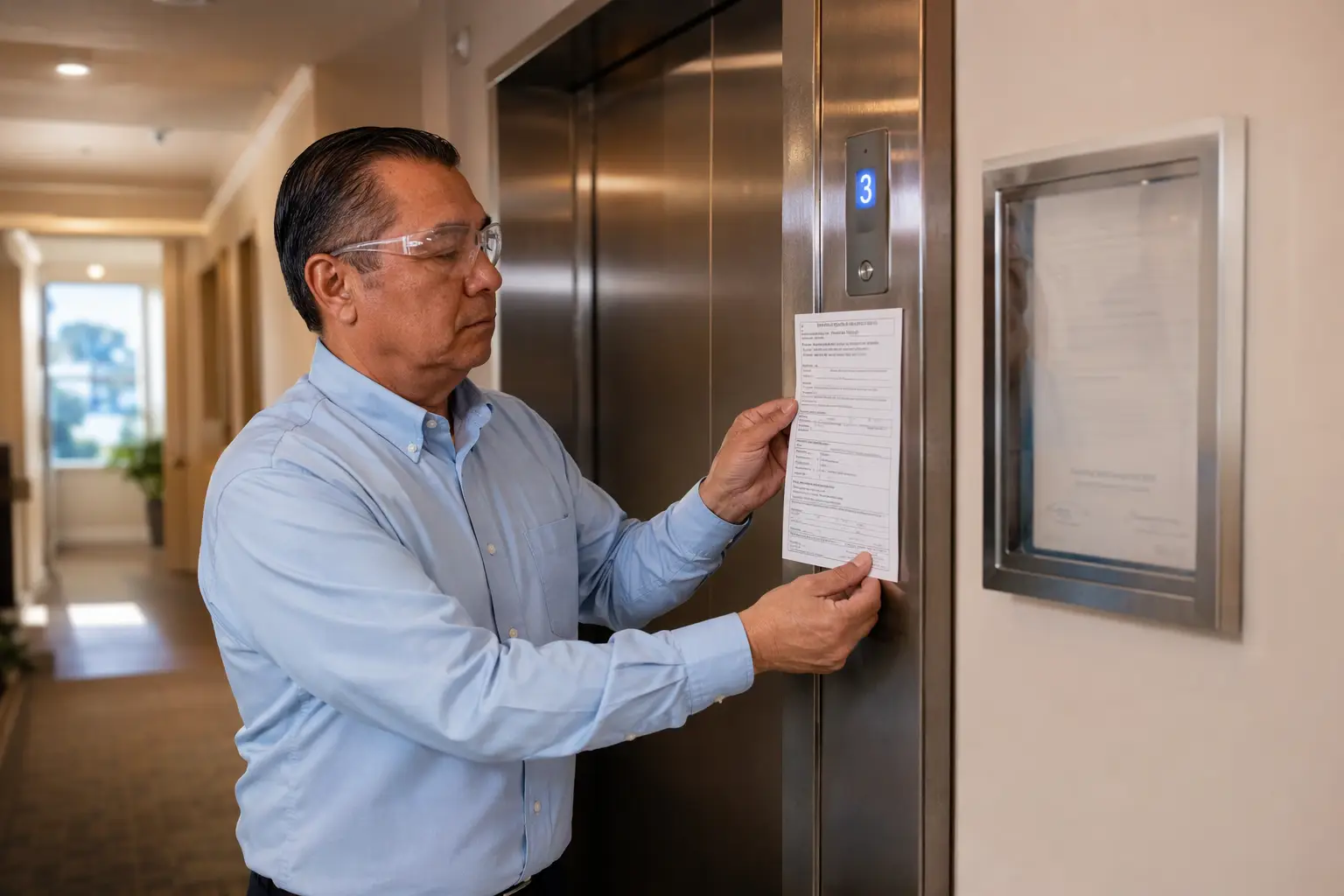
An elevator inspector performs a formal compliance evaluation that results in a government-issued permit or certificate, while a maintenance technician performs the ongoing mechanical and electrical upkeep that keeps equipment running safely between inspections.
These two roles are intentionally kept separate to maintain objectivity. In California, only Cal/OSHA State safety engineers and Certified Competent Conveyance Inspectors (CCCI) may conduct official elevator inspections. The CCCI credential is issued by Cal/OSHA, and no other individual — regardless of their mechanical qualifications — may perform a legally recognized inspection in California. In Texas, elevator inspectors must register with TDLR. Texas inspectors are not TDLR employees; they are independent professionals retained by building owners. Notably, Texas law grants the building owner the sole right to select their elevator inspector.
Maintenance technicians, by contrast, work for a registered or certified contractor and are responsible for lubrication, adjustment, parts replacement, cleaning, safety device testing, and the documentation of equipment condition. While inspectors and technicians may both possess deep technical knowledge, only the authorized inspector’s report triggers the issuance of a Certificate of Compliance in Texas or a permit to operate in California.
What Credentials Must Elevator Maintenance Professionals Hold in California?
In California, any company that installs, alters, tests, maintains, repairs, or services elevators must be certified by Cal/OSHA as a Certified Qualified Conveyance Company (CQCC), and any individual performing unsupervised work on a conveyance must hold a Certified Competent Conveyance Mechanic (CCCM) credential from Cal/OSHA.
The CQCC certification requires the applicant to hold a current C-11 Elevator Contractor license issued by the California Contractors State License Board (CSLB) and to provide certificates of workers’ compensation and liability insurance. The C-11 license is a separate credential administered by the CSLB, while permits to operate, inspections, and CQCC/CCCM certifications all fall under Cal/OSHA’s authority.
California law is unambiguous: only a CCCM working for a CQCC may maintain, repair, alter, or replace components on a conveyance. CQCC, CCCM, and conveyance inspector certificates are valid for two years, and renewal requires at least eight hours of continuing education. Building owners in California should request documentation of a contractor’s CQCC status before authorizing any work. More information is available on the Cal/OSHA Elevator Unit website.
What Credentials Must Elevator Maintenance Professionals Hold in Texas?
In Texas, any person or business that installs, repairs, alters, tests, or maintains elevator equipment must register as a contractor with TDLR under Texas Health and Safety Code Chapter 754 and 16 Texas Administrative Code Chapter 74.
Texas elevator contractor registrations expire one year after issuance. Contractors must carry general liability insurance of at least $1,000,000 per occurrence for bodily injury or death and $500,000 per occurrence for property damage. Each registered contractor must also designate one or two responsible parties with at least three years of elevator contractor experience.
It is important for Texas building owners to understand that the TDLR program does not apply within the City of Houston, which operates its own elevator program. Building owners with equipment in Houston should consult the City of Houston directly for applicable local requirements. Outside Houston, TDLR registration is the governing credential. Full program details are available on the TDLR Elevator and Escalator Safety page.
How Often Must Elevators Be Inspected Under State Law?
Both Texas and California require annual inspections of elevator equipment by qualified inspectors, with California also allowing a two-year permit interval under specific conditions.
In California, every conveyance must be inspected at least once a year. If the equipment is found safe, Cal/OSHA issues a permit to operate for up to one year. However, if the elevator is covered by a full maintenance contract with a CQCC-certified company that also holds a C-11 license, Cal/OSHA may issue a permit to operate for up to two years. Arranging the annual reinspection is the building owner’s responsibility — the state does not automatically schedule it.
In Texas, building owners must have elevators, escalators, and related equipment inspected annually by a TDLR-registered elevator inspector. After inspection, a TDLR Certificate of Compliance is issued for each unit and is valid for one year. The Texas inspector must deliver the inspection report to the owner within five calendar days of completing the inspection. Any cited violations must be corrected or under contract to be corrected within 30 days, or the owner must obtain a waiver or delay from TDLR.
What Is ASME A17.1 and Why Does It Matter to Elevator Maintenance Professionals?
The ASME A17.1 Safety Code for Elevators and Escalators is the foundational national standard governing the design, construction, installation, operation, inspection, testing, maintenance, and repair of elevators and escalators throughout the United States.
Both Texas and California have adopted ASME A17.1, though at different editions. Texas adopted the 2016 edition of ASME A17.1/CSA B44, effective November 1, 2018, as amended by 16 TAC §74.100(b). California adopted the 2004 edition of ASME A17.1/CSA B44 for elevators installed under contracts signed on or after May 1, 2008, under its Group IV Elevator Safety Orders. California has proposed a Group V update that would incorporate elements of ASME A17.1-2019; a public hearing was held on June 18, 2026, but no effective date has been announced as of this writing.
For elevator maintenance professionals, ASME A17.1 defines the specific tests, maintenance tasks, lubrication intervals, safety device requirements, and documentation standards that must be met. It also establishes categories of periodic tests — from routine annual checks to major load tests — that determine whether equipment is fit for continued operation.
What Does a Comprehensive Elevator Maintenance Program Include?
A comprehensive elevator maintenance program covers systematic mechanical and electrical inspection, lubrication, adjustment, cleaning, safety device testing, documentation, and timely parts replacement to keep equipment operating safely and within code.
Qualified elevator maintenance professionals structure maintenance programs around several key activity types:
- Preventive maintenance: Scheduled visits to lubricate moving components, check cable tension, adjust brake clearances, test door operators, and inspect controller logic to prevent failures before they occur.
- Corrective maintenance: Responding to breakdowns or malfunctions, diagnosing root causes, and restoring equipment to full operation.
- Periodic safety testing: Conducting code-required tests such as governor and safety device tests and, in Texas, the Category 5 full-load test on traction elevators every five years.
- Code compliance updates: Identifying components that require modernization to meet current code requirements, particularly when alterations are made to existing equipment.
- Documentation: Maintaining maintenance logs, test records, and inspection reports that satisfy regulatory agencies and are available for audit.
AmeriTex Elevator provides structured maintenance programs across its Texas and California markets that address each of these activity categories in accordance with applicable state requirements.
What Is the Category 5 Test and Who Must Perform It?
The Category 5 test is a full-load safety test applied to traction elevators that verifies the functioning of the car and counterweight safeties, governor, and buffers under actual operating load conditions.
In Texas, a Category 5 full-load test is required every five years on electric (traction) elevators. This test must be performed by qualified elevator maintenance professionals and witnessed by a TDLR-registered elevator inspector. The test involves running the elevator at rated speed with rated load, triggering the governor to activate the car safeties, and confirming that the safety system stops and holds the car within code-specified limits. The results must be documented and submitted as part of the inspection record. Failure to pass a Category 5 test indicates a potentially critical safety deficiency that requires immediate attention. Building owners should work with their maintenance contractor to ensure Category 5 tests are scheduled well in advance of their due date.
What Immediate Removal-From-Service Conditions Exist for Texas Elevators?
Texas law mandates immediate removal from service for passenger elevators that lack working door restrictors or that lack firefighters’ service or have a non-working Phase One firefighters’ service.
These are not correctable-within-30-days violations — they require the elevator to be taken out of operation immediately. Building owners who discover either condition should take the following steps:
- Remove the elevator from passenger service immediately by locking out the unit.
- Post clear out-of-service notices at all landings.
- Contact a TDLR-registered elevator contractor to begin emergency repair or inspection.
- Coordinate with your registered elevator inspector to document the condition and confirm when corrective action is complete.
- Ensure the unit is reinspected and a new Certificate of Compliance is issued before returning the elevator to service.
Texas building owners must also report any accident involving elevator equipment to TDLR within 24 hours. AmeriTex Elevator serves building owners in Dallas, Austin, and San Antonio who need rapid response to code-driven removal-from-service situations.
What Are the ADA Requirements That Elevator Maintenance Professionals Must Address?
The Americans with Disabilities Act (ADA) requires that elevators in covered facilities be accessible to people with disabilities and that they remain operational and accessible on an ongoing basis.
ADA requirements relevant to elevator maintenance professionals include ensuring that call buttons are at the correct mounting height, that floor designations are marked with raised characters and Braille, that door reopening devices function properly, that platform leveling keeps the car floor within a specified tolerance of the landing, and that emergency two-way communication is functional. The ADA’s maintenance obligation is an ongoing one — allowing an accessible feature to fall into disrepair constitutes a violation even if the original installation was compliant.
Elevator maintenance professionals should include ADA feature verification as a standard component of every maintenance visit, documenting the condition of call buttons, door timing, leveling accuracy, and communication devices. Building owners in Los Angeles and San Diego should be aware that the Los Angeles Department of Building and Safety (LADBS) operates its own elevator and conveyance inspection program, and local ADA enforcement may involve coordination with both federal and local authorities.
How Should Building Owners Evaluate Elevator Maintenance Contractors?
Building owners should evaluate elevator maintenance contractors based on verified state credentials, insurance documentation, maintenance contract terms, emergency response capability, and familiarity with the specific equipment installed in the building.
| Evaluation Criterion | California Requirement | Texas Requirement | What to Request |
|---|---|---|---|
| Company credential | CQCC certification from Cal/OSHA | TDLR registered contractor | Credential number and expiration date |
| Technician credential | CCCM certification from Cal/OSHA | Not separately verified — confirm via contractor | CCCM certificate(s) for assigned technicians |
| Contractor license | C-11 from CSLB (required for CQCC) | Not separately stated in state facts | CSLB license number and status |
| Insurance — bodily injury | Proof required for CQCC application | Min. $1,000,000 per occurrence | Certificate of insurance naming your entity |
| Insurance — property damage | Proof required for CQCC application | Min. $500,000 per occurrence | Certificate of insurance naming your entity |
| Maintenance contract scope | Full maintenance contract enables 2-yr permit | Defined in service agreement | Written specification of included services |
| Category 5 test capability | Not applicable (different edition) | Required every 5 years for traction units | Evidence of prior Category 5 test execution |
| Responsible party designation | Not stated in California facts | One or two persons with 3+ yrs experience | Name and experience documentation |
Building owners should also confirm whether the contractor is familiar with the specific manufacturer and model of equipment in the building. Proprietary elevator systems can limit which contractors have access to diagnostic tools and parts, so this question is worth asking explicitly during vendor evaluation.
What Permits Are Required Before Elevator Work Begins?
Both California and Texas require permits before installation or material alteration of elevator equipment, and work performed without the required permits exposes building owners and contractors to significant regulatory risk.
In California, a permit from Cal/OSHA is required before a conveyance is erected, installed, or materially altered. Each new elevator must also be inspected by Cal/OSHA and receive a permit to operate before it is placed in service. No elevator may operate in California without a valid, current permit to operate, which must be posted conspicuously in the elevator car.
In Texas, before installing an elevator or escalator, the registered contractor must submit plans to TDLR and obtain approval. After installation and inspection, the building owner must obtain a TDLR Certificate of Compliance, which must be displayed in a publicly visible area of the building. Texas Certificates of Compliance are valid for one year. Building owners in Houston should contact the City of Houston directly, as TDLR does not regulate elevators within Houston city limits.
What Is the Building Owner’s Responsibility Versus the Contractor’s Responsibility?
Building owners bear ultimate legal responsibility for maintaining compliant, safe elevator equipment, while contractors are responsible for performing work that meets code — the two obligations are complementary and cannot be fully delegated to one another.
In California, arranging the annual reinspection is explicitly the building owner’s responsibility. The owner must ensure that a qualified Cal/OSHA-authorized inspector conducts the inspection and that a valid permit to operate is current and posted in the car. In Texas, building owners must obtain the TDLR Certificate of Compliance, display it, have violations corrected within 30 days, and report accidents to TDLR within 24 hours.
Contractors, meanwhile, are responsible for performing all maintenance and repair work using credentialed technicians, using proper equipment and materials, documenting their work accurately, and advising building owners of any conditions that could lead to violations or safety incidents. A well-structured maintenance agreement with a qualified contractor such as AmeriTex Elevator clarifies which party is responsible for scheduling inspections, tracking permit renewal dates, and coordinating the Category 5 test cycle.
What Happens If an Elevator Fails Inspection?
When an elevator fails a formal inspection, the building owner must address cited violations within the timeframe established by state law and may be required to remove the unit from service until corrections are made.
In Texas, building owners must have cited violations corrected or under contract to be corrected within 30 days of the inspection. Owners who cannot meet that timeline must obtain a waiver or delay from TDLR. Certain violations — such as non-functioning door restrictors or firefighters’ service — require immediate removal from service with no grace period.
In California, violations identified during a Cal/OSHA inspection can result in permit denial or permit suspension. Without a valid permit to operate, the elevator cannot legally run. Owners who receive a corrective notice should engage their CQCC-certified contractor immediately to assess the scope of work required and develop a correction plan. AmeriTex Elevator’s teams in Los Angeles and San Diego are structured to assist building owners with post-inspection corrective action and re-inspection coordination.
What Documentation Should Elevator Maintenance Professionals Maintain?
Elevator maintenance professionals must maintain detailed records of all maintenance activities, test results, inspection reports, permits, and certificates to satisfy regulatory agencies and protect building owners in the event of an incident or audit.
Core documentation requirements include:
- Maintenance logs: Date, nature of work performed, components serviced, parts replaced, and technician identification for every visit.
- Periodic test records: Written results of all code-required tests, including annual safety tests and, in Texas, Category 5 full-load test reports.
- Inspection reports: The signed report from the authorized inspector, which Texas law requires to be delivered to the owner within five calendar days of the inspection.
- Permits and certificates: Current California permit to operate (posted in the car) and current Texas Certificate of Compliance (posted in a publicly visible area of the building).
- Violation correction records: Documentation showing that cited violations were corrected within the required timeframe and confirmation from the inspector.
- Accident reports: In Texas, records of any elevator accident and evidence that it was reported to TDLR within 24 hours.
Building owners should require their maintenance contractor to provide copies of all documentation and should maintain a file organized by unit and calendar year. This documentation is not merely a regulatory formality — it is essential evidence in the event of a liability claim.
How Do Elevator Maintenance Professionals Handle Modernization Projects?
Elevator modernization involves the alteration of existing equipment to improve performance, reliability, energy efficiency, or code compliance, and it triggers specific permit and inspection requirements in both California and Texas.
In California, any material alteration to a conveyance requires a permit from Cal/OSHA before work begins, and the altered elevator must be inspected and receive a new permit to operate before it returns to service. The scope of applicable code requirements for an alteration depends on the edition of ASME A17.1 in force at the time the original installation was permitted, as well as the nature of the alteration itself.
In Texas, the contractor must submit plans to TDLR and receive approval before altering elevator equipment. Following the alteration, a new inspection and Certificate of Compliance are required. Building owners considering modernization projects should engage their elevator contractor early in the planning process to understand the full regulatory pathway, including plan submission timelines and inspection scheduling, before committing to a project schedule.
AmeriTex Elevator supports building owners in Houston, Dallas, Austin, and San Antonio through the full modernization lifecycle, from initial assessment through TDLR plan submission and final inspection coordination.
What Should Building Owners Know About Elevator Safety Devices?
Elevator safety devices are code-mandated mechanical and electronic systems — including governors, safeties, door restrictors, and firefighters’ service controls — that prevent injury in the event of a malfunction, and their proper function is verified during both periodic maintenance and formal inspections.
Under ASME A17.1, elevators must be equipped with specific safety devices appropriate to the type and speed of the installation. These include overspeed governors, car safeties and counterweight safeties on traction elevators, door reopening devices, emergency lighting, and emergency communication systems. In Texas, door restrictors and Phase One firefighters’ service are considered so critical that their absence or malfunction requires immediate removal from service. Maintenance professionals must test each safety device on a schedule defined by the applicable code edition and document the results.
ADA requirements under the Americans with Disabilities Act add another layer of safety device maintenance obligations, particularly for door reopening devices and emergency two-way communication, which must function reliably for passengers with disabilities.
How Do Elevator Maintenance Professionals Support ADA Compliance?
Elevator maintenance professionals support ongoing ADA compliance by verifying and maintaining the accessibility features of elevator equipment during scheduled maintenance visits and advising building owners of any deficiencies that could constitute an ADA violation.
Key ADA-related maintenance tasks include verifying that door reopening devices activate when obstructed and that doors remain open for a sufficient dwell time, confirming that the car platform levels within acceptable tolerances at each floor, testing emergency two-way communication systems, checking that call button illumination and audible signals function correctly, and inspecting Braille and raised character markings for legibility and secure attachment. Because the ADA imposes a continuous maintenance obligation — not merely an installation standard — building owners cannot rely on a passed inspection from a prior year to satisfy current compliance. These checks should be part of every maintenance visit.
What Are the Most Common Elevator Code Violations Found During Inspections?
The most frequently cited elevator violations involve deferred lubrication and adjustment, door system deficiencies, deteriorated or missing safety device documentation, non-compliant emergency communication, and expired or unposted permits and certificates.
Door-related issues are a persistent source of violations because elevator doors experience high cycle counts and their mechanical components wear relatively quickly. Worn rollers, misadjusted clutches, and failing door operators can result in doors that do not close fully, do not reopen reliably when obstructed, or take too long to close — each of which is a code violation. In Texas, a door restrictor that is not working is an immediate removal-from-service condition.
Permit and certificate posting failures are administratively simple but legally significant. In California, the permit to operate must be posted conspicuously in the elevator car. In Texas, the Certificate of Compliance must be displayed in a publicly visible area. An elevator that is mechanically sound but lacks a posted, current permit is operating in violation of state law. Routine maintenance visits should include a check of permit and certificate status as a standard agenda item.
How Can Multi-Site Building Owners Manage Elevator Compliance Across Multiple Properties?
Multi-site building owners benefit most from a single maintenance contractor with geographic reach across their portfolio, standardized documentation systems, and proactive tracking of inspection, permit, and test due dates across every unit.
Organizations managing properties in multiple Texas or California cities face the complexity of varying local programs — including Houston’s independent elevator program and Los Angeles’s LADBS program — alongside state-level requirements administered by TDLR and Cal/OSHA. A maintenance partner with operations in all relevant markets can maintain consistent documentation standards, coordinate inspection scheduling centrally, and alert property managers to approaching deadlines before they become violations.
AmeriTex Elevator operates across Houston, Dallas, Austin, San Antonio, Los Angeles, and San Diego, positioning it as a practical choice for portfolio owners who need consistent elevator maintenance service and compliance tracking across both Texas and California markets. Building owners should request that any multi-site contractor provide a consolidated compliance calendar showing each unit’s inspection due date, permit or certificate expiration, and next scheduled Category 5 test date.
Contact AmeriTex Elevator for a free elevator assessment at 844-646-9660.
Need elevator service you can rely on? AmeriTex Elevator is ready to help.