California Elevator Code | AmeriTex Elevator
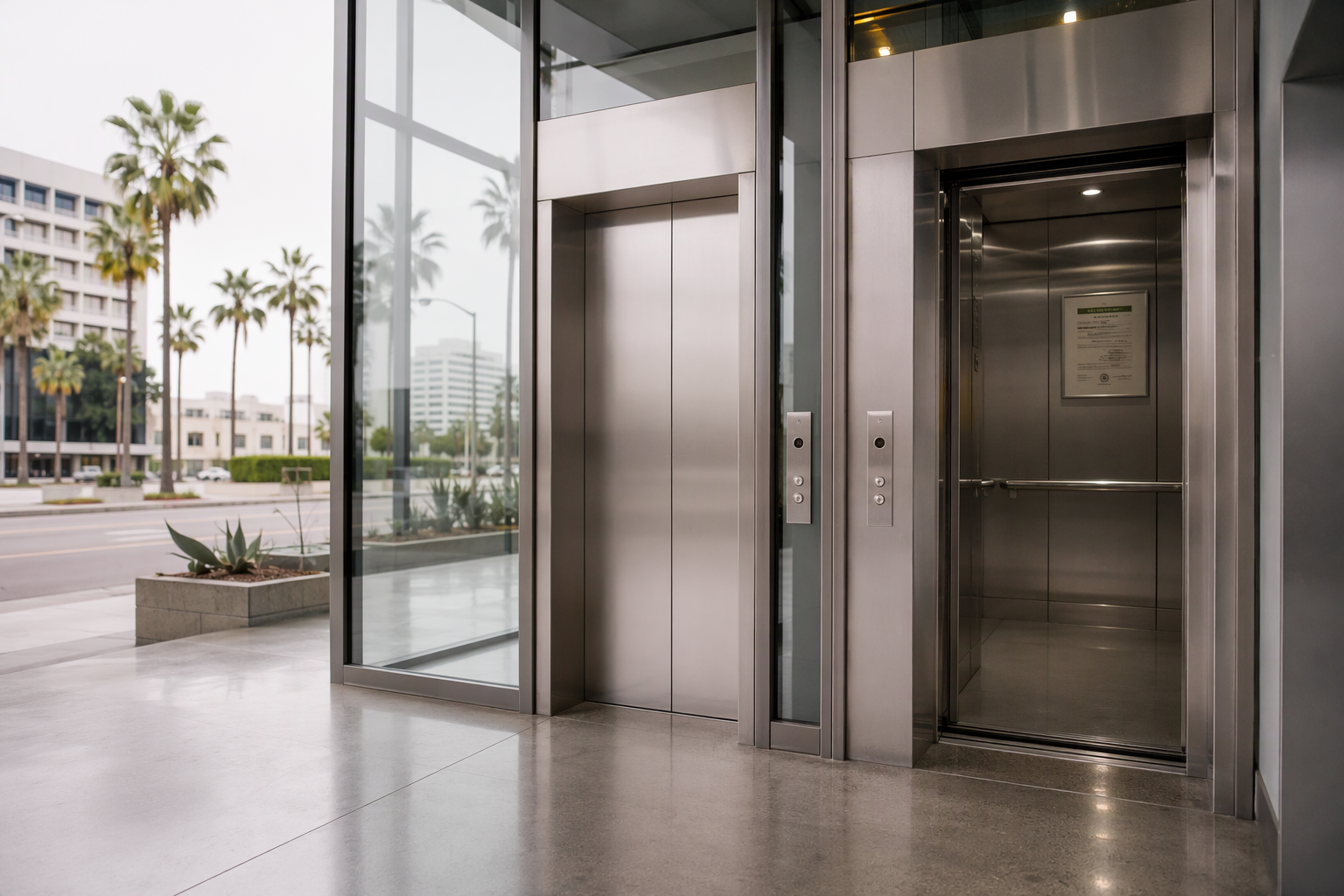
California maintains one of the most detailed elevator regulatory frameworks in the country. Building owners, property managers, and contractors operating in the state must navigate a layered system of statutes, administrative rules, adopted safety codes, and mandatory certification requirements. Understanding California elevator code is essential to keeping conveyances legal, safe, and continuously permitted to operate.
What law governs elevator safety in California?
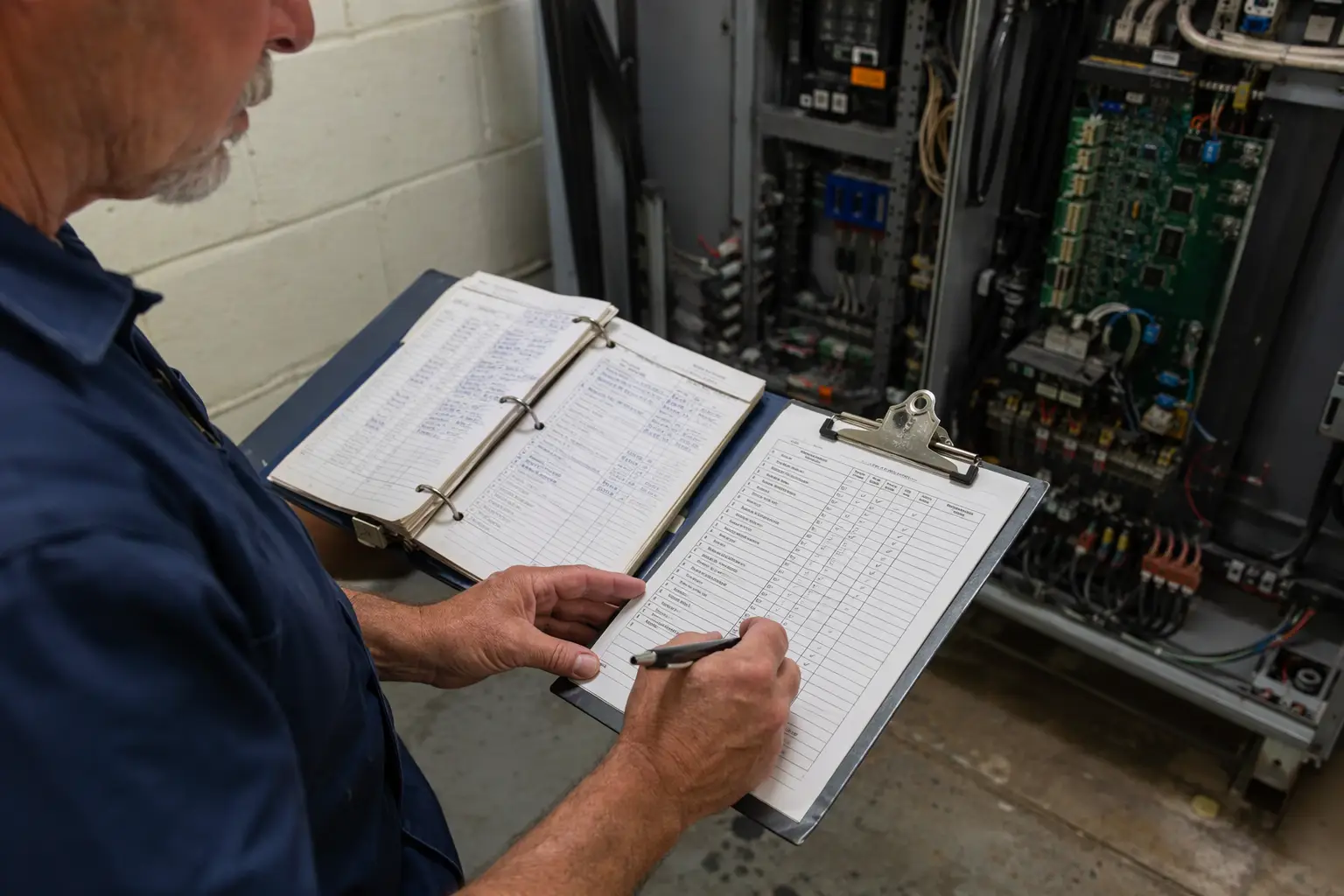
The foundational authority for elevator safety in California is Cal/OSHA’s Elevator Unit, within the California Department of Industrial Relations. The enabling statute is California Labor Code Sections 7300–7324.2. Under that statute, Cal/OSHA administers the California Code of Regulations, Title 8, Elevator Safety Orders (Sections 3000–3146), which set out the technical and procedural requirements for every conveyance in the state.
For installations placed under contract on or after May 1, 2008, California adopted the ASME A17.1/CSA B44, 2004 edition, as its Group IV Elevator Safety Orders. The ASME A17.1 Safety Code for Elevators and Escalators establishes the technical benchmarks that underpin California’s requirements. As of 2026, California has proposed a Group V update that would incorporate elements of the ASME A17.1-2019 edition; the Standards Board held a public hearing on that proposal on June 18, 2026, but no effective date has been announced.
What permits are required to operate an elevator in California?

No elevator may be operated in California without a valid, current permit to operate issued by Cal/OSHA. That permit must be posted conspicuously inside the elevator car so that passengers can verify the unit is legally authorized for use. Cal/OSHA also requires a separate permit before any conveyance is erected, installed, or materially altered — meaning contractors must obtain approval before construction begins, not simply before the unit opens to the public.
When a new elevator is installed, Cal/OSHA must inspect it and issue a permit to operate before it is placed in service. Building owners should plan permit procurement into their project timelines accordingly.
How often must California elevators be inspected?
California law requires every conveyance to be inspected at least once a year. A conveyance found to be in safe condition receives a permit to operate for up to one year. However, Cal/OSHA may issue a permit valid for up to two years when an elevator is in safe condition and covered by a full maintenance contract with a C-11 licensed elevator company — a meaningful incentive for owners to maintain comprehensive service agreements.
Arranging the annual reinspection is the elevator owner’s responsibility, not the inspector’s or the service contractor’s. Only State of California safety engineers and Certified Competent Conveyance Inspectors (CCCI) may perform these inspections.
Who is authorized to work on elevators in California?
California imposes a dual-certification requirement covering both companies and individual mechanics:
- Certified Qualified Conveyance Company (CQCC): Any company that installs, alters, tests, maintains, repairs, or services elevators in California must hold a CQCC certificate issued by Cal/OSHA. To apply, a company must submit a current C-11 Elevator Contractor license — issued by the California Contractors State License Board (CSLB) — along with proof of workers’ compensation and liability insurance.
- Certified Competent Conveyance Mechanic (CCCM): Any individual who works on a California elevator without direct supervision must hold a CCCM certificate issued by Cal/OSHA. Only a CCCM working for a CQCC may maintain, repair, alter, or replace components on a conveyance.
Both CQCC and CCCM certificates — along with conveyance inspector credentials — last two years, and renewal requires at least eight hours of continuing education. Building owners and property managers should confirm that any elevator contractor serving their property holds current CQCC certification before work begins.
Does California elevator code apply to all buildings?
California’s elevator law contains limited exemptions. Conveyances under federal jurisdiction and conveyances located in single-unit private homes that are not accessible to the public fall outside the statute’s reach. All other commercial, residential multi-unit, and publicly accessible conveyances are subject to the full requirements of the Elevator Safety Orders.
Property owners should also be aware that the City of Los Angeles operates its own elevator and conveyance inspection program through the Los Angeles Department of Building and Safety (LADBS). Building owners with equipment in Los Angeles should confirm current requirements directly with LADBS in addition to meeting Cal/OSHA requirements.
What are the consequences of operating without a valid California elevator permit?
Operating a conveyance without a current Cal/OSHA permit to operate is a violation of California Labor Code Sections 7300–7324.2 and the Title 8 Elevator Safety Orders. Cal/OSHA has authority to order a conveyance out of service, assess penalties, and require corrective action before reinspection. For building owners, an elevator that cannot be legally operated represents both a liability risk and a disruption to tenants and occupants. Maintaining a continuous, documented compliance record — including timely reinspections and a full maintenance contract — is the most reliable way to avoid permit lapses.
How does AmeriTex Elevator support California compliance?
AmeriTex Elevator operates as a certified elevator service company serving California property owners, managers, and developers. The company’s service scope includes preventive maintenance, repair, modernization, and compliance support — all performed in accordance with the California Code of Regulations, Title 8, Elevator Safety Orders and the adopted ASME A17.1 Safety Code for Elevators and Escalators.
AmeriTex Elevator supports clients across a range of building types, including commercial office buildings, healthcare facilities, multifamily residential properties, retail centers, and industrial facilities. The team assists building owners in tracking inspection schedules, maintaining documentation required by Cal/OSHA, and structuring full maintenance contracts that may qualify for extended two-year permit terms.
When California’s elevator code requirements change — such as the pending Group V Elevator Safety Orders update — AmeriTex Elevator works to keep clients informed so that equipment alterations and new installations can be planned in alignment with applicable code editions.
What should a building owner do when a California elevator fails inspection?
- Review the inspection report provided by the CCCI or Cal/OSHA safety engineer to identify each cited deficiency.
- Contact a Cal/OSHA-certified CQCC elevator contractor promptly to assess the scope of required corrections.
- Determine whether the conveyance must be taken out of service while repairs are completed, based on the nature of the violations.
- Have a CCCM-certified mechanic complete all required repairs in accordance with the Title 8 Elevator Safety Orders and the adopted ASME A17.1 code edition.
- Coordinate a reinspection with a qualified CCCI or Cal/OSHA safety engineer to verify that all deficiencies have been resolved.
- Obtain the updated permit to operate from Cal/OSHA and post it conspicuously inside the elevator car before returning the conveyance to service.
- Retain all inspection reports, repair records, and permit documents for future compliance audits.
Does federal law add any requirements beyond California elevator code?
Yes. Building owners in California must also consider federal requirements that layer on top of the state Elevator Safety Orders. The Americans with Disabilities Act (ADA) establishes accessibility standards for elevator controls, door dimensions, floor designations, and communication systems in public accommodations and commercial facilities. OSHA imposes workplace safety standards that affect elevator maintenance personnel and construction sites where elevator work is performed. Neither the ADA nor OSHA replaces California’s permit and inspection regime — both sets of requirements apply concurrently, and compliance with one does not satisfy the other.
Schedule a free consultation with AmeriTex Elevator at 844-646-9660.
Need elevator service you can rely on? AmeriTex Elevator is ready to help.