Elevator Service in Houston, TX | AmeriTex Elevator
Building owners and facility managers in Houston face a consistent challenge: they know their elevators need maintenance, but the language in service contracts can be difficult to parse. Understanding exactly what a standard elevator maintenance contract covers — and where it falls short — is essential for protecting passengers, managing liability, and staying compliant with Houston’s local elevator program. AmeriTex Elevator serves commercial, residential, and industrial properties throughout the Houston area, bringing local knowledge of the city’s requirements to every service relationship.
What Is Included in a Standard Elevator Maintenance Contract?
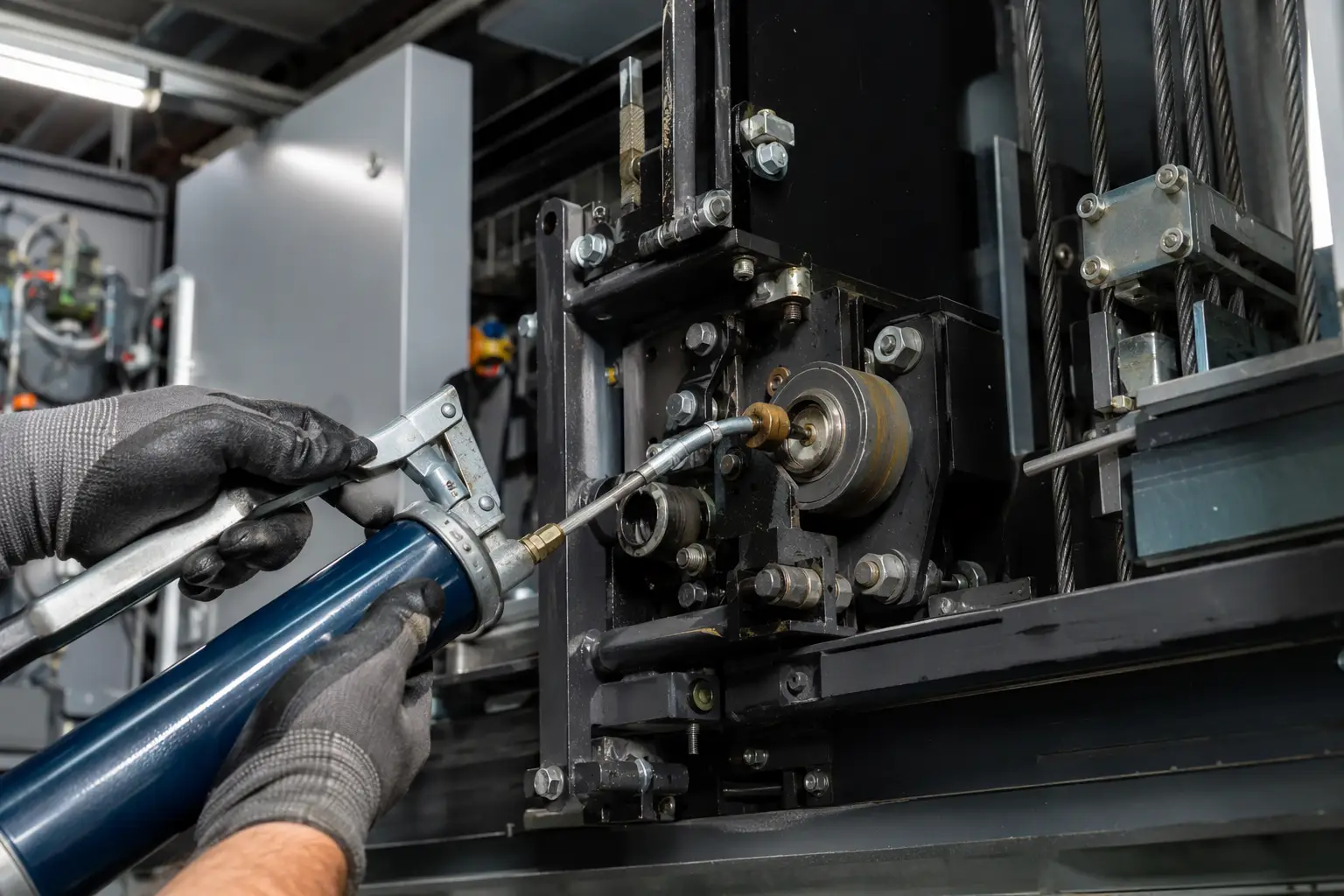
A standard elevator maintenance contract typically covers scheduled preventive maintenance visits. During each visit, a qualified technician performs lubrication of moving components, adjustment of brakes and door operators, testing of safety devices, and a general inspection of mechanical and electrical systems. The goal is to keep the elevator operating within the parameters established by the applicable safety code.
In Houston, the City runs its own elevator program independent of the statewide Texas Department of Licensing and Regulation (TDLR) elevator program. Building owners should confirm compliance requirements directly with the City of Houston, as TDLR does not regulate elevators or escalators inside Houston city limits. A maintenance contractor familiar with Houston’s local program can help owners understand current obligations and keep equipment inspection-ready.
Standard contracts generally do not include the cost of replacement parts, major repairs, or emergency callback visits outside of normal business hours. Those services are either billed separately or covered under a higher tier of service.
What Should Full-Coverage Elevator Maintenance Actually Cover?
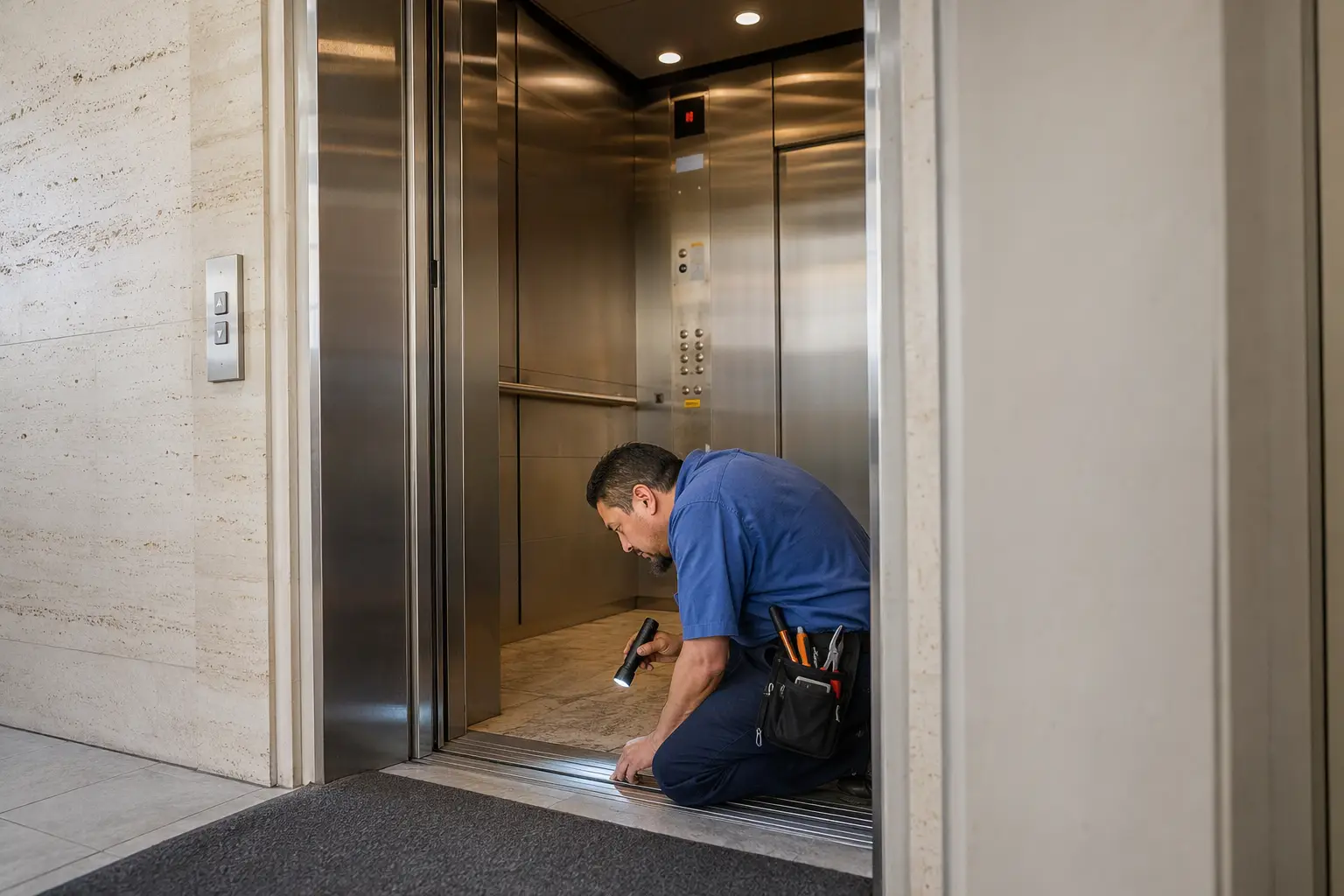
A full-coverage elevator maintenance contract is designed to remove financial uncertainty. In addition to everything included in a standard plan, full coverage should encompass:
- Parts and materials: Replacement of worn or failed components without additional invoicing, including electrical parts, door equipment, and hydraulic seals.
- Emergency callback service: Response to elevator entrapments and failures outside of scheduled visits, available on an around-the-clock basis.
- Annual safety inspection coordination: Assistance scheduling and preparing for the annual inspection required to maintain a valid Certificate of Compliance.
- Violation correction: Labor and parts to address deficiencies cited during an inspection, helping owners meet the requirement that violations be corrected or under contract for correction within 30 days of inspection.
- Category 5 testing (traction elevators): Under 16 Texas Administrative Code Chapter 74, traction elevators in Texas are required to undergo a full-load Category 5 test every five years. Full-coverage contracts should address how this mandatory test is handled and whether the associated labor is included.
- Code-compliance monitoring: Proactive review of equipment against the ASME A17.1/CSA B44 Safety Code for Elevators and Escalators and applicable local requirements.
How Do Basic and Full-Coverage Contracts Differ in Practice?
The practical difference between basic and full-coverage service becomes most apparent when something goes wrong. Under a basic contract, an unexpected parts failure or an entrapment event generates a separate service call and a separate invoice. Under a full-coverage agreement, those situations are addressed within the scope of the existing contract.
For high-traffic commercial buildings in Houston — office towers, hotels, healthcare facilities, and multifamily properties — full coverage reduces both financial exposure and administrative burden. For lower-traffic equipment, a building owner may weigh the cost of full coverage against the realistic frequency of unplanned repairs and decide accordingly. AmeriTex Elevator can walk property owners through that analysis based on equipment type, age, and usage profile.
What Are Houston Building Owners’ Inspection and Compliance Obligations?
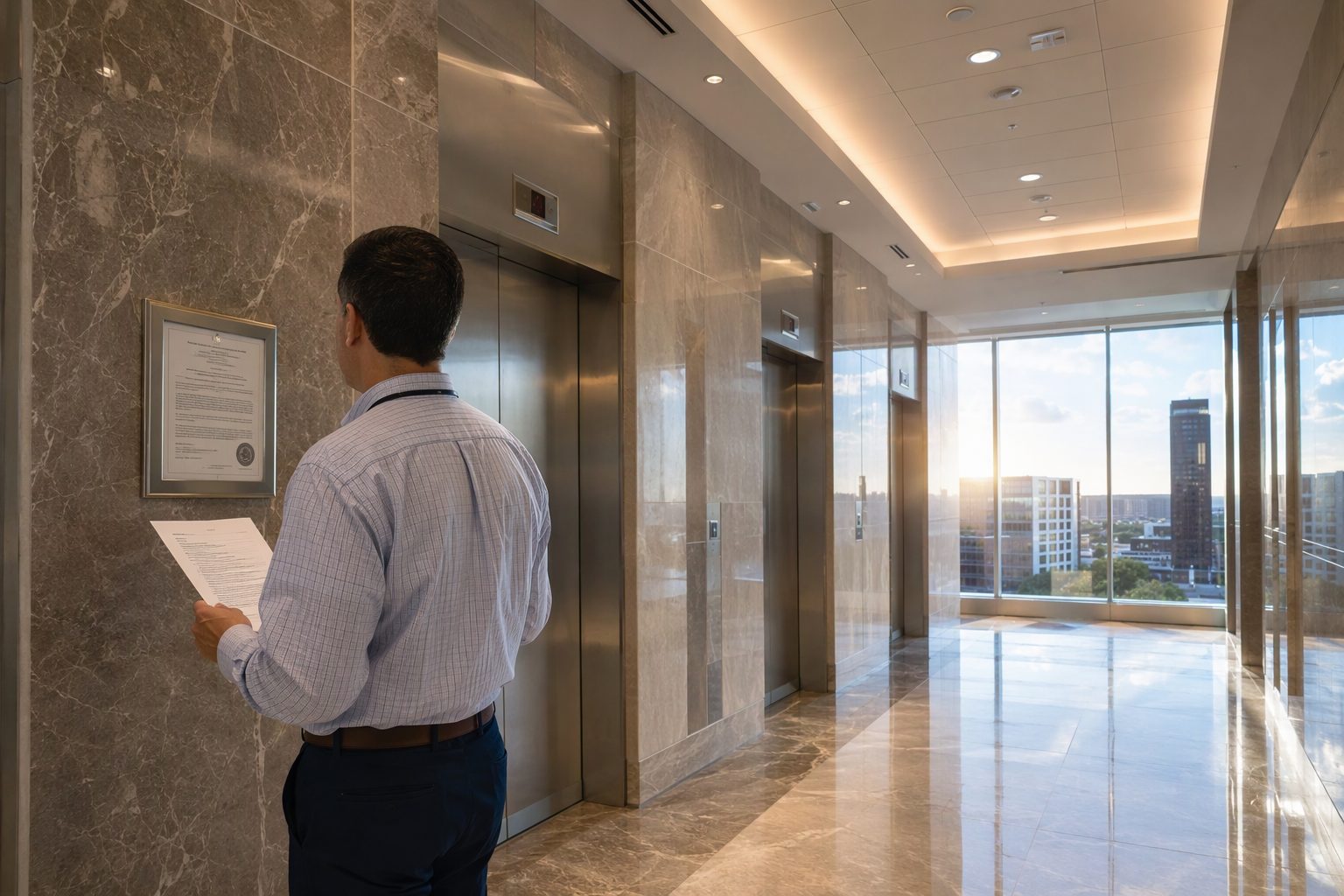
Houston operates its own elevator inspection and permitting program. Building owners should work directly with the City of Houston to confirm current inspection intervals, Certificate of Compliance requirements, and display obligations. Because TDLR does not govern equipment inside Houston city limits, statewide TDLR rules — while useful context — do not automatically apply to Houston properties.
Regardless of jurisdiction, elevator owners share a common responsibility: ensuring that equipment is maintained in a safe condition and that inspections are scheduled and completed on time. A maintenance contract with a registered contractor helps owners meet those obligations consistently.
What Should Building Owners Look for When Evaluating a Maintenance Contractor?
When reviewing a maintenance proposal, building owners in Houston should consider the following factors:
- Registration status: In Texas, a person or company may not install, repair, alter, test, or maintain elevator equipment without registering as a contractor with TDLR. For work inside Houston, owners should also confirm any additional local licensing requirements with the City.
- Insurance: Texas elevator contractors are required to carry general liability insurance of at least $1,000,000 per occurrence for bodily injury or death and $500,000 per occurrence for property damage.
- Scope clarity: The contract should explicitly define what is included and excluded — particularly around parts, emergency callbacks, and code-compliance testing.
- Local market knowledge: A contractor with established experience in Houston understands the city’s program requirements and the building stock across downtown, the Energy Corridor, the Medical Center, and surrounding commercial districts.
- Responsible party experience: Texas law requires each registered elevator contractor to designate one or two responsible parties with at least three years of elevator contractor experience.
Are There Specific Safety Systems That Must Always Be Maintained?
Yes. Certain safety systems carry immediate out-of-service consequences if they fail. Under Texas law, a passenger elevator without working door restrictors must be removed from service immediately. Similarly, a passenger elevator without firefighters’ service, or with non-working Phase One firefighters’ service, must also be removed from service immediately.
A well-structured maintenance contract — basic or full-coverage — should include routine testing of door restrictors and firefighters’ service as part of every scheduled visit. These are not optional checkpoints. Building owners should confirm that their contract explicitly addresses these systems and not assume they are covered by default.
What Happens If a Violation Is Found During an Annual Inspection?
When a Texas-registered elevator inspector identifies a violation, the building owner is responsible for having it corrected — or under contract to be corrected — within 30 days of the inspection. Owners must also report any accident involving elevator equipment to TDLR within 24 hours under Texas Health and Safety Code Chapter 754, regardless of whether the equipment is in Houston or another Texas jurisdiction.
For Houston properties, owners should follow the City’s own process for addressing inspection citations. Having an active maintenance relationship with a qualified contractor before an inspection is cited makes the correction process significantly more manageable. AmeriTex Elevator’s familiarity with Houston’s local program supports efficient coordination when violations need to be resolved.
- Review the inspection report delivered by the registered inspector within five calendar days of the inspection (this is a statewide TDLR timeline; Houston owners should confirm the city’s equivalent process).
- Identify all cited violations and assess whether they can be corrected within the applicable deadline.
- Contact your maintenance contractor immediately to schedule corrective work.
- Obtain written confirmation that the work is under contract if repairs cannot be completed before the deadline.
- Confirm that the correction has been documented and retain records for future inspections.
- For Houston properties, follow up with the City’s elevator program to ensure the Certificate of Compliance is reinstated or updated as required.
How Does AmeriTex Elevator Serve the Houston Market?
AmeriTex Elevator provides elevator maintenance, repair, and compliance support across Houston and the broader Texas market. The company’s work spans commercial office buildings, healthcare facilities, multifamily residential properties, industrial sites, and hospitality venues throughout the region. Local presence means familiarity with the City of Houston’s elevator program, the characteristics of the local building stock, and the logistical realities of maintaining equipment across a large metropolitan area.
AmeriTex Elevator offers both standard and full-coverage maintenance agreements, with contract structures designed to match the specific needs of each property. Prospective clients are encouraged to have contract language reviewed carefully against their equipment inventory and usage patterns before signing.
Schedule a free consultation with AmeriTex Elevator at 844-646-9660.
Need elevator service you can rely on? AmeriTex Elevator is ready to help.