Elevator Maintenance Contract Terms and Exclusions That Burn Building Owners

Building owners in California and Texas routinely sign elevator maintenance agreements without fully understanding what those contracts do — and do not — cover. When a repair bill arrives or a compliance violation surfaces, the exclusions buried in fine print can turn a manageable maintenance budget into a five-figure emergency expense. The sections below map out every major contract trap, the regulatory context that makes each one matter, and what to look for before signing.
What Is the Most Common Elevator Maintenance Contract Trap?
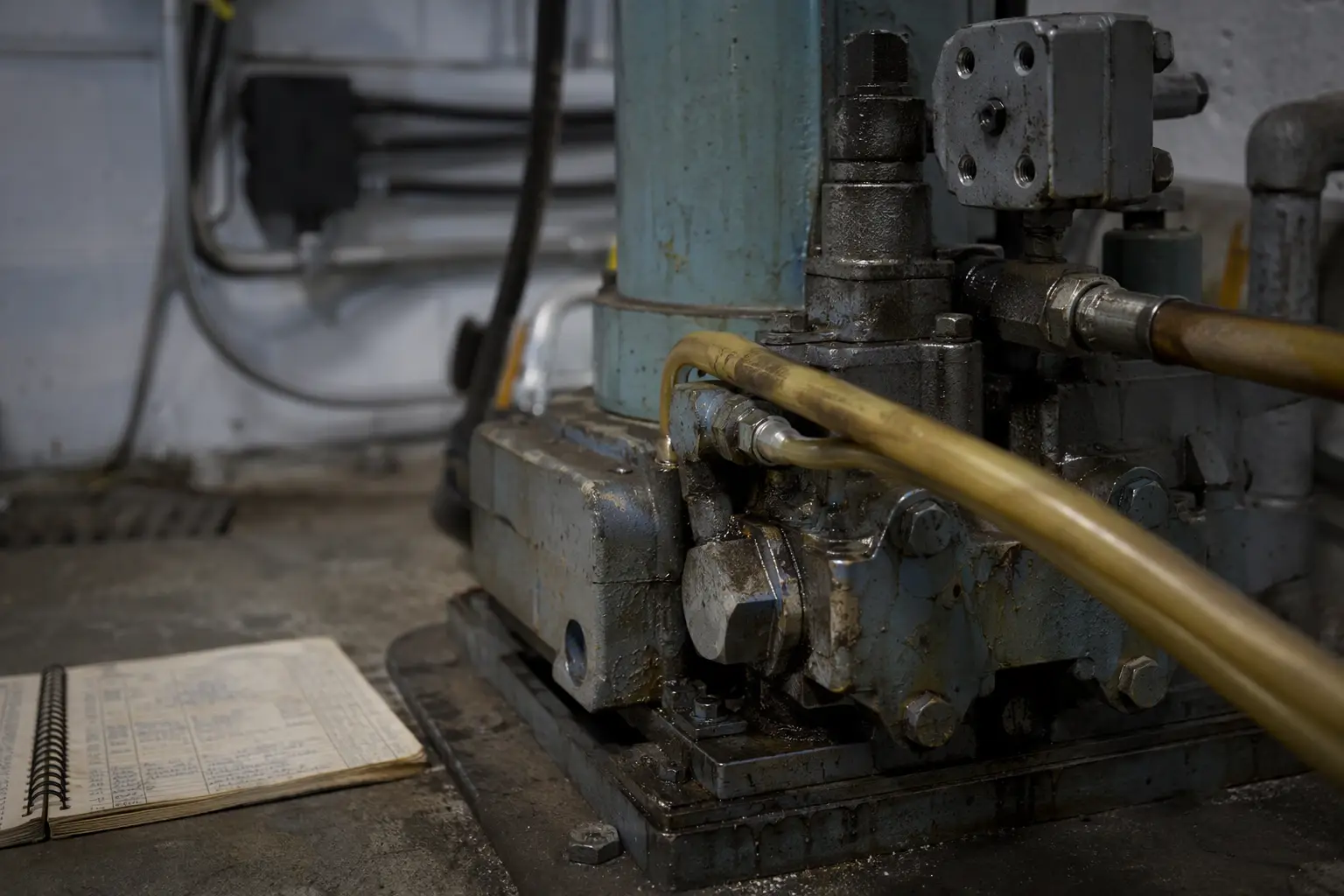
The single most common trap is the “oil, grease, and adjustments” scope — sometimes marketed as a “basic” or “lubrication only” agreement. This tier typically excludes parts, labor for repairs, hydraulic fluid, wire rope, controller components, door operators, and safety devices. When a Texas Department of Licensing and Regulation (TDLR) inspection or a Cal/OSHA inspection flags a defective door restrictor or worn safety gear, the building owner discovers the maintenance vendor has zero obligation to fix it under their contract — and must negotiate a separate repair quote at full market rates.
What makes this especially damaging is timing. In Texas, building owners must have cited violations corrected or under contract to be corrected within 30 days of the inspection. In California, the building owner bears direct responsibility for arranging the annual reinspection and ensuring the unit is in safe operating condition. A narrow-scope contract leaves owners scrambling to find emergency repair authorization under deadline pressure, which eliminates negotiating leverage.
What Are the Most Dangerous Parts-Exclusion Clauses in Elevator Contracts?
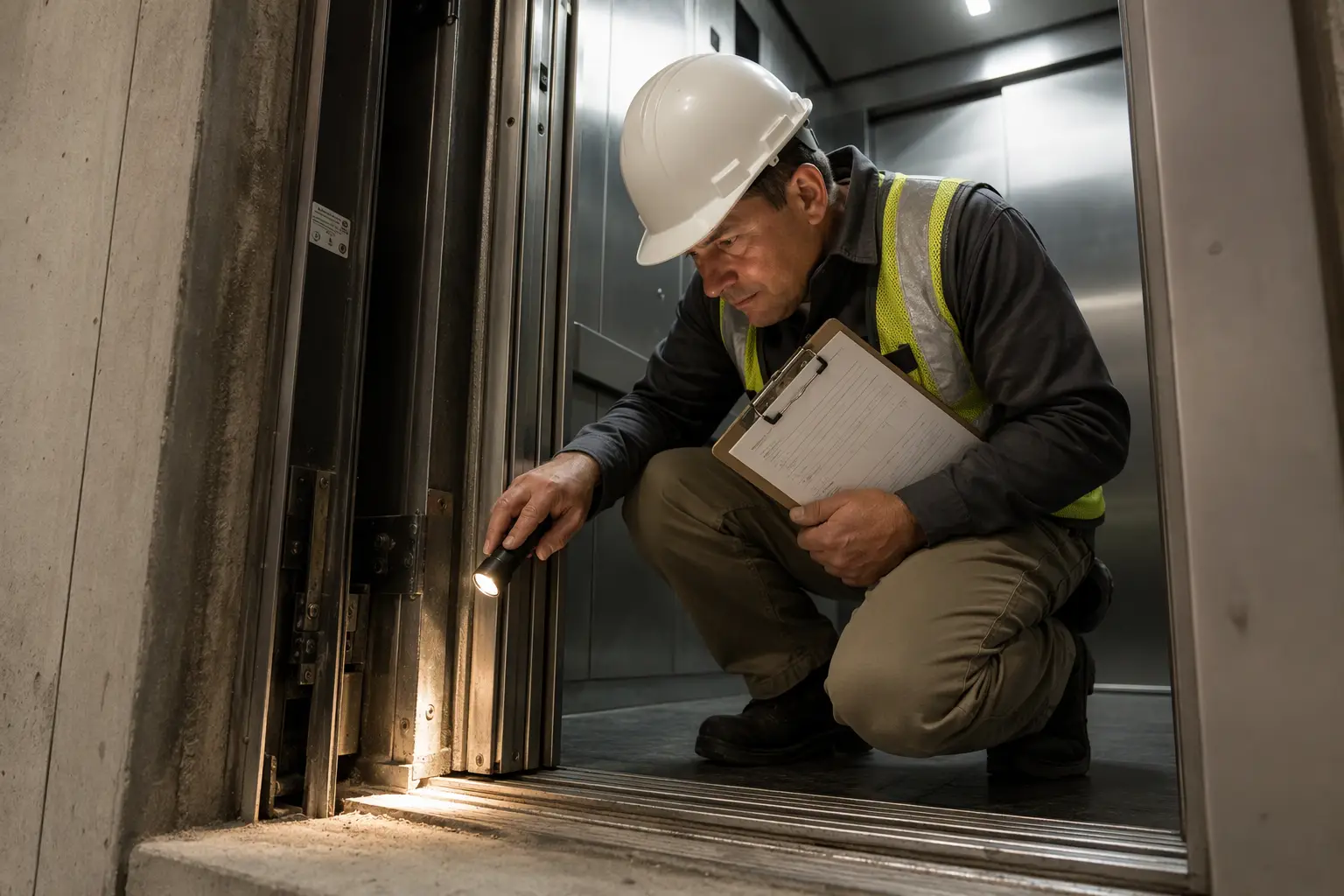
Parts exclusions vary widely by contract tier, and vendors do not always use consistent language. The categories below represent the most consequential exclusions building owners encounter across California and Texas markets:
- Hydraulic components and fluid: Hydraulic elevators require periodic fluid replacement and can develop cylinder or valve leaks. Contracts that exclude hydraulic fluid and cylinder seals expose owners to substantial unplanned costs.
- Hoist ropes and wire rope: Wire rope on traction elevators degrades over time and must be replaced when it reaches discard criteria under ASME A17.1/CSA B44 Safety Code for Elevators and Escalators. Many basic contracts exclude rope replacement entirely.
- Controller circuit boards and software: Modernization-era controllers depend on proprietary circuit boards. Some vendors exclude “electronic components” broadly, covering boards that can cost thousands of dollars per card.
- Door operators, door gibs, and sill inserts: Door-related failures are among the most frequent reasons an elevator is cited during inspection. Exclusions on door operator motors, rollers, and gibs shift the full repair cost to the building owner.
- Safety devices — governors, safeties, and buffers: These are tested during periodic safety tests. Texas requires a Category 5 full-load test every five years on electric traction elevators. California’s annual inspection cycle also evaluates these devices. Contracts that exclude safety device repair or replacement are particularly risky because these items are non-negotiable compliance items.
- Firefighters’ service (Phase I and Phase II) components: In Texas, a passenger elevator with non-working Phase One firefighters’ service must be removed from service immediately. If the contract excludes the relay panels, switches, and wiring that govern firefighters’ service, a single component failure can trigger a mandatory shutdown.
How Do Automatic Renewal and Cancellation Clauses Hurt Building Owners?
Multi-year elevator maintenance contracts routinely include automatic renewal language that rolls the agreement forward — often for another full term — if the owner fails to provide written notice of cancellation within a specific window, commonly 60 to 180 days before expiration. Missing this window by even one day can lock a building owner into another year or more of service with the same vendor at the same (or escalated) pricing.
Compounding the problem, cancellation penalties frequently include:
- Removal of proprietary parts that the vendor installed under the contract, leaving the unit inoperable or requiring immediate re-sourcing of components.
- Clawback clauses that require repayment of discounts or credits extended during the contract term.
- Early termination fees calculated as a percentage of remaining contract value, sometimes amounting to tens of thousands of dollars on a full-service agreement covering multiple units.
Building owners should calendar their cancellation notice windows at the moment of contract execution and review renewal terms annually — not just when problems arise.
What Does a “Full Maintenance” Contract Actually Include?
The term “full maintenance” is a marketing label, not a legally defined standard. Two vendors can both offer “full maintenance” agreements with dramatically different scopes. A meaningful full maintenance contract for California and Texas building owners should specify in writing:
- All labor for routine maintenance visits, including frequency (commonly monthly or quarterly depending on unit type and usage)
- All parts coverage, including which categories — if any — are excluded
- Coverage for annual inspection preparation and any repairs required to pass the Cal/OSHA annual inspection or the TDLR annual inspection
- Coverage for the five-year Category 5 full-load test on traction elevators in Texas
- Emergency callback response scope and what qualifies as a billable versus covered callback
- Modernization exclusions — most contracts explicitly exclude modernization work even when it is recommended by an inspector
In California, Cal/OSHA may issue a permit to operate for up to two years — rather than the standard one-year permit — for an elevator in safe condition that is covered by a full maintenance contract with a Certified Qualified Conveyance Company (CQCC) holding a C-11 contractor license. This two-year permit benefit is available only if the contract genuinely qualifies as full maintenance under Cal/OSHA standards, not simply because a vendor labels it that way.
What Regulatory Compliance Gaps Do Maintenance Contracts Often Leave?
Maintenance contracts address the mechanical condition of a unit, but compliance obligations extend beyond what any maintenance vendor controls. Building owners in California and Texas remain responsible for the following, regardless of their maintenance contract:
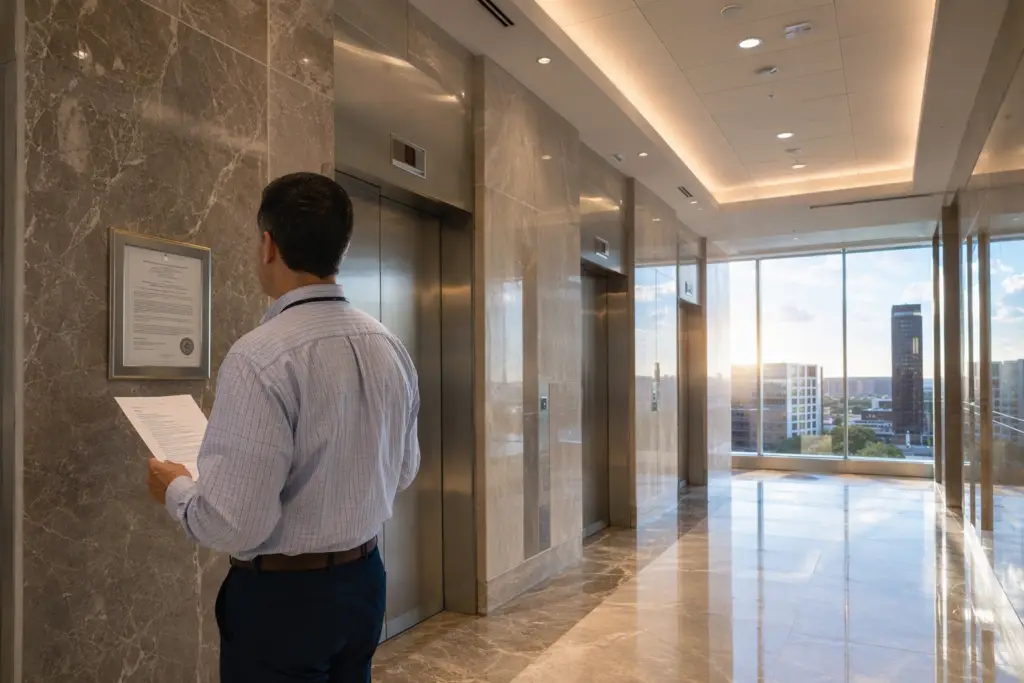
In California: Under Cal/OSHA’s Elevator Unit, governed by California Labor Code Sections 7300–7324.2 and the California Code of Regulations, Title 8, Elevator Safety Orders, the building owner is responsible for arranging the annual reinspection. No elevator may operate without a valid permit to operate issued by Cal/OSHA. The permit must be posted conspicuously in the elevator car. Only State of California safety engineers and Certified Competent Conveyance Inspectors (CCCI) may perform these inspections. A maintenance contract does not transfer the owner’s scheduling and posting obligations to the vendor.
In California (Los Angeles): Los Angeles runs its own elevator and conveyance inspection program through the Department of Building and Safety (LADBS). Building owners with elevators in the City of Los Angeles should verify their compliance obligations directly with LADBS, as requirements may differ from the statewide Cal/OSHA program.
In Texas: Under the Texas Department of Licensing and Regulation (TDLR) Elevator and Escalator Safety program, governed by Texas Health and Safety Code Chapter 754 and 16 Texas Administrative Code Chapter 74, building owners must obtain a TDLR Certificate of Compliance for each unit annually. The building owner has the sole right to select the elevator inspector — the inspector is not provided by the maintenance contractor. Texas owners must also report accidents involving elevator equipment to TDLR within 24 hours.
In Houston: TDLR does not regulate elevators inside Houston city limits. The City of Houston runs its own elevator program. Building owners with units in Houston must verify their inspection and compliance obligations with the city directly.
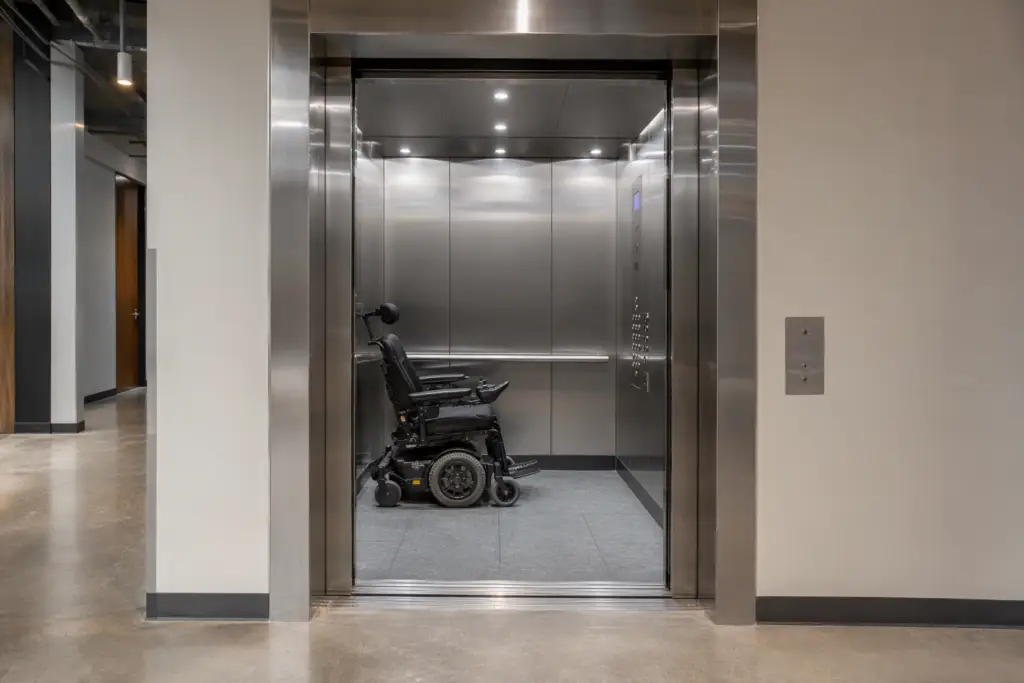
ADA compliance: The Americans with Disabilities Act imposes accessibility requirements on elevators in public accommodations and commercial facilities. ADA compliance issues — including control panel height, braille, and door timing — are almost universally excluded from maintenance contracts and are the building owner’s separate legal obligation.
What Hidden Escalation Clauses Drive Up Contract Costs Over Time?
Multi-year contracts frequently contain annual price escalation provisions tied to indices such as the Consumer Price Index (CPI) or a fixed percentage escalator, commonly between 3% and 7% per year. Over a five-year contract term, compounding escalators can produce a contract cost in year five that is meaningfully higher than the year-one baseline the owner used to evaluate the agreement at signing.
Some contracts combine a fixed escalator with a “materials surcharge” clause that allows additional increases when parts costs rise — creating a double escalation mechanism. Building owners should negotiate a cap on annual increases and require disclosure of any surcharge triggers before execution.
What Should Building Owners Do Immediately After Receiving an Inspection Violation?
- Read the inspection report carefully and identify every cited item with its required correction timeline. In Texas, the inspector must deliver the report within five calendar days of the inspection.
- Pull the maintenance contract and cross-reference each cited item against the parts and labor coverage schedule to determine which corrections the vendor is obligated to perform at no additional charge.
- Contact the maintenance vendor in writing within 48 hours to establish which items fall under the contract and request a written repair schedule.
- For items excluded from the contract, obtain at least two independent repair quotes immediately — do not rely solely on the incumbent vendor’s pricing under time pressure.
- In Texas, ensure all corrections are either completed or formally under contract to be corrected within 30 days of the inspection date, or pursue a waiver or delay from TDLR. Document every step in writing.
- In California, do not operate the elevator if Cal/OSHA has indicated the unit is unsafe. Coordinate with the inspector and vendor to clear the violation before the reinspection.
- File all corrected inspection documentation and updated permits in the building’s compliance records and ensure the permit or certificate is properly posted.
What Proprietary Parts Lock-In Strategies Do Vendors Use?
Some elevator maintenance vendors install proprietary controller software, communication boards, or encoded components that cannot be sourced from independent suppliers. When the contract ends or the vendor relationship deteriorates, the building owner may find that competitive bidding for maintenance or repairs is functionally impossible because only the original vendor can supply the components the system requires.
This is not inherently a deceptive practice — some proprietary systems offer genuine performance advantages — but it becomes a problem when building owners are unaware of the dependency at contract signing. Before executing any agreement, owners should ask the vendor in writing whether any components to be installed or serviced under the contract are proprietary to that vendor and what the ownership and access terms are for any software or encoded components.
How Do Callback and Emergency Service Exclusions Create Unexpected Costs?
Even contracts that cover parts and labor for scheduled maintenance often limit emergency callback coverage. Common exclusions include:
- Callbacks during non-business hours: Evening, weekend, and holiday callbacks may be excluded or subject to additional hourly charges, even under agreements marketed as full maintenance.
- Callbacks attributed to “owner misuse” or vandalism: Vendors frequently reserve the right to bill for callbacks when they determine the cause was misuse, vandalism, or a third-party modification — a determination made unilaterally by the vendor.
- Passenger entrapment not covered as emergency: Some contracts distinguish between a “callback” (unit stops, no entrapment) and an “emergency” (entrapment) and apply different billing terms to each. OSHA addresses general duty obligations for employer safety, and building owners have independent liability exposure when entrapments are prolonged. Understanding whether entrapment response is covered and at what service level matters significantly.
What Should Building Owners Verify About a Vendor’s Credentials Before Signing?
In California, every company that installs, alters, tests, maintains, repairs, or services elevators must be certified by Cal/OSHA as a Certified Qualified Conveyance Company (CQCC). The company must also hold a C-11 Elevator Contractor license issued by the California Contractors State License Board (CSLB). Anyone performing unsupervised work on a California elevator must be certified by Cal/OSHA as a Certified Competent Conveyance Mechanic (CCCM). Signing a maintenance contract with a company that lacks current CQCC certification or whose mechanics lack CCCM certification creates compliance exposure for the building owner and may invalidate the two-year permit benefit.
In Texas, every person or company that installs, repairs, alters, tests, or maintains elevator equipment must be registered as a contractor with TDLR. Texas elevator contractor registrations expire annually. Building owners should verify that the vendor’s TDLR contractor registration is current before execution and at each annual renewal. Texas elevator contractors are also required to carry general liability insurance of at least $1,000,000 per occurrence for bodily injury or death and $500,000 per occurrence for property damage — building owners should request current certificates of insurance.
What 2025–2026 Industry Trends Are Changing Elevator Maintenance Contract Terms?
Several qualitative trends are reshaping how maintenance contracts are structured in California and Texas heading into 2026:
Remote monitoring and IoT integration: Vendors are increasingly embedding remote monitoring platforms into maintenance agreements. These systems can provide real-time fault data and predictive maintenance indicators, but contracts may include data ownership provisions that restrict the building owner’s ability to share operational data with competing vendors — a subtle form of lock-in.
Code modernization pressure: California has proposed a Group V update to its Elevator Safety Orders that would incorporate elements of ASME A17.1-2019 in part; a public hearing was held in June 2026 and no effective date has been posted. Texas adopted ASME A17.1/CSA B44, 2016 edition effective November 1, 2018, as amended by 16 TAC §74.100(b). As code editions update, maintenance contracts that do not include language addressing code-required upgrades may leave building owners bearing the full cost of compliance modifications that surface during inspections.
Labor and parts cost volatility: Supply chain pressures on elevator components and skilled mechanic availability have made fixed-price multi-year agreements more difficult for vendors to sustain without broad escalation clauses. Building owners should expect increased pressure from vendors to include open-ended materials surcharges in new agreements.
Vendor consolidation: Regional consolidation in the elevator services industry means that independent local contractors are increasingly acquired by national firms. When this occurs mid-contract, building owners should review whether their agreement contains assignment provisions that allow the vendor to transfer the contract to a successor entity without the owner’s consent.
How Does AmeriTex Elevator Approach Contract Transparency?
AmeriTex Elevator operates as a data-driven elevator service provider in California and Texas, applying regulatory and technical knowledge to help building owners understand what their maintenance agreements actually require and what gaps may exist. Rather than relying on generic contract templates, AmeriTex Elevator’s approach centers on matching contract scope to the specific unit type, usage profile, age, and compliance history of each installation — so building owners understand exactly what is and is not covered before they sign.
When reviewing an existing contract or preparing to bid a new one, AmeriTex Elevator cross-references the contract scope against the current inspection and compliance requirements applicable under Cal/OSHA for California properties and TDLR for Texas properties, ensuring owners can identify exclusions that would leave them exposed during the annual inspection cycle or the five-year Category 5 test on Texas traction elevators.
What Questions Should Building Owners Ask Before Signing an Elevator Maintenance Contract?
- Is every category of parts covered or excluded explicitly listed in the contract, or does the contract use broad undefined exclusion language?
- Does the contract cover all repairs required to pass the annual Cal/OSHA or TDLR inspection at no additional charge?
- Does the contract cover the five-year Category 5 full-load test for traction elevators in Texas?
- What is the cancellation notice period, and what penalties apply if the owner misses it?
- Does the contract auto-renew, and for what term?
- What is the annual price escalation mechanism, and is there a cap?
- Are emergency and after-hours callbacks covered, and are there exclusions or surcharges?
- Does the vendor hold current CQCC certification and C-11 license in California, or current TDLR contractor registration in Texas?
- Are any installed components proprietary, and what happens to access when the contract ends?
- Does the contract contain an assignment clause that allows transfer to a successor entity without owner consent?
Building owners who cannot get written, specific answers to these questions before signing should treat that difficulty as a meaningful signal about how disputes will be handled during the contract term.
Contact AmeriTex Elevator for a free elevator assessment at 844-646-9660.
Need elevator service you can rely on? AmeriTex Elevator is ready to help.