Elevator Service in Houston, TX | AmeriTex Elevator
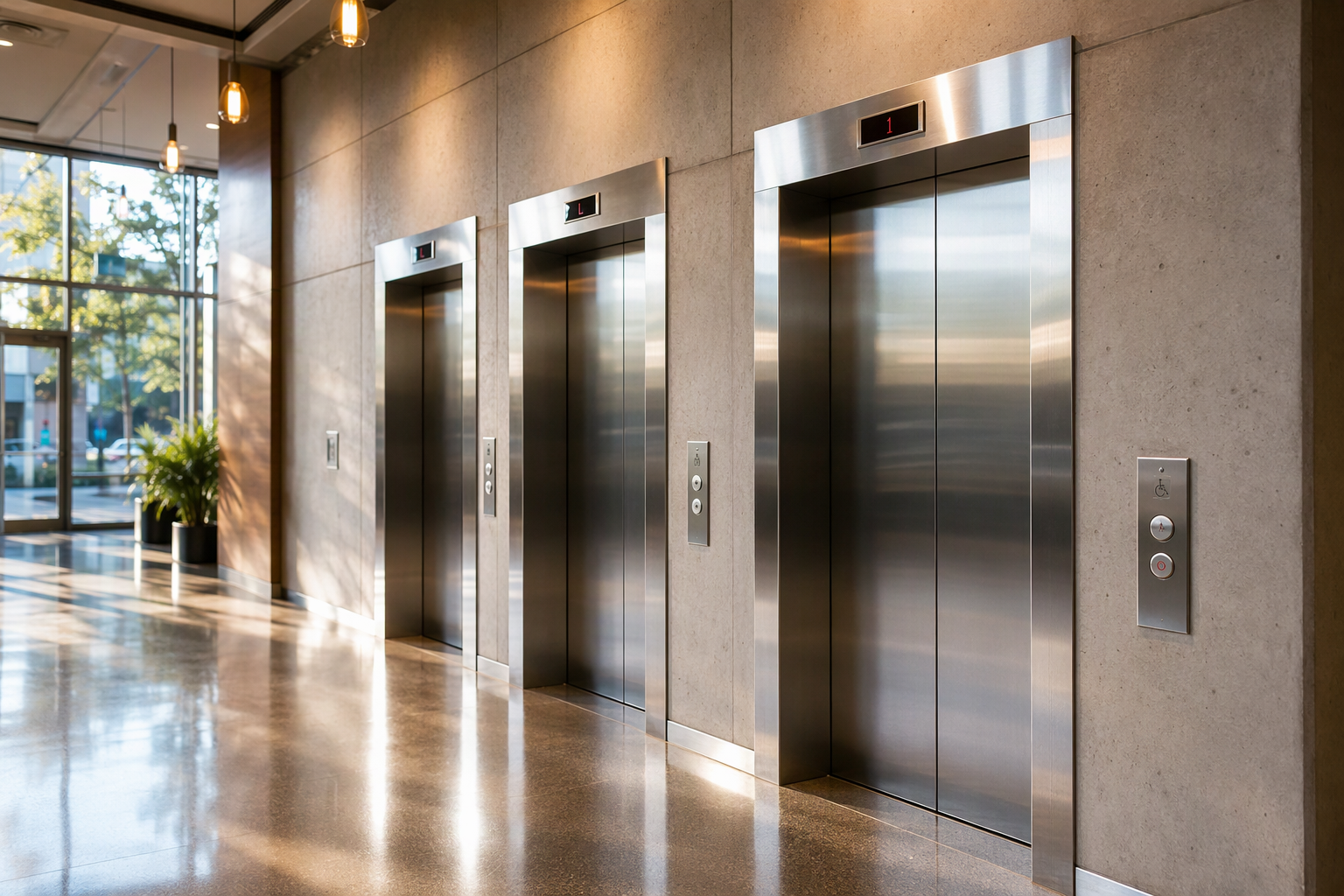
Commercial property owners and facility managers in Houston, TX face a layered compliance picture when it comes to elevators: federal ADA standards set the accessibility floor, while local Houston regulations govern inspections and certificates of compliance. AmeriTex Elevator helps commercial buildings navigate both layers, from initial code assessments through ongoing maintenance and modernization work.
What Does the ADA Require for Elevators in Commercial Buildings?
The Americans with Disabilities Act (ADA) requires that elevators in commercial buildings be accessible to individuals with disabilities. Key requirements under ADA Standards for Accessible Design include:
- Elevator access: Multi-story commercial buildings that are open to the public or house commercial tenants generally must provide at least one accessible elevator connecting all floors, unless a specific exemption applies (such as the two-story, under-3,000-square-foot exception for certain private facilities).
- Cab dimensions: The elevator car must be large enough to accommodate a wheelchair user and allow maneuvering room for entry and exit.
- Door clear width: Hoistway and cab doors must provide a minimum clear opening width to allow wheelchair passage.
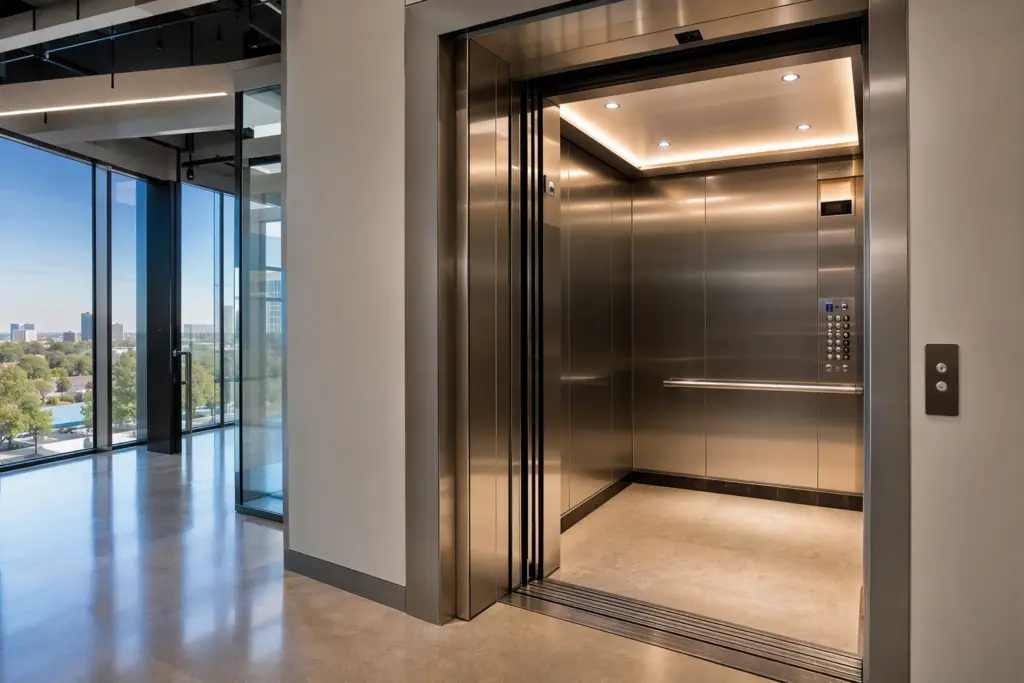
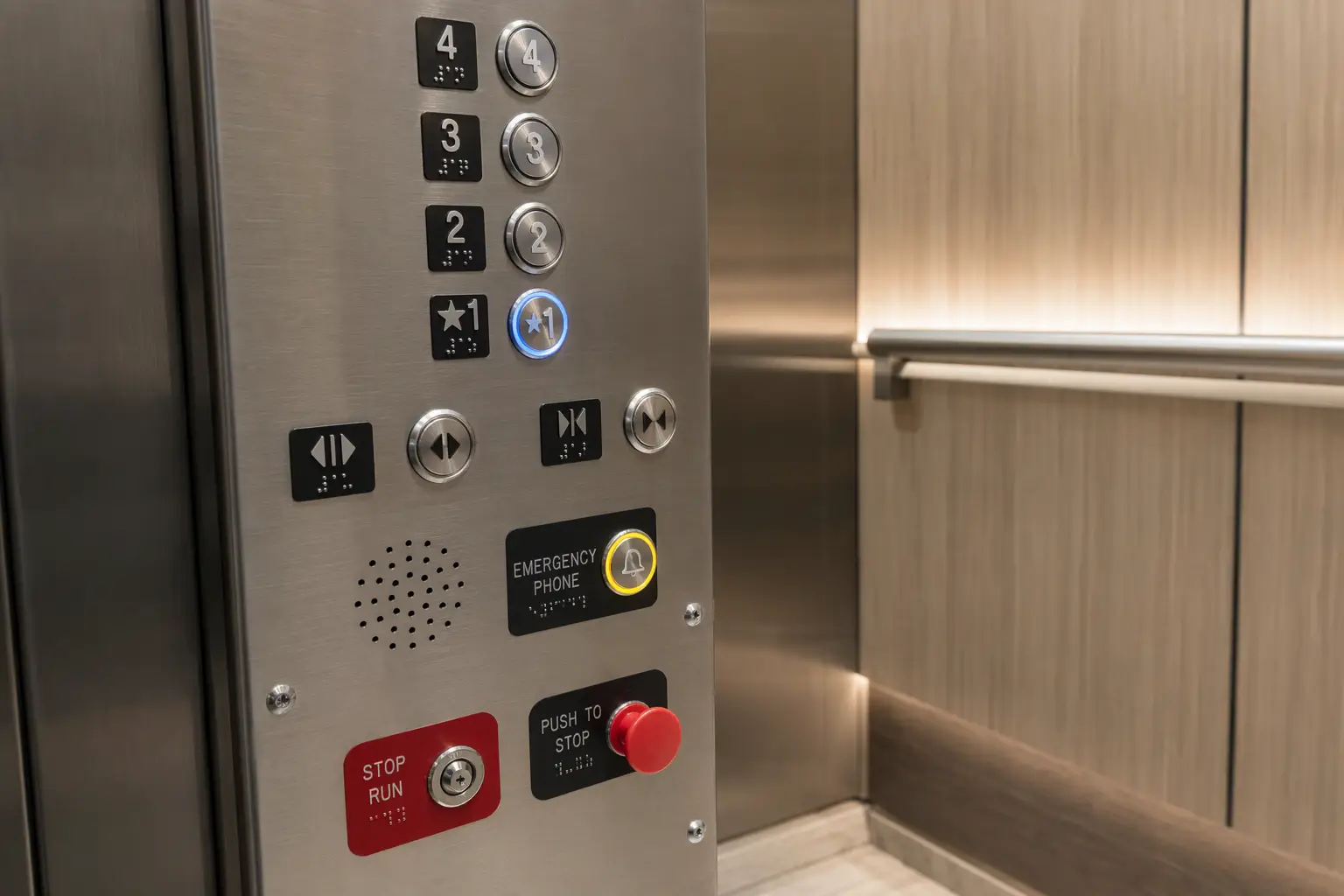
- Control panel height: Floor buttons, emergency controls, and other operable controls must be mounted within reach ranges accessible to a seated user.
- Visual and tactile indicators: Floor buttons must have raised characters and Braille, and hall lanterns or audible signals must indicate car arrival and direction of travel.
- Two-way emergency communication: An ADA-compliant two-way communication system must be provided in the elevator cab so that a person with a hearing or speech impairment can summon emergency assistance.
- Leveling and door timing: The car must level accurately with landings, and door-open timing must allow sufficient time for a person using a mobility device to enter and exit.
ADA requirements apply to new construction and to alterations of existing elevators. When a commercial building undergoes renovation that triggers accessibility upgrades, elevator compliance is typically part of that review.
How Do Houston’s Local Elevator Rules Interact with ADA Requirements?
In Texas, the Texas Department of Licensing and Regulation (TDLR) administers the statewide elevator and escalator safety program under Texas Health and Safety Code Chapter 754 and 16 Texas Administrative Code Chapter 74. However, TDLR does not regulate elevators or escalators inside Houston city limits. The City of Houston runs its own elevator inspection and permitting program.
This means Houston commercial building owners work with the City of Houston — not TDLR — for elevator inspections, certificates of compliance, and local code enforcement. ADA requirements exist alongside and independently of Houston’s local program: a building can pass a local safety inspection and still have ADA deficiencies, or vice versa. AmeriTex Elevator evaluates both dimensions when assessing a commercial elevator’s compliance status.
What ASME Code Standards Apply to Commercial Elevators in Houston?
Across the state of Texas (outside Houston’s jurisdiction), TDLR has adopted the ASME A17.1/CSA B44 Safety Code for Elevators and Escalators, 2016 edition, as amended by 16 TAC §74.100(b), effective November 1, 2018. This code governs the technical design, construction, installation, and performance of elevators in commercial buildings statewide.
Because the City of Houston operates its own program, the specific code edition and local amendments Houston has adopted have not been independently verified — commercial building owners should confirm current requirements directly with the City of Houston. AmeriTex Elevator’s technicians stay current on both the ASME A17.1 standard and local Houston requirements to ensure that maintenance and modernization work meets the applicable technical baseline.
What Inspections and Certificates Does a Houston Commercial Building Owner Need?
Because the City of Houston runs its own elevator program, building owners within Houston city limits must obtain certificates of compliance and arrange inspections through that local program rather than through TDLR. Outside of Houston, Texas law requires:
- Annual inspection by a TDLR-registered elevator inspector (selected by the building owner).
- A TDLR Certificate of Compliance for each unit of equipment, valid for one year, displayed in a publicly visible area of the building.
- Cited violations corrected or under contract for correction within 30 days of inspection, or a waiver or delay obtained from TDLR.
- Accident reporting to TDLR within 24 hours of any incident involving elevator equipment.
- A Category 5 full-load test every five years for electric (traction) elevators.
For Houston commercial buildings, owners should contact the City of Houston directly to confirm current inspection intervals, certificate requirements, and enforcement procedures. AmeriTex Elevator can help coordinate the inspection-readiness process and ensure the equipment is in proper condition before an inspector arrives.
What Happens If an Elevator Must Be Taken Out of Service?
Under Texas law (applicable in areas regulated by TDLR), a passenger elevator must be removed from service immediately if it lacks working door restrictors or if firefighters’ service (Phase One) is absent or non-functional. These are non-negotiable safety requirements, not items that can be deferred.
When an out-of-service condition is identified, the following steps help building owners respond appropriately:
- Secure the elevator and prevent public access immediately.
- Post clear notice that the elevator is out of service to protect building occupants and visitors.
- Assess whether ADA-required accessible routes remain available via another elevator or lift; if not, notify affected tenants and visitors and take steps to restore accessible access as quickly as possible.
- Contact a registered elevator contractor — such as AmeriTex Elevator — to diagnose the deficiency and develop a repair plan.
- Document the deficiency and the corrective action taken for your compliance records.
- Confirm with the applicable authority (City of Houston or TDLR, depending on location) whether a formal out-of-service notification or permit for repair is required before work begins.
- Return the elevator to service only after the deficiency has been corrected and the unit has been cleared by the appropriate authority.
How Does ADA Two-Way Emergency Communication Work in a Commercial Elevator?
The ADA requires a two-way communication system in elevator cabs that allows a person with a hearing or speech impairment to request emergency assistance. This typically means the system must have both audible and visual components — for example, a lighted indicator that confirms a call has been received, along with text-based or visual response capability.
Standard analog phone-based emergency call systems may not fully satisfy ADA requirements if they provide only voice communication. As commercial buildings upgrade aging elevator systems, ensuring the emergency communication equipment meets current ADA accessibility standards is an important part of the modernization scope. AmeriTex Elevator evaluates emergency communication systems during maintenance assessments and can advise on upgrades that bring a cab into ADA compliance.
What Commercial Building Types in Houston Need ADA-Compliant Elevators?
ADA elevator requirements apply broadly to commercial facilities open to the public and to facilities used by employers with employees, including:
- Office buildings and professional service facilities
- Retail and shopping centers
- Hotels and hospitality properties
- Healthcare and medical office buildings
- Industrial and warehouse facilities with office or public-access components
- Educational and civic buildings
- Mixed-use residential and commercial developments
Houston’s commercial real estate market spans all of these categories, and AmeriTex Elevator serves property owners, facility managers, and building operators across the Houston metro area. Whether the project involves a high-rise office tower, a mid-rise medical building, or a neighborhood retail center, the ADA compliance requirements are the same federal standard regardless of building size or age.
How Can a Building Owner Stay Ahead of ADA and Local Compliance Requirements?
Proactive maintenance and regular compliance assessments are the most effective way to avoid costly emergency repairs, ADA violations, and certificate lapses. A structured approach includes:
- Scheduling a baseline ADA accessibility audit of all elevator cabs, controls, signage, and emergency communication systems.
- Reviewing current certificates of compliance and inspection records to confirm everything is current and properly posted.
- Establishing a full-maintenance contract with a qualified elevator contractor to keep equipment in reliable, inspection-ready condition throughout the year.
- Planning ahead for the five-year Category 5 full-load test required for electric traction elevators under the ASME A17.1 standard.
- Budgeting for modernization work when aging equipment can no longer be economically maintained in ADA-compliant condition.
- Keeping detailed maintenance and repair records to demonstrate due diligence in the event of a complaint, inspection, or legal inquiry.
AmeriTex Elevator provides maintenance programs, compliance evaluations, modernization services, and emergency repair support to commercial building owners throughout Houston, TX. The company is registered as an elevator contractor under applicable Texas requirements, carries the insurance coverage required by Texas elevator contractor law, and maintains the technical qualifications required to work on commercial elevator equipment.
Schedule a free consultation with AmeriTex Elevator at 844-646-9660.
Need elevator service you can rely on? AmeriTex Elevator is ready to help.