Getting an elevator permit approved for a new installation in Texas or California involves multiple agency touchpoints, code compliance reviews, and inspections — each of which adds time to a project schedule. Understanding exactly where delays occur, what each state’s regulatory framework requires, and how to prepare documentation correctly is critical to keeping a construction timeline on track. This guide breaks down the permit process in both states, compares the two systems side by side, and explains how working with an experienced, compliant elevator service company helps owners avoid costly setbacks.
How Does the Texas Elevator Permit Process Work for a New Installation?
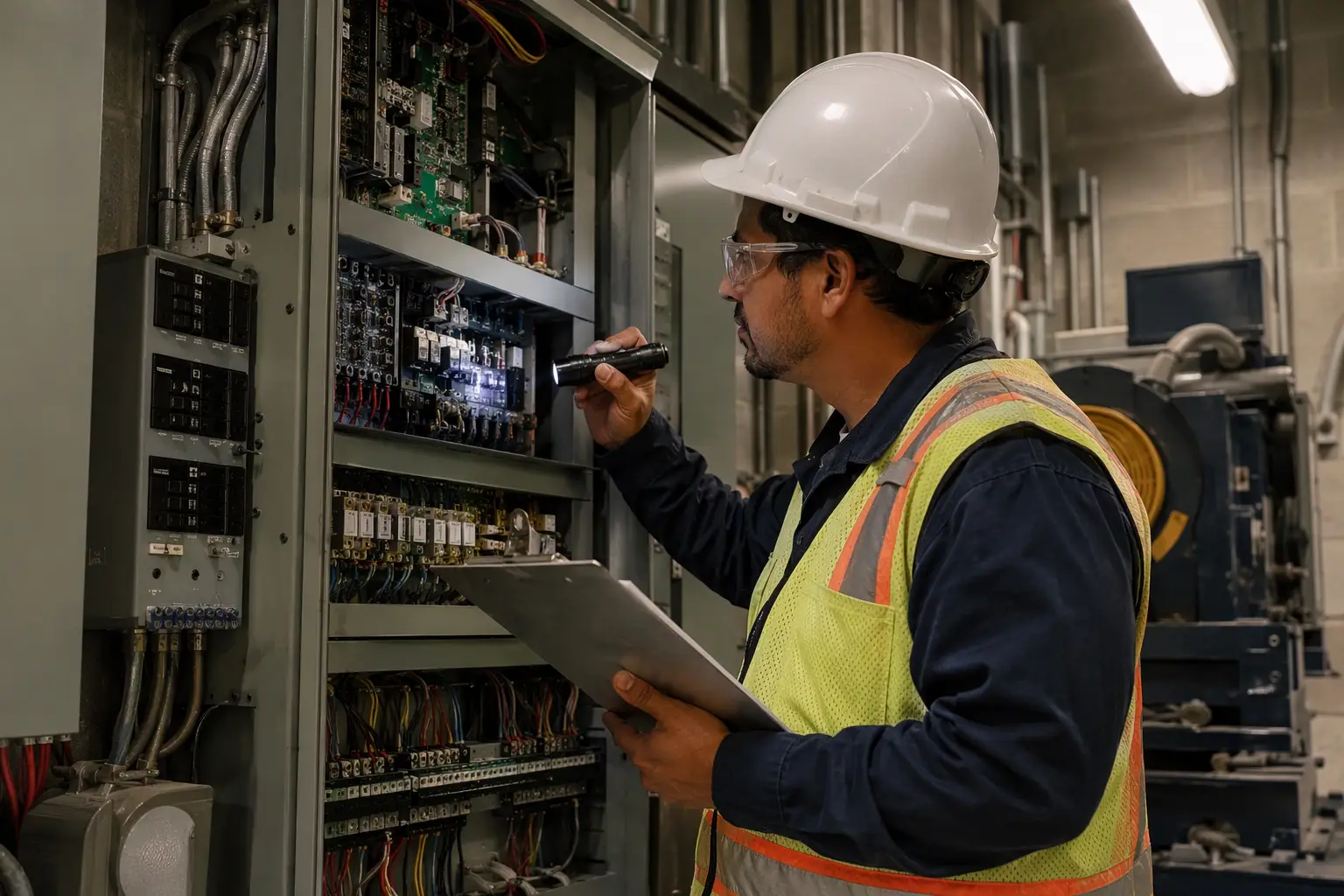
In Texas, the elevator permit and approval process is governed by the Texas Department of Licensing and Regulation (TDLR), Elevator and Escalator Safety program, under Texas Health and Safety Code Chapter 754 and 16 Texas Administrative Code Chapter 74. Texas has adopted the ASME A17.1/CSA B44, 2016 edition as its baseline elevator safety code, effective November 1, 2018.
Before any installation work begins, the registered contractor must submit plans to TDLR and obtain approval. No installation may legally proceed without that pre-construction authorization. Once installation is complete, a TDLR-registered elevator inspector — selected by the building owner — performs a final inspection. If the elevator is found to be in compliance, the owner receives a Certificate of Compliance, which must be displayed in a publicly visible area of the building and is valid for one year.
Important local exception: TDLR does not regulate elevators or escalators inside Houston city limits. The City of Houston operates its own elevator program. Owners with projects in Houston should contact the City of Houston directly to confirm that jurisdiction’s specific plan submission and approval requirements.
Step-by-Step: Texas New Elevator Permit Process
- Engage a contractor registered with TDLR — Texas law prohibits any person from installing elevator equipment without TDLR contractor registration.
- Prepare complete installation plans that conform to the ASME A17.1/CSA B44, 2016 edition as adopted by Texas.
- Submit plans to TDLR and wait for written approval before breaking ground or beginning any elevator installation work.
- Complete installation according to the approved plans.
- Select a TDLR-registered elevator inspector (the building owner holds this right exclusively under Texas law).
- Schedule and undergo the final inspection; the inspector must provide the inspection report within five calendar days of the inspection date.
- Resolve any cited violations or place them under a correction contract within 30 days, or apply to TDLR for a waiver or delay.
- Receive and prominently display the Certificate of Compliance before placing the elevator in service.
How Does the California Elevator Permit Process Work for a New Installation?
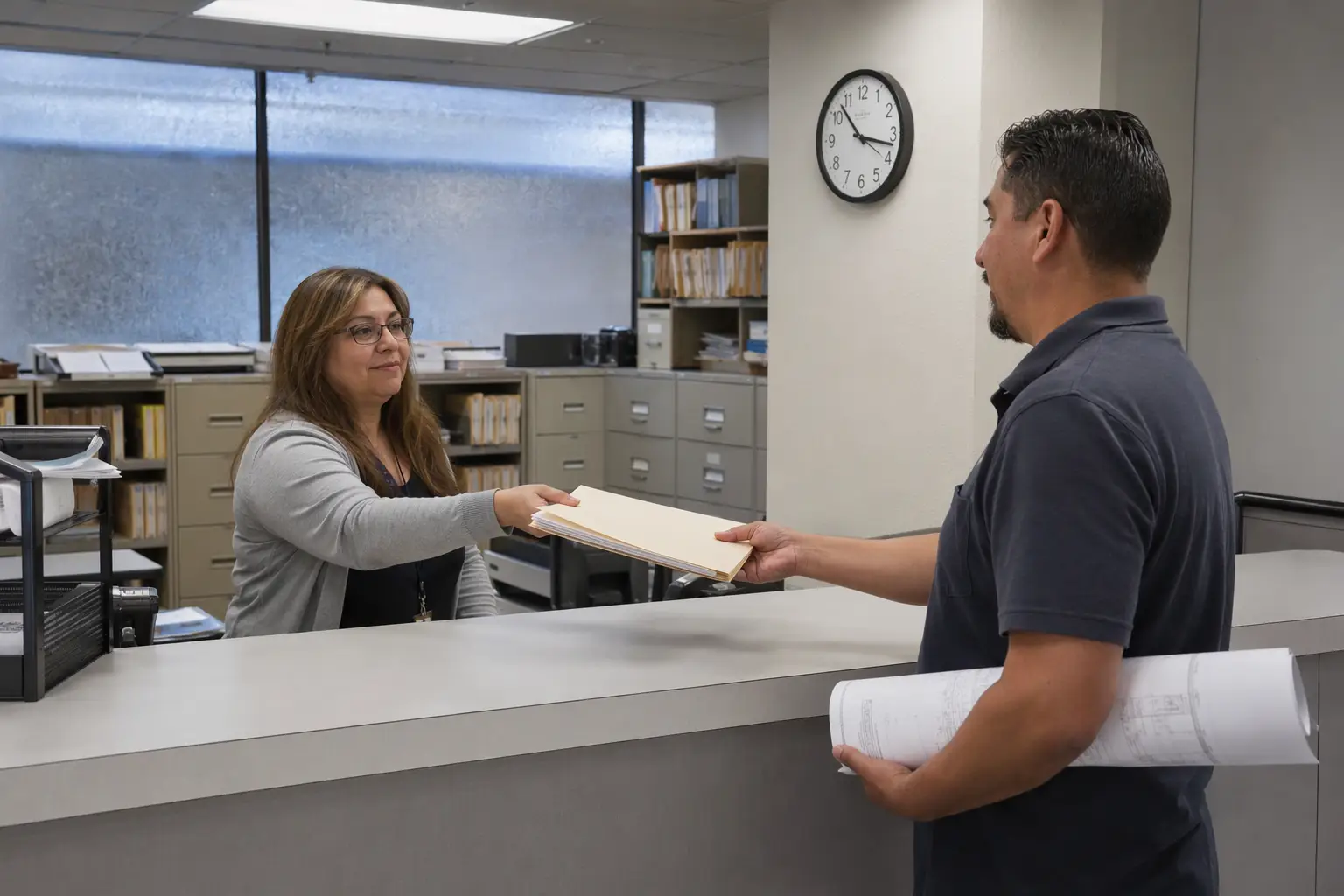
California’s elevator safety program is administered by the Division of Occupational Safety and Health (Cal/OSHA), Elevator Unit, California Department of Industrial Relations, under California Labor Code Sections 7300–7324.2 and the California Code of Regulations, Title 8, Elevator Safety Orders (Sections 3000–3146). California has adopted the ASME A17.1/CSA B44, 2004 edition (Group IV Elevator Safety Orders), effective May 1, 2008, for installation contracts signed on or after that date.
California requires two distinct permits for a new elevator installation:
- Pre-installation permit: A Cal/OSHA permit is required before a conveyance is erected, installed, or materially altered. Work cannot begin without this authorization.
- Permit to operate: After installation is complete, Cal/OSHA must inspect the elevator and issue a permit to operate before the elevator may be placed in service. The permit to operate must be posted conspicuously inside the elevator car.
Only State of California safety engineers and Certified Competent Conveyance Inspectors (CCCI) may perform elevator inspections in California. Additionally, any company performing installation work must be certified by Cal/OSHA as a Certified Qualified Conveyance Company (CQCC), and every mechanic working unsupervised must hold a Certified Competent Conveyance Mechanic (CCCM) credential. The installation contractor must also hold a C-11 Elevator Contractor license issued by the California Contractors State License Board (CSLB).
Important local exception: The City of Los Angeles runs its own elevator and conveyance inspection program through the Los Angeles Department of Building and Safety (LADBS). Owners with projects in Los Angeles should verify that jurisdiction’s specific requirements directly with LADBS.
Step-by-Step: California New Elevator Permit Process
- Confirm the installing contractor holds a valid CSLB C-11 license and Cal/OSHA CQCC certification, and that all working mechanics hold CCCM credentials.
- Prepare installation plans that conform to the ASME A17.1/CSA B44, 2004 edition as adopted in California’s Elevator Safety Orders.
- Apply to Cal/OSHA for a permit to erect or install the conveyance; do not begin work until the permit is issued.
- Complete installation according to the approved plans and the applicable Elevator Safety Orders.
- Request a Cal/OSHA inspection by a State safety engineer or CCCI upon completion of installation.
- Pass the inspection and receive a permit to operate from Cal/OSHA.
- Post the permit to operate conspicuously inside the elevator car before placing the elevator in service.
- Note: Arranging the annual reinspection thereafter is the elevator owner’s responsibility.
Texas vs. California: Side-by-Side Permit Process Comparison
| Factor | Texas (TDLR) | California (Cal/OSHA) |
|---|---|---|
| Governing Agency | TDLR, Elevator & Escalator Safety | Cal/OSHA, Elevator Unit, DIR |
| Adopted Elevator Code | ASME A17.1/CSA B44, 2016 edition | ASME A17.1/CSA B44, 2004 edition |
| Governing Statute | Texas Health & Safety Code Chapter 754 | California Labor Code §§7300–7324.2 |
| Pre-Installation Approval Required? | Yes — plan submission and TDLR approval required before installation | Yes — Cal/OSHA permit required before erection or installation |
| Number of Permits for New Install | One (Certificate of Compliance after inspection) | Two (pre-installation permit + permit to operate) |
| Who Performs the Inspection? | TDLR-registered elevator inspector (selected by building owner) | State safety engineer or CCCI only |
| Inspector Independence | Registered with TDLR; not a TDLR employee | State employee or certified inspector authorized by Cal/OSHA |
| Contractor Requirement | Must be registered with TDLR as an elevator contractor | Must hold CSLB C-11 license + Cal/OSHA CQCC certification |
| Mechanic Requirement | Not verified — see TDLR for current mechanic requirements | CCCM credential required for unsupervised work |
| Certificate/Permit Validity | Certificate of Compliance: one year | Permit to operate: up to one year (up to two years with a full maintenance contract with a C-11/CQCC company) |
| Display Requirement | Certificate of Compliance in a publicly visible area of the building | Permit to operate posted conspicuously inside the elevator car |
| Annual Inspection Responsibility | Building owner must arrange annually | Building owner must arrange annually |
| Violation Correction Deadline | 30 days from inspection, or waiver/delay from TDLR | Determined by Cal/OSHA; unsafe elevator may not operate |
| Key Local Exception | City of Houston has its own program (TDLR does not regulate Houston) | City of Los Angeles has its own program through LADBS |
| Exemptions | Federal government buildings; single-family dwellings (except post-installation inspection) | Federal jurisdiction conveyances; single-unit private homes not accessible to the public |
What Are the Most Common Causes of Elevator Permit Delays in Texas and California?
Regardless of the state, permit delays almost always trace back to one or more of the following preventable issues:
- Incomplete or non-conforming plan submissions: Plans that do not reflect the adopted code edition — ASME A17.1-2016 in Texas or ASME A17.1-2004 in California — are returned for correction, restarting the review clock.
- Unlicensed or uncertified contractors: In California, a contractor without both a CSLB C-11 license and Cal/OSHA CQCC certification cannot legally perform the installation. Discovering a compliance gap mid-project causes significant delays.
- Agency review backlogs: State agency workloads fluctuate. Projects submitted during peak construction periods may wait longer for plan review responses.
- Local jurisdiction overlaps: Projects in Houston or Los Angeles must navigate those cities’ independent programs rather than the state agency — owners unaware of this distinction often submit to the wrong authority first.
- Failure to schedule inspections promptly: In Texas, the building owner selects the inspector; waiting to make that selection after installation is complete adds unnecessary lag. In California, Cal/OSHA inspection availability drives the timeline for the permit to operate.
- Outstanding violations: Any unresolved safety deficiency found during inspection prevents issuance of a Certificate of Compliance in Texas or a permit to operate in California until corrections are made and re-inspected.
- ADA compliance gaps: New installations must also meet applicable federal accessibility requirements under the Americans with Disabilities Act. Overlooking ADA clearances, controls, or signage requirements can trigger plan rejection or inspection failure.
What Documentation Is Required to Submit for Elevator Permit Approval?
While each agency’s specific submittal checklist should be confirmed directly with TDLR or Cal/OSHA before submission, owners and contractors should generally prepare:
- Complete engineering drawings and specifications referencing the applicable adopted code edition
- Equipment specifications and manufacturer data sheets
- Proof of contractor registration or certification (TDLR registration in Texas; CSLB C-11 license and Cal/OSHA CQCC certification in California)
- Proof of required insurance coverage (Texas contractors must carry at least $1,000,000 per occurrence for bodily injury or death and $500,000 per occurrence for property damage)
- In California, evidence that all mechanics performing the work hold valid CCCM credentials
- Site plans showing hoistway dimensions, machine room layout, and pit depth
- Any applicable seismic design documentation (particularly relevant in California)
- Documentation showing compliance with ADA accessibility requirements for the new installation
Does the Adopted Code Edition Affect Permit Approval Timeline?
Yes — and this is a frequently overlooked source of delay. Texas has adopted ASME A17.1/CSA B44, 2016 edition, while California’s Elevator Safety Orders reflect ASME A17.1/CSA B44, 2004 edition for Group IV installations. These are meaningfully different editions of the same base code.
A contractor whose design documents reference the wrong edition — or a newer edition not yet adopted by the state — will have plans returned for revision. California has proposed a Group V update to its Elevator Safety Orders that would incorporate portions of ASME A17.1-2019; the Standards Board held a public hearing on this proposal on June 18, 2026, but no effective date has been posted as of the publication of this guide. Owners and contractors should monitor Cal/OSHA announcements for any change in the adopted edition that could affect pending or upcoming projects.
How Do Local Jurisdictions Like Houston and Los Angeles Affect the Permit Timeline?
Both Texas and California have major cities that operate independent elevator programs outside the state regulatory structure, and this is a critical planning factor for projects in those markets.
In Texas, TDLR does not regulate elevators or escalators inside Houston city limits. The City of Houston runs its own elevator inspection and compliance program. Submitting plans to TDLR for a Houston project would not satisfy the city’s requirements, meaning a project team that fails to identify this distinction early will lose significant time.
In California, the City of Los Angeles Department of Building and Safety (LADBS) operates its own elevator and conveyance inspection program. Los Angeles projects should be coordinated with LADBS, not solely with Cal/OSHA’s statewide unit.
AmeriTex Elevator works with clients to identify the correct permitting authority at project outset, helping avoid the most common — and most time-consuming — jurisdictional misstep in the permit process.
What Happens If an Elevator Is Placed in Service Without a Valid Permit?
Operating an elevator without proper authorization carries serious legal and liability consequences in both states.
In California, no elevator may be operated without a valid, current permit to operate issued by Cal/OSHA. Operating without one exposes the building owner to enforcement action and potential liability in the event of an incident.
In Texas, operating elevator equipment without a valid Certificate of Compliance from TDLR violates Texas Health and Safety Code Chapter 754. Texas law also requires the building owner to report any accident involving elevator equipment to TDLR within 24 hours — an obligation that exists regardless of whether the elevator had a valid certificate at the time of the incident.
Beyond state penalties, operating an unpermitted or uninspected elevator creates significant exposure under general liability and property insurance policies, and may violate applicable OSHA workplace safety requirements in commercial settings.
How Do Annual Inspection Requirements Affect Long-Term Compliance After Initial Permit Approval?
Permit approval for the installation is only the beginning of an ongoing compliance obligation. Both Texas and California require annual inspections, and the responsibility for scheduling those inspections rests with the building owner in both states.
In Texas, building owners must have each elevator inspected annually by a TDLR-registered inspector. The Certificate of Compliance is valid for one year. Texas owners must also have cited violations corrected or under contract to be corrected within 30 days of inspection, or obtain a waiver or delay from TDLR. Additionally, electric (traction) elevators in Texas require a Category 5 full-load test every five years.
In California, California law requires every conveyance to be inspected at least once a year. A conveyance found safe receives a permit to operate for up to one year. However, Cal/OSHA may issue a permit to operate for up to two years for an elevator in safe condition that is covered by a full maintenance contract with a C-11 licensed elevator company — a meaningful incentive for owners who want to reduce annual permitting workload.
What Role Does an Independent Elevator Service Company Play in the Permit Process?
An experienced, compliant elevator service company contributes to a smoother permit process at several stages: plan preparation that matches the adopted code edition, contractor credentialing that satisfies state requirements, coordination with the correct permitting authority (including local programs in Houston and Los Angeles), and timely scheduling of required inspections.
AmeriTex Elevator is an independent elevator service provider serving Texas and California, positioned to help building owners navigate the regulatory requirements of both states. As an independent company, AmeriTex Elevator is not tied to a single equipment manufacturer, which means recommendations are based on code compliance and project requirements rather than brand preference. For California projects, working with a company that holds the required CQCC certification and employs CCCM-credentialed mechanics is not optional — it is a legal prerequisite to installation. For Texas projects, the contractor’s TDLR registration and insurance documentation must be confirmed before any work begins.
AmeriTex Elevator assists clients in identifying the correct permitting authority, preparing compliant documentation, and maintaining the annual inspection and compliance cycle that protects the permit to operate or Certificate of Compliance over the life of the equipment.
Pros and Cons: Texas vs. California Permit Environment for New Elevator Installations
| Texas | California | |
|---|---|---|
| Pros |
|
|
| Cons |
|
|
Key Takeaways: Timeline Factors to Plan For in Both States
- Allow time for plan review before installation begins — both states prohibit starting work without pre-installation approval, and review timelines vary by agency workload.
- Confirm the correct permitting authority first — projects in Houston or Los Angeles require engagement with those cities’ programs, not the state agency.
- Verify contractor credentials before signing — in California, CQCC certification and C-11 licensing are legal prerequisites; in Texas, TDLR registration and insurance minimums must be confirmed.
- Align plans with the correct adopted code edition — ASME A17.1-2016 in Texas, ASME A17.1-2004 in California (Group IV). Submitting plans referencing the wrong edition causes avoidable delays.
- Schedule the post-installation inspection early — in California, inspection availability is controlled by Cal/OSHA; in Texas, the owner must proactively select and engage a registered inspector.
- Plan for ongoing annual compliance — the initial permit is not a one-time event. Both states require annual inspections, and the building owner bears the scheduling responsibility.
- Check ADA compliance alongside state code — federal accessibility requirements apply independently of state elevator codes and must be addressed in the installation design.
Contact AmeriTex Elevator for a free elevator assessment at 844-646-9660.
Need elevator service you can rely on? AmeriTex Elevator is ready to help.