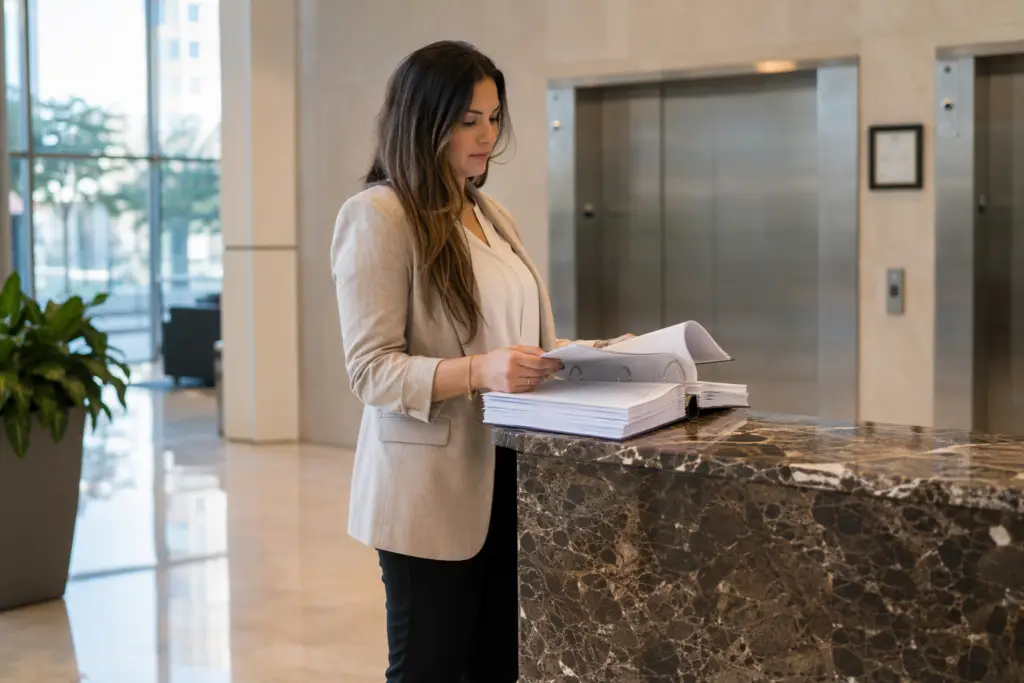
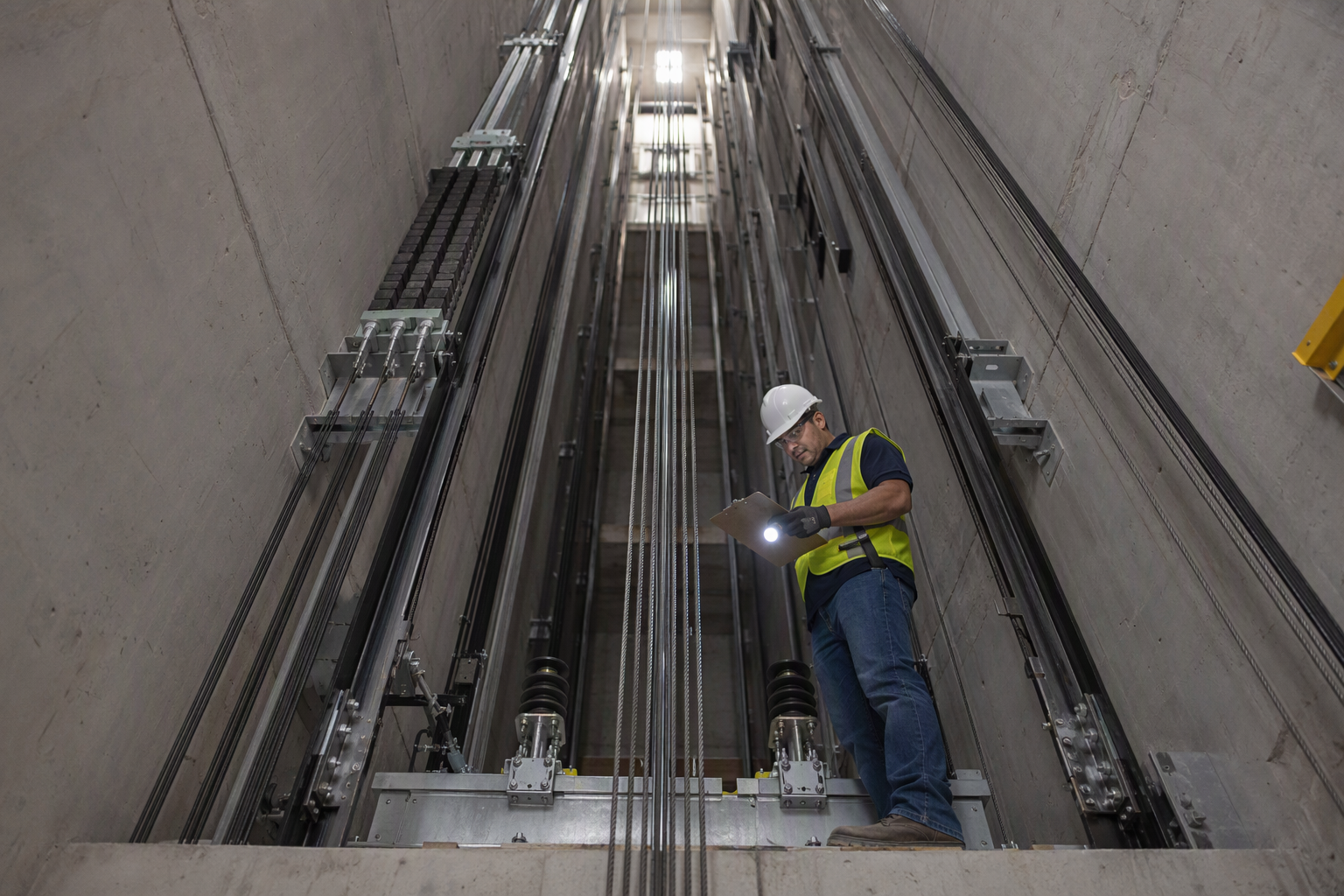
What is an elevator safety inspection?
An elevator safety inspection is a comprehensive examination performed by a qualified inspector to verify that all mechanical, electrical, structural, and emergency systems in an elevator are functioning correctly and meet the applicable safety codes.
Inspectors evaluate components including the drive machine, sheaves, ropes or chains, buffers, safeties, interlocks, door operators, lighting, emergency communication, firefighters’ service, and the elevator car enclosure itself. The process is governed at the federal standard level by the ASME A17.1 Safety Code for Elevators and Escalators, which both Texas and California have adopted — in different editions. A completed inspection results in either a passed certificate authorizing continued operation or a written report of violations that must be corrected before the elevator can lawfully remain in service.
How often are elevator safety inspections required in Texas and California?
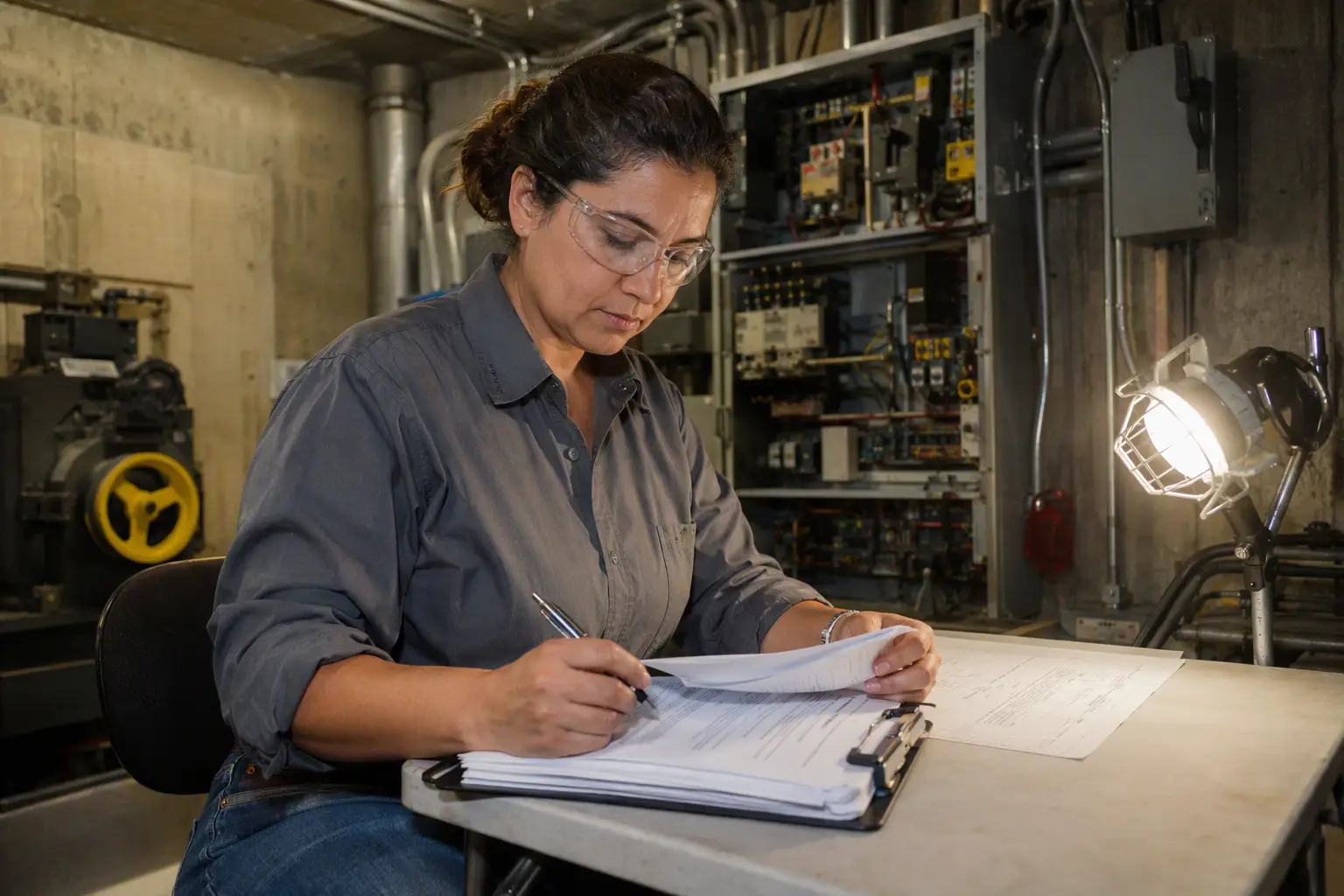
Both Texas and California mandate elevator safety inspections at minimum once every year, with Texas requiring an additional Category 5 full-load test every five years for electric (traction) elevators.
In Texas, the Texas Department of Licensing and Regulation (TDLR), Elevator and Escalator Safety program, requires building owners to have elevators inspected annually by a TDLR-registered elevator inspector under Texas Health and Safety Code Chapter 754 and 16 Texas Administrative Code Chapter 74. The resulting Certificate of Compliance is valid for one year. The Category 5 full-load test — which verifies the elevator’s ability to stop and hold a rated load — must be performed every five years and is separate from the annual inspection.
In California, the Division of Occupational Safety and Health (Cal/OSHA), Elevator Unit, California Department of Industrial Relations, requires every conveyance to be inspected at least once a year under California Labor Code Sections 7300–7324.2 and California Code of Regulations, Title 8, Elevator Safety Orders. A conveyance found safe receives a permit to operate for up to one year. Notably, California law allows Cal/OSHA to issue a permit for up to two years when the elevator is in safe condition and is covered by a full maintenance contract with a C-11 licensed elevator company.
Note that within Houston city limits, TDLR does not regulate elevators or escalators — the City of Houston operates its own program. Similarly, the City of Los Angeles runs its own elevator and conveyance inspection program through the Department of Building and Safety. Building owners in those cities should confirm requirements directly with the relevant municipal authority.
Who is authorized to inspect elevators in Texas and California?
In Texas, inspections must be performed by a TDLR-registered elevator inspector; in California, only State of California safety engineers and Certified Competent Conveyance Inspectors (CCCI) may legally perform elevator inspections.
Texas elevator inspectors register with TDLR but are not TDLR employees, and importantly, the building owner holds the sole right to select the inspector. Inspectors must provide the owner with the inspection report within five calendar days of completing the inspection.
In California, the qualifications are layered: companies that install, alter, test, maintain, repair, or service elevators must be certified by Cal/OSHA as a Certified Qualified Conveyance Company (CQCC), and individual mechanics must hold a Certified Competent Conveyance Mechanic (CCCM) certification. The California Contractors State License Board (CSLB) issues the C-11 Elevator Contractor license, while Cal/OSHA issues CQCC and CCCM certifications — both of which last two years and require at least eight hours of continuing education for renewal.
AmeriTex Elevator operates as a compliant elevator service company serving Houston, Dallas, Austin, San Antonio, Los Angeles, and San Diego, working within the applicable regulatory frameworks in Texas and California.
What codes govern elevator safety inspections in 2026?
Texas has adopted the ASME A17.1/CSA B44, 2016 edition, effective November 1, 2018, while California’s Elevator Safety Orders adopt the ASME A17.1/CSA B44, 2004 edition, with a proposed Group V update to incorporate elements of ASME A17.1-2019 currently under regulatory review as of 2026.
The ASME A17.1 standard is the foundational safety code for elevators and escalators across North America, specifying design, construction, operation, inspection, testing, maintenance, alteration, and repair requirements. The different adopted editions mean that specific technical requirements — such as door protection, emergency communication specifications, and safety device standards — can vary between Texas and California installations.
The Americans with Disabilities Act (ADA) applies at the federal level and establishes accessibility requirements for elevator dimensions, controls, door timing, and audible/visual signals in facilities subject to ADA jurisdiction. The Occupational Safety and Health Administration (OSHA) also has relevance for construction-phase elevators and temporary hoisting equipment used during building projects.
California’s Standards Board held a public hearing on June 18, 2026, regarding the proposed Group V update to its Elevator Safety Orders — no effective date has been posted as of this writing. Building owners and service companies should monitor the Cal/OSHA Elevator Unit page for updates.
What happens during an elevator safety inspection — step by step?
A qualified inspector follows a structured protocol that covers every major system and subsystem of the elevator, from the machine room to the pit.
- Document and permit review: The inspector verifies the elevator’s maintenance records, previous inspection reports, and current certificate or permit status before entering any elevator space.
- Machine room examination: The drive machine, motor, controller, sheaves, governor, and electrical panels are inspected for condition, clearances, lighting, fire protection, and code compliance.
- Hoistway inspection: Guide rails, counterweight, buffers, limit switches, hoistway lighting, venting, and structural clearances are evaluated.
- Car and door system testing: Door operation, reopening devices, door restrictors (critical for passenger safety), interlock function, car enclosure integrity, lighting, emergency lighting, and capacity placards are checked.
- Safety device tests: The governor, safeties, and buffers are tested to confirm they function within code tolerances. For Texas traction elevators on a five-year cycle, the Category 5 full-load test is conducted at this stage.
- Emergency systems verification: Firefighters’ service (Phase One and Phase Two), emergency communication, alarm bell, and battery backup are each operationally tested.
- Pit inspection: The pit is examined for water intrusion, lighting, stop switches, ladder, and buffer conditions.
- Final operational run: The elevator is run through all floors in both directions to verify leveling, speed, and ride quality.
- Report generation: The inspector documents all findings. In Texas, the report must be delivered to the owner within five calendar days. Any violations requiring immediate correction — such as non-working door restrictors or failed firefighters’ service in Texas — may result in removal from service.
What are the most common elevator safety violations found during inspections?
The most frequently cited deficiencies involve door protection systems, emergency communication failures, expired or missing certificates, firefighters’ service malfunctions, and deteriorated rope or chain components.
In Texas, two deficiencies automatically require immediate removal from service: a passenger elevator without working door restrictors, and a passenger elevator without functional Phase One firefighters’ service. These are not correctable on a 30-day schedule — the elevator must stop operating until the condition is remedied.
Other commonly cited issues include inadequate pit lighting, missing or expired capacity placards, non-functioning emergency lighting, oil leakage from hydraulic cylinders, worn or improperly tensioned hoisting ropes, and controller anomalies. Regular preventive maintenance dramatically reduces the frequency of these findings and helps building owners avoid the disruption of an unexpected shutdown.
AmeriTex Elevator provides pre-inspection maintenance services across its Texas and California markets, helping owners identify and resolve potential violations before the inspection takes place.
What is a Category 5 elevator test and when is it required?
A Category 5 test is a full-load, full-speed safety test of an electric (traction) elevator’s braking and safety systems, required in Texas every five years under the adopted ASME A17.1-2016 standard.
During a Category 5 test, the elevator is loaded to its rated capacity and run at full speed while the inspector triggers the governor and safety devices to confirm they engage and stop the car within code-specified limits. The test also verifies buffer performance. This test is distinct from the annual inspection — it requires advance planning, temporary shutdown of the elevator, and coordination between the building owner, the registered inspector, and the elevator maintenance contractor. Because the test places unusual stress on mechanical components, it is best performed by a qualified service company immediately following the test to evaluate any wear that may have been exposed.
What permits and certificates must be displayed in an elevator?
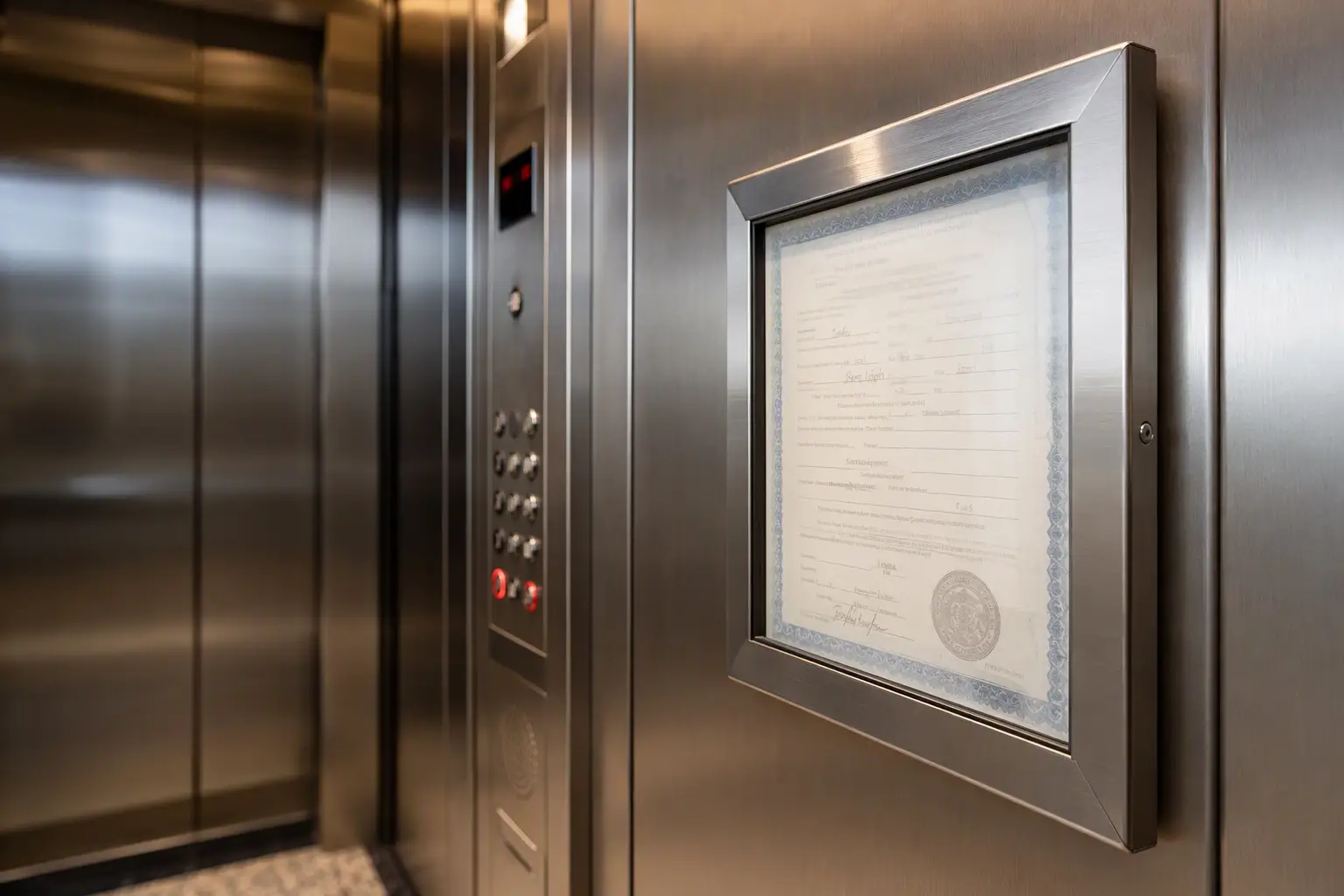
In California, the permit to operate issued by Cal/OSHA must be posted conspicuously inside the elevator car; in Texas, the TDLR Certificate of Compliance must be displayed in a publicly visible area of the building.
California law is explicit: no elevator may be operated without a valid, current permit to operate. If the permit has expired or is missing, the elevator is operating unlawfully regardless of its mechanical condition. Similarly, any new California elevator must receive a Cal/OSHA permit before it is placed in service, and a Cal/OSHA permit is required before a conveyance is erected, installed, or materially altered.
In Texas, the Certificate of Compliance is issued per unit of equipment and is valid for one year. Texas building owners are responsible for obtaining the certificate and ensuring it is current. Owners must also have violations cited in the inspection report corrected — or under contract to be corrected — within 30 days, or obtain a waiver or delay from TDLR.
Who is responsible for scheduling elevator inspections — the owner or the contractor?
In both Texas and California, the legal responsibility for ensuring a timely inspection falls on the building owner, not the elevator service contractor.
In California, arranging the annual reinspection is explicitly the elevator owner’s responsibility under state law. In Texas, the building owner must not only arrange the inspection but also select the registered inspector — a right that belongs solely to the owner, not the service company or any third party. Many building owners delegate the coordination to their elevator maintenance contractor as a practical matter, but the regulatory obligation remains with the owner.
Building owners who fail to maintain a current certificate or permit face legal exposure and potential liability in the event of an incident. Owners in Houston, Dallas, Austin, and San Antonio should coordinate with a TDLR-registered inspector and confirm any supplementary local requirements. Owners in Los Angeles and San Diego should work with the applicable municipal authority and ensure their service company holds the required California credentials.
How does elevator inspection differ for new installations versus existing elevators?
New installations require a pre-service inspection and permit before the elevator may carry any passengers, while existing elevators must meet ongoing annual inspection and — where applicable — periodic load-test requirements.
In California, each new elevator must be inspected by Cal/OSHA and receive a permit to operate before it is placed in service. Additionally, a Cal/OSHA permit is required before installation begins. In Texas, the registered contractor must submit plans to TDLR and obtain approval before installing an elevator or escalator — the inspection and Certificate of Compliance follow after installation is complete.
Existing elevators are also subject to inspection requirements whenever they undergo material alterations. In California, a permit from Cal/OSHA is required before any material alteration. This means that even a significant modernization project — replacing a drive system, adding new door operators, or updating controls — triggers a pre-alteration permit and a post-alteration inspection before the elevator returns to service.
What are the consequences of failing an elevator safety inspection?
A failed inspection can result in mandatory shutdown of the elevator, legal citations, financial penalties, and significant liability exposure for the building owner in the event of a passenger injury.
In Texas, certain violations — including non-working door restrictors and failed firefighters’ service — require immediate removal from service with no grace period. Other violations must be corrected or placed under contract to be corrected within 30 days, or the owner must obtain a waiver or delay from TDLR. Texas building owners must also report any accident involving elevator equipment to TDLR within 24 hours.
In California, operating an elevator without a valid permit is unlawful under California Labor Code Sections 7300–7324.2. Cal/OSHA has authority to order an elevator out of service. Beyond the regulatory consequences, a building owner operating a non-compliant elevator faces substantially increased civil liability exposure if a passenger is injured, because non-compliance is frequently treated as evidence of negligence in litigation.
How should a building owner choose an elevator inspection and service company?
Building owners should verify that any elevator company serving their building holds the applicable state certifications — a TDLR contractor registration in Texas or a Cal/OSHA Certified Qualified Conveyance Company (CQCC) certification and C-11 license in California — and that individual mechanics meet the corresponding credentialing requirements.
In Texas, elevator contractors must carry general liability insurance of at least $1,000,000 per occurrence for bodily injury or death and $500,000 per occurrence for property damage, and each contractor must designate one or two responsible parties with at least three years of elevator contractor experience. In California, CQCC applicants must submit a current C-11 contractor license and certificates of workers’ compensation and liability insurance.
Practical selection criteria beyond credentials include the company’s familiarity with the specific elevator type and manufacturer, the quality of maintenance documentation, and responsiveness when issues arise. AmeriTex Elevator serves building owners across Houston, Dallas, Austin, San Antonio, Los Angeles, and San Diego, providing maintenance and compliance support within the regulatory frameworks of both states.
What is the difference between a routine maintenance visit and a formal safety inspection?
A routine maintenance visit is a preventive service call performed by the elevator contractor to lubricate, adjust, and test components; a formal safety inspection is a code-mandated evaluation performed by an authorized inspector whose findings determine the legal right to operate.
Maintenance visits do not produce a certificate or permit — they produce a service record. Regular maintenance is what makes elevators pass their formal inspections cleanly: well-maintained systems have fewer deferred deficiencies and a lower probability of surprise failures. The ASME A17.1 standard establishes maintenance requirements as well as inspection requirements, and compliance with maintenance schedules is itself reviewed during formal inspections.
Building owners should maintain complete service logs and make them available to the inspector. Gaps in maintenance records can raise questions about equipment condition even when the elevator appears mechanically sound at the time of inspection.
Does the ADA impose additional requirements on elevators that inspectors check?
Yes — the Americans with Disabilities Act establishes federal accessibility standards for elevators in public accommodations and commercial facilities, and inspectors or plan reviewers may evaluate ADA compliance as part of a broader building assessment, though ADA enforcement is separate from state safety inspection programs.
ADA elevator requirements address car dimensions, door width and timing, leveling accuracy, control height and reach ranges, Braille and raised character markings, audible and visual position indicators, and two-way communication systems. While state safety inspections focus on mechanical safety rather than accessibility, ADA deficiencies can create separate legal exposure for building owners under federal law.
Building owners modernizing elevators should treat an alteration as an opportunity to bring the equipment into full ADA compliance, since alterations trigger ADA path-of-travel obligations in many facility types.
How does elevator inspection apply to hydraulic versus traction elevators?
Both hydraulic and traction elevators require annual safety inspections, but the specific tests differ — hydraulic elevators are evaluated for cylinder integrity, oil leakage, and pressure relief, while traction elevators require rope inspection and the five-year Category 5 load test in Texas.
Hydraulic elevators present unique risks related to underground cylinder corrosion and oil contamination of soil, which is why inspectors pay particular attention to the cylinder condition, flexible hose connections, and pressure relief valve function. Modern hydraulic elevators often use above-ground or in-ground PVC-lined cylinders that reduce environmental risk.
Traction elevators — including geared, gearless, and machine-room-less (MRL) designs — require evaluation of wire rope condition, tension equalization, groove wear on sheaves, and the governor and safety system. The Category 5 test required every five years in Texas is specific to electric (traction) elevators and is the most operationally demanding recurring test in the inspection cycle.
| Requirement | Texas | California |
|---|---|---|
| Governing agency | TDLR (statewide, except Houston) | Cal/OSHA Elevator Unit (statewide, except LA program) |
| Enabling statute | Texas Health and Safety Code Chapter 754 | California Labor Code Sections 7300–7324.2 |
| Adopted ASME edition | ASME A17.1/CSA B44, 2016 ed. (eff. Nov. 1, 2018) | ASME A17.1/CSA B44, 2004 ed. (eff. May 1, 2008); Group V update proposed |
| Inspection frequency | Annually | Annually (up to 2 years with full maintenance contract) |
| Who may inspect | TDLR-registered elevator inspector | Cal/OSHA safety engineers and Certified Competent Conveyance Inspectors (CCCI) |
| Inspector selects by | Building owner (sole right) | Inspection arranged by owner; performed by state-authorized inspectors |
| Operating certificate | TDLR Certificate of Compliance (1 year) | Cal/OSHA Permit to Operate (1–2 years) |
| Certificate display location | Publicly visible area of the building | Conspicuously inside the elevator car |
| Violation correction deadline | 30 days (or waiver/delay from TDLR) | As directed by Cal/OSHA; no operation without valid permit |
| Periodic load test | Category 5 every 5 years (traction elevators) | Per ASME A17.1-2004 Elevator Safety Orders |
| Contractor credential | TDLR contractor registration | Cal/OSHA CQCC certification + CSLB C-11 license |
| Mechanic credential | Not verified at state level (check local requirements) | Cal/OSHA Certified Competent Conveyance Mechanic (CCCM) |
| Accident reporting | To TDLR within 24 hours | Per Cal/OSHA requirements |
| Exemptions | Federal buildings; single-family homes (post-install inspection still required) | Federal jurisdiction; single-unit private homes not accessible to the public |
What should a building owner do immediately after receiving a failed inspection report?
A building owner who receives a failed inspection report should act systematically and promptly to protect both occupant safety and legal compliance.
- Review the report in full: Identify which violations are designated as requiring immediate shutdown versus those with a correction window. In Texas, non-working door restrictors or failed Phase One firefighters’ service require the elevator to be taken out of service immediately — do not allow continued passenger use.
- Take the elevator out of service if required: Post clear out-of-service signage on all landings and at the elevator entrance on every floor.
- Contact a qualified elevator service contractor: Engage a TDLR-registered contractor in Texas or a Cal/OSHA CQCC-certified company in California to evaluate the scope of repairs needed.
- Obtain repair estimates and timeline: In Texas, violations must be corrected or under contract to be corrected within 30 days of inspection. If the timeline cannot be met, contact TDLR to request a waiver or delay before the deadline passes.
- Document everything: Keep written records of all contractor communications, repair contracts, parts orders, and completion confirmations. This documentation is essential for demonstrating compliance with the correction deadline.
- Schedule a follow-up inspection: Once repairs are complete, arrange a reinspection to confirm compliance and restore the elevator’s certificate or permit.
- Report accidents if applicable: In Texas, any accident involving elevator equipment must be reported to TDLR within 24 hours — this obligation exists regardless of inspection status.
Are there elevator types or locations that are exempt from inspection requirements?
Both Texas and California exempt certain elevators from their respective safety programs, primarily elevators under federal jurisdiction and residential elevators in private homes not accessible to the public.
In Texas, the elevator safety law does not apply to equipment in buildings owned and operated by the federal government. TDLR also does not regulate elevators in single-family dwellings, with one important exception: state law requires a TDLR-registered inspector to inspect a residential elevator after installation.
In California, the elevator law exempts conveyances under federal jurisdiction and conveyances in single-unit private homes that are not accessible to the public. Commercial elevators, elevators in multi-unit residential buildings, and all publicly accessible conveyances are subject to the full Cal/OSHA inspection and permitting framework.
Building owners should not assume that an elevator qualifies for an exemption without confirming with the applicable regulatory authority. Misclassifying a covered elevator as exempt and operating it without a valid certificate or permit creates significant legal risk.
How does preventive maintenance affect elevator inspection outcomes?
Consistent, documented preventive maintenance is the single most effective strategy for achieving clean inspection results and reducing the likelihood of unexpected shutdowns or citations.
The ASME A17.1 Safety Code for Elevators and Escalators includes maintenance requirements as part of the code — compliance with those maintenance schedules is reviewed during formal inspections. Inspectors examine service logs as part of the inspection process, and gaps in documentation can be cited even when the equipment is mechanically functional.
Preventive maintenance typically includes lubrication of moving parts, rope tension equalization, adjustment of door timing and pressure, cleaning of the pit and machine room, testing of safety devices, and verification of emergency systems. Each of these activities directly corresponds to items on the inspection checklist. AmeriTex Elevator offers structured maintenance programs for building owners in Houston, Dallas, Austin, San Antonio, Los Angeles, and San Diego, designed to keep equipment in continuous compliance with both state regulatory requirements and the applicable ASME A17.1 standard.
California’s provision for a two-year permit — available when the elevator is covered by a full maintenance contract with a C-11 licensed elevator company — reflects the regulatory recognition that well-maintained elevators present lower ongoing risk and allow inspection resources to be directed toward higher-risk equipment.
What records should building owners keep related to elevator safety inspections?
Building owners should maintain a complete inspection and maintenance file for each elevator unit, including all certificates and permits, inspection reports, violation notices, repair documentation, and the Category 5 test record for traction elevators.
At minimum, the file for each elevator should contain: the current Certificate of Compliance (Texas) or Permit to Operate (California), all prior inspection reports from at least the past several years, all service records from the maintenance contractor, records of any repairs or alterations performed and the subsequent inspection or permit issued, and — for Texas traction elevators — the Category 5 test report from the most recent five-year cycle.
In Texas, the inspector’s report must be delivered to the owner within five calendar days of inspection. Owners should file this promptly and confirm that all cited violations are addressed within the 30-day correction window. Maintaining organized records supports timely compliance, demonstrates due diligence in the event of a claim or investigation, and makes future inspections more efficient.
AmeriTex Elevator helps clients across its service markets maintain organized compliance documentation as part of its maintenance support services, ensuring that building owners can quickly produce records when inspectors, insurers, or legal counsel request them.
Contact AmeriTex Elevator for a free elevator assessment at 844-646-9660.
Need elevator service you can rely on? AmeriTex Elevator is ready to help.