ADA Elevator Compliance Upgrades for Healthcare Facilities: What Existing Buildings Must Know
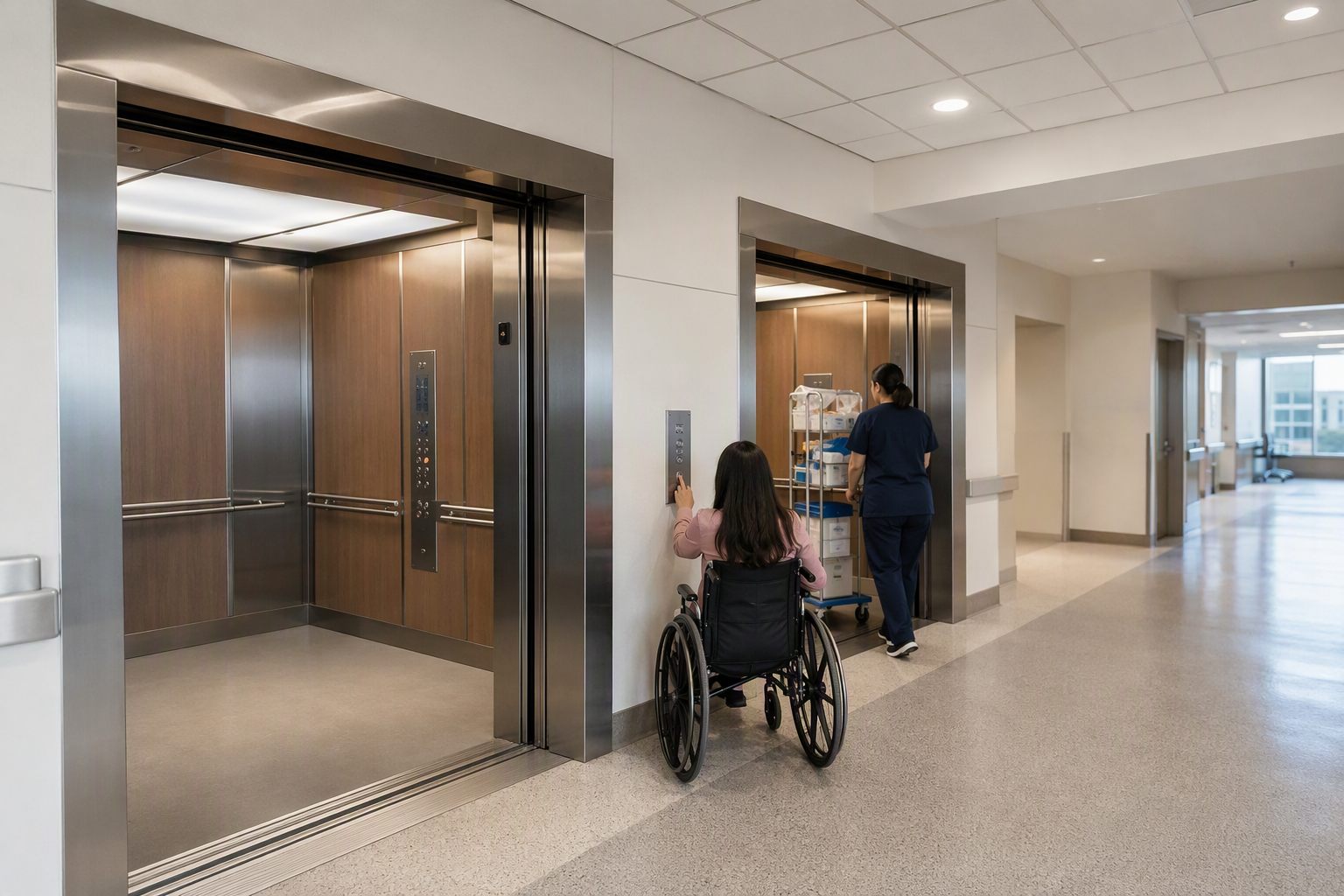
Hospitals, medical office buildings, outpatient clinics, and long-term care facilities face a uniquely demanding compliance environment. Patients with mobility impairments, visitors using wheelchairs, and staff transporting medical equipment all depend on elevators that meet or exceed ADA standards. For facility managers in Houston, Dallas, Austin, San Antonio, Los Angeles, and San Diego, understanding exactly which upgrades are required — and which codes apply — is the starting point for any modernization project.
What ADA Requirements Apply to Elevators in Existing Healthcare Buildings?
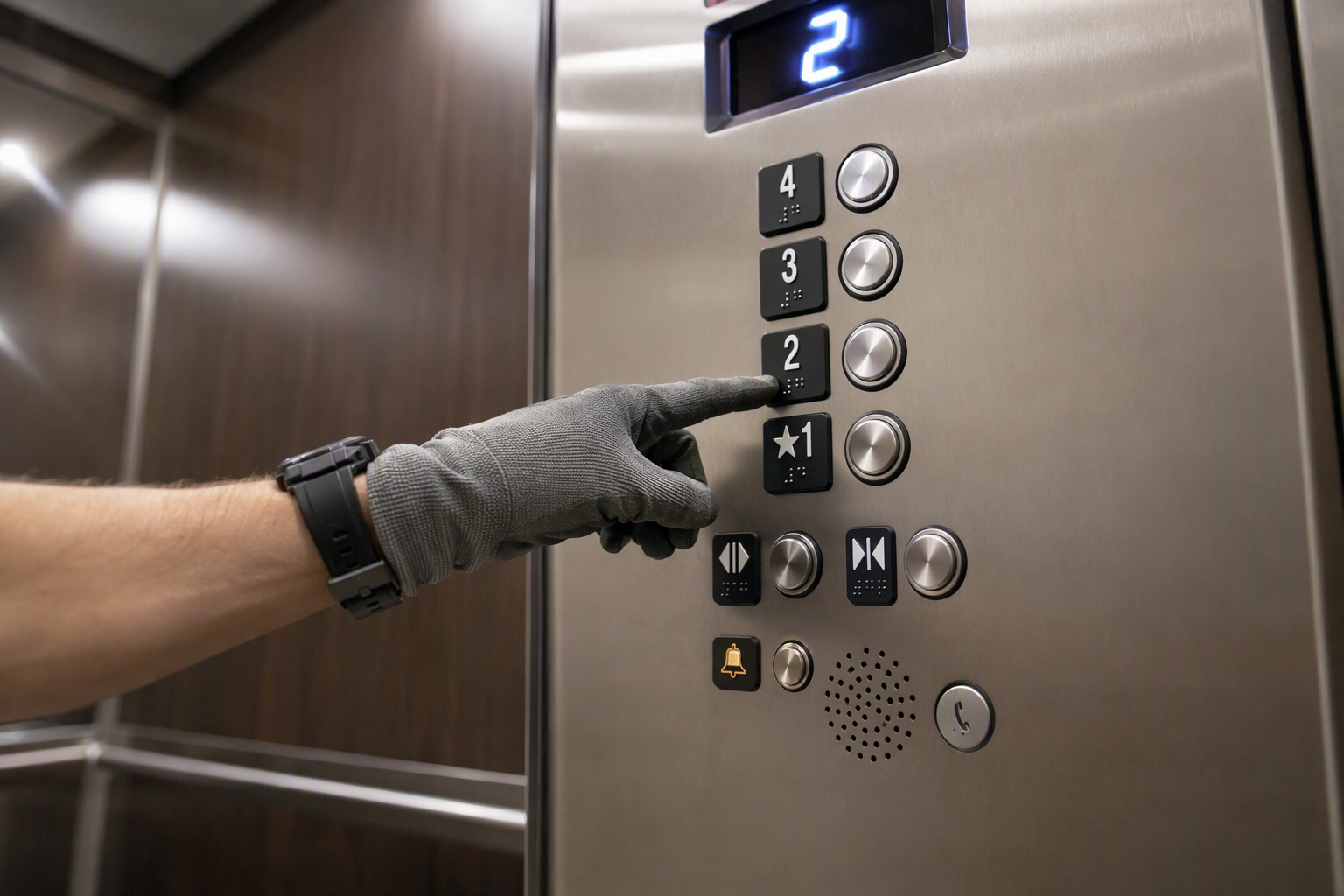
The ADA Standards for Accessible Design require that elevators serving multiple floors in existing buildings be accessible to people with disabilities. For healthcare facilities, the core ADA elevator requirements for existing buildings include:
- Call buttons: Hall call buttons must be located no higher than 54 inches above the floor (side reach) or 48 inches (forward reach), centered at the designated height, and must be at least ¾ inch in diameter with a raised symbol.
- Door reopening devices: Elevator doors must include a reopening device that stops and reverses door closing if an object or person is detected — without requiring contact — at a height between 5 inches and 29 inches above the floor.
- Door timing: Doors must remain fully open for at least 3 seconds for passenger elevators.
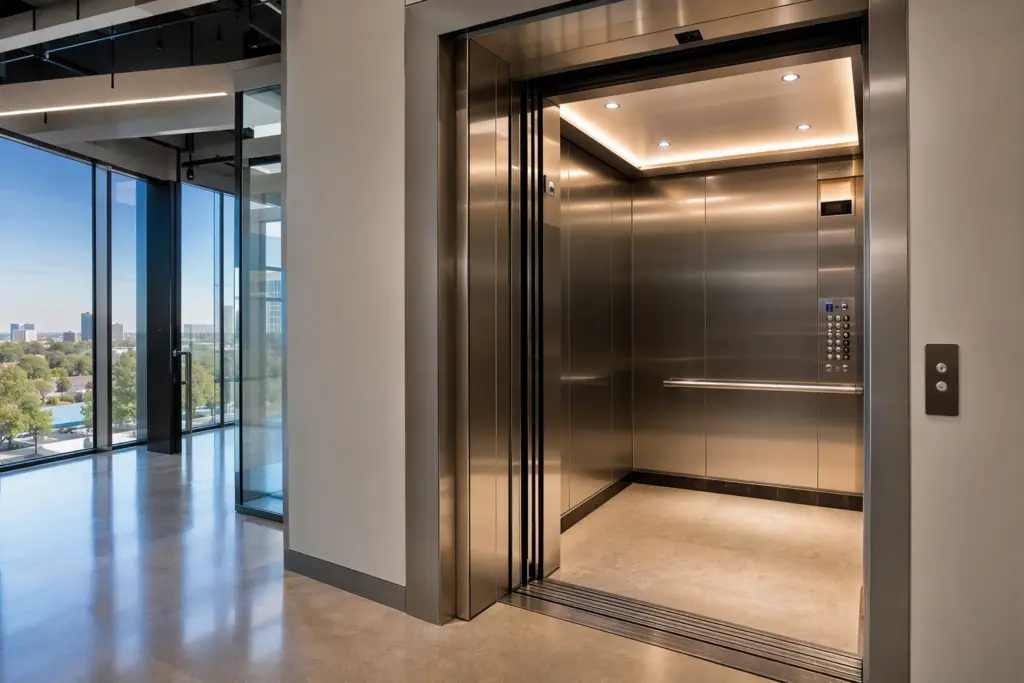
- Cab dimensions: The minimum clear inside cab dimensions for a center-opening door elevator are 80 inches wide by 51 inches deep; for a side-opening door, 68 inches wide by 51 inches deep.
- Floor surfaces: Cab floors must be stable, firm, and slip-resistant.
- Illumination: Minimum illumination of 5 foot-candles measured at the floor is required.
- Car controls: Control panels must have raised and Braille characters, be mounted between 15 and 48 inches above the floor, and be usable with one hand without tight grasping or twisting.
- Position indicators: A visual and audible signal indicating the car position must be provided in the car.
- Leveling: The elevator must level within ½ inch of each floor landing.
- Emergency communication: A two-way means of emergency communication must be provided inside the cab and must be accessible to people with hearing or speech disabilities.
In healthcare settings, these requirements are not merely regulatory checkboxes. A patient on a gurney, a visitor using a power wheelchair, or a staff member transporting a medication cart depends on every one of these features functioning correctly.
How Does ASME A17.3 Differ from ADA for Existing Elevators?
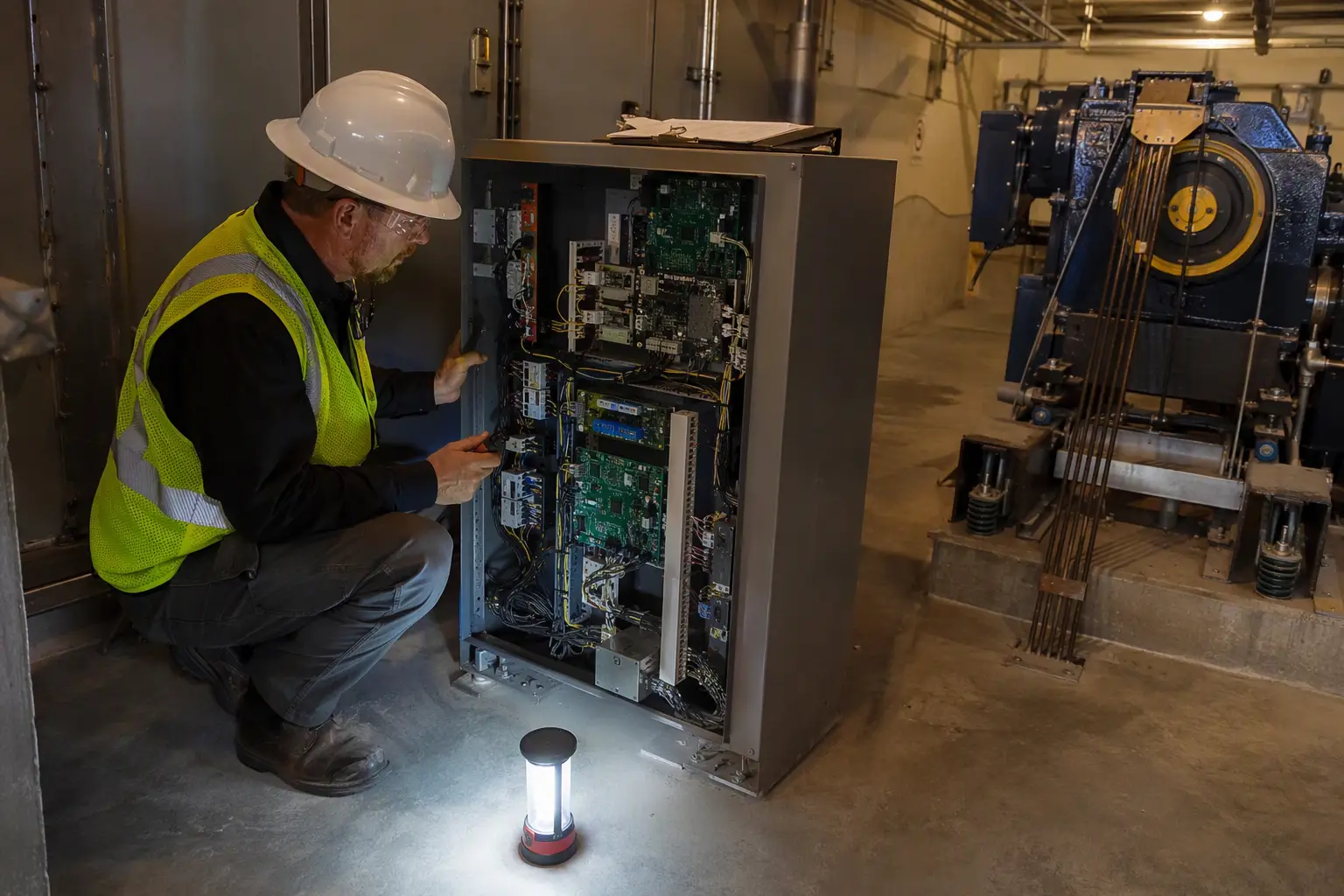
While the ADA establishes civil rights accessibility requirements, the ASME A17.3 Safety Code for Existing Elevators and Escalators addresses the mechanical safety standards for equipment already in service. Healthcare facility managers should understand that these two frameworks work in parallel:
- ASME A17.3 focuses on safety devices, door systems, machine room conditions, firefighters’ service, and operational safety for existing installations.
- ADA Standards focus on accessibility — usability for people with disabilities.
- An elevator can pass a safety inspection under ASME A17.3 and still be out of ADA compliance, and vice versa.
- For new installations or major alterations in Texas, contractors must comply with the ASME A17.1/CSA B44, 2016 edition as adopted by TDLR under 16 Texas Administrative Code Chapter 74. In California, installations governed by contracts signed on or after May 1, 2008, must meet ASME A17.1/CSA B44, 2004 edition as adopted in the California Code of Regulations, Title 8, Elevator Safety Orders, enforced by the Division of Occupational Safety and Health (Cal/OSHA), Elevator Unit, California Department of Industrial Relations.
Which ADA Elevator Upgrades Are Most Commonly Required in Healthcare Settings?
Based on the requirements of the ADA Standards for Accessible Design, the upgrades most frequently needed in existing healthcare buildings include:
- Replacement or relocation of hall call button panels to meet height requirements
- Installation or recalibration of door reopening devices with non-contact detection
- Retrofitting car operating panels with tactile Braille markings and correct mounting heights
- Upgrading audible and visual floor-arrival signals
- Replacing emergency communication systems to support two-way communication for individuals with hearing or speech disabilities
- Leveling adjustments to bring the cab within the ½-inch tolerance
- Lighting upgrades to meet minimum illumination requirements
- Handrail installation within the elevator cab where space permits and where required by the applicable jurisdiction
What Are the Texas-Specific Regulatory Requirements Healthcare Facilities Must Meet?
In Texas, elevator compliance for healthcare buildings involves multiple layers of oversight. The Texas Department of Licensing and Regulation (TDLR), Elevator and Escalator Safety program, administers the state elevator program under Texas Health and Safety Code Chapter 754 and 16 Texas Administrative Code Chapter 74.
- Texas building owners, including healthcare facility operators, must have elevators inspected annually by a TDLR-registered elevator inspector.
- A TDLR Certificate of Compliance must be obtained for each unit of equipment and displayed in a publicly visible area of the building.
- Violations cited during inspection must be corrected or under contract to be corrected within 30 days, or the owner must obtain a waiver or delay from TDLR.
- In Texas, a passenger elevator without working door restrictors must be removed from service immediately — a particularly critical point for busy hospital floors.
- A passenger elevator without firefighters’ service, or with non-working Phase One firefighters’ service, must also be removed from service immediately under Texas law.
- Electric (traction) elevators in Texas require a Category 5 full-load test every five years.
- Any contractor performing installation, repair, alteration, testing, or maintenance on Texas elevator equipment must be registered with TDLR.
Houston note: TDLR does not regulate elevators inside Houston city limits. The City of Houston operates its own elevator program. Healthcare facility managers in Houston should contact the City of Houston directly for local permit and inspection requirements and work with a contractor familiar with the city’s program. AmeriTex Elevator serves Houston-area healthcare facilities and maintains familiarity with local requirements.
What Are the California-Specific Regulatory Requirements Healthcare Facilities Must Meet?
In California, the elevator program is administered by the Division of Occupational Safety and Health (Cal/OSHA), Elevator Unit, California Department of Industrial Relations under California Labor Code Sections 7300–7324.2 and the California Code of Regulations, Title 8, Elevator Safety Orders (Sections 3000–3146).
- No elevator may operate in California without a valid permit to operate issued by Cal/OSHA, which must be posted conspicuously inside the elevator car — a requirement that applies directly to every patient-floor elevator in a California hospital or clinic.
- Every conveyance must be inspected at least once a year. Only State of California safety engineers and Certified Competent Conveyance Inspectors (CCCI) may perform these inspections.
- Cal/OSHA may issue a permit to operate for up to two years for an elevator in safe condition that is covered by a full maintenance contract with a company holding a C-11 Elevator Contractor license issued by the California Contractors State License Board (CSLB) and certified by Cal/OSHA as a Certified Qualified Conveyance Company (CQCC).
- Arranging the annual reinspection is the elevator owner’s — in this context, the healthcare facility’s — responsibility.
- Only a Certified Competent Conveyance Mechanic (CCCM) working for a CQCC may maintain, repair, alter, or replace components on a conveyance in California.
- A permit from Cal/OSHA is required before a conveyance is materially altered — meaning any significant ADA upgrade that constitutes an alteration requires a permit before work begins.
Los Angeles note: The City of Los Angeles, Department of Building and Safety (LADBS), operates its own elevator and conveyance inspection program. Healthcare facilities in Los Angeles should verify current local requirements directly with LADBS in addition to Cal/OSHA requirements.
Does the ADA Require Elevators in All Existing Healthcare Buildings?
The ADA requires that elevators be accessible in existing buildings if they serve multiple floors and are not exempt. The ADA’s “elevator exception” generally exempts buildings under three stories or with fewer than 3,000 square feet per floor — but this exemption does not apply to shopping centers, shopping malls, the professional office of a health care provider, or transportation terminals. This means that a physician’s office, clinic, or any professional healthcare provider occupying a multistory building typically cannot rely on the elevator exception and must provide an accessible elevator.
For hospitals and larger healthcare campuses, the exemption almost never applies given their size and function. Healthcare facility managers should consult legal counsel and a qualified accessibility consultant to confirm which exemptions, if any, apply to their specific building.
What Is the Difference Between ADA Barrier Removal and an Alteration Trigger?
Existing buildings face two distinct compliance pathways under the ADA:
- Barrier removal: Even without renovation, existing public accommodations must remove architectural barriers to accessibility when doing so is “readily achievable” — meaning accomplishable without much difficulty or expense. For healthcare facilities, elevator call button height corrections and Braille panel retrofits are commonly cited as readily achievable barrier removal.
- Alteration triggers: When a facility undertakes a renovation or alteration to an area containing a primary function, the path of travel to that area — including elevators — must be made accessible to the extent that the cost of doing so does not exceed a defined percentage of the overall alteration cost.
AmeriTex Elevator assists healthcare facility managers in understanding which scenario applies to their building and what scope of elevator work is required under each pathway.
How Long Does an ADA Elevator Upgrade Take in a Healthcare Facility?
Timeline depends on the scope of work, the number of elevators, and whether permits are required. In Texas, any alteration requires the registered contractor to submit plans to TDLR and obtain approval before work begins. In California, a Cal/OSHA permit is required before a conveyance is materially altered. Healthcare facilities should account for:
- Initial assessment and documentation of existing conditions
- Preparation and submission of alteration plans to the applicable regulatory authority (TDLR in Texas outside Houston; Cal/OSHA in California; local authority in Houston and Los Angeles)
- Regulatory review and permit issuance
- Scheduling of work to minimize disruption to patient care areas — often requiring phased or overnight work
- Post-alteration inspection and issuance of updated operating permit or Certificate of Compliance
Planning in advance and engaging a qualified contractor early in the process reduces delays that could leave a healthcare facility out of compliance.
What Emergency Communication Upgrades Are Required for ADA Compliance?
The ADA requires a two-way means of emergency communication inside the elevator cab that is accessible to individuals who are deaf or hard of hearing or who have speech disabilities. This typically means the system must provide a visual signal, such as a blinking light, to indicate that the call has been received, in addition to voice communication capability.
Healthcare facilities have additional considerations: emergency communication systems must remain functional during power outages, and the system must connect to a location that is staffed when the building is occupied. For hospitals operating around the clock, this standard is generally met, but the accessibility features of the communication device itself — including tactile identification and visual confirmation — must be verified. AmeriTex Elevator evaluates emergency communication systems as part of a comprehensive ADA compliance assessment.
Questions Your Inspector Will Ask
Whether a TDLR-registered inspector in Texas, a Cal/OSHA safety engineer or CCCI in California, or a local inspector in Houston or Los Angeles is conducting the review, healthcare facility managers should be prepared to answer the following:
- Is the Certificate of Compliance (Texas) or permit to operate (California) current, and is it posted as required?
- Are all door reopening devices functional and tested without requiring contact at heights between 5 and 29 inches?
- Do hall call buttons meet ADA mounting height requirements, and are they operable with one hand without grasping or twisting?
- Are all car operating panel characters raised and accompanied by Braille, and are panels mounted within the required height range?
- Does the emergency communication system provide both audible and visual confirmation that a call has been placed?
- Does the elevator level within ½ inch of each floor landing consistently?
- Are firefighters’ service (Phase One and Phase Two) and door restrictors operational? (Required in Texas; verify local requirements in California.)
- In Texas: Has the Category 5 full-load test been completed within the required five-year interval for traction elevators?
- In California: Is the elevator covered by a full maintenance contract with a CQCC-certified company, and has the annual reinspection been arranged by the owner?
- Is the cab illumination at or above minimum levels at the floor surface?
- Are all floor surfaces inside the cab stable, firm, and slip-resistant?
How Can Healthcare Facilities Prioritize ADA Elevator Upgrades?
Facilities with limited capital budgets should approach ADA elevator compliance systematically:
- Conduct a documented accessibility audit of every elevator in the facility, capturing current conditions against ADA Standards.
- Identify items that constitute readily achievable barrier removal — these carry no alteration trigger threshold and should be addressed promptly.
- Prioritize upgrades based on the frequency of use by patients with disabilities and the risk of a formal ADA complaint or Department of Justice action.
- Coordinate planned building renovations to trigger alteration-based compliance work efficiently, since the path-of-travel requirement is already activated.
- Engage a registered or CQCC-certified elevator contractor early to obtain accurate scope and cost estimates before submitting plans to the regulator.
AmeriTex Elevator works with healthcare facility managers across Houston, Dallas, Austin, San Antonio, Los Angeles, and San Diego to build phased compliance plans that align with capital improvement cycles without leaving facilities exposed to regulatory or civil liability.
What Should Healthcare Facilities Do If an Elevator Is Found Out of Compliance?
- Document the specific deficiencies identified — retain the inspection report or internal audit findings.
- In Texas, engage a TDLR-registered elevator contractor within the 30-day correction window or begin the process of obtaining a waiver or delay from TDLR before the deadline passes.
- In California, work with a CQCC-certified company to obtain the required Cal/OSHA alteration permit before any material changes are made.
- In Houston, follow the City of Houston’s local program requirements for correction and re-inspection.
- In Los Angeles, coordinate with LADBS for any required permits.
- Notify risk management and legal counsel of the deficiency findings, particularly if the building is subject to active ADA complaints.
- Schedule re-inspection promptly after corrections are complete to restore the Certificate of Compliance or permit to operate without a gap in coverage.
AmeriTex Elevator is a registered elevator contractor in Texas under the TDLR program and holds the certifications required under California’s elevator regulatory framework, enabling healthcare clients across both states to move from assessment to corrected compliance efficiently.
Contact AmeriTex Elevator for a free elevator assessment at 844-646-9660.
Need elevator service you can rely on? AmeriTex Elevator is ready to help.