Pricing for a hydraulic elevator jack and packing replacement is generally available within one to three business days after an on-site inspection and measurement of the cylinder assembly. Parts lead times range from same-day stock for standard packing kits to four to eight weeks or longer for custom-diameter or single-bottom cylinders. The variables that matter most are jack type, cylinder condition, local parts availability, and whether the job requires a full jack replacement or a packing-only repair.
What Is a Hydraulic Elevator Jack and Why Does the Packing Wear Out?

A hydraulic elevator jack is the pressurized cylinder-and-plunger assembly that raises and lowers a hydraulic elevator car by pushing hydraulic fluid against a steel piston rod.
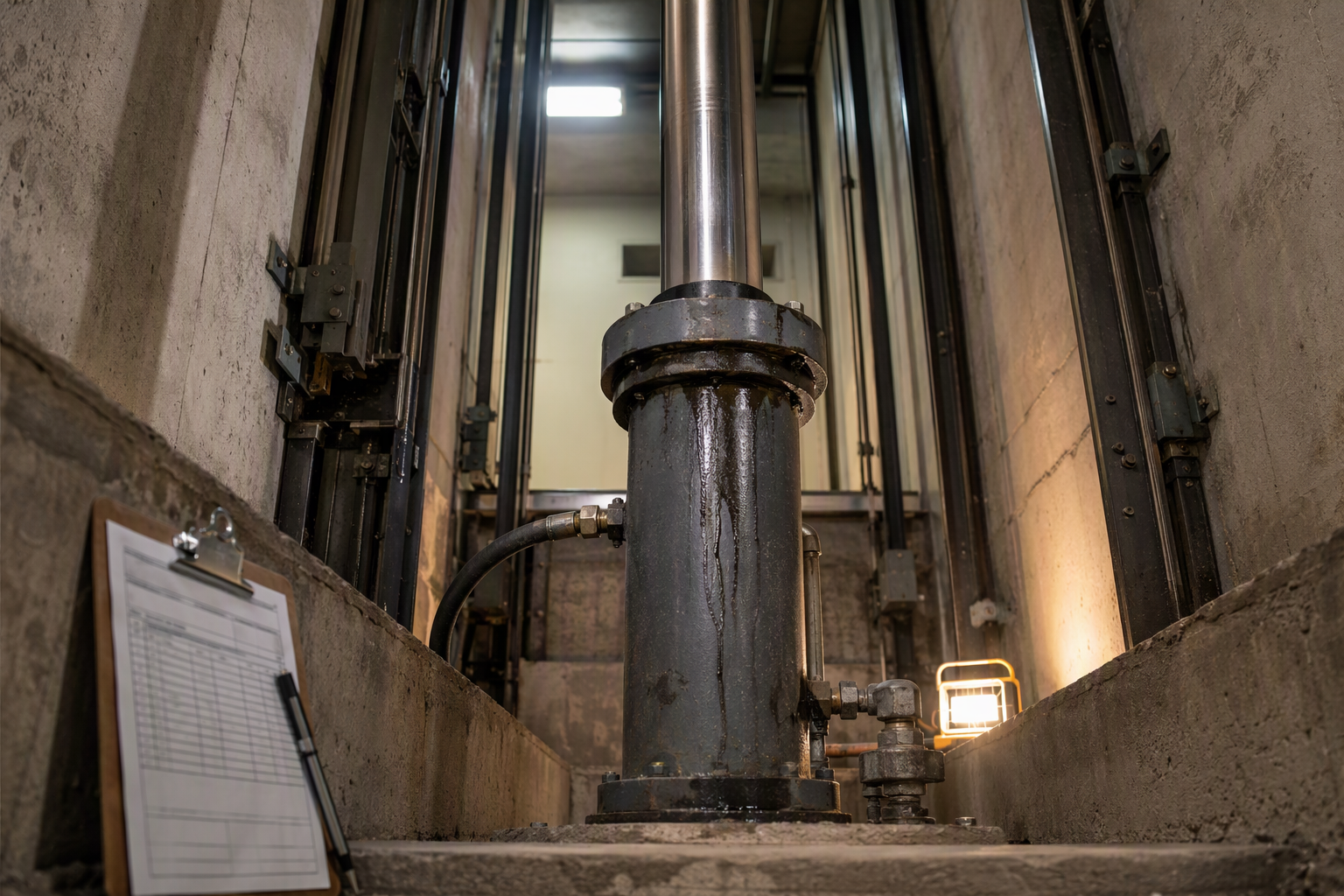
Hydraulic elevators use either a holed (in-ground) jack or a holeless (above-ground) jack. In-ground jacks are buried beneath the pit floor in a steel casing, while holeless jacks are mounted in the hoistway alongside the car. Both designs rely on dynamic seals — commonly called packing — to prevent hydraulic oil from leaking past the plunger where it exits the cylinder head. Packing is made from synthetic elastomers, PTFE, or leather-composite materials that compress against the moving plunger under system pressure. Over time, heat cycling, oil contamination, plunger surface wear, and age cause the packing to harden, crack, or extrude, leading to visible oil leaks, slow descent, or uneven leveling at floors.
Industry maintenance guidance under ASME A17.1 Safety Code for Elevators and Escalators requires periodic inspection of hydraulic systems for leaks and pressure integrity. When a leak is found, the building owner faces a choice: replace the packing only, or replace the entire jack assembly if the plunger surface is scored or the cylinder has corroded beyond tolerance.
How Long Does It Take to Get a Quote for Jack and Packing Replacement?
A qualified elevator contractor can typically deliver a written quote within one to three business days after completing an on-site assessment of the cylinder assembly.
The quoting process is not a simple phone estimate. A technician must physically measure the cylinder bore diameter, plunger outside diameter, stuffing box configuration, travel length, and working pressure rating before a parts cost can be calculated. For in-ground jacks, the assessment may also include checking for corrosion on the outer casing and testing soil conditions if a full jack pull is anticipated. Once measurements are in hand, the contractor contacts hydraulic elevator parts distributors — regionally, this includes suppliers serving Houston, Dallas, Austin, San Antonio, Los Angeles, and San Diego — to confirm stock and lead times before finalizing the quote.
AmeriTex Elevator conducts on-site hydraulic assessments across all of its Texas and California service markets and provides written scopes of work with itemized parts and labor breakdowns so building owners can make informed decisions without guessing at total cost.
What Factors Affect the Timeline for Getting Replacement Parts?
The single biggest factor affecting parts lead time is whether the jack uses a standard catalog packing kit or requires custom-machined seals fitted to a non-standard cylinder diameter.
Several variables combine to determine how quickly parts arrive on-site:
- Cylinder diameter and bore tolerances: Standard bore sizes (such as 3-inch, 4-inch, and 5-inch nominal diameters) are stocked by most hydraulic elevator parts distributors. Non-standard diameters require custom seal fabrication, which adds lead time.
- Jack vintage and manufacturer: Cylinders manufactured before the mid-1990s may be from brands that are discontinued or absorbed. Finding OEM-matched packing for legacy jacks often takes longer than sourcing aftermarket kits.
- Full jack replacement vs. packing-only repair: Replacement jack assemblies — particularly two-stage or three-stage holeless jacks — are typically special-order items with lead times measured in weeks rather than days.
- Regional distributor inventory: Markets like Houston and Los Angeles tend to have broader local distributor coverage than smaller metro areas, which can shorten the lag between order and delivery.
- Permit and inspection scheduling: In California, any material alteration to a conveyance requires a permit from Cal/OSHA’s Elevator Unit, California Department of Industrial Relations before work begins. That permitting step adds time to the overall project timeline independent of parts availability.
- Texas plan submission: In Texas, a registered contractor must submit plans to the Texas Department of Licensing and Regulation (TDLR) and obtain approval before installing or materially altering elevator equipment — another scheduling factor that is separate from parts lead time. Note that TDLR does not regulate elevators inside Houston city limits; the City of Houston runs its own program.
What Is the Typical Lead Time for Common Jack Packing Parts?
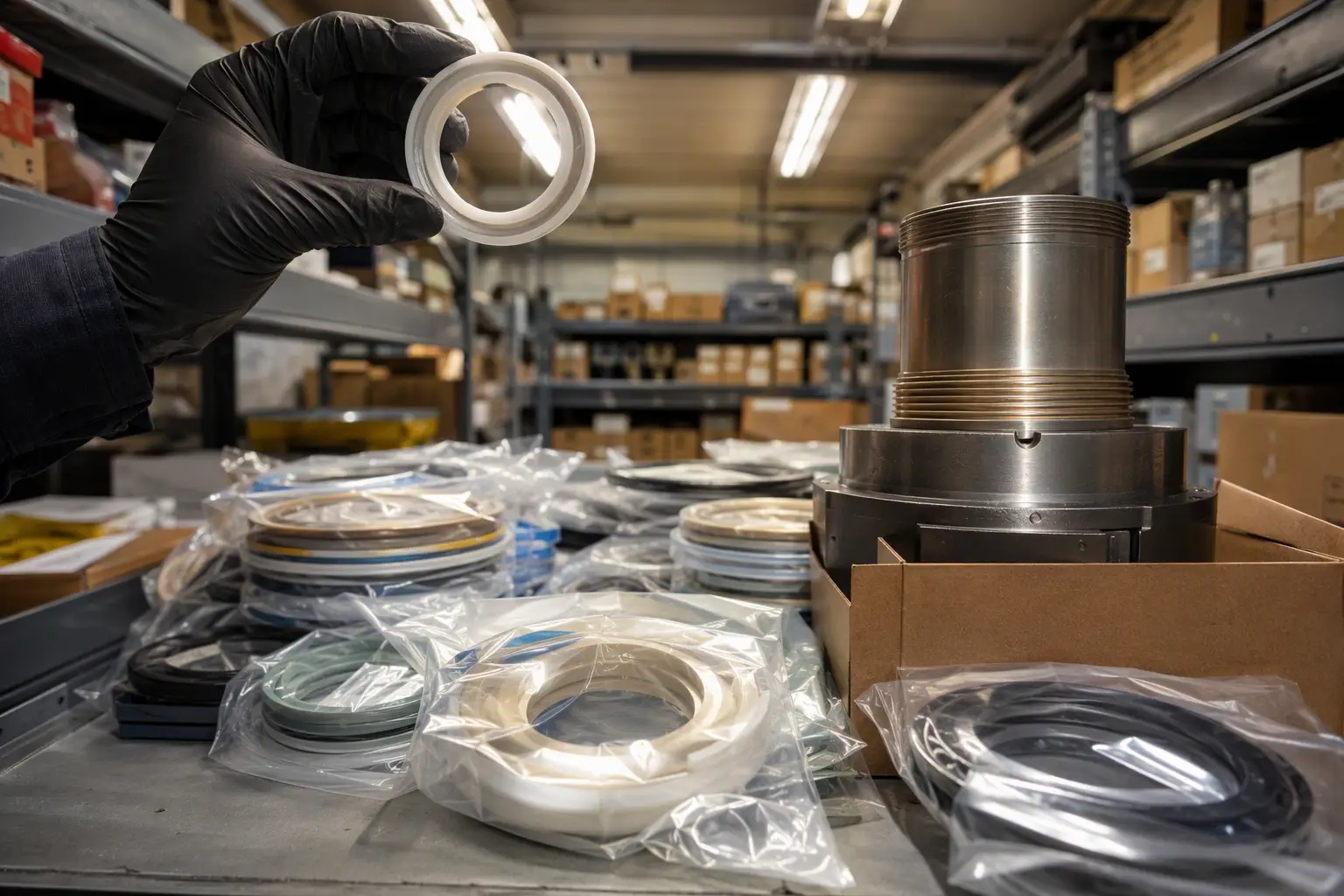
Standard hydraulic elevator packing kits for common cylinder sizes are generally available from regional distributors within one to five business days.
The table below provides benchmark lead time ranges for different categories of hydraulic elevator jack parts. These ranges reflect typical distributor stock conditions in major markets and are intended as planning benchmarks, not guarantees.
| Part Category | Description | Typical Lead Time | Key Variables |
|---|---|---|---|
| Standard packing kit | Catalog seal set for common bore diameters (3″–6″) | 1–5 business days | Distributor local stock, cylinder brand |
| Custom-machined packing | Non-standard bore, special elastomer grade | 2–4 weeks | Seal fabricator schedule, material spec |
| Stuffing box / cylinder head | Replacement gland or head casting | 1–3 weeks | OEM vs. aftermarket, bore size |
| Single-stage holeless jack assembly | Full plunger-and-cylinder replacement | 3–6 weeks | Travel length, capacity, brand |
| Two- or three-stage telescoping jack | Multi-section hydraulic cylinder | 6–12 weeks or longer | Custom fabrication, travel, load rating |
| In-ground jack with outer casing | Full buried cylinder replacement | 8–16 weeks or longer | Site conditions, corrosion, bore diameter |
| Hydraulic power unit components | Pump, motor, valve, tank | 1–4 weeks | Horsepower rating, OEM availability |
What Is Included in the Scope of a Jack Packing Replacement Job?
A hydraulic elevator jack packing replacement involves safely isolating the hydraulic system, removing worn seals, inspecting the plunger surface, installing new packing, and pressure-testing the assembly before returning the elevator to service.
The typical scope of work includes the following steps:
- Take the elevator out of service and lock out / tag out the hydraulic power unit per OSHA lockout/tagout requirements (29 CFR 1910.147).
- Drain hydraulic fluid from the cylinder or lower the plunger to a safe working position.
- Remove the stuffing box retaining hardware and extract the worn packing rings or V-packing stack.
- Inspect the plunger surface for scoring, pitting, or corrosion using a profilometer or visual inspection tool.
- Clean the stuffing box bore and inspect the cylinder head for cracks or distortion.
- Install new packing kit — including wiper rings, pressure rings, and backup rings — in the correct sequence and orientation per manufacturer specifications.
- Reassemble the stuffing box and torque retaining hardware to specification.
- Restore hydraulic fluid to the correct level and bleed air from the system.
- Perform a pressure test and cycle the elevator through multiple full runs to verify zero leakage.
- Verify floor leveling accuracy and adjust the control valve as needed.
- Complete documentation for the building owner and, where required, submit inspection records to the authority having jurisdiction.
Does the Packing Replacement Require a Permit or Inspection?
Whether a permit is required depends on the jurisdiction and the scope of work — packing replacement may qualify as routine maintenance in some cases, but any material alteration of the hydraulic system typically triggers a permit requirement.
In California, Cal/OSHA’s Elevator Unit requires a permit before a conveyance is erected, installed, or materially altered, and only a Certified Qualified Conveyance Company (CQCC) employing Certified Competent Conveyance Mechanics (CCCM) may perform the work. Building owners in Los Angeles should also be aware that the City of Los Angeles runs its own elevator and conveyance inspection program through the Department of Building and Safety (LADBS).
In Texas, a TDLR-registered contractor must submit plans to TDLR and receive approval before installing or materially altering elevator equipment. Texas building owners must also maintain a current Certificate of Compliance and report any accidents to TDLR within 24 hours. In Houston specifically, TDLR does not have jurisdiction — the City of Houston administers its own program, so owners should contact the city directly for local requirements.
How Does the Condition of the Plunger Affect Pricing and Timeline?
A plunger with surface damage beyond acceptable tolerances cannot hold new packing effectively, which may convert a straightforward packing replacement into a full jack pull and replacement — significantly increasing both cost and lead time.
When a technician inspects the plunger, they look for longitudinal scoring from debris ingestion, pitting from corrosion at the oil-air interface, and out-of-round conditions from mechanical damage. Minor surface imperfections can sometimes be addressed with in-place honing or polishing. Severe damage requires replacing the plunger rod or the entire jack assembly. Because this determination cannot be made without a physical inspection, contractors cannot provide fully binding pricing until they have eyes on the plunger — which is one reason quote timelines are measured in days rather than hours.
What Is the Difference Between Packing Replacement and a Full Jack Replacement?
Packing replacement involves only the dynamic seals in the stuffing box, while a full jack replacement involves pulling the entire cylinder-and-plunger assembly out of the hoistway or pit and installing a new unit.
Packing replacement is a shorter, less disruptive procedure when the plunger and cylinder are structurally sound. A full jack replacement is a major alteration that requires more extensive permitting, a longer equipment lead time, and greater downtime for the elevator. For in-ground (holed) jacks, a full replacement also involves excavation below the pit floor and remediation of any hydraulic oil contamination of the surrounding soil — an environmental concern regulated at the state level in both California and Texas. The decision between the two scopes should be driven by inspection findings and the remaining useful life of the existing cylinder, not by cost alone.
How Do California and Texas Regulatory Requirements Affect the Project Timeline?
Regulatory requirements in both states add non-negotiable steps to the project schedule that exist entirely apart from parts procurement and technician availability.
In California, the building owner is responsible for arranging the annual reinspection with a State of California safety engineer or a Certified Competent Conveyance Inspector (CCCI). No elevator may be operated in California without a valid, current permit to operate issued by Cal/OSHA, and that permit must be posted conspicuously in the elevator car. Where a material alteration is involved, the pre-work permit from Cal/OSHA must be secured before any wrench is turned — and obtaining that permit takes time that must be built into the project schedule from day one.
In Texas, the building owner holds the sole right to select the elevator inspector, who must be registered with TDLR. The inspector must deliver the inspection report within five calendar days of the inspection. If violations are cited, the owner must have them corrected or under contract for correction within 30 days, or obtain a waiver or delay from TDLR. For alteration projects, TDLR plan approval must precede construction. Both states make compliance the building owner’s responsibility — a knowledgeable elevator contractor can guide the process but cannot waive regulatory steps on the owner’s behalf.
What Should a Building Owner Do Immediately After Discovering a Hydraulic Leak?
A hydraulic oil leak from the jack assembly is a safety and environmental issue that warrants immediate action, beginning with taking the elevator out of normal passenger service until the leak is assessed and addressed.
- Take the elevator out of service by posting “Out of Service” notices at all landings and securing the car at a landing with doors open and power off if possible.
- Contact a registered elevator contractor — in Texas, this means a TDLR-registered contractor; in California, a CQCC — to schedule an on-site assessment as quickly as possible.
- Document the visible leak: photograph the stuffing box area, the oil accumulation in the pit, and any visible drips on the plunger rod. This documentation supports the insurance claim and the contractor’s quote process.
- Contain the oil if it is pooling in the pit — use absorbent pads and a containment tray while awaiting the contractor. Hydraulic oil in elevator pits is a slip hazard and may trigger environmental reporting obligations depending on volume and proximity to storm drains.
- Notify the building’s insurance carrier if the leak is significant or if there is damage to surrounding structure or equipment.
- In Texas, report any accident involving elevator equipment to TDLR within 24 hours if a person was injured.
- Request a written scope of work and itemized quote from the contractor before authorizing repairs, so permit costs, parts, labor, and inspection fees are all visible in a single document.
Can Packing Be Replaced While the Elevator Is Still in the Pit, or Does the Jack Have to Come Out?
In most cases, packing on a holeless above-ground jack can be replaced in place; packing on an in-ground jack typically requires either a partial plunger pull or full jack removal depending on the stuffing box design and the depth of the cylinder casing.
For holeless jacks, the stuffing box is accessible from the hoistway pit, and packing can usually be changed without moving the cylinder. For in-ground jacks, access to the stuffing box requires pulling the plunger up far enough to expose the gland — a step that requires the hydraulic system to be isolated and the plunger physically secured against gravity. If the outer casing is corroded or if the plunger cannot be extracted cleanly, the scope escalates to a full jack pull. This is another reason why a physical assessment is required before pricing: the difference between in-place packing and a full jack pull represents a large difference in labor hours, equipment rental, and downtime.
How Does ASME A17.1 Apply to Hydraulic Elevator Maintenance and Jack Inspections?
ASME A17.1 Safety Code for Elevators and Escalators establishes the minimum design, installation, and maintenance requirements for hydraulic elevators, including testing intervals and the conditions under which hydraulic equipment must be taken out of service.
The code requires that hydraulic elevator systems be maintained in a safe operating condition and includes requirements for pressure relief valve settings, hydraulic fluid containment, and testing of the lowering valve. California has adopted the ASME A17.1/CSA B44, 2004 edition (Group IV Elevator Safety Orders), effective May 1, 2008, for installation contracts signed on or after that date. Texas has adopted the ASME A17.1/CSA B44, 2016 edition, as amended by 16 Texas Administrative Code Chapter 74, effective November 1, 2018. Because these are different code editions, the specific technical requirements for hydraulic system testing and packing inspection intervals may differ between the two states — a critical detail for any multi-state building portfolio.
What Does an ADA-Compliant Elevator Have to Do With the Jack Replacement Decision?
The Americans with Disabilities Act (ADA) requires that elevators serving public accommodations and commercial facilities remain accessible, which means extended downtime for a jack replacement can trigger accessibility compliance issues if no accessible alternative exists in the building.
When a hydraulic elevator is the only accessible means of vertical travel in a building, taking it out of service for a major repair creates a potential ADA compliance gap for building owners and tenants. This consideration should be factored into project scheduling: ordering parts before the elevator is taken out of service — to the extent that lead time allows — can minimize downtime. For buildings in Houston, Dallas, Austin, San Antonio, Los Angeles, or San Diego with a single accessible elevator, discussing a pre-order strategy with the contractor during the quoting phase is advisable.
Is There a Way to Speed Up the Parts Procurement Process?
Yes — working with a contractor who has established distributor relationships and who initiates parts sourcing immediately after the on-site assessment, rather than waiting for the owner to authorize the quote, can materially compress the overall timeline.
Several strategies can reduce lag time between assessment and parts arrival:
- Parallel processing: A contractor can request distributor stock checks and lead time quotes simultaneously with preparing the written estimate, so the owner gets pricing and parts availability information in the same document.
- Pre-authorization for long-lead items: If the assessment confirms a standard-diameter cylinder but requires a custom packing grade, the owner can authorize the parts order before finalizing all other scope decisions.
- Emergency freight: Standard packing kits can often be air-freighted from a regional warehouse when downtime cost justifies expedited shipping charges.
- Contractor stock programs: Some elevator service companies maintain a van or shop stock of high-turnover packing sizes, enabling same-day or next-day packing changes for common cylinder diameters.
- Early permitting: In states where a pre-work permit is required, submitting the permit application as soon as the scope is defined — rather than waiting for parts to arrive — prevents the permit from becoming the critical path item.
AmeriTex Elevator’s service teams in Texas and California work to coordinate parts sourcing and permitting concurrently so that building owners face the shortest possible elevator downtime consistent with safe, code-compliant work.
What Questions Should a Building Owner Ask When Comparing Contractor Quotes?
A meaningful apples-to-apples comparison of contractor quotes for jack and packing replacement requires understanding exactly what each quote does and does not include.
The following questions help building owners evaluate competing proposals with clarity:
- Does the quote include parts, labor, and hydraulic fluid refill, or are any of these line items billed separately?
- Is plunger inspection and surface assessment included, or is it an add-on if scoring is found?
- What is the quoted lead time for parts, and is that based on confirmed distributor stock or an estimate?
- Does the quote include permit fees and inspection fees, or will those be billed as incurred?
- Is the contractor registered with TDLR (Texas) or certified as a CQCC (California) as required by state law?
- What is the warranty on the new packing, and does it cover both material and labor?
- How is the quote affected if the plunger or cylinder is found to require full replacement once work begins?
- Does the quote include post-repair testing and documentation for compliance with the authority having jurisdiction?
How Often Should Hydraulic Elevator Jack Packing Be Inspected or Replaced?
Packing inspection should occur at every routine maintenance visit, with replacement intervals driven by observed leakage, plunger surface condition, and oil consumption trends rather than a fixed calendar schedule.
There is no universal packing replacement interval expressed in ASME A17.1 as a standalone maintenance task — the code focuses on outcomes (no leakage, proper pressure maintenance) rather than prescribing replacement frequency. In practice, packing life is highly variable: a well-maintained elevator with clean hydraulic oil, a smooth plunger, and moderate use may go many years without packing replacement, while a unit with contaminated fluid, a worn plunger, or high cycle rates may require packing attention much sooner. Building owners who have a full maintenance contract can benefit from proactive packing monitoring as part of regular service visits, which tends to catch early-stage leaks before they become emergency repairs.
Do Full Maintenance Contracts Cover Jack Packing Replacement?
Whether a full maintenance contract covers packing replacement depends entirely on the contract language — some contracts include packing as a covered maintenance item, while others treat it as a billable repair.
Building owners should read their maintenance agreement carefully to determine whether hydraulic jack packing is listed as an included component or excluded as a wear part. In California, a full maintenance contract with a C-11 licensed elevator company can qualify an elevator for a permit to operate valid for up to two years (rather than the standard one year) from Cal/OSHA — an administrative benefit that highlights the value of comprehensive coverage. In Texas, owners must ensure compliance with the annual inspection requirement regardless of contract type, as the Certificate of Compliance from TDLR is the owner’s responsibility.
What Happens If a Hydraulic Elevator With a Leaking Jack Is Left in Service?
Continuing to operate an elevator with an active hydraulic leak creates safety risks, environmental liability, and potential regulatory violations that escalate in severity the longer the problem is deferred.
From a safety standpoint, oil loss reduces system pressure, which can cause the elevator to descend slowly between calls (a condition known as “creep”) or fail to maintain floor level. In a worst-case scenario, severe oil loss can cause an uncontrolled descent. From an environmental standpoint, hydraulic oil that accumulates in the pit may seep into surrounding soil or drainage systems, creating liability under applicable state environmental regulations in both California and Texas. From a regulatory standpoint, a leaking hydraulic elevator may fail the annual inspection, resulting in a cited violation that must be corrected or placed under contract for correction within 30 days in Texas, or a permit to operate that is not renewed in California. Neither outcome is preferable to proactive repair.
How Does Location Within Texas or California Affect Pricing and Parts Access?
Geographic location within each state affects both parts delivery logistics and the regulatory authority that must be engaged for permits and inspections.
In the major Texas metros — Houston, Dallas, Austin, and San Antonio — elevator parts distributors and hydraulic supply houses are generally well-represented, which supports shorter delivery lead times for standard packing kits. Houston building owners must coordinate with the City of Houston’s program rather than TDLR. In Dallas, Austin, and San Antonio, TDLR has jurisdiction and the standard state regulatory process applies. In California, the Los Angeles market is served by a broad network of hydraulic suppliers, and Los Angeles building owners interact with both Cal/OSHA and the City of Los Angeles Department of Building and Safety. San Diego building owners work primarily through Cal/OSHA’s statewide program. In all markets, AmeriTex Elevator manages the permitting coordination and parts sourcing on behalf of building owners so that regulatory timelines and supply chain timelines are addressed in parallel rather than sequentially.
What Records Should a Building Owner Retain After Jack and Packing Replacement Is Complete?
Building owners should retain a complete set of repair documentation including the contractor’s written scope of work, parts specifications, pressure test results, permit approvals, and post-repair inspection reports for the life of the equipment.
In Texas, the registered inspector must provide the inspection report within five calendar days of the inspection, and that report is part of the compliance record. The Certificate of Compliance must be displayed in a publicly visible area of the building. In California, the permit to operate must be posted conspicuously in the elevator car. Beyond regulatory documents, retaining parts specifications and test results creates a maintenance history that supports future repair decisions, insurance claims, and due diligence documentation during a building sale. A hydraulic elevator with a documented maintenance record — including dated packing replacement records and pressure test results — is an asset rather than a liability in a transaction.
Contact AmeriTex Elevator for a free elevator assessment at 844-646-9660.
Need elevator service you can rely on? AmeriTex Elevator is ready to help.