Elevator Preventative Maintenance Services for Government Contract Work at Military and Army Reserve Facilities
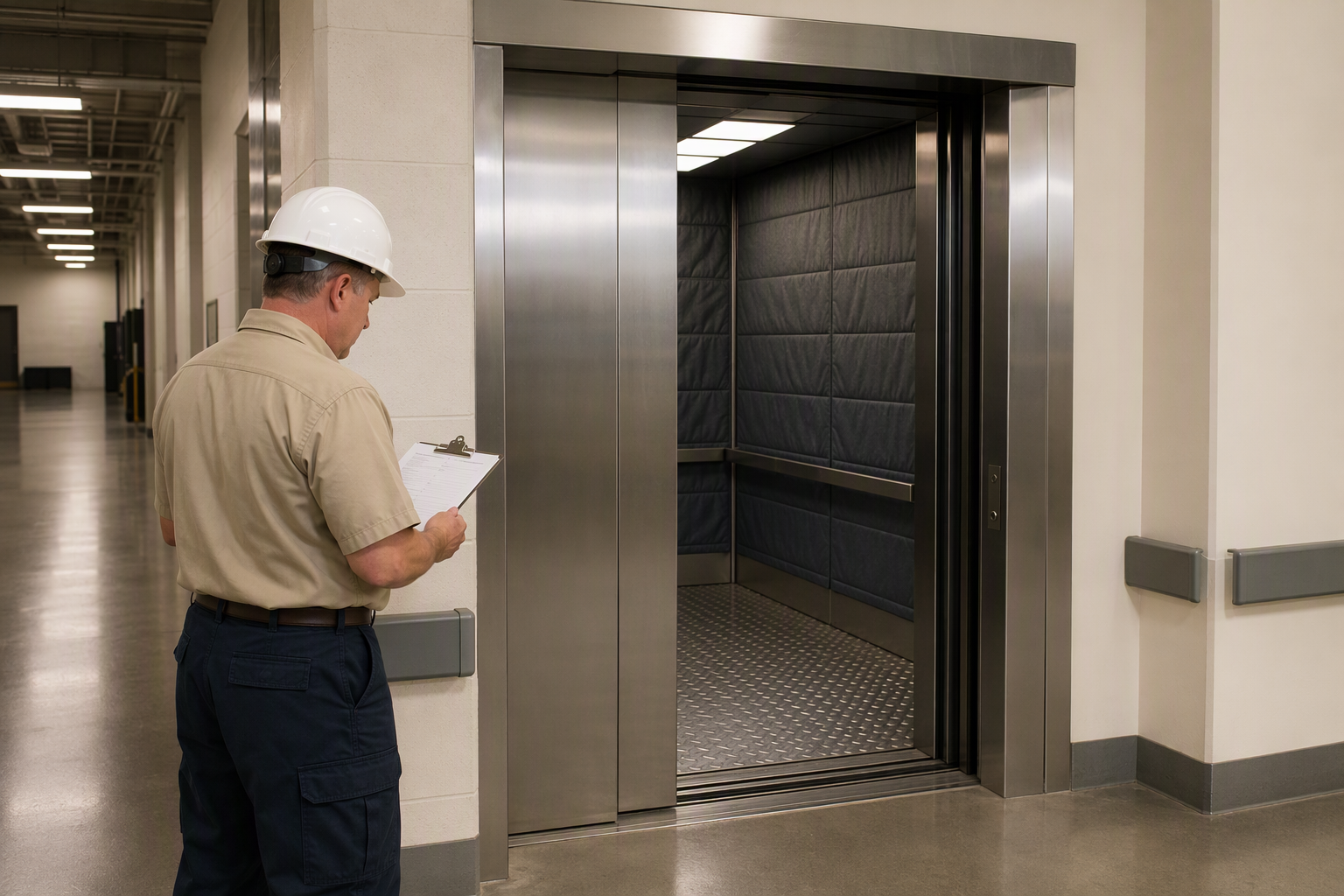
Federal installations — including active-duty military bases, Army Reserve centers, National Guard armories, and other Department of Defense properties — present unique operational and regulatory demands for elevator maintenance contractors. These facilities require vendors who understand federal procurement standards, can align maintenance protocols with federal safety codes, and can document compliance in formats acceptable to contracting officers. The following comprehensive FAQ addresses the most important questions facility managers, contracting officers, and property administrators ask when evaluating elevator preventative maintenance providers for government contract work.
Do you offer elevator preventative maintenance services for government contract work at military or Army Reserve facilities?
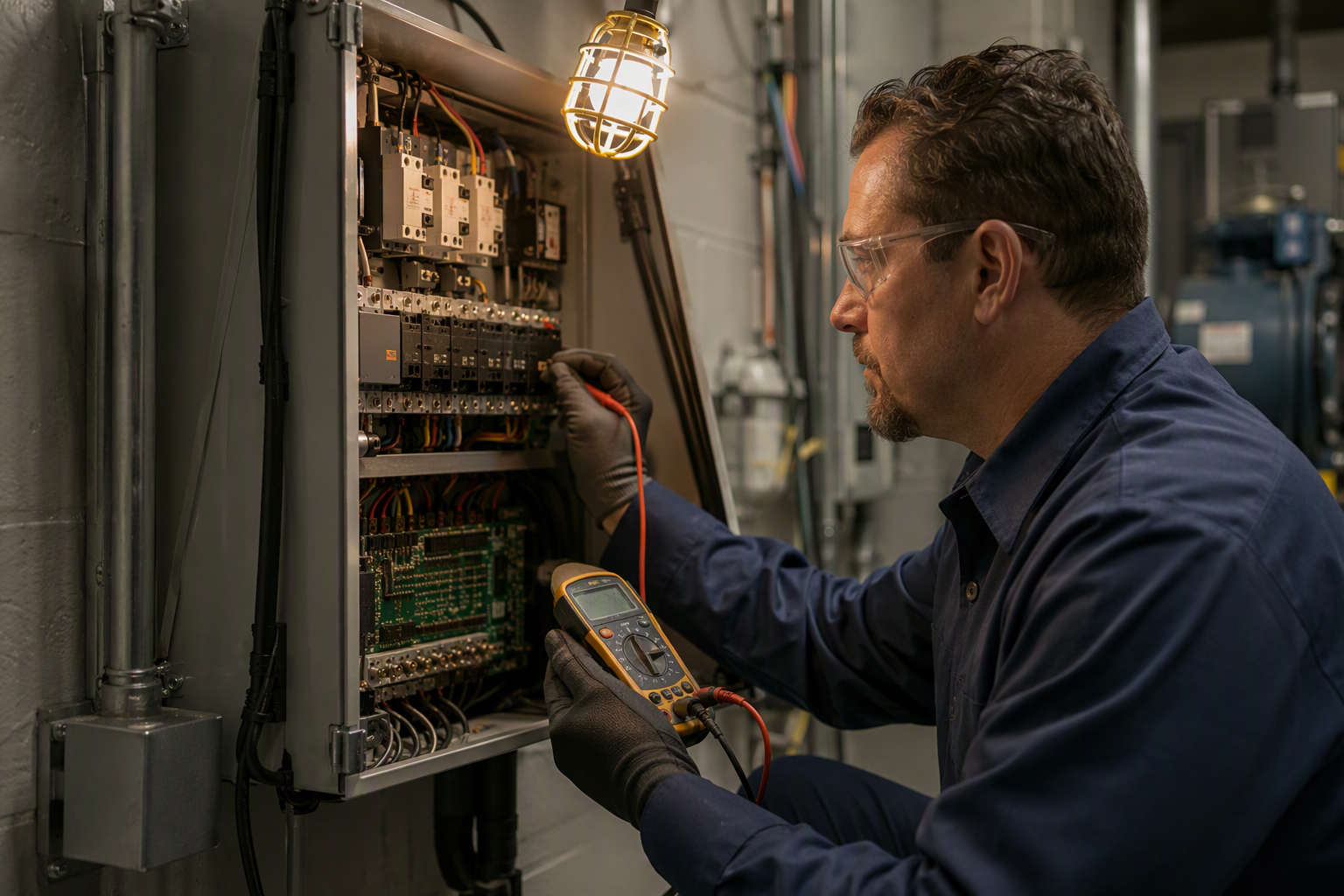
Yes — AmeriTex Elevator offers elevator preventative maintenance services structured to support government contract work at military installations and Army Reserve facilities across its Texas and California service markets.
Military and Army Reserve facilities operate elevators in a wide range of building types — administrative buildings, armories, maintenance hangars, barracks, medical clinics, and logistics warehouses. Each of these environments places distinct demands on elevator systems, from heavy freight loads to round-the-clock operational schedules. Preventative maintenance at these facilities must align with the ASME A17.1 Safety Code for Elevators and Escalators, which establishes the baseline safety standard for elevator installation and maintenance across the United States, and must accommodate the documentation and access requirements specific to federal government properties.
AmeriTex Elevator serves facilities in Houston, Dallas, Austin, San Antonio, Los Angeles, and San Diego — metro areas that host a significant concentration of military and Army Reserve installations.
Why does federal law exempt government-owned elevators from state elevator programs?
Federal law establishes that elevators in buildings owned and operated by the federal government are not subject to state-level elevator regulatory programs, meaning state inspection and permitting requirements do not apply to those units.
In Texas, the Texas Health and Safety Code Chapter 754 explicitly states that the state elevator law does not apply to equipment in buildings owned and operated by the federal government. This is confirmed by the Texas Department of Licensing and Regulation (TDLR) Elevator and Escalator Safety program, which administers the state program but has no jurisdiction over federally owned properties. Similarly, in California, Cal/OSHA’s Elevator Unit — which enforces California Labor Code Sections 7300–7324.2 and the California Code of Regulations, Title 8, Elevator Safety Orders — exempts conveyances under federal jurisdiction from its program.
This federal exemption means that military and Army Reserve facilities operate under federal standards and internal Department of Defense directives rather than state permitting, inspection, and certificate-of-compliance requirements. Maintenance contractors working on these properties must be prepared to follow federal protocols and document compliance in accordance with the installation’s contracting requirements, not state agency forms.
Which federal elevator safety standard applies at military facilities?
The primary federal benchmark for elevator safety at military and government facilities is the ASME A17.1 Safety Code for Elevators and Escalators, supplemented by ASME A17.3 for existing installations.
ASME A17.1 governs the design, construction, installation, operation, inspection, testing, maintenance, alteration, and repair of elevators and related conveyances. ASME A17.3, the Safety Code for Existing Elevators and Escalators, provides the framework for bringing older units into a reasonable state of safety. Federal agencies and Department of Defense facilities commonly reference these codes when writing performance work statements and quality assurance surveillance plans for elevator maintenance contracts. Contractors must demonstrate familiarity with both documents and the ability to perform maintenance to those standards.
Additionally, ADA requirements apply to federally owned and leased facilities, ensuring that elevator accessibility features — including door timing, cab dimensions, control panel height, tactile buttons, and audible signals — are maintained to standards that protect access for individuals with disabilities. Federal facilities are subject to ADA Title II requirements, and elevator maintenance programs must preserve full ADA compliance throughout the life of the maintenance contract.
What does a preventative maintenance plan for a military facility elevator typically include?
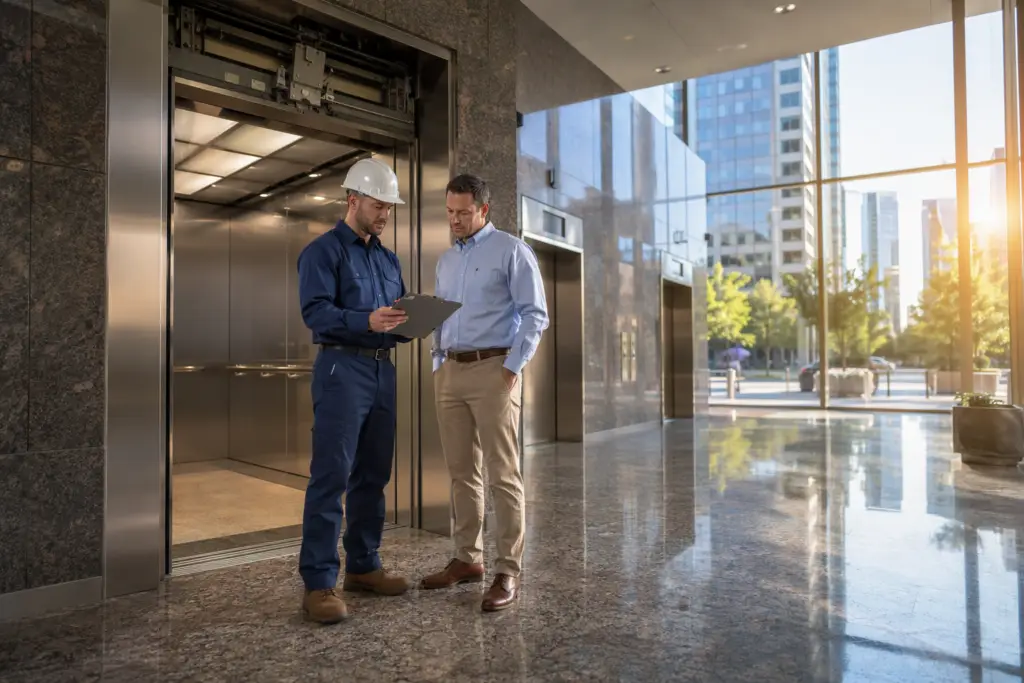
A preventative maintenance plan for a military facility elevator is a structured, scheduled program of inspections, lubrication, adjustment, cleaning, and component testing designed to prevent failures before they occur and sustain ASME A17.1 compliance throughout the contract period.
Typical elements of a comprehensive preventative maintenance plan at a military or government facility include:
- Scheduled inspection visits — routine visits at defined intervals to inspect all major mechanical, electrical, hydraulic, and safety components
- Lubrication program — systematic lubrication of guide rails, governor assemblies, machine room components, and door mechanisms per manufacturer specifications and ASME A17.1 guidelines
- Door system maintenance — adjustment and testing of door operators, door restrictors, safety edges, and interlock contacts, with particular attention to door restrictor functionality required for safe operation
- Safety device testing — periodic testing of safeties, governors, buffers, and emergency stopping systems as required under ASME A17.1
- Firefighters’ service testing — verification that Phase One and Phase Two firefighters’ emergency service functions operate correctly, a critical life-safety requirement
- Category testing — support for and documentation of periodic load and safety tests required by the applicable code, including Category 1 and Category 5 tests on traction elevators where applicable
- Emergency communication verification — testing of in-cab emergency communication systems to confirm operability in compliance with ADA and ASME A17.1 requirements
- Machine room and pit inspection — inspection of machine rooms and pits for code-required lighting, clearances, housekeeping, and access conditions
- Documented maintenance records — maintenance logs formatted to support government contractor documentation requirements, inspection reports, and audit trails
How does preventative maintenance differ from a full maintenance contract?
A preventative maintenance contract covers scheduled inspections, adjustments, lubrication, and minor part replacements, while a full maintenance contract typically extends coverage to include repair labor and parts replacement for components that wear out or fail during the contract period.
The distinction is significant for government procurement because contracting officers and facility managers must align the scope of the maintenance contract with the installation’s budget structure and risk tolerance. Full maintenance contracts shift more financial risk to the contractor and can simplify budget planning, but they typically carry higher base pricing. Preventative-only contracts allow the government to exercise tighter control over parts expenditure but require a separate mechanism — a task order, purchase order, or repair authorization process — to address failures and replacements as they arise.
California’s Cal/OSHA program provides one useful benchmark: a full maintenance contract with a Certified Qualified Conveyance Company (CQCC) can result in the permit to operate being valid for up to two years rather than the standard one year, illustrating how regulators recognize full maintenance programs as a higher tier of protective service. While this specific California benefit does not apply to federally exempt facilities, it reflects the industry understanding that comprehensive maintenance programs reduce failure risk and downtime.
What regulatory qualifications should a contractor have to work on elevators at military facilities in Texas?
In Texas, contractors performing elevator maintenance must be registered with the Texas Department of Licensing and Regulation (TDLR) as an elevator contractor, and must carry the required insurance minimums, even though the federal installation itself is exempt from TDLR jurisdiction over its elevators.
Under 16 Texas Administrative Code Chapter 74, a person may not install, repair, alter, test, or maintain elevator equipment in Texas without registering as a contractor with TDLR. Texas elevator contractor registrations expire annually. Contractors must carry general liability insurance of at least $1,000,000 per occurrence for bodily injury or death and $500,000 per occurrence for property damage. Each contractor must designate a responsible party with at least three years of elevator contractor experience. While TDLR does not regulate the federal facility’s elevator itself, a properly registered and insured Texas contractor provides the institutional credibility that government contracting officers look for when evaluating vendor qualifications.
Note: The City of Houston operates its own elevator program independently — TDLR does not regulate elevators inside Houston city limits. Contractors serving military or Reserve facilities within Houston should be familiar with that city’s own program requirements as they pertain to the contractor’s general qualifications.
What regulatory qualifications should a contractor have to work on elevators at military facilities in California?
In California, any company that installs, alters, tests, maintains, repairs, or services elevators must be certified by Cal/OSHA as a Certified Qualified Conveyance Company (CQCC), and each mechanic performing unsupervised work must hold a Certified Competent Conveyance Mechanic (CCCM) credential.
California Labor Code Sections 7300–7324.2 and the California Code of Regulations, Title 8, Elevator Safety Orders govern elevator work in the state. To obtain CQCC certification, a company must submit a current C-11 Elevator Contractor license — issued by the California Contractors State License Board (CSLB) — along with certificates of workers’ compensation and liability insurance. CQCC and CCCM certificates are valid for two years and require at least eight hours of continuing education for renewal. Although federally owned facilities are exempt from Cal/OSHA’s permitting and inspection jurisdiction, these qualifications demonstrate a contractor’s technical legitimacy and are typically required or preferred in federal solicitations covering California installations.
Los Angeles has its own elevator and conveyance inspection program administered by the Department of Building and Safety (LADBS). Contractors serving military or Reserve facilities in the Los Angeles area should account for that program’s requirements as applicable to their general business operations.
How should a preventative maintenance schedule be structured for a high-use military facility elevator?
A preventative maintenance schedule for a high-use military facility elevator should be structured around visit frequency, component-specific service intervals, and mandatory periodic testing milestones, all documented in a format that supports contract performance verification.
A structured maintenance schedule for a high-use facility typically looks as follows:
| Maintenance Activity | Recommended Frequency | Applicable Standard |
|---|---|---|
| General lubrication and visual inspection | Monthly | ASME A17.1 |
| Door operator and interlock inspection | Monthly | ASME A17.1 |
| Safety edge and reopening device test | Monthly | ASME A17.1 |
| Emergency lighting and communication test | Monthly | ASME A17.1 / ADA |
| Governor and safety gear inspection | Quarterly | ASME A17.1 |
| Firefighters’ service (Phase I and II) test | Quarterly | ASME A17.1 |
| Machine room and pit housekeeping inspection | Quarterly | ASME A17.1 |
| Category 1 no-load safety test (traction) | Annually | ASME A17.1 |
| Full-load brake test | Annually | ASME A17.1 |
| Category 5 full-load, full-speed test (traction) | Every 5 years | ASME A17.1 / 16 TAC §74 (Texas) |
| Hydraulic pressure and relief valve test | Annually | ASME A17.1 |
| ADA compliance audit (controls, signals, timing) | Annually | ADA |
Texas state code requires a Category 5 full-load test every five years on electric traction elevators under 16 Texas Administrative Code Chapter 74. Although federally exempt facilities are not obligated to follow TDLR’s schedule, many federal installation standards align with or exceed this benchmark, making it a useful planning reference.
What documentation does AmeriTex Elevator provide that supports government contract compliance?
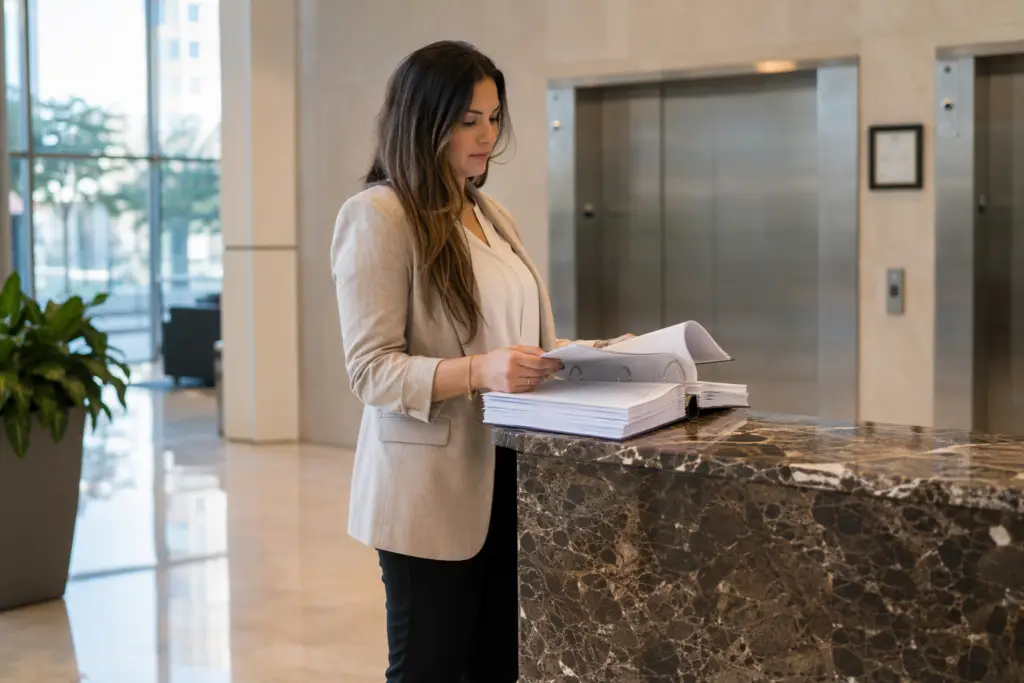
AmeriTex Elevator provides detailed, dated maintenance records and service reports designed to support government contract performance documentation requirements and quality assurance surveillance activities.
Government contracts for elevator maintenance typically include performance work statements, quality assurance surveillance plans, and deliverable requirements lists that mandate specific documentation. Useful documentation for these contracts includes visit reports identifying components inspected, services performed, and items noted for follow-up; parts replacement logs; test result records for periodic safety and load tests; and records that allow a contracting officer’s representative to verify that the contractor met the required visit frequency and scope. Organized, consistently formatted documentation reduces administrative burden during contract performance reviews and supports the installation’s overall facility maintenance record.
What types of elevators are commonly found at military and Army Reserve facilities?
Military and Army Reserve facilities commonly house a mix of electric traction passenger elevators, hydraulic freight elevators, platform lifts, and in some cases dumbwaiters or vertical reciprocating conveyors — each requiring maintenance protocols appropriate to its drive system and use environment.
Administrative and headquarters buildings typically rely on electric traction passenger elevators serving multiple floors. Armories and maintenance facilities may use hydraulic freight elevators capable of moving heavy equipment, vehicles, or supplies. Accessible entrances and smaller buildings may be served by platform lifts subject to ADA requirements. Each drive type — traction, hydraulic, or winding drum — has distinct lubrication, adjustment, and testing requirements under ASME A17.1. A comprehensive preventative maintenance provider must be equipped to service all conveyance types present at a given installation, rather than limiting coverage to a single unit type.
How does ADA compliance factor into elevator maintenance at government facilities?
ADA compliance is a continuous maintenance obligation at government facilities, not a one-time installation requirement, because elevator components that affect accessibility can degrade over time through normal wear.
Under ADA Title II, federal and state government facilities must maintain accessible features in operable condition. For elevators, this encompasses door open times, leveling accuracy, cab lighting levels, control panel button operation and tactile markings, floor indicators, and audible and visual signals. A preventative maintenance program that incorporates periodic ADA compliance checks helps government facility managers document their commitment to accessibility and address degradation before it results in a barrier to access. Elevator controls, door timing adjustments, and leveling calibration are all areas where routine maintenance directly sustains ADA compliance.
What safety hazards does preventative maintenance specifically prevent at high-security government installations?
Preventative maintenance at high-security government installations specifically targets failure modes that can compromise occupant safety, disrupt critical operations, or create security vulnerabilities — including door restrictor failures, firefighters’ service malfunctions, and leveling errors that create trip hazards.
In Texas, a passenger elevator without working door restrictors must be removed from service immediately, as must a passenger elevator with non-working Phase One firefighters’ service. These mandatory out-of-service requirements reflect the severity of the life-safety risk these failures present. At a military or Reserve facility, an elevator taken out of service can disrupt personnel movement, impede equipment transport, and affect mission readiness. Regular inspection and testing of door restrictors, door interlocks, and firefighters’ service equipment — key elements of a structured preventative maintenance program — directly reduces the probability of these failures and the operational consequences that follow.
Machine room access security is also a legitimate concern at government installations. A preventative maintenance provider must coordinate access with security personnel, adhere to access control protocols, and maintain proper identification and escort procedures, all of which should be addressed in the contract’s security requirements clauses.
How should a government facility manager select an elevator maintenance contractor for a solicitation?
A government facility manager selecting an elevator maintenance contractor should evaluate the vendor’s state-level contractor registrations and certifications, documented experience with the relevant elevator types, insurance minimums, ability to perform ASME-required periodic tests, and capacity to produce documentation that satisfies the contract’s quality assurance requirements.
Key evaluation criteria to include in a solicitation or source selection include:
- Verify that the contractor holds current state registration or certification — TDLR registration in Texas, CQCC certification in California — as applicable to the installation’s location.
- Confirm that the contractor carries at minimum the insurance levels required by state law — in Texas, at least $1,000,000 per occurrence for bodily injury or death and $500,000 per occurrence for property damage under 16 Texas Administrative Code Chapter 74.
- Confirm that mechanics assigned to the contract hold the appropriate credentials — in California, CCCM certification from Cal/OSHA is mandatory for unsupervised elevator work.
- Review sample maintenance reports and documentation to assess whether the format meets the contract’s deliverable requirements.
- Evaluate the contractor’s familiarity with ASME A17.1 and ASME A17.3, the governing federal safety codes, and their ability to perform Category 1 and Category 5 tests.
- Assess the contractor’s security clearance capability or willingness to comply with base access and personnel screening requirements.
- Confirm the contractor’s geographic coverage aligns with all installations included in the contract’s scope.
What is the difference between ASME A17.1 and ASME A17.3, and which applies to existing military facility elevators?
ASME A17.1 is the Safety Code for Elevators and Escalators governing new installations, while ASME A17.3 is the Safety Code for Existing Elevators and Escalators, which establishes retroactive safety requirements for elevators that were installed before the current A17.1 edition was adopted.
Many military and Army Reserve facilities contain elevators installed decades ago that predate modern editions of ASME A17.1. For those units, ASME A17.3 provides the applicable framework for maintenance, inspection, and retrofit requirements. A competent preventative maintenance provider must be able to identify whether a unit is subject to A17.1 requirements as the installation code or to A17.3 requirements as an existing installation, and tailor the maintenance program accordingly. This distinction also affects the scope of periodic testing and the determination of which retrofit upgrades may be required or advisable.
How does the five-year Category 5 test requirement affect long-term maintenance planning for government contracts?
The Category 5 full-load, full-speed safety test requirement should be factored into multi-year government elevator maintenance contracts as a planned, budgeted event rather than an unexpected cost, because it is a code-required performance milestone that cannot be deferred.
In Texas, 16 Texas Administrative Code Chapter 74 requires a Category 5 full-load test every five years on electric traction elevators. For a federal facility using ASME A17.1 as its maintenance standard — as many do, even in the absence of state regulatory jurisdiction — this testing interval represents a best-practice benchmark. A five-year government maintenance contract that does not account for Category 5 testing in its performance work statement and pricing structure risks mid-contract disputes over who bears the cost and scheduling burden of this test. Facility managers and contracting officers should confirm that the Category 5 test scope, scheduling, and documentation responsibility are explicitly defined in the contract.
Can elevator preventative maintenance for military facilities be structured as a multi-year contract?
Yes — elevator preventative maintenance for military facilities is well suited to multi-year contract vehicles because elevator systems benefit from continuity of service, consistent documentation history, and a maintenance provider familiar with the specific equipment at each installation.
Multi-year contracts allow the maintenance provider to build an equipment history database for each elevator unit, track wear trends, anticipate component replacements, and calibrate inspection focus to the specific failure patterns observed at that installation. For the government, multi-year contracts reduce procurement administrative burden and allow for better workforce planning around security access and base coordination. The contract structure should include clear provisions for annual performance reviews, mechanisms for addressing emergency repairs outside the preventative maintenance scope, and defined processes for out-of-service conditions such as door restrictor or firefighters’ service failures that require immediate action.
What should be included in the transition plan when a new elevator maintenance contractor takes over a military installation?
A transition plan for a new elevator maintenance contractor at a military installation should include a comprehensive equipment survey, transfer of all prior maintenance records, identification of any deferred maintenance items, base access credentialing for all assigned personnel, and a defined first-visit schedule that establishes baseline conditions for the new contract.
Equipment survey and record transfer are foundational. Without a full history of prior maintenance, test dates, and known deficiencies, an incoming contractor cannot accurately assess the current condition of each unit or set a realistic schedule for upcoming required tests such as Category 5 evaluations. AmeriTex Elevator recommends that transition plans include a joint walkthrough with the outgoing contractor where contractually feasible, a formal punch list of any open maintenance items, and written confirmation of when the next Category 1 and Category 5 tests are due for each traction unit on the installation.
How does OSHA apply to elevator maintenance workers at military facilities?
OSHA standards apply to elevator maintenance workers — including those working on federally owned properties — because OSHA’s worker protection rules cover employees performing the maintenance work itself, distinct from the question of which agency regulates the elevator installation.
The Occupational Safety and Health Administration (OSHA) sets requirements for lockout/tagout procedures, confined space entry, fall protection, and electrical safety that apply to elevator mechanics performing maintenance in machine rooms, pits, and hoistways. Contractors working at military installations must comply with applicable OSHA standards as a condition of employee safety, and many federal contracts explicitly require contractors to demonstrate OSHA compliance programs and provide OSHA safety training documentation for assigned personnel. A preventative maintenance provider that cannot demonstrate a robust OSHA compliance program introduces legal and operational risk for the installation’s contracting officer.
What are the most common elevator deficiencies found during preventative maintenance inspections at older government buildings?
The most common deficiencies found during preventative maintenance inspections at older government buildings include worn door operator components, degraded hoist ropes or hydraulic seals, malfunctioning firefighters’ service features, leveling accuracy drift, and deteriorated cab lighting or emergency communication systems.
Older installations — particularly those built before more recent editions of ASME A17.1 imposed updated requirements — may also have machine room conditions that do not meet current housekeeping, lighting, or clearance standards. Hydraulic units may show evidence of hydraulic fluid seepage requiring seal replacement or underground cylinder evaluation. Traction units may be approaching the end of useful service life for wire ropes, requiring documented assessment and planned replacement. A preventative maintenance program that includes systematic documentation of observed conditions — even those not yet requiring immediate repair — gives facility managers the forward-looking information needed to plan capital budgets and prioritize corrective actions before failures occur.
Why should military and Army Reserve facility managers choose AmeriTex Elevator for elevator preventative maintenance?
AmeriTex Elevator holds the state registrations and certifications required to perform elevator maintenance in Texas and California, serves all major metro markets where military and Army Reserve concentrations are significant, and structures maintenance programs around ASME A17.1 and ADA compliance in a format compatible with government contract documentation requirements.
AmeriTex Elevator operates across Houston, Dallas, Austin, San Antonio, Los Angeles, and San Diego — markets that include major military installations and Reserve centers. The company’s maintenance programs address the full range of conveyance types found at government facilities, from traction passenger elevators to hydraulic freight units and platform lifts. Documentation practices are structured to support government quality assurance requirements, and maintenance schedules account for mandatory periodic tests including Category 5 evaluations. Facility managers seeking a maintenance partner with the technical depth to service complex, high-use government elevator systems and the administrative capability to operate within federal contract frameworks will find AmeriTex Elevator’s programs aligned with those requirements.
For Texas facilities, AmeriTex Elevator operates in compliance with the Texas Department of Licensing and Regulation (TDLR) Elevator and Escalator Safety program requirements. For California facilities, the company operates in accordance with Cal/OSHA Elevator Unit requirements, including CQCC and CCCM credentials required for elevator work in the state. Both state frameworks underpin the technical and institutional credibility that government contracting officers expect from an elevator maintenance vendor.
Contact AmeriTex Elevator for a free elevator assessment at 844-646-9660.
Need elevator service you can rely on? AmeriTex Elevator is ready to help.