How Much Does Elevator Modernization Cost for a Commercial Building in 2026?

Elevator modernization is one of the largest capital decisions a commercial building owner faces. Unlike routine maintenance, modernization replaces or upgrades major systems—controls, motors, cab interiors, door operators, or all of the above—to restore safety, efficiency, and code compliance. Understanding what drives cost is essential before requesting bids.
What Is Elevator Modernization?
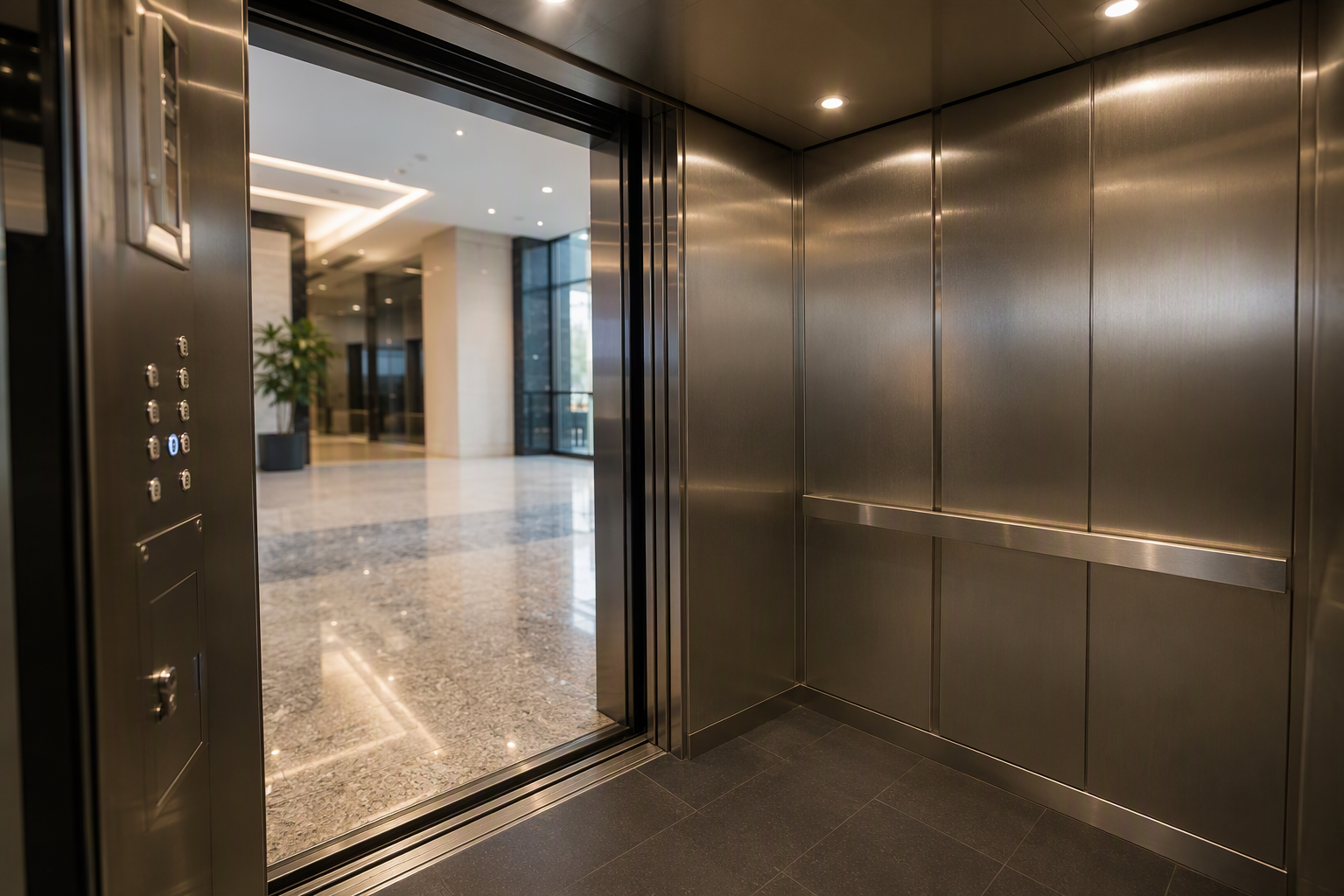
Modernization refers to the partial or complete replacement of an elevator’s mechanical, electrical, and safety systems without necessarily installing an entirely new unit. It is distinct from routine maintenance and from a full new installation. Projects range from a targeted controls upgrade to a comprehensive renovation that addresses the machine, cab, doors, signals, and safety components simultaneously.
In California, any material alteration to a conveyance requires a permit from the Cal/OSHA Elevator Unit, California Department of Industrial Relations before work begins, and the altered equipment must be inspected and issued a new permit to operate before it is returned to service. In Texas, a registered contractor must submit plans to the Texas Department of Licensing and Regulation (TDLR) Elevator and Escalator Safety program and receive approval before installation or alteration work starts.
What Are the Main Cost Drivers for Commercial Elevator Modernization?

Because verified industry-wide cost averages are not available from a single authoritative source, the following qualitative factors explain why two seemingly similar projects can carry very different price tags.
- Scope of work: A controls-only modernization replacing outdated relay logic with a modern microprocessor controller is far less expensive than a full modernization that also addresses the machine room equipment, cab interior, door operators, and signal fixtures.
- Elevator type and drive system: Hydraulic elevators and traction (cable-driven) elevators have different component sets. Replacing a traction machine, motor, and gearbox adds significant cost that a hydraulic unit does not carry, and vice versa for hydraulic power units and oil management systems.
- Number of stories and stops: More floors mean longer hoist-way runs, more door equipment, and more signal fixtures—each adding to material and labor costs.
- Equipment age and parts availability: Elevators manufactured decades ago may require custom fabrication or sourcing of obsolete components, which increases both lead time and cost.
- Code compliance requirements: Bringing an older elevator into conformance with current ASME A17.1/CSA B44 Safety Code for Elevators and Escalators or ADA accessibility standards can add scope beyond what an owner initially anticipates. California’s adopted code is the 2004 edition of ASME A17.1/CSA B44 (Group IV Elevator Safety Orders), while Texas has adopted the 2016 edition per 16 Texas Administrative Code Chapter 74.
- Downtime and logistics: Multi-elevator buildings may require phased work to keep at least one car in service, adding scheduling complexity. Buildings without a machine room (machine-room-less systems) present different access and rigging challenges.
- Local jurisdiction and permitting fees: California permit fees are set by Cal/OSHA; Texas fees are set by TDLR. Houston operates its own elevator program outside TDLR jurisdiction, and Los Angeles has its own program through the Los Angeles Department of Building and Safety—each with its own fee schedules that must be factored into project budgets.
- Labor market conditions: In California, work must be performed by a Certified Competent Conveyance Mechanic (CCCM) employed by a Certified Qualified Conveyance Company (CQCC) that also holds a C-11 Elevator Contractor license from the California Contractors State License Board. In Texas, all work must be performed by a TDLR-registered elevator contractor. Prevailing wage requirements in publicly owned California buildings add further labor cost.
What Does a Partial Modernization Typically Include?
Partial modernization targets one or more systems without replacing everything. Common partial-scope projects include:
- Controls modernization: Replacing relay-based or older microprocessor systems with a current-generation controller. This is often the highest-priority item because obsolete controls are the leading source of downtime and the component most likely to be unavailable for repair.
- Door operator and equipment upgrade: Door-related failures are the most frequent cause of elevator outages. Replacing worn door operators, hangers, tracks, and safety edges reduces callbacks and supports code compliance. In Texas, a passenger elevator without working door restrictors must be removed from service immediately under TDLR rules.
- Cab interior renovation: Wall panels, flooring, lighting, handrails, and ceiling replacements are often driven by tenant expectations and ADA requirements rather than mechanical necessity, but they materially affect perceived building quality.
- Signal and communication fixtures: Hall lanterns, position indicators, and emergency communication systems are modernized to meet current ASME A17.1 and ADA requirements.
What Does a Full Modernization Typically Include?
A full modernization replaces essentially all major systems and is warranted when an elevator has reached the end of its useful service life or when the cumulative cost of partial upgrades would approach or exceed a comprehensive project. Full modernization typically encompasses the controller and dispatching system, the machine and motor (for traction elevators) or power unit (for hydraulic elevators), all door equipment, cab interior, hall fixtures, wiring, and safety devices. The result is functionally equivalent to a new installation in terms of performance and compliance, at a lower total cost than a new hoist-way and full installation.
How Do California and Texas Regulatory Requirements Affect Modernization Cost?
Both states add compliance-related cost that building owners must budget alongside the mechanical scope of work.
In California, the Cal/OSHA Elevator Unit requires a permit before any material alteration and a post-modernization inspection by a State of California safety engineer or a Certified Competent Conveyance Inspector (CCCI) before the elevator is returned to service. Only a CQCC-certified company employing CCCMs may perform the work. The state has proposed a Group V update to its Elevator Safety Orders that would incorporate portions of ASME A17.1-2019; the Standards Board held a public hearing on June 18, 2026, and no effective date has been posted—meaning owners planning multi-year modernization programs should monitor the Cal/OSHA Elevator Unit for rulemaking updates that could affect scope and cost.
In Texas, registered contractors must submit plans to and receive approval from TDLR before starting. Texas owners must have violations corrected or under contract to be corrected within 30 days of an inspection. Texas also requires a Category 5 full-load test every five years on electric traction elevators, a testing obligation that intersects with modernization planning. Owners in Houston should contact the City of Houston directly, as TDLR does not regulate elevators inside Houston city limits.
How Does ADA Compliance Affect Modernization Scope and Cost?
The Americans with Disabilities Act sets requirements for accessible elevator design that apply to alterations as well as new construction. When modernization constitutes an alteration under ADA definitions, it can trigger requirements for cab dimensions, door width and timing, control button placement and Braille markings, audible and visual floor signals, and emergency communication accessibility. Owners and contractors must evaluate ADA exposure at the project scoping stage, because discovering accessibility gaps mid-project increases cost and may delay reopening the unit. AmeriTex Elevator incorporates ADA compliance review into its modernization assessment process so that owners receive a complete picture of required scope before committing to a contract.
What Is the Typical Timeline for a Commercial Elevator Modernization?
Timeline varies with scope, parts lead times, and the permitting queue at Cal/OSHA or TDLR. Qualitatively:
- Assessment and scoping: A qualified contractor inspects the existing equipment, reviews permit history, and identifies code deficiencies. This phase produces the specification on which bids are based.
- Permitting: In California, Cal/OSHA must issue a permit before work begins. In Texas, TDLR plan approval is required. Permit processing time varies and should be treated as a budget line item in the project schedule.
- Equipment procurement: Modern controllers and specialty components can carry lead times ranging from several weeks to several months depending on manufacturer and configuration. Supply chain conditions in 2025–2026 have continued to affect lead times for certain elevator components.
- Installation and testing: The physical modernization, including removal of old equipment and installation, wiring, and adjustment of new systems.
- Inspection and permit to operate: In California, a CCCI or Cal/OSHA engineer must inspect and issue a new permit before the elevator is returned to service. In Texas, an annual Certificate of Compliance from a TDLR-registered inspector is required.
- Return to service: The elevator is reopened to building occupants after all inspections and permits are complete.
How Should Building Owners Evaluate Modernization Bids?
Because cost drivers are highly project-specific, evaluating bids requires more than comparing bottom-line numbers. Owners should confirm that each bidder holds the required credentials—CQCC certification and C-11 license in California, or TDLR contractor registration in Texas—and that the bid scope is identical across proposals. A lower bid that omits permit fees, testing, or ADA upgrades is not actually lower in total cost. Warranty terms, the availability of parts for the proposed new equipment, and the contractor’s capacity to service the equipment after modernization are also material evaluation factors. AmeriTex Elevator provides data-driven assessments that itemize compliance requirements alongside mechanical scope, helping building owners compare bids on equal terms.
What Are the 2025–2026 Industry Trends Affecting Modernization Cost?
Several qualitative trends are shaping modernization projects in California and Texas as of 2026:
- Aging installed base: A significant share of commercial elevators in both states were installed during construction booms of the 1970s through 1990s and are approaching or past the end of standard service life for controls and mechanical systems, creating growing demand for modernization services.
- Supply chain normalization, but persistent lead times: Component lead times improved from peak disruption levels but remain longer than pre-2020 norms for certain elevator controllers and specialty parts, making early procurement planning more important than in previous decades.
- Energy efficiency as a co-driver: Modern regenerative drives and LED lighting packages are increasingly included in modernization scopes because they reduce operating costs over the life of the equipment, partially offsetting the upfront capital outlay.
- Destination dispatch and connectivity: Building owners in Class A commercial properties are more frequently requesting destination dispatch controls and remote monitoring capabilities as part of modernization, adding scope but improving tenant experience and maintenance predictability.
- Regulatory monitoring in California: The pending Group V Elevator Safety Orders proposal, with a public hearing held June 18, 2026, creates uncertainty for owners planning longer-horizon modernizations. Contractors and owners in California should monitor the Cal/OSHA Elevator Unit for any effective date announcement.
Does Modernization Require the Elevator to Be Taken Out of Service?
Yes. Modernization work requires the elevator to be out of service for the duration of installation and until the post-modernization inspection is completed and a permit to operate is issued. For multi-elevator buildings, contractors typically phase work to maintain at least one car in operation. Building owners should communicate planned outages to tenants well in advance and coordinate with contractors to minimize the impact on building operations.
How Does Elevator Age Affect the Decision Between Modernization and Full Replacement?
There is no universal age threshold that mandates full replacement over modernization, but age is a central factor in the analysis. As an elevator ages, the probability of multiple systems requiring attention simultaneously increases. A modernization that addresses controls but defers the machine and door equipment may result in a second significant expenditure within a few years. A full modernization that replaces all major systems at once typically offers a longer effective service life extension and may be more economical on a cost-per-year basis than a series of partial projects. AmeriTex Elevator’s assessment process evaluates remaining useful life across all major subsystems so building owners can make this comparison with actual data rather than general assumptions.
What Ongoing Maintenance and Inspection Obligations Follow Modernization?
Modernization does not reduce ongoing compliance obligations—it resets the equipment’s condition, but annual inspection requirements continue. In California, every conveyance must be inspected at least once a year by a CCCI or Cal/OSHA safety engineer, and the owner is responsible for arranging reinspection. A valid permit to operate must be posted conspicuously in the elevator car at all times. Cal/OSHA may issue a permit valid for up to two years for an elevator covered by a full maintenance contract with a C-11 licensed company. In Texas, TDLR requires annual inspection by a TDLR-registered elevator inspector, a current Certificate of Compliance posted in a publicly visible area, and violations corrected or under contract for correction within 30 days. Texas traction elevator owners must also budget for the Category 5 full-load test every five years.
How Can Building Owners Budget for Elevator Modernization Without a Firm Quote?
Because verified published cost benchmarks for commercial elevator modernization are not available from a single authoritative source, the most reliable budgeting approach is to obtain a site-specific assessment and preliminary scope from a qualified contractor before the capital budgeting cycle. Owners can also review their elevator’s maintenance history and current inspection reports to identify which systems have required the most repairs—high repair frequency in a specific subsystem is a reliable indicator of near-term modernization need. Building owners planning multi-year capital programs should account for permit and inspection fees, potential code upgrade requirements triggered by alteration under ASME A17.1 and ADA, and contractor availability in a market with growing demand.
How Does AmeriTex Elevator Approach Modernization Projects in California and Texas?
AmeriTex Elevator serves commercial building owners across California and Texas as a data-driven modernization and maintenance provider. The company’s assessment process documents existing equipment condition, permit status, code compliance gaps, and remaining useful life across all major subsystems, producing a scope of work grounded in the actual state of the equipment rather than generic assumptions. This approach gives building owners the information needed to compare bids accurately, prioritize capital spending, and avoid surprises during or after the project. All work is performed in conformance with the applicable regulatory frameworks—Cal/OSHA requirements in California and TDLR requirements in Texas—including permitting, inspection coordination, and post-modernization compliance documentation.
Contact AmeriTex Elevator for a free elevator assessment at 844-646-9660.
Need elevator service you can rely on? AmeriTex Elevator is ready to help.