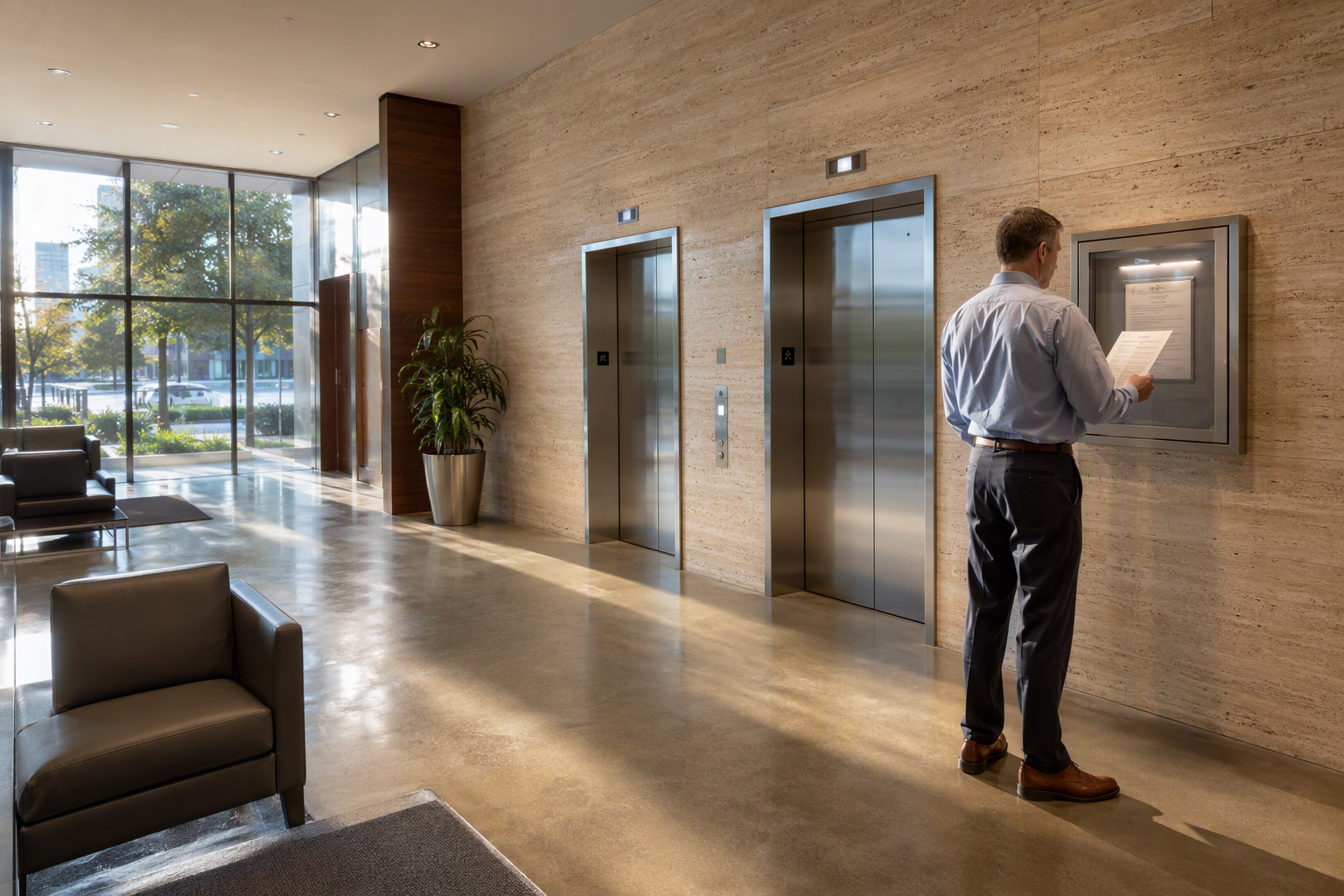
Texas elevator compliance is not one-size-fits-all. The state’s regulatory framework, governed by the Texas Department of Licensing and Regulation (TDLR) Elevator and Escalator Safety program under Texas Health and Safety Code Chapter 754 and 16 Texas Administrative Code Chapter 74, establishes clear annual inspection and certification requirements for most of the state. Houston, however, operates entirely outside that framework. Building owners in Dallas, Austin, and San Antonio report to TDLR. Building owners in Houston report to the City of Houston’s own program. Understanding which authority governs your property — and what each demands — is the foundation of staying compliant in 2026.
How Do Texas Elevator Inspection Requirements Work Statewide?
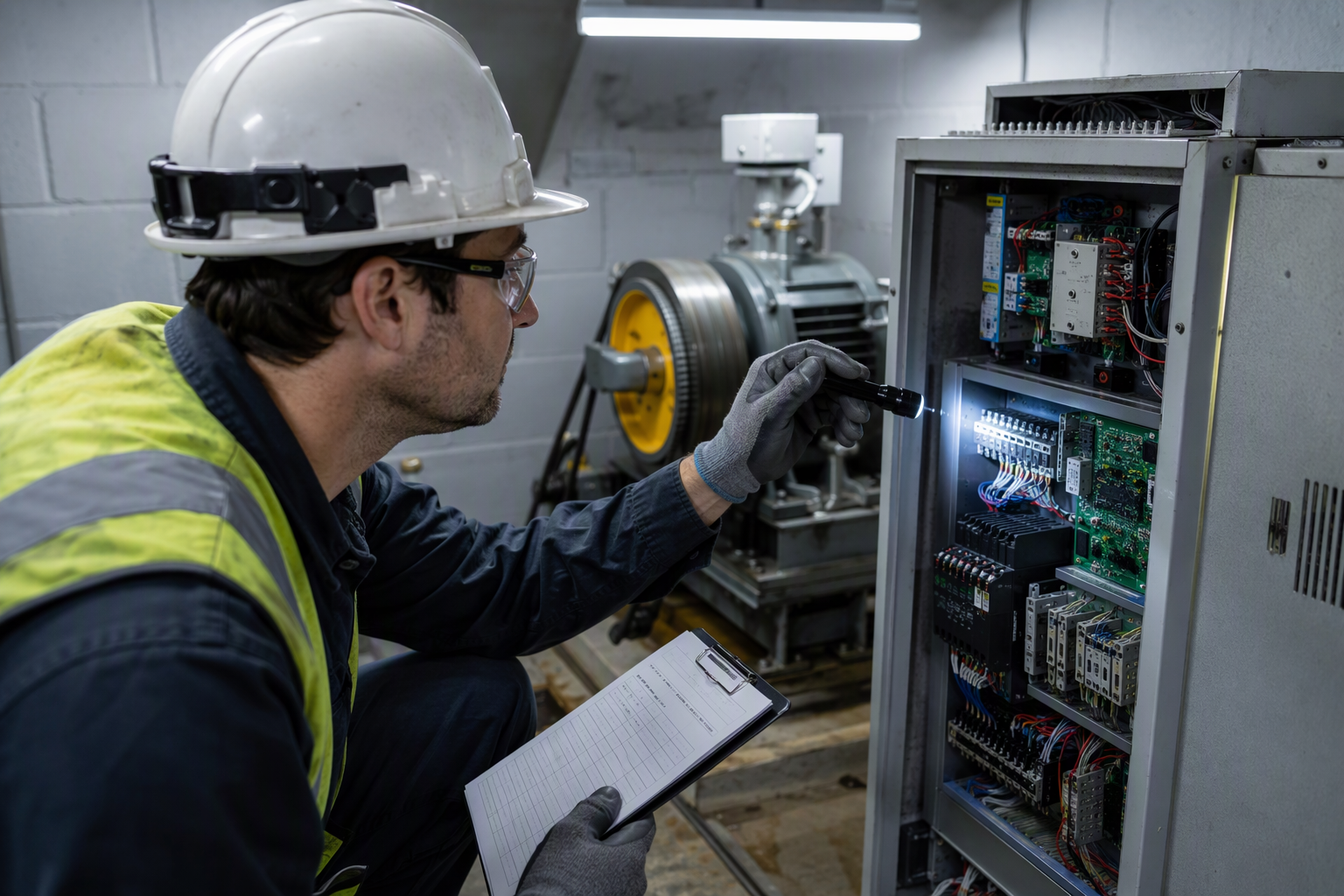
For most Texas cities, including Dallas, Austin, and San Antonio, the Texas Department of Licensing and Regulation (TDLR) administers elevator and escalator safety under Texas Health and Safety Code Chapter 754. TDLR has adopted the ASME A17.1/CSA B44 Safety Code for Elevators and Escalators, 2016 edition, as amended by 16 TAC §74.100(b), effective November 1, 2018.
The core statewide requirements that apply to Dallas, Austin, San Antonio, and all other non-exempt Texas jurisdictions are:
- Annual inspection: Every elevator, escalator, and related equipment must be inspected once per year by a TDLR-registered elevator inspector.
- Inspector independence: Texas elevator inspectors register with TDLR but are not TDLR employees. Importantly, the building owner has the sole right to select the inspector.
- Inspection report deadline: The registered inspector must deliver the written inspection report to the building owner within five calendar days of the inspection.
- Certificate of Compliance: Building owners must obtain a TDLR Certificate of Compliance for each unit of equipment. The certificate is valid for one year.
- Certificate display: The Certificate of Compliance must be displayed in a publicly visible area of the building.
- Violation correction window: Owners must have any cited violations corrected, or under a signed contract to be corrected, within 30 days of the inspection — or obtain a waiver or delay from TDLR.
- Accident reporting: Any accident involving elevator equipment must be reported to TDLR within 24 hours.
- Category 5 load test: Electric (traction) elevators require a Category 5 full-load test every five years.
Does Houston Have Different Elevator Rules Than the Rest of Texas?
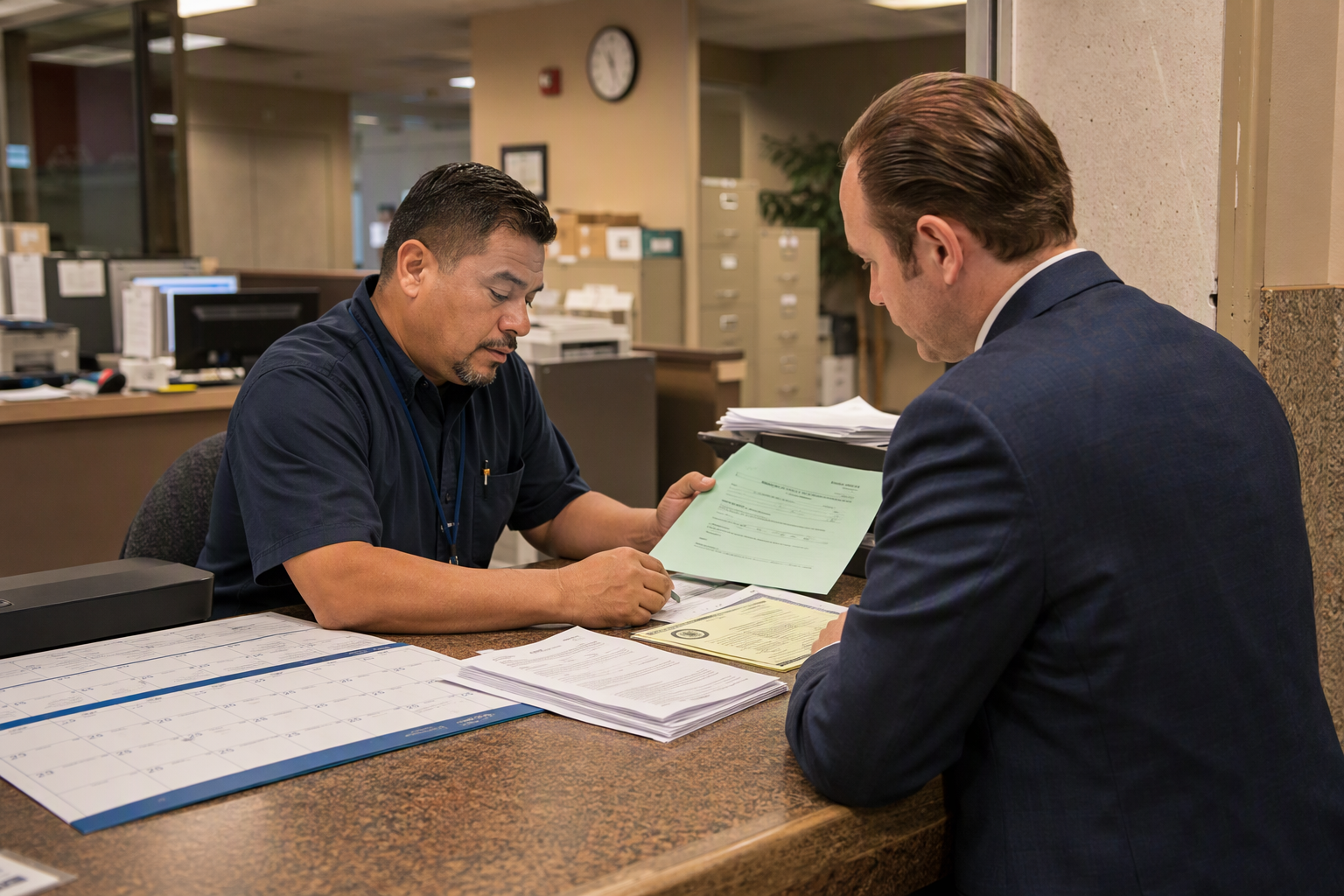
Yes — significantly. TDLR does not regulate elevators or escalators inside Houston city limits. The City of Houston operates its own elevator inspection program, independent of TDLR. This is one of the most important distinctions building owners must understand before assuming statewide TDLR compliance applies to their Houston properties.
Because Houston’s adopted code edition and specific procedural rules are managed at the city level and are not verified through TDLR, building owners with properties inside Houston should contact the City of Houston directly to confirm current inspection schedules, certificate requirements, and approved inspector qualifications. AmeriTex Elevator works with building owners across the Houston area and can help navigate the city’s requirements alongside other compliance obligations.
What Is the Annual Inspection Deadline for Dallas, Austin, and San Antonio Elevators?
TDLR does not publish a single statewide calendar deadline (such as “all elevators must be inspected by December 31”). Instead, each Certificate of Compliance is valid for one year from the date of issuance, making the effective annual deadline tied to each unit’s prior inspection date. Building owners should track each elevator’s certificate expiration individually to ensure no unit operates with a lapsed certificate.
Best practice for multi-unit buildings in Dallas, Austin, and San Antonio is to schedule inspections well before the certificate expiration date, allowing time to:
- Receive the inspection report (within five calendar days of the inspection, per TDLR rules).
- Address any cited violations within the 30-day correction window.
- Obtain and display the renewed Certificate of Compliance before the current certificate lapses.
Who Can Inspect an Elevator in Texas?
In TDLR-regulated jurisdictions (Dallas, Austin, San Antonio, and most of Texas), only a TDLR-registered elevator inspector may conduct the required annual inspection. Elevator inspectors are independent professionals — they register with TDLR but operate independently, and the building owner holds the right to choose which registered inspector to hire.
For elevator installation, repair, alteration, testing, or maintenance work in Texas, the company performing the work must be registered as a contractor with TDLR. Contractor and inspector registrations expire one year after issuance and must be kept current. Each registered Texas elevator contractor must designate one or two responsible parties with at least three years of elevator contractor experience, and must carry general liability insurance of at least $1,000,000 per occurrence for bodily injury or death and $500,000 per occurrence for property damage.
AmeriTex Elevator is a certified elevator service provider operating in Texas, working alongside TDLR-registered inspectors and maintaining the contractor credentials required to service, maintain, and repair elevator equipment across the state.
What Happens If an Elevator Fails Inspection in Texas?
When an elevator inspection uncovers violations, Texas law establishes a structured response process. Building owners must act within 30 days of the inspection to either correct the violation or enter a signed contract for correction — or formally request a waiver or delay from TDLR. Certain safety-critical deficiencies trigger immediate removal from service without any grace period:
- A passenger elevator without working door restrictors must be removed from service immediately.
- A passenger elevator without firefighters’ service, or with non-working Phase One firefighters’ service, must also be removed from service immediately.
Operating an elevator with a lapsed Certificate of Compliance or unresolved violations exposes building owners to regulatory action. Prompt scheduling of maintenance and follow-up inspections is the most effective way to avoid service disruptions and compliance penalties.
What Is Required Before Installing a New Elevator in Texas?
Before any new elevator or escalator installation begins in Texas, the registered contractor must submit plans to TDLR and obtain approval. This plan-review step applies in TDLR-regulated jurisdictions. For Houston, building owners should verify the city’s specific pre-installation permitting process directly with the City of Houston.
TDLR’s exemptions are limited: the Texas elevator law does not apply to equipment in buildings owned and operated by the federal government. For single-family dwellings, TDLR does not regulate ongoing elevator operations, but Texas law still requires an inspection by a TDLR-registered inspector after initial installation.
How Do Texas Elevator Rules Compare Across Houston, Dallas, Austin, and San Antonio?
| Requirement | Houston | Dallas | Austin | San Antonio |
|---|---|---|---|---|
| Governing authority | City of Houston (independent program) | TDLR | TDLR | TDLR |
| Adopted code base | City-determined (not verified — confirm with City of Houston) | ASME A17.1/CSA B44, 2016 ed. (16 TAC §74.100(b)) | ASME A17.1/CSA B44, 2016 ed. (16 TAC §74.100(b)) | ASME A17.1/CSA B44, 2016 ed. (16 TAC §74.100(b)) |
| Annual inspection required | Yes (city program) | Yes (TDLR) | Yes (TDLR) | Yes (TDLR) |
| Certificate of Compliance | City-issued (confirm locally) | TDLR-issued, 1-year validity | TDLR-issued, 1-year validity | TDLR-issued, 1-year validity |
| Certificate must be publicly displayed | Confirm with City of Houston | Yes | Yes | Yes |
| Inspection report delivery window | Confirm with City of Houston | Within 5 calendar days | Within 5 calendar days | Within 5 calendar days |
| Violation correction window | Confirm with City of Houston | 30 days (or waiver) | 30 days (or waiver) | 30 days (or waiver) |
| Accident reporting | Confirm with City of Houston | Within 24 hours to TDLR | Within 24 hours to TDLR | Within 24 hours to TDLR |
| Category 5 full-load test | Confirm with City of Houston | Every 5 years (traction elevators) | Every 5 years (traction elevators) | Every 5 years (traction elevators) |
| Contractor registration required | City requirements apply | TDLR contractor registration | TDLR contractor registration | TDLR contractor registration |
What Steps Should a Building Owner Follow to Stay Compliant Year-Round?
- Identify your governing authority. Determine whether your property falls under TDLR jurisdiction (Dallas, Austin, San Antonio, and most Texas cities) or the City of Houston’s independent program.
- Track each certificate expiration date. Each elevator’s Certificate of Compliance is valid for one year from issuance. Maintain a compliance calendar for every unit in your building.
- Select a TDLR-registered inspector. In TDLR jurisdictions, building owners have the sole right to choose their inspector. Select a registered inspector well before the certificate expiration date.
- Schedule routine maintenance in advance. Pre-inspection maintenance by a TDLR-registered contractor helps identify and resolve issues before the formal inspection, reducing the likelihood of violations.
- Review the inspection report promptly. The inspector must deliver the report within five calendar days. Review it immediately to assess any cited violations.
- Address violations within 30 days. Correct all violations or execute a signed correction contract within 30 days of the inspection. For urgent safety deficiencies (door restrictors, firefighters’ service), remove the unit from service immediately and arrange repair without delay.
- Obtain and display the Certificate of Compliance. Once TDLR issues the certificate, display it in a publicly visible area of the building as required.
- Plan for the Category 5 test cycle. For electric traction elevators, schedule the five-year full-load test with sufficient lead time to coordinate with a registered contractor and avoid service disruption.
- Report accidents within 24 hours. Any accident involving elevator equipment must be reported to TDLR (or the City of Houston for Houston properties) within 24 hours.
Does ADA Apply to Elevators in Texas Buildings?
Yes. The Americans with Disabilities Act (ADA) applies to elevators in places of public accommodation and commercial facilities throughout Texas, independent of state inspection requirements. ADA elevator standards address accessible car controls, door timing, floor designations, and communication systems. ADA compliance is a federal obligation that runs parallel to — and does not replace — TDLR or City of Houston inspection requirements. Building owners should evaluate ADA accessibility requirements alongside their annual inspection obligations.
What Are the Consequences of Operating an Elevator Without a Valid Certificate in Texas?
Operating elevator equipment without a current, valid Certificate of Compliance in TDLR-regulated jurisdictions exposes building owners to regulatory enforcement. For certain critical safety failures — including non-functional door restrictors or absent or non-working Phase One firefighters’ service — Texas rules require immediate removal from service, with no grace period for correction. Beyond regulatory penalties, operating non-compliant equipment creates significant liability exposure in the event of an incident. Staying ahead of the annual renewal cycle is the most straightforward way to avoid these risks.
Do Texas Elevator Rules Apply to All Building Types?
Texas elevator law under Health and Safety Code Chapter 754 applies broadly to commercial and multi-unit residential buildings. Key exemptions include:
- Federal government buildings: Equipment in buildings owned and operated by the federal government is exempt from Texas elevator law.
- Single-family dwellings: TDLR does not regulate ongoing elevator operations in single-family homes, though a TDLR-registered inspector must inspect after initial installation.
For all other property types — office towers, apartment complexes, hotels, hospitals, retail centers, and mixed-use developments — the requirements described in this guide apply in full.
How Can Building Owners in Houston Determine Their Specific Local Requirements?
Because Houston operates an independent elevator program outside of TDLR, the specific code edition, inspector qualification standards, certificate format, and procedural deadlines are determined at the city level. Building owners with Houston properties should:
- Contact the City of Houston directly to confirm current requirements for their specific equipment type and building classification.
- Work with an elevator service contractor experienced in Houston’s local program to ensure maintenance and testing records meet city expectations.
- Avoid assuming that TDLR certificates, TDLR-registered inspectors alone, or statewide TDLR procedures satisfy Houston’s requirements — they may not.
AmeriTex Elevator serves building owners throughout the Houston area and is familiar with the landscape of local compliance requirements, helping owners identify the right questions to ask and the right parties to engage.
What Role Does ASME A17.1 Play in Texas Elevator Compliance?
The ASME A17.1/CSA B44 Safety Code for Elevators and Escalators is the technical foundation for Texas elevator safety rules. TDLR has adopted the 2016 edition, as amended by 16 TAC §74.100(b), effective November 1, 2018. This code governs the design, construction, installation, operation, inspection, testing, maintenance, alteration, and repair of elevators and escalators in TDLR-regulated Texas jurisdictions. Inspectors and contractors working in Texas reference ASME A17.1 standards when evaluating equipment condition, conducting Category 5 tests, and determining whether deficiencies require immediate action.
Why Work With an Independent Elevator Service Provider Like AmeriTex Elevator?
Building owners in Houston, Dallas, Austin, and San Antonio benefit from working with an independent elevator service provider who is not tied to a single equipment manufacturer. Independent providers like AmeriTex Elevator can coordinate with TDLR-registered inspectors, manage maintenance schedules across multiple units and properties, and help building owners track the compliance calendar that governs each elevator’s annual certificate renewal. AmeriTex Elevator operates as a certified elevator service company in Texas, with the contractor credentials and regulatory familiarity needed to support building owners through routine maintenance, violation correction, Category 5 testing, and the documentation requirements that accompany every annual inspection cycle.
Contact AmeriTex Elevator for a free elevator assessment at 844-646-9660.
Need elevator service you can rely on? AmeriTex Elevator is ready to help.