Home Elevators: Repair and Maintenance in Jollyville, TX — Complete FAQ Guide
Residential elevators in Jollyville, TX require licensed contractors, annual third-party inspections, and adherence to the Texas Department of Licensing and Regulation (TDLR) Elevator and Escalator Safety program. Homeowners must obtain a TDLR Certificate of Compliance after installation and following each annual inspection. All repair and maintenance work must be performed by a TDLR-registered elevator contractor operating under the ASME A17.1/CSA B44, 2016 edition Safety Code for Elevators and Escalators, which Texas adopted effective November 1, 2018, per 16 Texas Administrative Code Chapter 74.
What are the regulatory requirements for home elevator repair and maintenance in Jollyville, TX?
All home elevator repair and maintenance in Jollyville, TX is governed by the TDLR Elevator and Escalator Safety program under Texas Health and Safety Code Chapter 754 and 16 Texas Administrative Code Chapter 74.
Texas law mandates that any person who installs, repairs, alters, tests, or maintains elevator equipment must be registered as a contractor with TDLR. Contractors must carry general liability insurance of at least $1,000,000 per occurrence for bodily injury or death and $500,000 per occurrence for property damage. Each registered contractor must designate one or two responsible parties who have at least three years of relevant elevator contractor experience.
Jollyville is an unincorporated community in the Austin, TX metropolitan area and is not a municipality with its own elevator inspection program. Unlike Houston — which operates its own independent elevator program — Jollyville-area properties fall under direct TDLR jurisdiction, making TDLR the applicable authority having jurisdiction (AHJ) for elevator compliance in this area.
The adopted technical standard in Texas is the ASME A17.1/CSA B44, 2016 edition, as amended by 16 TAC §74.100(b). All repair work, component replacements, and alterations must conform to this code. AmeriTex Elevator, which serves the greater Austin, TX area, operates as a TDLR-registered elevator contractor capable of performing compliant residential elevator maintenance and repair in the Jollyville region.
Does Texas require annual inspections for residential home elevators?
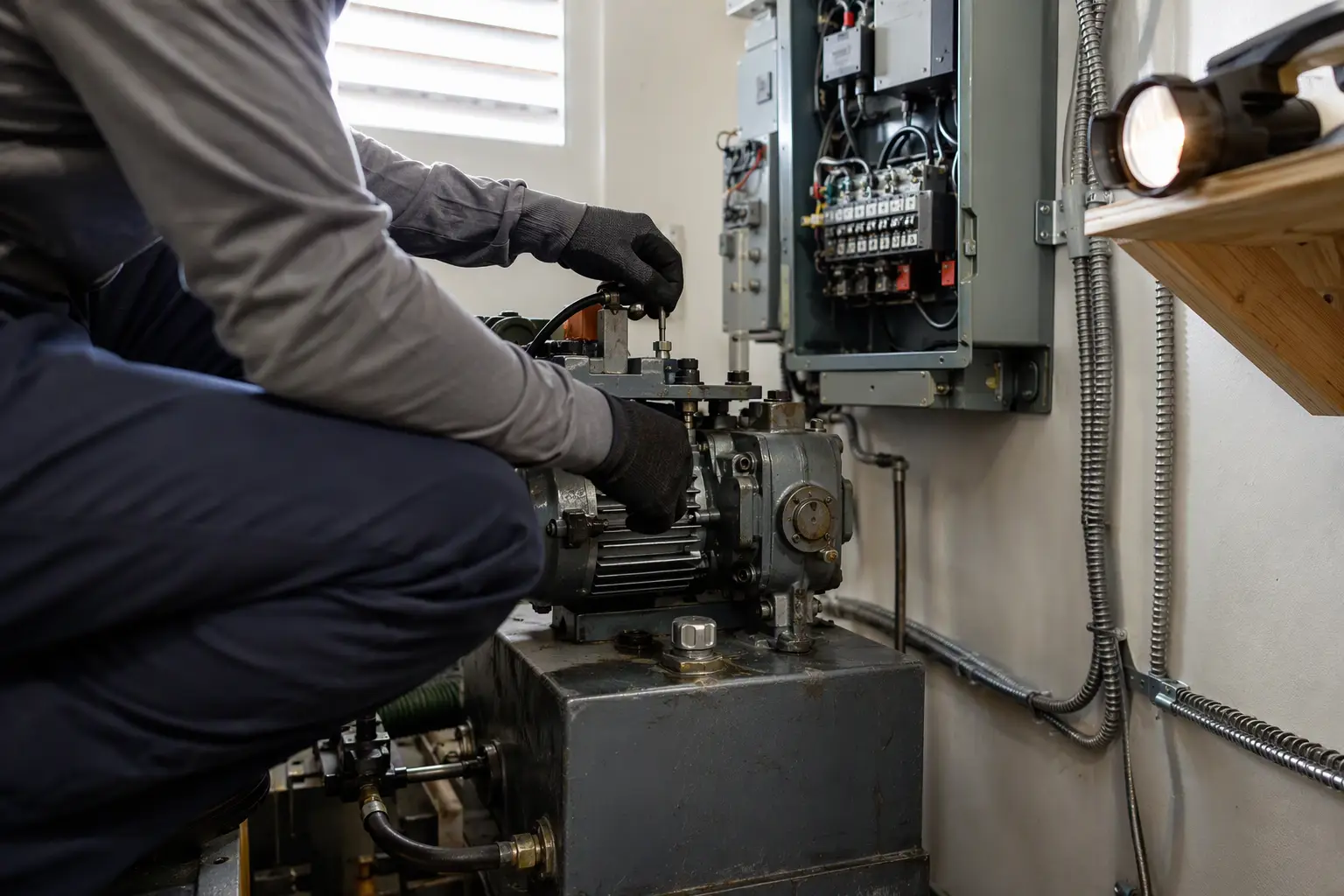
Yes — under Texas Health and Safety Code Chapter 754, building owners including residential property owners must have elevators inspected annually by a TDLR-registered elevator inspector.
It is important to note that TDLR does not regulate elevators in single-family dwellings in the same way it regulates commercial equipment; however, state law does require an inspection by a TDLR-registered inspector after installation of a residential elevator. For ongoing annual inspections, homeowners should consult with a TDLR-registered contractor about applicable requirements for their specific equipment type and configuration, since the scope of residential elevator regulation can depend on factors such as whether the unit serves only one private household.
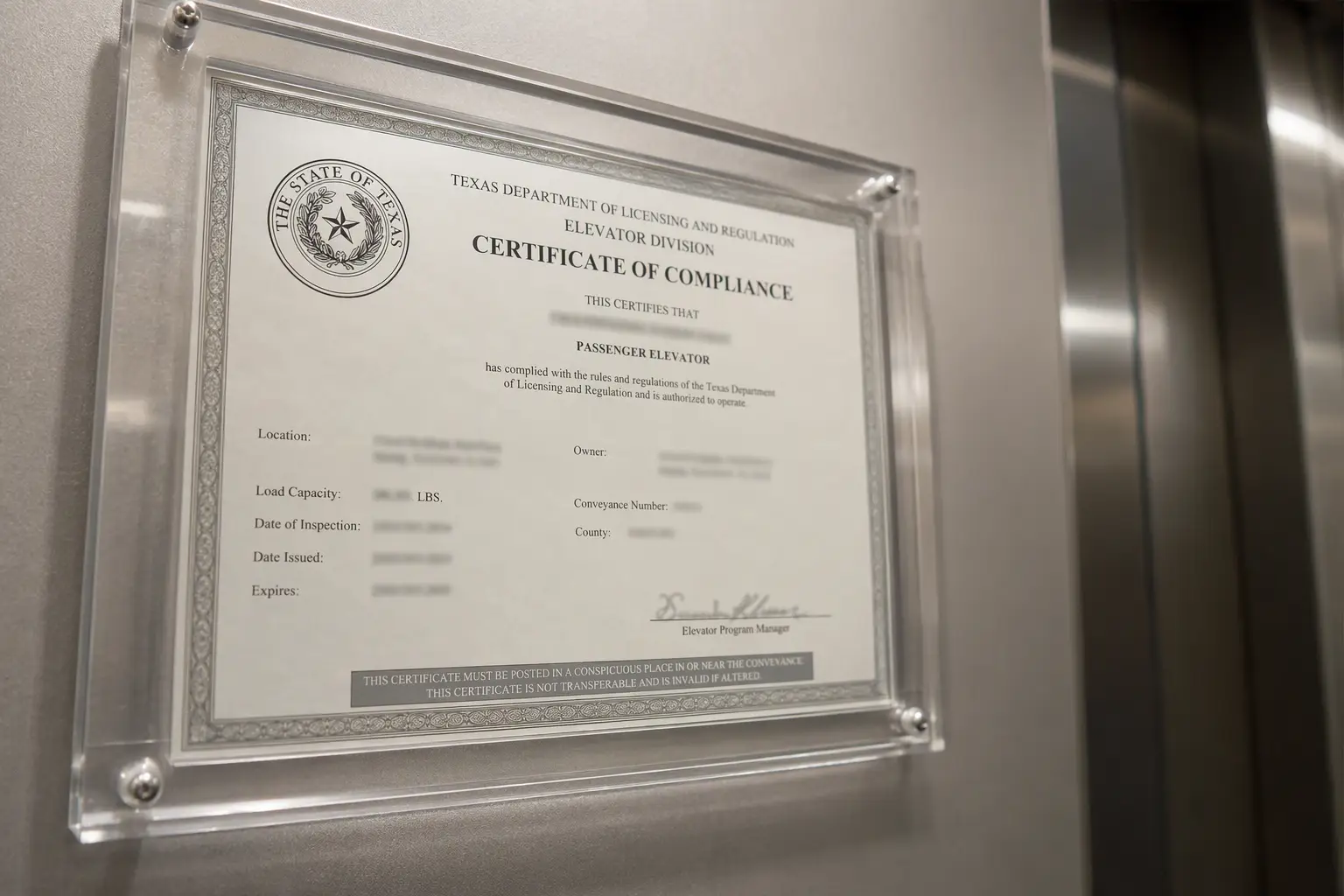
After each inspection, the TDLR-registered inspector must provide the owner with a written inspection report within five calendar days. If violations are cited, the owner must have them corrected — or under a contract to be corrected — within 30 days, or obtain a waiver or delay from TDLR. Owners must obtain a TDLR Certificate of Compliance for each unit, which is valid for one year and must be displayed in a publicly visible area of the building.
What types of home elevators are commonly repaired and maintained in the Jollyville, TX area?
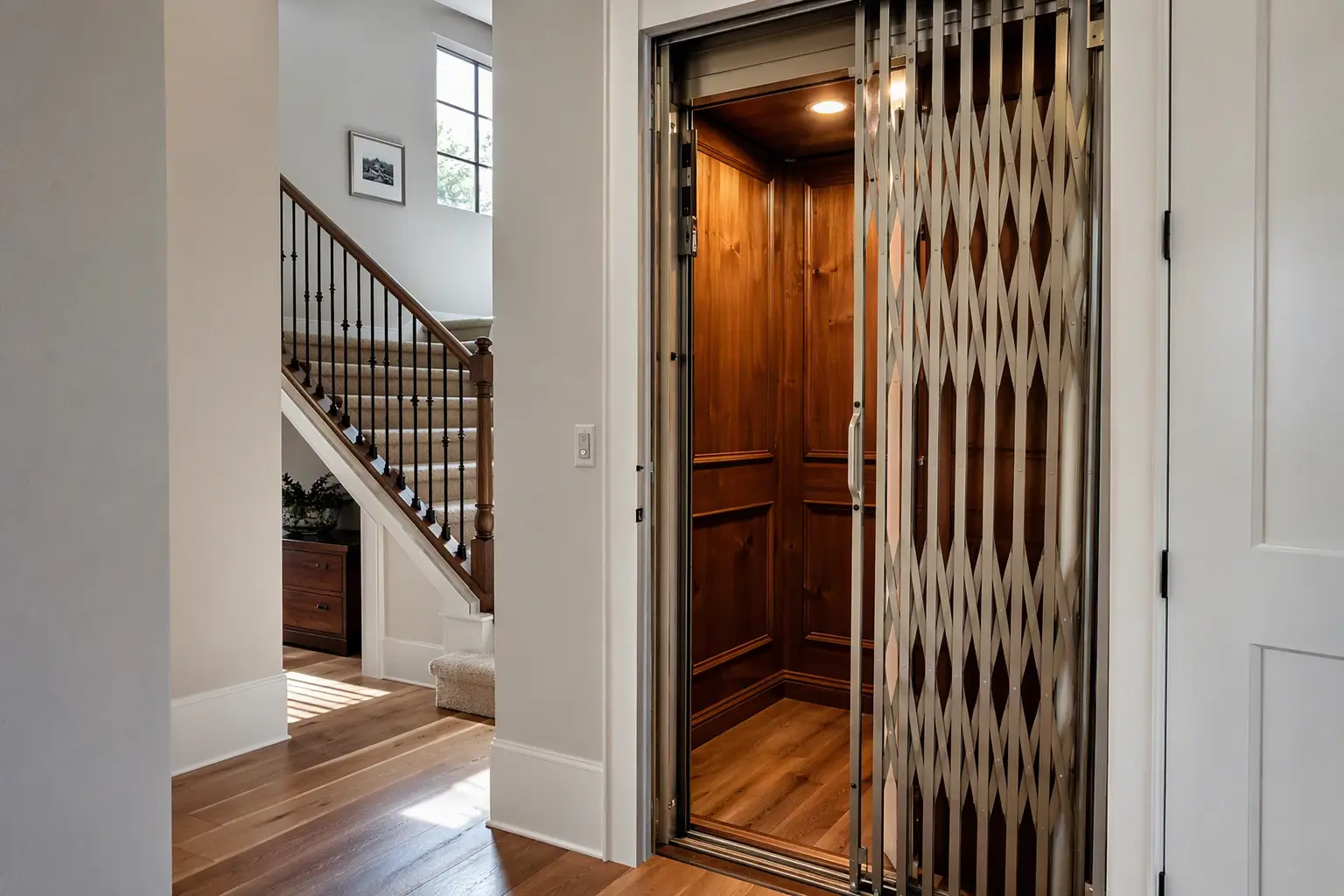
Residential elevators in the Jollyville, TX area most commonly include hydraulic, traction (cable-driven), pneumatic (vacuum), and winding drum models, each with distinct maintenance and repair profiles.
| Elevator Type | Common Drive System | Typical Maintenance Focus | Repair Complexity | ASME A17.1-2016 Applicability |
|---|---|---|---|---|
| Hydraulic (residential) | Submersible pump/oil cylinder | Fluid levels, cylinder integrity, pump unit, valve seals | Moderate — fluid leaks and pump wear are common | Yes — Part 5, Section 5.3 |
| Traction (cable-driven) | Electric motor, sheave, counterweight | Cable tension, brake adjustment, controller, safeties | Moderate to high — requires precise calibration | Yes — Part 2 and Part 5 |
| Pneumatic (vacuum) | Air pressure differential | Seals, tube integrity, air pump, valve actuators | Low to moderate — fewer moving parts | Varies — consult TDLR for current classification |
| Winding Drum | Drum motor, cable wrap | Drum wear, cable inspection, limit switches | Moderate — older technology with known failure modes | Yes — subject to ASME A17.1 requirements |
Hydraulic elevators are particularly prevalent in Texas residential settings due to their relatively straightforward installation profile in homes without deep pit requirements for low-rise travel. Oil contamination, cylinder pitting, and pump motor wear represent the most frequently encountered repair scenarios for this type. Traction elevators in high-end custom homes require periodic rope and sheave inspections aligned with the ASME A17.1 Safety Code for Elevators and Escalators maintenance intervals.
What does a routine home elevator maintenance visit in Texas include?
A routine residential elevator maintenance visit by a TDLR-registered contractor typically covers mechanical, electrical, safety, and code-compliance checks across all major elevator subsystems.
A thorough maintenance inspection addresses the following systems and components:
- Drive system: Motor windings, pump unit (hydraulic), sheave condition (traction), fluid levels, and oil contamination checks
- Safety devices: Governor and safeties, oil buffers, terminal stopping switches, and emergency lowering systems
- Door systems: Door operator, interlock mechanisms, closing force, and reopening device functionality
- Control system: Controller boards, wiring harnesses, selector switches, and logic relays
- Cab and hoistway: Guide rails, rail brackets, cab lighting, emergency lighting, ventilation, and pit sump pump (if applicable)
- Communication: Emergency two-way communication system test
- Rope or chain: Wear, tension, and lubrication on traction and winding drum units
- Pit inspection: Pit lighting, stop switch, clearances, and moisture intrusion
Technicians working for a TDLR-registered contractor performing this work must operate within the scope of 16 Texas Administrative Code Chapter 74 and the ASME A17.1/CSA B44, 2016 edition. AmeriTex Elevator performs comprehensive maintenance visits for residential elevator clients throughout the Austin, TX service area, including communities such as Jollyville.
What is the Category 5 full-load test requirement, and does it apply to home elevators in Texas?
Texas requires a Category 5 full-load, full-speed safety test every five years on electric traction elevators, in accordance with the ASME A17.1/CSA B44, 2016 edition, as adopted under 16 TAC §74.100(b).
The Category 5 test — formally defined in the ASME A17.1 Safety Code for Elevators and Escalators — verifies that the car’s safeties and governor can stop and hold the fully loaded car under rated speed conditions. This is a physically demanding test that must be witnessed by a TDLR-registered inspector and performed by a TDLR-registered contractor.
Whether the Category 5 requirement applies to a specific residential traction elevator in Jollyville, TX depends on the unit’s classification under TDLR rules. Homeowners with residential traction elevators should confirm the testing schedule with their TDLR-registered contractor well in advance, since the test requires preparation, load weights, and inspector coordination. Hydraulic elevators have their own Category test requirements under ASME A17.1 that differ from traction elevators; the specific intervals and test types applicable to a given residential unit should be confirmed with a registered contractor based on the equipment’s inspection history and TDLR records.
What must Texas homeowners do immediately after a residential elevator accident or entrapment?
Texas law requires building owners to report any accident involving elevator equipment to TDLR within 24 hours of the incident.
In the event of an elevator accident or entrapment in a Jollyville, TX home, the recommended sequence of actions is:
- Ensure the safety of all occupants — if a person is entrapped in the cab, keep them calm and call 911 if medical attention is needed or entrapment cannot be resolved quickly.
- Do not attempt to force open hoistway doors or manually move the car without trained personnel, as doing so can worsen the situation and damage safety components.
- Contact a TDLR-registered elevator contractor immediately to dispatch qualified personnel for emergency service.
- Take the elevator out of service by placing the controller in the “off” or “stop” position if safe to do so, and restrict access to the hoistway.
- Report the accident to TDLR within 24 hours, as required by Texas Health and Safety Code Chapter 754.
- Do not return the elevator to service until a TDLR-registered inspector has evaluated the unit and a TDLR-registered contractor has made all required repairs.
- Document the incident thoroughly — photographs, witness accounts, and maintenance records — for the inspection report and any insurance purposes.
Failure to report an elevator accident to TDLR within the required 24-hour window can result in regulatory penalties. Homeowners should keep the TDLR reporting contact information and their elevator contractor’s emergency line readily accessible.
What are the most common home elevator repair issues in Texas climates?
Texas’s heat, humidity fluctuations, and occasional temperature extremes create specific wear patterns in residential elevator equipment that differ from those seen in more temperate climates.
Hydraulic elevator fluid viscosity can be negatively affected by extreme heat common to Central Texas summers, causing sluggish performance or triggering thermal protection shutdowns. Pit moisture intrusion — accelerated by the region’s periodic heavy rainfall and clay soil movement — is a frequent source of electrical faults, corrosion on pit components, and pit sump failures. Rubber seals and gaskets in both hydraulic cylinders and door systems degrade more rapidly under sustained high-temperature conditions.
Control boards and electronic components in elevator machine rooms that are not climate-controlled can experience premature failure due to heat stress. Door operator belts and rollers tend to show accelerated wear in climates where the mechanical components undergo frequent thermal cycling. Homeowners in the Jollyville area should ensure that machine rooms and control spaces have adequate ventilation and are protected from moisture infiltration as part of their preventive maintenance program.
How does a homeowner select a qualified elevator repair contractor in Jollyville, TX?
In Texas, any contractor performing elevator repair or maintenance must be registered with TDLR and carry the required minimum levels of general liability insurance as specified under 16 Texas Administrative Code Chapter 74.
Homeowners should verify the following before engaging a residential elevator contractor:
- Active TDLR contractor registration — verifiable through the TDLR public license lookup
- Proof of general liability insurance meeting the $1,000,000 per occurrence (bodily injury/death) and $500,000 per occurrence (property damage) minimums required by Texas law
- Designation of a responsible party with the requisite three years of elevator contractor experience
- Familiarity with the specific elevator make and model installed in the home
- Ability to coordinate TDLR-registered inspector scheduling for annual compliance inspections
- Clear written scope of work for any repairs or alterations, since alterations to existing elevator equipment in Texas require plan submission to TDLR before work begins
AmeriTex Elevator serves the Austin, TX metropolitan area — including communities in the Jollyville vicinity — as a TDLR-registered elevator contractor, providing residential elevator maintenance, repair, and compliance support.
What ADA requirements apply to home elevators?
The Americans with Disabilities Act (ADA) applies primarily to places of public accommodation and commercial facilities; purely private single-family residential elevators are generally not subject to ADA mandates.
However, ADA requirements become relevant to residential elevators in specific scenarios. If a home is used as a place of business — for example, a home-based daycare, medical office, or similar operation — the ADA’s accessibility standards for vertical access may apply to any elevator serving that portion of the structure. Additionally, multi-family residential buildings such as condominiums and apartment complexes are subject to Fair Housing Act accessibility requirements that interact with ADA-derived design standards for elevator cab dimensions, landing controls, and door timing.
For homeowners installing residential elevators primarily for personal mobility or aging-in-place purposes, the ADA’s technical specifications for cab size, door width, control button height, and two-way communication systems represent recognized best-practice benchmarks even when not legally mandated. Referencing the ADA guidelines during design and installation helps ensure the elevator remains functional and accessible as occupant needs evolve over time.
What permits are required before altering or repairing a home elevator in Texas?
In Texas, a TDLR-registered contractor must submit plans to TDLR and obtain approval before installing or materially altering an elevator or escalator, as required under Texas Health and Safety Code Chapter 754 and 16 Texas Administrative Code Chapter 74.
Routine maintenance and like-for-like part replacements that do not constitute an alteration under TDLR’s definitions typically do not require pre-approval plan submission. However, modifications that change the elevator’s rated speed, capacity, travel, or control system generally qualify as alterations and trigger the plan review requirement. Homeowners planning to upgrade their cab, expand the travel distance, convert a winding drum unit to hydraulic, or modernize an aging controller should confirm with their TDLR-registered contractor whether a plan submission is required before any work begins.
Performing installation, alteration, or repair work without the required TDLR registration or without submitting required plans is a violation of Texas law and can result in the elevator being taken out of service until compliance is achieved. Homeowners should always request documentation of the contractor’s TDLR registration number before authorizing any work beyond routine maintenance.
How should homeowners prepare their Jollyville, TX home elevator for an annual inspection?
Proper preparation for an annual TDLR-registered inspector visit helps ensure the inspection is efficient and that the unit is in the best possible condition to receive a clean Certificate of Compliance.
Recommended pre-inspection steps include:
- Review the previous year’s inspection report and confirm that any previously cited violations have been fully corrected and documented by a TDLR-registered contractor.
- Ensure unobstructed access to the machine room, pit, and hoistway — clear stored items, restore proper lighting, and verify that the pit stop switch is accessible and functional.
- Test the emergency two-way communication system in the cab to confirm it is operational.
- Confirm that the current Certificate of Compliance is still posted in a publicly visible location and that the unit’s maintenance log is available for the inspector’s review.
- Schedule any outstanding maintenance tasks with a TDLR-registered contractor at least two to four weeks before the inspection to allow time for parts procurement if needed.
- Verify that the pit is dry — arrange pit sump pump servicing or waterproofing if seasonal rains have caused moisture accumulation.
- Check that all cab lighting, emergency lighting, and ventilation are fully functional.
After the inspection, the TDLR-registered inspector must deliver the written inspection report within five calendar days. If the Certificate of Compliance is issued without cited violations, the homeowner maintains full legal status for elevator operation. If violations are noted, corrections must be initiated within 30 days or a waiver/delay sought from TDLR.
What is the homeowner’s responsibility versus the contractor’s responsibility for Texas elevator compliance?
Under Texas Health and Safety Code Chapter 754, the building owner bears primary legal responsibility for maintaining the elevator in a safe and compliant condition, obtaining the annual Certificate of Compliance, and correcting cited violations within the required timeframe.
The division of responsibility is important for Jollyville homeowners to understand clearly. The owner selects the TDLR-registered inspector — Texas law grants the building owner the sole right to select their inspector, independent of the maintenance contractor. The owner is responsible for ensuring the annual inspection occurs and that the Certificate of Compliance is current and posted. The owner must report accidents to TDLR within 24 hours. The owner must ensure that any contractor performing work on the elevator is TDLR-registered.
The TDLR-registered contractor is responsible for performing all repair, maintenance, and alteration work in compliance with 16 TAC Chapter 74 and the ASME A17.1/CSA B44, 2016 edition. The contractor is responsible for submitting plans to TDLR before beginning installations or alterations. However, the contractor’s compliance obligations do not transfer the owner’s overarching duty to maintain a safe, code-compliant elevator. Both parties share responsibility for the equipment’s continued safe operation.
What door safety requirements apply to residential elevators under Texas and ASME codes?
Under Texas law, a passenger elevator without working door restrictors must be removed from service immediately — a zero-tolerance safety requirement derived from the ASME A17.1 Safety Code for Elevators and Escalators as adopted in Texas.
Door restrictors prevent hoistway doors from being opened from the landing side when the car is not at that floor, protecting users from falling into an empty hoistway shaft — one of the most severe injury hazards in elevator operation. Homeowners who notice that a landing door can be manually forced open, opens without the cab present, or does not fully latch should treat this as an emergency requiring immediate contractor response and should not operate the elevator until the condition is resolved.
Door interlock testing is a standard component of annual inspections under the ASME A17.1 code. During maintenance visits, technicians verify interlock engagement force, electrical interlock circuit continuity, and the mechanical condition of door restrictors and closers. On residential elevators with swing-type hoistway doors — common on older winding drum and some hydraulic installations — the interlock mechanism differs from commercial sliding door systems but is subject to equivalent safety standards under ASME A17.1.
What firefighter service requirements apply to home elevators in Texas?
Texas law requires that a passenger elevator without firefighters’ service, or with non-working Phase One firefighters’ service, must be removed from service immediately.
Firefighters’ service — defined in the ASME A17.1 Safety Code for Elevators and Escalators — consists of two phases. Phase One (initiated by a smoke detector signal or a key switch on the main landing) returns the elevator automatically to the designated floor, opens the doors, and takes the unit out of normal passenger service. Phase Two allows firefighters to operate the elevator manually from inside the cab using a key switch. Both phases are life-safety systems that must remain operational at all times under Texas law.
Homeowners whose residential elevators are equipped with firefighters’ service — which is required when the elevator is installed under ASME A17.1 code editions that mandate it for the given rise — should ensure that the fire recall key switches are tested during every maintenance visit. Malfunctioning smoke detectors, faulty key switches, and controller logic failures are the most frequent causes of firefighters’ service non-compliance discovered during annual inspections. AmeriTex Elevator includes firefighters’ service testing as part of its residential elevator maintenance protocol in the Austin, TX region.
How long does a typical home elevator repair take in the Jollyville, TX area?
Repair duration for residential elevators depends on the type of failure, parts availability, and whether a TDLR plan submission is required for the scope of work involved.
Minor repairs — such as replacing a faulty door interlock, controller relay, or lighting component — are typically completed during a single service visit when standard parts are in stock. Mid-range repairs involving pump unit replacement on a hydraulic elevator, rope replacement on a traction unit, or control board replacement may require parts lead times that extend the repair timeline by several days to a few weeks, depending on the elevator’s manufacturer and model age.
Major repairs or modernizations that constitute alterations under TDLR’s definitions require plan submission and TDLR approval before work can commence, adding administrative lead time to the project schedule. Homeowners with older elevators — particularly units more than two decades old — should anticipate longer parts sourcing timelines, since components for discontinued elevator models may need to be custom fabricated or sourced from specialty suppliers. Proactive preventive maintenance is the most effective strategy for minimizing unplanned downtime and controlling repair timelines.
What are the most important safety codes governing home elevator maintenance in Texas?
The primary technical standard governing home elevator maintenance and repair in Texas is the ASME A17.1/CSA B44 Safety Code for Elevators and Escalators, 2016 edition, as adopted by Texas under 16 Texas Administrative Code Chapter 74, effective November 1, 2018.
Key ASME A17.1 provisions relevant to residential elevator maintenance include requirements for periodic tests (Category 1 and Category 5), governor and safety device testing, hydraulic elevator oil sampling and cylinder integrity, door system performance, emergency operation, firefighters’ service, and machine room environment. The code also governs the standards for pit depth, overhead clearances, and hoistway construction that inform repair scope when physical conditions require correction.
In addition to ASME A17.1, the ADA provides accessibility benchmarks applicable in any scenario where the residential elevator serves a space open to the public, and OSHA standards govern the workplace safety obligations of contractor employees performing repair work in residential hoistways and machine rooms. Texas Health and Safety Code Chapter 754 and 16 TAC Chapter 74 constitute the state statutory and regulatory framework that determines licensing, inspection, and reporting requirements.
How does preventive maintenance reduce long-term home elevator repair costs in Texas?
A documented preventive maintenance program aligned with the ASME A17.1 Safety Code for Elevators and Escalators maintenance intervals is the most cost-effective strategy for extending the service life of a residential elevator and avoiding major unplanned repair expenditures.
Hydraulic elevators benefit most from regular oil sampling — contaminated or thermally degraded hydraulic fluid is a primary driver of valve body wear, cylinder corrosion, and pump damage. Addressing fluid condition during scheduled maintenance visits prevents the significantly more costly scenario of an underground cylinder leak, which can require excavation and cylinder replacement. On traction elevators, regular rope lubrication and tension checks prevent the accelerated wear that leads to full rope replacement — a substantially larger expense than routine lubrication service.
Proactive replacement of wear items — brake linings, door rollers, interlock contacts, and control board capacitors — during planned maintenance visits avoids the scenario where component failure cascades into damage to secondary systems. A maintenance log that documents all visits, tests, and replacements also supports the annual TDLR inspection by demonstrating to the TDLR-registered inspector that the owner has exercised due diligence in equipment care, which can streamline the compliance process.
Can a homeowner perform any elevator maintenance work themselves in Texas?
Texas law prohibits any person from installing, repairing, altering, testing, or maintaining elevator equipment without being registered as a contractor with TDLR, with the statutory exception that the term “contractor” does not include an employee of a contractor.
This means that a residential homeowner who is not a TDLR-registered contractor may not legally perform repairs, adjustments, or alterations to their elevator’s mechanical, electrical, or structural systems. The prohibition extends to any work on safety-critical components including door interlocks, controllers, governors, safeties, buffers, and hydraulic systems. Even seemingly minor interventions — such as adjusting a door closing speed, resetting a controller, or adding hydraulic fluid — should be performed or directly supervised by a TDLR-registered contractor to maintain legal compliance and preserve the unit’s insurance coverage.
Homeowners may perform basic non-technical tasks without contractor involvement, such as cleaning the cab interior, replacing burned-out cab light bulbs in accessible fixtures (where this does not require accessing the hoistway or controller), and testing the door open/close and emergency communication functions from the cab as operational checks. Any observed anomaly during these checks should be promptly reported to a TDLR-registered contractor for evaluation.
What should homeowners in Jollyville, TX know about elevator modernization versus repair?
When an aging residential elevator requires repeated repairs or when key components reach the end of their serviceable life, modernization — a systematic upgrade of major subsystems — often delivers better long-term value than continuing to repair outdated equipment on a reactive basis.
A modernization project may involve replacement of the control system, hydraulic power unit, door operator, cab finishes, or drive machine. Under Texas law, any modernization that constitutes a material alteration requires the TDLR-registered contractor to submit plans to TDLR and obtain approval before commencing work, and the modernized unit must comply with the currently adopted ASME A17.1/CSA B44, 2016 edition to the extent required by 16 TAC Chapter 74 for the scope of work performed.
Modernization also presents an opportunity to bring older equipment into compliance with current ADA accessibility benchmarks — particularly relevant for homeowners whose mobility needs have changed since original installation. Control panel heights, cab dimensions, door timing, and two-way communication equipment can all be evaluated and upgraded as part of a comprehensive modernization scope. AmeriTex Elevator assists Austin-area residential clients, including those in the Jollyville vicinity, in evaluating repair-versus-modernization decisions for aging elevator equipment.
Where can Jollyville, TX homeowners find official elevator safety resources?
Homeowners in Jollyville, TX seeking official regulatory guidance on residential elevator compliance should consult the Texas Department of Licensing and Regulation Elevator and Escalator Safety program as the primary authoritative source for Texas-specific requirements.
The TDLR website provides access to contractor and inspector registration lookups, complaint filing, Certificate of Compliance verification, and the full text of 16 Texas Administrative Code Chapter 74. The technical requirements governing elevator design, testing, and maintenance are published by the American Society of Mechanical Engineers (ASME) through its A17.1/CSA B44 Safety Code for Elevators and Escalators. Accessibility standards and guidance for scenarios where ADA applicability is a consideration are available from the ADA.gov resource portal. Workplace safety obligations for elevator contractor personnel operating in residential hoistways are governed by OSHA standards.
Homeowners should be cautious about relying on general internet resources or equipment manufacturer documentation alone for compliance guidance, since Texas regulatory requirements — including the specific ASME A17.1 code edition adopted, the registration requirements for contractors and inspectors, and the Certificate of Compliance renewal timeline — are jurisdiction-specific and should always be confirmed against current TDLR guidance. AmeriTex Elevator encourages all residential elevator owners in its Austin, TX service area to maintain direct communication with a TDLR-registered contractor as their primary resource for ongoing compliance questions.
Contact AmeriTex Elevator for a free elevator assessment at 844-646-9660.
Need elevator service you can rely on? AmeriTex Elevator is ready to help.