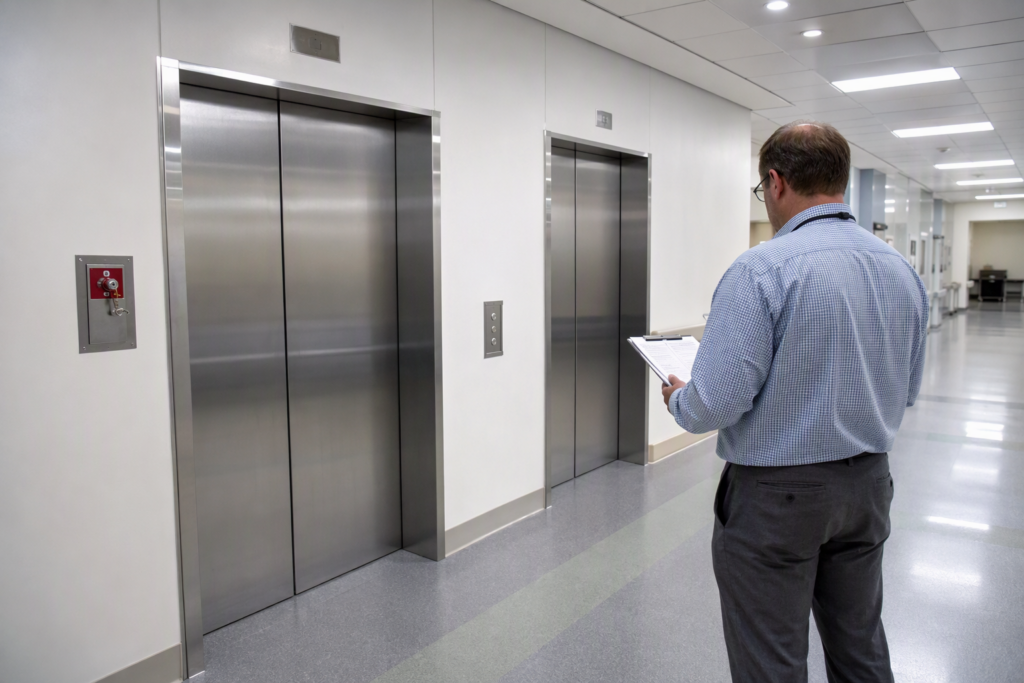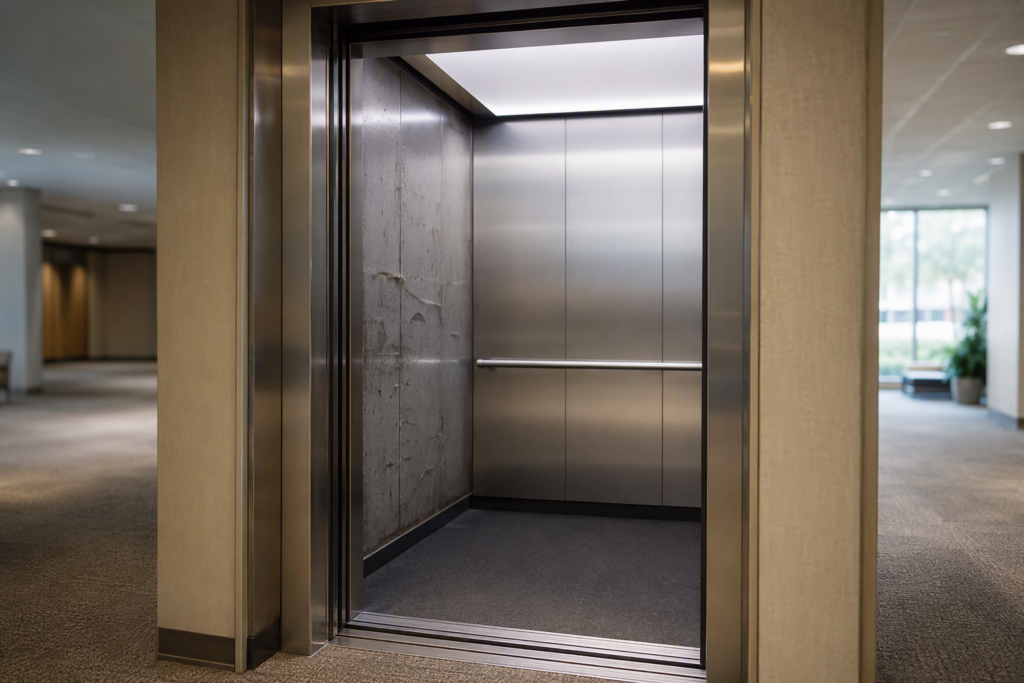
Getting a second opinion on a belt replacement recommendation is straightforward: hire an independent, licensed elevator contractor — one with no financial stake in the first recommendation — to physically inspect the belts, document their condition against applicable code wear criteria, and deliver a written assessment. A qualified second-opinion provider should reference ASME A17.1 manufacturer tolerances and, depending on your location, either Texas TDLR or California Cal/OSHA requirements before drawing any conclusions.
Why Should a Building Owner Always Consider a Second Opinion Before Authorizing Belt Replacement?
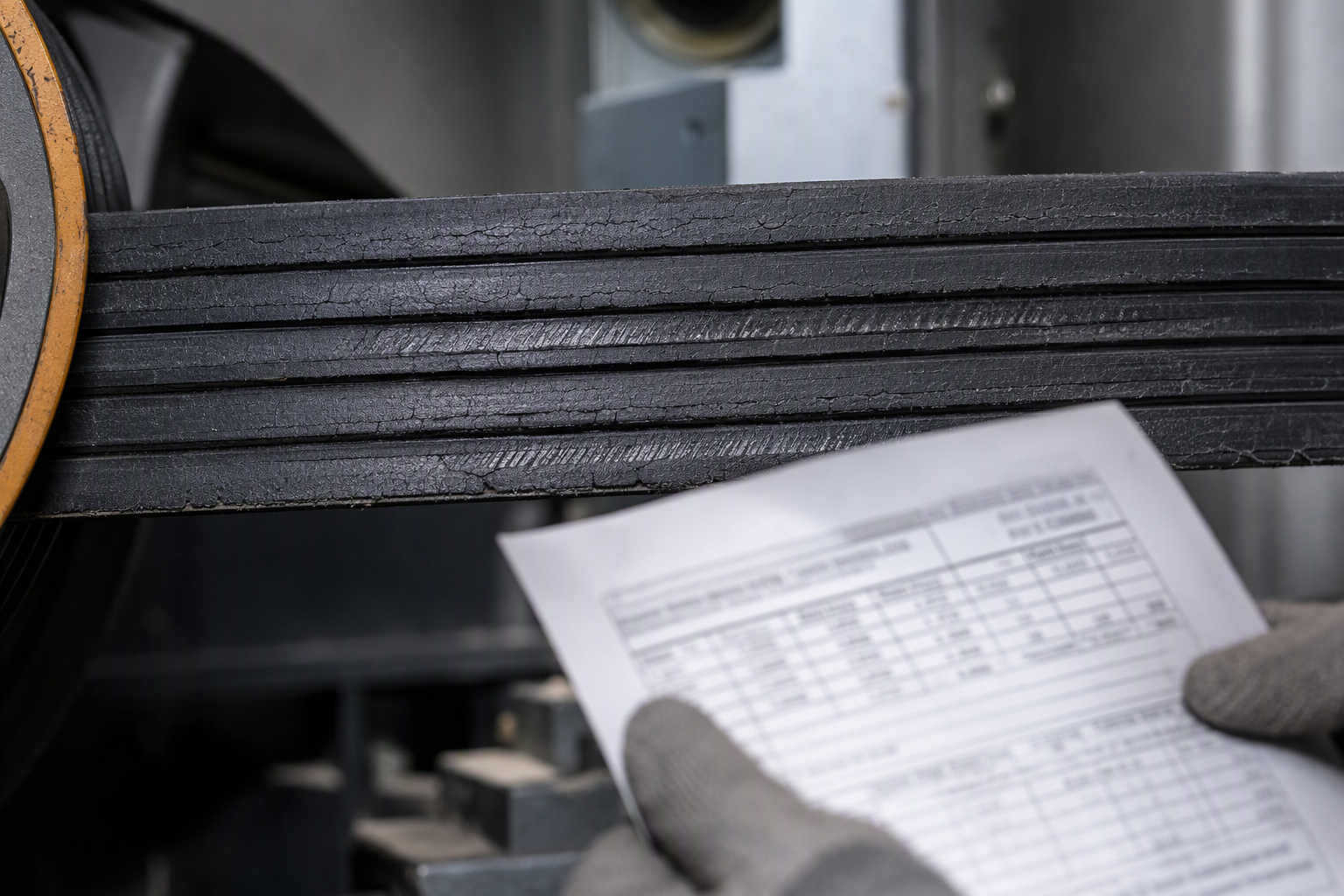
Belt replacement is one of the more significant maintenance expenditures in an elevator’s lifecycle, and a second opinion protects owners from both premature replacement and missed safety risks.
Elevator belts — whether governor ropes, compensation ropes, or, in the case of machine-room-less (MRL) traction elevators, flat polyurethane-coated steel belts — represent a meaningful capital outlay. A recommendation to replace them may be entirely justified, or it may be triggered by a technician’s conservative schedule preference, a manufacturer’s sales incentive, or a misreading of wear indicators. An independent assessment validates or refutes the original finding with objective evidence.
Beyond cost, there is a safety dimension. If a belt genuinely is at end of life and a building owner delays replacement after two conflicting opinions, the consequences can be severe. A rigorous second opinion does not just look for reasons to avoid spending money — it confirms the appropriate course of action, whatever that turns out to be.
What Types of Elevator Belts Are Actually Being Discussed in a Replacement Recommendation?
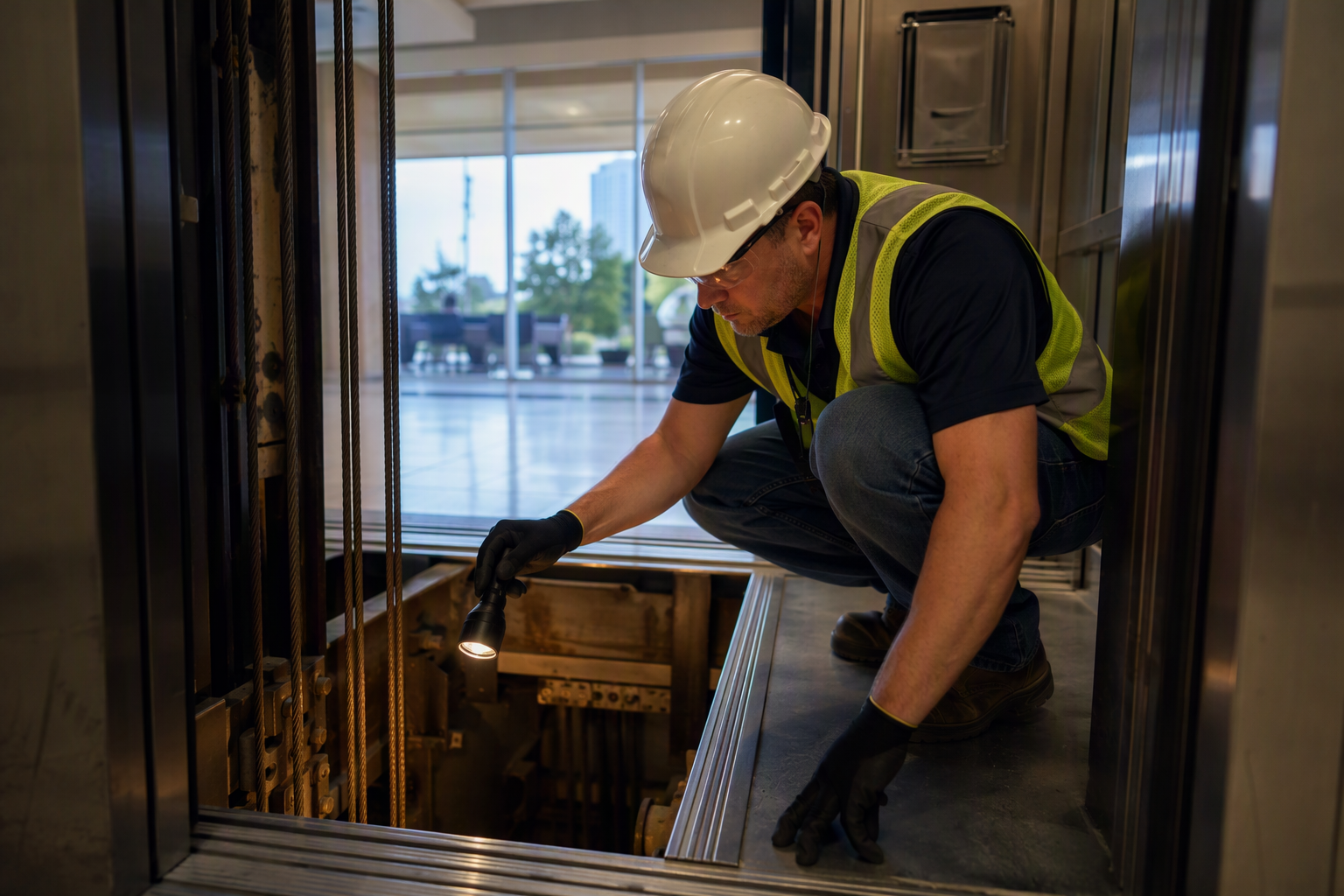
The term “belts” in elevator maintenance can refer to several distinct components, and identifying exactly which component is being recommended for replacement is the essential first step of any second opinion.
The most common scenarios involve:
- Flat steel belts (also called coated steel belts or aramid belts): Used in MRL traction elevators. These consist of multiple steel cords encased in a polyurethane jacket. Their condition is assessed by visual inspection of jacket wear, cord integrity testing, and manufacturer-specified service intervals.
- Wire rope (hoist ropes): Traditional traction elevators use round wire ropes over a sheave. Rope replacement is governed by discard criteria in ASME A17.1, including broken wire counts per lay length and diameter loss thresholds.
- Governor ropes: These trigger the safety device if the car overspeeds. They have their own wear criteria under ASME A17.1.
- Hydraulic elevator drive belts (machine belts): Some hydraulic and older traction units use machine drive belts that connect the motor to the pump or sheave.
Before scheduling any second opinion, the building owner should request from the original contractor a written statement specifying exactly which component is flagged, the observed condition, the measured parameters, and the code or manufacturer basis for the recommendation. That document becomes the starting point for any independent review.
How Do I Find a Qualified Independent Contractor for a Second Opinion?
The key qualification criteria differ by state, and engaging a contractor who meets those criteria in your jurisdiction ensures the second-opinion report will carry regulatory weight.
In Texas
Under Texas TDLR (Texas Department of Licensing and Regulation), which administers the Elevator and Escalator Safety program under Texas Health and Safety Code Chapter 754 and 16 Texas Administrative Code Chapter 74, a person may not install, repair, alter, test, or maintain elevator equipment without being registered as a contractor with TDLR. Verify that any second-opinion provider holds a current TDLR contractor registration. Note that within Houston city limits, TDLR does not regulate elevators — the City of Houston runs its own program — so building owners in Houston should verify local program requirements directly with the city.
In California
Under Cal/OSHA’s Elevator Unit (California Department of Industrial Relations), companies that maintain, repair, or service elevators must be certified as a Certified Qualified Conveyance Company (CQCC). Only a Certified Competent Conveyance Mechanic (CCCM) working for a CQCC may perform hands-on inspection of belts or ropes as part of a maintenance or repair evaluation. Verify CQCC and CCCM credentials before engaging any contractor in California. In Los Angeles, the Department of Building and Safety (LADBS) also runs its own elevator and conveyance inspection program.
AmeriTex Elevator operates in Houston, Dallas, Austin, and San Antonio, Texas, and in Los Angeles and San Diego, California, holding the appropriate registrations and certifications required in each jurisdiction to conduct legitimate, independent assessments.
What Should a Second-Opinion Inspection of Elevator Belts or Ropes Actually Include?
A thorough second-opinion inspection is a structured technical evaluation, not simply a visual walkthrough.
A competent independent evaluation should include the following steps:
- Document review: Obtain and read the original contractor’s written recommendation, maintenance logs, previous inspection reports, and the elevator’s modernization or installation date to establish service history.
- Physical access and safety lockout: The technician places the elevator in test mode and secures access per safe work practices before any hands-on inspection begins.
- Visual inspection of belt or rope condition: For flat belts, this includes checking the polyurethane jacket for cracking, fraying, or sheave-groove wear marks. For wire rope, it includes counting broken wires per lay and checking for kinking, birdcaging, or corrosion.
- Measurement against discard criteria: Results are compared against the specific discard criteria in ASME A17.1 Safety Code for Elevators and Escalators and against the manufacturer’s published service data for the specific belt or rope model.
- Sheave and drive system inspection: Belt condition cannot be evaluated in isolation — sheave groove wear, out-of-round sheaves, and misalignment accelerate belt deterioration and may be the root cause of premature wear.
- Load and tension check (where applicable): Rope tension equalization and belt tension are measurable parameters that affect service life.
- Written findings report: The inspector documents every measured parameter, the applicable standard threshold, and a clear conclusion: replace now, replace within a defined timeframe, or no replacement needed at this time.
- Recommendation on root cause (if replacement is confirmed): A second-opinion report should explain why the belts or ropes have reached their condition — whether due to age, abnormal wear, sheave issues, or other factors — so the problem is corrected and not repeated.
What ASME A17.1 Standards Apply to Elevator Rope and Belt Condition?
ASME A17.1 Safety Code for Elevators and Escalators establishes the foundational technical criteria for when hoist ropes and related components must be removed from service.
ASME A17.1 includes specific provisions addressing wire rope discard criteria — the point at which a rope must be replaced regardless of whether it appears structurally intact. These criteria address broken wire counts within a defined length of rope, reduction in diameter beyond a stated percentage of nominal diameter, and other degradation indicators. For flat belts used in MRL elevators, manufacturers typically issue their own service bulletins that work in conjunction with A17.1 because flat belt technology postdates many of the rope-specific sections of the code.
In Texas, the state adopted ASME A17.1/CSA B44, 2016 edition (as amended by 16 TAC §74.100(b), effective November 1, 2018). In California, the state adopted ASME A17.1/CSA B44, 2004 edition for installations on or after May 1, 2008, under the Cal/OSHA Elevator Safety Orders (California Code of Regulations, Title 8, Sections 3000–3146). Note that California has proposed a Group V update that would incorporate elements of ASME A17.1-2019, though no effective date had been posted as of 2026. The edition in effect at the time of installation governs existing equipment, though newer editions may be referenced for modernization work.
A credible second-opinion contractor will cite the specific section and threshold from the applicable edition of A17.1 — not just a general statement that the belts “look worn.”
How Does the Texas TDLR Framework Affect the Second-Opinion Process?
Texas building owners have clearly defined rights under the TDLR framework that directly support obtaining independent assessments.
Under Texas law, the building owner has the sole right to select the elevator inspector. Texas requires that building owners obtain a TDLR Certificate of Compliance for each unit of equipment, renewed annually. Inspections must be performed by a TDLR-registered elevator inspector, who must deliver the inspection report within five calendar days. If a citation for deficient ropes or belts appears on an inspection report, Texas owners must have violations corrected or under contract to be corrected within 30 days, or obtain a waiver or delay from TDLR.
This 30-day window is the practical timeframe within which a second opinion must be obtained if an owner disputes the original recommendation. Waiting beyond that window without a correction contract or TDLR-approved delay risks non-compliance. Building owners in Dallas, Austin, and San Antonio fall under TDLR jurisdiction; Houston building owners should contact the City of Houston’s elevator program directly for their specific process.
How Does the California Cal/OSHA Framework Affect the Second-Opinion Process?
California’s regulatory structure places additional credential requirements on who may even perform a belt or rope inspection, which narrows the pool of legitimate second-opinion providers.
Under Cal/OSHA and California Labor Code Sections 7300–7324.2, only a Certified Competent Conveyance Mechanic (CCCM) working for a Certified Qualified Conveyance Company (CQCC) may perform hands-on maintenance or repair evaluation work on a conveyance. CQCC certification requires a current C-11 Elevator Contractor license (issued by the California Contractors State License Board) plus certificates of workers’ compensation and liability insurance. California CQCC and CCCM certificates last two years and require at least eight hours of continuing education for renewal.
No elevator may operate in California without a valid Cal/OSHA permit to operate, and Cal/OSHA may issue a permit for up to two years for elevators under a full maintenance contract with a C-11 licensed company. If a belt deficiency is cited during an annual inspection, the owner is responsible for arranging reinspection — making a timely second opinion strategically important to avoid unnecessary replacement costs or prolonged downtime.
Building owners in Los Angeles should also be aware that LADBS runs its own elevator and conveyance inspection program. Coordinate with LADBS directly in addition to working with a CQCC-certified contractor.
What Questions Should I Ask the Second-Opinion Contractor Before Hiring Them?
Vetting the second-opinion provider before the inspection ensures the assessment will be technically credible and legally defensible.
Building owners should ask:
- Are you a TDLR-registered contractor (Texas) or a Cal/OSHA-certified CQCC (California)?
- Will the technician performing the inspection be a CCCM (California) or an appropriately qualified mechanic under your registration?
- Do you carry general liability insurance meeting state minimums? (Texas requires at least $1,000,000 per occurrence for bodily injury or death.)
- Will you provide a written report citing the specific ASME A17.1 section and threshold that supports your conclusion?
- Will you inspect the sheave system and drive components in addition to the belts or ropes themselves?
- Do you have a financial relationship with any supplier that could influence your recommendation?
- Will you review the original contractor’s report as part of your assessment?
What Does a Belt Condition Assessment Cost, and Is It Worth It?
The cost of an independent assessment is almost always justified relative to the cost of an unnecessary full belt replacement.
Because AmeriTex Elevator does not publish pricing in this format, building owners should request itemized quotes directly from any qualified contractor. What can be stated is that belt or rope replacement on a mid-rise traction elevator is a significant expenditure involving labor, materials, re-tensioning, and potential downtime costs. An independent inspection fee is typically a small fraction of that total. Even when the second opinion confirms the original recommendation, the owner gains documentation that supports their maintenance records and compliance files — useful during TDLR or Cal/OSHA inspections.
What Is the Difference Between a Preventive Replacement Schedule and a Code-Required Replacement?
Understanding whether a belt replacement is being recommended as a precaution or as a code mandate changes how urgently a building owner must act.
Many elevator service contracts include time-based or cycle-based preventive replacement intervals drawn from manufacturer recommendations rather than code mandates. These intervals are not always legally required — they represent conservative best practice to reduce the probability of in-service failure. A code-required replacement, by contrast, is triggered when a measured parameter (such as broken wire count) crosses the discard threshold in ASME A17.1 or a cited deficiency appears on an official inspection report.
A second-opinion contractor should clearly categorize the recommendation as one or the other in their written report. If it is preventive, the owner can make a risk-informed decision. If it is code-required, the timeline for correction is non-negotiable under state law.
Belt and Rope Condition: What Are the Key Inspection Benchmarks?
The following table summarizes the major component categories, the basis for evaluation, and what a second-opinion contractor should be checking in each case. All criteria reference applicable standards — building owners should request that the contractor document actual measured values against these benchmarks.
| Component | Primary Evaluation Basis | Key Indicators Assessed | Applicable Standard | Who May Inspect (CA / TX) |
|---|---|---|---|---|
| Wire hoist rope | ASME A17.1 discard criteria | Broken wire count per lay, diameter reduction, corrosion, kinking, birdcaging | ASME A17.1 | CCCM / CQCC (CA); TDLR-registered contractor (TX) |
| Governor rope | ASME A17.1 discard criteria | Broken wires, diameter loss, surface condition, tension | ASME A17.1 | CCCM / CQCC (CA); TDLR-registered contractor (TX) |
| Flat coated steel belt (MRL) | Manufacturer service data + A17.1 | Jacket wear depth, cord integrity, sheave groove wear, service life tracking | ASME A17.1 + OEM data | CCCM / CQCC (CA); TDLR-registered contractor (TX) |
| Compensation rope/chain | ASME A17.1 + visual/functional check | Wear, elongation, chain link condition (if applicable), tension | ASME A17.1 | CCCM / CQCC (CA); TDLR-registered contractor (TX) |
| Machine drive belt | Manufacturer spec + visual | Cracking, fraying, glazing, tension, alignment | Manufacturer OEM data | CCCM / CQCC (CA); TDLR-registered contractor (TX) |
| Sheave (groove wear) | ASME A17.1 + manufacturer spec | Groove profile, traction capability, undercutting | ASME A17.1 | CCCM / CQCC (CA); TDLR-registered contractor (TX) |
How Long Does a Second-Opinion Inspection Take, and Will It Cause Elevator Downtime?
A belt or rope second-opinion inspection requires the elevator to be taken out of service temporarily, but a well-coordinated assessment minimizes disruption to building occupants.
The actual hands-on inspection — including lockout, visual and measured assessment of ropes or belts, sheave inspection, and restoration to service — typically requires the elevator to be out of service for a period that varies depending on elevator type, machine room configuration, and the number of cars involved. Multi-car buildings may be able to maintain partial elevator service during the inspection of individual units. Building owners should coordinate with the contractor in advance to schedule the inspection during low-traffic periods and notify occupants accordingly. The written report, by contrast, may take additional time after the physical inspection to prepare properly.
Can a Second-Opinion Inspection Affect My Elevator’s Certificate of Compliance or Permit to Operate?
An independent maintenance assessment by a qualified contractor does not itself alter a certificate’s status — only a state-authorized inspection can change that — but the findings can influence what happens next.
In Texas, the Certificate of Compliance is issued by TDLR based on a registered elevator inspector’s report. A second-opinion maintenance evaluation conducted by a TDLR-registered contractor is a separate activity from the official inspection. However, if the second-opinion report identifies that belts or ropes do not meet discard criteria and the original inspector’s citation was overstated, the building owner has documentation to support a conversation with their registered inspector or TDLR about the cited deficiency.
In California, the permit to operate is issued by Cal/OSHA after inspection by a State safety engineer or Certified Competent Conveyance Inspector (CCCI). A CQCC’s internal maintenance assessment does not replace or override that inspection. However, a well-documented second opinion from a CQCC can inform discussions with Cal/OSHA about the appropriate course of action when a deficiency is in dispute.
What If Both Opinions Disagree — Who Makes the Final Call?
When two qualified contractors reach different conclusions about belt condition, the building owner has several options to resolve the conflict before authorizing costly work.
- Request that both contractors provide written reports citing the specific ASME A17.1 section and measured values that support their conclusion. If one report lacks specific measurements, that is a credibility indicator.
- Engage a third-party registered elevator inspector (in Texas, a TDLR-registered inspector; in California, a CCCI or Cal/OSHA safety engineer) to perform an official inspection focused on the disputed component.
- Request the elevator manufacturer’s technical service team to review the belt or rope model’s service data and weigh in on whether the observed condition triggers their own replacement criteria.
- Consult TDLR (Texas) or Cal/OSHA (California) if the dispute involves whether a code-cited deficiency is valid. Both agencies have processes for owners to raise questions about inspection findings.
- Document everything — all reports, communications, and decisions — to protect the building owner in the event of a future compliance inquiry or safety incident.
What Are the Risks of Delaying Belt Replacement If Both Inspectors Agree It Is Needed?
When qualified independent review confirms the replacement recommendation, delay introduces both safety and regulatory risk that building owners must weigh carefully.
From a safety standpoint, hoist ropes and governor ropes that have crossed ASME A17.1 discard thresholds are at elevated risk of in-service failure. The consequences of a hoist rope failure or governor rope failure range from uncontrolled car movement to activation of the safety device and potential injury. Flat coated steel belts with jacket deterioration can lose traction predictability.
From a regulatory standpoint, Texas building owners must have cited violations corrected or under contract within 30 days of the inspection or obtain a waiver from TDLR. Failure to comply risks loss of the Certificate of Compliance and the ability to operate the elevator legally. In California, operating an elevator without a valid permit to operate is a violation of California Labor Code Sections 7300–7324.2 — and Cal/OSHA has authority to order equipment out of service.
What Role Does the Annual Inspection Play in Belt Monitoring?
Mandatory annual inspections are the primary mechanism by which regulators identify belt and rope deficiencies — understanding this process helps building owners stay ahead of replacement recommendations.
In Texas, building owners must have elevators inspected annually by a TDLR-registered elevator inspector. In California, California law requires every conveyance to be inspected at least once a year, with the owner responsible for arranging that reinspection. Cal/OSHA may issue a permit for up to two years for elevators in safe condition covered by a full maintenance contract with a C-11 licensed company.
During these annual inspections, the inspector evaluates rope and belt condition as part of the overall equipment assessment. Building owners who maintain detailed maintenance records — including rope or belt installation dates, measured parameters at each service visit, and technician notes — are in a stronger position to challenge or validate any replacement recommendation that arises from an annual inspection. AmeriTex Elevator recommends that building owners request maintenance log documentation from their service provider at every visit.
How Should I Document and Manage the Second-Opinion Process?
Thorough documentation of a second-opinion process protects building owners legally, supports compliance records, and provides a baseline for future maintenance decisions.
Owners should maintain the following records in a dedicated elevator file for each unit:
- The original contractor’s written replacement recommendation, including the stated basis and any measured parameters
- All maintenance logs for the past two or more service years
- The most recent official inspection report and Certificate of Compliance (Texas) or Cal/OSHA permit to operate (California)
- The second-opinion contractor’s written report, including credentials, measured values, ASME A17.1 references, and conclusion
- Any communications with TDLR (Texas) or Cal/OSHA (California) regarding the deficiency
- The final decision made by the building owner and the date on which work was authorized or deferred
- Post-replacement documentation: the new belt or rope specifications, installation date, technician credentials, and re-inspection results
This file should be retained for the operational life of the elevator. AmeriTex Elevator provides clients with written documentation of all assessment findings as a standard part of the evaluation process.
Are There Situations Where Belt Replacement Should Not Be Delayed Even for a Second Opinion?
Yes — certain safety conditions require immediate action and cannot wait for a secondary assessment process to conclude.
If the original inspection or maintenance visit identifies any of the following, the building owner should treat the matter as an emergency and take the elevator out of service immediately while arranging expedited evaluation:
- Visible broken wires on hoist or governor ropes that the technician believes exceed ASME A17.1 discard limits
- Significant diameter reduction or corrosion on hoist ropes affecting visible rope length
- Flat belt jacket damage that exposes underlying steel cords
- Any abnormal elevator behavior — unusual noise, vibration, leveling errors, or uncontrolled movement — that the technician attributes to belt or rope condition
- A written order from TDLR, Cal/OSHA, or a local authority having jurisdiction (AHJ) requiring immediate removal from service
In these cases, a second opinion can still be sought — but it should be conducted on equipment that is already safely out of service, not on equipment continuing to carry passengers while the owner evaluates options.
How Can AmeriTex Elevator Help With a Second Opinion in Texas and California?
AmeriTex Elevator provides independent belt and rope condition assessments for building owners in Houston, Dallas, Austin, San Antonio, Los Angeles, and San Diego who have received a replacement recommendation and want an objective second evaluation.
AmeriTex Elevator operates with the registrations and certifications required by TDLR in Texas and by Cal/OSHA in California. Assessment reports from AmeriTex Elevator cite specific ASME A17.1 criteria and manufacturer data relevant to the component in question, giving building owners the technical documentation they need to make an informed decision. AmeriTex Elevator also evaluates the sheave system and related drive components as part of any rope or belt assessment, because root-cause identification is as important as the component condition finding itself.
Building owners who are managing compliance timelines — the 30-day correction window under TDLR or the annual reinspection cycle under Cal/OSHA — should contact AmeriTex Elevator promptly to schedule an assessment before regulatory deadlines become a constraint.
What Should I Do Immediately After Receiving a Belt Replacement Recommendation?
Taking the right steps in the correct sequence maximizes the owner’s options and keeps the elevator in legal compliance throughout the second-opinion process.
- Request the written recommendation: Ask the original contractor to provide a written report specifying the component, the observed condition, the measured parameters, and the code or manufacturer basis for the recommendation. Do not authorize work until this is in hand.
- Check the compliance deadline: In Texas, determine whether the issue was cited on an official inspection report — if so, the 30-day correction window applies. In California, confirm whether the issue affects the current permit to operate or the upcoming annual inspection.
- Verify your elevator’s status: Confirm whether the elevator can legally continue in service while the second opinion is obtained, or whether it must be taken out of service immediately.
- Identify qualified second-opinion providers: In Texas, verify TDLR contractor registration. In California, verify CQCC certification and C-11 license. Request references from similar building types.
- Schedule the second-opinion inspection promptly: Do not allow the compliance deadline to lapse while waiting for a secondary assessment. If the timeline is tight, notify TDLR (Texas) about the situation or consult Cal/OSHA (California) about available options.
- Compile existing documentation: Gather maintenance logs, the previous inspection report, and the original recommendation to share with the second-opinion contractor before their visit.
- Receive and compare written reports: Once the second-opinion report is complete, compare its specific measurements and code references against those in the original recommendation to determine the appropriate course of action.
- Authorize work or document the deferral decision: If replacement is confirmed, authorize the work with a qualified registered contractor and retain all completion documentation. If deferral is supported by the evidence, document that decision and establish a reinspection schedule.
Get an Independent Assessment From a Certified Elevator Contractor
If a contractor has recommended belt or rope replacement on your elevator and you want an objective second evaluation before authorizing the work, AmeriTex Elevator serves building owners in Houston, Dallas, Austin, San Antonio, Los Angeles, and San Diego with independent, documentation-based assessments referenced to ASME A17.1 and applicable state requirements.
Contact AmeriTex Elevator for a free elevator assessment: 844-646-9660