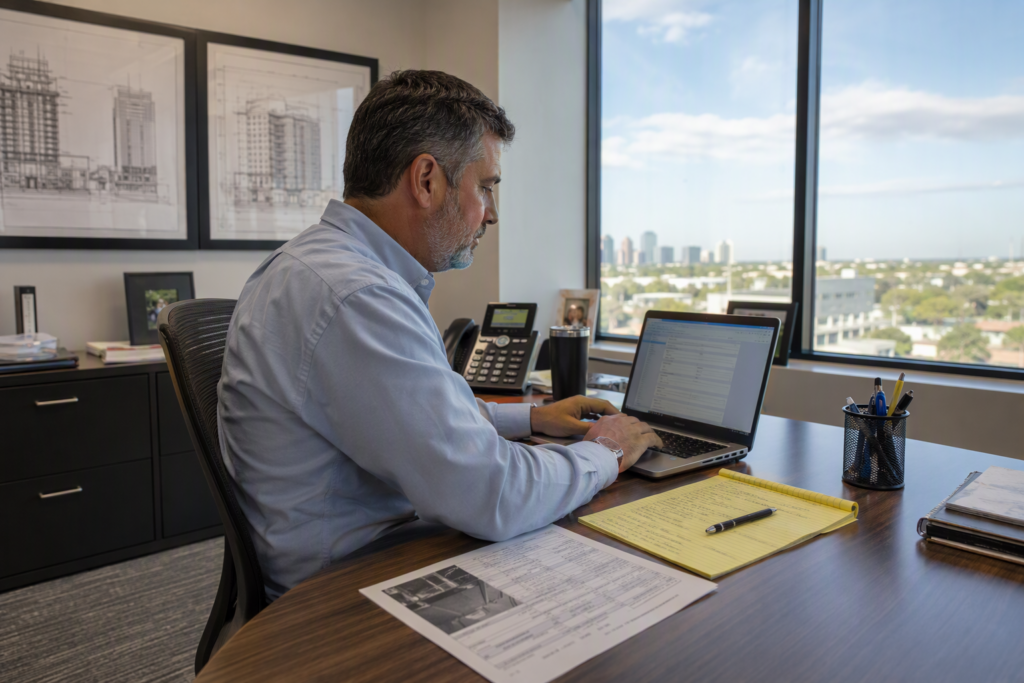
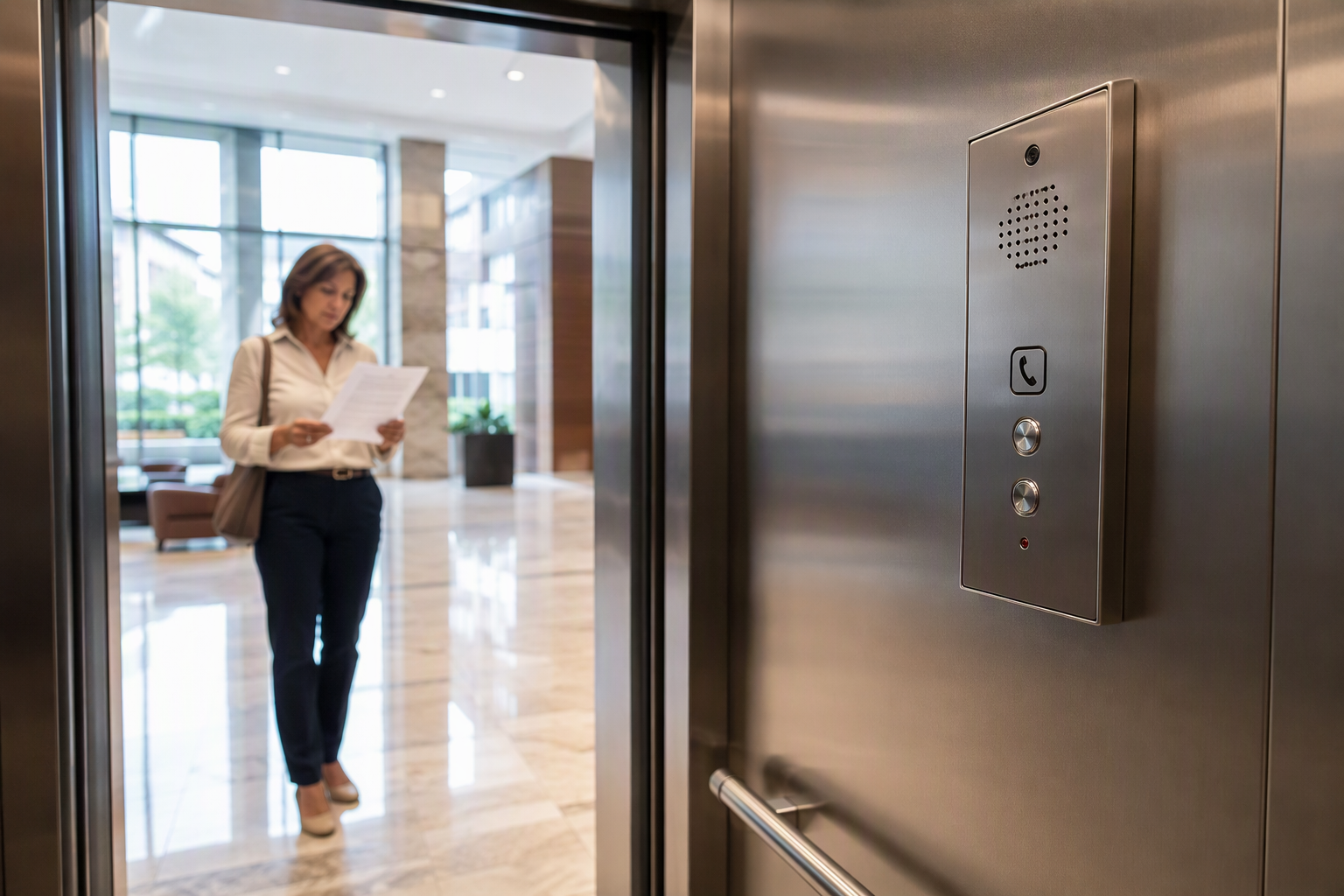
Yes. A qualified elevator contractor can replace an emergency telephone or two-way communication device on an elevator that is currently maintained by a different company. The emergency phone is a life-safety component subject to federal accessibility standards under the Americans with Disabilities Act (ADA) and to installation and testing requirements under the ASME A17.1 Safety Code for Elevators and Escalators. Building owners retain the right to select separate vendors for different scopes of work unless a maintenance contract explicitly restricts it — and even then, life-safety deficiencies may override such restrictions.
The sections below answer the most common questions building owners, property managers, and facilities directors ask when navigating elevator phone replacement in Texas and California markets — including Houston, Dallas, Austin, San Antonio, Los Angeles, and San Diego.
1. Does an Existing Elevator Maintenance Contract Prevent a Different Company from Replacing the Emergency Phone?
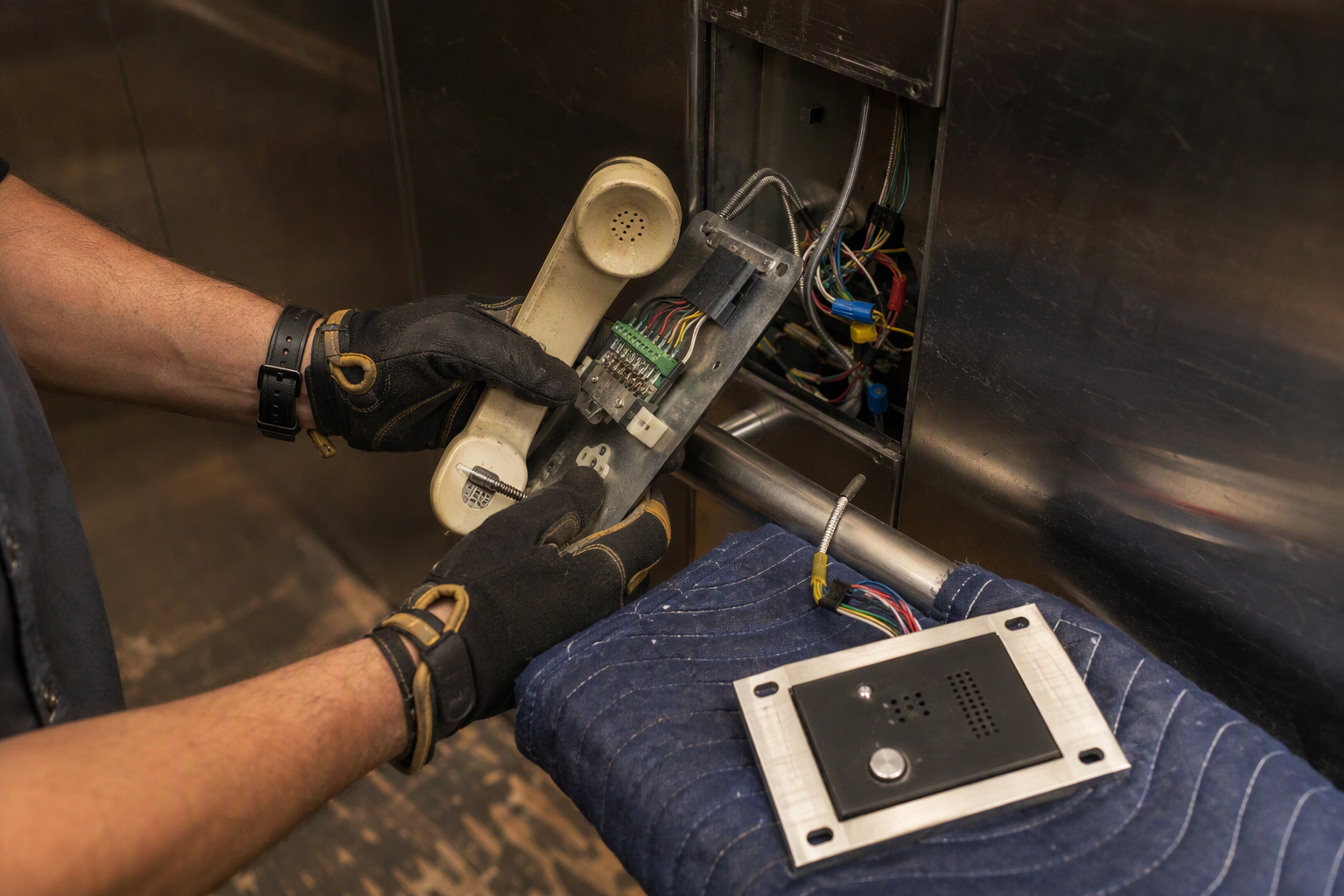
Not automatically. Most maintenance contracts cover scheduled maintenance and repairs to mechanical components, and a separate vendor performing a phone replacement is legally permissible unless the contract contains an explicit exclusivity clause covering communication equipment.
Building owners should review their current maintenance agreement before scheduling third-party phone work. Some full-service contracts include language stating that all alterations or replacements must be performed by the contract holder. However, even broad exclusivity clauses typically cannot override a building owner’s obligation to restore a non-functional life-safety device promptly. Under ASME A17.1, an inoperative emergency communication system is a condition that can require the elevator to be taken out of service. Waiting on a slow-responding incumbent provider when the device is non-functional exposes the building owner to regulatory liability. AmeriTex Elevator can review the scope of an existing contract and advise owners on how to proceed without breaching their agreement.
2. What Federal Code Governs Elevator Emergency Telephone Requirements?
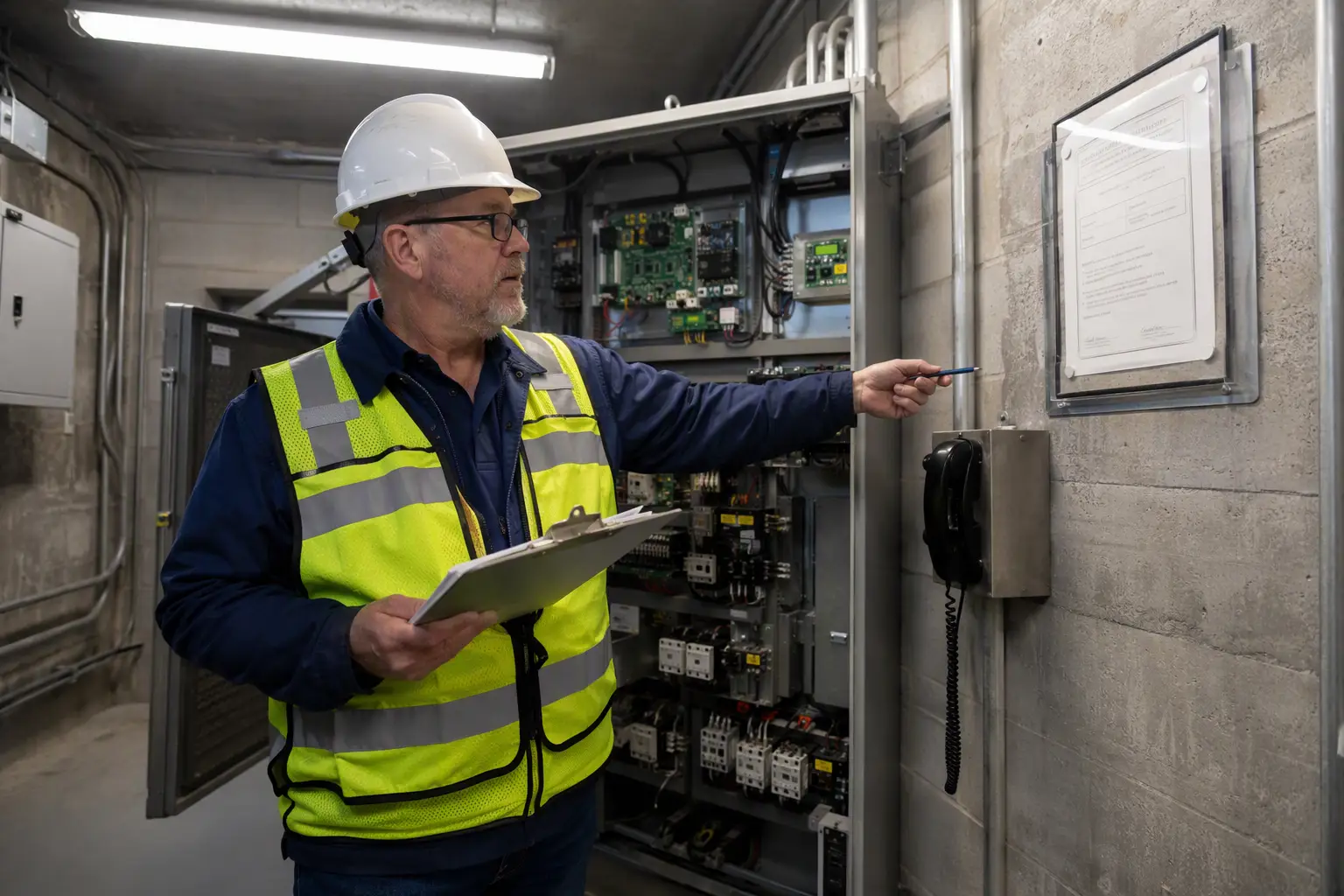
Two federal frameworks apply in every jurisdiction AmeriTex Elevator serves:
- ASME A17.1 Safety Code for Elevators and Escalators — establishes the technical requirements for two-way emergency communication systems in elevator cars, including audibility, operability, and connection to a location that is monitored continuously or answered within a defined response time.
- Americans with Disabilities Act (ADA) — requires that emergency communication systems in elevators be accessible to individuals who are deaf or hard of hearing. The ADA Standards for Accessible Design specify that the two-way communication system must include both audible and visible signals.
These federal standards create a baseline floor. State and local authorities having jurisdiction (AHJs) may adopt additional or more stringent requirements on top of them.
3. Who Regulates Elevator Work in Texas?
The Texas Department of Licensing and Regulation (TDLR), Elevator and Escalator Safety program, administers the Texas elevator program under Texas Health and Safety Code Chapter 754 and 16 Texas Administrative Code Chapter 74. Texas has adopted ASME A17.1/CSA B44, 2016 edition, as its state elevator code, effective November 1, 2018.
Key Texas regulatory facts relevant to phone replacement work:
- Any person or company that installs, repairs, alters, tests, or maintains elevator equipment in Texas must be registered as a contractor with TDLR.
- Texas elevator contractor registrations expire one year after issuance.
- Texas elevator contractors must carry general liability insurance of at least $1,000,000 per occurrence for bodily injury or death and $500,000 per occurrence for property damage.
- Before certain alterations, the registered contractor must submit plans to TDLR and obtain approval.
- Building owners must obtain a TDLR Certificate of Compliance for each unit of equipment, and that certificate is valid for one year.
- Houston exception: TDLR does not regulate elevators or escalators inside Houston city limits. The City of Houston runs its own elevator program. Building owners in Houston should contact the City of Houston directly for local requirements.
AmeriTex Elevator is a TDLR-registered elevator contractor and manages all required documentation on behalf of Texas building owners.
4. Who Regulates Elevator Work in California?
The Division of Occupational Safety and Health (Cal/OSHA), Elevator Unit, California Department of Industrial Relations administers California’s elevator program under California Labor Code Sections 7300–7324.2 and the California Code of Regulations, Title 8, Elevator Safety Orders (Sections 3000–3146). California has adopted ASME A17.1/CSA B44, 2004 edition, for installation contracts signed on or after May 1, 2008.
Key California regulatory facts relevant to phone replacement work:
- Companies that install, alter, test, maintain, repair, or service elevators in California must be certified by Cal/OSHA as a Certified Qualified Conveyance Company (CQCC) and hold a C-11 Elevator Contractor license issued by the California Contractors State License Board (CSLB).
- Anyone who works on an elevator in California without supervision must be certified by Cal/OSHA as a Certified Competent Conveyance Mechanic (CCCM).
- Only a CCCM working for a CQCC may maintain, repair, alter, or replace components on a conveyance.
- A permit from Cal/OSHA is required before a conveyance is materially altered.
- No elevator may be operated in California without a valid, current permit to operate issued by Cal/OSHA.
- Los Angeles exception: The City of Los Angeles, Department of Building and Safety (LADBS), runs its own elevator and conveyance inspection program. Building owners in Los Angeles should confirm local requirements with LADBS.
AmeriTex Elevator holds the required California certifications and licenses to perform emergency phone replacement work lawfully throughout the state.
5. Is Replacing an Elevator Phone Considered an Alteration Requiring Permits?
It depends on the scope of work and the jurisdiction. A like-for-like replacement of an existing telephone unit using the same wiring and connection point may be treated differently than installing a new communication system type or reconfiguring how the system connects to a monitoring center. In California, Cal/OSHA requires a permit before a conveyance is materially altered. In Texas, TDLR requires plan submission and approval before certain alterations are performed.
AmeriTex Elevator evaluates each replacement project individually, determines whether a permit or plan submission is required, and handles that process before work begins. Building owners should never assume that replacing a phone is purely a swap-and-go task without first confirming the permit status with their contractor.
6. What ADA Requirements Apply to Elevator Emergency Phones?
The ADA Standards for Accessible Design require that two-way communication systems in elevators provide both audible and visible signals so that the system is accessible to individuals who are deaf or hard of hearing. Specifically:
- The system must include a means for the user to indicate that help is needed.
- The system must include a visible signal to acknowledge that the user’s call has been received.
- Controls must comply with reach range and operability requirements.
- The system must not require voice communication as the sole means of calling for assistance.
These ADA requirements apply to elevators subject to the ADA — generally those in places of public accommodation, commercial facilities, and state and local government facilities. When AmeriTex Elevator replaces an emergency phone, the replacement unit is selected to meet current ADA accessibility standards.
7. Can the Building Owner Choose Which Company Replaces the Emergency Phone?
Yes, in virtually all circumstances. The building owner has the legal right to select qualified contractors for discrete scopes of work. An incumbent maintenance provider does not have an inherent right to perform every repair or replacement on the equipment it services. The key considerations are:
- Contract review: Confirm whether the existing maintenance agreement contains exclusivity language covering communication equipment replacement.
- Contractor qualifications: The replacement contractor must hold all required state registrations, certifications, and licenses for the jurisdiction where the elevator is located.
- Permit compliance: The replacement contractor must pull any required permits before performing the work.
- Inspection and certificate: In Texas, the building owner must maintain a valid TDLR Certificate of Compliance. In California, the building owner must maintain a valid Cal/OSHA permit to operate. Phone replacement work that constitutes a material alteration may trigger a reinspection requirement before the unit is returned to service.
In Texas, the building owner also has the sole right to select the elevator inspector who performs required annual inspections — that inspector is independent of the maintenance contractor.
8. What Happens if the Emergency Phone Is Non-Functional and the Maintenance Contractor Is Slow to Respond?
A non-functional emergency communication system is a life-safety deficiency. Under ASME A17.1, an elevator with an inoperative emergency communication system may be required to be taken out of service. Operating an elevator with a known life-safety deficiency exposes the building owner to regulatory penalties, potential liability in the event of an incident, and — in Texas — potential loss of the Certificate of Compliance.
If the incumbent maintenance provider cannot restore the emergency phone within a reasonable timeframe, the building owner is not required to wait indefinitely. Building owners may contact AmeriTex Elevator to assess the situation and, where the existing contract permits or where life-safety urgency warrants, perform the replacement promptly. AmeriTex Elevator documents all work to support the owner’s regulatory compliance file.
9. What Types of Emergency Communication Devices Can Be Installed?
The emergency communication market has evolved significantly. Options available today include:
- Traditional analog telephone units — connect over a standard telephone line (POTS line) to a monitoring center or building security desk.
- VoIP-based emergency phones — connect over an internet protocol network; require evaluation for reliability and 911 routing compliance before installation in an elevator.
- Cellular emergency communication units — connect over a cellular network, eliminating the need for a dedicated telephone line; suitable for buildings where running a dedicated line is impractical.
- Two-way communication systems with visual acknowledgment — include visible indicators to confirm call connection, meeting ADA accessibility requirements for users who are deaf or hard of hearing.
AmeriTex Elevator evaluates the building’s infrastructure, the elevator’s location, cellular signal availability, and applicable code requirements to recommend the appropriate device. The replacement unit must comply with ASME A17.1 requirements as adopted in the applicable jurisdiction and with ADA accessibility standards.
10. Does the Emergency Phone Need to Connect to a 24-Hour Monitoring Center?
ASME A17.1 requires that the two-way emergency communication system connect to a location that is monitored. The code’s intent is that a person who activates the emergency communication system can reach assistance at any hour. Connection to a building security desk that is staffed only during business hours does not satisfy this requirement for elevators that operate outside those hours.
Many building owners connect emergency phones to a third-party elevator monitoring center that provides around-the-clock answering. AmeriTex Elevator can coordinate monitoring service as part of a phone replacement project or advise owners on selecting an independent monitoring provider.
11. How Long Does an Elevator Phone Replacement Typically Take?
A straightforward like-for-like phone replacement — same connection type, same location, no wiring reconfiguration — can typically be completed in a few hours. Projects that involve switching from an analog line to a cellular unit, relocating the device, or reconfiguring wiring may take longer and may require a permit inspection before the elevator is returned to service.
AmeriTex Elevator provides a project timeline estimate at the time of assessment so that building owners and property managers can plan for any required downtime.
12. What Documentation Should the Building Owner Receive After the Phone Is Replaced?
After a compliant emergency phone replacement, the building owner should receive:
- A written description of the work performed, including the make and model of the replacement unit.
- Copies of any permits pulled for the work.
- Test results confirming the two-way communication system is functional and connected to monitoring.
- Any updated inspection or compliance documentation required by the AHJ.
In Texas, if the replacement constitutes an alteration that triggers a new inspection, the owner will need an updated TDLR Certificate of Compliance before returning the elevator to service. In California, a material alteration requires a Cal/OSHA permit and inspection before the elevator is placed back in service. AmeriTex Elevator provides a complete documentation package and coordinates any required inspections.
13. Can an Elevator Be Kept in Service While Awaiting a Phone Replacement?
This is a determination that the building owner must make in consultation with their elevator contractor and, where applicable, their AHJ. ASME A17.1 identifies an inoperative emergency communication system as a condition that may require the elevator to be removed from service. However, the specific enforcement action depends on the AHJ and the circumstances.
In Texas, a building owner must report conditions that may require removal from service and address cited violations within 30 days of inspection or obtain a waiver or delay from TDLR. In California, Cal/OSHA may require the elevator to be taken out of service pending restoration of a life-safety system. Building owners should not assume an elevator with a non-functional emergency phone can continue in service without risk — contact AmeriTex Elevator immediately for an assessment.
14. Does the Monitoring Service Contract Change When the Phone Is Replaced?
It may. If the existing emergency phone is connected to a monitoring service under a separate contract, replacing the device — particularly if switching communication technology — may require updating or replacing that monitoring agreement. Building owners should confirm with their current monitoring provider whether the new device is compatible and whether any contract changes are required.
AmeriTex Elevator reviews monitoring compatibility as part of every phone replacement assessment and advises owners on any changes needed to maintain continuous monitoring coverage during and after the transition.
15. What Should a Building Owner Do Before Contacting AmeriTex Elevator for a Phone Replacement?
Having the following information available will allow AmeriTex Elevator to provide a faster and more accurate assessment:
- The make, model, and serial number of the existing elevator, if available.
- A copy of the current maintenance contract, particularly any exclusivity provisions.
- The type of existing emergency phone (analog, VoIP, cellular) and the monitoring provider’s contact information.
- The current Texas TDLR Certificate of Compliance or California Cal/OSHA permit to operate number.
- A description of the problem with the existing phone, if applicable.
- The building address and city — particularly relevant for Houston and Los Angeles, which run their own programs.
Contact AmeriTex Elevator through our website or by phone to schedule an on-site assessment. Our team handles the regulatory documentation, coordinates inspections, and returns the elevator to compliant service as efficiently as possible.
Summary
An elevator company can replace an emergency phone on an elevator under contract with another provider when the work is performed by a properly credentialed contractor, required permits are obtained, and the replacement device meets ASME A17.1 and ADA requirements. Building owners in Texas work within the TDLR framework — except in Houston, which runs its own program. Building owners in California work within the Cal/OSHA framework, with Los Angeles maintaining its own program as well. AmeriTex Elevator is qualified to perform this work in both states, manages all required regulatory steps, and provides complete documentation to support each owner’s compliance file.
For questions about elevator emergency phone replacement in Texas or California, contact the AmeriTex Elevator team directly. We serve commercial, residential, and institutional properties throughout our markets and are available to assess your situation promptly.
Need elevator service you can rely on? AmeriTex Elevator is ready to help.