
When an elevator service company is acquired, merged, or sold, building owners across Texas and California can find themselves uncertain about who is now responsible for maintaining their equipment, honoring their contracts, and keeping them legally compliant. This FAQ hub covers every dimension of that transition — from tracking down ownership records to verifying contractor credentials, reviewing compliance obligations, and protecting your building from service gaps.
How do I find out who the new owner of an elevator company is after it has been sold?
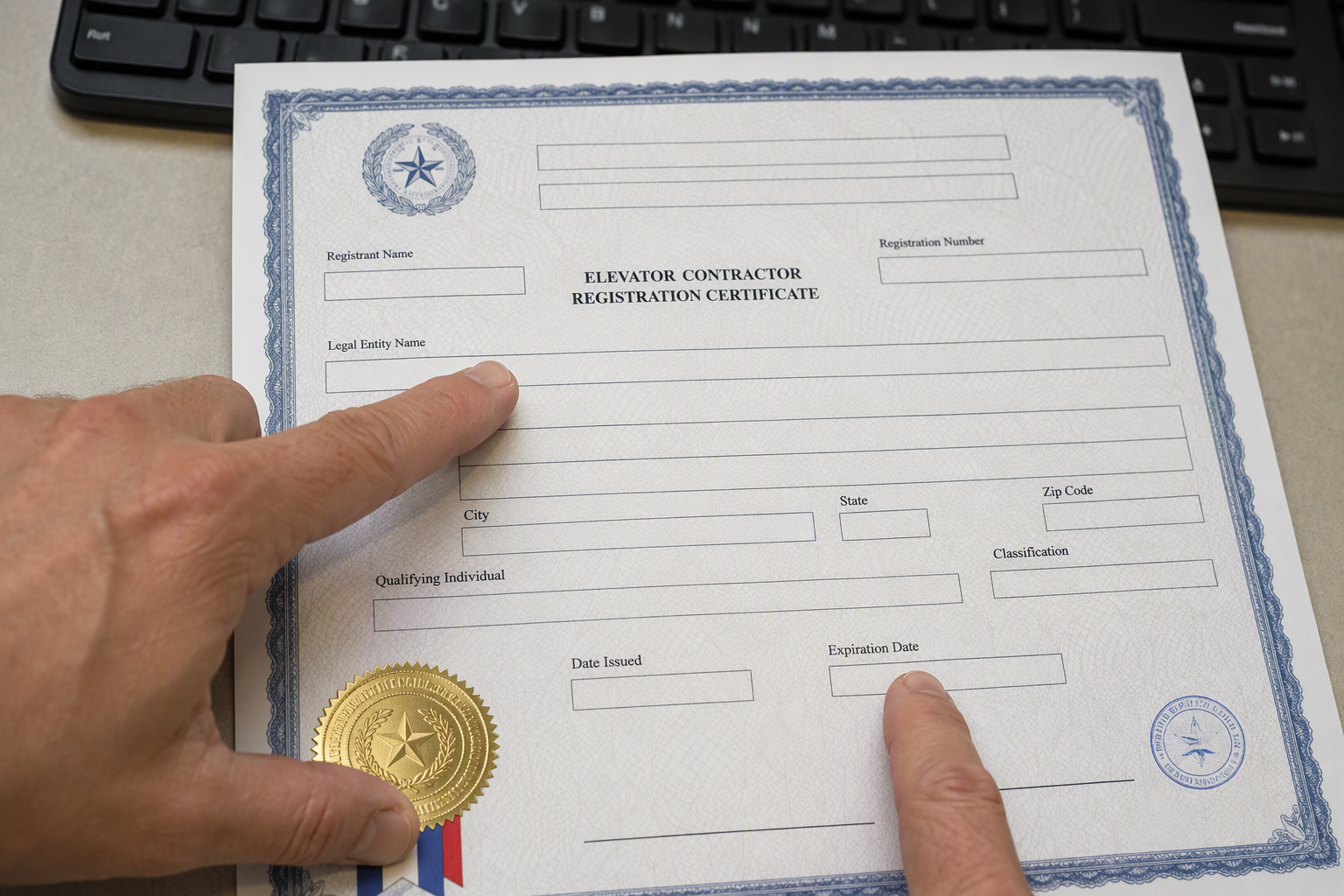
Contact your state’s elevator regulatory agency, review your maintenance contract for assignment clauses, and request written confirmation of the ownership change from the acquiring company.
The most authoritative starting point is the official contractor registration database maintained by your state regulator. In Texas, the TDLR Elevator and Escalator Safety program maintains public records of all registered elevator contractors, including registration status, responsible parties, and insurance documentation. In California, the Cal/OSHA Elevator Unit maintains Certified Qualified Conveyance Company (CQCC) records. Searching the acquiring company’s name — or the old company’s name — in those databases will often reveal whether a transfer of registration has occurred or whether the buyer is operating under a new entity name.
Beyond the regulatory database, building owners should request a formal written notice of assignment from the acquiring entity. A legitimate buyer will typically send a notice to all existing service customers explaining the acquisition, identifying the new legal entity, confirming whether existing contracts are being assumed, and providing updated contact and emergency service information. If no such notice has arrived, that alone is a red flag warranting direct inquiry.
Finally, check your state’s Secretary of State business entity database (Texas or California) by searching the old company name to see whether it has been dissolved, merged into another entity, or had its name changed — all of which are publicly recorded events.
What official agency records can confirm a Texas elevator company ownership change?
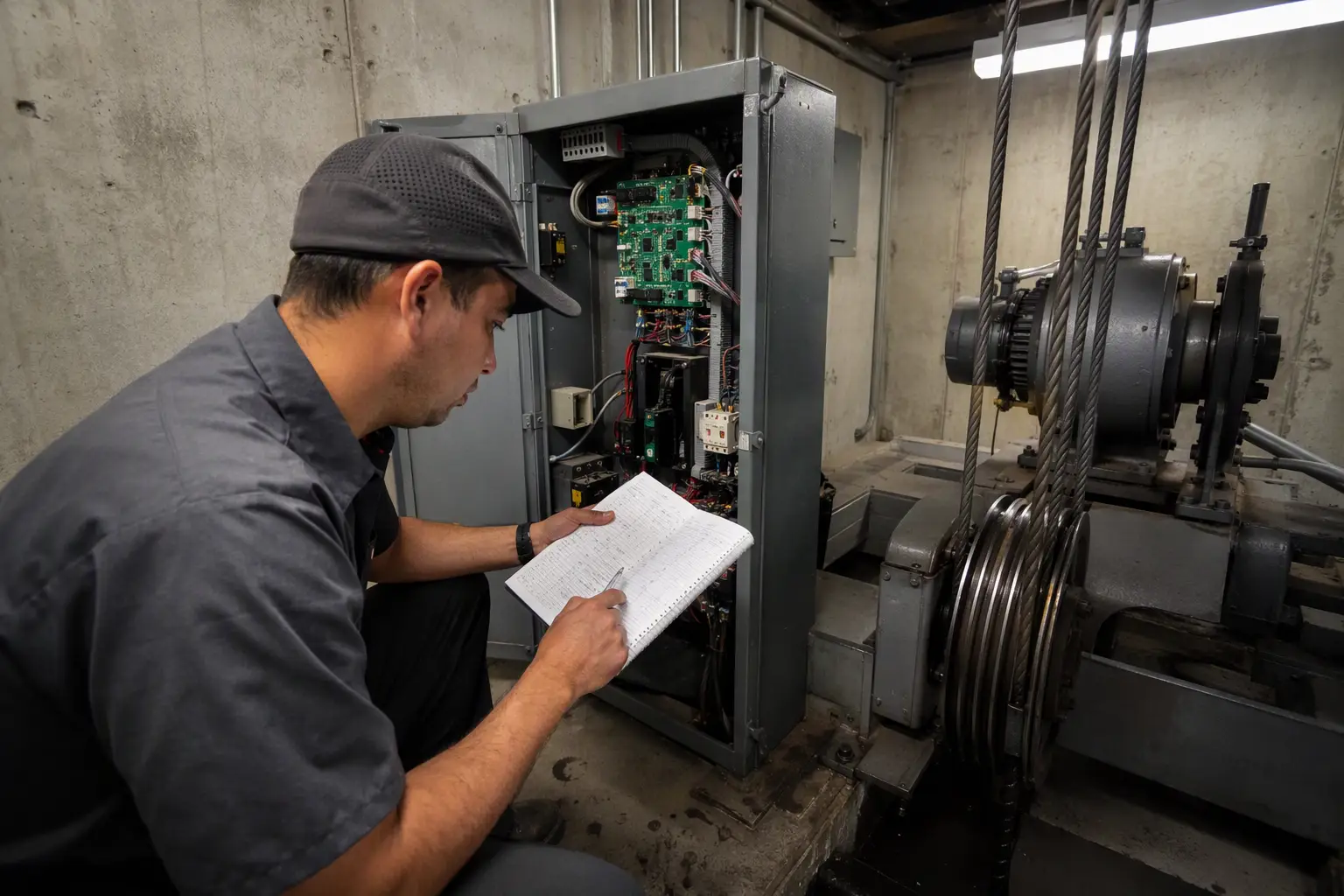
In Texas, the TDLR’s online contractor registration lookup is the primary public record source for verifying elevator company ownership and registration status.
Under Texas Health and Safety Code Chapter 754 and 16 Texas Administrative Code Chapter 74, any person or entity that installs, repairs, alters, tests, or maintains elevator equipment in Texas must register as a contractor with the Texas Department of Licensing and Regulation. That registration is tied to a specific legal entity and expires one year after issuance. When a company is sold, the buyer must register as a separate contractor or demonstrate a lawful transfer of the existing registration.
Building owners can search TDLR’s public license lookup tool using the old company name, the new company name, or the responsible party’s name. The result will show whether the registration is active, expired, or under a new entity. Texas elevator contractors are also required to designate one or two responsible parties with at least three years of elevator contractor experience, so changes in that designation are another indicator that an ownership transition has occurred.
Note that TDLR does not regulate elevators inside Houston city limits — the City of Houston operates its own elevator program — so Houston building owners should contact the City of Houston directly in addition to any TDLR inquiry.
What official agency records can confirm a California elevator company ownership change?
In California, Cal/OSHA’s CQCC certification database and the California Contractors State License Board (CSLB) C-11 license records together confirm whether an elevator company is legitimately operating under new ownership.
California Labor Code Sections 7300–7324.2 and the California Code of Regulations, Title 8, Elevator Safety Orders require that any company maintaining, repairing, altering, or replacing elevator components hold a valid Certified Qualified Conveyance Company (CQCC) certificate issued by Cal/OSHA. Applicants for CQCC certification must also hold a current C-11 Elevator Contractor license from the California Contractors State License Board (CSLB). Both records are searchable online.
CQCC and related certificates in California are valid for two years and require at least eight hours of continuing education for renewal. A company that has been acquired but has not yet transferred or renewed its CQCC certification is operating in a regulatory gray zone. Building owners should verify both the CQCC status and the C-11 license independently before allowing any service work to continue after an ownership transition.
In Los Angeles specifically, the City of Los Angeles Department of Building and Safety (LADBS) runs its own elevator and conveyance inspection program. Los Angeles building owners should contact LADBS directly to confirm that any service contractor change has been properly recorded at the local level as well.
What steps should a building owner take immediately after learning their elevator company has been sold?
Building owners should follow a structured verification process to protect compliance, safety, and contractual rights from the moment they learn of an elevator company sale.
- Locate your current maintenance contract. Pull the signed service agreement and identify the legal entity named as the service provider, the term of the contract, and any assignment or change-of-ownership clauses.
- Request written notice of assignment. Contact the old company’s main office or the acquiring company and request formal written confirmation of the ownership change, the new entity’s legal name, and confirmation that the contract is being assumed.
- Verify the new company’s regulatory standing. In Texas, check TDLR contractor registration status. In California, verify CQCC certification and C-11 license status. In Los Angeles, also check with LADBS.
- Confirm insurance coverage. In Texas, registered elevator contractors must carry general liability insurance of at least $1,000,000 per occurrence for bodily injury or death and $500,000 per occurrence for property damage. Request a current certificate of insurance naming your building as an additional insured.
- Review your permit and compliance records. In Texas, confirm your TDLR Certificate of Compliance remains valid and that any scheduled inspections are still on the calendar. In California, confirm your Cal/OSHA permit to operate is current and that your annual inspection has not been disrupted.
- Evaluate service continuity. Confirm who your new emergency contact is, whether technician assignments have changed, and whether the acquiring company services your specific equipment make and model.
- Consult legal counsel if needed. If the new owner refuses to honor the existing contract terms, a construction or commercial contract attorney can advise on assignment rights and remedies.
- Contact an independent certified elevator service provider — such as AmeriTex Elevator — to conduct an independent assessment of your equipment’s condition and maintenance history before the transition is complete.
Does a change of elevator company ownership affect my maintenance contract?
Whether an elevator company sale affects your maintenance contract depends entirely on the assignment clause in your specific agreement and applicable contract law, but the buyer generally assumes the seller’s contractual obligations unless the contract prohibits assignment.
Most commercial elevator maintenance contracts contain an assignment clause that either (a) allows the service company to assign the contract to a buyer without the building owner’s consent, (b) requires the building owner’s written consent before assignment, or (c) is silent on the issue. In states like Texas and California, silence on assignment typically means the contract can be assigned, but material changes in the quality or nature of performance may still give the building owner grounds to object.
Building owners should read their contracts carefully for any “change of control” or “anti-assignment” provisions. If consent is required and the new owner proceeds without it, the building owner may have the right to treat the contract as terminated. Conversely, if a building owner wishes to exit a contract they find unfavorable, a company sale may create an opportunity to negotiate a release, particularly if the new owner is unable to demonstrate equivalent qualifications.
How do I verify that the new elevator company is properly licensed and registered in Texas?
Search the TDLR’s public contractor registration database for the new company’s legal name and confirm the registration is active, unexpired, and covers the type of work being performed on your equipment.
Under 16 Texas Administrative Code Chapter 74, Texas elevator contractor registrations expire one year after issuance. A company that has recently been acquired may be operating under a transitional registration period or may have filed for a new registration entirely. When reviewing the TDLR record, building owners should confirm the following details are current: the entity name matches what appears on the service invoices, the responsible party designations are filled, and the registration has not lapsed.
Texas elevator contractors must also carry the minimum insurance thresholds specified in the regulations. Requesting an updated certificate of insurance from the new ownership group is a reasonable and prudent step that any legitimate contractor should accommodate without objection.
How do I verify that the new elevator company is properly certified in California?
Verify that the acquiring company holds a current Cal/OSHA CQCC certificate and a current C-11 Elevator Contractor license from the CSLB, and that all mechanics working on your equipment hold current CCCM certifications.
California law requires that only a Certified Competent Conveyance Mechanic (CCCM) working for a Certified Qualified Conveyance Company (CQCC) may maintain, repair, alter, or replace elevator components. CQCC and CCCM certificates issued by Cal/OSHA are valid for two years. The C-11 Elevator Contractor license is issued by the CSLB and is a prerequisite for CQCC certification.
When an elevator company is acquired, the acquiring entity may need to apply for its own CQCC certification rather than simply inheriting the prior company’s certification. Building owners should not assume that a change of ownership automatically results in valid, transferred credentials — they should ask for documentation directly.
What happens to my elevator’s annual inspection and compliance certificate if the company is sold mid-contract?
The inspection and compliance certificate obligations remain with the building owner regardless of any service company change, so a company sale does not pause or extend your inspection or certificate deadlines.
In Texas, building owners bear the sole responsibility for ensuring annual inspections occur and that a valid TDLR Certificate of Compliance is obtained and displayed. A company sale does not reset or extend that deadline. If the transition creates a gap in service coverage, the building owner must arrange inspection and maintenance through an alternative registered contractor before the certificate lapses.
In California, arranging the annual reinspection is the elevator owner’s responsibility. The Cal/OSHA permit to operate is valid for up to one year (or up to two years for elevators covered by a full maintenance contract with a CQCC-certified company). A company sale that interrupts the full maintenance contract could affect eligibility for the two-year permit period.
AmeriTex Elevator helps building owners in Texas and California navigate exactly these compliance gaps, ensuring that inspections, permits, and certificates remain current even during service provider transitions.
Can I terminate my elevator maintenance contract if the company is sold to an owner I do not trust?
Whether a building owner can terminate a contract after a company sale depends on the contract’s specific terms, but grounds for termination may exist if the new owner cannot demonstrate equivalent licensing, insurance, or performance capabilities.
Building owners should document any deficiencies in the new owner’s credentials — expired registrations, lapsed insurance, unqualified technicians — as these may constitute material breaches of the contract’s implied or express warranty of performance. In Texas, where the contractor must maintain a current TDLR registration and minimum insurance, a lapse in either may be a contractual breach. In California, failure to maintain CQCC certification or employ CCCM-certified mechanics is both a regulatory violation and likely a breach of any professional service agreement.
Legal counsel familiar with commercial contracts in the relevant jurisdiction should be consulted before terminating any agreement to avoid exposure to early termination penalties.
What records should I request from the new elevator company to protect my building?
Request the new company’s contractor registration or certification documents, current certificate of insurance, a copy of the assumed maintenance contract, and a complete service history for your equipment.
The table below summarizes the key documents building owners should request and verify after an elevator company ownership change in Texas and California:
| Document | Texas Requirement | California Requirement | Why It Matters |
|---|---|---|---|
| Contractor Registration / Certification | TDLR Elevator Contractor Registration (active, unexpired) | Cal/OSHA CQCC Certificate + CSLB C-11 License | Confirms the company is legally authorized to service your elevator |
| Mechanic Credentials | Not verified by TDLR as an individual mechanic licensing requirement — confirm with contractor | Cal/OSHA CCCM Certificate for each technician | Confirms the people touching your equipment are certified |
| Certificate of Insurance | Min. $1,000,000 per occurrence bodily injury/death; $500,000 per occurrence property damage | Required for CQCC certification — request copy | Protects the building owner from liability exposure |
| Contract Assignment Notice | Written notice identifying new entity and confirming assumption of obligations | Written notice identifying new entity and confirming assumption of obligations | Establishes who is legally responsible for performance |
| Equipment Service History | Maintenance logs, inspection reports, violation and correction records | Maintenance logs, Cal/OSHA inspection reports, permit to operate copies | Allows new provider to continue maintenance without knowledge gaps |
| Compliance Certificate / Permit | Current TDLR Certificate of Compliance (annual) | Current Cal/OSHA Permit to Operate (up to 1 or 2 years) | Confirms the elevator is legally permitted to operate |
| Emergency Contact Protocols | 24/7 emergency contact information for the new ownership entity | 24/7 emergency contact information for the new ownership entity | Ensures service continuity for after-hours incidents |
Does the sale of an elevator company affect ASME A17.1 code compliance for my equipment?
ASME A17.1 code compliance obligations follow the equipment and the building owner, not the service company — a change of ownership does not reset, pause, or alter any code-mandated testing or inspection schedule.
The ASME A17.1 Safety Code for Elevators and Escalators establishes the baseline safety standards for elevator installation, maintenance, inspection, and testing. Texas has adopted ASME A17.1/CSA B44, 2016 edition (effective November 1, 2018), as amended by 16 TAC §74.100(b). California has adopted ASME A17.1/CSA B44, 2004 edition, for installation contracts signed on or after May 1, 2008.
Required periodic tests — such as Texas’s Category 5 full-load test every five years on electric traction elevators — are the building owner’s responsibility to ensure occur on schedule, regardless of which contractor is performing the work. A service company transition is not a recognized reason for delaying required tests, and a building owner who cannot demonstrate current compliance may face regulatory penalties or be required to remove the elevator from service.
What are the ADA compliance implications of switching elevator service providers?
ADA elevator requirements are tied to the equipment and the building, not the service provider, so a change of elevator company does not alter ADA obligations but may affect the quality of ADA-related maintenance.
The Americans with Disabilities Act (ADA) establishes accessibility requirements for elevators in most commercial and multi-family buildings, including requirements related to call button placement, door timing, floor indication, and more. These obligations belong to the building owner and remain unchanged by any service company transaction.
However, the competence of the service provider directly affects ADA performance in practice. Door timing, leveling accuracy, and control surface maintenance all affect accessibility. When transitioning to a new service provider following a company sale, building owners should request a documented ADA compliance walkthrough as part of the service onboarding process.
How can I find a replacement elevator service company if I choose not to continue with the new owner?
Search the TDLR contractor registration database in Texas or the Cal/OSHA CQCC database in California, verify insurance and credentials independently, and prioritize companies with documented experience on your specific elevator make and model.
In Texas, any replacement contractor must be registered with TDLR (or, in Houston, comply with the City of Houston’s own program). In California, the replacement contractor must hold both a Cal/OSHA CQCC certificate and a CSLB C-11 license, and all mechanics must be CCCM-certified.
Building owners should request a formal transition meeting with any prospective replacement provider to review equipment history, outstanding violations, and scheduled tests before signing a new service agreement. AmeriTex Elevator serves building owners in Houston, Dallas, Austin, San Antonio, Los Angeles, and San Diego and can provide a free elevator assessment to document the current condition of equipment during a service provider transition.
What happens if the new elevator company lets my Texas TDLR Certificate of Compliance lapse?
A lapsed Certificate of Compliance in Texas is a regulatory violation that may require the elevator to be removed from service, and the responsibility for maintaining it falls on the building owner — not the service company.
Under Texas Health and Safety Code Chapter 754, Texas building owners must obtain a TDLR Certificate of Compliance for each unit of equipment, and the certificate is valid for one year. If a company transition causes the inspection to be missed and the certificate to lapse, the building owner — not the service company — bears the regulatory exposure.
Texas owners must also have cited violations corrected or under contract to be corrected within 30 days of the inspection. If the transition creates uncertainty about who is responsible for corrections, violations may go unresolved past that deadline, compounding the compliance problem. Building owners should proactively contact TDLR if they have any concern that a service company transition has disrupted their compliance schedule.
What happens if the new elevator company lets my California Cal/OSHA permit to operate lapse?
No elevator may be operated in California without a valid, current permit to operate issued by Cal/OSHA — a lapsed permit means the elevator must be taken out of service until a new permit is issued following inspection.
Under California Labor Code Sections 7300–7324.2, the responsibility for arranging the annual reinspection rests with the elevator owner. A service company transition does not extend, pause, or transfer that obligation. Only State of California safety engineers and Certified Competent Conveyance Inspectors (CCCI) may perform elevator inspections in California — the maintenance company does not perform the inspection itself, it facilitates the owner’s access to those inspectors.
The current Cal/OSHA permit to operate must be posted conspicuously inside the elevator car. A building owner who cannot produce a current posted permit is in violation of California law and may face penalties in addition to being required to take the equipment out of service. Contact Cal/OSHA’s Elevator Unit directly if a service provider transition has created any uncertainty about permit status.
Can the new elevator company legally work on my equipment before its registration or certification is confirmed?
No — in both Texas and California, performing elevator work without the required registration or certification is a violation of state law, and building owners who knowingly allow unlicensed work may face liability exposure.
In Texas, a person may not install, repair, alter, test, or maintain elevator equipment without being registered as a contractor with TDLR. Allowing an unregistered entity to perform work — even temporarily during a transition — exposes the building owner to potential liability if an incident occurs. Under Texas law, accidents involving elevator equipment must also be reported to TDLR within 24 hours, and having an unregistered contractor involved at the time of an incident significantly complicates that process.
In California, only a CCCM working for a CQCC-certified company may legally maintain, repair, alter, or replace elevator components. Unauthorized work may also void insurance coverage and invalidate the Cal/OSHA permit to operate. Building owners should require proof of credentials before the first post-acquisition service visit occurs.
What safety risks does a poorly managed elevator company transition create for my building?
A poorly managed transition creates risks including missed inspections, unresolved violations, loss of equipment service history, unqualified technicians, and potential gaps in emergency response coverage.
Each of these risks has a concrete consequence under federal and state safety standards. Missed periodic tests — such as the Category 5 full-load test required by Texas for electric traction elevators — create both a regulatory violation and an undetected safety hazard. Loss of service records means the incoming provider cannot identify recurring issues, deferred maintenance items, or parts near the end of their service life.
From an OSHA perspective, elevator mechanical rooms and hoistways are regulated workspaces, and the handoff of safety-critical information between contractors is a recognized occupational safety concern. Building owners should insist on a formal record transfer — including maintenance logs, inspection reports, violation histories, and parts replacement records — as a condition of any service contract transition.
How long does it typically take for elevator company ownership changes to be reflected in state databases?
State agency databases are updated on varying timelines depending on when the acquiring company files its registration or certification application, which means a recent acquisition may not yet appear in public records even though work has already begun.
In Texas, TDLR contractor registrations expire annually and are tied to specific entities. A sale does not automatically update the database — the new owner must file its own registration. Similarly, in California, CQCC certificates are issued to specific entities and do not transfer automatically upon a company sale. The application and review process takes time, during which the new entity is not yet listed in the public database.
This lag means building owners should not rely solely on database searches immediately following a reported acquisition. Supplementing database checks with direct written requests for documentation from the acquiring company is the most reliable approach. AmeriTex Elevator recommends that building owners establish a documentation file for their elevator service provider that is updated at every contract renewal and any time a service company transition occurs.
Should I commission an independent elevator assessment when my service company changes ownership?
Yes — an independent assessment by a qualified, unaffiliated elevator service company provides an objective baseline of equipment condition that protects building owners from inheriting unresolved maintenance issues or disputed service histories.
When a service company is sold, the departing ownership has reduced incentive to document and communicate deferred maintenance, outstanding violations, or parts approaching failure. An independent assessment — performed by a company with no stake in the prior relationship — will document the actual condition of the equipment at the moment of transition. This protects the building owner from being held responsible for pre-existing issues and gives the incoming service provider a clear starting point.
AmeriTex Elevator provides free elevator assessments for building owners in Houston, Dallas, Austin, San Antonio, Los Angeles, and San Diego. An assessment covers equipment condition, compliance status, service history review, and recommendations for any deferred maintenance items that should be addressed before the new service relationship begins.
What questions should I ask a new elevator service company that has acquired my previous provider?
Building owners should ask the acquiring company to confirm their regulatory credentials, service coverage for their equipment make and model, continuity of technician assignments, emergency response protocols, and the specific terms under which they are assuming the existing contract.
Recommended questions to ask the new ownership group include:
- What is the new legal entity name, and what is your TDLR registration number or Cal/OSHA CQCC certificate number?
- Do your mechanics hold current CCCM certification (California) or equivalent qualifications for working on our specific equipment?
- Are you assuming our existing contract in full, or are you proposing revised terms?
- What is your emergency service contact number and response protocol?
- Do you have service records for our equipment, and will you provide us with copies?
- Are there any outstanding inspection violations or deferred maintenance items we should be aware of?
- Are you registered with TDLR (or the City of Houston), or certified by Cal/OSHA, effective as of today?
- What insurance coverage do you carry, and can you provide a current certificate naming our building?
Any acquiring elevator company that cannot or will not answer these questions clearly and in writing warrants serious scrutiny before service is allowed to continue.
How does AmeriTex Elevator help building owners during elevator company transitions?
AmeriTex Elevator provides independent elevator assessments, compliance verification, and full-service maintenance for building owners in Texas and California who are navigating an elevator service provider transition.
Ownership changes in the elevator industry are not uncommon, and building owners in Houston, Dallas, Austin, San Antonio, Los Angeles, and San Diego deserve continuity of safe, compliant elevator service regardless of what is happening at the corporate level of their prior service provider. AmeriTex Elevator is a certified elevator service company serving all of those markets, with expertise across the distinct regulatory frameworks of both Texas (TDLR, 16 TAC Chapter 74) and California (Cal/OSHA, California Labor Code Sections 7300–7324.2).
Whether a building owner needs an independent assessment of equipment condition following a transition, help understanding their compliance obligations under ASME A17.1, or a reliable ongoing maintenance provider with proper credentials in their state, AmeriTex Elevator is positioned to assist without delay.
Protect Your Building During an Elevator Company Transition
If your elevator service company has been sold and you have questions about compliance, contract rights, or equipment condition, do not wait for problems to surface. Contact AmeriTex Elevator for a free elevator assessment — serving building owners in Houston, Dallas, Austin, San Antonio, Los Angeles, and San Diego.
Call AmeriTex Elevator today: 844-646-9660