Quick Answer: Elevator modification in Austin, TX involves altering existing elevator equipment to meet updated safety codes, improve performance, enhance accessibility, or extend service life — all work must be performed by a contractor registered with the Texas Department of Licensing and Regulation (TDLR), with plans submitted and approved before work begins, and a new Certificate of Compliance obtained after inspection.
Elevator Modification in Austin, TX: Complete FAQ Guide
Elevator modification in Austin, TX means altering one or more components or systems of an existing elevator to improve safety, accessibility, reliability, or code compliance — and every such project must follow TDLR permitting requirements, the ASME A17.1/CSA B44-2016 Safety Code for Elevators and Escalators as adopted by Texas, and applicable ADA accessibility standards before the elevator is returned to service.
What exactly counts as an elevator modification in Austin, TX?
An elevator modification — also called an alteration — is any change to an elevator’s components, systems, or configuration beyond routine maintenance or like-for-like part replacement.
Under the ASME A17.1/CSA B44-2016 code adopted by Texas via 16 Texas Administrative Code Chapter 74, alterations include changes to the drive system, control system, safety devices, car structure, cab interior, door operator, capacity rating, speed rating, or travel distance. Even adding a new user interface, modernizing a controller, or upgrading lighting to LED can qualify as an alteration if it changes how the system functions or interfaces with other components.
Routine maintenance tasks — lubricating guide rails, replacing worn brake pads with identical parts, adjusting door timing within tolerances — are generally not considered modifications. When in doubt, a TDLR-registered contractor should evaluate whether a planned change triggers the alteration process.
What Texas regulations govern elevator modifications in Austin?
Elevator modifications in Austin are governed by Texas Health and Safety Code Chapter 754, 16 Texas Administrative Code Chapter 74, and the ASME A17.1/CSA B44-2016 code as adopted by Texas, all administered by TDLR.
Texas adopted the ASME A17.1/CSA B44, 2016 edition as its governing elevator safety standard, effective November 1, 2018, as amended by 16 TAC §74.100(b). This edition sets the baseline technical requirements for alteration work statewide. Austin falls under TDLR jurisdiction — unlike Houston, which operates its own municipal elevator program — so all Austin modification projects must be permitted through TDLR, not a city agency.
In addition to state rules, any modification affecting public accessibility must comply with the Americans with Disabilities Act. The ADA applies independently of state code and can require specific cab dimensions, control heights, audible signals, and Braille markings even when the state code does not explicitly mandate them for a given alteration scope.
Do I need TDLR approval before starting an elevator modification in Austin?
Yes — before any registered contractor installs or alters elevator equipment in Texas, the contractor must submit plans to TDLR and obtain approval prior to beginning work.
This pre-work plan submission is a firm legal requirement under Texas law, not a formality. TDLR reviews the engineering drawings and specifications to confirm the proposed alteration meets the adopted ASME A17.1-2016 code. Work begun without approved plans can trigger stop-work orders, require removal of installed components, and delay the issuance of a new Certificate of Compliance.
Building owners in Austin should coordinate closely with their chosen registered contractor to ensure the plan package — which typically includes schematic drawings, equipment specifications, and a description of scope — is complete before submission. Incomplete packages extend review timelines.
Who is legally allowed to perform elevator modifications in Austin, TX?
Only a contractor registered with TDLR may install, repair, alter, test, or maintain elevator equipment in Texas, and that registration must be current at the time work begins.
Texas elevator contractor registrations expire one year after issuance, so building owners in Austin should verify that their contractor’s registration is active before signing any modification contract. Texas law requires each registered contractor to designate one or two responsible parties who have at least three years of elevator contractor experience, and the contractor must carry general liability insurance of at least $1,000,000 per occurrence for bodily injury or death and $500,000 per occurrence for property damage.
AmeriTex Elevator is a TDLR-registered elevator contractor serving Austin and the broader Central Texas market, equipped to handle the full permitting, engineering coordination, modification, and post-work inspection process.
What are the most common types of elevator modifications requested in Austin?
The most common elevator modifications in Austin include control system modernization, door operator upgrades, cab interior renovation, drive system replacement, and ADA compliance retrofits.
Austin’s growing commercial real estate market — including high-rise office towers, mixed-use developments, and retrofitted historic buildings — generates a wide range of modification needs. Below are the principal categories:
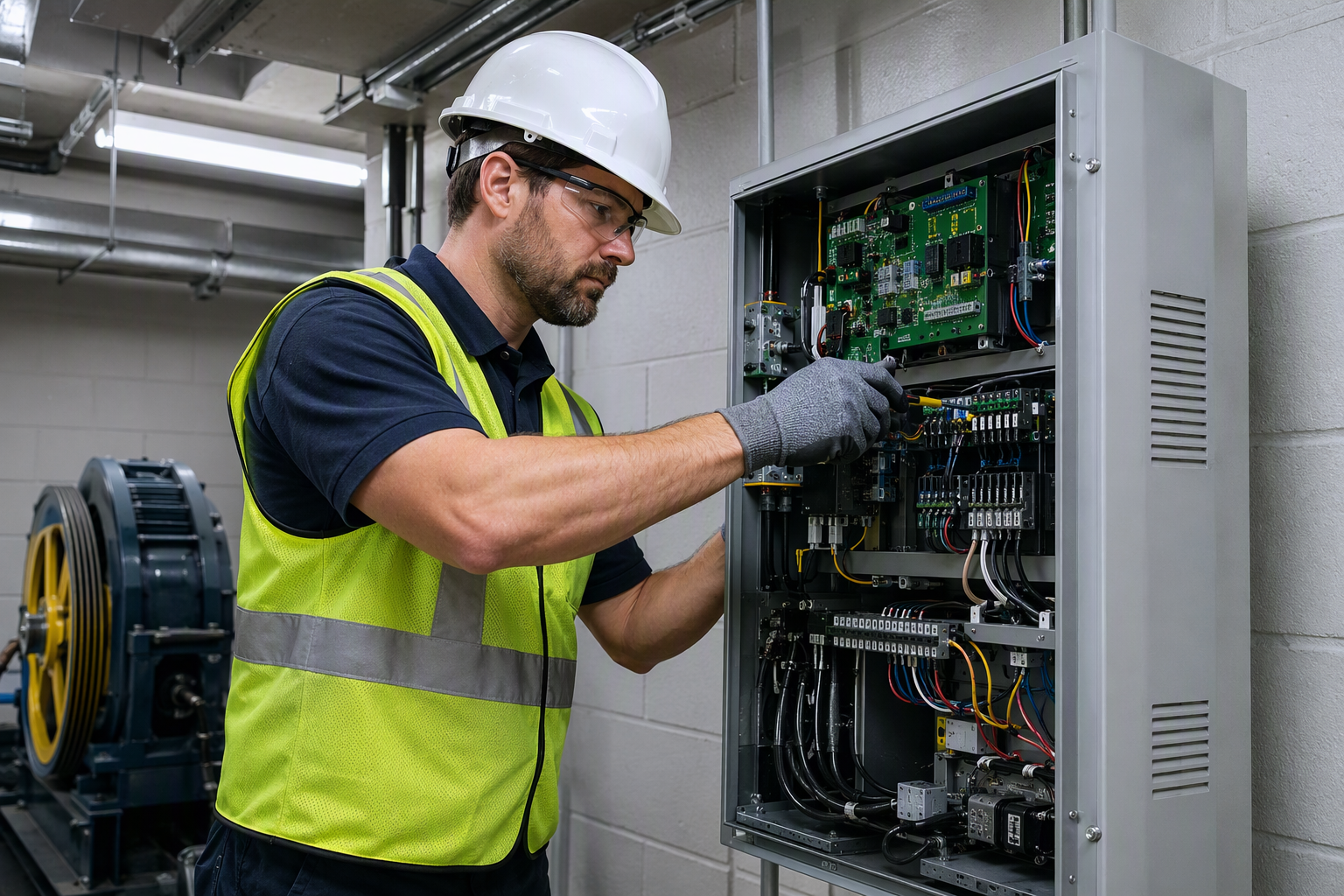
- Control system modernization: Replacing relay-logic or early microprocessor controllers with current solid-state or programmable logic controller (PLC) systems to improve reliability, dispatching efficiency, and diagnostic capability.
- Door operator and safety edge upgrades: Modernizing door operators and replacing worn mechanical safety edges with electronic full-door safety curtains or light curtains, which detect obstructions more reliably across the full height of the door opening.
- Drive system conversion: Converting older hydraulic systems or DC drive traction elevators to variable voltage variable frequency (VVFD) AC drives, which improve energy efficiency and ride quality.
- ADA accessibility retrofits: Adjusting car operating panel heights, adding audible floor indicators, installing Braille buttons, and modifying door timing and leveling accuracy to meet ADA standards.
- Cab interior renovation: Updating flooring, wall panels, lighting, and ceilings for aesthetic or functional reasons — which may or may not constitute an alteration depending on scope.
- Safety device upgrades: Replacing or upgrading governor-safeties, buffers, car door restrictors, or firefighters’ service systems to current code requirements.
What does the ASME A17.1-2016 code require when an elevator in Austin is altered?
When an elevator is altered, the ASME A17.1/CSA B44-2016 Safety Code for Elevators and Escalators requires that the altered parts, and any parts affected by the alteration, conform to the requirements of the current code edition adopted by Texas.
This is a critical compliance principle. An alteration does not trigger a full modernization of every system on the elevator, but it does require that altered components and any components rendered non-compliant or made part of a changed interface meet current code. For example, replacing a controller may trigger requirements for updated car door restrictors, firefighters’ service, and emergency lighting if those systems interface with the new controller.
Texas also mandates a Category 5 full-load safety test every five years on electric (traction) elevators. If a modification is performed near a Category 5 test cycle, coordinating the alteration with the required test can reduce downtime and inspection scheduling complexity — a consideration that experienced contractors like AmeriTex Elevator build into project planning.
What ADA requirements apply to elevator modifications in Austin?
Any elevator modification that affects accessibility features must comply with ADA Standards for Accessible Design, which specify requirements for car size, door width, control placement, floor designation signals, and emergency communication.
The ADA is a federal law that applies regardless of whether a building owner is performing a voluntary upgrade or a code-mandated correction. Key ADA requirements relevant to elevator modifications include:
- Car operating panel button heights accessible from a wheelchair (maximum reach range standards apply).
- Floor designation raised characters and Braille on hoistway entrance jambs and car operating panels.
- Audible and visible floor indicators inside the car and at landings.
- Minimum clear door width and car interior dimensions for passenger elevators in public accommodations.
- Two-way emergency communication systems that do not require voice communication — important for users with hearing or speech impairments.
Building owners should note that the ADA’s path-of-travel obligations can require accessibility upgrades to an elevator even when the primary modification is not accessibility-related, if the cost of accessibility improvements is not disproportionate to the overall project cost. Legal counsel or an accessibility consultant should be part of any significant modification project.
How does the elevator inspection and Certificate of Compliance process work after a modification in Austin?
After a modification is completed in Austin, a TDLR-registered elevator inspector must inspect the equipment, and the building owner must obtain a new TDLR Certificate of Compliance before returning the elevator to service.
Texas law requires building owners to have elevators inspected annually by a TDLR-registered elevator inspector, and a modification resets this compliance cycle by requiring a fresh inspection. The building owner — not the contractor — has the sole right under Texas law to select the elevator inspector. After the inspection, the registered inspector must provide the owner with the inspection report within five calendar days.
Once the elevator passes inspection, TDLR issues a Certificate of Compliance valid for one year. Texas law requires that this certificate be displayed in a publicly visible area of the building. If the inspector identifies violations, Texas law requires those violations to be corrected or under contract to be corrected within 30 days of the inspection, or the owner must obtain a waiver or delay from TDLR.
What is the step-by-step process for completing an elevator modification in Austin, TX?
A compliant elevator modification in Austin follows a structured sequence from initial assessment through post-modification inspection and certificate issuance.
- Conduct a needs assessment: Engage a TDLR-registered contractor to evaluate the existing elevator’s condition, identify deficiencies, and define the modification scope based on safety, code compliance, performance, and accessibility goals.
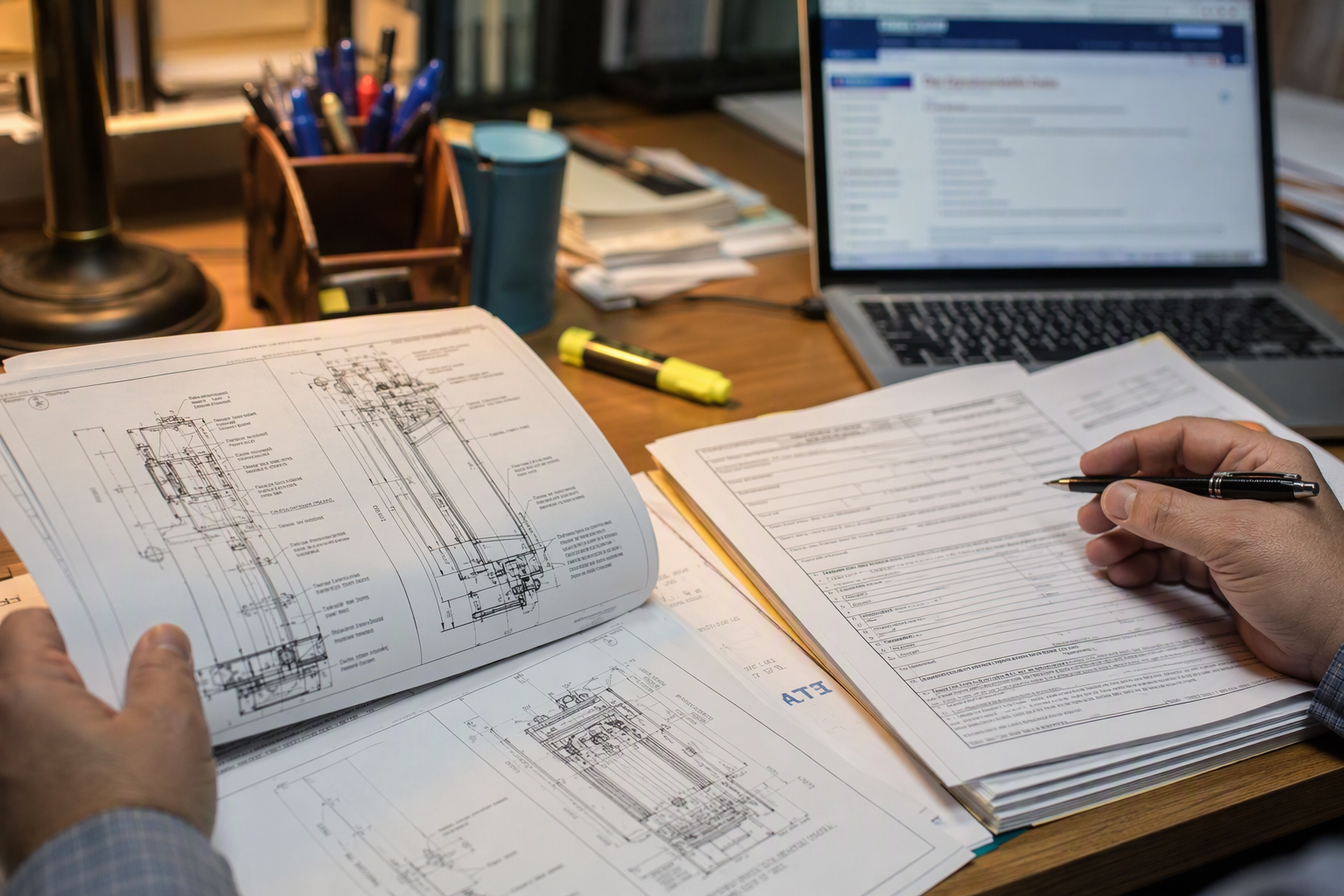
- Develop engineering drawings and specifications: The contractor prepares detailed plans — including schematics, equipment cut sheets, and a written scope of work — suitable for TDLR plan review.
- Submit plans to TDLR and obtain approval: The registered contractor submits the plan package to TDLR and waits for written approval before any work begins. Starting without approval violates Texas law.
- Schedule and sequence work: Coordinate with building management to schedule downtime, arrange temporary vertical transportation if needed, and sequence work to minimize disruption to building occupants.
- Execute the modification: The registered contractor’s qualified personnel perform the alteration in strict accordance with the approved plans and ASME A17.1-2016 code requirements.
- Conduct contractor acceptance testing: Before calling for inspection, the contractor performs internal acceptance tests — including door operation, leveling accuracy, safety device function, and load tests as required — to confirm the system is ready.
- Arrange a post-modification inspection: The building owner selects a TDLR-registered elevator inspector and schedules the inspection.
- Receive inspection report and correct any noted items: The inspector provides the report within five calendar days. Any cited violations must be corrected or under contract for correction within 30 days.
- Obtain and display the Certificate of Compliance: Once the elevator passes inspection, TDLR issues the Certificate of Compliance, which must be posted in a publicly visible area of the building.
- Resume service and update maintenance records: Return the elevator to service and update all maintenance documentation, test records, and inspection logs to reflect the modification.
How long does an elevator modification project typically take in Austin?
Project duration varies significantly based on modification scope — a targeted component upgrade may take days, while a full control system modernization or drive replacement can take several weeks from plan approval to final inspection.
TDLR plan review timelines, equipment lead times, building access logistics, and inspection scheduling all affect the overall project calendar. Control system modernizations — among the most complex and common alteration types — require careful sequencing because the elevator is typically out of service for the duration of the electrical conversion. Owners of multi-unit buildings should plan for temporary service disruptions and communicate timelines to building occupants well in advance.
Supply chain considerations for specialty elevator components can extend lead times, particularly for custom-fitted drive systems or proprietary controllers on older equipment. Working with a contractor like AmeriTex Elevator that maintains active supplier relationships can help reduce procurement delays.
What happens if an elevator in Austin is operated without a valid Certificate of Compliance?
Operating an elevator in Texas without a valid TDLR Certificate of Compliance exposes the building owner to regulatory enforcement action, and TDLR has authority to order the equipment out of service.
Texas Health and Safety Code Chapter 754 and 16 TAC Chapter 74 establish the Certificate of Compliance as a mandatory operating document. A lapse in certification — whether due to a missed annual inspection or an unresolved post-modification inspection — creates legal liability for the owner and can result in enforcement proceedings. Beyond regulatory consequences, operating non-compliant elevator equipment creates significant premises liability exposure if an incident occurs.
Texas law also requires building owners to report any accident involving elevator equipment to TDLR within 24 hours. An elevator that is out-of-compliance at the time of an accident compounds the owner’s regulatory and legal position considerably.
What are the firefighters’ service requirements that affect elevator modifications in Austin?
Texas law requires that a passenger elevator without firefighters’ service — or with non-working Phase One firefighters’ service — must be removed from service immediately, making firefighters’ service a non-negotiable compliance item in any modification that touches related systems.
Phase One firefighters’ service recalls the elevator automatically to the designated floor when a building fire alarm activates. Phase Two firefighters’ service gives firefighters manual control of the car from inside. Under the ASME A17.1-2016 code adopted by Texas, any modification to controls, door systems, or electrical systems that interfaces with the firefighters’ service system must result in a fully functional, code-compliant firefighters’ service upon completion.
In practice, control system modernizations almost always require a concurrent firefighters’ service review and upgrade, because new controller logic must integrate correctly with the building’s fire alarm system. This integration must be tested and documented before the elevator is returned to service.
What is the difference between elevator modernization and elevator modification in Austin?
Modernization typically refers to a comprehensive replacement of major systems — controls, drives, door operators, and cabs — while modification can refer to any targeted alteration to one or more components; both are treated as alterations under Texas regulatory requirements.
| Factor | Targeted Modification | Full Modernization |
|---|---|---|
| Scope | One or a few components (e.g., door operator, safety edge) | Controls, drive, cab, doors — typically all major systems |
| TDLR plan submission required? | Yes | Yes |
| Post-work inspection required? | Yes | Yes |
| New Certificate of Compliance required? | Yes | Yes |
| Typical downtime | Days to one week | Several weeks to months |
| Code upgrade trigger | Altered parts and affected interfaces | Entire elevator brought to current code where practicable |
| ADA review recommended? | Yes, for affected accessibility features | Yes, comprehensive review required |
| Energy efficiency improvement | Moderate (component-level) | Significant (VVFD drives, LED lighting, standby mode) |
| Applicable ASME standard (Texas) | ASME A17.1/CSA B44-2016 | ASME A17.1/CSA B44-2016 |
Whether a project is scoped as a targeted modification or a full modernization, the regulatory pathway through TDLR is the same. The distinction matters more for project budgeting, downtime planning, and the degree of code compliance uplift the owner can expect as a result.
How do door restrictor requirements factor into elevator modifications in Austin?
Texas law states that a passenger elevator without working door restrictors must be removed from service immediately, so any modification affecting door systems must include a verified, functional door restrictor as part of the final configuration.
Door restrictors prevent the car door from being opened more than a defined distance when the car is not within the landing zone, protecting passengers from falls into the hoistway. Under the ASME A17.1-2016 code, door restrictors are a safety-critical device. When a modification involves door operators, car door panels, or control systems that interface with door operation, the contractor must verify — and the post-modification inspection must confirm — that the door restrictor system is functional and code-compliant.
Older elevators that pre-date the door restrictor requirement may require a door restrictor retrofit as part of a broader modification project, particularly when the modification scope touches the door system. Building owners should factor this into project scoping conversations with their registered contractor.
What role does ASME A17.3 play in Austin elevator modification decisions?
The ASME A17.3 Safety Code for Existing Elevators and Escalators provides retrofit requirements for in-service elevators that have not been altered, and it informs the baseline from which many modification projects begin.
While Texas has adopted ASME A17.1-2016 as its primary installation and alteration code, ASME A17.3 addresses existing elevators that are not currently being altered. Understanding an elevator’s status under A17.3 helps owners and contractors identify which components are already non-compliant and may benefit from or require upgrade as part of a planned modification. In practice, a thorough pre-modification assessment compares the existing elevator’s configuration against both A17.1 alteration requirements and A17.3 existing-equipment provisions to build a complete and defensible compliance picture.
What questions should Austin building owners ask when hiring an elevator modification contractor?
Building owners in Austin should verify TDLR contractor registration, insurance coverage, plan submission experience, and familiarity with the specific elevator brand and system type before engaging any contractor for modification work.
Key questions to ask any prospective modification contractor include:
- Is your TDLR contractor registration current, and can you provide the registration number for verification?
- Do you carry the minimum required general liability insurance of $1,000,000 per occurrence for bodily injury or death and $500,000 per occurrence for property damage?
- Have you submitted and received TDLR plan approval for projects of similar scope?
- Do you have experience with this specific elevator manufacturer’s equipment and proprietary control systems?
- Who will coordinate the post-modification inspection, and how are inspection discrepancies handled?
- How do you manage ADA compliance review during the modification scoping process?
- What is your process for communicating with building management and tenants during the out-of-service period?
AmeriTex Elevator encourages building owners to conduct thorough due diligence on any contractor — including AmeriTex — before committing to a modification project. Transparency around registration, insurance, and process is a baseline expectation for any reputable elevator contractor in Texas.
Are there energy efficiency benefits to elevator modification in Austin?
Yes — targeted modifications such as drive system upgrades to variable voltage variable frequency (VVFD) technology, LED cab lighting conversion, and standby mode controls can meaningfully reduce an elevator’s energy consumption without a full modernization.
Austin’s commercial building market increasingly emphasizes sustainability metrics, and elevator systems — which can be among the larger energy consumers in a multi-story building — are a logical target for efficiency improvements. VVFD drives in particular improve efficiency by modulating motor power in proportion to actual load rather than running at full power regardless of demand. Regenerative drive systems go further by feeding energy back to the building’s electrical system during descent with a loaded car or ascent with a light car.
Energy-focused modifications still require TDLR plan submission and post-work inspection when they constitute an alteration to the drive or control system. Building owners pursuing LEED certification or local Austin sustainability benchmarking programs should document the modification scope and expected performance improvement for inclusion in their certification submissions.
How should Austin building owners handle elevator modification in an occupied building?
Elevator modification in an occupied building requires careful coordination between the registered contractor, building management, and tenants to plan for temporary vertical transportation alternatives, communication, and phased work scheduling where multiple units are involved.
For single-elevator buildings, the out-of-service period may necessitate temporary arrangements for mobility-impaired occupants to comply with ADA obligations and basic duty-of-care requirements. Building management should notify tenants of the planned modification timeline well in advance, identify which floors will be most affected, and establish a communication channel for updates during the project.
For buildings with multiple elevator units, contractors can often sequence modification work so that at least one cab remains in service at all times. This phased approach extends the overall project timeline but significantly reduces the operational impact on building occupants. Experienced contractors build phasing plans into their project proposals as a standard deliverable.
How does elevator modification in Austin differ from elevator modification in Houston or other Texas cities?
Austin elevator modifications are regulated by TDLR, while Houston operates its own municipal elevator program — meaning the permitting authority, plan submission process, and inspection requirements differ between the two cities, even though both fall under Texas state law.
Across Austin, San Antonio, Dallas, and most other Texas jurisdictions, TDLR is the authority having jurisdiction (AHJ) for elevator modifications, and the process described throughout this guide applies. Houston is a notable exception: TDLR does not regulate elevators or escalators inside Houston city limits, and the City of Houston runs its own program. Building owners with properties in multiple Texas markets — or in both Texas and California — should work with a contractor that understands the distinct requirements of each jurisdiction.
AmeriTex Elevator serves Austin, San Antonio, Dallas, and Houston in Texas, as well as Los Angeles and San Diego in California, and coordinates the appropriate regulatory pathway for each market.
What ongoing maintenance obligations apply after an elevator modification in Austin?
After a modification is complete and the Certificate of Compliance is issued, Texas law requires continued annual inspection by a TDLR-registered inspector and ongoing maintenance by a TDLR-registered contractor to keep the elevator in legal operation.
A modification does not extend or replace the annual inspection cycle — it resets it. The building owner must arrange and fund the next annual inspection within one year of the post-modification inspection, and every year thereafter. Texas law places the responsibility for maintaining elevator equipment and ensuring it remains in safe operating condition squarely on the building owner.
Establishing a preventive maintenance contract with a TDLR-registered contractor after a modification is strongly advisable. Preventive maintenance programs — which typically include scheduled lubrication, adjustment, cleaning, and safety device testing — reduce unplanned downtime, extend component life, and provide documentation that supports a defensible compliance posture. AmeriTex Elevator offers ongoing maintenance programs for Austin-area building owners following modification projects.
Ready to Start Your Elevator Modification Project in Austin, TX?
Elevator modification is a regulated, multi-step process that requires TDLR-registered contractors, pre-approved engineering plans, post-modification inspection, and a valid Certificate of Compliance before the elevator returns to service. Working with an experienced, properly registered contractor from the first assessment through final certification is the most effective way to control risk, timeline, and compliance outcomes.
Contact AmeriTex Elevator for a free elevator assessment. AmeriTex Elevator’s team serves Austin and the broader Texas market as a TDLR-registered contractor, coordinating plan submission, modification execution, and post-work inspection support for commercial and residential building owners.
Call today: 866-679-4313
Need elevator service you can rely on? AmeriTex Elevator is ready to help.