Commercial Elevator Service in Austin, TX | AmeriTex Elevator
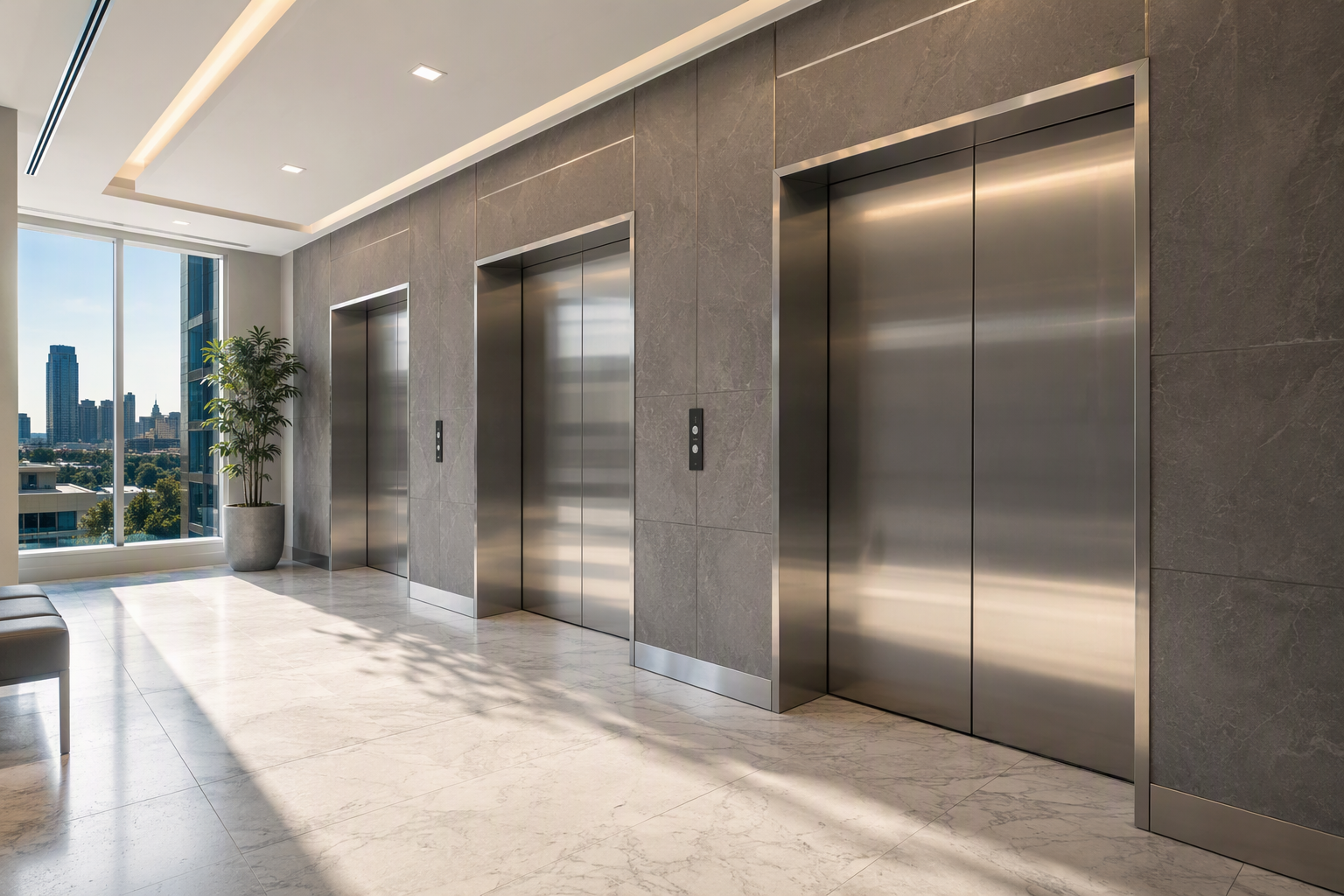
Commercial elevators are essential infrastructure for office buildings, retail centers, medical facilities, hotels, and mixed-use properties across Austin. Keeping that equipment safe, code-compliant, and running smoothly is not optional — it is a legal requirement and a direct responsibility of the building owner. AmeriTex Elevator serves the Austin commercial market with maintenance, repair, modernization, and compliance support tailored to the demands of Texas elevator law.
Who Regulates Commercial Elevators in Austin, TX?

Austin presents a unique regulatory situation that every commercial property owner should understand. The Texas Department of Licensing and Regulation (TDLR), Elevator and Escalator Safety program, administers elevator oversight for most of the state under Texas Health and Safety Code Chapter 754 and 16 Texas Administrative Code Chapter 74. Texas has adopted the ASME A17.1/CSA B44, 2016 edition as its governing safety code, effective November 1, 2018.
However, building owners in Austin should verify with the City of Austin’s local authority having jurisdiction (AHJ) whether a local elevator program applies to their property. When working with AmeriTex Elevator, clients receive guidance on how to identify the correct oversight authority for their specific location, so compliance obligations are never left to guesswork.
What Does Texas Law Require for Commercial Elevator Inspections?

Under Texas law, commercial building owners carry direct responsibility for maintaining elevator compliance. Key requirements include:
- Annual inspection of elevators, escalators, and related equipment by a TDLR-registered elevator inspector.
- Obtaining a TDLR Certificate of Compliance for each unit of equipment — valid for one year.
- Displaying the Certificate of Compliance in a publicly visible area of the building.
- Receiving the inspection report from the registered inspector within five calendar days of the inspection.
- Correcting cited violations — or having a correction contract in place — within 30 days of the inspection, or obtaining a waiver or delay from TDLR.
- Reporting any accident involving elevator equipment to TDLR within 24 hours.
Texas building owners also hold the sole right to select their elevator inspector. AmeriTex Elevator helps owners understand what to expect from the inspection process and ensures that equipment is in the best possible condition before a scheduled evaluation.
In addition, Texas requires a Category 5 full-load test every five years on electric (traction) elevators. AmeriTex Elevator tracks these testing milestones on behalf of clients so that critical deadlines are never missed.
What Happens If a Commercial Elevator Fails a Safety Check in Texas?
Texas elevator law is clear on certain safety failures. A passenger elevator without working door restrictors must be removed from service immediately. Likewise, a passenger elevator without firefighters’ service — or with non-working Phase One firefighters’ service — must also be taken out of service without delay. These are not discretionary calls; they are firm legal requirements that expose building owners to liability if ignored.
When a violation is identified, AmeriTex Elevator works to prioritize repairs and get equipment back into safe, compliant operation as quickly as possible, helping owners meet the 30-day correction window required under Texas regulations.
What Types of Commercial Elevators Does AmeriTex Elevator Service in Austin?
Austin’s commercial real estate market spans a wide range of property types, each with its own elevator and vertical transportation needs. AmeriTex Elevator provides service across equipment categories including:
- Traction elevators in mid-rise and high-rise office and residential towers
- Hydraulic elevators in low-rise commercial and retail buildings
- Freight elevators in warehouses, distribution facilities, and industrial properties
- Escalators and moving walkways in retail, hospitality, and transit-adjacent properties
- Limited-use/limited-application (LU/LA) elevators in smaller commercial buildings
- Accessibility lifts and platform lifts subject to Americans with Disabilities Act (ADA) requirements
Each equipment type carries its own maintenance profile, testing schedule, and regulatory touchpoints. AmeriTex Elevator brings the technical knowledge to service the full spectrum of commercial vertical transportation found in Austin properties.
How Does the Commercial Elevator Maintenance Process Work?
A structured maintenance program is the most effective way to prevent costly breakdowns, maintain compliance, and extend the service life of commercial elevator equipment. AmeriTex Elevator’s maintenance approach for Austin commercial clients generally follows this sequence:
- Initial equipment assessment: A thorough evaluation of the elevator’s mechanical, electrical, and safety systems to establish a baseline condition and identify any existing issues.
- Customized maintenance plan: Development of a scheduled service plan aligned with the equipment type, usage volume, and any manufacturer recommendations.
- Routine preventive visits: Scheduled inspections and lubrication, adjustment, and testing of components to catch wear before it becomes failure.
- Documentation and reporting: Detailed service records provided to the building owner after each visit, supporting compliance documentation and inspection readiness.
- Repair coordination: When components require repair or replacement, AmeriTex Elevator coordinates the work efficiently to minimize equipment downtime.
- Pre-inspection review: Before annual TDLR inspections, a review of the equipment’s condition to address any items that could result in a citation.
- Ongoing compliance tracking: Monitoring of certificate renewal dates, Category 5 testing intervals, and other regulatory milestones.
Does ADA Apply to Commercial Elevators in Austin?
Yes. The Americans with Disabilities Act sets federal accessibility requirements that apply to commercial facilities regardless of state or local jurisdiction. Elevators in most multi-story commercial buildings must meet ADA standards for cab dimensions, door timing, control placement, and tactile signage, among other requirements. AmeriTex Elevator helps Austin commercial property owners identify and address ADA compliance gaps as part of broader modernization and maintenance programs.
What Should Austin Building Owners Do When an Elevator Malfunctions?
- Ensure passenger safety first: If anyone is trapped, contact emergency services immediately. Do not attempt to manually open elevator doors without qualified personnel.
- Take the unit out of service: Post clear signage and prevent additional use until the equipment has been inspected and cleared by a qualified technician.
- Report accidents to TDLR: Any accident involving elevator equipment must be reported to TDLR within 24 hours under Texas law.
- Contact your elevator service provider: Reach out to AmeriTex Elevator to dispatch a registered contractor for diagnosis and repair.
- Document the incident: Keep written records of the malfunction, any witness accounts, and all communications with inspectors and contractors.
- Return to service only after clearance: Do not restore elevator operation until the equipment has been confirmed safe and any required documentation is in order.
What Is Elevator Modernization and When Is It Necessary for Austin Commercial Properties?
Elevator modernization refers to the planned upgrade of aging elevator systems — replacing outdated controls, drives, cab finishes, door operators, or safety components with current technology. For Austin commercial buildings, modernization is often driven by a combination of factors:
- Increasing frequency of breakdowns and repair costs on aging equipment
- Code compliance requirements when equipment is materially altered — which triggers review under TDLR and the adopted ASME standard
- Tenant expectations for reliability and ride quality in competitive commercial real estate markets
- Energy efficiency goals, as modern drive systems can significantly reduce power consumption
- ADA accessibility upgrades required during renovation projects
Before any installation or material alteration proceeds, Texas-registered contractors must submit plans to TDLR and obtain approval. AmeriTex Elevator manages this process on behalf of building owners, coordinating plan submission, inspection scheduling, and regulatory communication.
Why Do Austin Commercial Property Owners Choose AmeriTex Elevator?
Austin’s commercial real estate landscape is diverse and growing — from downtown high-rises and medical campuses to suburban office parks and mixed-use developments. AmeriTex Elevator understands the operational demands that Austin building owners, property managers, and facilities directors face. The company brings deep familiarity with Texas elevator regulations, the local compliance landscape, and the range of equipment found across the Austin market.
As a TDLR-registered elevator contractor, AmeriTex Elevator meets the legal requirements to install, repair, alter, test, and maintain elevator equipment in Texas. The company carries general liability insurance meeting Texas’s minimum requirements — at least $1,000,000 per occurrence for bodily injury or death and $500,000 per occurrence for property damage — and designates responsible parties with the elevator contractor experience Texas law requires.
AmeriTex Elevator is available for emergency service calls when commercial elevator equipment fails outside of regular business hours, providing Austin property owners with a reliable point of contact when unexpected issues arise.
Schedule a free consultation with AmeriTex Elevator at 844-646-9660.
Need elevator service you can rely on? AmeriTex Elevator is ready to help.