Elevator Service in Houston, TX | AmeriTex Elevator
Apartment building owners and property managers in Houston face a distinct set of elevator compliance obligations, maintenance responsibilities, and capital planning decisions. Because the City of Houston runs its own elevator program—separate from the statewide program administered by the Texas Department of Licensing and Regulation (TDLR)—owners must work within Houston’s local requirements while also keeping pace with federally mandated accessibility standards and evolving safety codes. AmeriTex Elevator works with multifamily communities across the Houston market to keep equipment compliant, operational, and resident-ready.
What Regulatory Body Oversees Elevators in Houston Apartment Buildings?
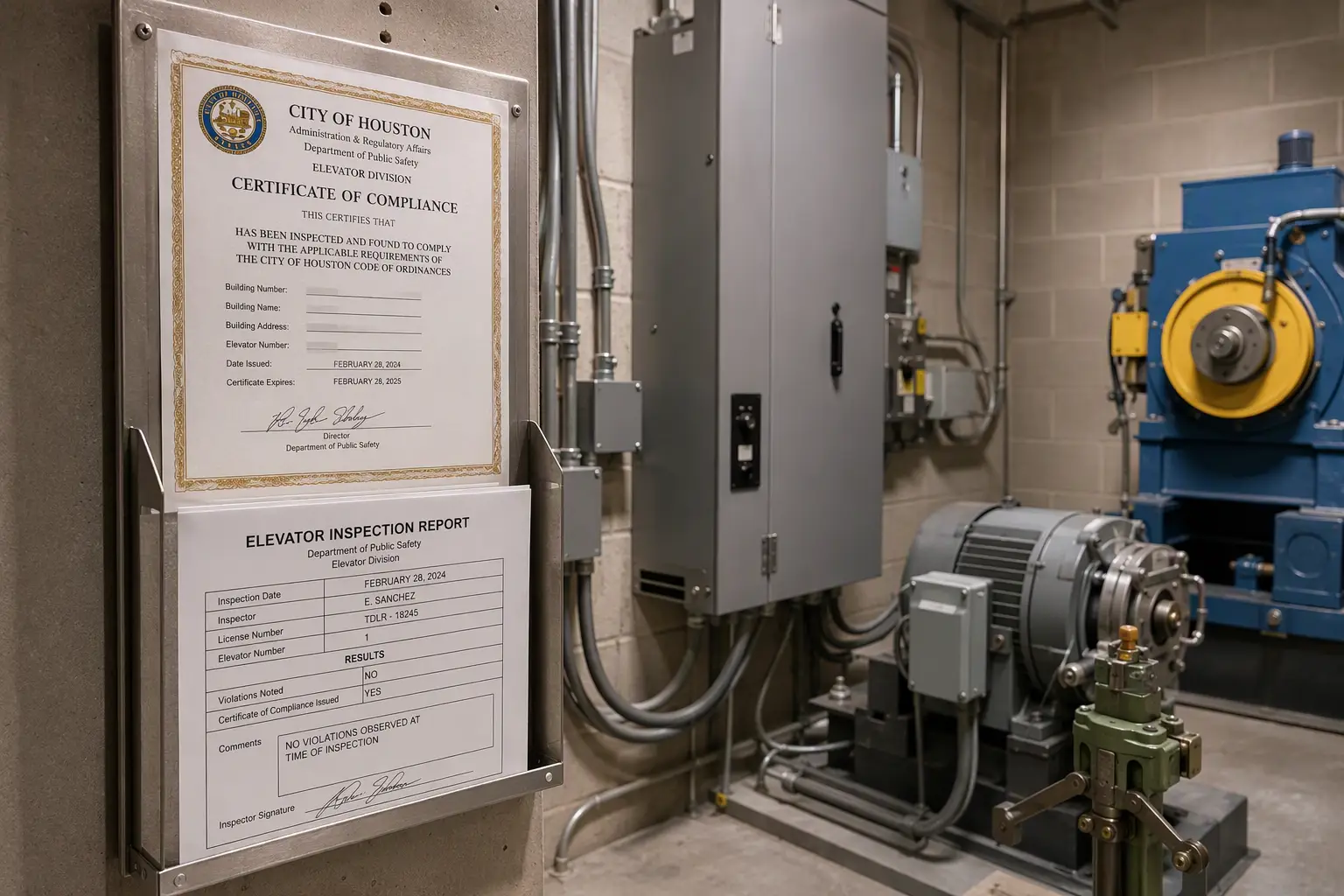
For elevator equipment located inside Houston city limits, the City of Houston runs its own elevator inspection and compliance program. TDLR—which administers the statewide elevator program under Texas Health and Safety Code Chapter 754 and 16 Texas Administrative Code Chapter 74—does not regulate elevators or escalators within the City of Houston. Property owners and managers should contact the City of Houston directly to confirm current permit, inspection, and certificate requirements. AmeriTex Elevator’s team is familiar with local Houston requirements and can help ownership teams navigate the process.
What Annual Inspections and Certificates Does a Houston Apartment Building Need?
Apartment building owners are responsible for ensuring their elevator equipment is inspected on the schedule required by the City of Houston’s program. Outside of Houston, statewide Texas rules require building owners to have elevators inspected annually by a TDLR-registered elevator inspector and to obtain a TDLR Certificate of Compliance for each unit of equipment, with that certificate displayed in a publicly visible area of the building. While Houston’s local program governs properties within city limits, the principle of annual professional inspection and posted documentation is consistent with best practices across the Texas market. Owners should maintain organized records of inspection reports, certificates, and any cited violations.
How Quickly Must Elevator Violations Be Corrected in Texas?
Under the statewide Texas framework, building owners must have cited violations corrected—or have them under contract to be corrected—within 30 days of the inspection, or obtain a waiver or delay from the applicable authority. Certain deficiencies carry immediate removal-from-service requirements. For example, under Texas state rules, a passenger elevator without working door restrictors must be taken out of service immediately, as must a passenger elevator without firefighters’ service or with non-working Phase One firefighters’ service. Houston apartment owners should confirm with the City of Houston whether its local program applies the same timelines, and should work with a qualified contractor to address violations promptly.
What Is the Category 5 Test and Does My Houston Apartment Elevator Need One?
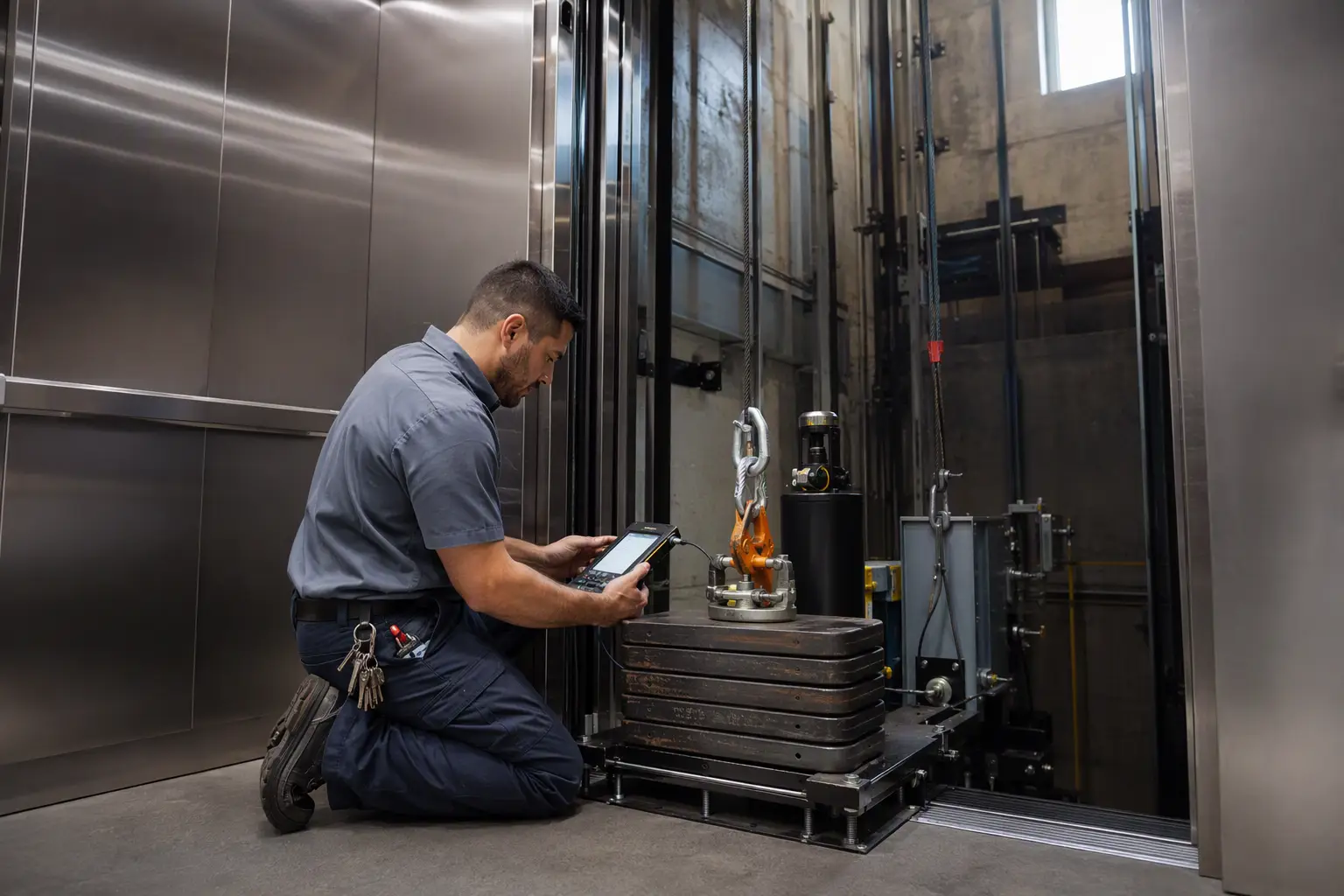
Under Texas state rules, electric traction elevators are subject to a Category 5 full-load test every five years. This test verifies that the elevator’s brake, governor, and safety systems perform correctly under full rated load conditions. It is among the most demanding periodic tests in the ASME A17.1/CSA B44 Safety Code for Elevators and Escalators—the adopted safety code for Texas—and requires coordination between the building owner, the registered contractor, and the inspector. For Houston properties, owners should confirm with the City of Houston’s program how Category 5 testing requirements are applied locally, and should budget for this test as a regular capital planning item. AmeriTex Elevator coordinates full-load testing for traction elevator installations throughout the Houston market.
What ADA Accessibility Upgrades Should Multifamily Apartment Owners Plan For?
Federal Americans with Disabilities Act (ADA) requirements apply to the common-use and public areas of multifamily apartment buildings, and elevator accessibility is a core component of compliance. Typical areas that trigger upgrade planning include:
- Cab controls: Button height, Braille/raised character markings, and audio floor announcements must meet current ADA Standards for Accessible Design.
- Door timing and reopening: Door hold-open times and reopening devices must allow passengers with mobility limitations to enter and exit safely.
- Cab dimensions: Interior floor space must be sufficient for wheelchair users. Older cab configurations may require platform extensions or full cab rebuilds.
- Leveling accuracy: The elevator must stop level with each floor landing within tolerances that prevent tripping hazards for wheelchair users and pedestrians alike.
- Lighting and signage: Adequate cab lighting and compliant hall lanterns and position indicators are required.
Older apartment buildings in Houston often have elevators installed under earlier code editions that predate current ADA and ASME requirements. A modernization assessment can identify which components fall short of current standards and establish a phased upgrade plan.
What Equipment Upgrades Should Be Included in a Multifamily Capital Plan?
Elevator systems have multiple components with different service lives. A well-structured capital plan for a Houston apartment building typically accounts for the following upgrade categories:
- Controller modernization: Relay-logic and early solid-state controllers are increasingly difficult to maintain due to parts obsolescence. Modern microprocessor-based controllers improve reliability, energy efficiency, and diagnostic capability.
- Door operator and door hardware replacement: Door systems are among the highest-wear components in a multifamily elevator and are directly tied to entrapment prevention and compliance with door restrictor requirements.
- Machine and motor upgrades: On traction elevators, worn machines and motors affect leveling, ride quality, and energy consumption. Permanent-magnet gearless machines offer significant efficiency improvements over older geared equipment.
- Cab interior renovation: Flooring, wall panels, lighting, and fixtures affect resident perception of building quality and can be planned alongside control upgrades to minimize downtime.
- Hydraulic system upgrades: Low-rise apartment buildings frequently use hydraulic elevators. Older hydraulic units may use mineral oil, present environmental containment concerns, and lack the energy efficiency of modern units. Retrofit valve assemblies and fluid containment systems are common upgrade items.
- Emergency communication systems: Code requirements for two-way communication in elevator cabs continue to evolve. Owners should review their current system against ASME A17.1 requirements and applicable Houston local rules.
- Firefighters’ service (Phase I and Phase II): Under Texas rules, non-functional firefighters’ service is grounds for immediate removal from service. Systems should be tested regularly and kept in working order.
How Should Apartment Building Owners Report Elevator Accidents in Texas?
Under Texas state law, building owners must report each accident involving elevator equipment to TDLR within 24 hours. For properties within Houston city limits, owners should also confirm whether the City of Houston’s local program has its own accident reporting requirement. When an incident occurs, the recommended steps are:
- Ensure the safety of all passengers and bystanders, and contact emergency services if anyone is injured.
- Take the affected elevator out of service and secure the machine room.
- Notify the applicable authority having jurisdiction—TDLR for properties outside Houston city limits, or the City of Houston for properties within city limits—within the required reporting window.
- Contact AmeriTex Elevator or another TDLR-registered contractor to assess the equipment and document findings before the unit is returned to service.
- Preserve any available records, including maintenance logs and inspection reports, as these will be reviewed in any subsequent investigation.
How Does AmeriTex Elevator Support Multifamily Properties in the Houston Market?
AmeriTex Elevator provides elevator maintenance, repair, modernization, and compliance support to multifamily apartment communities throughout Houston and the surrounding Texas market. The company’s service team is available around the clock so that building owners and property managers can reach a qualified professional when equipment issues arise outside normal business hours. Planned maintenance agreements are structured to keep equipment in the condition required to pass annual inspections and avoid the costs associated with unplanned downtime. For communities planning capital improvements, AmeriTex Elevator provides modernization assessments that map existing equipment against current ASME A17.1 Safety Code benchmarks, ADA requirements, and applicable Houston local standards, giving ownership teams the information needed to budget and sequence upgrades effectively.
Schedule a free consultation with AmeriTex Elevator at 844-646-9660.
Need elevator service you can rely on? AmeriTex Elevator is ready to help.