Elevator Service in Houston, TX | AmeriTex Elevator
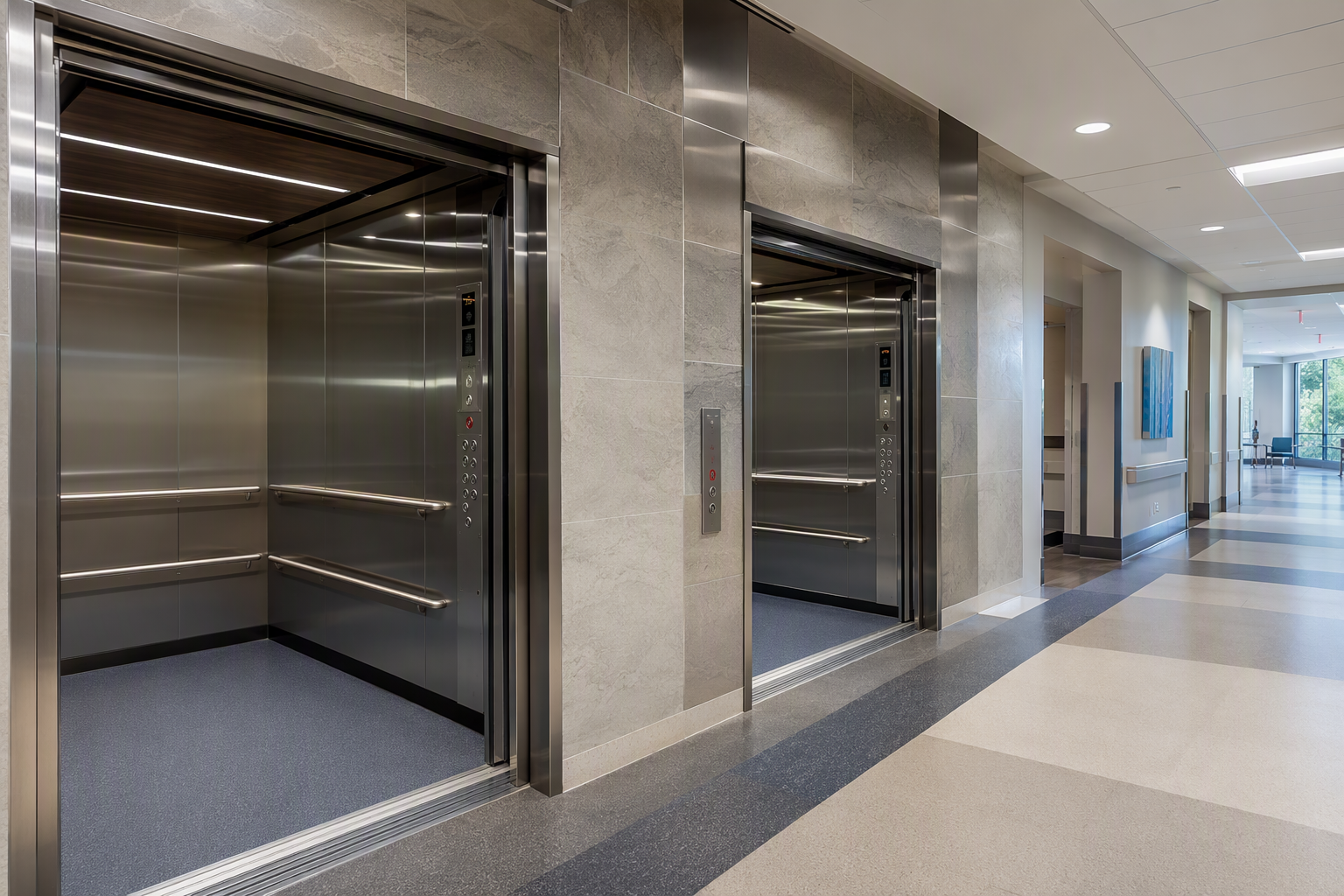
Hospitals, surgery centers, long-term care facilities, and other healthcare buildings place extraordinary demands on vertical transportation. Patients in beds, wheelchairs, and stretchers depend on elevators around the clock, which means code compliance is not simply a regulatory checkbox — it is a direct patient-safety obligation. In Houston, TX, understanding which agencies have jurisdiction, which codes apply, and what modernization or upgrade work actually satisfies those codes is essential for facility managers and building owners operating in the healthcare sector.
What Governing Bodies Set Elevator Compliance Requirements for Hospitals in Houston?

In Houston, the City of Houston administers its own elevator inspection and permitting program. The Texas Department of Licensing and Regulation (TDLR), which oversees elevators throughout most of Texas under Texas Health and Safety Code Chapter 754 and 16 Texas Administrative Code Chapter 74, does not regulate elevators or escalators inside Houston city limits. Healthcare facility owners in Houston should work directly with the City of Houston’s program for permitting, inspection scheduling, and certificate requirements.
At the federal level, two additional frameworks apply regardless of jurisdiction:
- Americans with Disabilities Act (ADA): Establishes accessibility requirements for elevators serving the public, including hospitals.
- ASME A17.1/CSA B44 Safety Code for Elevators and Escalators: The foundational technical standard for elevator design, installation, and maintenance that most jurisdictions — including Texas at the state level — adopt by reference.
- OSHA: Sets worker safety standards that apply during elevator construction, maintenance, and repair work performed inside healthcare facilities.
What Does the ASME A17.1 Code Require for Existing Hospital Elevators Undergoing Modernization?
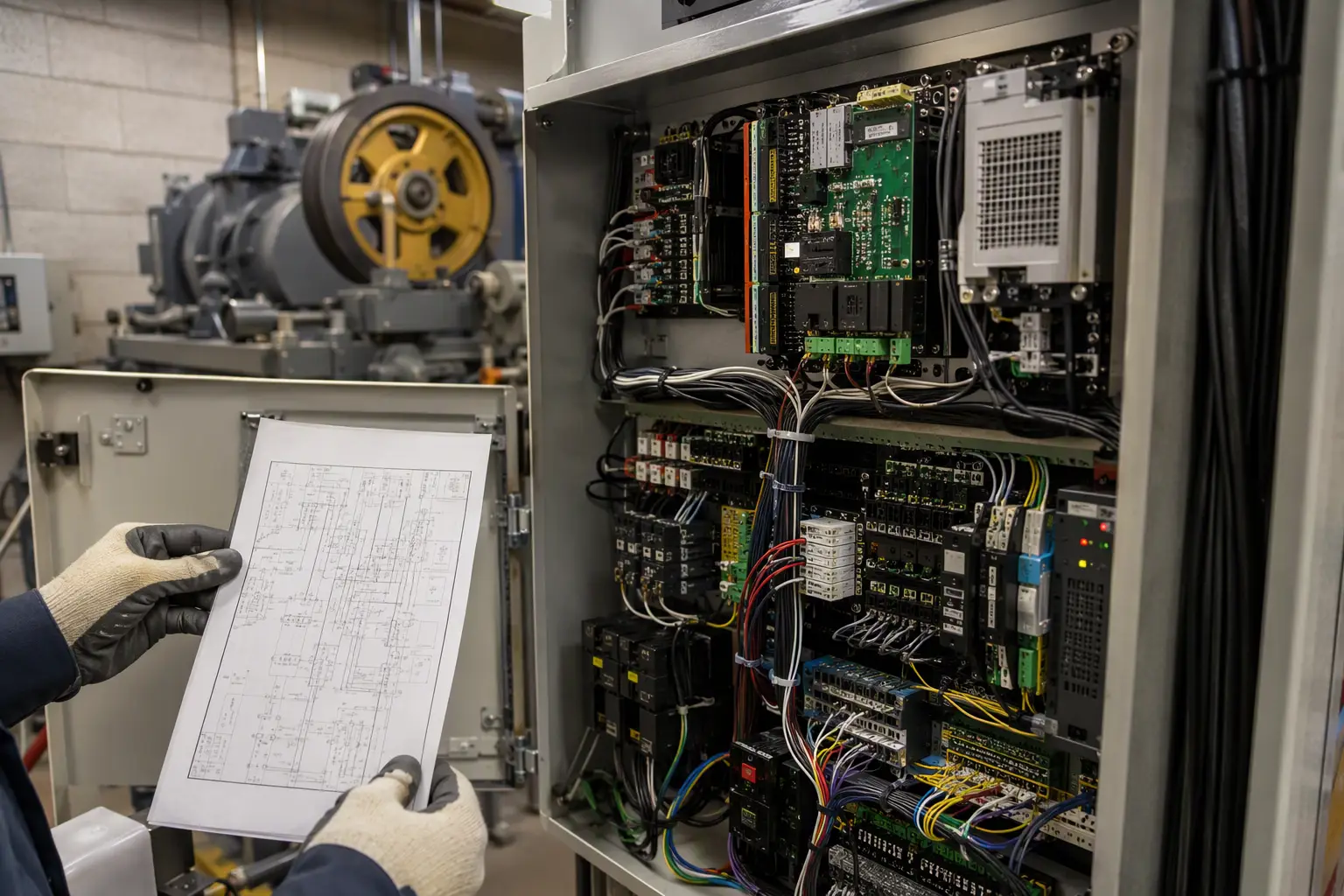
When a hospital elevator is modernized or materially altered, the ASME A17.1 Safety Code for Elevators and Escalators — and its companion standard ASME A17.3 for existing installations — govern what must be brought into compliance. Modernization work typically triggers a review of the equipment against the code edition in effect at the time of the alteration. Components that are replaced or significantly modified are generally required to meet current code requirements, while other portions of the installation may be evaluated under ASME A17.3 retrofit provisions.
For Texas at the state level, TDLR has adopted the ASME A17.1/CSA B44, 2016 edition as amended by 16 TAC §74.100(b), effective November 1, 2018. Because the City of Houston operates its own program, the specific code edition Houston applies has not been independently verified here — facility owners should confirm the adopted edition directly with the City of Houston before beginning any modernization project.
Common modernization triggers in healthcare settings include:
- Replacement of the elevator controller or drive system
- Upgrading door operators or door safety devices
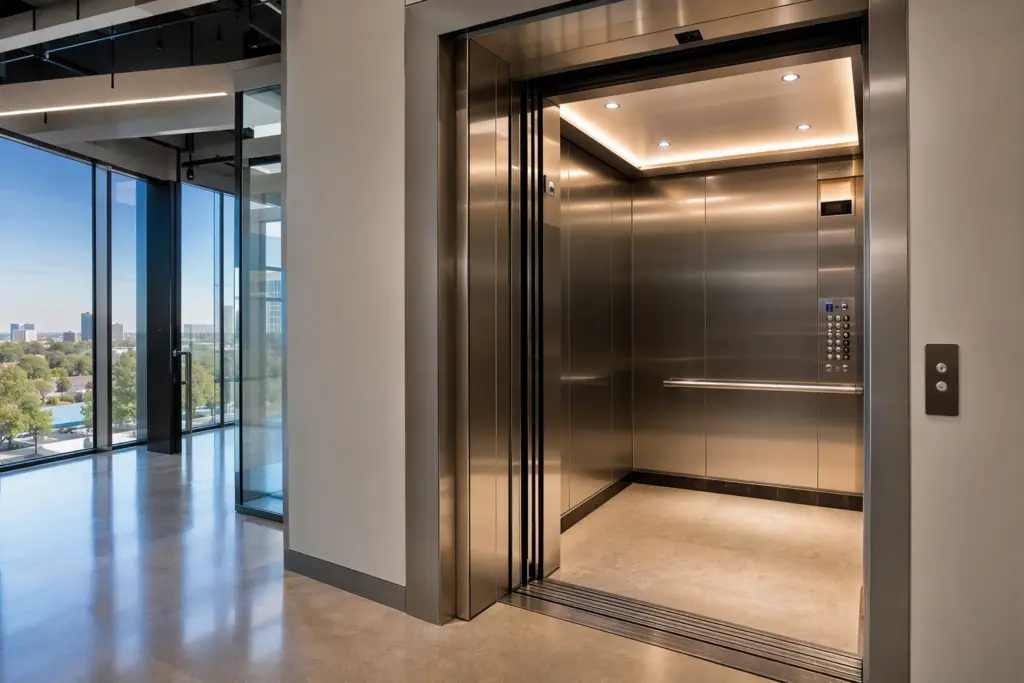
- Installing new cab interiors to meet ADA dimensional and signage requirements
- Adding or upgrading firefighters’ emergency service features
- Replacing traction sheaves, ropes, or hydraulic power units
- Updating emergency lighting and communication systems
What ADA Requirements Must Hospital Elevators Meet?
The ADA requires that elevators serving multiple floors in a healthcare facility be accessible to individuals with disabilities. Key accessibility provisions that commonly arise during healthcare elevator modernization include:
- Minimum car dimensions that allow wheelchair and stretcher passage
- Door width and timing requirements sufficient for mobility device users
- Tactile and Braille call and floor buttons at accessible mounting heights
- Audible and visual floor indicators
- Two-way emergency communication systems usable by individuals with hearing or speech impairments
- Level landings and door protection devices
Healthcare facilities should consult the full ADA Standards for Accessible Design and work with a qualified elevator contractor to assess which elements of an existing installation require upgrading to achieve compliance.
Are There Specific Safety Tests Required for Hospital Elevators in Texas?
For elevators regulated by TDLR outside of Houston, Texas requires a Category 5 full-load test every five years on electric traction elevators under 16 Texas Administrative Code Chapter 74. Because Houston operates its own program, facility managers should confirm whether and how the City of Houston applies equivalent periodic testing requirements to healthcare-facility elevators within city limits.
Regardless of jurisdiction, hospitals should be aware that certain safety conditions require immediate removal from service under Texas state law. Outside of Houston, a passenger elevator without working door restrictors must be taken out of service immediately, and a passenger elevator without functioning firefighters’ service — or with non-working Phase One firefighters’ emergency service — must also be removed from service immediately. These standards reflect baseline life-safety principles that are broadly applicable in healthcare environments.
What Firefighters’ Service Requirements Apply to Hospital Elevators?
Firefighters’ emergency service — often called Phase I (lobby recall) and Phase II (in-car firefighter control) — is a critical life-safety feature in multi-story healthcare buildings. Under the ASME A17.1 Safety Code, elevators are required to have firefighters’ service features that allow first responders to control elevator operation during an emergency. For hospitals specifically, this capability is vital because evacuating patients on upper floors depends on reliable elevator operation coordinated with building fire systems.
During a modernization project, the firefighters’ service system is typically reviewed and updated to meet the code edition in force at the time of the alteration. Facility managers should ensure that any modernization scope explicitly includes a firefighters’ service evaluation and that the completed work is tested and documented before the elevator is returned to service.
How Should a Hospital Prepare for an Elevator Modernization Project?
- Audit existing equipment. Have a qualified elevator contractor perform a condition assessment of all elevator units, documenting the age of major components, current code compliance status, and any outstanding violations or repair orders.
- Identify the applicable code edition. Confirm with the City of Houston which edition of ASME A17.1 is currently adopted and whether any local amendments apply to healthcare occupancies.
- Assess ADA compliance gaps. Compare existing car dimensions, signage, call-button mounting heights, and communication systems against current ADA Standards for Accessible Design.
- Develop a modernization scope. Work with an experienced elevator contractor to define which components will be replaced or upgraded, ensuring the scope satisfies both the local code adoption and ADA requirements.
- Submit permit applications. In Houston, file for the required permits with the City of Houston’s program before any installation or alteration work begins.
- Schedule inspections. Coordinate inspections with the appropriate authority having jurisdiction — in Houston, that is the City of Houston — at required project milestones.
- Obtain certificates before returning to service. Ensure all required certificates or permits to operate are received and displayed as required before placing modernized elevators back into patient service.
- Establish an ongoing maintenance contract. Post-modernization, a structured maintenance agreement with a registered elevator contractor helps sustain compliance, supports future inspection readiness, and prioritizes availability in a healthcare environment where elevator downtime directly affects patient care.
What Role Does Ongoing Maintenance Play in Healthcare Elevator Compliance?
Code compliance does not end at the completion of a modernization project. In Texas, building owners must have elevators inspected annually by a TDLR-registered elevator inspector (for equipment under TDLR jurisdiction outside Houston), and owners must obtain a Certificate of Compliance for each unit that is valid for one year. Violations identified during inspection must be corrected or under contract to be corrected within 30 days, or the owner must obtain a waiver or delay from TDLR. In Houston, owners should confirm the equivalent certificate and correction-timeline requirements with the City of Houston’s program.
For hospitals, the stakes of non-compliance extend beyond regulatory penalties. An elevator taken out of service affects patient transport, surgical scheduling, and emergency response. A proactive maintenance program aligned with the relevant code requirements — including documentation of all service visits, parts replaced, and test results — forms the foundation of a defensible compliance record.
How Does AmeriTex Elevator Support Houston-Area Healthcare Facilities?
AmeriTex Elevator serves hospitals, medical office buildings, surgery centers, and other healthcare facilities across Houston and the broader Texas market. The company provides elevator modernization planning, code-compliance assessments, permit coordination, and ongoing maintenance services tailored to the operational demands of healthcare environments. AmeriTex Elevator works as a TDLR-registered elevator contractor and is familiar with the requirements that govern elevator work throughout Texas, including the distinct local program administered by the City of Houston.
Healthcare facility managers seeking to navigate the intersection of ASME safety standards, ADA accessibility requirements, and Houston’s local compliance program can engage AmeriTex Elevator for a structured assessment of their vertical transportation assets.
Schedule a free consultation with AmeriTex Elevator at 844-646-9660.
Need elevator service you can rely on? AmeriTex Elevator is ready to help.