Best Elevator Maintenance Company in Austin, TX: Complete FAQ Guide
After 15-plus years working on elevator systems across Texas, I’ve seen what separates a truly reliable maintenance company from one that just shows up when something breaks. In Austin’s rapidly growing commercial and residential market, elevator reliability isn’t optional — it’s a legal requirement, a safety obligation, and a direct driver of tenant satisfaction. This guide answers every question building owners, property managers, and facilities directors ask me about elevator maintenance in Austin, TX.
What Makes an Elevator Maintenance Company the “Best” in Austin, TX?
The best elevator maintenance company in Austin combines IUEC-certified technicians, full compliance with ASME A17.1-2022 safety codes, emergency response times under four hours, and transparent preventive maintenance contracts without hidden fees.
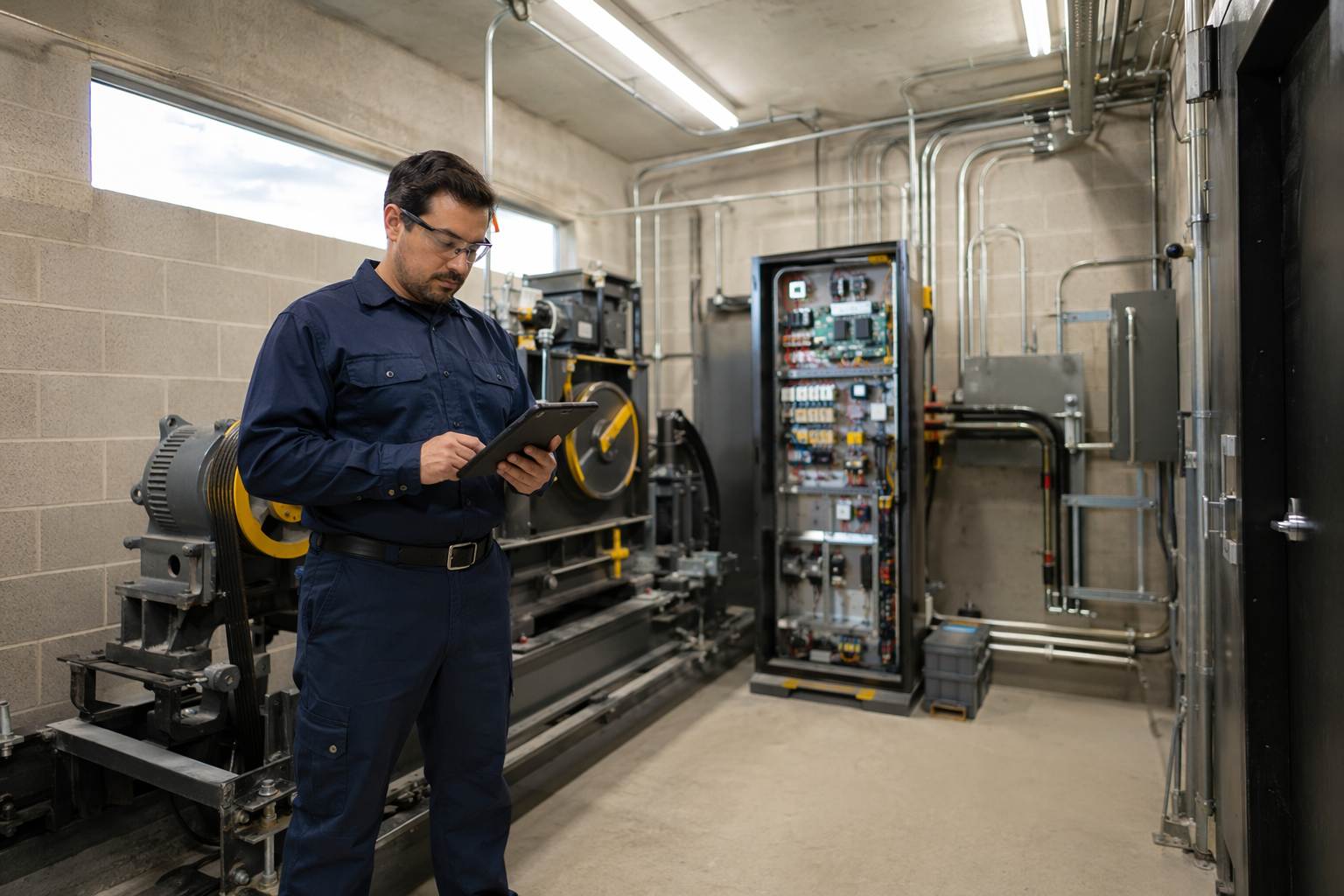
In my experience, the companies that consistently outperform the competition in Austin share four non-negotiable traits: their technicians hold current IUEC (International Union of Elevator Constructors) certifications, they maintain detailed digital service records for every unit they touch, they respond to emergency calls around the clock, and they carry full liability insurance meeting Texas Department of Insurance minimums. A company might advertise aggressively, but if their technicians aren’t certified or their response time exceeds six hours, your tenants and your liability exposure will suffer the consequences.
Austin’s sustained construction growth — with significant new mid-rise and high-rise inventory coming online through 2026 — means demand for qualified elevator maintenance has surged. Not every provider has scaled their technical workforce to match. Vetting your vendor carefully is more important now than ever.
How Often Should Elevators Be Inspected in Austin, TX?

Under Texas state law and ASME A17.1-2022 standards, elevators in Austin must undergo a full annual inspection by a licensed inspector, plus periodic maintenance visits — typically monthly or quarterly depending on usage volume and equipment type.
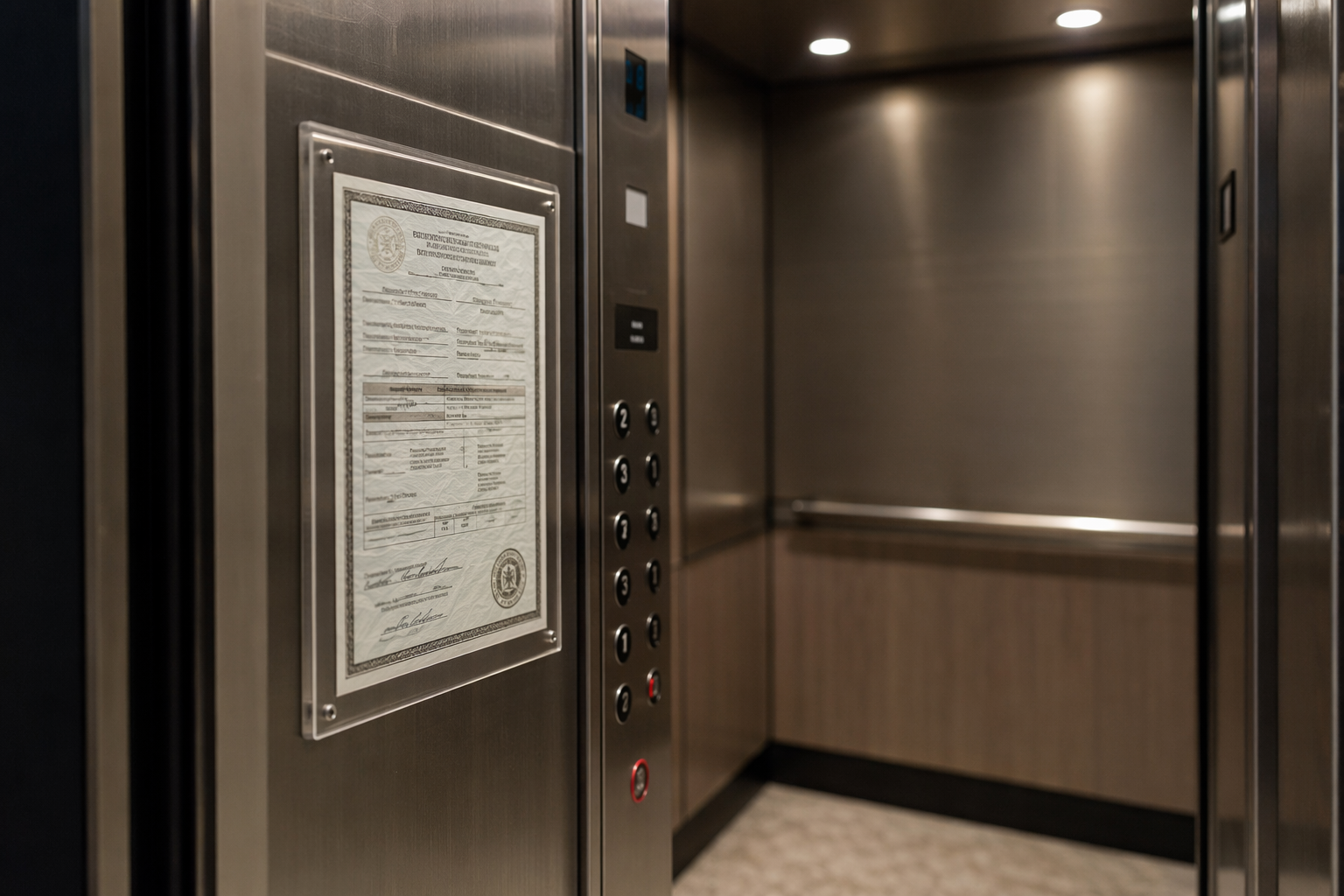
Texas follows the ASME A17.1/CSA B44 Safety Code for Elevators and Escalators, the most widely adopted elevator safety standard in North America. The Texas Department of Insurance (TDI) enforces elevator safety inspections statewide, and Austin buildings are required to display a current Certificate of Inspection in or near each elevator cab.
Beyond the mandatory annual inspection, a professional maintenance contract typically includes monthly visits for high-traffic commercial elevators, quarterly visits for lower-traffic residential units, and a five-year full load test for hydraulic elevators as specified under ASME A17.1-2022 Rule 8.6. Skipping scheduled maintenance doesn’t just risk regulatory violations — it dramatically shortens equipment lifespan and increases the likelihood of costly emergency repairs between visits.
How Much Does Elevator Maintenance Cost in Austin, TX?
Elevator maintenance contract pricing in Austin varies based on equipment type, building usage level, number of units, and the scope of services included. Rather than quoting figures that shift with market conditions, the most reliable approach is to request itemized proposals from at least three licensed providers and compare them line by line.
When evaluating cost, building owners should look beyond the monthly base rate and assess what is actually covered. Key questions to ask any vendor include:
- Are parts included in the contract price, or billed separately?
- Is 24/7 emergency callback service included, or does it carry an additional hourly rate?
- What is the guaranteed response time for entrapments and safety-critical failures?
- Are annual TDI inspection coordination and documentation included?
- What exclusions apply — and are modernization components covered?
AmeriTex Elevator provides fully itemized, no-hidden-fee maintenance proposals for Austin properties. Facilities managers frequently find that comparing an AmeriTex contract against a lower-advertised competitor reveals significant differences in coverage scope that affect true total cost of ownership over a multi-year agreement.
What Compliance Requirements Apply to Austin Elevator Owners in 2026?
Austin elevator owners must satisfy both Texas state requirements enforced by the Texas Department of Insurance Boiler and Pressure Vessel Division and the applicable edition of ASME A17.1. As of 2026, TDI references ASME A17.1-2022 for new installations and significant alterations, while existing equipment is evaluated under the code edition in effect at the time of original installation with applicable retrofits required over time.
Core compliance obligations for Austin building owners include:
- Annual inspection: Performed by a TDI-licensed elevator inspector. The current Certificate of Inspection must be posted in or adjacent to each cab.
- Five-year hydraulic pressure test: Required under ASME A17.1-2022 for hydraulic elevator systems.
- Five-year full load safety test: Required for traction elevators under ASME A17.1-2022 Rule 8.6.
- ADA compliance: Elevator cab dimensions, control heights, and door timing must meet ADA Standards for Accessible Design in buildings subject to Title II or Title III of the Americans with Disabilities Act.
- Emergency operations: Phase I and Phase II firefighter emergency operation requirements under ASME A17.1-2022 must be tested and documented during each maintenance cycle.
AmeriTex Elevator’s maintenance program is structured to keep Austin properties continuously inspection-ready, with digital service records available to property managers at any time and proactive scheduling of all code-required periodic tests.
How Do You Compare Elevator Maintenance Companies in Austin Before Signing a Contract?
Choosing between elevator maintenance vendors in Austin requires evaluating credentials, response capability, contract transparency, and local technical depth — not just price. Here is a practical comparison framework facilities professionals use when selecting a provider:
- Technician certification: Confirm that field technicians hold current IUEC certifications. Ask for documentation, not just a verbal assurance.
- Local workforce: A company with Austin-based technicians will consistently outperform one dispatching from San Antonio or Houston when emergency response time matters.
- Service record access: Top-tier providers offer digital service history accessible to building management, supporting compliance documentation and insurance audits.
- Contract exit terms: Review cancellation clauses carefully. Some providers include multi-year lock-ins with steep early termination penalties that are not disclosed prominently at signing.
- References from comparable properties: Request references from Austin buildings similar in size and equipment type to yours — a provider experienced with a single low-rise residential building may not be equipped for a 20-story mixed-use tower.
- Parts inventory: Ask whether the company maintains a local parts inventory. Vendors who must order all parts from out-of-state warehouses introduce unnecessary downtime into repairs.
AmeriTex Elevator welcomes direct comparison against any Austin competitor. Our team provides side-by-side contract analysis for property managers evaluating multiple proposals and will clearly document what our program includes versus what others commonly exclude.
How Long Does It Take to Set Up a New Elevator Maintenance Contract in Austin?
Transitioning to a new elevator maintenance provider in Austin typically takes between two and four weeks from initial site survey to first scheduled maintenance visit. The process involves a baseline inspection of all units, documentation review of existing service records and inspection certificates, contract execution, and technician assignment.
Building owners should plan the transition to avoid gaps in coverage, particularly around the timing of a scheduled TDI annual inspection. If your current Certificate of Inspection expires within 60 days, initiating the vendor transition process immediately is advisable so your new provider can coordinate the required inspection without a lapse that creates a code violation.
AmeriTex Elevator’s onboarding process for new Austin accounts includes a complimentary baseline assessment of all elevator units, a review of outstanding TDI inspection deadlines, and a priority scheduling queue for accounts transitioning from a prior vendor. Most Austin properties are fully onboarded within three weeks of contract execution.
Need elevator service you can rely on? AmeriTex Elevator is ready to help.