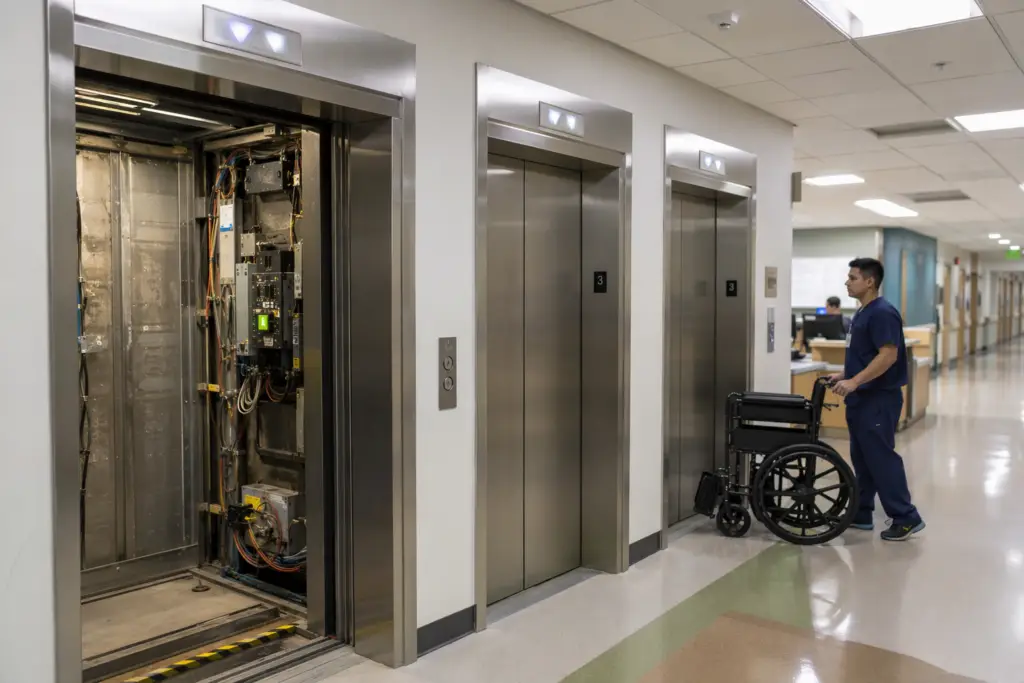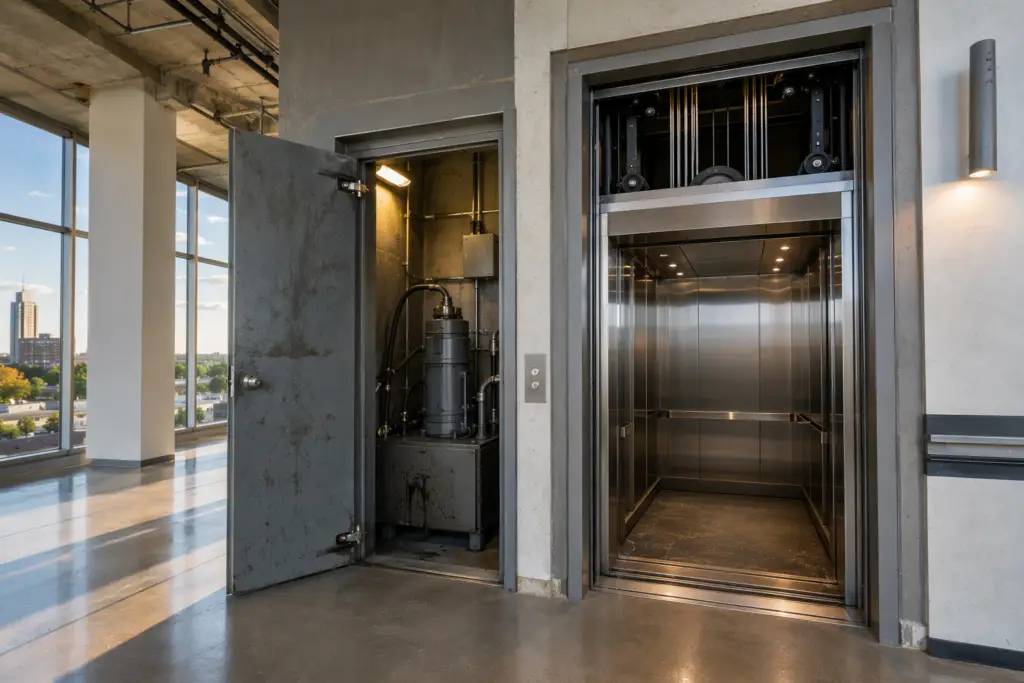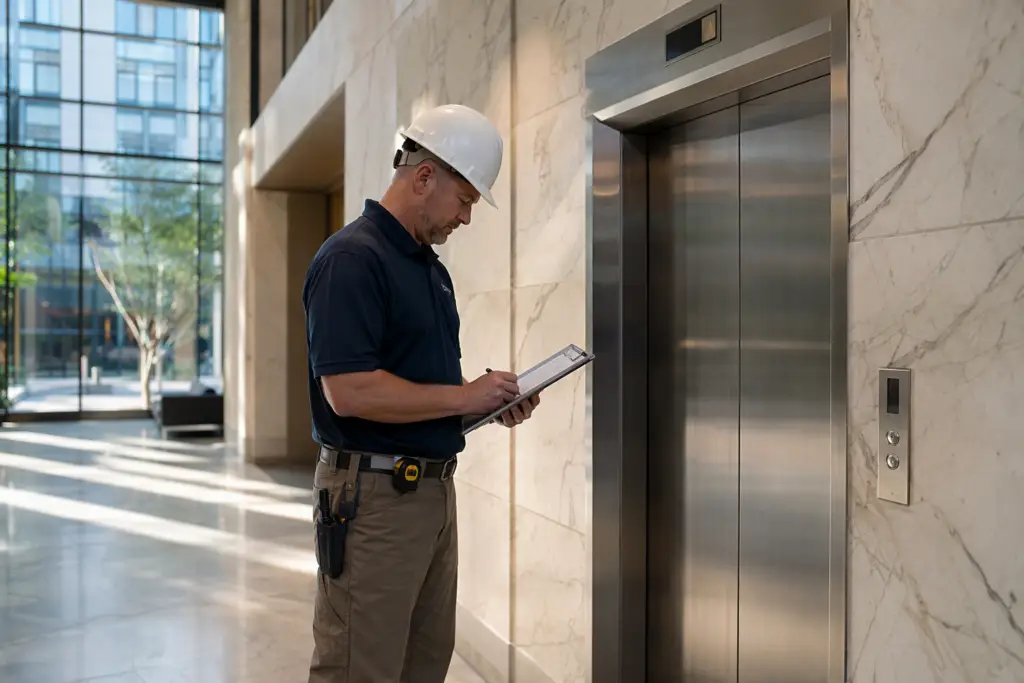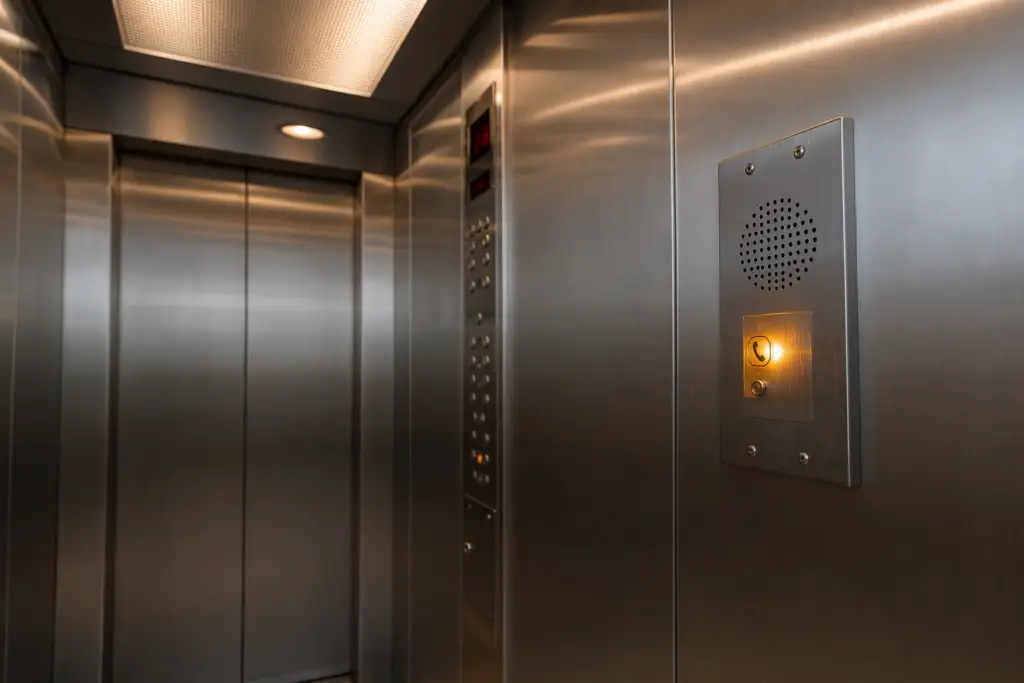
AmeriTex Elevator services both residential dumbwaiters and commercial dumbwaiter systems, covering installation, maintenance, repair, and code-compliance inspections across Houston, Dallas, Austin, San Antonio, Los Angeles, and San Diego.
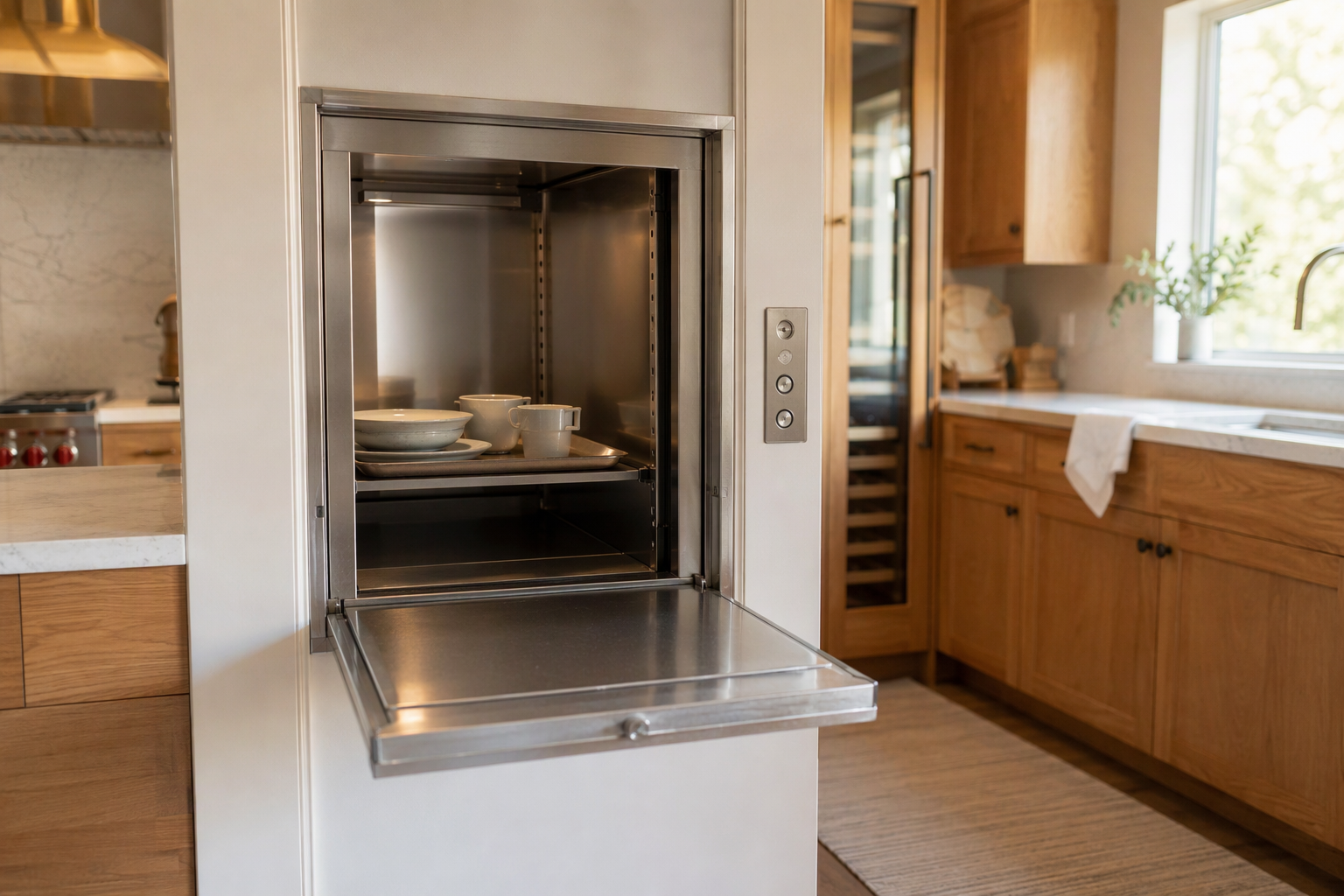
AmeriTex Elevator services both residential dumbwaiters and commercial dumbwaiter equipment. Whether a homeowner needs a small food-and-laundry lift or a restaurant needs a heavy-duty kitchen service lift, qualified technicians handle the full scope of dumbwaiter work — inspection, preventive maintenance, repair, modernization, and regulatory compliance — in every market AmeriTex Elevator serves across Texas and California.
Do you service residential dumbwaiters, or only commercial equipment?
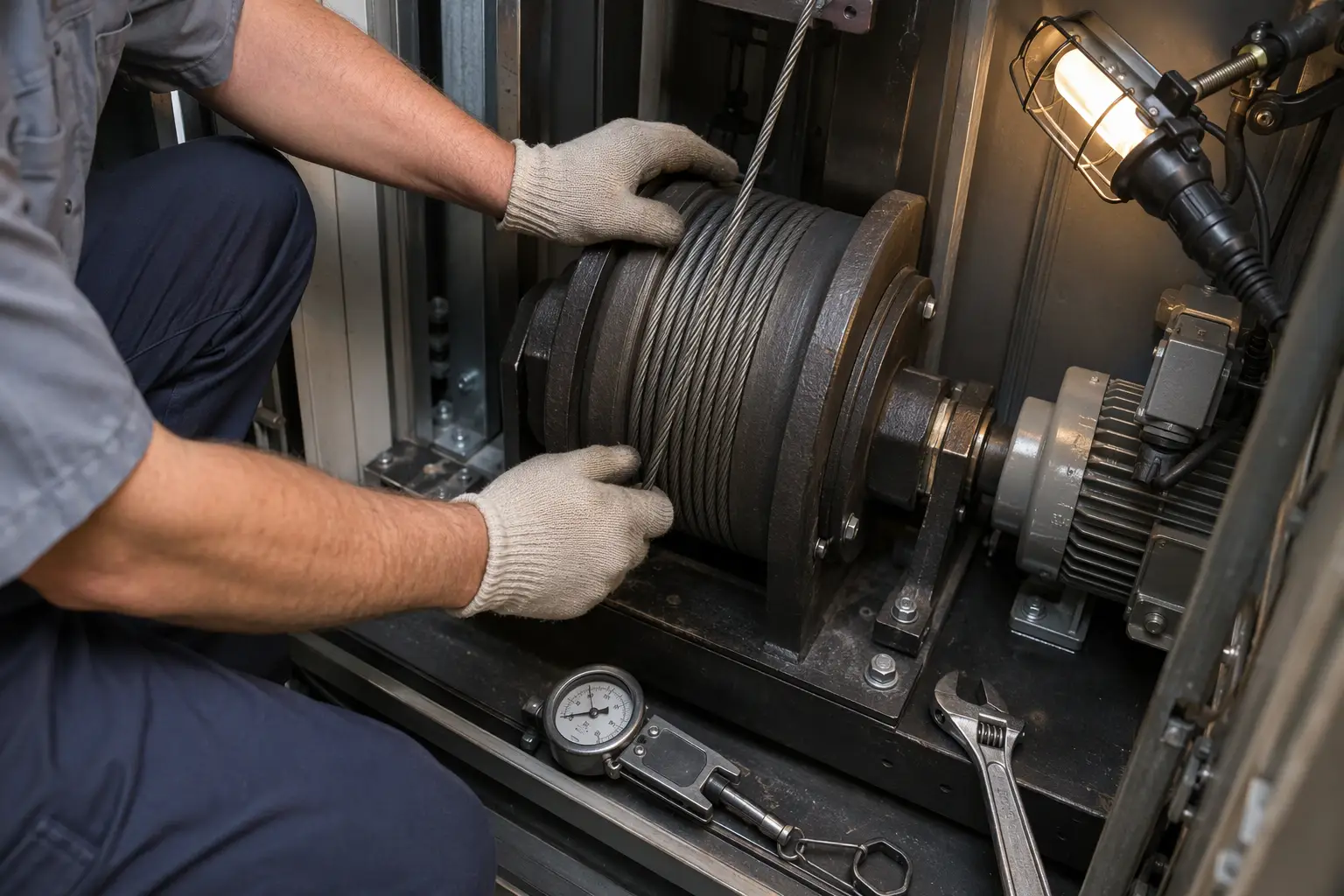
AmeriTex Elevator services both residential and commercial dumbwaiters, including installation support, preventive maintenance, component repair, and compliance documentation in Houston, Dallas, Austin, San Antonio, Los Angeles, and San Diego.
Dumbwaiters fall into two broad categories: residential units installed in private homes to move food, laundry, or supplies between floors, and commercial units installed in restaurants, hotels, hospitals, libraries, and multi-story retail facilities. The engineering fundamentals — counterweights, guide rails, drive machines, safeties, and control systems — are shared across both categories, but load ratings, duty cycles, applicable codes, and regulatory oversight differ significantly. A technician who understands only commercial traction elevators but has never adjusted a residential dumbwaiter’s slack-rope safety or programmed a home-use controller cannot serve either customer well. AmeriTex Elevator maintains the technical range to cover both.
What is a dumbwaiter, and how does it differ from a residential elevator?
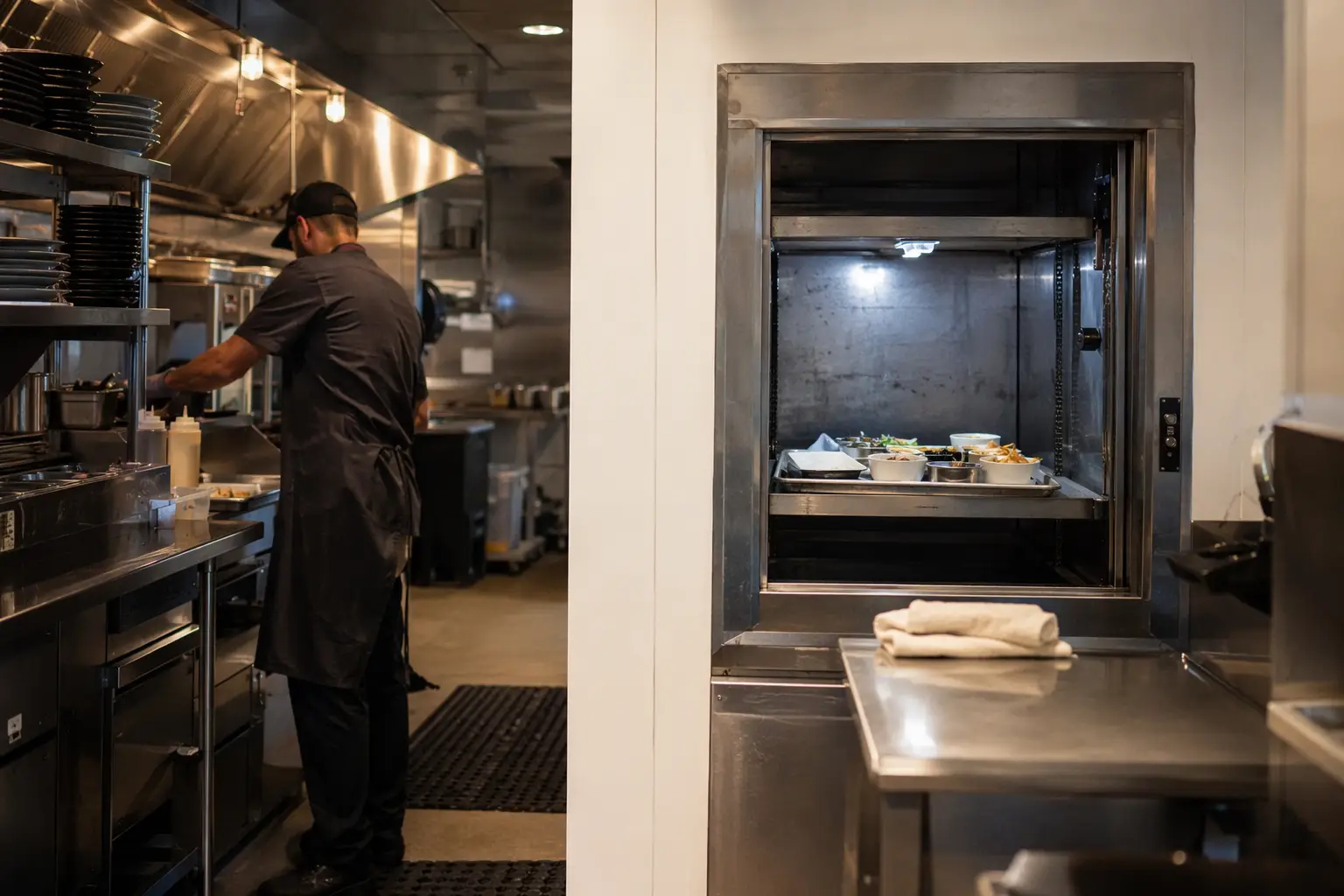
A dumbwaiter is a small freight-only conveying system designed to move goods — not people — between floors, and it is governed by its own section of the ASME A17.1 Safety Code for Elevators and Escalators rather than the passenger elevator sections.
Under ASME A17.1, dumbwaiters are classified as hoisting and lowering mechanisms with a car platform area not exceeding 9 square feet, a car height not exceeding 4 feet, and a capacity not exceeding 500 pounds. These dimensional limits are what legally distinguish a dumbwaiter from a freight elevator or a residential LULA (Limited Use/Limited Application) elevator. A residential elevator, by contrast, is designed and code-approved to carry people, requires cab dimensions large enough to admit a wheelchair under ADA standards when installed in covered multifamily housing, and must comply with the full passenger-elevator sections of ASME A17.1.
Because a dumbwaiter is restricted to goods only, it must include interlocks, door restrictors, or other access-prevention devices that prevent a person from riding the car. Verifying the integrity of these access-prevention features is a standard item on every dumbwaiter inspection checklist used by AmeriTex Elevator technicians.
What types of residential dumbwaiters are most commonly serviced?
The most common residential dumbwaiter types are electric traction units and cable-drum units, both designed for light-duty cycling in private homes with load capacities typically ranging from 25 to 200 pounds.
Electric traction residential dumbwaiters use a motor-driven sheave and counterweight arrangement similar in concept to a full-size traction elevator, though far smaller. Cable-drum units wind the hoist cable directly onto a drum rather than over a sheave, making them mechanically simpler but requiring precise drum groove maintenance to prevent cable wear. Hydraulic residential dumbwaiters also exist, using a small power unit and cylinder, though they are less common in new residential construction.
Common residential service calls include slack-rope safety trips, worn or frayed hoist cables, failed limit switches, door interlock faults, motor thermal overloads, and deteriorated guide-shoe liners. In older homes, aluminum or galvanized guide rails may show corrosion that requires cleaning, lubrication, or rail replacement to restore smooth travel.
What types of commercial dumbwaiters does AmeriTex Elevator service?
Commercial dumbwaiters serviced by AmeriTex Elevator include hand-powered, electric traction, and hydraulic units installed in restaurants, hotels, hospitals, libraries, senior living facilities, and multi-story retail buildings, with capacities commonly reaching 500 pounds.
Restaurant and foodservice dumbwaiters face some of the highest duty cycles of any dumbwaiter application, often running dozens of trips per hour during meal service. This accelerates wear on hoist cables, sheaves, door sill plates, and car guide shoes. Hospital and healthcare dumbwaiters carry pharmaceuticals, linen, and meal trays and are subject to strict sanitation requirements in addition to mechanical maintenance. Library book-lifts — sometimes called book elevators — are a specialized commercial dumbwaiter variant with longer travel heights and reinforced car platforms designed for the concentrated weight of stacked volumes.
Commercial dumbwaiters in Texas are subject to Texas Department of Licensing and Regulation (TDLR) oversight under Texas Health and Safety Code Chapter 754 and 16 Texas Administrative Code Chapter 74, except within Houston city limits, where the City of Houston operates its own elevator program. In California, commercial dumbwaiters fall under Cal/OSHA’s Elevator Unit within the California Department of Industrial Relations, governed by California Labor Code Sections 7300–7324.2 and the California Code of Regulations, Title 8, Elevator Safety Orders.
Are residential dumbwaiters regulated differently than commercial dumbwaiters in Texas?
Yes — in Texas, TDLR does not regulate dumbwaiters installed in single-family dwellings in the same way it regulates commercial equipment, though state law does require an inspection by a TDLR-registered inspector after installation of a residential unit.
For commercial dumbwaiters throughout Texas (outside Houston), TDLR requires annual inspections by a TDLR-registered elevator inspector, a valid Certificate of Compliance posted in a publicly visible area, and correction of any cited violations within 30 days of inspection or a waiver from TDLR. Texas adopted the ASME A17.1/CSA B44, 2016 edition as its governing code, effective November 1, 2018, under 16 TAC §74.100(b). Electric traction commercial dumbwaiters in Texas are also subject to the Category 5 full-load test required every five years for traction equipment.
Within Houston city limits, TDLR does not regulate elevators or dumbwaiters — the City of Houston administers its own program. Building owners with commercial dumbwaiters in Houston should contact the City’s inspection authority directly for current permit and inspection requirements. AmeriTex Elevator technicians working in Houston are familiar with the City’s program and can assist owners in understanding their local obligations.
Are residential dumbwaiters regulated differently than commercial dumbwaiters in California?
Yes — California law expressly exempts conveyances in single-unit private homes that are not accessible to the public from the state’s elevator regulatory requirements, while commercial dumbwaiters require a Cal/OSHA permit to operate and annual inspection.
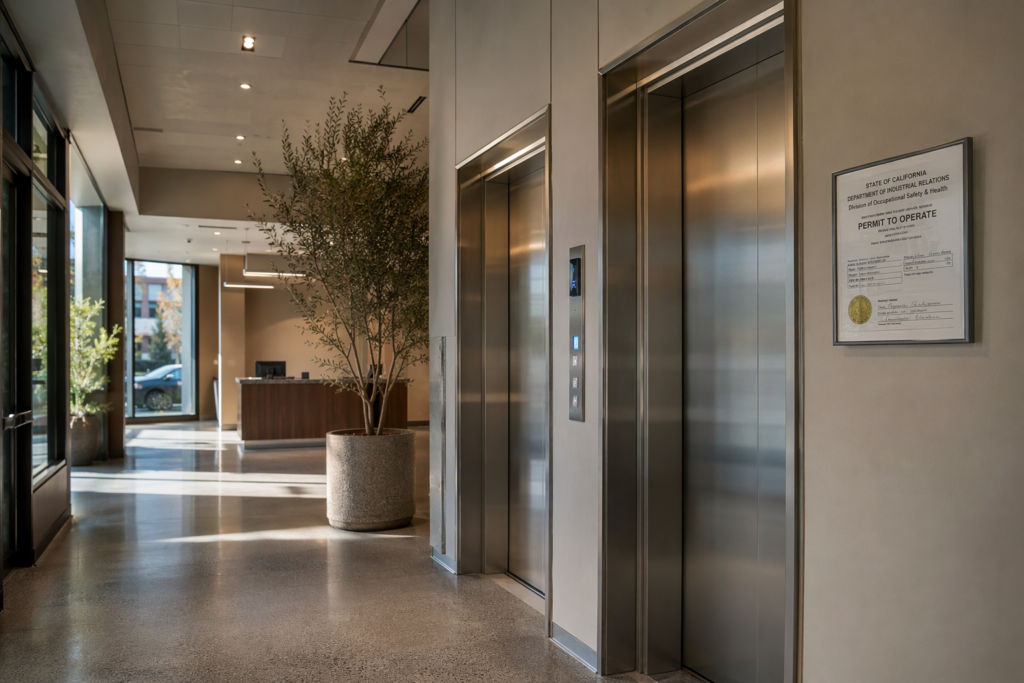
Under California Labor Code Sections 7300–7324.2 and the Title 8 Elevator Safety Orders, every commercial dumbwaiter must hold a valid permit to operate issued by Cal/OSHA’s Elevator Unit. The permit must be obtained before the unit is placed in service, and California law requires annual reinspection — a responsibility that rests with the building owner, not the service company. If a commercial dumbwaiter is covered by a full maintenance contract with a Certified Qualified Conveyance Company (CQCC), Cal/OSHA may issue a permit to operate for up to two years.
In Los Angeles, the City’s Department of Building and Safety (LADBS) runs its own elevator and conveyance inspection program in addition to the state framework. Building owners with commercial dumbwaiters in Los Angeles should verify current requirements with LADBS. AmeriTex Elevator serves both Los Angeles and San Diego and maintains awareness of local authority having jurisdiction (AHJ) requirements in both markets.
Residential dumbwaiters in single-unit private California homes that are not accessible to the public fall under the statutory exemption and do not require a Cal/OSHA permit. However, the mechanical safety requirements of the ASME standard still represent the technical benchmark for safe residential dumbwaiter maintenance, and AmeriTex Elevator applies those standards to all residential work regardless of permit status.
What ASME code sections govern dumbwaiter installation and maintenance?
Dumbwaiters are governed by Part 7 of the ASME A17.1 Safety Code for Elevators and Escalators, which establishes requirements for car enclosures, hoisting machines, safeties, buffers, governor systems (where required), door interlocks, and electrical equipment.
Key technical requirements under ASME A17.1 for dumbwaiters include:
- Car enclosures must be constructed to prevent persons from entering the hoistway through the car opening when the car is not at the landing.
- Every dumbwaiter must be equipped with a device that stops and holds the car in the event of rope slack or failure — commonly called a slack-rope safety.
- Normal terminal stopping devices must prevent the car from running past the top or bottom terminal landings.
- Final terminal stopping devices must provide a second, independent layer of overtravel protection.
- All landing doors must be interlocked so they cannot be opened unless the car is at that landing.
California adopted ASME A17.1/CSA B44, 2004 edition for installation contracts signed on or after May 1, 2008, under its Group IV Elevator Safety Orders, and has proposed a Group V update that would incorporate elements of ASME A17.1-2019 — no effective date has been posted as of 2026. Texas adopted ASME A17.1/CSA B44, 2016 edition effective November 1, 2018. When AmeriTex Elevator performs maintenance or modernization work, technicians reference the code edition applicable to each unit’s jurisdiction and installation date.
What does a standard dumbwaiter maintenance visit include?
A standard dumbwaiter preventive maintenance visit covers mechanical inspection, lubrication, adjustment, electrical safety checks, and documentation — mirroring the scope of maintenance defined in ASME A17.1 maintenance requirements.
Typical maintenance tasks include:
- Visual inspection of hoist cables or chains for wear, fraying, broken wires, or kinking
- Sheave or drum groove inspection and measurement for wear
- Lubrication of guide rails, guide shoes, and machine components per manufacturer specifications
- Testing of normal and final terminal stopping devices
- Testing of slack-rope safety device function
- Inspection and adjustment of landing door interlocks
- Verification that access-prevention devices are intact and functional
- Control system check including limit switches and overload protection
- Motor and drive inspection including belt or chain tension (where applicable)
- Documentation of findings and any required corrective actions
For commercial dumbwaiters in Texas (outside Houston), maintenance records support the annual TDLR inspection and can help resolve any disputed findings during the inspector’s visit. In California, a full maintenance contract with a CQCC-certified company is what enables Cal/OSHA to issue a two-year permit to operate rather than the standard one-year permit.
What are the most common dumbwaiter repair needs?
The most frequent dumbwaiter repairs involve hoist cable replacement, door interlock failure, limit switch adjustment or replacement, slack-rope safety reset or rebuilding, and motor or drive-system faults.
Hoist cables on heavily used commercial dumbwaiters — particularly in restaurant applications — can reach the end of their service life faster than those on residential units because of the higher duty cycle. ASME A17.1 establishes wire rope discard criteria based on broken wire counts per lay length and overall rope diameter reduction; technicians use these criteria rather than calendar age alone to determine replacement timing.
Door interlocks are another high-frequency repair item. A landing door that can be opened when the car is away from the landing is an immediate safety hazard — it creates a hoistway fall risk. Under Texas rules, certain safety-critical failures require immediate removal from service, underscoring why interlock repairs are never deferred. Limit switch failures can cause the car to overtravel at terminals, risking structural damage to the car, buffer, or guide rail. Slack-rope safety trips — where the safety catches the car after a rope goes slack — require both resetting the safety device and diagnosing the root cause of the rope slack before returning the unit to service.
How much weight can a dumbwaiter carry?
Under ASME A17.1, the maximum rated load for a dumbwaiter is 500 pounds, and the car platform area may not exceed 9 square feet — dimensions that legally define the boundary between a dumbwaiter and a freight elevator.
In practice, residential dumbwaiters are typically engineered for capacities between 25 and 200 pounds, sized for groceries, laundry baskets, or meal trays. Commercial units, particularly those used in hotel service corridors or hospital linen distribution, are often specified at or near the 500-pound maximum. Exceeding a dumbwaiter’s rated capacity accelerates wear on all load-bearing components and can trigger safety device activation. If an owner’s operational needs regularly approach or exceed the capacity of a dumbwaiter, upgrading to a properly rated freight elevator or platform lift is the appropriate solution — a topic AmeriTex Elevator can evaluate during a site assessment.
How do residential and commercial dumbwaiters compare on key specifications?
The table below summarizes common specification differences between residential and commercial dumbwaiters to help building owners understand which category their equipment falls into and what service requirements apply.
| Specification | Residential Dumbwaiter | Commercial Dumbwaiter |
|---|---|---|
| Typical rated load | 25–200 lbs | Up to 500 lbs (ASME A17.1 maximum) |
| Duty cycle | Light (occasional trips per day) | Heavy (dozens of trips per hour in restaurant settings) |
| Drive type | Cable-drum or light traction; occasional hydraulic | Electric traction, hydraulic, or hand-powered |
| Car platform area | Typically under 6 sq ft | Up to 9 sq ft (ASME A17.1 limit) |
| Car height | Typically under 3 ft | Up to 4 ft (ASME A17.1 limit) |
| Texas regulation (outside Houston) | Post-installation inspection by TDLR-registered inspector required; ongoing oversight limited | Annual inspection, Certificate of Compliance, TDLR oversight |
| California regulation | Exempt if in single-unit private home not accessible to public | Cal/OSHA permit to operate required; annual inspection; CQCC maintenance required |
| Category 5 test (Texas, traction) | Not typically applicable at residential scale | Every 5 years for electric traction units |
| Recommended maintenance frequency | Annual inspection at minimum | Quarterly or semi-annual preventive maintenance typical for heavy-duty applications |
What should a building owner do immediately if a dumbwaiter stops working or shows a safety fault?
When a dumbwaiter stops unexpectedly, shows a door interlock fault, or activates a safety device, the owner should take the unit out of service and follow a systematic response before resuming operation.
- Secure the unit by switching off power at the dedicated dumbwaiter disconnect switch to prevent further operation attempts.
- Lock or barricade all landing doors to prevent anyone from attempting to open the hoistway while the car position is unknown.
- Do not attempt to reset a slack-rope safety, interlock, or safety device without first determining the root cause — resetting a tripped safety without diagnosing why it tripped can result in a repeat event under load.
- Contact a qualified service provider such as AmeriTex Elevator to perform a diagnostic inspection before returning the unit to service.
- In Texas (outside Houston), report any accident involving the dumbwaiter to TDLR within 24 hours as required by state law.
- In Texas (outside Houston), if the unit has a cited safety deficiency from a prior inspection, verify that the 30-day correction window has not lapsed; if it has, contact TDLR about a waiver or delay before resuming operation.
- Document the fault, the time it occurred, what the car was carrying, and any unusual sounds or movements observed — this information assists the technician in diagnosis.
Can a dumbwaiter be modernized or upgraded rather than replaced?
Yes — in many cases, dumbwaiter modernization of the control system, hoist machine, door operators, or wiring is a cost-effective alternative to full replacement, particularly when the guide rails, hoistway structure, and car frame remain in serviceable condition.
Common modernization scopes include replacing relay-logic control panels with solid-state programmable controllers, upgrading open-wiring electrical systems to meet current code, retrofitting manual-swing landing doors with interlocked sliding doors, and replacing worn cable-drum machines with more efficient traction drive systems. Any material alteration to a dumbwaiter in Texas (outside Houston) requires the registered contractor to submit plans to TDLR and obtain approval before work begins, under 16 Texas Administrative Code Chapter 74. In California, a permit from Cal/OSHA is required before a conveyance is materially altered.
Modernization work must be performed by appropriately qualified contractors. In California, only a Certified Qualified Conveyance Company (CQCC) may maintain, repair, alter, or replace components on a conveyance, and all field mechanics must be Certified Competent Conveyance Mechanics (CCCM). In Texas, a person may not install, repair, alter, test, or maintain elevator equipment without registering as a contractor with TDLR.
Does the ADA apply to dumbwaiters?
Dumbwaiters are goods-only conveyances and are not required to be accessible under the Americans with Disabilities Act, but ADA requirements may apply to the broader facility served by the dumbwaiter, including the elevators or platform lifts that provide vertical access for people.
Because dumbwaiters are restricted to freight and explicitly exclude human occupancy under ASME A17.1, they fall outside the scope of ADA accessibility provisions for vertical conveyances. However, if a dumbwaiter’s installation required modifying a corridor, service area, or building entrance that is part of an accessible route, those alterations must comply with ADA Standards for Accessible Design. Building owners undertaking dumbwaiter installation or modernization projects should consult with their architect or accessibility consultant to confirm that any associated construction does not create barriers to ADA-required accessible routes. AmeriTex Elevator can coordinate with project design teams to ensure the vertical conveyance scope of work does not inadvertently affect accessible path-of-travel compliance.
How often should a residential dumbwaiter be inspected?
For residential dumbwaiters in California homes that are exempt from the state permit requirement, the ASME A17.1 maintenance standard provides the best available technical benchmark, and an annual inspection by a qualified technician is widely regarded as the minimum prudent interval for residential units.
In Texas, state law requires an inspection by a TDLR-registered inspector after installation of a residential dumbwaiter in a single-family dwelling. Ongoing periodic inspection requirements for residential dumbwaiters in Texas are not specified in the same way as for commercial equipment, but owners should consult TDLR and their local authority having jurisdiction for current requirements. For commercial dumbwaiters in Texas (outside Houston), annual inspection by a TDLR-registered inspector is a legal requirement. In California, commercial dumbwaiters must be inspected at least once a year, with the possibility of a two-year permit for units under a full maintenance contract with a CQCC.
Regardless of regulatory minimums, residential dumbwaiter owners whose units are in frequent daily use — for example, a multi-story home with mobility-limited residents relying on the dumbwaiter for meals and supplies — benefit from more frequent service intervals to catch wear before it becomes a failure. AmeriTex Elevator can help owners develop a maintenance schedule appropriate for their specific unit, usage pattern, and jurisdiction.
What states and cities does AmeriTex Elevator serve for dumbwaiter work?
AmeriTex Elevator provides residential and commercial dumbwaiter services in Houston TX, Dallas TX, Austin TX, San Antonio TX, Los Angeles CA, and San Diego CA — covering both Texas TDLR-regulated markets and California Cal/OSHA-regulated markets.
Each market has its own regulatory environment. In Texas outside Houston, TDLR governs commercial dumbwaiters under Texas Health and Safety Code Chapter 754 and 16 TAC Chapter 74. The City of Houston administers its own program independent of TDLR. In California, Cal/OSHA’s Elevator Unit regulates commercial dumbwaiters statewide under the Title 8 Elevator Safety Orders, with the City of Los Angeles running an additional local inspection program through LADBS. AmeriTex Elevator’s technicians operating in California work within the CQCC and CCCM certification framework required by state law, while Texas operations comply with TDLR contractor registration requirements including the minimum general liability insurance thresholds mandated by state regulation.
For building owners or homeowners outside these six markets, AmeriTex Elevator can offer referrals or guidance on identifying qualified service providers in other jurisdictions.
What questions should a building owner ask when hiring a dumbwaiter service company?
Building owners should ask potential service providers about regulatory standing, insurance, code familiarity, and their specific experience with the make and drive type of the dumbwaiter in question before entering a maintenance agreement.
Key questions to ask any dumbwaiter service company include:
- Are you a TDLR-registered elevator contractor (Texas) or a Cal/OSHA-certified CQCC (California)?
- Do your field mechanics hold the certifications required in this jurisdiction?
- Do you carry general liability insurance meeting the minimums required by state law?
- Are you familiar with the specific manufacturer and drive type of my dumbwaiter?
- Can you assist with permit applications, plan submissions, or inspection coordination in my jurisdiction?
- Will you provide written documentation of all maintenance and repair work performed?
- How do you handle emergency service calls when a unit fails during business hours or after hours?
These questions establish whether a service company has the regulatory standing and technical depth to perform the work legally and competently. AmeriTex Elevator operates as a registered and compliant contractor across all six markets it serves and can provide documentation of its regulatory standing upon request.
Can a homeowner service or repair their own residential dumbwaiter?
While homeowners may perform minor, non-mechanical tasks such as cleaning landing door sills or wiping down car surfaces, any work involving hoist cables, safeties, electrical systems, interlocks, or adjustable mechanical components should be performed by a qualified elevator service company.
In California, the law is explicit: only a Certified Competent Conveyance Mechanic working for a Certified Qualified Conveyance Company may maintain, repair, alter, or replace components on a conveyance. Even if a residential dumbwaiter in a California private home falls under the statutory exemption from the permit requirement, the mechanical risk of untrained work on hoist cables, safety devices, or electrical systems is the same regardless of regulatory status. A miswired limit switch, an improperly tensioned hoist cable, or a manually defeated interlock creates genuine fall-into-hoistway or entrapment risks. In Texas, a person may not install, repair, alter, test, or maintain elevator equipment without registering as a contractor with TDLR. Residential dumbwaiter owners are best served by engaging a qualified service provider for any work beyond basic cleaning.
How does AmeriTex Elevator handle dumbwaiter service calls in markets with local authority jurisdiction programs?
In markets such as Houston and Los Angeles, where local authorities operate their own elevator and conveyance programs independently of the state agency, AmeriTex Elevator coordinates service and documentation to satisfy local program requirements rather than defaulting solely to state-level procedures.
Houston building owners cannot rely on TDLR for permits or inspections — the City of Houston administers its own program. AmeriTex Elevator technicians working in Houston are familiar with the City’s requirements and work with building owners to navigate the local inspection and compliance process. In Los Angeles, LADBS runs the City’s conveyance program, and AmeriTex Elevator’s California operations account for LADBS requirements alongside the statewide Cal/OSHA framework. Building owners in both cities should ensure their service provider understands the local program, not just state-level regulations — a gap that can result in permit lapses or compliance findings during local inspections.
What is the difference between a dumbwaiter and a material lift or vertical reciprocating conveyor (VRC)?
A dumbwaiter is a passenger-elevator-adjacent conveying device governed by ASME A17.1 Part 7, while a vertical reciprocating conveyor (VRC) is an industrial material-handling device governed by ASME B20.1 Safety Standard for Conveyors and Related Equipment and industrial safety regulations — the distinction affects which regulatory body oversees the equipment and which service company qualifications apply.
VRCs are designed to move pallets, industrial containers, and production materials between floor levels in manufacturing and warehouse environments. They are typically open-platform systems without car enclosures, capable of carrying loads far exceeding the 500-pound ASME A17.1 dumbwaiter maximum. Because VRCs are classified as conveyors rather than elevators, they are not inspected by TDLR or Cal/OSHA’s Elevator Unit — they fall under OSHA industrial safety standards. Building owners with material-handling needs that exceed dumbwaiter capacity limits should understand that the equipment, applicable codes, regulatory oversight, and required service provider qualifications differ substantially from those for a dumbwaiter. AmeriTex Elevator’s scope covers ASME A17.1-governed equipment; owners with VRC equipment should confirm whether the service provider they engage holds the appropriate qualifications for conveyor-class machinery.
Contact AmeriTex Elevator for a free elevator assessment at 844-646-9660.
Need elevator service you can rely on? AmeriTex Elevator is ready to help.