
Elevator Stuck Between Floors: Who to Call, What to Do, and How to Prevent It
Getting trapped in a stuck elevator is one of the most stressful situations a building occupant can experience. After more than 15 years in the elevator service industry, our team has responded to hundreds of entrapment calls across Texas and California. Knowing exactly who to call and what to do in the first critical minutes can make all the difference — both for passenger safety and for minimizing damage to your elevator system.
Who Should You Call First When an Elevator Is Stuck Between Floors?
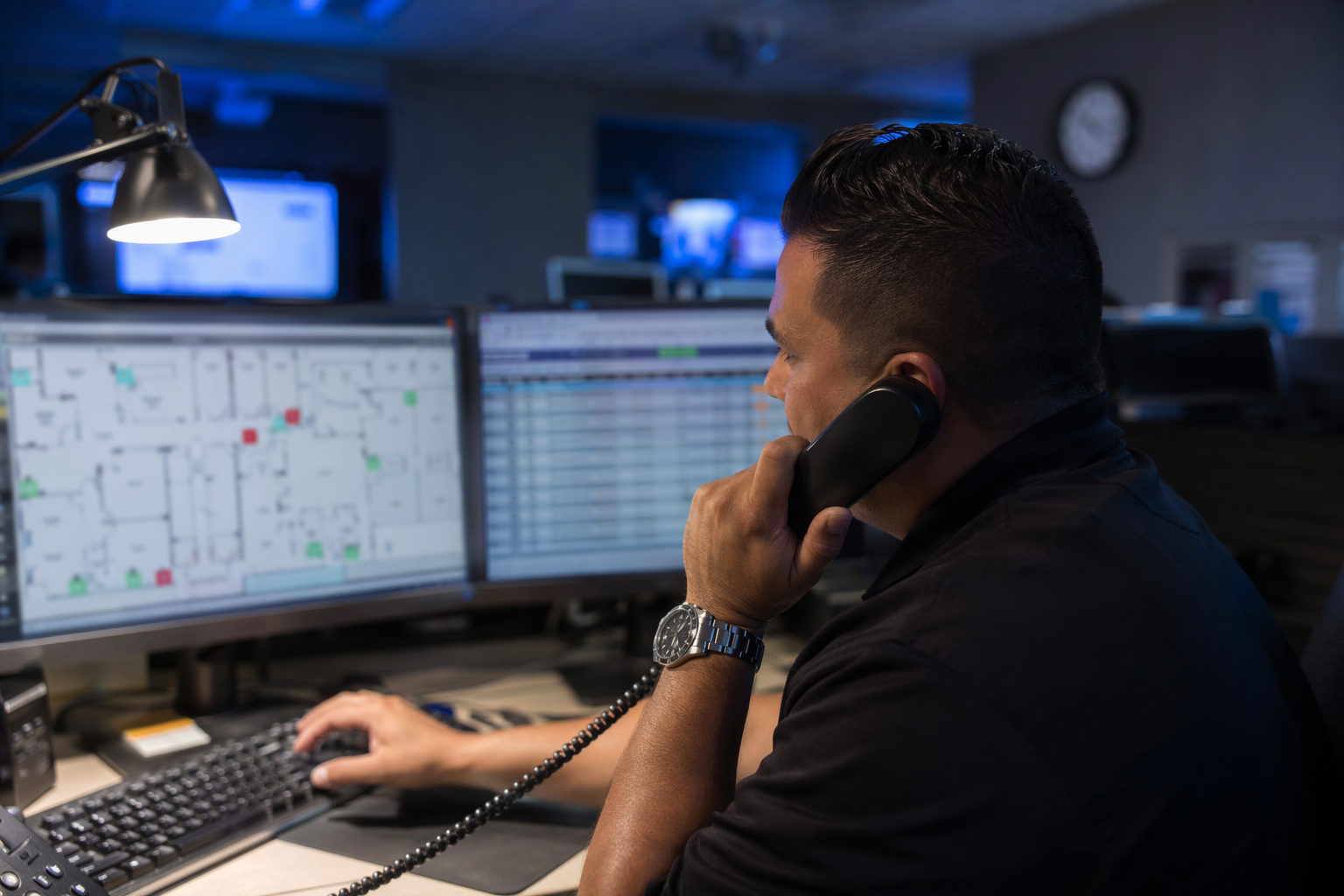
Call 911 immediately if anyone in the elevator has a medical emergency, is in distress, or if the elevator shows signs of mechanical failure such as smoke or fire — otherwise, press the emergency call button inside the cab to reach building management or a monitoring center, then contact a certified elevator service company for technical rescue and repair.
In most modern elevator installations, the emergency call button is connected 24/7 to a monitoring station staffed by trained personnel who can coordinate rescue. Under ASME A17.1 Safety Code for Elevators and Escalators, all passenger elevators must be equipped with a two-way emergency communications system. This is a code requirement, not an option.
Here is the priority order we recommend to every building manager and facility operator:
- Press the emergency call button inside the elevator cab
- Call 911 if there is any medical emergency, smoke, or immediate danger
- Call your building management team so they can dispatch on-site personnel
- Contact your certified elevator service provider — such as AmeriTex Elevator at 866-679-4313 — for technical extraction and diagnostics
- Document the incident for regulatory reporting purposes
Never attempt to force open elevator doors or climb out of a stopped elevator without professional guidance. Elevator shafts are extremely dangerous, and self-rescue attempts result in serious injuries and fatalities every year.
What Should Passengers Do While Waiting to Be Rescued From a Stuck Elevator?
Passengers should stay calm, use the emergency call button, call 911 or use a cell phone to contact building management, avoid forcing doors open, and wait for trained elevator technicians or emergency responders to perform a safe extraction.
The most dangerous thing a trapped passenger can do is attempt self-rescue. The National Elevator Industry Inc. (NEII) consistently reinforces that improper self-rescue is one of the leading causes of elevator-related fatalities. The elevator car may move unexpectedly while someone is attempting to exit between floors, creating a deadly shear point between the car and the hoistway wall.
Here are our practical recommendations for passengers while waiting for rescue:
- Stay calm and reassure others — panic can escalate the situation unnecessarily
- Press the emergency call button and communicate your location and any medical needs
- Use your cell phone to call 911 or building management if the call button does not connect
- Do not pry or force the doors open — even a partially open door creates a fatal risk if the car moves
- Sit or lean against the walls if the wait is prolonged, especially if anyone feels faint
- Alert rescuers to any medical conditions — technicians and dispatchers need this information to prioritize response
Elevator entrapments in well-maintained buildings are typically resolved within 30 to 90 minutes. If you manage a building in Texas or California, having a current service contract with a qualified elevator company like AmeriTex Elevator ensures a faster response time and a trained technician who already knows your equipment.
What Are the Regulatory Requirements for Elevator Safety in Texas and California?
In Texas, the elevator safety program is administered by the Texas Department of Licensing and Regulation (TDLR), Elevator and Escalator Safety program, under Texas Health and Safety Code Chapter 754 and 16 Texas Administrative Code Chapter 74. Texas has adopted the ASME A17.1/CSA B44, 2016 edition as its state elevator code. Building owners in Texas are required to have elevators inspected annually by a TDLR-registered elevator inspector, and must obtain and display a TDLR Certificate of Compliance for each unit. That certificate is valid for one year. Owners must also report any accident involving elevator equipment to TDLR within 24 hours.
One important Texas-specific note: TDLR does not regulate elevators inside Houston city limits. The City of Houston operates its own elevator inspection and permitting program. Building owners with elevators in Houston should contact the City of Houston directly for local requirements.
In Texas, any company that installs, repairs, alters, tests, or maintains elevator equipment must be registered as a contractor with TDLR. AmeriTex Elevator operates as a TDLR-registered elevator contractor throughout Texas.
In California, the elevator safety program is administered by the Division of Occupational Safety and Health (Cal/OSHA), Elevator Unit, California Department of Industrial Relations, under California Labor Code Sections 7300–7324.2 and the California Code of Regulations, Title 8, Elevator Safety Orders. California requires every conveyance to be inspected at least once a year. A conveyance found to be in safe condition receives a permit to operate for up to one year; that permit period may be extended to up to two years for elevators covered by a full maintenance contract with a C-11 licensed elevator company.
In California, only companies certified by Cal/OSHA as a Certified Qualified Conveyance Company (CQCC) may install, alter, test, maintain, or repair elevators. Any mechanic working unsupervised on an elevator must hold Cal/OSHA certification as a Certified Competent Conveyance Mechanic (CCCM). The California Contractors State License Board (CSLB) issues the C-11 Elevator Contractor license required as part of CQCC certification. AmeriTex Elevator meets these certification requirements for the California markets we serve.
No elevator may be operated in California without a valid permit to operate issued by Cal/OSHA, and that permit must be posted conspicuously inside the elevator car. Arranging the annual reinspection is the building owner’s responsibility.
Note for Los Angeles building owners: The City of Los Angeles, Department of Building and Safety (LADBS) runs its own elevator and conveyance inspection program. If your building is located within Los Angeles city limits, contact LADBS for local requirements in addition to Cal/OSHA obligations.
How Much Does Emergency Elevator Rescue and Repair Cost?
Emergency elevator service costs vary based on the cause of the entrapment, time of day, equipment type, and whether your building has an existing maintenance contract. Here is a general framework to help building owners and facility managers plan:
- Emergency after-hours dispatch: Most elevator service companies charge a premium for emergency calls outside of normal business hours. This fee varies by provider and region.
- Diagnostic and labor: A technician responding to an entrapment will perform a safety inspection and root-cause diagnosis before returning the elevator to service. Labor costs depend on the complexity of the issue and time required.
- Parts and repairs: If a component failure caused the entrapment — such as a faulty door operator, drive failure, or control board issue — parts costs are additional and vary widely by elevator make and model.
- Full maintenance contracts: Building owners with a full maintenance agreement typically receive priority emergency response, reduced or waived dispatch fees, and coverage for many repairs. This is the most cost-effective approach for high-traffic commercial buildings.
In Texas, building owners must also factor in the cost of having any cited violations corrected or under contract to be corrected within 30 days of a TDLR inspection. Deferred maintenance is a primary driver of entrapments and emergency repair costs.
AmeriTex Elevator offers customized maintenance contracts for commercial buildings across Texas and California. To get a quote or discuss emergency service options, call us at 866-679-4313.
How Long Does It Take to Rescue Passengers From a Stuck Elevator?
Response and rescue timelines depend on several factors: the location of the building, time of day, whether the building has an active service contract, and the nature of the malfunction. Here is what building managers and passengers can reasonably expect:
- Initial response via emergency call button: A staffed 24/7 monitoring center should acknowledge the call within seconds to minutes and begin coordinating response immediately.
- On-site technician arrival: For buildings with an active full maintenance contract in a major metro area such as Houston, Dallas, San Antonio, or Los Angeles, a technician can typically arrive within 30 to 90 minutes depending on traffic and time of day. Response times in suburban or rural areas may be longer.
- Extraction time: Once a certified technician is on site, extraction of passengers from a stuck elevator typically takes between 15 and 45 minutes, depending on where the car is stopped relative to a floor landing and the nature of the malfunction.
- Return to service: After extraction, the technician will diagnose the cause. Minor issues such as a tripped safety device or door fault may be resolved in the same visit. Major component failures may require the elevator to remain out of service until parts are sourced and installed.
The single biggest factor in faster rescue response is having a current, active service agreement with a qualified elevator contractor before an emergency occurs. AmeriTex Elevator provides 24/7 emergency response for our contract customers across Texas and California.
What Causes an Elevator to Get Stuck Between Floors?
Elevators stop between floors for a range of mechanical, electrical, and safety-system reasons. Understanding the most common causes helps building owners and facility managers prioritize preventive maintenance and reduce entrapment risk.
- Door system faults: The door operator, door contacts, or interlocks detect an obstruction or misalignment and halt the car as a safety measure. Door faults are among the most common causes of elevator stoppages.
- Overload conditions: If the elevator exceeds its rated load capacity, the overload sensor will stop the car before departure or between floors.
- Drive and motor issues: Failures in the main drive unit, motor, or variable frequency drive (VFD) can cause the car to stop mid-travel.
- Control board and software faults: Modern microprocessor-controlled elevators can stop due to controller errors, communication failures between the car and machine room, or corrupted software states.
- Safety device activation: Governors, safeties, buffers, and other ASME-required safety devices are designed to stop the car if an unsafe condition is detected — such as overspeed or a broken rope.
- Power interruptions: A sudden loss of building power or a phase imbalance can stop an elevator between floors. Many modern elevators include a battery lowering feature to bring the car to the nearest floor during a power outage.
- Deferred maintenance: Worn components, contaminated hydraulic fluid, and aging control systems are all significantly more likely to cause unplanned stoppages. In Texas, TDLR’s annual inspection requirement and the 30-day correction timeline for cited violations are specifically designed to address this risk.
A qualified elevator technician can diagnose the root cause of an entrapment and provide a written report documenting what failed and what corrective action was taken. In Texas, building owners must report accidents to TDLR within 24 hours. California building owners should consult their Cal/OSHA permit obligations and their service provider following any significant incident.
How Do You Choose the Right Elevator Service Company for Emergency Response?
When an elevator is stuck between floors, the company you have on contract determines how fast a trained technician arrives. Here is what to look for when evaluating elevator service providers in Texas and California:
- Proper licensing and registration: In Texas, confirm the company is registered as an elevator contractor with TDLR. In California, verify that the company holds a Cal/OSHA Certified Qualified Conveyance Company (CQCC) certification and that its mechanics hold Certified Competent Conveyance Mechanic (CCCM) credentials. Also confirm the company holds a C-11 Elevator Contractor license issued by the California Contractors State License Board (CSLB).
- 24/7 emergency response capability: Any service provider worth considering should offer around-the-clock emergency dispatch, not just during business hours.
- Local technician coverage: A company with technicians based near your building will respond faster than one dispatching from a distant location. AmeriTex Elevator maintains field coverage across major Texas and California markets.
- Experience with your elevator brand and type: Traction, hydraulic, and machine-room-less (MRL) elevators have different maintenance and repair requirements. Confirm your provider has documented experience with your specific equipment.
- Transparent maintenance contracts: Full maintenance contracts should clearly define what is included, response time guarantees, and coverage for parts and labor.
- Insurance: In Texas, TDLR requires elevator contractors to carry general liability insurance of at least $1,000,000 per occurrence for bodily injury or death and $500,000 per occurrence for property damage. Verify that any provider you consider meets or exceeds these minimums.
AmeriTex Elevator is a TDLR-registered elevator contractor serving commercial buildings throughout Texas, and a Cal/OSHA-certified elevator company serving California building owners. Our technicians are available 24/7 for emergency entrapment response, diagnostics, and repair. Call us at 866-679-4313 or visit ameritexelevator.com to learn more about our service agreements.
Need elevator service you can rely on? AmeriTex Elevator is ready to help.