Emergency Elevator Repair in Houston, TX: Complete FAQ Guide
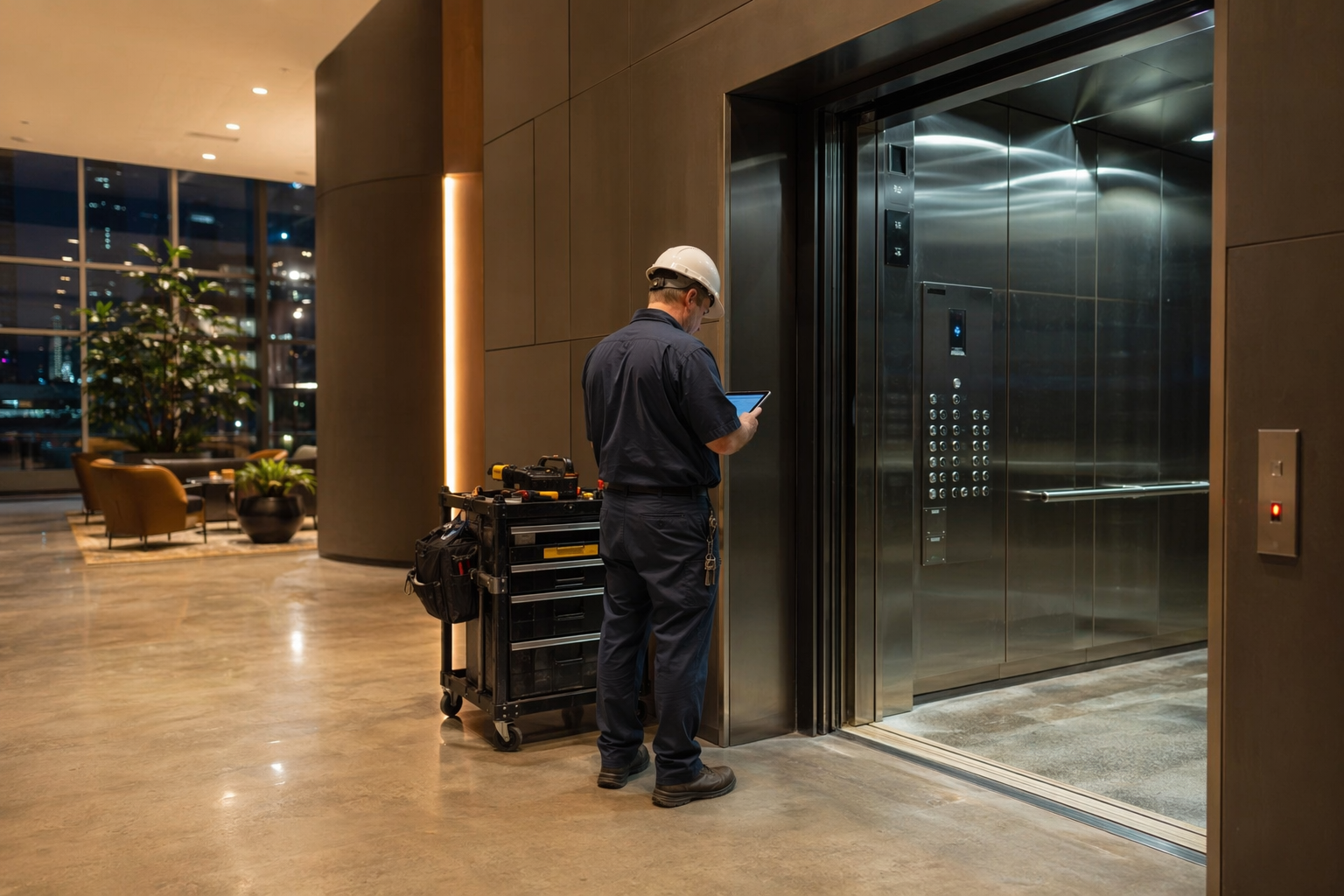
After 15 years of responding to elevator emergencies across Houston’s medical centers, high-rises, and mixed-use properties, we’ve seen what separates a minor inconvenience from a life-safety crisis. This guide answers every question building owners, property managers, and facility directors ask when an elevator goes down — fast.
What Exactly Counts as an Emergency Elevator Repair in Houston?
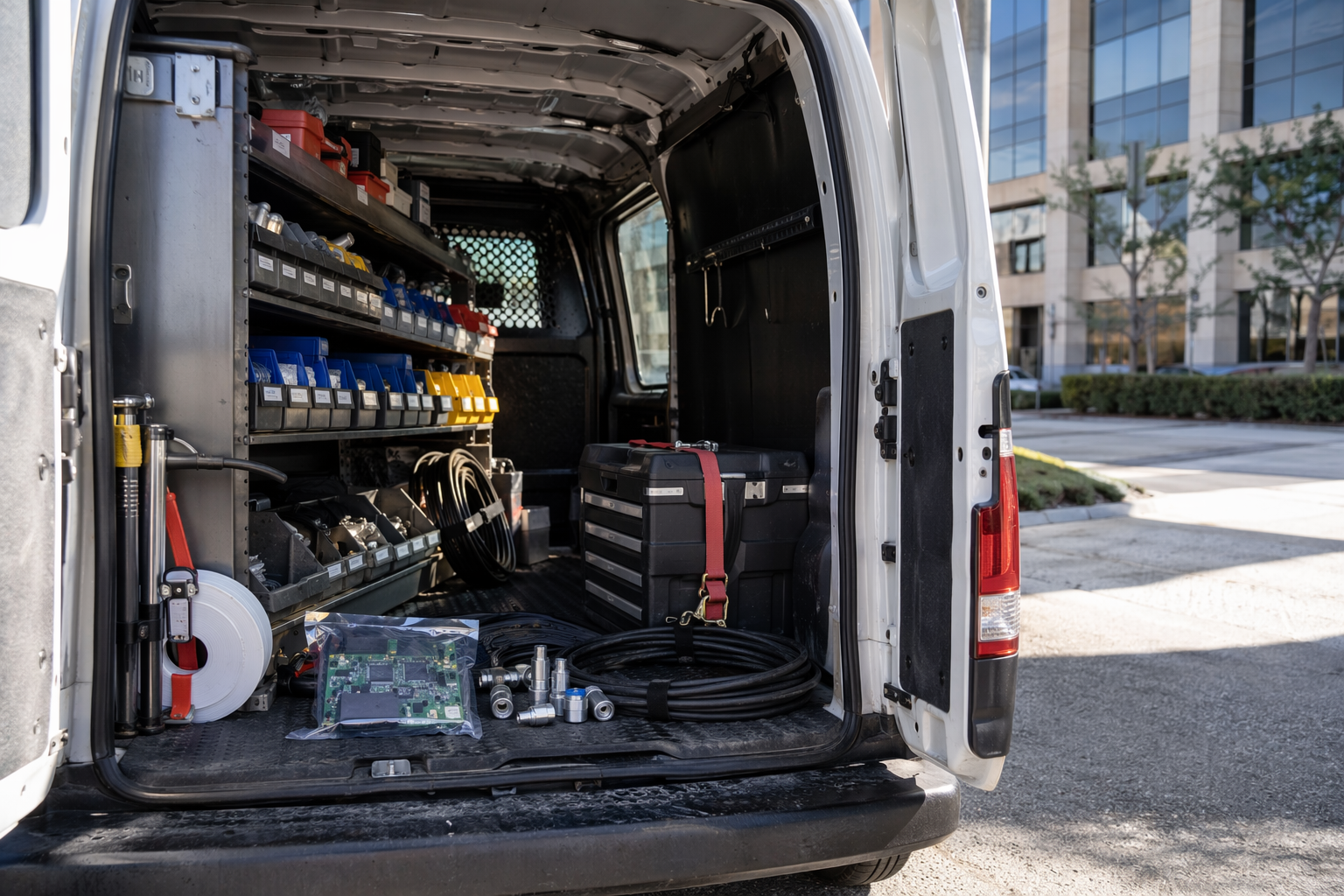
An emergency elevator repair is any failure that traps passengers, creates an imminent safety hazard, or takes a required accessible route out of service — requiring immediate, same-day response under ASME A17.1 and Texas state code.
Not every elevator malfunction is an emergency, but several scenarios demand immediate action. Passenger entrapment is the most urgent: any time a person is physically trapped inside an elevator car, emergency protocols must activate immediately. Door failures that prevent safe egress, brake malfunctions, uncontrolled movement, and sudden loss of power mid-travel all qualify as life-safety emergencies under the ASME A17.1/CSA B44 Safety Code for Elevators and Escalators.
Beyond entrapment, a non-functional elevator in a building subject to ADA accessibility requirements can trigger compliance violations within hours if the unit serves as the sole accessible route. Houston property managers should treat any ADA-route elevator outage as a legal emergency, not just a maintenance issue.
How Quickly Can an Emergency Elevator Technician Reach My Houston Property?
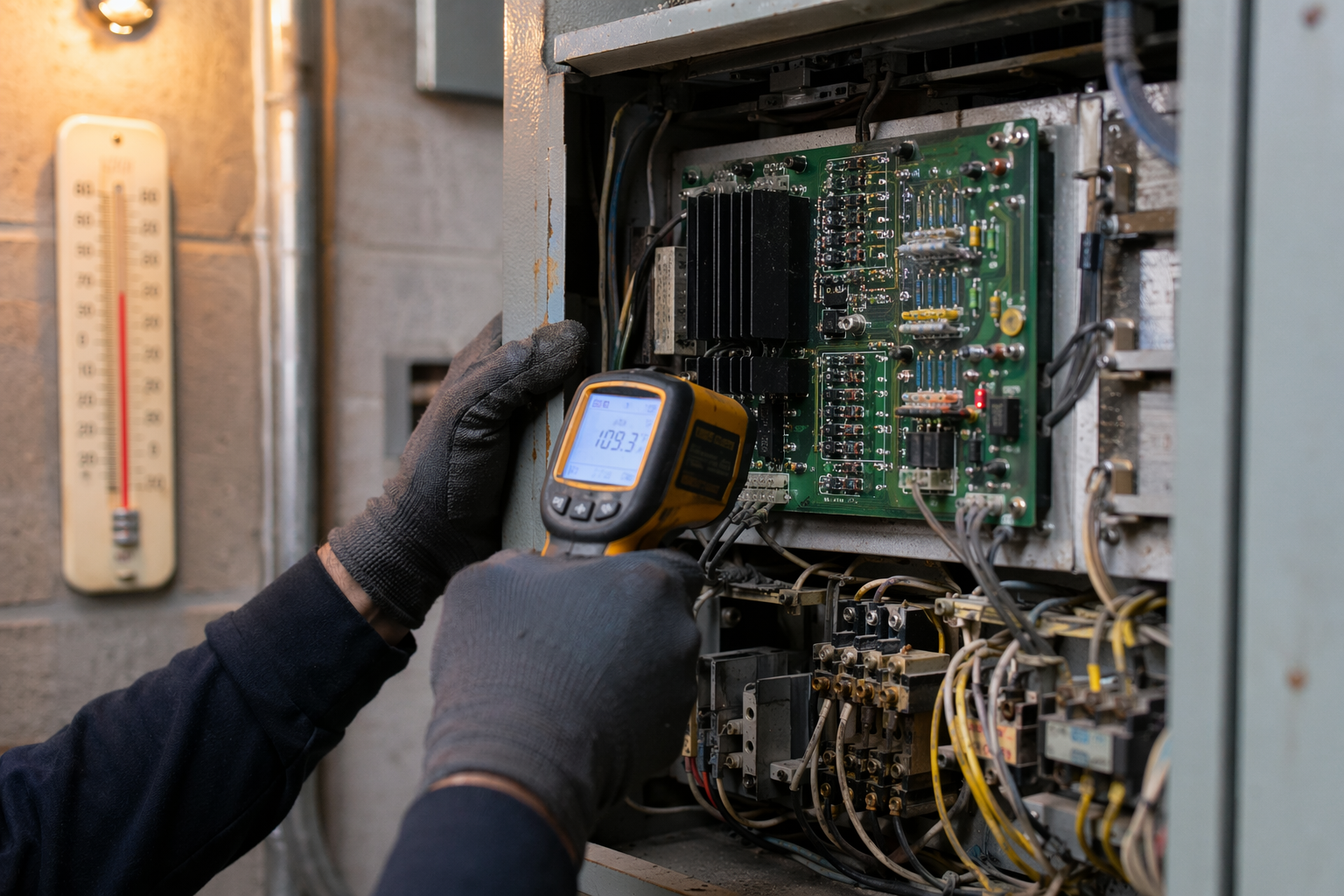
A qualified 24/7 emergency elevator contractor in Houston should arrive on-site within 2–4 hours of your call, with most metropolitan-area responses achieved in under 90 minutes during standard business hours.
Response time depends heavily on which service provider you use and whether you have an active maintenance contract. Building owners with a full-service maintenance agreement typically receive priority dispatch — meaning technicians are already familiar with the equipment on file and can arrive faster with the right parts. AmeriTex Elevator dispatches certified technicians across the greater Houston area 24 hours a day, 7 days a week, 365 days a year, including holidays.
Houston’s geography matters too. Properties in the Texas Medical Center, Downtown, Midtown, or the Energy Corridor are serviced from different staging areas. When vetting a provider, always ask for their guaranteed response window in writing before an emergency happens.
What Are the Most Common Causes of Emergency Elevator Failures in Houston?
The five most common causes of emergency elevator failures in Houston are door system malfunctions, hydraulic fluid leaks, electrical control board failures, worn hoist ropes or sheaves, and heat-related component stress from Houston’s extreme subtropical climate.
Houston’s climate — with summer temperatures consistently exceeding 95°F and sustained high humidity — accelerates wear on mechanical and electrical components in ways that technicians in cooler climates rarely encounter. Machine rooms in older Houston buildings can reach internal temperatures above 110°F during peak summer months, placing thermal stress on control boards and hydraulic power units that shortens their service life significantly. The National Weather Service Houston/Galveston office documents the region’s heat index patterns, which directly correlate with summertime spikes in elevator service calls across the metro area.
Door system failures are the single most frequent trigger of emergency calls regardless of season. Worn door rollers, misaligned tracks, failing door operator motors, and faulty door safety edges can all cause a car to go out of service suddenly. Because ASME A17.1 prohibits elevator movement with an open or improperly latched door, a door fault immediately immobilizes the unit and — if a passenger is aboard — constitutes an entrapment scenario.
How Much Does Emergency Elevator Repair Cost in Houston in 2026?
Emergency elevator repair costs in Houston in 2026 typically range from $500 for minor electrical resets or door adjustments to $5,000 or more for major component replacements such as hydraulic pumps, control boards, or hoist motors — with after-hours emergency service premiums adding 25–50% over standard labor rates.
Several variables drive the final invoice:
- Fault type and severity: A tripped circuit breaker reset costs far less than a failed hydraulic power unit or a burned motor controller.
- Parts availability: Proprietary components for older or discontinued elevator models may require expedited shipping, adding both parts cost and delay. Buildings with legacy systems installed before 2000 face the highest parts-sourcing risk.
- Time of call: Emergency dispatches between 10 p.m. and 6 a.m., on weekends, or on holidays typically carry overtime or emergency premiums. Always confirm the after-hours billing structure with your contractor before signing any service agreement.
- Maintenance contract status: Buildings enrolled in a full-service preventive maintenance contract with AmeriTex Elevator generally receive discounted emergency labor rates and parts priority — reducing both cost and downtime compared to one-time service calls.
- Entrapment vs. non-entrapment: Calls involving trapped passengers are prioritized and may require simultaneous dispatch of a second technician, affecting total labor cost.
Property managers should request an itemized written estimate before authorizing any repair work beyond the initial diagnostic. Reputable contractors will provide a clear scope of work and cost range once the fault is identified on-site.
What Texas Compliance and Inspection Requirements Apply After an Emergency Elevator Repair?
In Texas, any repair that affects elevator safety systems, load-bearing components, or control logic may require a post-repair inspection and updated certificate of compliance from the Texas Department of Insurance (TDI) Elevator Safety Program before the unit returns to public service.
The Texas Department of Insurance Elevator Safety Program is the state authority responsible for licensing elevator contractors, registering elevators, and enforcing compliance with ASME A17.1 across all Texas jurisdictions — including the City of Houston and Harris County. Key compliance points building owners must understand include:
- Contractor licensing: Only TDI-licensed elevator contractors may perform code-regulated elevator repair work in Texas. Always verify your contractor’s current TDI license before authorizing emergency repairs.
- Post-repair inspection triggers: Repairs involving safety circuits, overspeed governors, buffers, brakes, or hydraulic system components typically require a TDI inspection before the elevator may be returned to passenger service. Your licensed contractor should advise you on whether the specific repair triggers this requirement.
- Certificate of operation currency: Texas law requires a current certificate of operation to be posted in or adjacent to each elevator. An elevator that has been out of service for a safety-related failure should have its certificate status confirmed with TDI before reopening to building occupants.
- Incident reporting: Entrapments and injuries must be reported to TDI. Building owners who rely on their contractor to handle this reporting should confirm the report was filed — failure to report is a separate compliance violation.
Houston property managers operating multiple elevator units should maintain a compliance log for each unit, documenting the date and nature of every emergency repair and whether a TDI inspection was required and completed. AmeriTex Elevator provides post-repair compliance documentation as a standard deliverable on every service call.
How Do I Choose the Right Emergency Elevator Repair Contractor in Houston?
The right emergency elevator repair contractor in Houston holds a current TDI license, maintains 24/7 dispatch capability, employs NAEC-certified or union-trained technicians, carries adequate liability insurance, and can provide verifiable local references from commercial properties comparable to yours.
Use the following checklist when comparing vendors — especially before an emergency occurs, when you have time to evaluate options carefully:
- TDI license verification: Confirm the contractor’s license is active and in good standing through the TDI public license lookup. Working with an unlicensed contractor exposes your property to liability and may void your insurance coverage.
- Certified technician credentials: Ask whether field technicians hold National Association of Elevator Contractors (NAEC) Certified Elevator Technician (CET) credentials or equivalent union training through IUEC Local 31 (Houston).
- Guaranteed response time in writing: Any contractor unwilling to commit to a written response window for emergency calls should be disqualified. Verbal assurances are not enforceable when a passenger is trapped.
- Parts inventory and sourcing: Ask what major components the contractor stocks locally and how they source parts for legacy systems. Contractors without local parts inventory will consistently underperform on first-trip resolution rates.
- Insurance coverage: Request proof of general liability and workers’ compensation insurance. Minimum acceptable general liability coverage for Houston commercial elevator work is typically $1,000,000 per occurrence — confirm your building’s requirements with your property insurer.
- Maintenance contract terms: A contractor offering emergency-only service without a maintenance relationship may deprioritize your call during peak demand. Full-service maintenance contracts with AmeriTex Elevator include priority emergency dispatch, documented equipment histories, and compliance tracking for every registered unit.
AmeriTex Elevator serves the greater Houston metro area including the Texas Medical Center, Downtown Houston, Midtown, the Energy Corridor, Sugar Land, Katy, The Woodlands, and Pearland. Contact our 24/7 dispatch line to discuss emergency response coverage for your property or to schedule a no-obligation maintenance assessment.
Need elevator service you can rely on? AmeriTex Elevator is ready to help.