Quick Answer: To compare elevator service companies before signing a contract, building owners should evaluate licensing and code compliance, contract terms and transparency, maintenance scope, emergency response protocols, technician qualifications, equipment compatibility, and client references — prioritizing providers who align with local regulations and offer clearly written, full-coverage agreements.

Choosing the wrong elevator service company can expose a building to safety violations, unexpected downtime, and costly contract disputes. This guide walks building owners and facility managers through every factor that should drive a vendor comparison — from compliance credentials to contract language — so the decision is based on substance rather than price alone.
What Credentials Should an Elevator Service Company Hold?
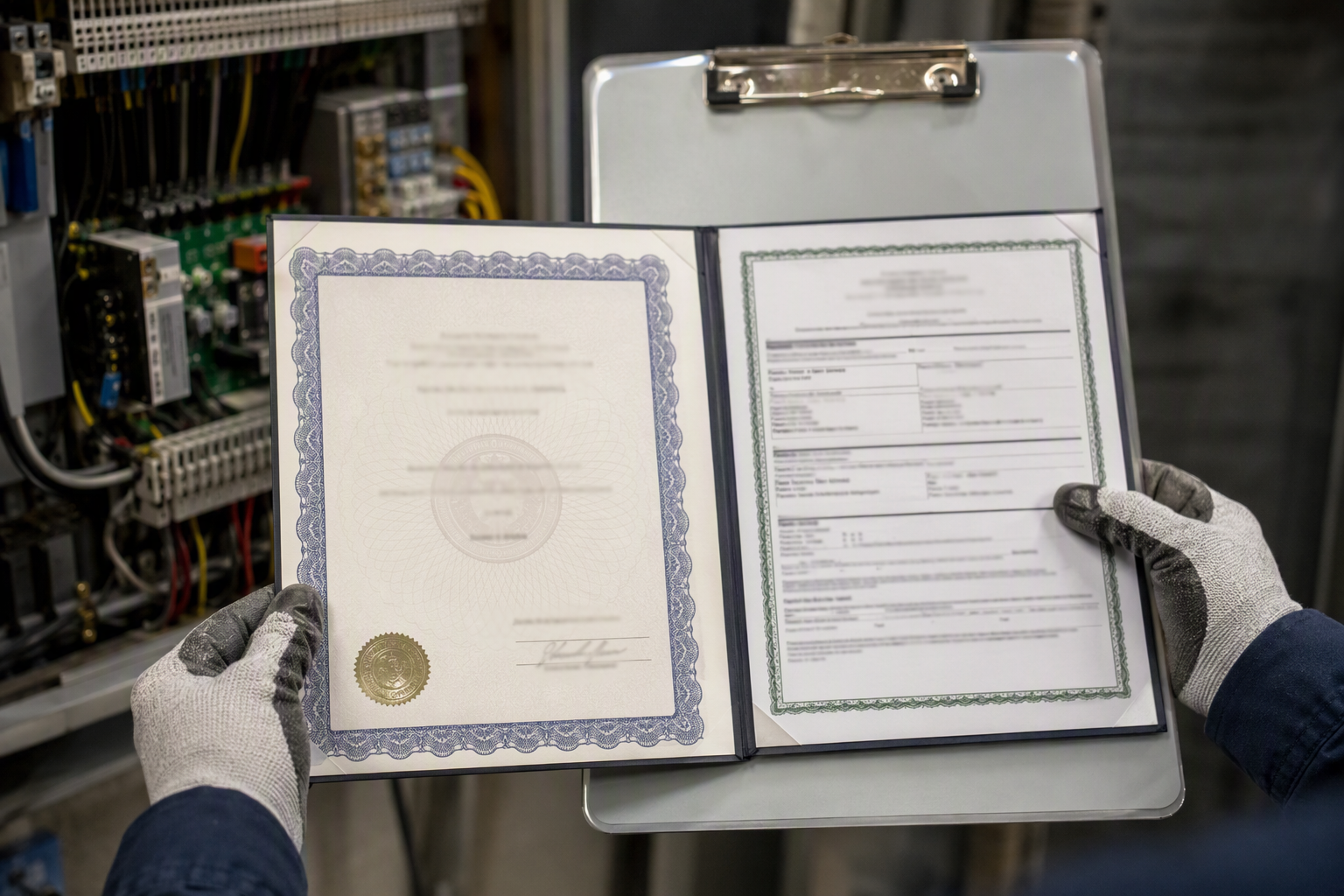
Credentials are the baseline filter. Before any other comparison begins, a service company must demonstrate that it operates within the legal and safety framework governing elevator work.
Key credentials to verify include:
- State contractor licensing: Most states require elevator contractors to hold a dedicated elevator contractor license separate from a general contractor license. Request the license number and verify it through the state’s licensing board.
- Technician certifications: Ask whether field technicians hold industry-recognized certifications. While this guide does not endorse any individual’s credentials, ask vendors to describe their technician qualification requirements in writing.
- Insurance coverage: Vendors should carry general liability insurance and workers’ compensation. Request certificates of insurance naming your building as an additional insured.
- Code familiarity: Companies should demonstrate active knowledge of ASME A17.1 Safety Code for Elevators and Escalators, which sets the national standard for elevator design, installation, and maintenance in the United States. Ask how the company stays current with code editions and amendments.
- ADA compliance awareness: For passenger elevators in public accommodations and commercial facilities, service providers should understand ADA accessibility requirements as they apply to cab dimensions, controls, and signage.
- OSHA compliance: Technicians working in elevator pits and machine rooms are subject to OSHA standards for confined spaces and electrical work. Ask vendors how they document and enforce safety protocols for their field teams.
Any vendor unwilling to provide documentation for the above items should be removed from consideration immediately.
What Should Be in an Elevator Maintenance Contract?

The contract is where promises become enforceable — or don’t. Elevator maintenance contracts vary dramatically in scope, and what is excluded often matters more than what is included.
Comparison Table: Common Contract Types
| Contract Type | What It Typically Covers | What It Often Excludes | Best For |
|---|---|---|---|
| Oil & Grease (Lubrication Only) | Routine lubrication and basic adjustment | Parts, labor for repairs, callbacks | Very new equipment under manufacturer warranty |
| Examination Contract | Periodic inspection, minor adjustments | Most parts and repair labor | Budget-conscious owners with low-traffic buildings |
| Parts & Labor (Full Maintenance) | Inspections, callbacks, most parts, labor | Major component replacements (varies by vendor) | Mid-age equipment in moderate-traffic buildings |
| Comprehensive (Full Coverage) | All of the above plus major components | Vandalism, code-mandated upgrades | Older equipment or high-traffic commercial properties |
Red flags to watch for in any contract:
- Vague language such as “normal wear and tear excluded” without defining wear and tear
- Auto-renewal clauses with short cancellation windows
- Price escalation terms that are not capped or tied to a published index
- Proprietary parts language that locks you into using only that vendor’s components at undisclosed markups
- No written documentation of what constitutes a callback versus a billable service visit
How Do Response Times and Emergency Protocols Differ Between Vendors?
An elevator entrapment is a time-sensitive situation. The quality of a vendor’s emergency response protocol is a legitimate differentiator — but building owners should evaluate this based on what vendors can document, not on verbal claims alone.
Questions to ask every vendor in writing:
- What is the documented process when a passenger is entrapped?
- Is emergency dispatch available outside of business hours, and how is it staffed?
- How does the vendor communicate status updates to building management during an emergency?
- Are callback response expectations written into the contract with defined consequences for non-performance?
If a vendor cannot answer these questions with a written policy, that gap represents real operational and liability risk for the building owner.
What Questions Should You Ask About Technician Qualifications?
The quality of service depends heavily on who performs the work. Building owners are entitled to ask detailed questions about the technicians who will service their equipment.
- Are technicians employees of the company or subcontractors?
- What ongoing training do technicians receive, and how is it documented?
- Will the same technician(s) be assigned to the building on a consistent basis?
- How does the company handle technician turnover — is institutional knowledge about a specific unit retained?
- Are technicians background-checked before working in your building?
Consistent technician assignment is particularly valuable because familiarity with a specific unit — its quirks, service history, and wear patterns — directly improves diagnostic accuracy and reduces repeat service calls.
How Does Equipment Compatibility Affect Your Choice of Service Provider?
Not every elevator service company is equally capable of servicing every brand and type of elevator. This is especially relevant for buildings with older or proprietary systems.
Comparison Table: OEM vs. Independent Service Providers
| Factor | OEM (Manufacturer) Service | Independent Service Provider (e.g., AmeriTex Elevator) |
|---|---|---|
| Parts Access | Direct access to OEM parts; may limit access to third parties | Access to OEM-equivalent and aftermarket parts; broader sourcing flexibility |
| Pricing Transparency | Parts markups often opaque; bundled into contract | Can provide itemized parts and labor billing |
| Multi-Brand Capability | Focused on own equipment; limited on competitor brands | Typically services multiple brands across a portfolio |
| Contract Flexibility | Standard terms; limited negotiation | More flexibility to negotiate scope and terms |
| Local Presence | Varies; national companies may dispatch from distant locations | Independent providers typically serve defined local markets |
| Code Compliance Support | Generally strong for own equipment | Strong when company demonstrates active code familiarity |
AmeriTex Elevator is an independent elevator service provider, meaning it can service equipment from a range of manufacturers and is not commercially incentivized to push proprietary parts or lock customers into inflexible agreements.
What Compliance Obligations Should the Service Company Help You Meet?
Elevator compliance is an ongoing obligation, not a one-time event. A qualified service company should actively help building owners stay ahead of inspection schedules and code requirements — not simply react to failures.
Core compliance areas include:
- Annual and periodic inspections: Most jurisdictions require annual third-party inspections. The ASME A17.1 Safety Code for Elevators and Escalators (2022 edition and ongoing) sets inspection frequency and testing requirements. Ask vendors how they coordinate with inspectors and whether they accompany inspectors during visits.
- Periodic tests: Hydraulic systems, safeties, and other components require periodic load and operational testing per ASME A17.1. Confirm these are included in the contract scope.
- ADA-related maintenance: Cab lighting levels, door operation timing, and button tactile requirements under ADA accessibility standards must be maintained — not just installed correctly at the outset.
- Violation correction: When an inspection yields a violation notice, the service company should provide a written corrective action plan with a timeline, not just an invoice.
- Record-keeping: Maintenance logs are required by most jurisdictions and should be kept current and accessible. Ask whether the vendor provides digital log access.
How Should You Evaluate a Vendor’s References and Track Record?
A vendor’s past performance is a reliable predictor of future service quality. Building owners should conduct structured reference checks rather than simply accepting a list of client names.
- Request three to five references from buildings with similar elevator type, age, and usage levels to yours.
- Ask each reference: “How does the vendor handle callbacks and unresolved issues?”
- Ask: “Has the vendor ever missed an inspection deadline or caused a code violation through delayed maintenance?”
- Ask: “How transparent is billing — are there surprise charges for items you expected to be covered?”
- Check the vendor’s history with the state licensing board for disciplinary actions or complaints.
- Search local court records for contract dispute litigation as a due-diligence step.
What Are the Total Cost Considerations Beyond the Monthly Contract Fee?
The monthly maintenance fee is rarely the total cost of an elevator service relationship. Building owners should calculate the full cost of ownership when comparing proposals.
Total Cost Comparison Framework
| Cost Category | Questions to Ask | Risk If Not Clarified |
|---|---|---|
| Monthly maintenance fee | What exactly is included? Is it fixed or variable? | Scope creep; unexpected exclusions |
| Parts markups | Are parts billed at cost, or is there a markup percentage? | Parts costs can exceed labor costs on older equipment |
| Callback labor billing | Is emergency or after-hours labor included or billed separately? | Significant unbudgeted costs in high-traffic buildings |
| Inspection coordination fees | Does the vendor charge separately to accompany the inspector? | Added cost that should be standard in a full-service agreement |
| Contract exit penalties | What are the early termination fees? | Financial lock-in even when service quality is poor |
| Modernization upsells | Is the vendor required to disclose conflicts of interest when recommending upgrades? | Unnecessary capital expenditure driven by vendor incentives |
How Do You Compare Elevator Service Proposals Side by Side?
When multiple proposals are on the table, a structured side-by-side evaluation prevents the lowest price from dominating a decision that should be based on overall value and risk management.
Step-by-Step Proposal Evaluation Process
- Standardize the scope: Before comparing prices, confirm each vendor has bid on identical scope — same visit frequency, same parts coverage level, same callback terms. Apples-to-apples comparison is impossible otherwise.
- Highlight all exclusions: Create a single list of everything excluded by each vendor. Exclusions with high replacement cost (e.g., controllers, motors, hydraulic cylinders) represent real financial exposure.
- Score compliance support: Rate each vendor on how clearly they document inspection coordination, violation response, and code update protocols.
- Evaluate contract flexibility: Assess notice periods, auto-renewal terms, price escalation clauses, and exit provisions side by side.
- Assess communication quality: The speed and clarity of responses during the sales process is often predictive of service quality. Document how quickly each vendor responds to written questions.
- Check financial stability: A vendor that closes or is acquired mid-contract creates significant operational disruption. Research company longevity and ownership structure.
- Request a sample service report: Ask each vendor for a redacted sample of a completed maintenance visit report. This reveals how thoroughly technicians document their work.
- Verify insurance before signing: Obtain and verify certificates of insurance from the finalist vendor before executing any agreement.
What Are the Pros and Cons of Switching Elevator Service Providers?
Pros and Cons Table
| Switching: Pros | Switching: Cons & Considerations |
|---|---|
| Better contract terms and pricing transparency | Early termination fees may apply on existing contract |
| Improved service responsiveness | New technicians require a learning curve on existing equipment |
| Access to broader parts sourcing | Equipment records may not transfer smoothly between vendors |
| More comprehensive maintenance scope | Transition period may create a brief window of reduced familiarity |
| Better code compliance support | Requires time investment to vet and onboard a new vendor properly |
When switching, request a complete copy of all maintenance records, inspection reports, and violation histories from the outgoing vendor before the transition. These records are the property of the building owner, not the service company.
Why Is Local Service Presence Important When Choosing an Elevator Company?
National elevator companies operate across broad geographies, which can create meaningful delays when a local dispatch is unavailable. A service provider with a genuine local presence — technicians based in the market, not traveling from a regional hub — is better positioned to respond when equipment is down.
When assessing local presence, ask:
- Where are the technicians physically based who would service this building?
- Does the company have a local office or dispatch center in the market?
- How are service calls routed — directly to a local technician or through a national call center?
AmeriTex Elevator operates as a locally focused independent elevator service company, serving building owners who value direct relationships and local accountability over the standardized, high-volume model of national service chains.
Summary: Key Evaluation Criteria at a Glance
| Evaluation Category | Minimum Acceptable Standard | Strong Indicator |
|---|---|---|
| Licensing | Valid state elevator contractor license on file | No disciplinary history; documentation provided proactively |
| Code Knowledge | Familiarity with ASME A17.1 and local code | Can explain code requirements in plain language without prompting |
| Contract Transparency | Clear scope of inclusions and exclusions | Willing to negotiate terms; no hidden auto-renewal traps |
| Emergency Protocol | Written policy for entrapment response | Policy is contractually enforceable, not just stated verbally |
| Technician Quality | Employees (not subcontractors); trained and background-checked | Consistent technician assignment; documented training program |
| References | Three verifiable client references in similar building type | References volunteered proactively; willing to provide contact details |
| Local Presence | Technicians based within the local market | Local office; direct dispatch; no national call-center routing |
| Record-Keeping | Maintenance logs maintained per jurisdiction requirements | Digital log access for building owner; records transfer policy in writing |
Ready to Make a Confident Decision?
AmeriTex Elevator is an independent, locally focused elevator service provider committed to transparent contracts, verifiable compliance support, and consistent technician service. Building owners across the region trust AmeriTex Elevator to protect their equipment, their tenants, and their investment.
Contact AmeriTex Elevator for a free elevator assessment today.
866-679-4313
Need elevator service you can rely on? AmeriTex Elevator is ready to help.