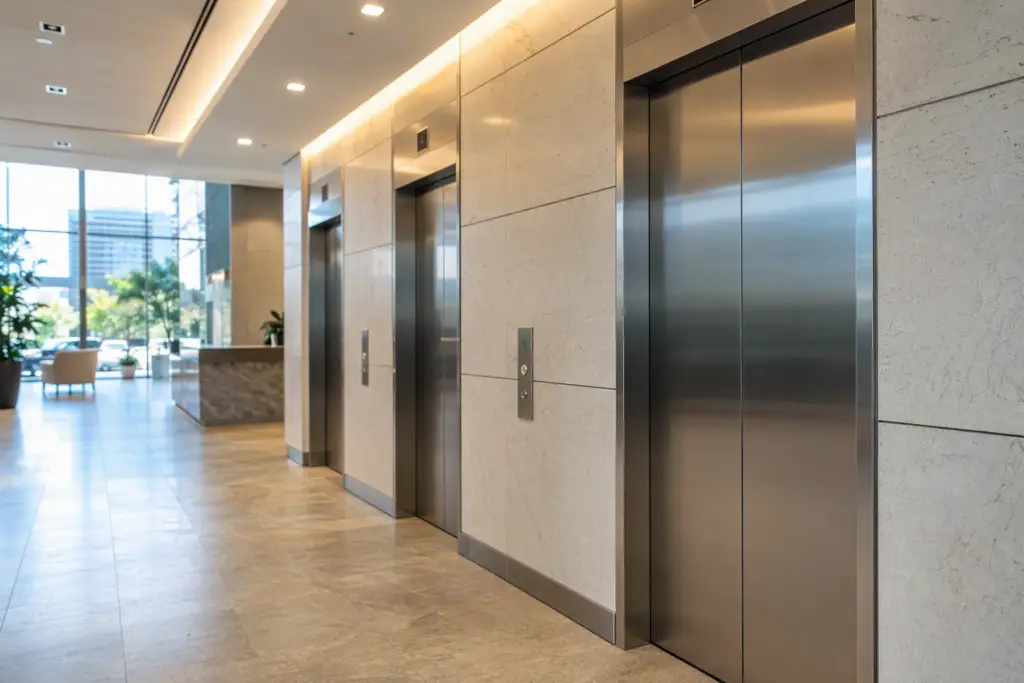

Choosing the right elevator maintenance contract is one of the most consequential facility management decisions a building owner or property manager can make. The wrong coverage level can expose a building to unexpected repair bills, compliance gaps, and extended downtime. This guide breaks down both contract types in detail so decision-makers can match coverage to their specific building profile, budget, and risk tolerance.
What Is a Full Elevator Maintenance Contract?
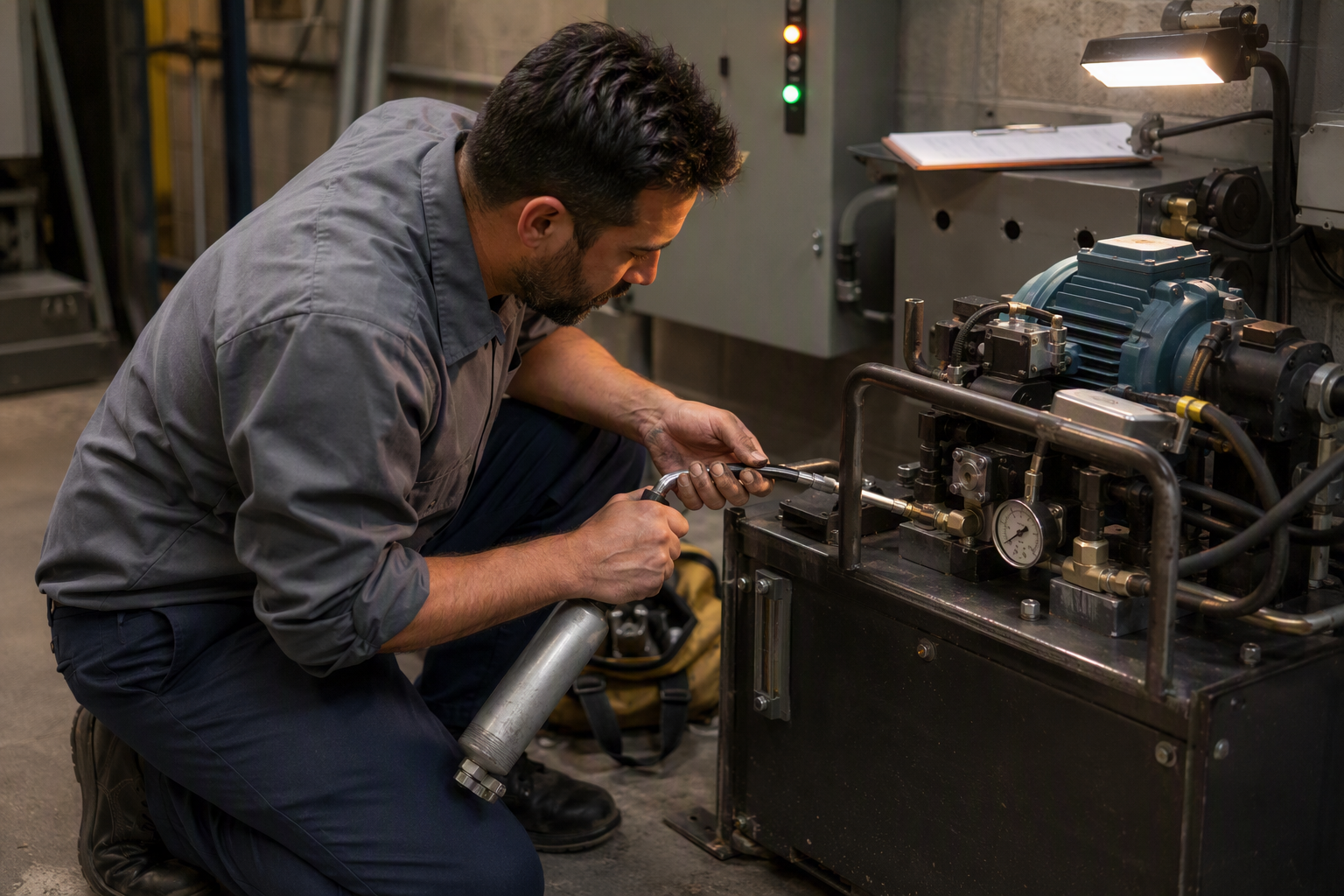
A full-maintenance contract — sometimes called a “comprehensive” or “all-inclusive” contract — covers routine lubrication, adjustments, inspections, and most parts and labor required to keep an elevator operating within code. When a component fails, the service provider repairs or replaces it at no additional charge beyond the monthly contract fee, subject to the exclusions defined in the agreement.
Full-maintenance contracts are common in commercial high-rises, hospitals, hotels, and multi-family residential properties where elevator uptime is mission-critical and budget predictability is valued. Buildings subject to frequent use or aging equipment also tend to benefit most from this coverage level.
Compliance is another driver. Elevators in the United States must conform to ASME A17.1 Safety Code for Elevators and Escalators, which establishes maintenance, inspection, and testing requirements. A full-maintenance provider typically structures its service visits around these requirements, reducing the burden on building staff to track inspection intervals independently.
What Is a Partial or Oil-and-Grease Elevator Maintenance Contract?
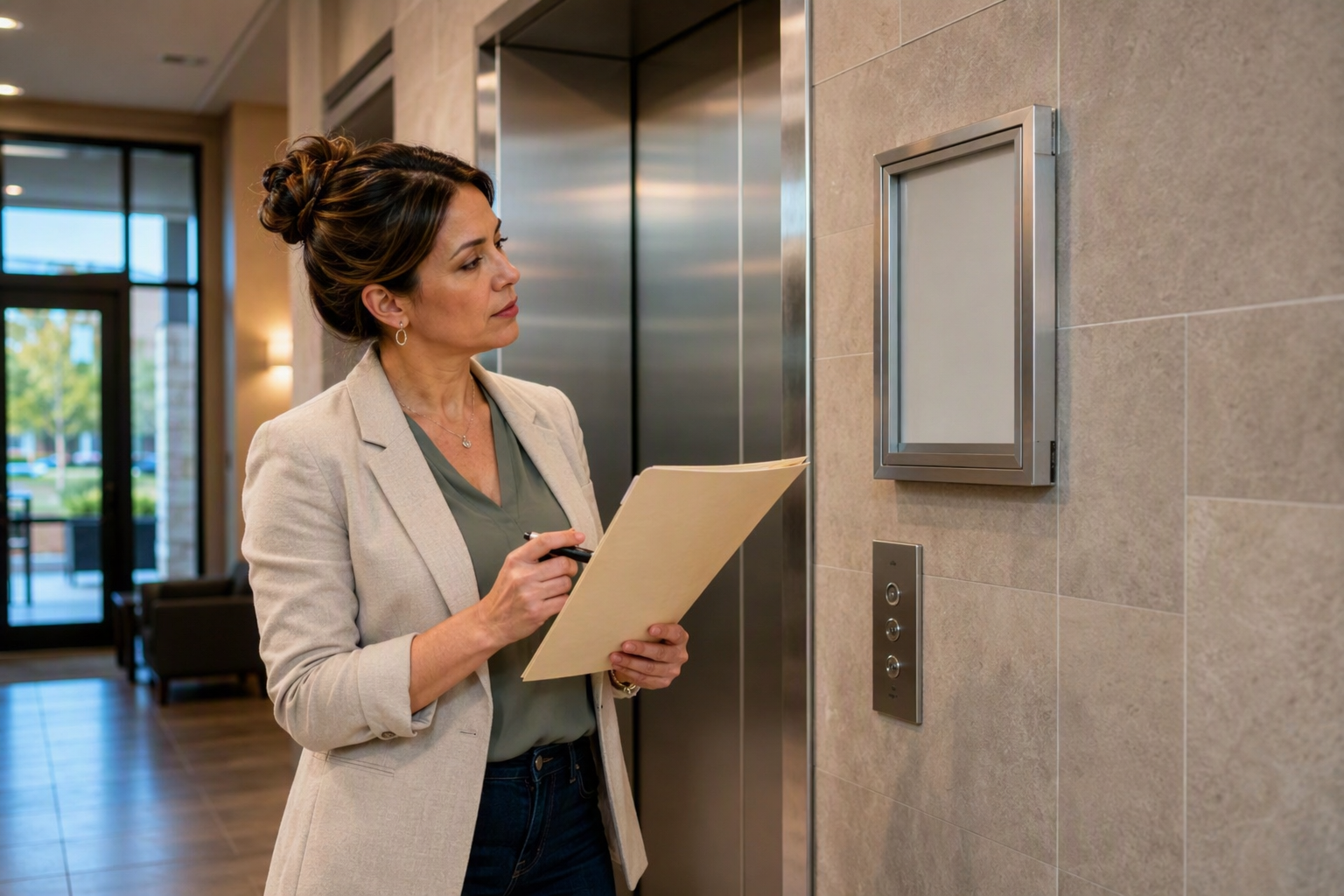
A partial maintenance contract — frequently called an “oil-and-grease” contract in the industry — covers only routine servicing: lubrication, minor adjustments, visual inspections, and cleaning. Parts, major adjustments, and repairs fall outside the scope and are billed separately at time-and-materials rates.
This contract type is sometimes chosen by owners of newer elevators still under manufacturer warranty, buildings with experienced in-house maintenance staff, or property managers operating under tight near-term budgets. It offers a lower monthly baseline cost but transfers financial risk for repairs back to the building owner.
Full vs. Partial Elevator Maintenance Contract: Side-by-Side Comparison
| Factor | Full Maintenance Contract | Partial / Oil-and-Grease Contract |
|---|---|---|
| Scope of Coverage | Lubrication, adjustments, inspections, most parts, and labor | Lubrication, minor adjustments, and visual inspections only |
| Monthly Cost Baseline | Higher fixed monthly fee | Lower fixed monthly fee |
| Repair Cost Predictability | High — repairs included (per contract terms) | Low — repair bills are unpredictable and separate |
| Parts Included | Yes, with defined exclusions (e.g., vandalism, cab interiors) | No — all parts billed at time-and-materials rates |
| Best For | Aging equipment, high-traffic buildings, budget-sensitive operations | Newer equipment, low-traffic buildings, buildings with warranty coverage |
| Compliance Support | Comprehensive — provider tracks inspection and testing schedules | Limited — building owner must coordinate additional compliance steps |
| Downtime Risk | Lower — faster repair authorization with no cost negotiation needed | Higher — repair approvals and billing disputes can extend outages |
| Contract Term Flexibility | Often multi-year agreements with renewal clauses | Typically shorter terms; more vendor flexibility |
| Provider Incentive | Provider is incentivized to prevent failures (repairs come out of their margin) | Provider earns more when repairs are needed — potential conflict of interest |
Pros and Cons at a Glance
| Contract Type | Pros | Cons |
|---|---|---|
| Full Maintenance |
|
|
| Partial / Oil-and-Grease |
|
|
What Does an Elevator Maintenance Contract Legally Require?
Regardless of contract type, all elevators operating in the United States must comply with applicable editions of the ASME A17.1 Safety Code for Elevators and Escalators, which governs maintenance intervals, inspection requirements, and testing protocols. States and municipalities adopt specific editions of this code, so requirements can vary by jurisdiction.
Buildings open to the public must also ensure elevators meet accessibility standards under the Americans with Disabilities Act (ADA). While the ADA does not mandate a specific contract type, it does require that accessible elevator features remain operational.
Additionally, workplace safety standards established by OSHA apply to elevator maintenance personnel and the conditions under which maintenance work is performed. Building owners have an obligation to ensure their chosen service provider operates safely and compliantly.
Neither a full nor partial contract automatically guarantees compliance — the specific terms of the agreement and the provider’s execution determine whether code obligations are met. Decision-makers should review contract language carefully and confirm that required periodic tests and inspections are explicitly included.
How Does Equipment Age Affect Which Contract Is Right?
Equipment age is one of the most reliable indicators of appropriate contract type. Newer elevators — particularly those still covered by a manufacturer’s warranty — typically have lower failure rates and may not require the comprehensive parts-and-labor protection that a full-maintenance contract provides. In these cases, a partial contract can be a reasonable fit, provided the building owner understands the warranty terms and what gaps the partial contract leaves.
As equipment ages, mechanical components wear, control systems become obsolete, and the frequency of needed adjustments and part replacements increases. For older equipment, the probability of incurring repair costs outside a partial contract rises significantly. A full-maintenance contract becomes increasingly cost-effective as equipment ages because it converts unpredictable repair exposure into a fixed operating expense.
Buildings considering modernization should also factor in the timing. A partial contract may serve as a bridge before a planned modernization project, after which a full-maintenance contract on the new equipment becomes the long-term strategy.
What Exclusions Should Buyers Watch for in Full Maintenance Contracts?
Not all full-maintenance contracts are created equal. Common exclusions that appear in even comprehensive agreements include:
- Vandalism and abuse damage — damage caused by misuse, graffiti, or forced entry is typically excluded
- Cab interior finishes — flooring, wall panels, lighting fixtures, and ceiling tiles are often treated as cosmetic and excluded
- Firefighters’ service and building interface systems — electrical modifications required by code changes may not be covered
- Hydraulic fluid replacement — some contracts limit the volume of oil covered per contract year
- Modernization components — upgrades required by new code editions may fall outside routine maintenance scope
- Acts of nature or power surges — damage from flooding, lightning, or electrical events from the building’s own systems
Buyers should request a written list of all exclusions before signing and compare exclusion lists across multiple providers to understand what “full maintenance” actually means in each specific contract.
How Do You Evaluate an Elevator Maintenance Vendor Beyond Price?
Price is only one dimension of vendor evaluation. Building owners and property managers should assess the following factors when comparing providers:
- Review contract exclusion language in detail — low monthly fees with broad exclusions may cost more over time than a higher-fee contract with narrow exclusions.
- Ask for documentation of how inspection and testing compliance is tracked — confirm the provider will supply copies of all required inspection reports.
- Confirm the provider’s familiarity with the local jurisdiction’s adopted code edition — states and cities adopt different editions of ASME A17.1, and a provider must know which edition applies.
- Request references from buildings with comparable equipment age and traffic volume — a provider well-suited for new construction may not be the best fit for aging hydraulic equipment.
- Review escalation and renewal clauses — understand how contract pricing can change at renewal and whether there are caps on annual increases.
- Ask about parts sourcing and availability — providers with established parts networks can resolve outages faster than those who rely solely on manufacturer lead times.
- Evaluate communication and reporting practices — consistent reporting keeps building owners informed and supports compliance documentation.
Is a Full Maintenance Contract More Cost-Effective Than a Partial Contract Over Time?
Cost-effectiveness depends on repair frequency and component failure patterns — factors that vary by equipment age, usage intensity, and maintenance history. For buildings with aging equipment or high daily call volumes, repair costs outside a partial contract can accumulate quickly and exceed the premium paid for a full-maintenance contract.
For buildings with newer equipment and lower traffic, the additional monthly premium of a full-maintenance contract may not be recovered in any given year. However, the value of budget predictability and reduced administrative overhead has real financial worth, even when repair costs are low — particularly for property managers overseeing multiple buildings simultaneously.
A side-by-side cost analysis comparing the partial contract fee plus estimated annual repair spend against a full-maintenance contract fee is the most reliable way to assess which option is more cost-effective for a specific building. AmeriTex Elevator can assist building owners in structuring this comparison as part of a free elevator assessment.
What Questions Should You Ask Before Signing Any Elevator Maintenance Contract?
Before committing to either contract type, building owners and managers should obtain clear written answers to the following questions:
- What specific parts and components are included and excluded?
- What is the process for authorizing and billing a repair that falls outside the contract scope?
- How are emergency calls handled, and is there an additional charge for after-hours service?
- Who is responsible for scheduling and documenting required periodic inspections and tests?
- What are the contract term length, renewal terms, and annual escalation provisions?
- How are disputes over whether a repair falls inside or outside contract scope resolved?
- What happens to the contract and its obligations if the service provider is acquired or changes ownership?
How Does Building Type Influence the Right Contract Choice?
The nature of a building and its occupants is a strong indicator of appropriate coverage level. Consider these common scenarios:
| Building Type | Typical Recommendation | Rationale |
|---|---|---|
| Hospital or Healthcare Facility | Full Maintenance | Elevator downtime can affect patient safety; compliance documentation is critical |
| Multi-Family Residential (50+ units) | Full Maintenance | High daily usage and ADA obligations make downtime and compliance gaps costly |
| Small Office Building (low traffic) | Partial or Full — depends on equipment age | Lower usage reduces wear; newer equipment with warranty may suit partial coverage |
| Hotel or Hospitality Property | Full Maintenance | Guest experience and brand reputation make elevator uptime essential |
| Warehouse or Light Industrial | Partial or Full — depends on freight elevator usage | Freight elevators under heavy load may benefit from full coverage; low-use facilities may not |
| New Construction (within warranty period) | Partial | Manufacturer warranty covers major components; partial contract provides routine servicing |
What Should You Do Immediately If Your Current Contract Is Not Meeting Your Needs?
- Review your existing contract in full — identify the contract term, renewal date, cancellation provisions, and any notice periods required to avoid automatic renewal.
- Document any service gaps or unresolved issues — maintain a written log of service calls, response times, and any disputes over repair scope to support your case for renegotiation or termination.
- Request a copy of all inspection and maintenance records — these records belong to the building owner and are necessary for compliance continuity if you change providers.
- Obtain a competitive assessment from an independent service provider — an independent assessment evaluates your equipment condition and identifies which coverage level is appropriate for the current state of your system.
- Compare contract proposals on identical terms — when requesting new quotes, specify the same equipment list, required inspection schedule, and scope of inclusion so proposals are directly comparable.
- Consult your local elevator inspection authority — confirm which tests and inspections are required in your jurisdiction and ensure any new contract explicitly addresses those obligations.
- Negotiate transition terms carefully — if switching providers, clarify which party is responsible for any outstanding inspections or tests that fall within the transition period.
Why Consider AmeriTex Elevator as Your Independent Service Provider?
AmeriTex Elevator is an independent elevator service company serving building owners and property managers with both full-maintenance and partial maintenance contract options. As an independent provider, AmeriTex Elevator is not tied to a single equipment manufacturer, which allows the team to service a wide range of elevator brands and systems and to source parts from multiple supply channels.
Independent providers like AmeriTex Elevator can offer building owners a more flexible and transparent contracting experience compared to manufacturer-affiliated service organizations, which may be incentivized to recommend proprietary parts or upgrades. AmeriTex Elevator structures its service agreements around the specific needs of each building, rather than a one-size-fits-all approach.
Whether a building needs a comprehensive full-maintenance contract for aging equipment or a focused partial contract for a recently installed system, AmeriTex Elevator can assess the equipment, explain the compliance requirements under the applicable edition of the ASME A17.1 Safety Code for Elevators and Escalators, and recommend the coverage level that aligns with the building’s operational profile and budget.
Summary: How to Make the Final Decision
The decision between a full-maintenance contract and a partial or oil-and-grease contract comes down to four core variables: equipment age, daily usage volume, tolerance for budget unpredictability, and the building’s compliance obligations. Buildings with older equipment, high traffic, strict compliance requirements, or limited in-house maintenance capacity are strong candidates for full-maintenance coverage. Buildings with newer equipment, lower traffic, or active manufacturer warranties can often be well-served by a partial contract — provided the owner understands and accepts the financial risk of uncovered repairs.
In either case, the quality of the service provider and the specificity of the contract language matter as much as the contract type. A poorly written full-maintenance contract with broad exclusions may provide less real protection than a carefully negotiated partial contract with a responsive, proactive provider.
Ready to Find the Right Coverage for Your Building?
Contact AmeriTex Elevator for a free elevator assessment. A knowledgeable representative will evaluate your equipment, review your compliance obligations, and recommend the contract type that fits your building — with no obligation.
Call AmeriTex Elevator today: 866-679-4313
Need elevator service you can rely on? AmeriTex Elevator is ready to help.