Elevator Inspection Requirements and Certificate Rules in California for Commercial Buildings: A Healthcare Guide
California elevator regulations are among the most rigorous in the United States, and healthcare facilities face an added layer of compliance complexity. Hospitals, surgical centers, assisted living communities, medical office buildings, and outpatient clinics all depend on vertical transportation that must meet not only state inspection mandates but also federal accessibility standards and life-safety codes. The following guide addresses the full compliance picture for healthcare property owners, facilities managers, and compliance officers operating in California markets — including Los Angeles and San Diego.
—
What Are the Core California Elevator Inspection Requirements for Commercial Buildings?
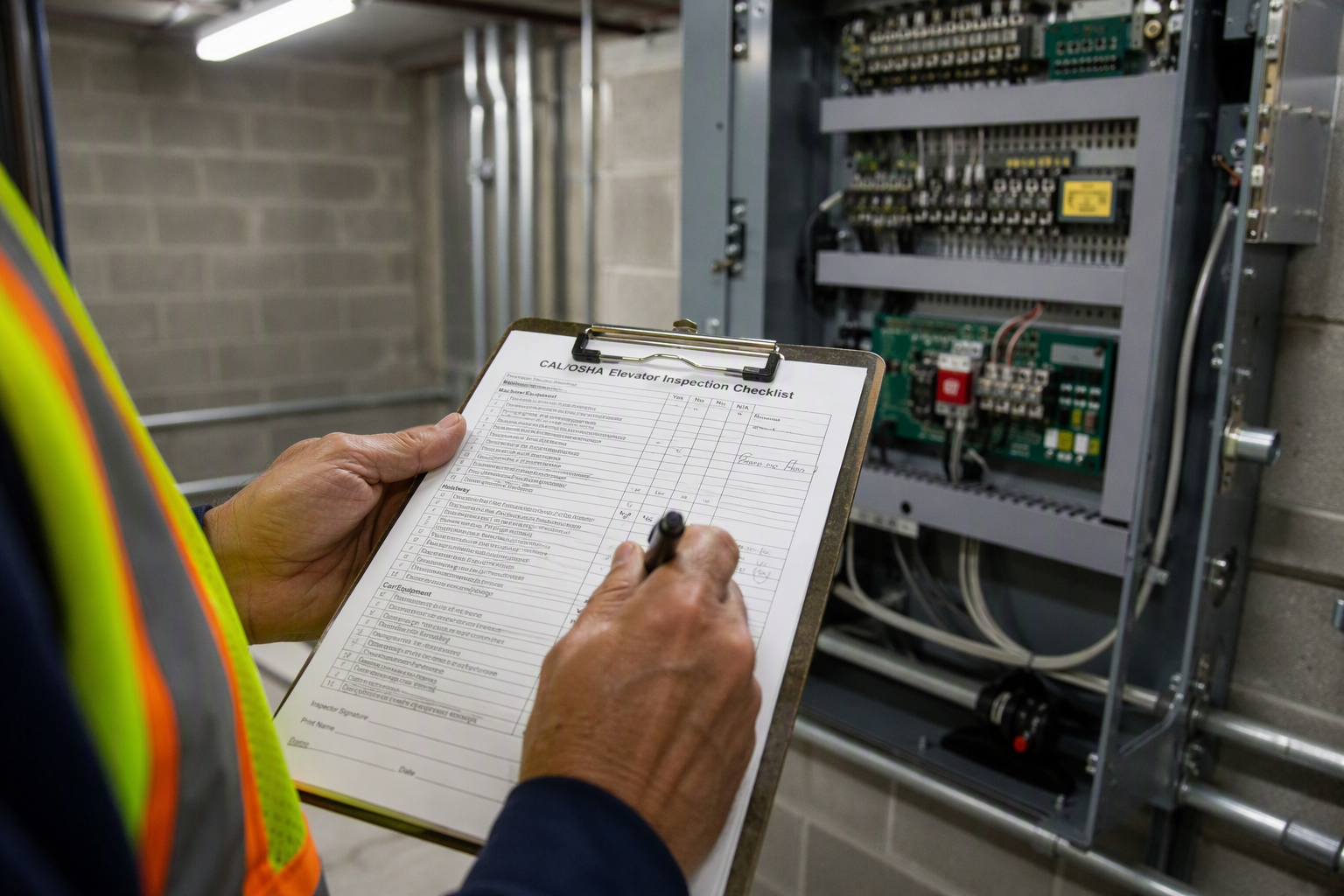
California’s elevator safety program is administered by the Division of Occupational Safety and Health (Cal/OSHA), specifically through its Elevator, Ride, and Tramway (ERT) Unit. Under California Labor Code Sections 7300–7324.2, every elevator in a commercial building must:
- Undergo a periodic inspection at least once every 12 months by a QEI-certified inspector.
- Pass all applicable tests and load evaluations required under the current edition of the ASME A17.1 Safety Code for Elevators and Escalators.
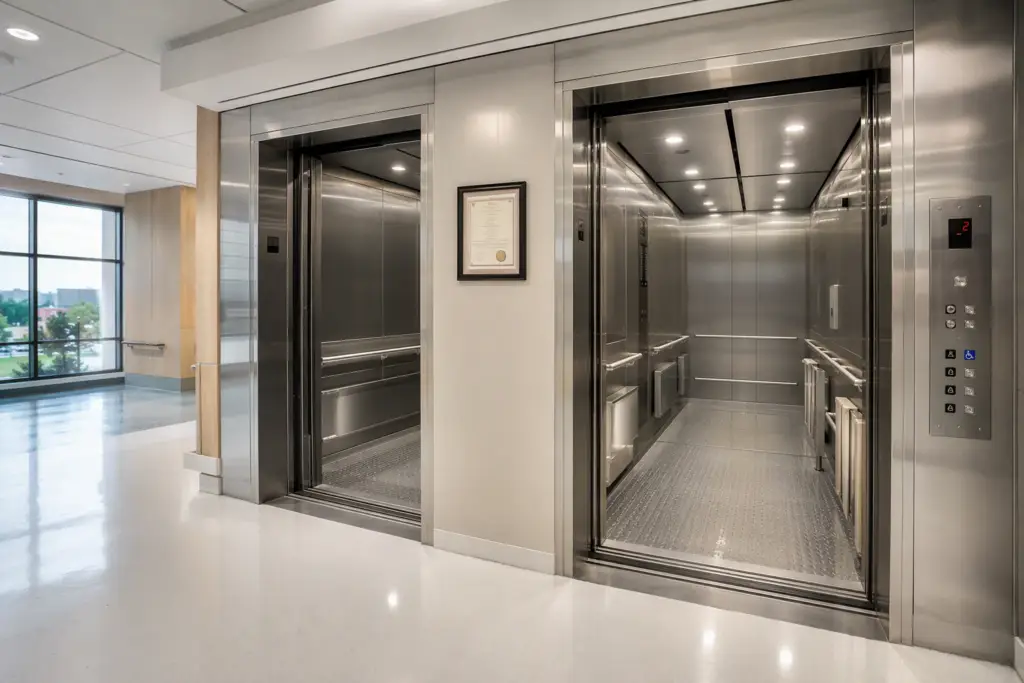
- Display a valid Certificate of Inspection inside the elevator cab, visible to passengers.
- Receive a new certificate after each successful inspection. An elevator operating without a current, posted certificate is out of compliance and subject to shutdown.
Healthcare facilities typically operate elevators around the clock, which places additional wear on mechanical and control systems. Facilities managers should plan inspection timelines well in advance to avoid lapses in certification that could trigger regulatory action.
—
What Is the ASME A17.1 Code and Why Does It Apply to California Healthcare Elevators?
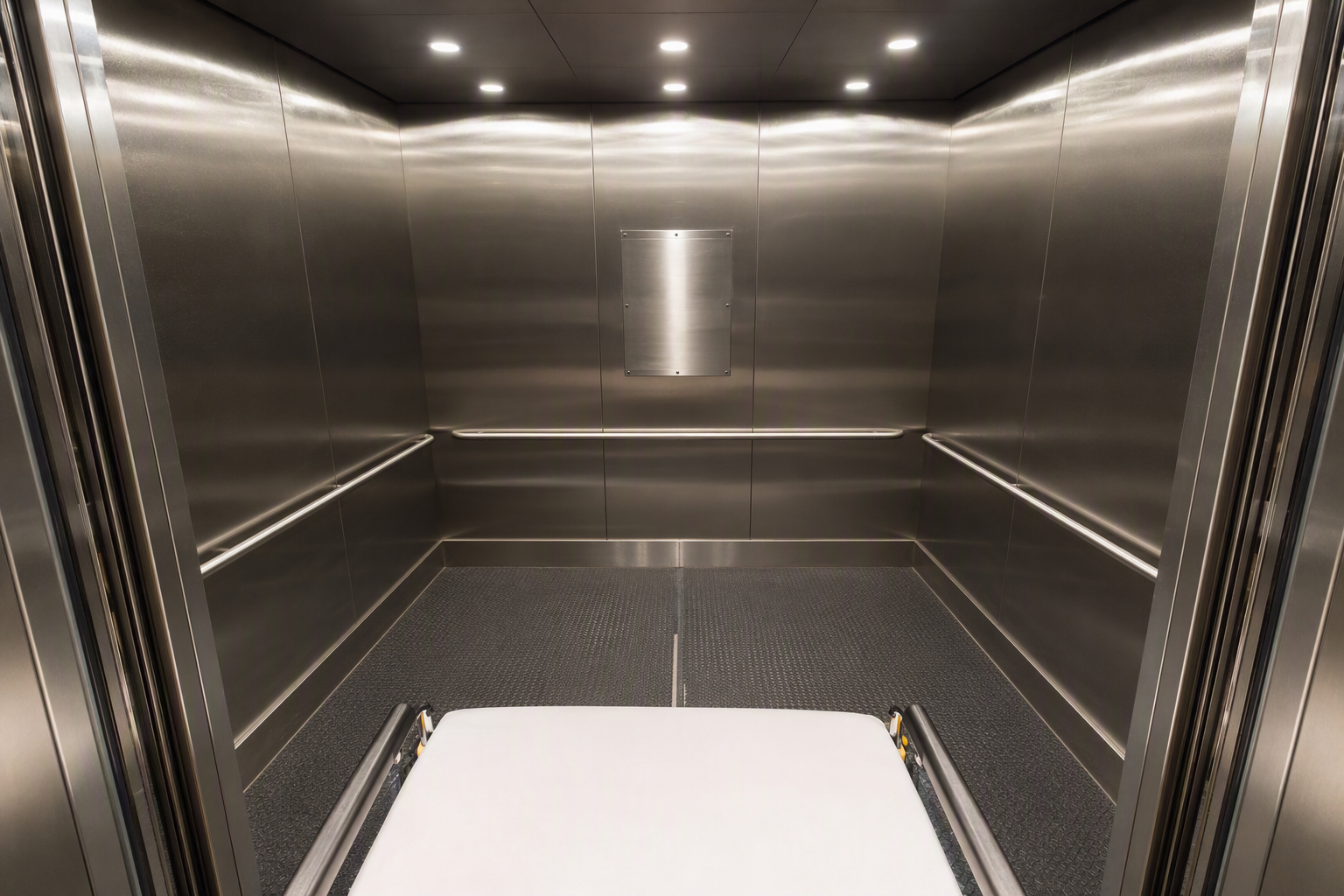
The ASME A17.1 Safety Code for Elevators and Escalators is the foundational technical standard adopted — and in some respects amended — by California for all conveyance equipment in commercial structures. For healthcare applications, the code is especially relevant in several areas:
- Load ratings and capacity markings: Hospital elevators frequently transport patients on gurneys, power wheelchairs, and heavy medical equipment. ASME A17.1 establishes minimum cab dimensions and rated load requirements that are critical for these use cases.
- Door operation and timing: The code sets requirements for door dwell time and reopening devices — important for patients with mobility challenges who need additional time to board or exit.
- Emergency operations: Healthcare facilities must ensure elevators comply with firefighters’ emergency operation (Phase I and Phase II) requirements so that clinical staff can evacuate patients safely during an emergency.
- Periodic and acceptance tests: The code specifies which tests must be performed at installation and at defined intervals, including full-load safety tests, governor rope tests, and buffer tests.
California also references the California Building Code (CBC) Title 24 for construction-related elevator requirements, which incorporates ASME A17.1 by reference with state-specific amendments.
—
What ADA Accessibility Requirements Apply to Elevators in California Healthcare Facilities?
Beyond state inspection rules, federal law under the Americans with Disabilities Act (ADA) requires that elevators in multi-story commercial facilities — including hospitals and medical buildings — be accessible to individuals with disabilities. Key ADA elevator requirements include:
- Minimum cab dimensions to accommodate wheelchair users.
- Raised and Braille floor designation markings on hoistway entrances and inside the cab.
- Audible and visual floor indicators to assist passengers with visual or hearing impairments.
- Two-way emergency communication inside each cab, usable without voice communication.
- Door reopening devices that respond to obstruction without requiring physical contact.
In California, the CBC’s accessibility provisions can be more stringent than federal ADA minimums. Healthcare facilities are advised to confirm that both federal and state accessibility standards are satisfied during every inspection cycle. AmeriTex Elevator evaluates ADA and CBC accessibility compliance as part of its elevator assessment process for healthcare clients in Los Angeles and San Diego.
—
Who Is Authorized to Inspect Elevators in California?
Only inspectors holding a Qualified Elevator Inspector (QEI) certification — issued through the National Association of Elevator Safety Authorities (NAESA) or an equivalent body recognized by Cal/OSHA — are authorized to conduct periodic and acceptance inspections. The inspector must also hold a current California state certification through the ERT Unit.
Property owners should verify that any inspection company they engage can document that its inspectors hold current QEI credentials in California. This documentation should be retained as part of the facility’s compliance records.
—
What Happens If a Healthcare Facility’s Elevator Fails Its Inspection?
When an elevator fails a California inspection, the inspector issues a Notice to Unsafe Equipment or an order to cease operation. For a healthcare facility, this creates immediate operational and patient-safety consequences. The standard process following a failed inspection is:
- Receive the written deficiency report from the inspector, which identifies all code violations and required corrective actions.
- Notify building management and clinical leadership so that patient transport, surgical schedules, and discharge workflows can be adjusted.
- Engage a licensed elevator contractor to address each deficiency item in the order specified by the inspector or by priority of patient safety risk.
- Document all repairs with parts records, technician logs, and timestamps for submission to the ERT Unit.
- Request a re-inspection through the Cal/OSHA ERT Unit or through a certified third-party inspector.
- Confirm the new Certificate of Inspection is posted inside the cab before returning the elevator to service.
Healthcare facilities should maintain a relationship with a qualified maintenance provider — such as AmeriTex Elevator — so that corrective repairs can be completed promptly and without extended service disruptions.
—
How Often Must Elevator Safety Tests Be Performed Beyond the Annual Inspection?
The ASME A17.1 Safety Code for Elevators and Escalators establishes a tiered schedule of tests that extends beyond the annual periodic inspection:
- Category 1 tests — no-load safety and governor tests — are required annually.
- Category 3 tests — with safeties, buffers, and governor rope applied — are required every three to five years depending on equipment type.
- Category 5 tests — full-load safety tests — are required every five years for traction elevators.
For healthcare facilities where elevators operate under heavy, continuous use, proactive maintenance between required tests is essential to prevent unexpected failures that could compromise patient safety.
—
What Are the Elevator Maintenance Requirements for California Healthcare Buildings in 2026?
California does not mandate a specific maintenance frequency by statute for most commercial elevators, but the ASME A17.1 Safety Code for Elevators and Escalators requires that all conveyance equipment be maintained in a safe operating condition. For healthcare facilities, this means:
- Maintaining a written maintenance control program (MCP) as required under ASME A17.1, which documents inspection intervals, lubrication schedules, and component replacement timelines.
- Retaining all maintenance records and making them available to the inspector at each periodic inspection.
- Ensuring that any maintenance contractor is properly licensed under California Business and Professions Code requirements for elevator work.
AmeriTex Elevator develops and manages maintenance control programs for healthcare clients across Los Angeles, San Diego, and Texas markets, helping facilities stay ahead of code requirements and reduce the risk of inspection failures.
—
What Are the Elevator Requirements Specific to Hospitals and Ambulatory Care Facilities in California?
Hospitals and licensed ambulatory surgical centers in California are also subject to the California Office of Statewide Health Planning and Development (OSHPD) — now known as the Division of State Architect – Office of Healthcare Facility Planning — which governs the design and construction of healthcare facilities. Elevator installations and major modifications in these settings require OSHPD/DSA plan review and construction approval in addition to standard Cal/OSHA certification. Key healthcare-specific requirements include:
- Minimum cab size for hospital-use elevators capable of accommodating a standard hospital bed or gurney with attendants.
- Seismic design requirements under California’s Title 24, which affect elevator guide rails, counterweights, buffers, and pit ladders in seismically active zones such as Los Angeles and San Diego.
- Standby power connectivity so that at least one elevator per bank remains operational during a power outage, supporting patient evacuation and emergency response.
- Infection control considerations during any modernization or major repair project, including the management of construction debris in active clinical areas.
—
Questions Your Inspector Will Ask
California QEI-certified inspectors conducting periodic inspections at healthcare facilities typically assess and inquire about the following:
- Is the current Certificate of Inspection posted inside the cab? An expired or missing certificate triggers immediate compliance action.
- Is a written Maintenance Control Program on file and accessible? ASME A17.1 requires an MCP for all maintained elevators.
- Have all required periodic tests been completed on schedule? Category 1, 3, and 5 test logs must be available for review.
- Are all emergency communication systems functional? Two-way communication must work without requiring voice.
- Is the firefighters’ emergency operation (Phase I and Phase II) functioning correctly? This is especially critical in hospitals where evacuation protocols are complex.
- Are door reopening devices operating properly? Failures here create both safety and ADA compliance risks.
- Is the machine room or equipment space secured and free of combustible storage? Cal/OSHA inspectors flag unauthorized materials in elevator equipment spaces.
- Are all required load and capacity signs posted and legible? This includes maximum capacity in both pounds and persons.
- Have any modifications been made to the elevator since the last inspection? Unpermitted modifications can result in a failed inspection and an order to cease operation.
- Is the pit compliant — dry, lit, and with proper stop switch and ladder access? Pit conditions are a standard inspection item under ASME A17.1.
—
How Should Healthcare Facilities Prepare for an Elevator Inspection in California?
Preparation is the most effective way to ensure a successful inspection outcome. The recommended preparation protocol for healthcare facilities is:
- Audit your certificate status at least 90 days before each annual inspection date to identify any elevators approaching expiration.
- Pull and review maintenance logs to confirm that all scheduled maintenance tasks and required tests have been completed and documented.
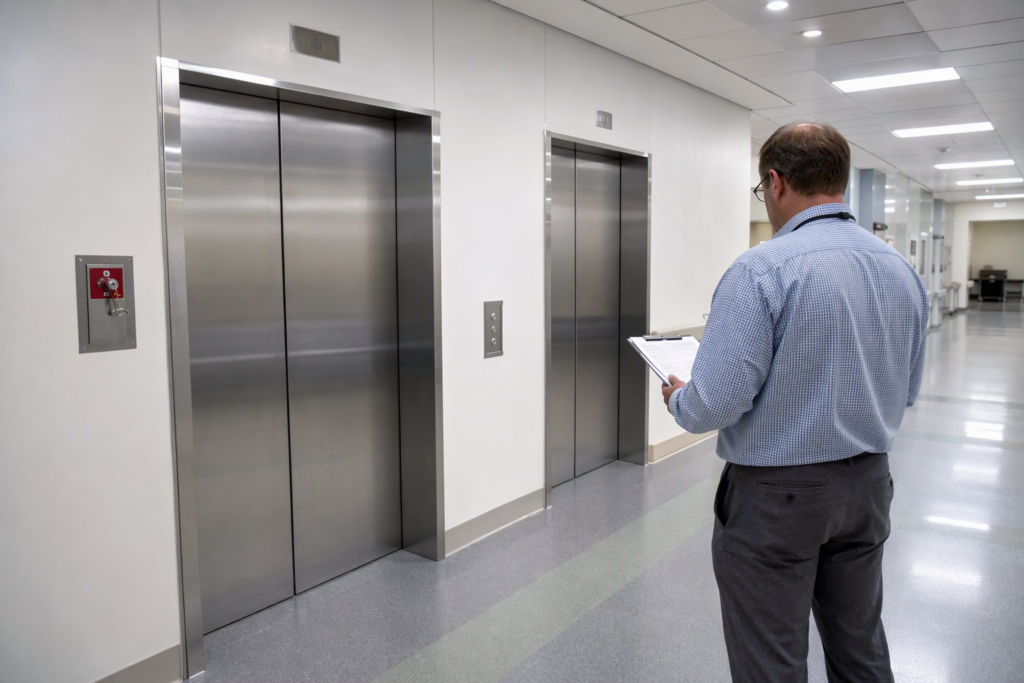
- Conduct an internal walkthrough of each elevator cab and machine room, checking for posted certificates, lighting, cab condition, door operation, and emergency communication function.
- Verify contractor license status for any vendor performing work on your elevators — California requires licensure for elevator maintenance and repair.
- Schedule a pre-inspection assessment with a qualified maintenance provider such as AmeriTex Elevator, which can identify and resolve deficiencies before the official inspection.
- Coordinate with clinical operations leadership on an inspection day plan to minimize disruption to patient transport and care delivery.
—
What Are the Penalties for Operating an Elevator Without a Valid Certificate in California?
Operating a commercial elevator in California without a current Certificate of Inspection is a violation of the California Labor Code. Cal/OSHA has authority to issue civil penalties, order the immediate shutdown of non-compliant equipment, and require a formal re-inspection before the elevator can return to service. For a healthcare facility, an unplanned elevator shutdown carries serious operational consequences including disrupted patient transport, delayed procedures, and potential regulatory scrutiny from healthcare licensing agencies. Maintaining current certifications is not optional — it is a foundational compliance obligation.
—
How Can AmeriTex Elevator Help Healthcare Facilities Stay Compliant in California?
AmeriTex Elevator serves healthcare facilities in Los Angeles, San Diego, Houston, Dallas, Austin, and San Antonio, providing elevator maintenance, modernization, and compliance support tailored to the demands of clinical environments. The team understands the intersection of Cal/OSHA certification requirements, ASME A17.1 test schedules, ADA accessibility obligations, and the operational realities of facilities that cannot afford extended equipment downtime.
Services offered to healthcare clients include maintenance control program development, pre-inspection assessments, corrective repair following failed inspections, Category 1/3/5 testing coordination, and modernization project management that meets OSHPD/DSA requirements for licensed healthcare facilities.
—
Get Your Free Elevator Assessment
Compliance gaps in healthcare elevator programs create real risk — regulatory, operational, and patient-safety. Contact AmeriTex Elevator for a free elevator assessment and let a qualified team evaluate your current certification status, maintenance records, and code compliance posture before your next Cal/OSHA inspection.
Call AmeriTex Elevator today: 866-679-4313
Need elevator service you can rely on? AmeriTex Elevator is ready to help.