Who Should I Contact for Elevator Inspection Requirements in California?
Navigating California’s elevator inspection landscape can feel overwhelming — multiple agencies, layered code requirements, and strict compliance timelines all apply simultaneously. This guide identifies every contact point, explains what each authority governs, and outlines exactly what building owners, property managers, and facilities directors need to do to stay compliant in 2026.
What Is the Primary California Elevator Inspection Authority?
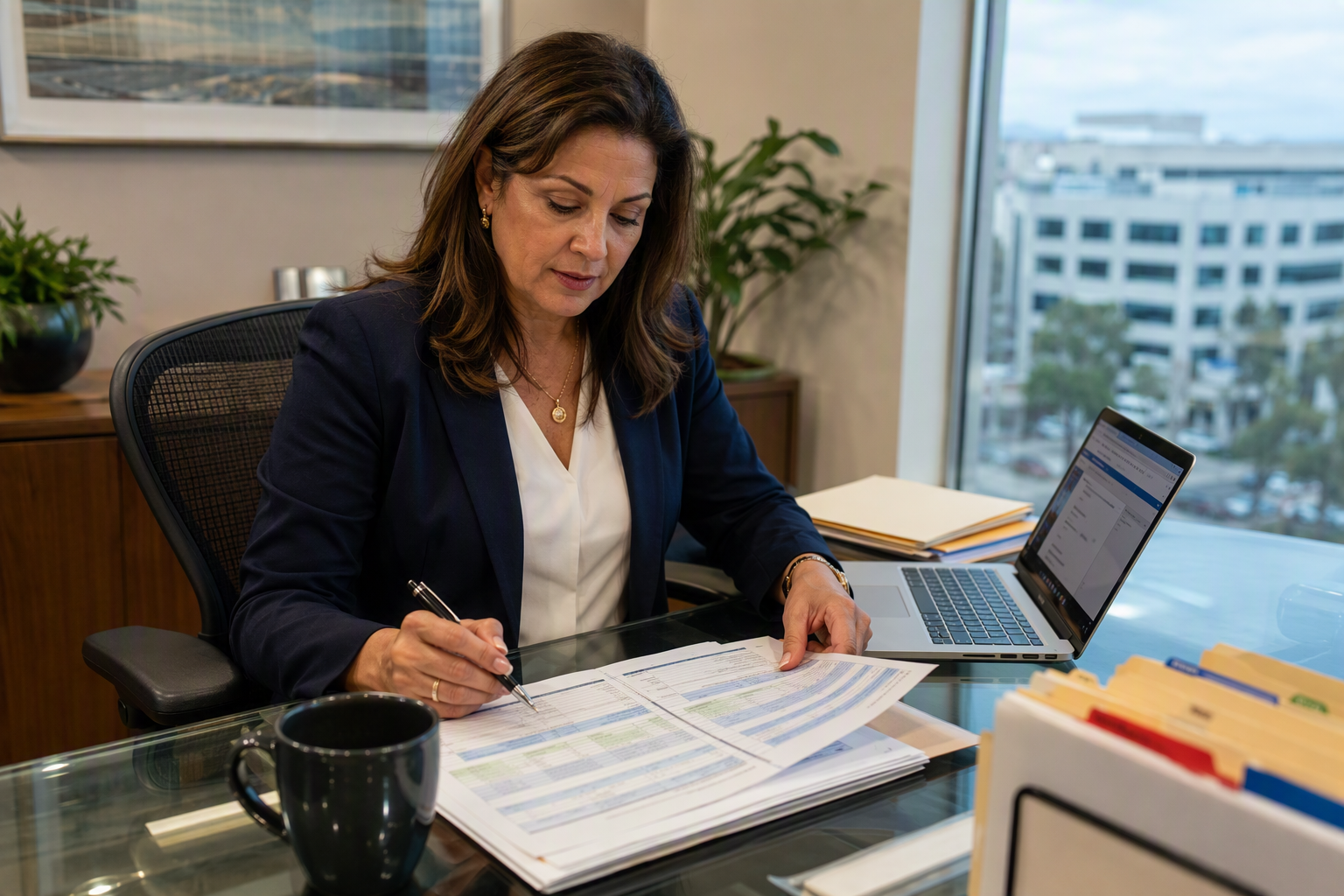
The California Division of Occupational Safety and Health — commonly known as Cal/OSHA — oversees elevator safety through its Elevator Unit (also called the Pressure Vessel Unit in some historical references). This unit administers the Elevator Safety Act under California Labor Code Sections 7300–7324.2, which establishes mandatory periodic inspections, permit requirements, and enforcement authority for elevators, escalators, and related conveyances operating in commercial and public buildings throughout the state.
Cal/OSHA’s Elevator Unit can be reached through the OSHA regulatory framework at the state level. For California-specific matters, the Cal/OSHA website provides regional office directories, permit application portals, and inspection scheduling contacts. Building owners should identify which Cal/OSHA district office covers their county when initiating contact.
Are There Other Agencies I Should Contact Regarding Elevator Compliance in California?
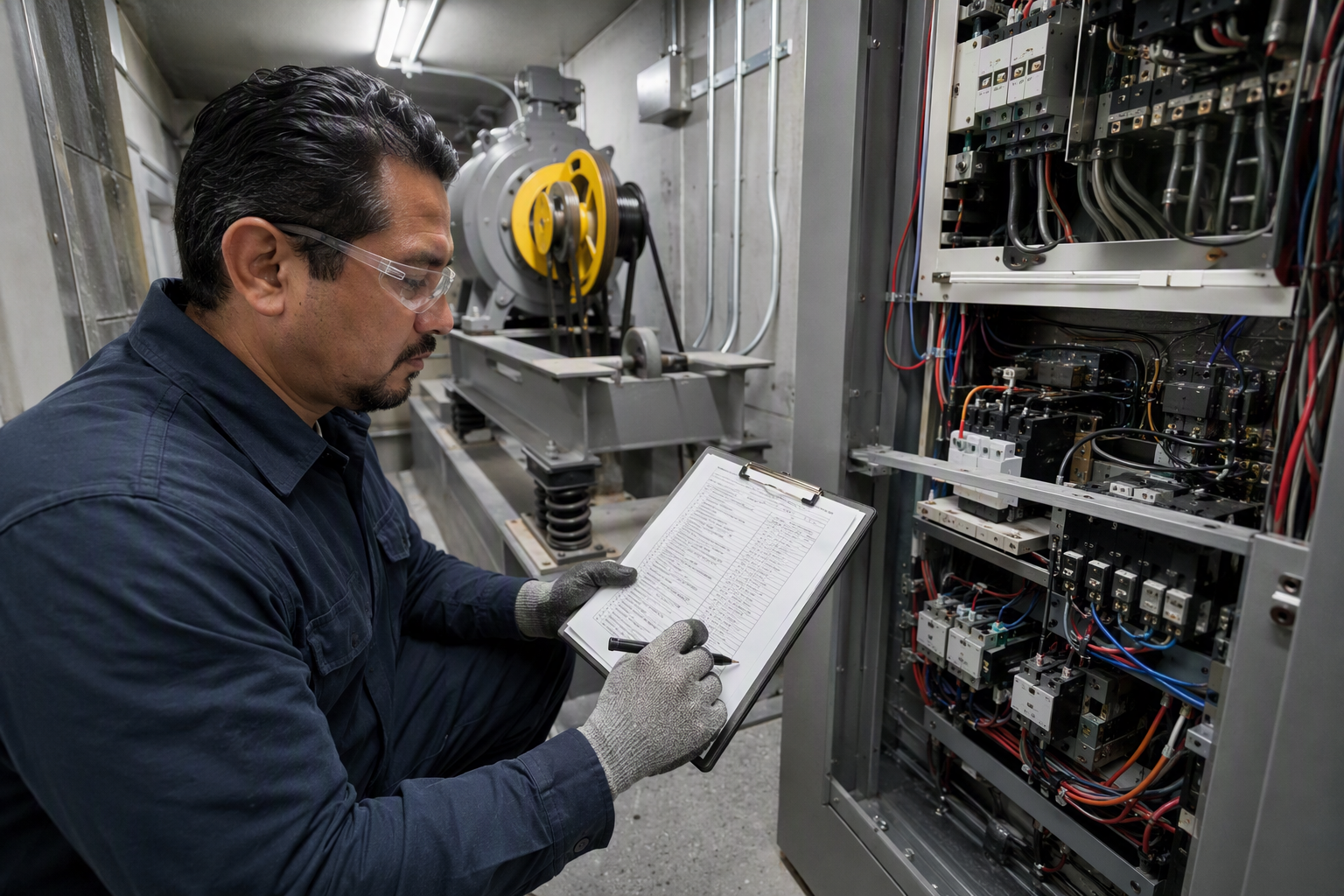
Yes. Elevator compliance in California involves several overlapping regulatory bodies depending on the type of building, the nature of the elevator equipment, and accessibility obligations:
- Cal/OSHA Elevator Unit: Primary authority for safety inspections, operating permits, and code enforcement under the California Elevator Safety Act.
- California Department of General Services (DGS): Has jurisdiction over elevators in state-owned and state-leased buildings. Owners of such properties must coordinate directly with DGS for inspection scheduling and permit issuance.
- Local Building Departments: In some California jurisdictions, local authorities having jurisdiction (AHJs) play a role during new installation permitting and construction-phase inspections. Always confirm whether your city or county has adopted supplemental elevator ordinances.
- The U.S. Department of Justice / ADA Compliance: For public accommodations and commercial facilities, federal accessibility standards under the Americans with Disabilities Act (ADA) require that elevator equipment meets accessibility design requirements — a separate but equally enforceable obligation.
What Code Standards Govern California Elevator Inspections?
California adopts and references the ASME A17.1 Safety Code for Elevators and Escalators as the foundational technical standard for elevator design, installation, maintenance, and inspection. This code, developed by the American Society of Mechanical Engineers, specifies inspection intervals, test procedures, and safety device requirements that California’s Elevator Safety Act incorporates by reference.
Key areas the ASME A17.1 standard addresses include:
- Periodic inspection and testing intervals for different elevator types
- Safety device testing requirements (governors, safeties, buffers, interlocks)
- Hydraulic elevator testing protocols
- Emergency operation and communication system requirements
- Modernization and alteration standards when equipment is upgraded
For accessibility-specific technical requirements, the ADA Standards for Accessible Design provide dimension, control height, door timing, and auditory signal specifications that complement Cal/OSHA’s safety inspection scope.
How Do I Contact Cal/OSHA’s Elevator Unit in California?
To contact Cal/OSHA’s Elevator Unit, building owners and property managers should take the following steps:
- Identify your regional Cal/OSHA district office. California is divided into multiple districts, each serving specific counties. The district office with jurisdiction over your property location handles permit issuance and inspection coordination.
- Locate the Elevator Unit contact within your district. Not all district offices have dedicated elevator inspectors on-site. The Cal/OSHA headquarters Elevator Unit in Sacramento coordinates statewide, while field inspectors operate regionally.
- Prepare your elevator permit number and equipment details. When calling or submitting online, have the Cal/OSHA permit number (displayed on the elevator’s certificate of compliance), the elevator’s make and model, installation date, and building address ready.
- Submit inspection requests or permit renewal applications through the Cal/OSHA online portal. California has moved toward online processing for many elevator unit transactions, including permit renewals and inspection scheduling.
- Follow up in writing. For any compliance question or enforcement dispute, request written confirmation of the agency’s position to create a clear record.
- Consult a licensed elevator contractor if technical questions arise. Cal/OSHA inspectors assess compliance but do not provide consulting advice on how to achieve it — a qualified elevator service company can bridge that gap.
What Happens If My Elevator Fails a California Inspection?
When an elevator fails a Cal/OSHA inspection, the inspector issues a notice of violation identifying the deficiencies that must be corrected before the elevator is returned to service. Depending on the severity of the violation, the inspector may issue an immediate order to take the elevator out of service or allow continued operation with a corrective action deadline.
Building owners are required to engage a licensed elevator contractor to perform the necessary repairs or corrections, then request a follow-up inspection to verify compliance. Operating an elevator without a valid permit or in known violation of a Cal/OSHA order carries significant legal and financial liability, including civil penalties and potential personal injury liability.
AmeriTex Elevator works with California building owners to assess deficiency notices, develop corrective action plans, and coordinate the documentation needed for reinspection — helping facilities return to compliant operation as efficiently as the code process allows.
How Often Are Elevators Inspected in California?
California inspection frequencies are determined by the type of elevator and the requirements set out under the Elevator Safety Act in conjunction with the ASME A17.1 Safety Code for Elevators and Escalators. In general terms:
- Periodic inspections are required at defined intervals — typically annually for most elevator types — to renew the operating permit.
- Safety tests (which are more comprehensive than routine inspections) are required at longer intervals and involve physical testing of safety devices such as governors, safeties, and car buffers.
- Hydraulic pressure tests apply to hydraulic elevators and occur on a cycle defined by the code edition California has adopted.
- After any major alteration or modernization, a special inspection is required before the elevator is returned to service, regardless of where it falls in the normal inspection cycle.
Building owners should track their elevator’s permit renewal date and proactively schedule maintenance and pre-inspection reviews to avoid permit lapses.
Does the ADA Create Separate Elevator Inspection or Compliance Obligations in California?
The Americans with Disabilities Act does not create a separate periodic inspection program with a government inspector. However, ADA compliance is an ongoing legal obligation for public accommodations and commercial facilities. Elevators serving multiple floors in buildings that are not exempt (most commercial buildings are not exempt) must meet ADA accessibility standards covering door operation timing, cab dimensions, control panel height and labeling, auditory floor signals, and more.
ADA compliance issues are typically enforced through civil rights complaints filed with the Department of Justice or through private litigation. California’s own accessibility law — the Unruh Civil Rights Act — adds a state-level enforcement layer with statutory damages, making accessibility compliance in California particularly consequential for building owners.
A comprehensive elevator assessment should evaluate both Cal/OSHA safety compliance and ADA/California accessibility compliance simultaneously, since deficiencies in either area represent legal exposure.
What Documentation Should Building Owners Keep for California Elevator Compliance?
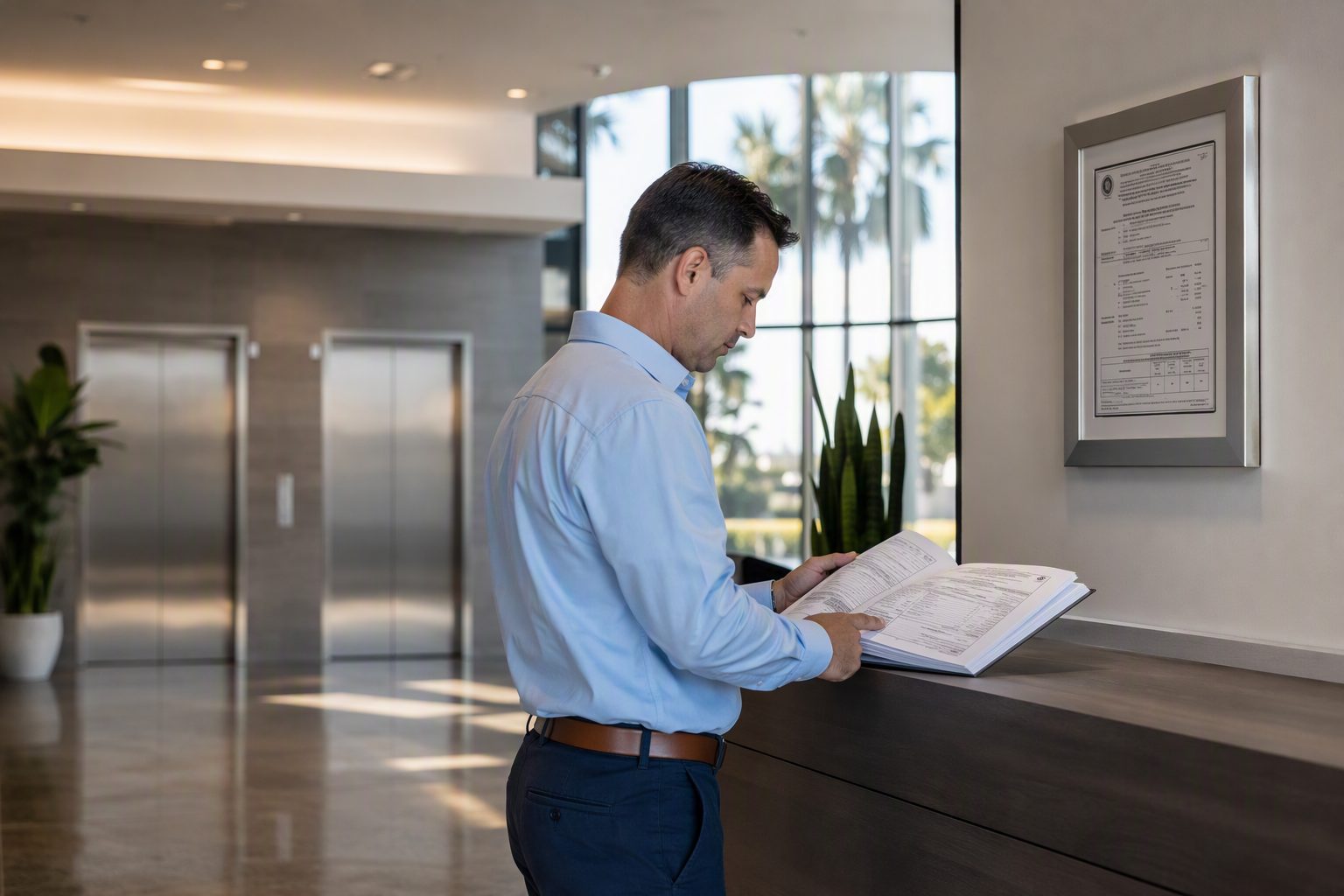
Maintaining organized compliance documentation is essential for California building owners. The core documents that should be retained and accessible include:
- Current Cal/OSHA elevator permit (required to be posted in the elevator cab)
- Most recent inspection report and any notices of violation or correction orders
- Maintenance logs from the licensed elevator contractor
- Records of any alterations, modernizations, or major repairs with corresponding inspection approvals
- Safety test reports at the intervals required by the applicable code edition
- Emergency communication system test records
- Contracts and licenses of the elevator service company performing maintenance
Cal/OSHA inspectors may request any of these documents during an inspection or investigation. Gaps in documentation can themselves constitute violations or complicate the defense of any injury claim related to the elevator.
What Is the Role of a Licensed Elevator Contractor in California’s Inspection Process?
In California, elevator maintenance and repair must be performed by a licensed elevator contractor — an entity holding the appropriate state contractor’s license for elevator work. Licensed elevator contractors play a central role in the inspection process even though they do not conduct the official Cal/OSHA inspection themselves. Their responsibilities include:
- Performing ongoing maintenance to keep equipment in code-compliant condition between inspections
- Conducting pre-inspection assessments to identify and correct deficiencies before the official Cal/OSHA inspection
- Completing required safety tests and submitting test reports to Cal/OSHA
- Performing any corrective repairs ordered following an inspection
- Advising building owners on modernization needs when equipment reaches the end of its useful service life
Selecting a knowledgeable, experienced elevator contractor is one of the most important decisions a California building owner makes for long-term compliance. AmeriTex Elevator provides data-driven assessments and maintenance programs designed to keep California building owners ahead of inspection cycles rather than responding to violations after the fact.
How Are California Elevator Inspection Requirements Likely to Evolve in 2025–2026?
The elevator compliance landscape in California is experiencing meaningful evolution driven by several qualitative trends:
Adoption of updated ASME standards: As California periodically updates its references to newer editions of the ASME A17.1 Safety Code for Elevators and Escalators, building owners with older equipment may face new requirements for safety device upgrades, enhanced emergency communication systems, and more rigorous documentation protocols.
Increased focus on accessibility enforcement: California’s strong statutory damages framework under the Unruh Act continues to drive heightened attention to ADA elevator compliance, particularly in older buildings where cab dimensions, signage, and door timing may not meet current standards.
Remote monitoring and predictive maintenance: The industry is seeing growing adoption of remote elevator monitoring technology that provides real-time data on equipment performance, allowing maintenance teams to address developing issues before they result in equipment failure or inspection deficiencies. Regulatory frameworks are beginning to acknowledge these technologies, and their role in compliance documentation is expected to expand.
Workforce and inspection capacity pressures: State inspection capacity and the availability of licensed elevator technicians continue to influence inspection scheduling timelines. Building owners who proactively maintain their equipment and submit permit renewal documentation early are better positioned to avoid compliance gaps caused by scheduling delays outside their control.
Seismic requirements: California’s seismic environment continues to be a driver of specific elevator code requirements. Building owners in higher seismic risk zones should confirm that their equipment meets applicable seismic safety requirements, which are distinct from standard inspection items.
What Should I Do If I Am Purchasing a Building with Existing Elevators in California?
Buyers of California commercial real estate with existing elevators should treat elevator compliance as a material due diligence item. Recommended steps include:
- Request copies of all current Cal/OSHA elevator permits and the most recent inspection reports. Verify that permits are current and that no open violations or corrective orders exist.
- Review the maintenance history provided by the current elevator contractor, looking for recurring issues, deferred repairs, or incomplete safety tests.
- Commission an independent elevator assessment from a qualified elevator contractor before closing. This assessment should evaluate safety code compliance, ADA/accessibility compliance, equipment age and condition, and near-term capital expenditure requirements.
- Confirm the elevator contractor relationship. Determine whether the existing maintenance contract transfers with the property and whether its terms are favorable, or whether new service arrangements need to be established at closing.
- Factor remediation costs into the transaction. If the assessment identifies deficiencies, these should be addressed in purchase price negotiations or seller repair obligations.
How Can AmeriTex Elevator Help with California Elevator Inspection Compliance?
AmeriTex Elevator serves California building owners, property managers, and facilities directors as a data-driven elevator service partner. Rather than simply responding to breakdowns and violations, AmeriTex Elevator approaches compliance proactively — helping clients understand where their equipment stands against current Cal/OSHA requirements, applicable ASME A17.1 standards, and ADA accessibility obligations before an inspector identifies deficiencies.
AmeriTex Elevator’s services are structured to support building owners through every phase of the compliance lifecycle: pre-inspection assessments, maintenance program development, deficiency correction, safety test documentation, modernization planning, and post-violation remediation support. The goal is to ensure that California building owners are never surprised by an inspection outcome — and that their elevators remain in safe, legal, and accessible operation for the people who depend on them every day.
Get Expert Guidance on California Elevator Inspection Requirements
California’s elevator inspection requirements involve multiple agencies, layered code standards, and significant compliance obligations that evolve with each code update. Building owners who wait for an inspection notice to take action often face avoidable violations, out-of-service equipment, and costly emergency repairs.
AmeriTex Elevator provides comprehensive elevator assessments designed to give California property owners a clear, accurate picture of their compliance position — and a practical path forward.
Contact AmeriTex Elevator for a free elevator assessment: 866-679-4313
Need elevator service you can rely on? AmeriTex Elevator is ready to help.