Elevator Industry Statistics 2025: Who to Contact & Where to Find Reliable Data

Finding accurate, up-to-date elevator industry statistics requires knowing which organizations track what — and understanding the difference between national market research, federal safety data, and the technical standards that drive real-world decisions. The sections below map the full landscape of sources, explain what each one publishes, and answer the most common questions building owners, facility managers, and real estate professionals ask when researching elevator data in 2025 and beyond.
What is the most important elevator statistic to know right now?
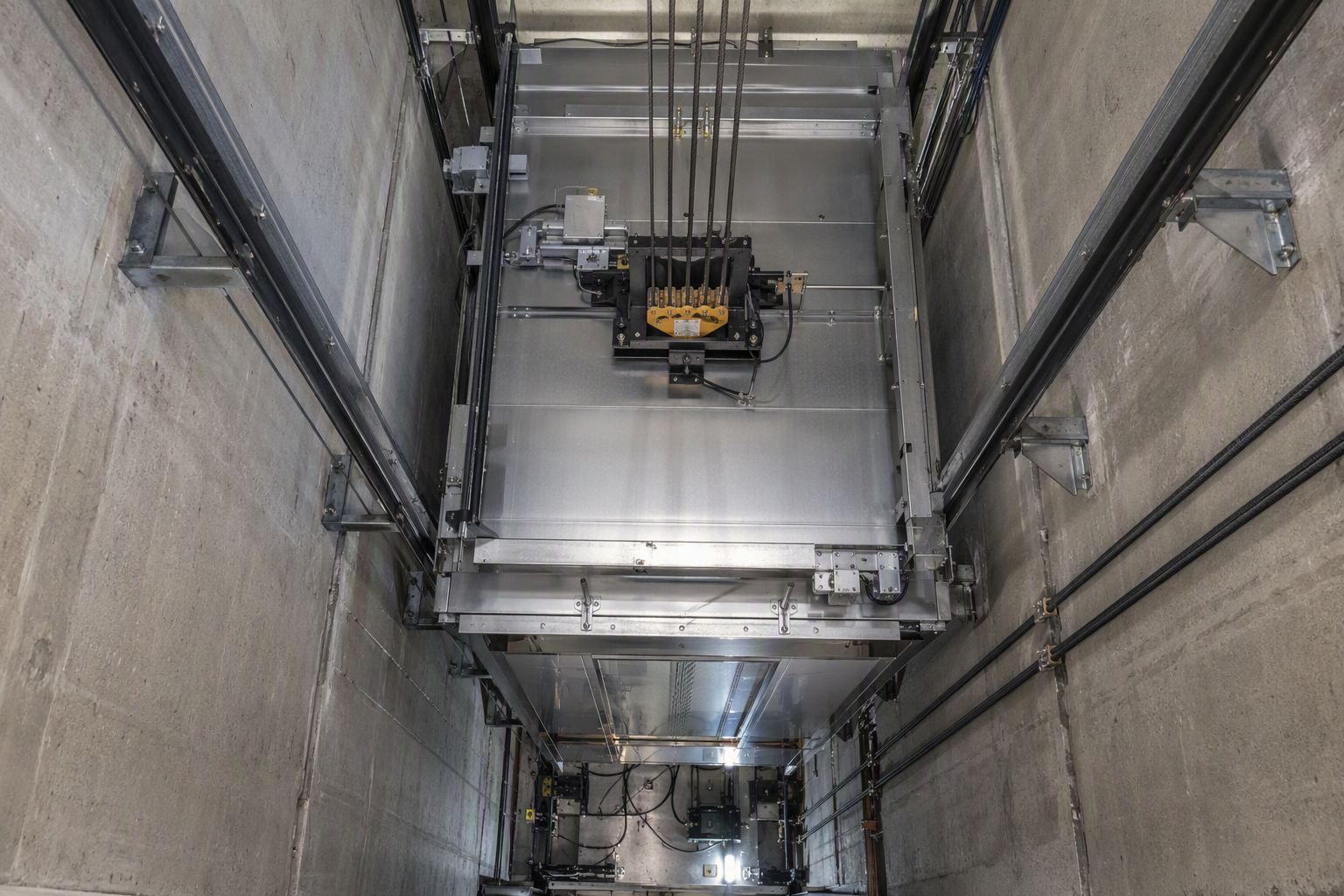
The single most practically significant figure in the elevator industry is the scale of the installed base. According to the National Elevator Industry Inc. (NEII), there are approximately 900,000 elevators operating in the United States. That installed base — the vast majority of which is aging — is what drives inspection requirements, modernization demand, and workforce needs across every market segment.
Because this figure is published by NEII, the industry’s primary trade association, it is the most widely cited and consistently attributed data point in the sector. Any research effort into elevator industry statistics in 2025 should begin there.
Who are the primary organizations that publish elevator industry statistics?
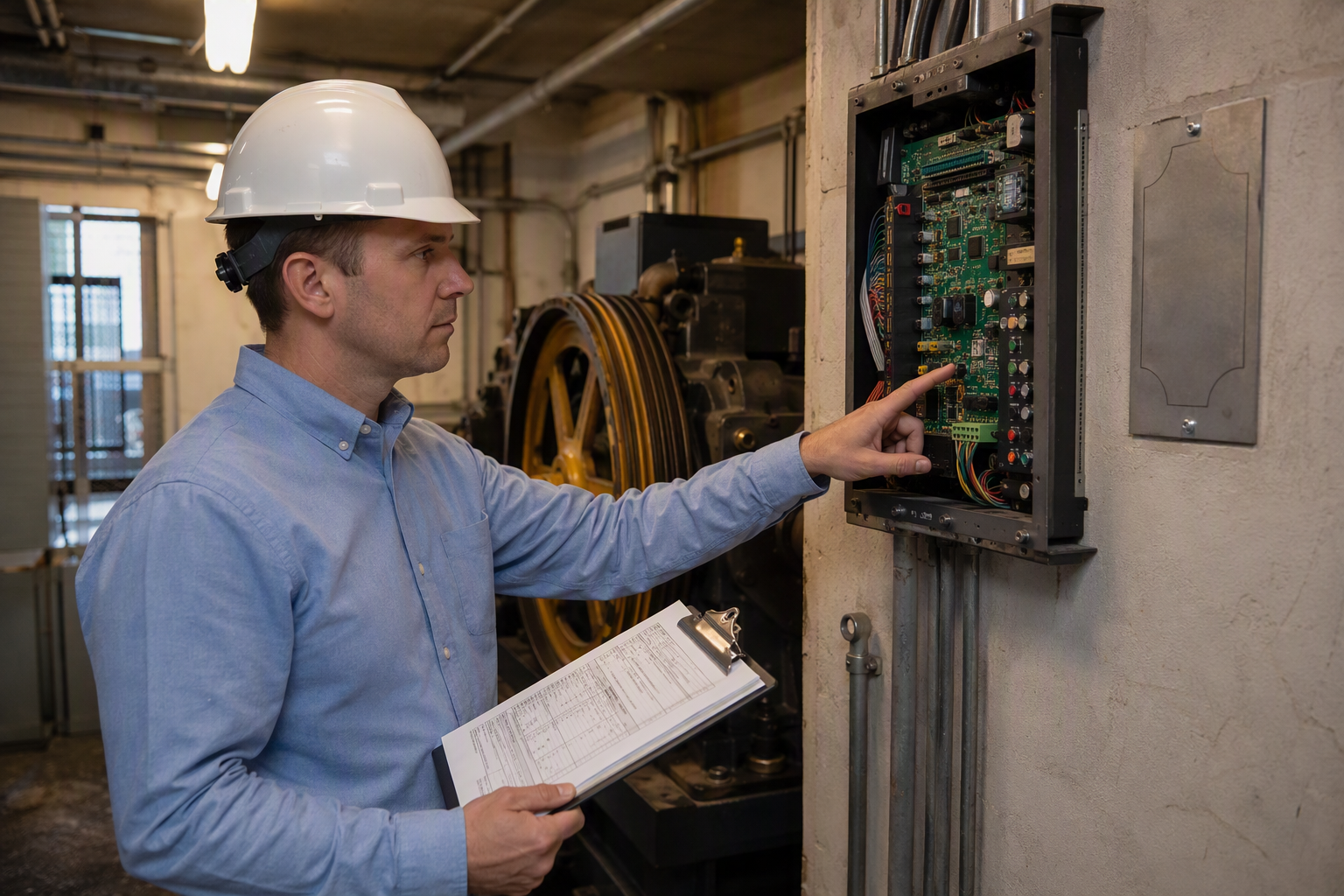
Several distinct types of organizations publish elevator-related data, each serving a different purpose:
| Organization | Type | What They Publish | Source / URL |
|---|---|---|---|
| National Elevator Industry Inc. (NEII) | Trade Association | Installed base counts, industry employment, safety data | neii.org |
| Elevator Escalator Safety Foundation (EESF) | Safety Nonprofit | Consumer safety statistics, incident data | eesf.org |
| U.S. Bureau of Labor Statistics (BLS) | Federal Agency | Elevator installer & repairer employment, wages, occupational outlook | bls.gov |
| ASME (American Society of Mechanical Engineers) | Standards Body | Safety codes and standards (A17.1, A18.1) | asme.org/codes-standards |
| U.S. Access Board | Federal Agency | Accessibility guidelines referenced by ADA | access-board.gov |
| OSHA | Federal Agency | Workplace safety standards for elevator construction & maintenance | osha.gov |
Market research firms such as IBISWorld, Mordor Intelligence, and Grand View Research also publish elevator market reports, though these are typically available by paid subscription and should be evaluated for methodology before citing.
What does ASME publish that is relevant to elevator statistics?
ASME does not publish market statistics, but it publishes the foundational safety codes that define how elevator data is collected and reported. The ASME A17.1 Safety Code for Elevators and Escalators establishes inspection intervals, testing requirements, and performance standards that state and local jurisdictions adopt into law. The ASME A18.1 Safety Standard for Platform Lifts and Stairway Chairlifts covers vertical platform lifts.
Understanding which edition of ASME A17.1 a jurisdiction has adopted is critical for compliance planning, because code editions vary by state and locality. Facilities managers seeking to compare inspection data across states must account for these jurisdictional differences.
How does OSHA relate to elevator industry data?
The Occupational Safety and Health Administration (OSHA) is the authoritative federal source for workplace injury and fatality data involving elevator installation and repair. OSHA publishes enforcement data, inspection records, and industry injury rates through its public databases. For anyone researching elevator worker safety statistics — as distinct from passenger safety — OSHA’s data is the appropriate primary source.
OSHA also sets standards for construction elevators (hoistways and personnel hoists), which are distinct from the standards governing permanent passenger elevators under ASME A17.1.
What ADA requirements affect elevator statistics and compliance reporting?
The Americans with Disabilities Act (ADA) mandates elevator access in most multi-story public accommodations and commercial facilities. Compliance with ADA accessibility standards is a significant driver of elevator modernization and new installation activity. Buildings that fall short of ADA requirements face both legal exposure and a measurable gap in their asset value.
The ADA Standards for Accessible Design reference technical specifications for cab dimensions, door timing, control reach ranges, and audible/visual signals. These requirements influence how elevator performance is measured and reported, particularly in portfolio-level accessibility audits that generate their own data sets.
What elevator industry trends are expected for 2025–2026?
Several qualitative trends are shaping elevator industry data and service demand heading into 2026:
- Modernization demand is accelerating. Much of the U.S. installed base was installed decades ago. As equipment ages beyond typical manufacturer support windows, building owners face growing pressure to modernize controls, drive systems, and safety components. This trend is generating increased activity in both new contracts and capital planning discussions.
- Predictive maintenance and IoT integration. Remote monitoring technology is increasingly standard in new installations and is being retrofitted to existing equipment. This shift is beginning to produce richer operational data, which will gradually improve the quality of industry statistics over time.
- Workforce supply constraints. The elevator industry has faced well-documented skilled labor shortages. Apprenticeship pipelines through the International Union of Elevator Constructors (IUEC) are a primary response, but demand continues to outpace supply in many markets.
- Energy efficiency requirements. State and municipal energy codes increasingly include vertical transportation. LED lighting, standby operation modes, and regenerative drives are becoming standard considerations in modernization scoping.
- Code adoption cycles. Jurisdictions continue to work through adoption of more recent ASME A17.1 editions. The gap between the current published edition and what a given state has adopted affects what compliance data is meaningful in that market.
How do I evaluate whether an elevator market report is credible?
When reviewing any elevator industry statistics report, apply the following criteria:
- Identify the primary data source. Is the figure derived from government surveys, trade association counts, or proprietary modeling? Government-sourced data (BLS, Census Bureau) is generally the most transparent.
- Check the methodology disclosure. Credible reports describe how data was collected, what sample sizes were used, and what assumptions underlie projections. Reports without methodology sections should be treated with caution.
- Look for a base year and projection rationale. Market size projections require a starting baseline. Verify that the base year figure is independently corroborated before accepting a projected compound annual growth rate (CAGR).
- Confirm the publication date. Data older than two years may not reflect current market conditions, particularly given pandemic-related disruptions to construction activity in 2020–2022.
- Cross-reference against NEII and BLS data. These two sources provide independent checks against which market research claims can be tested.
What should a building owner ask when requesting elevator statistics from a service provider?
Service providers can offer operational data about specific equipment and local market conditions that national statistics cannot provide. When engaging a service provider for data-informed planning, building owners should ask:
- What is the current inspection and violation rate for elevators of this type and age in this jurisdiction?
- Which edition of ASME A17.1 has the local authority having jurisdiction (AHJ) adopted, and what does that mean for this equipment?
- What are the most common failure modes for the drive system, controls, and door operators at this equipment age?
- What is the typical modernization timeline for a project of this scope in this market?
- How does this equipment’s performance compare to current ADA requirements under the standards referenced by the ADA?
AmeriTex Elevator approaches client conversations with this data-driven framework, helping building owners translate national industry statistics into actionable assessments for their specific equipment and regulatory environment.
Where can I find elevator inspection frequency requirements backed by code?
Inspection frequency is governed by the ASME A17.1 Safety Code for Elevators and Escalators, which establishes required periodic inspection and testing intervals. Most jurisdictions require annual inspections for hydraulic elevators and annual or more frequent inspections for traction elevators, though the precise schedule depends on the elevator type, use, and the edition of the code that the local AHJ has adopted.
Building owners should not rely on national summaries alone. The applicable local or state code — which may reference an older ASME A17.1 edition — is the controlling document. Contacting the state elevator safety office or the local AHJ directly provides the most reliable jurisdiction-specific inspection schedule information.
How does elevator downtime data get tracked, and where is it published?
Elevator downtime is not tracked through a centralized public database in the United States. Downtime data is held by individual service contractors, building management systems, and, increasingly, IoT-connected monitoring platforms. Some large building portfolios track their own key performance indicators (KPIs) including mean time between failures (MTBF) and mean time to repair (MTTR), but these are proprietary.
Industry associations such as NEII periodically publish aggregate safety and reliability data, but granular downtime benchmarks by building type or equipment age are not publicly available with the consistency that market demand statistics are. This gap is one reason predictive maintenance platforms and digital monitoring tools are growing in adoption — they generate the kind of operational data that the industry has historically lacked at scale.
What is the difference between elevator safety data and elevator market data?
These two categories are frequently conflated but serve very different purposes:
- Safety data focuses on incidents, injuries, fatalities, inspection violations, and equipment failure rates. Primary sources include OSHA, the Elevator Escalator Safety Foundation, and state elevator safety offices.
- Market data focuses on industry revenue, employment levels, new installation volumes, modernization contract activity, and projected growth. Primary sources include NEII, the U.S. Bureau of Labor Statistics, U.S. Census Bureau construction data, and paid market research firms.
A building owner evaluating a modernization decision needs both: safety and compliance data to understand regulatory exposure, and market data to understand pricing trends, contractor availability, and technology directions.
How can AmeriTex Elevator help me use industry statistics for planning?
National statistics describe the industry broadly, but building-level decisions require local knowledge. AmeriTex Elevator operates as a data-informed service provider, helping clients understand how national trends — aging infrastructure, evolving code requirements under ASME A17.1, ADA compliance obligations under the Americans with Disabilities Act, and workplace safety standards under OSHA — apply to their specific equipment, building type, and jurisdiction.
Rather than providing generic market projections, AmeriTex Elevator focuses on translating the standards and data that matter into practical guidance: what inspections are required, when modernization becomes necessary for compliance, and how to build a capital plan around realistic equipment lifecycle expectations.
What steps should I take to research elevator compliance requirements for my building?
- Identify your local authority having jurisdiction (AHJ). This is typically a state elevator safety board or a municipal building department. The AHJ determines which code edition applies and enforces inspection requirements.
- Confirm which edition of ASME A17.1 your jurisdiction has adopted. The current published edition is available through ASME, but your AHJ may be operating under an earlier adopted version.
- Obtain copies of current inspection certificates for all elevators. These should be posted in the elevator cab and should reflect a current, passing inspection.
- Review your building’s ADA accessibility compliance. Compare existing cab dimensions, control configurations, and door operations against the standards referenced in the ADA Standards for Accessible Design.
- Assess equipment age and maintenance records. Document the installation date, most recent modernization, and any outstanding violation notices from prior inspections.
- Engage a qualified elevator service provider for a full assessment. A professional inspection goes beyond the annual code inspection to evaluate the full lifecycle status of the equipment and identify capital planning needs.
- Build a multi-year capital plan. Use the assessment findings and applicable code requirements to build a realistic timeline and budget for any required modernization or repairs.
Final Summary: Navigating Elevator Industry Statistics in 2025
Elevator industry statistics in 2025 come from a range of sources — federal agencies, trade associations, standards bodies, and market research firms — each publishing a different slice of the data landscape. The most authoritative contacts for specific categories of information are:
- Market size and employment: National Elevator Industry Inc. (NEII) and the U.S. Bureau of Labor Statistics
- Safety incidents and workplace injuries: OSHA and the Elevator Escalator Safety Foundation
- Code and inspection requirements: ASME and the local authority having jurisdiction
- Accessibility standards: The ADA and the U.S. Access Board
- Local compliance and equipment-level guidance: Qualified regional service providers with demonstrated code knowledge
AmeriTex Elevator serves as a data-informed partner for building owners and facility managers who need to move from industry statistics to building-specific action. Understanding the numbers is the starting point — applying them correctly to a real asset is where expertise matters.
Get a Professional Assessment Based on Current Standards and Data
Industry statistics provide important context, but your building’s compliance and capital planning needs depend on your specific equipment, jurisdiction, and operational requirements. Contact AmeriTex Elevator for a free elevator assessment and receive expert guidance grounded in current ASME, ADA, and OSHA requirements — applied directly to your property.
Contact AmeriTex Elevator for a free elevator assessment: 866-679-4313
Need elevator service you can rely on? AmeriTex Elevator is ready to help.