Elevator Modernization FAQ: How Long Does It Take and Will My Building Lose Service?
Elevator modernization is one of the most impactful upgrades a building owner or property manager can make — improving safety, energy efficiency, ride quality, and code compliance. But the two questions that dominate every pre-project conversation are simple: How long will this take? and Will my tenants and residents lose elevator service? This FAQ hub addresses both questions in depth, along with every related issue that typically arises during the planning and execution process.
How Long Does a Typical Elevator Modernization Project Take?
Most elevator modernization projects take between 4 and 12 weeks from the start of physical work, though the full project timeline including assessment, permitting, and equipment lead times can extend to 4–6 months before the first technician ever enters the machine room.
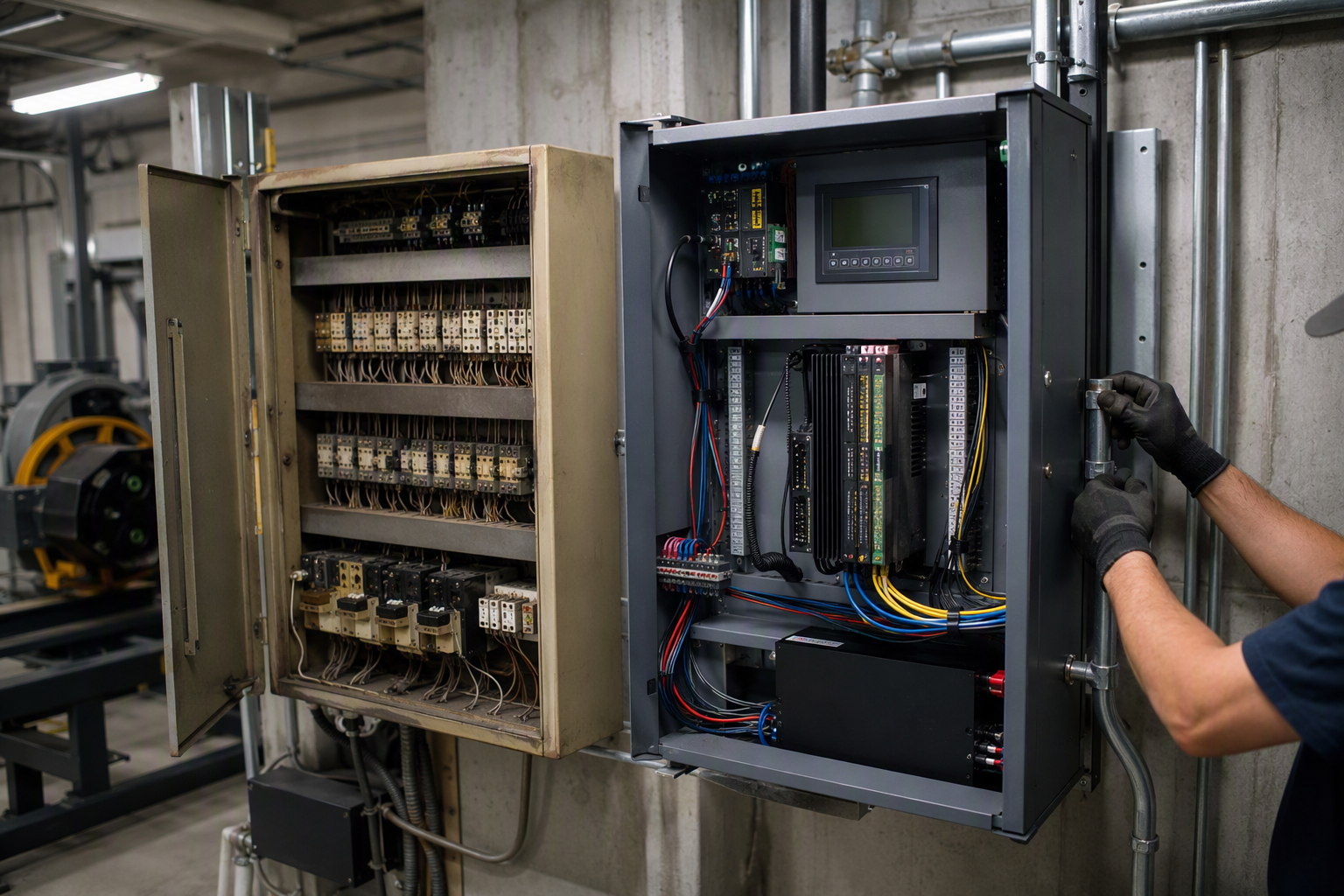
The actual construction phase varies significantly based on what is being replaced. A controls-only modernization — swapping out the controller, selector, and relay logic for a modern solid-state system — can often be completed in 2–4 weeks per elevator. A comprehensive modernization that includes the machine, motor, ropes, cab interior, door operators, fixtures, and control system may take 8–12 weeks or longer per unit.
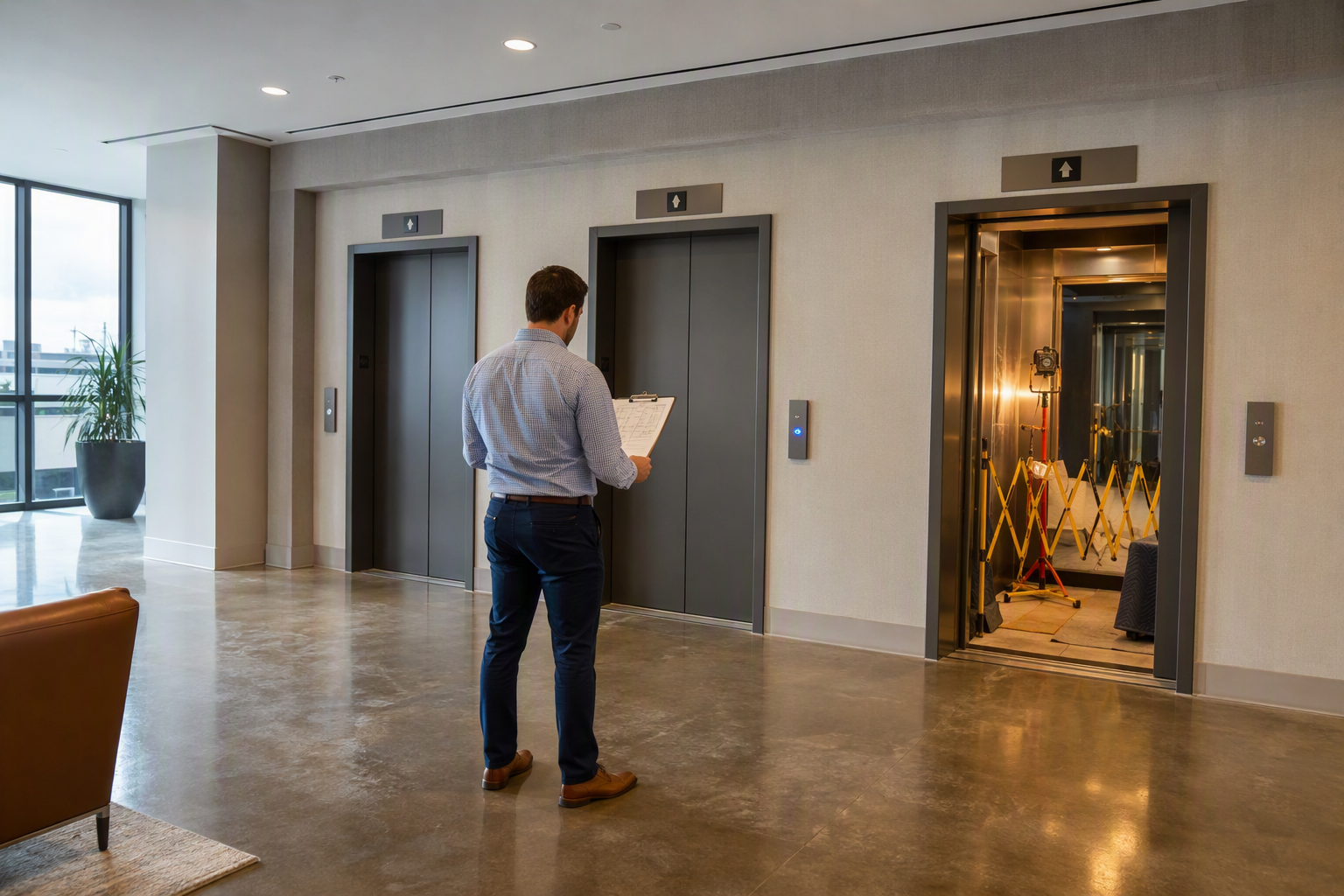
Multi-elevator buildings benefit from staggered scheduling. A property with four elevators, for example, can have one unit down at a time while the remaining three continue in service. This approach lengthens the overall project timeline but protects daily elevator availability for occupants.
Equipment lead times deserve serious attention. Specialty components — particularly custom machines, large-capacity controllers, or ADA-compliant cab fixtures — can have lead times of 8–16 weeks depending on the manufacturer and supply chain conditions. A well-planned modernization accounts for this front-end lead time so that installation begins as soon as equipment arrives.
What Factors Determine the Length of an Elevator Modernization?
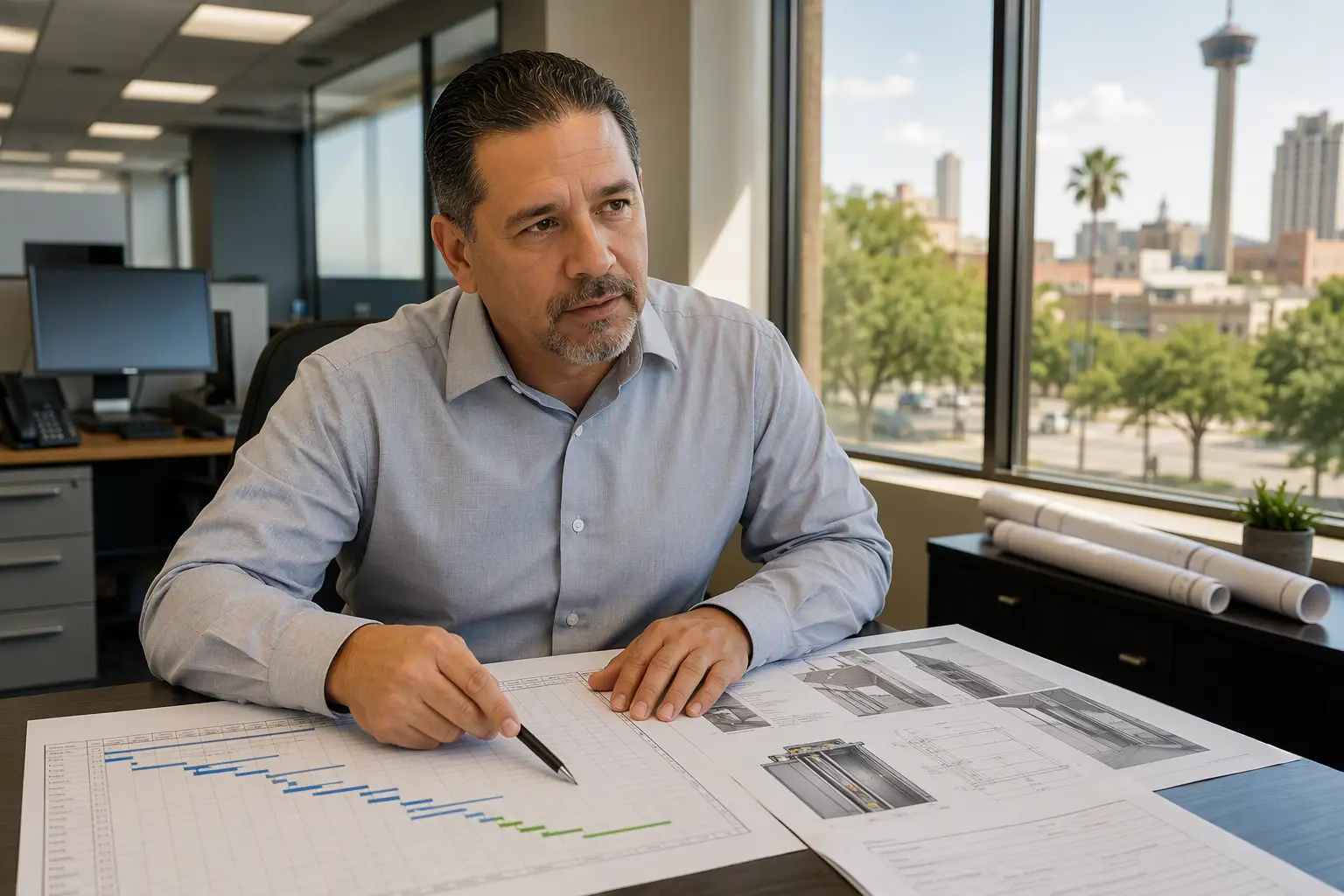
The scope of components being replaced, the age and type of the existing elevator system, local permitting timelines, and the building’s operational requirements are the primary factors that determine how long a modernization will take.
Key variables include:
- Elevator type: Hydraulic elevators, traction elevators, and machine-room-less (MRL) systems each have different modernization workflows and equipment requirements.
- Scope of work: A partial modernization targeting controls only differs fundamentally from a full modernization replacing every mechanical, electrical, and aesthetic component.
- Building access and logistics: High-rise buildings, historic structures, and properties with limited machine room access all add complexity and time.
- Local permit approval: In Texas markets — Houston, Dallas, Austin, and San Antonio — elevator work is regulated by the Texas Department of Insurance (TDI). In California markets — Los Angeles and San Diego — the California Division of the State Architect (DSA) and local jurisdictions govern permitting. Permit timelines vary by municipality and can add several weeks.
- Inspection scheduling: Modernized elevators require third-party inspections and approval before returning to service. Inspection scheduling windows vary by jurisdiction.
- Number of elevators in the building: More units mean longer total project duration, even when work is staggered.
Will My Building Lose Elevator Service During Modernization?
Yes, some elevator downtime is virtually always required during modernization, but in buildings with multiple elevators, a phased approach ensures at least one elevator remains in service throughout the project.
For single-elevator buildings — common in low-rise office buildings, smaller apartment complexes, and medical clinics — full downtime during the modernization phase is typically unavoidable. In these situations, advance planning is critical. Building managers should notify all occupants well in advance, coordinate accessible alternative routes where possible, and work with their contractor to compress the outage window as tightly as the work safely allows.
For multi-elevator buildings, a phased schedule takes one elevator offline at a time. This approach is standard practice and significantly reduces the impact on daily building operations. Contractors with deep project management experience — such as AmeriTex Elevator, which serves commercial and residential properties across Houston, Dallas, Austin, San Antonio, Los Angeles, and San Diego — develop detailed phasing plans as part of the initial project proposal so building managers know exactly what to expect before work begins.
What Is Included in a Full Elevator Modernization?
A full elevator modernization typically replaces the control system, machine and motor (for traction elevators), door operators and door detection systems, cab interior and lighting, fixtures and buttons, safeties, and all wiring and traveling cables.
Modernization is not a single defined scope — it sits on a spectrum. The table below illustrates common modernization levels and their typical scope:
| Modernization Level | Components Typically Replaced | Approximate Duration Per Elevator | Primary Driver |
|---|---|---|---|
| Controls Modernization | Controller, selector, fixtures, buttons, wiring | 2–4 weeks | Obsolete controls, code compliance |
| Partial Modernization | Controls + door operators + cab interior | 4–6 weeks | Reliability, aesthetics, ADA compliance |
| Full Modernization | All mechanical, electrical, and aesthetic components | 8–12 weeks | End-of-life equipment, comprehensive upgrade |
| Hydraulic Conversion | Power unit, jack and cylinder, fluid system, controls | 6–10 weeks | Environmental compliance, aging hydraulics |
| MRL Conversion | Machine, controls, cab, hoistway modifications | 10–16 weeks | Machine room elimination, modernization |
Every project scope should be confirmed through a professional site assessment before finalizing timelines or budgets, as building-specific conditions can shift estimates in either direction.
What Code and Safety Standards Govern Elevator Modernization?
Elevator modernization in the United States is governed primarily by the ASME A17.1 Safety Code for Elevators and Escalators, along with ADA accessibility requirements and applicable state-level regulations, all of which require compliance before a modernized elevator can return to service.
The ASME A17.1 code is the foundational national standard that establishes safety requirements for elevator construction, installation, operation, inspection, testing, maintenance, alteration, and repair. When modernization work constitutes an “alteration” under ASME A17.1 — which comprehensive modernization nearly always does — the altered components must comply with the code edition adopted by the local jurisdiction at the time of the alteration.
ADA compliance is a parallel requirement. The Americans with Disabilities Act (ADA) mandates accessible design for elevators in public accommodations and commercial facilities. Modernization projects that touch cab interiors, fixtures, door timing, or controls create an opportunity — and in many cases a legal obligation — to bring the elevator into full ADA conformance. This includes button height, braille signage, door hold-open timing, and audible floor signals.
In Texas, the Texas Department of Insurance Elevator Safety Program regulates elevator alterations and inspections. In California, regulations vary by project type and jurisdiction, with the California Division of Occupational Safety and Health (Cal/OSHA) playing a role in worker safety during installation. OSHA standards for construction safety apply to all modernization work nationwide.
When Does an Elevator Require Modernization Rather Than Repair?
An elevator typically requires modernization rather than repair when its control system becomes obsolete and replacement parts are no longer available, when recurring breakdowns indicate systemic end-of-life conditions, or when the equipment can no longer meet current safety codes through maintenance alone.
Repair addresses discrete, component-level failures. Modernization addresses systemic deterioration across multiple systems simultaneously. Common triggers for modernization include:
- Relay-logic or electromechanical controllers that are no longer supported by manufacturers
- Frequent callback rates that indicate systemic reliability failure rather than isolated incidents
- Safety system components that cannot be brought into current code compliance through repair alone
- Door equipment causing repeated entrapments or failures
- Energy consumption significantly above modern benchmarks
- Aesthetic and functional conditions that impair tenant retention or property value
- ADA non-compliance that creates legal exposure under the Americans with Disabilities Act
What Happens During the Modernization Assessment Phase?
During the assessment phase, a qualified elevator contractor inspects the existing equipment, reviews current code requirements, identifies all components requiring replacement or upgrade, evaluates hoistway and machine room conditions, and develops a detailed scope of work and project schedule.
A thorough assessment is the foundation of an accurate timeline and cost estimate. Properties that skip or compress the assessment phase frequently encounter unexpected field conditions — such as deteriorated hoistway wiring, asbestos-containing materials in older machine rooms, or structural limitations — that cause schedule and budget overruns during construction.
AmeriTex Elevator provides comprehensive elevator assessments for commercial, residential, and institutional properties across its service markets in Texas and California, giving building owners a clear picture of what modernization will involve before any commitments are made.
How Should Building Management Prepare Tenants and Occupants Before Modernization Begins?
Building management should communicate modernization schedules to all occupants at least 30 days in advance, identify accessible alternatives for residents or tenants with mobility limitations, post clear signage at all elevator lobbies, and provide regular progress updates throughout the project.
Preparation steps for an effective tenant communication plan include:
- Obtain the confirmed project schedule and phasing plan from your elevator contractor before communicating dates to tenants.
- Issue a written notice to all building occupants — including individuals with disabilities — at least 30 days before work begins, identifying which elevators will be offline and for how long.
- Coordinate with your contractor to confirm the precise sequence of outages so tenants can plan accordingly.
- Post clear, professionally produced signage at all elevator lobbies identifying out-of-service elevators and directing occupants to available units.
- For single-elevator buildings, engage local authorities and any ADA-covered tenants early to arrange reasonable accommodations during the outage period.
- Provide weekly progress updates via email or building-wide communication systems throughout the project.
- Confirm the final inspection and return-to-service date with tenants promptly once it is scheduled.
What Is the Permit and Inspection Process for Elevator Modernization?
Before physical work begins, an elevator modernization permit must be issued by the applicable authority having jurisdiction (AHJ), and before the elevator returns to service, a third-party inspection must confirm that all work complies with the adopted edition of the ASME A17.1 Safety Code for Elevators and Escalators.
In Texas markets, the Texas Department of Insurance (TDI) Elevator Safety Program oversees permitting and inspection for elevator alterations. In California, permits are issued at the local level, with Cal/OSHA and local inspection agencies conducting final inspections. Permit review timelines vary — in high-volume municipalities, permit approval can take several weeks, which is why experienced contractors submit permit applications well in advance of the intended construction start date.
After physical work is complete, the contractor schedules a final inspection with the AHJ. The elevator cannot legally return to service until the inspection is passed and the operating certificate is issued or updated. This inspection window is a frequently underestimated source of delay for building owners who expect the elevator to go live the day work finishes.
How Does Elevator Modernization Affect Energy Consumption?
Modern elevator systems — particularly those with regenerative drives, LED cab lighting, and destination dispatch controls — consume substantially less energy than systems built with technology from previous decades, often qualifying for utility rebate programs in Texas and California.
Legacy hydraulic elevators using petroleum-based hydraulic fluid and single-speed pump motors represent one of the highest-consumption elevator configurations. Replacement of the power unit with a variable-voltage variable-frequency (VVVF) drive system and modern motor can significantly reduce energy use. Similarly, traction elevator modernizations that include regenerative drive technology can return energy to the building’s electrical grid during descent cycles, reducing net consumption.
Energy efficiency improvements are rarely the sole driver of modernization decisions but frequently add measurable financial value to the investment, particularly in California markets where utility rates and rebate programs create favorable economics for energy-efficient upgrades.
What Are the Most Common Elevator Components Replaced During Modernization?
The most commonly replaced components during modernization are the control system, door operators, fixtures and buttons, cab interior panels and lighting, and — in comprehensive projects — the machine, motor, and traveling cables.
Control system replacement is the single most impactful modernization action. Older relay-logic and electromechanical controllers are prone to unreliability, lack diagnostic capability, and are no longer supported by most manufacturers with replacement parts. Modern microprocessor-based controllers offer self-diagnostic capability, remote monitoring integration, energy management features, and compatibility with destination dispatch and building automation systems.
Door system failures account for a disproportionate share of elevator-related incidents and entrapments. Modernizing door operators, installing current-generation door detection technology (multi-beam or light curtain systems), and replacing worn door sills and gibs directly improves safety and reduces callback frequency.
How Does Modernization Differ from a Full Elevator Replacement?
Modernization retains the original hoistway, structural pit, and often the cab frame, updating internal mechanical and electrical systems, while full replacement involves removing and reinstalling the entire elevator system including structural hoistway components — a far more invasive and costly undertaking.
Full replacement is relatively rare and typically only warranted when the hoistway itself is structurally compromised, when a change in building use requires a dramatically different elevator configuration, or when converting from hydraulic to traction technology requires hoistway modifications beyond what modernization can accommodate. For the vast majority of aging elevator systems, comprehensive modernization achieves equivalent performance and code compliance at a fraction of the cost and disruption of full replacement.
Can Elevator Modernization Bring an Older Elevator into ADA Compliance?
Yes — elevator modernization is one of the most practical and cost-effective ways to bring an older elevator into compliance with ADA accessibility requirements, since work is already being performed on fixtures, cab interiors, and door systems that affect accessible design.
The ADA requires that elevators in public accommodations and commercial facilities meet specific standards for cab dimensions, door clear width and open time, control button height, braille and tactile signage, audible and visual floor indicators, and leveling accuracy. Many elevators built before ADA’s effective date are non-compliant on multiple criteria. Since modernization already requires touching most of these systems, incorporating ADA upgrades during the project adds minimal incremental cost compared to performing them as standalone work afterward.
Property owners in Houston, Dallas, Austin, San Antonio, Los Angeles, and San Diego should treat modernization projects as an opportunity to conduct a full ADA gap analysis and close all outstanding compliance issues in a single project.
What Should Building Owners Look for When Selecting an Elevator Modernization Contractor?
Building owners should evaluate a contractor’s state licensing and registration, familiarity with local permitting authorities, demonstrated project management capability, references from comparable building types, and the clarity and completeness of their proposed scope of work and phasing plan.
Key evaluation criteria include:
- State registration: Elevator contractors must be registered with the appropriate state authority in both Texas and California. Verify registration before execution of any contract.
- Scope detail: A credible contractor provides a written scope of work that identifies every component being replaced, every component being retained, and the code editions governing the work.
- Phasing plan: For multi-elevator buildings, the contractor should provide a written phasing plan showing exactly which unit will be down, when, and for how long.
- Equipment specification: Understand what brands and models of controls, door operators, and machines are being proposed and why.
- Warranty: Confirm warranty coverage for both parts and labor on all replaced components.
- Post-modernization maintenance: A contractor who will also maintain the elevator after modernization has an incentive to install equipment correctly and to a high standard.
AmeriTex Elevator serves building owners and property managers across Houston, Dallas, Austin, San Antonio, Los Angeles, and San Diego with modernization services that include a detailed pre-project assessment, written phasing plans, and full compliance with applicable state and federal codes.
How Are Elevator Modernization Projects Phased in Multi-Elevator Buildings?
In multi-elevator buildings, modernization is phased by taking one elevator offline at a time, completing all work and final inspection on that unit before moving to the next, so that at least one elevator remains in service throughout the project.
A standard phasing sequence for a three-elevator building might proceed as follows:
- Complete all pre-construction activities: assessment, scope finalization, permit application, and equipment ordering for all three units simultaneously.
- Begin work on Elevator 1 while Elevators 2 and 3 remain in service. Install new controller, door equipment, cab interior, and wiring.
- Schedule and pass final inspection on Elevator 1 and return it to service.
- Begin work on Elevator 2. Elevators 1 and 3 remain in service.
- Schedule and pass final inspection on Elevator 2 and return it to service.
- Begin work on Elevator 3. Elevators 1 and 2 remain in service.
- Schedule and pass final inspection on Elevator 3 and return it to service.
- Conduct a final project closeout review with building management, confirm all warranty documentation, and confirm updated inspection certificates are on file.
This phased approach lengthens the total project duration compared to taking all elevators offline simultaneously, but it protects ongoing building operations and is the standard approach for occupied commercial, residential, and healthcare properties.
What Are the Risks of Deferring Elevator Modernization?
Deferring elevator modernization on aging equipment increases the risk of unexpected breakdown, regulatory non-compliance, potential safety incidents, and escalating maintenance costs as parts become scarce and technician labor hours increase to compensate for failing systems.
Aging elevator systems that have not been modernized present compounding risks. As relay-logic controllers and electromechanical components age beyond their design life, failure rates increase and the cost of sourcing replacement parts — often from specialty suppliers of obsolete equipment — rises substantially. Buildings that experience high callback rates or extended outages due to parts availability issues face real financial costs in tenant dissatisfaction, lost productivity, and potential legal exposure.
From a regulatory standpoint, the ASME A17.1 code’s requirements evolve with each edition. Jurisdictions that adopt newer code editions may require that certain safety features be present even on existing installations — meaning deferred modernization can result in compliance violations identified during routine inspections.
How Often Must Modernized Elevators Be Inspected After Modernization Is Complete?
After modernization, elevators must comply with the periodic inspection and testing requirements of the ASME A17.1 Safety Code for Elevators and Escalators as adopted by the local jurisdiction, which typically requires annual inspections and periodic load testing.
In Texas, the TDI Elevator Safety Program requires that elevators be inspected and receive a current certificate of inspection to legally remain in service. In California, inspection requirements are governed at the state and local level. The modernization project itself triggers a fresh inspection and certificate issuance, but ongoing periodic inspections are required regardless of the age of the equipment after modernization.
Building owners should view post-modernization maintenance agreements as an integral part of the total investment. A properly maintained elevator system preserves the value of the modernization investment, ensures ongoing code compliance, and significantly reduces the likelihood of unexpected outages.
Does Elevator Modernization Affect Building Insurance or Liability?
Elevator modernization that brings equipment into full compliance with current safety codes and ADA requirements can reduce a building’s liability exposure and may be viewed favorably by property insurers, though specific policy implications vary by carrier and should be confirmed directly with the insurer.
Buildings operating elevators with known code deficiencies or chronic reliability problems may face adverse consequences in the event of a tenant injury or entrapment. Modernization that addresses safety systems — door detection, safety devices, leveling accuracy, and emergency lighting — directly reduces the conditions that give rise to liability claims. Property owners should document all modernization work thoroughly, retain all permit and inspection records, and notify their insurance carrier upon project completion.
What Role Does AmeriTex Elevator Play in Modernization Projects in Texas and California?
AmeriTex Elevator provides full-service elevator modernization for commercial, residential, and institutional properties across Houston, Dallas, Austin, San Antonio, Los Angeles, and San Diego — from initial assessment and permitting through installation, inspection, and post-modernization maintenance.
Working with a contractor that operates across multiple major markets in Texas and California offers building owners with properties in multiple locations a consistent project management approach, standardized documentation practices, and a single point of contact for multi-site modernization programs. AmeriTex Elevator’s familiarity with the permitting and inspection requirements of each of its service markets enables accurate timeline forecasting and reduces the risk of unexpected regulatory delays.
What Questions Should Building Owners Ask Before Signing a Modernization Contract?
Before signing a modernization contract, building owners should ask about the specific equipment being installed, which code edition governs the work, how phasing will be managed, what the permit and inspection timeline looks like, and what warranty coverage applies to all replaced components.
A checklist of critical pre-contract questions includes:
- What specific brands and models of controls, door operators, machines, and fixtures are being installed?
- Which edition of ASME A17.1 governs this work under the local jurisdiction?
- Has a permit application been submitted, and what is the estimated approval timeline?
- What is the equipment lead time, and how does that affect the construction start date?
- What is the phasing plan for our building, and which elevators will be down and when?
- What is the warranty period for parts and labor?
- Who is responsible for scheduling the final inspection, and what happens if the elevator fails its first inspection?
- Does the scope include all work required to meet current ADA requirements?
- Is there a post-modernization maintenance agreement available, and what does it cover?
Ready to Plan Your Elevator Modernization?
Understanding the timeline, disruption, and code requirements involved in elevator modernization is the first step toward a successful project. The next step is a professional assessment of your specific equipment and building conditions.
Contact AmeriTex Elevator for a free elevator assessment. AmeriTex Elevator serves commercial and residential properties in Houston TX, Dallas TX, Austin TX, San Antonio TX, Los Angeles CA, and San Diego CA. Reach the team directly at 866-679-4313 to schedule your consultation and get a clear picture of what modernization will involve — timeline, phasing, compliance, and all.