Top-Rated Hotel Elevator Maintenance Practices for Healthcare Facilities
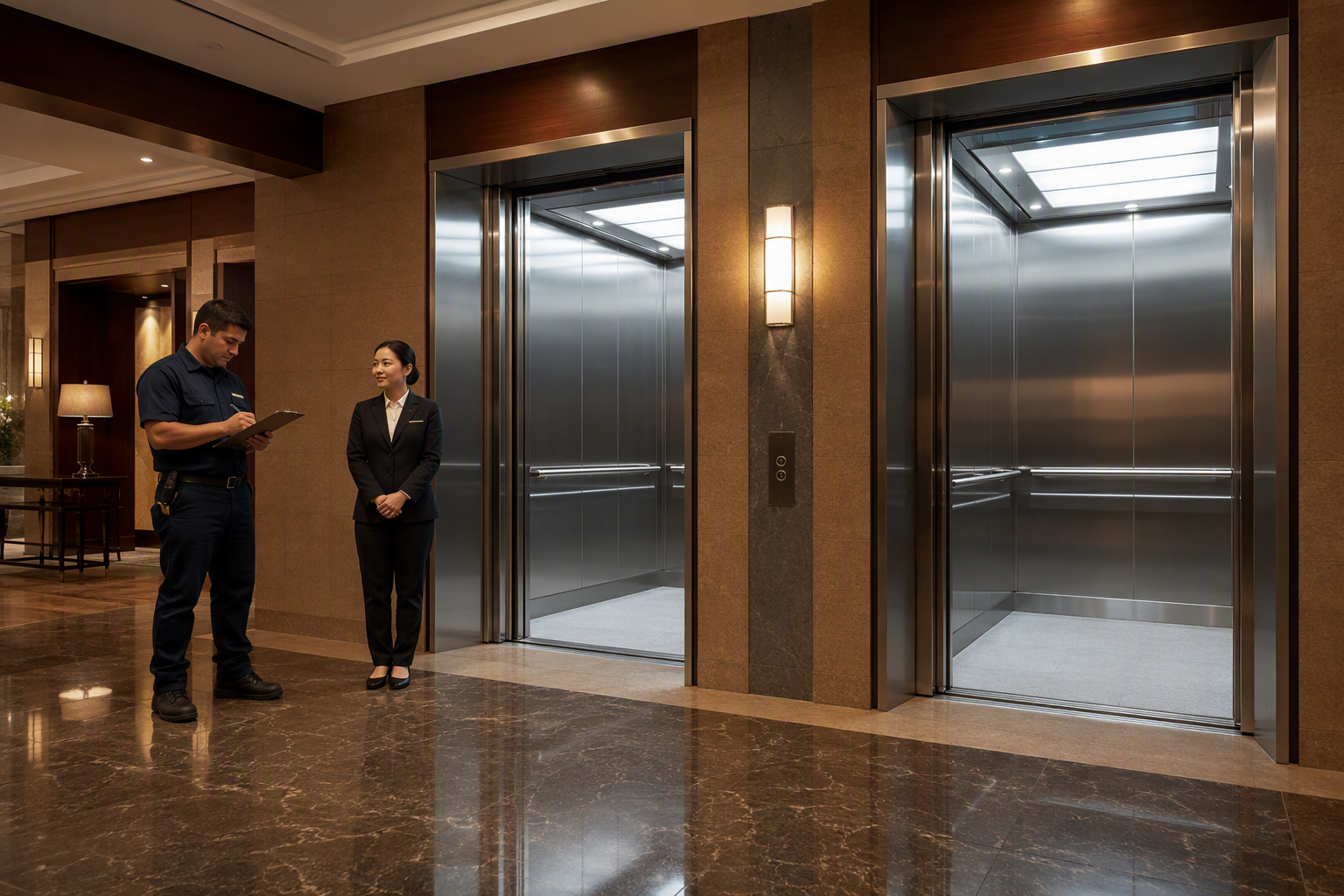
Healthcare and hospitality environments share one critical demand: elevators that cannot afford to fail. Patients, residents, guests, and medical staff depend on vertical transportation around the clock. When a cab goes offline in a hospital wing or a hotel hosting a medical conference, the consequences extend well beyond inconvenience. The sections below outline the top-rated practices that facilities in Houston, Dallas, Austin, San Antonio, Los Angeles, and San Diego rely on to keep elevator systems safe, code-compliant, and continuously operational.
What Are the Core Components of a Top-Rated Elevator Maintenance Program?

A high-performing maintenance program combines four pillars: preventive maintenance on a defined schedule, thorough documentation, code-based inspections, and rapid corrective action when deficiencies arise. Facilities that excel typically treat each of these pillars as non-negotiable rather than aspirational.
- Preventive Maintenance (PM): Lubrication, safety device testing, door operator adjustment, rope or belt inspection, and controller diagnostics performed at manufacturer-recommended and code-required intervals.
- Documented Service Records: Every visit, adjustment, part replacement, and inspection outcome logged in a retrievable format available to facility managers and inspectors.
- Third-Party Inspections: Annual or periodic inspections conducted by qualified inspectors per ASME A17.1 Safety Code for Elevators and Escalators and applicable state amendments.
- Corrective Maintenance Protocol: A defined escalation path so that safety-critical deficiencies trigger immediate out-of-service action rather than deferred repair.
AmeriTex Elevator structures its healthcare and hospitality service agreements around these four pillars, ensuring each facility receives a program tailored to its cab count, usage intensity, and regulatory environment.
Which Compliance Standards Apply to Hospital and Hotel Elevators in 2026?
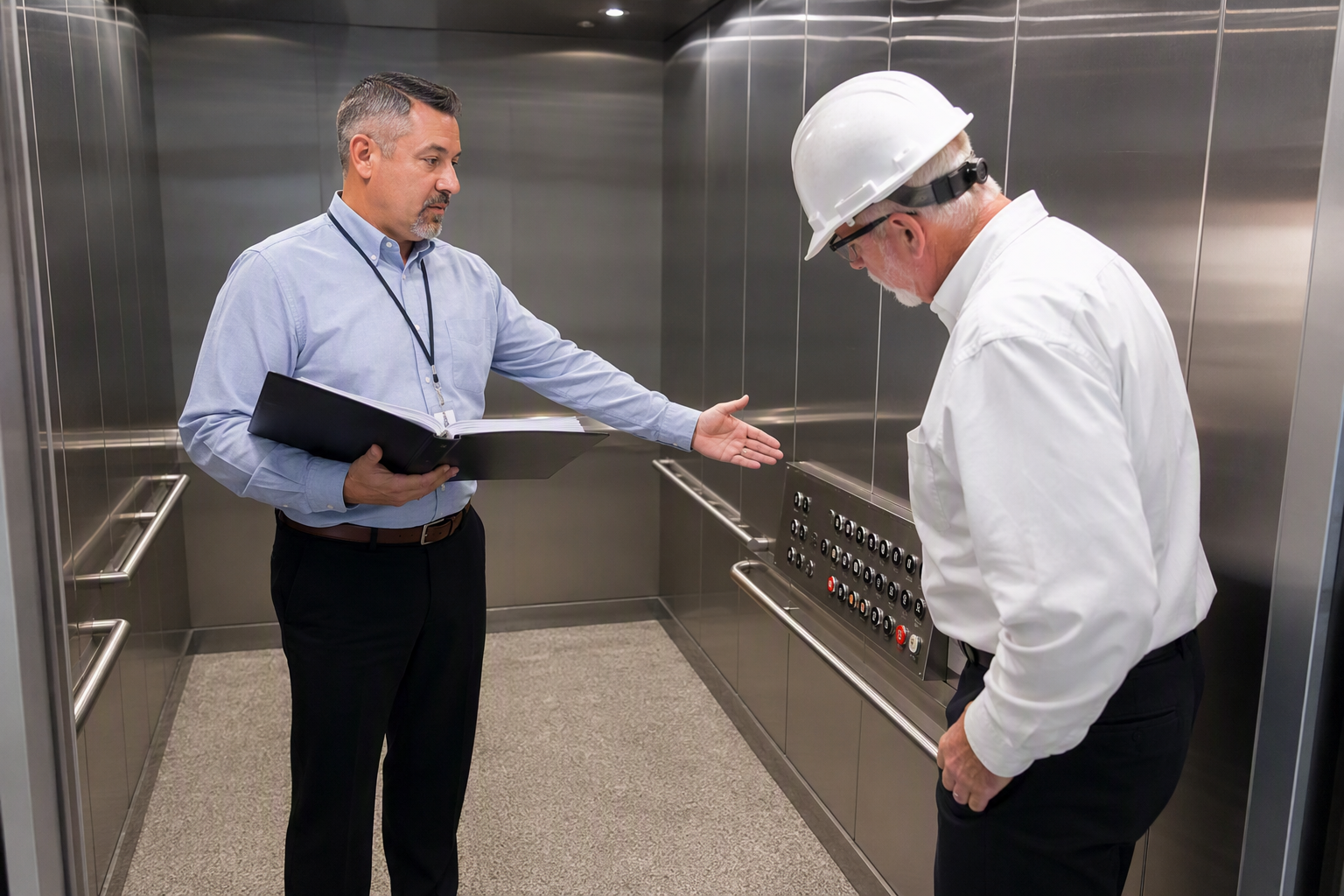
Multiple overlapping regulatory frameworks govern elevators in healthcare and hospitality settings. Understanding each layer prevents compliance gaps during inspections and accreditation reviews.
- ASME A17.1 Safety Code for Elevators and Escalators: The foundational national standard covering design, construction, operation, inspection, testing, maintenance, alteration, and repair of elevators. Most U.S. states adopt ASME A17.1 with local amendments.
- Americans with Disabilities Act (ADA): Mandates accessible cab dimensions, door timing, control panel height, Braille signage, and audible floor announcements. Healthcare facilities face heightened scrutiny because patients and visitors may use mobility devices, stretchers, and wheelchairs simultaneously.
- State Elevator Safety Codes: Texas facilities follow Texas Department of Insurance (TDI) elevator safety rules; California facilities follow the California Elevator Safety Construction Code under the Division of Occupational Safety and Health (Cal/OSHA). Both reference ASME A17.1 as the base standard.
- OSHA General Industry Standards: Apply to elevator maintenance technicians performing work in facility spaces, including confined-space and lockout/tagout requirements.
- Joint Commission / CMS Environment of Care Standards: Hospital accreditation bodies require documented evidence of equipment maintenance, including elevators, as part of Environment of Care and Life Safety chapter compliance.
- NFPA 101 Life Safety Code: Governs fire-service recall operation and firefighter elevator features that intersect with elevator maintenance obligations.
Why Is Elevator Downtime More Costly in Healthcare Settings Than in Standard Commercial Buildings?
In a hospital or long-term care facility, a single elevator outage can delay patient transport to surgery, prevent medication cart delivery to upper floors, or strand staff during a code response. The operational and liability implications extend far beyond the inconvenience experienced in a typical office building. In a hotel adjacent to or serving a medical campus, similar disruptions affect guests who may have mobility limitations or be traveling for medical reasons.
This reality makes predictive and preventive maintenance—not reactive repair—the only acceptable standard for these environments. Facilities that partner with a provider like AmeriTex Elevator gain access to structured PM schedules designed specifically to reduce unplanned outages in high-consequence settings.
What Infection Control Practices Should Be Integrated Into Elevator Maintenance?
Healthcare elevators transport patients with communicable conditions, immunocompromised individuals, and sterile surgical supplies. Maintenance visits must respect infection control policies established by the facility’s Infection Prevention team. Best practices include:
- Coordinate all maintenance access with the facility’s Infection Control Risk Assessment (ICRA) coordinator before entering patient-care elevator lobbies.
- Use facility-approved PPE, including gloves and, where required, respiratory protection, during maintenance activities in clinical zones.
- Follow facility-specified cleaning and disinfection protocols for all surfaces contacted during maintenance, including cab interiors, door tracks, and control panels.
- Avoid leaving tools, debris, or open parts bins in elevator lobbies adjacent to patient rooms or sterile processing areas.
- Document infection control compliance measures in the service record for each visit.
How Often Should Hotel and Healthcare Elevators Be Inspected and Tested?
Inspection and testing frequency is governed by ASME A17.1 and the applicable state code edition. In general, periodic inspections and tests are required at defined intervals—with full load and safety tests on a schedule that varies by elevator type and jurisdiction. Facilities should not rely solely on the statutory minimum; high-traffic healthcare elevators benefit from more frequent PM visits to catch wear before it triggers a violation or failure.
State elevator safety offices in Texas and California require that a current inspection certificate be posted or available in the elevator. Facilities that cannot produce an up-to-date certificate during a CMS survey or Joint Commission visit risk citation under Environment of Care standards.
What Elevator Features Are Most Critical for ADA Compliance in Healthcare Environments?
Healthcare facilities serve a disproportionately high percentage of individuals with mobility, visual, and auditory impairments. ADA requirements relevant to elevators in these settings include:
- Minimum cab dimensions sufficient to accommodate a standard hospital bed or stretcher where the elevator serves as a primary patient transport path.
- Door reopening devices that respond to both passenger and object obstructions without requiring contact.
- Hall and car call buttons with raised tactile characters and Braille, mounted within the specified reach range for wheelchair users.
- Audible and visible floor-arrival signals.
- Emergency communication systems that do not rely solely on voice for individuals who are hearing impaired.
Maintenance teams should verify that all ADA-related features—door timing, lighting levels, audible signals, and tactile signage—function correctly during every preventive maintenance visit, not only at annual inspection time.
What Should Be Included in an Elevator Maintenance Contract for a Healthcare or Hotel Facility?
Contract scope directly determines whether a facility is protected or exposed. A comprehensive agreement should specify:
- Frequency and scope of preventive maintenance visits.
- Parts coverage—distinguishing between routine wear items and major component replacements.
- Documentation deliverables: service logs, inspection certificates, and deficiency reports.
- Callback provisions that define how urgent safety-related calls are handled.
- Compliance support, including assistance preparing for state inspections and accreditation reviews.
- Clear ownership of code-required testing (e.g., governor, safeties, buffers, pressure relief valves on hydraulic units).
AmeriTex Elevator offers service agreements structured to meet the documentation and compliance requirements that healthcare and hospitality facilities encounter during regulatory and accreditation reviews in Texas and California markets.
How Do Facilities Compare Elevator Maintenance Vendors Effectively?
Vendor selection in high-stakes environments should go beyond price. Evaluation criteria for healthcare and hotel facilities include:
- Demonstrated familiarity with ASME A17.1 as adopted by the relevant state (Texas TDI or California Cal/OSHA).
- Experience maintaining the specific elevator manufacturers and models installed in the facility.
- Ability to provide complete, auditable service documentation that satisfies Joint Commission or CMS requirements.
- Clear escalation protocols for safety-critical failures discovered during maintenance.
- References from comparable facilities in the same market.
What Steps Should a Facility Take Immediately After an Elevator Malfunction?
- Activate the elevator’s emergency communication system to confirm whether any passengers are trapped and initiate rescue if needed.
- Place the unit out of service and post clear signage at all landings to prevent further use.
- Notify the elevator maintenance provider and document the time of notification.
- Record all observable symptoms: abnormal sounds, leveling errors, door behavior, and error codes displayed on the controller.
- Preserve any available data logs from the elevator controller for review by the service technician.
- File an incident report per facility policy and, if required by state code, notify the state elevator safety authority of any accident or entrapment.
- Do not return the elevator to service until the maintenance provider clears it in writing.
How Does Preventive Maintenance Differ From Predictive Maintenance for Hospital Elevators?
Preventive maintenance follows a time- or cycle-based schedule regardless of observed condition—tasks are performed because they are due. Predictive maintenance uses real-time monitoring data (vibration analysis, door cycle counts, motor current signatures) to anticipate failure before it occurs. In healthcare environments, both approaches are valuable. Preventive maintenance satisfies code-required inspection and lubrication intervals; predictive tools help facilities avoid the unexpected failures that time-based schedules alone cannot prevent.
Questions Your Inspector Will Ask
State elevator inspectors and healthcare accreditation surveyors consistently probe the same areas. Facilities should be prepared to answer the following:
- Is the current inspection certificate posted or immediately available? Missing or expired certificates result in violations and can trigger mandatory shutdown.
- Can you produce the maintenance log for the past 12 months? Inspectors verify that PM visits occurred at required intervals and that deficiencies were addressed promptly.
- What is your documented procedure when an elevator is taken out of service? Facilities must demonstrate a clear protocol, not an ad hoc response.
- Have all required periodic tests been completed and documented? This includes governor/safety tests, pressure relief tests on hydraulic units, and firefighter service tests as required by the applicable ASME A17.1 edition and state amendment.
- Are ADA-required features—door timing, audible signals, tactile controls—verified as functional? Inspectors may test these in the field.
- Who is your elevator maintenance contractor, and how are safety-critical deficiencies escalated? A vague or undocumented answer signals a compliance risk.
- Is the elevator’s emergency lighting and communication system tested at the required interval? Fire marshals and life safety surveyors often check this independently.
Which Markets Does AmeriTex Elevator Serve for Healthcare and Hotel Elevator Maintenance?
AmeriTex Elevator provides certified elevator maintenance and inspection support to healthcare and hospitality facilities across Houston TX, Dallas TX, Austin TX, San Antonio TX, Los Angeles CA, and San Diego CA. Each of these markets operates under distinct state regulatory frameworks—Texas TDI rules and California Cal/OSHA elevator safety requirements—and AmeriTex Elevator’s service protocols are structured to satisfy both sets of requirements without requiring facilities to manage that complexity internally.
What Is the True Cost of Deferred Elevator Maintenance in a Healthcare or Hotel Setting?
Deferred maintenance compounds risk in ways that are rarely reflected in the short-term budget line. A lubrication interval missed today accelerates bearing wear that may require a full motor replacement months later. A door operator adjustment postponed means door-related entrapments become more likely—and in a healthcare environment, a passenger entrapment triggers incident reporting obligations, potential regulatory scrutiny, and reputational consequences that far exceed the cost of routine service. Facilities that evaluate maintenance cost in isolation from these downstream risks consistently underinvest until a failure forces a reckoning.
Partnering with a provider like AmeriTex Elevator to maintain a complete, documented PM schedule is the most reliable way to control total elevator ownership cost over time in healthcare and hospitality environments.
Schedule Your Free Elevator Assessment Today
Whether your facility is managing a single hospital tower elevator or a multi-cab hotel system, proper maintenance documentation and compliance readiness are not optional—they are operational necessities. Contact AmeriTex Elevator for a free elevator assessment and learn how a structured maintenance program can reduce unplanned downtime, satisfy state inspection requirements, and support accreditation readiness at your facility.
Call AmeriTex Elevator: 866-679-4313
Serving Houston TX, Dallas TX, Austin TX, San Antonio TX, Los Angeles CA, and San Diego CA.
Need elevator service you can rely on? AmeriTex Elevator is ready to help.