Best Elevator Maintenance Company Houston: Complete FAQ Guide (2026)
Finding a reliable elevator maintenance company in Houston requires understanding what separates a certified, code-compliant service provider from a cut-rate alternative. This comprehensive FAQ covers everything property managers, building owners, and facilities directors need to know — from inspection intervals and compliance codes to what questions to ask before signing a maintenance contract.
What makes AmeriTex Elevator one of the best elevator maintenance companies in Houston?

AmeriTex Elevator provides certified elevator maintenance across Houston and the greater Texas market, combining code-compliant service protocols, transparent maintenance agreements, and deep familiarity with Texas Department of Insurance (TDI) elevator inspection requirements.
What distinguishes a top-tier elevator maintenance company is a combination of technical competency, regulatory knowledge, and proactive service culture. AmeriTex Elevator operates across Houston, Dallas, Austin, and San Antonio in Texas, as well as Los Angeles and San Diego in California — bringing multi-market regulatory expertise to every service engagement. Houston property owners benefit from a team that understands both the ASME A17.1 Safety Code for Elevators and Escalators and the specific enforcement practices of Texas state inspectors.
A quality elevator maintenance provider should offer documented preventive maintenance schedules, maintain detailed equipment histories, and ensure that every technician works to the standards outlined under ASME A17.1 — the foundational safety code governing elevator design, installation, operation, and maintenance across North America.
How often should elevators be inspected in Houston, Texas?

In Texas, elevators must undergo a periodic inspection by a licensed elevator inspector at least once per year, as governed by the Texas Department of Insurance Elevator Safety Program.
Annual inspections are the minimum legal requirement in Texas, but best practice — and the guidance embedded in ASME A17.1 — calls for a far more frequent preventive maintenance schedule. Depending on equipment type, usage volume, and building classification, monthly or quarterly maintenance visits are standard for commercial elevators in high-traffic Houston properties such as office towers, hospitals, hotels, and mixed-use developments.
Beyond the annual state inspection, hydraulic elevators require five-year load and pressure tests, while traction elevators require full load tests at defined intervals under ASME A17.1. Property managers should ensure their maintenance provider tracks these milestone tests and schedules them proactively to avoid lapses that could trigger citation or equipment shutdown by state inspectors.
What does a comprehensive elevator maintenance plan include?
A comprehensive elevator maintenance plan includes scheduled preventive maintenance visits, lubrication and adjustment of mechanical components, safety device testing, documentation, and code compliance verification.
A well-structured maintenance agreement for a Houston commercial elevator should cover the following service elements:
- Preventive maintenance visits: Scheduled inspections of all mechanical, electrical, hydraulic, and safety systems on a frequency appropriate to equipment type and usage.
- Component lubrication: Rails, guides, sheaves, governor, and door operators all require regular lubrication per manufacturer specifications.
- Safety device testing: Governor, buffers, safeties, interlocks, and emergency lighting must be tested per ASME A17.1 testing intervals.
- Door system maintenance: Door operators account for a significant proportion of service callbacks; clutch, coupler, and sensor adjustments are critical.
- Controller and drive inspection: Solid-state controls and variable-frequency drives require periodic inspection of connections, boards, and firmware.
- Maintenance log documentation: A written record of every visit, finding, adjustment, and part replacement — required for Texas state compliance.
- Code compliance updates: Notification and remediation when new ASME A17.1 editions introduce retroactive requirements or when state enforcement priorities shift.
AmeriTex Elevator structures its maintenance agreements to cover these elements with documented service records that property owners can present to Texas Department of Insurance inspectors on demand.
What is ASME A17.1 and why does it matter for Houston elevator owners?
ASME A17.1 is the Safety Code for Elevators and Escalators published by the American Society of Mechanical Engineers, and it is the primary technical standard that governs elevator safety, maintenance, and inspection requirements in Texas and across the United States.
The ASME A17.1 Safety Code for Elevators and Escalators is updated on a regular cycle, and the 2019 and subsequent editions have introduced notable changes around emergency operations, seismic requirements, and safety system testing protocols. Houston building owners should confirm that their maintenance provider works from the most current adopted edition of the code — not an outdated version that leaves the building out of compliance.
In Texas, the state adopts ASME A17.1 by reference through the Texas Department of Insurance Elevator Safety Program. Non-compliance with ASME A17.1 requirements can result in failed inspections, mandatory equipment shutdowns, fines, and — most critically — increased liability exposure if an incident occurs on an improperly maintained elevator.
How do I compare elevator maintenance companies in Houston before signing a contract?
Evaluate Houston elevator maintenance companies on licensing status, scope of services, contract terms, documentation practices, and familiarity with ASME A17.1 and Texas state requirements before signing any agreement.
The table below provides a benchmark framework for comparing elevator maintenance providers in Houston:
| Evaluation Criteria | What to Look For | Red Flags |
|---|---|---|
| Texas Licensing | Company registered with Texas Department of Insurance Elevator Safety Program | No verifiable license number or evasiveness about regulatory status |
| ASME A17.1 Compliance | Technicians trained to current ASME A17.1 edition | Cannot specify which code edition guides their work |
| Maintenance Documentation | Written logs left on-site after every visit | Verbal-only reporting with no paper or digital trail |
| Contract Transparency | Clear scope of inclusions, exclusions, and escalation clauses | Vague “full service” language with hidden exclusions |
| Emergency Response | Documented after-hours callback procedures | No defined callback process or single point of contact |
| Equipment Compatibility | Experience with your specific equipment brand and type (hydraulic, traction, MRL) | Claims to service all brands but cannot provide specifics |
| Compliance History | Track record of passing Texas TDI inspections on managed properties | Cannot provide references or compliance outcomes |
| Multi-Unit Capability | Ability to handle portfolios with multiple elevators across Houston | Limited capacity that may cause scheduling gaps |
What are the ADA requirements for elevators in Houston commercial buildings?
Under the Americans with Disabilities Act, most multi-story commercial buildings in Houston must provide elevator access that meets specific dimensional, operational, and signage standards to ensure accessibility for people with disabilities.
The Americans with Disabilities Act (ADA) sets requirements that apply to elevators in new construction and to alterations of existing buildings. Key ADA elevator requirements include minimum cab dimensions, door width and timing requirements, accessible control panel heights and Braille markings, audible and visual floor indicators, and emergency communication systems that connect to a monitored location. Maintenance providers must ensure that these accessibility features remain functional — a door that closes too quickly or a floor indicator light that has burned out can constitute an ADA violation.
Houston property owners undergoing building renovations should confirm with their elevator maintenance and modernization provider that any work performed maintains or improves ADA compliance. AmeriTex Elevator incorporates ADA compliance checks into its maintenance protocols so that accessibility features are verified at each scheduled visit.
What types of elevators does a Houston maintenance company typically service?
A full-service Houston elevator maintenance company should be capable of servicing hydraulic elevators, electric traction elevators, machine-room-less (MRL) traction elevators, freight elevators, and residential lift systems.
Houston’s commercial real estate inventory includes a wide range of elevator equipment types across decades of installation history. Common categories include:
- Hydraulic elevators: Common in low-rise buildings up to five or six stories; require specific maintenance of the hydraulic fluid system, cylinder, and power unit.
- Geared traction elevators: Found in mid-rise buildings; require machine room access and regular gearbox maintenance.
- Gearless traction elevators: Typical in Houston’s high-rise office towers; require sophisticated drive and motor maintenance.
- Machine-room-less (MRL) traction: Increasingly common in new Houston construction; maintenance requires familiarity with compact drive configurations.
- Freight elevators: Found in warehouses, distribution centers, and industrial properties; operate under distinct ASME A17.1 provisions.
- Limited-use/limited-application (LULA) elevators: Common in smaller commercial facilities and historic buildings with space constraints.
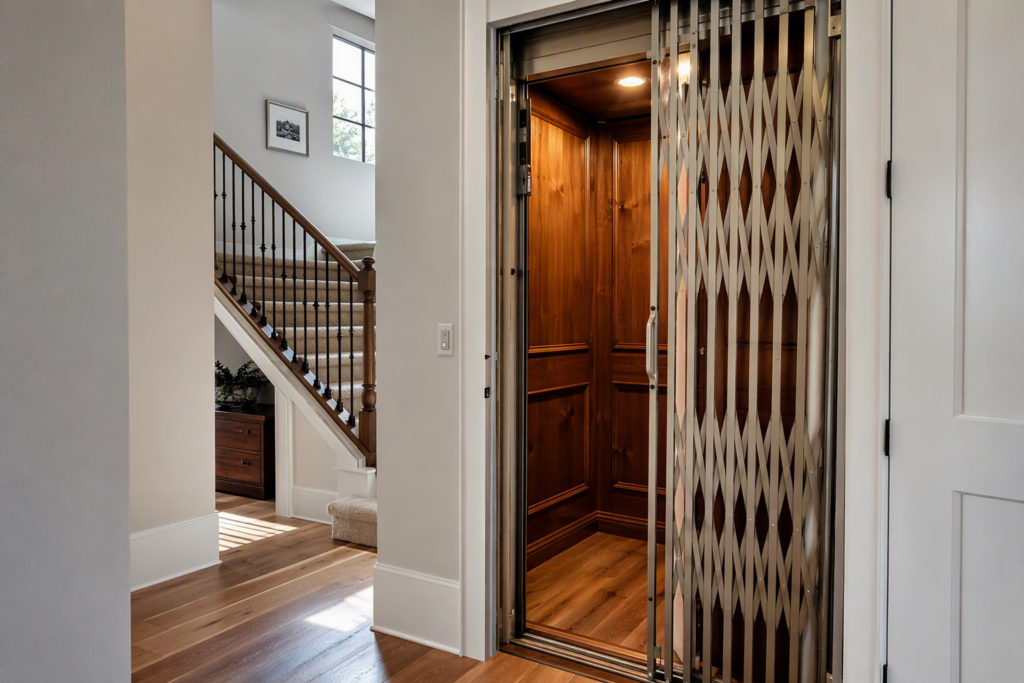
- Residential elevators: Governed by ASME A17.1 Chapter 5; require maintenance adapted to lower-frequency residential usage patterns.
How do I know if my Houston elevator is due for modernization rather than maintenance?
An elevator is typically a candidate for modernization rather than ongoing maintenance when recurring component failures, obsolete parts availability, rising energy costs, or new code requirements make continued maintenance economically or technically unsustainable.
Indicators that modernization may be more cost-effective than continued maintenance in a Houston building include: controllers that are no longer supported by the manufacturer, hydraulic systems using environmentally regulated fluids that require costly handling, frequent door-related callbacks that persist despite maintenance, inability to meet current ASME A17.1 safety device requirements through adjustment alone, and significant energy inefficiency compared to modern variable-frequency drive systems.
A qualified elevator maintenance company should provide an honest assessment — documenting recurring failure patterns and presenting a cost comparison between continued maintenance and targeted modernization. AmeriTex Elevator offers modernization assessments as part of its Houston service portfolio, helping building owners make data-informed capital planning decisions.
What should I do immediately if an elevator malfunctions or traps a passenger in Houston?
If an elevator traps a passenger or malfunctions in a Houston building, follow a defined emergency protocol immediately to ensure safety and regulatory compliance.
- Contact emergency services if there is any medical emergency, fire, or immediate danger — call 911 before taking any other action.
- Speak to any trapped passengers through the elevator’s emergency phone or intercom — reassure them that help is coming and instruct them to remain calm and not to attempt to exit on their own.
- Do NOT attempt to manually open elevator doors or force the cab to move without trained elevator technicians present — this creates serious injury risk.
- Contact your elevator maintenance company’s emergency line immediately — licensed technicians must perform all rescue and reset procedures.
- Secure the elevator lobby on the affected floor and place “Out of Service” signage to prevent unauthorized use.
- Document the incident — record the time, floor location, number of passengers, and nature of the malfunction for regulatory and insurance reporting.
- Do not return the elevator to service until the technician has inspected, repaired, and cleared the equipment.
- Report the incident to the Texas Department of Insurance if the malfunction resulted in injury or meets reporting thresholds under Texas elevator safety regulations.
OSHA also provides general industry guidance on elevator-related hazards and worker safety in confined space and equipment rescue scenarios that building safety officers should be familiar with.
How much does elevator maintenance cost in Houston?
Elevator maintenance costs in Houston vary based on equipment type, building height, number of units, service frequency, and contract scope — and should be evaluated relative to the cost of non-compliance, emergency repairs, and liability exposure rather than on base price alone.
Rather than citing specific price ranges that may not reflect current market conditions, Houston building owners should request itemized proposals from multiple licensed providers. Key cost drivers include: the type of elevator (hydraulic vs. traction vs. MRL), the age and parts availability of the equipment, the frequency of preventive maintenance visits specified in the contract, whether the agreement covers parts and labor or labor only, and the scope of emergency callback coverage included.
Low-bid contracts often exclude critical components — such as door operators, controller boards, or hydraulic seals — that result in high additional charges when failures occur. A transparent, all-inclusive maintenance agreement from a provider like AmeriTex Elevator can deliver better total cost of ownership than a superficially lower base-price contract with extensive exclusions.
What questions should I ask an elevator maintenance company before hiring them in Houston?
Before hiring an elevator maintenance company in Houston, ask targeted questions about licensing, code compliance, contract terms, documentation practices, and equipment-specific experience to verify their qualifications.
Recommended questions to ask any prospective Houston elevator maintenance provider include:
- Are you registered with the Texas Department of Insurance Elevator Safety Program?
- Which edition of ASME A17.1 do your technicians work to, and how do you track code updates?
- What does your maintenance agreement explicitly include and exclude?
- How are maintenance visits documented, and will I receive a copy after each visit?
- What is your process for handling emergency callbacks outside business hours?
- Do you have experience maintaining the specific make and model of elevator in my building?
- How do you handle ADA compliance verification during maintenance?
- Can you provide references from Houston properties with similar equipment?
- What is your process for notifying building owners about upcoming code-required tests?
- How do you manage parts procurement and inventory for common failure components?
What are the most common elevator problems in Houston commercial buildings?
The most common elevator problems in Houston commercial buildings include door malfunctions, leveling issues, controller errors, hydraulic fluid leaks, and heat-related electrical component failures exacerbated by Houston’s climate.
Houston’s hot and humid climate creates specific maintenance challenges. High ambient temperatures accelerate hydraulic fluid degradation, stress motor insulation, and can contribute to controller overheating in poorly ventilated machine rooms. The city’s periodic flooding events can introduce moisture into pit areas, corroding equipment and triggering safety circuits. Proactive maintenance that accounts for these local environmental conditions — not just generic national maintenance templates — is essential for reliable elevator operation in Houston.
Door system problems are consistently the leading cause of elevator service calls in commercial properties. Proper adjustment of door operators, sensors, and mechanical linkages requires regular attention, and deferring this maintenance leads to nuisance callbacks, passenger frustration, and the safety risk of door-related incidents.
How does elevator maintenance affect building insurance and liability in Texas?
Documented, code-compliant elevator maintenance directly affects a building’s liability exposure, insurance premiums, and legal defensibility in the event of an elevator-related injury claim in Texas.
Texas building owners should understand that inadequate elevator maintenance documentation creates significant legal vulnerability. If a passenger is injured in an elevator incident and maintenance records are incomplete, inconsistent, or absent, the building owner’s ability to defend against a negligence claim is materially compromised. Conversely, thorough maintenance logs demonstrating consistent preventive service, timely repairs, and ASME A17.1 compliance create a documentable record of due diligence.
Some commercial property insurers in Texas factor elevator maintenance compliance into policy underwriting and may require proof of current inspection certificates and maintenance agreements. Building owners should consult with their insurance broker about specific documentation requirements and confirm that their maintenance provider generates the records needed to satisfy those requirements.
What is the difference between elevator maintenance and elevator repair in Houston?
Elevator maintenance is proactive, scheduled service designed to prevent failures, while elevator repair is reactive work performed to restore an elevator to service after a breakdown — and relying primarily on repair rather than maintenance is significantly more costly and disruptive over time.
Preventive maintenance is structured to identify and correct developing issues — worn components, misadjusted mechanisms, degraded fluids, loose electrical connections — before they cause a breakdown. This approach minimizes unplanned downtime, reduces emergency repair costs, and extends equipment service life. Repair work, by contrast, occurs after a failure has already disrupted building operations, potentially stranded passengers, and triggered liability concerns.
The industry consensus, reflected in the maintenance provisions of ASME A17.1, is that elevators require regular, structured maintenance — not just reactive repair when something fails. Building owners who defer preventive maintenance in favor of lower short-term costs consistently encounter higher total lifecycle costs and more frequent compliance issues.
Can elevator maintenance be performed on older or legacy elevator equipment in Houston?
Yes, experienced elevator maintenance companies can service legacy and older elevator equipment in Houston, though aging equipment increasingly requires careful assessment of parts availability, safety device compliance, and the point at which modernization becomes the more prudent path.
Houston’s commercial building stock includes elevators installed across several decades, some with controllers and mechanical components that date back to the 1970s and 1980s. While these systems can often be maintained to continue operating safely, the maintenance provider must have familiarity with legacy equipment — including older relay-logic controllers, DC motors, and early-generation solid-state drives — and must assess whether the equipment can meet current ASME A17.1 safety device requirements.
Parts obsolescence is a significant concern with aging equipment. When original manufacturer parts are no longer available, maintenance providers must source compatible aftermarket components or custom fabrications, which requires technical judgment and should be documented in the maintenance record. AmeriTex Elevator has experience across a broad range of equipment generations, making it a suitable partner for Houston building owners with older elevator assets.
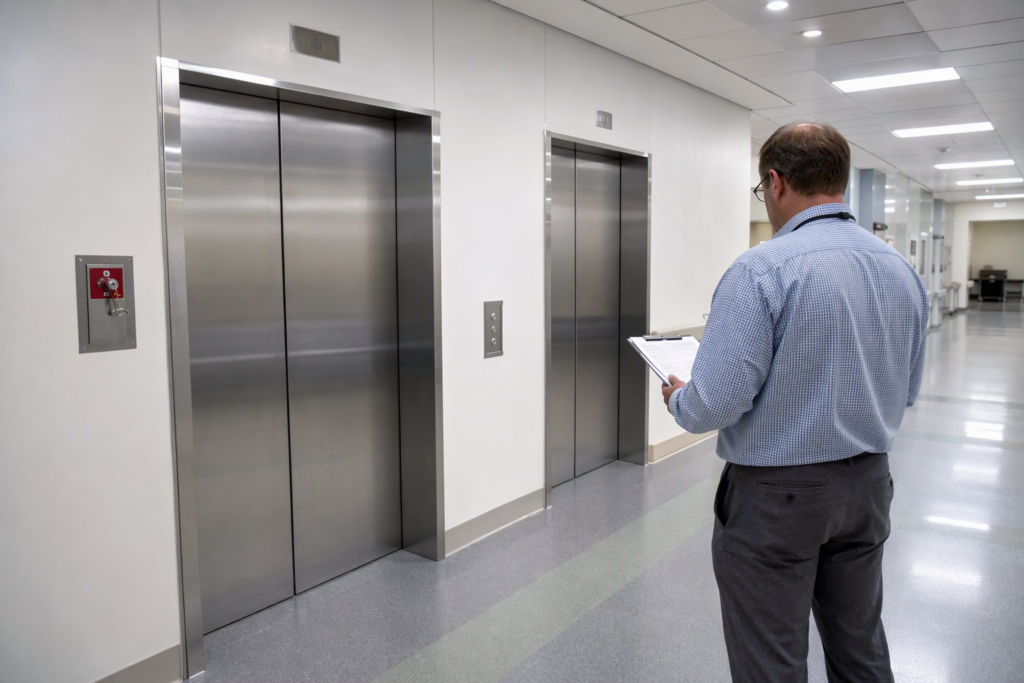
What are the elevator safety requirements for Houston hospitals and healthcare facilities?
Houston hospitals and healthcare facilities face heightened elevator safety and reliability standards due to the critical nature of patient transport, the requirements of The Joint Commission, and specific ASME A17.1 provisions applicable to health care occupancies.
Healthcare elevators in Houston must meet all standard ASME A17.1 requirements plus additional considerations: cars must be large enough to accommodate stretchers and medical equipment per accessibility and operational standards; fire service operations must be properly configured and tested; backup power for elevator operation during generator transfer is typically required; and emergency communication systems must connect to continuously monitored locations as required under both ADA and ASME A17.1.
Maintenance scheduling in hospital settings requires coordination to minimize disruption to patient care operations, with work often performed during low-census periods or in coordination with facilities management. Maintenance providers serving Houston healthcare facilities must understand these operational sensitivities in addition to the technical requirements.
How do Houston elevator maintenance companies handle multi-building portfolios?
A capable Houston elevator maintenance company should be able to manage multi-building portfolios through centralized account management, coordinated scheduling, consolidated reporting, and a single point of contact for property managers overseeing multiple assets.
For Houston property management companies and real estate investment trusts managing multiple buildings, elevator maintenance consistency across a portfolio is a significant operational concern. A provider that can deliver standardized documentation, coordinated inspection scheduling around Texas TDI annual inspection deadlines, and portfolio-level compliance reporting simplifies the administrative burden on facilities teams.
AmeriTex Elevator serves commercial clients across multiple Texas markets — Houston, Dallas, Austin, and San Antonio — making it well-positioned to support property owners and managers with assets distributed across the state. Centralized account management across locations enables consistent service standards and reporting regardless of which city the elevator equipment is located in.
What is elevator modernization and when should Houston building owners consider it?
Elevator modernization is the partial or full replacement of aging elevator components — including controls, drives, door systems, cab interiors, and safety devices — to improve reliability, safety, energy efficiency, and code compliance without replacing the entire elevator structure.
Common modernization scopes for Houston buildings include controller and drive replacements, which convert older relay-logic systems to modern solid-state programmable controllers with diagnostic capabilities; door operator modernization, which addresses the most common source of service callbacks; and hydraulic power unit replacements, which improve energy efficiency and eliminate older fluid types that pose environmental compliance concerns.
Building owners should consider modernization when: repair costs are increasing year-over-year on aging equipment; parts for the existing system are becoming difficult to source; the equipment cannot meet updated ASME A17.1 safety device requirements through adjustment alone; energy consumption is significantly higher than modern equivalents; or the elevator experience — speed, leveling accuracy, door performance — is creating tenant dissatisfaction.
What OSHA requirements apply to elevator maintenance workers and building owners in Houston?
OSHA regulations establish workplace safety requirements that apply both to elevator technicians performing maintenance and to building owners who must ensure safe working conditions in machine rooms, elevator pits, and on top of elevator cars.
The Occupational Safety and Health Administration (OSHA) regulates the working conditions that elevator technicians encounter during maintenance — including confined space entry for elevator pits, lockout/tagout procedures for energy isolation, working at heights on top of elevator cars, and machine room safety. Building owners have a responsibility to ensure that machine rooms are accessible, properly illuminated, and meet the physical requirements specified in ASME A17.1 so that maintenance technicians can work safely.
Houston building owners should verify that their elevator machine rooms comply with ASME A17.1 requirements for clearances, lighting, temperature control, and access security — not only because these are code requirements for the elevator system itself, but because they directly affect the safety of the technicians performing maintenance.
How can I verify that an elevator maintenance company in Houston is properly licensed?
To verify that a Houston elevator maintenance company is properly licensed, check the Texas Department of Insurance Elevator Safety Program’s public registry of licensed elevator companies, contractors, and inspectors.
Texas requires that elevator companies performing maintenance and repair work be registered with the TDI Elevator Safety Program, and that individual technicians hold appropriate licenses issued by the state. Building owners can request the company’s TDI registration number and verify it through the TDI public license lookup tool. This verification step is a fundamental due diligence requirement before signing any elevator maintenance agreement in Texas.
In addition to state licensing, property owners should confirm that the maintenance provider carries adequate general liability and workers’ compensation insurance. An uninsured contractor performing maintenance in a Houston building exposes the building owner to significant financial risk if a workplace injury occurs on the property. AmeriTex Elevator operates in full compliance with Texas licensing requirements across all of its Texas service markets.
Ready to Work with Houston’s Trusted Elevator Maintenance Professionals?
Building owners, property managers, and facilities directors across Houston rely on certified, code-compliant elevator maintenance to protect tenants, reduce liability, and keep operations running without interruption. From routine preventive maintenance to full modernization assessments, AmeriTex Elevator provides the technical expertise and regulatory knowledge Houston properties demand.
Contact AmeriTex Elevator for a free elevator assessment — call 866-679-4313 today.
AmeriTex Elevator serves Houston, Dallas, Austin, and San Antonio in Texas, as well as Los Angeles and San Diego in California.
Need elevator service you can rely on? AmeriTex Elevator is ready to help.