Elevator Service in Houston, TX | AmeriTex Elevator
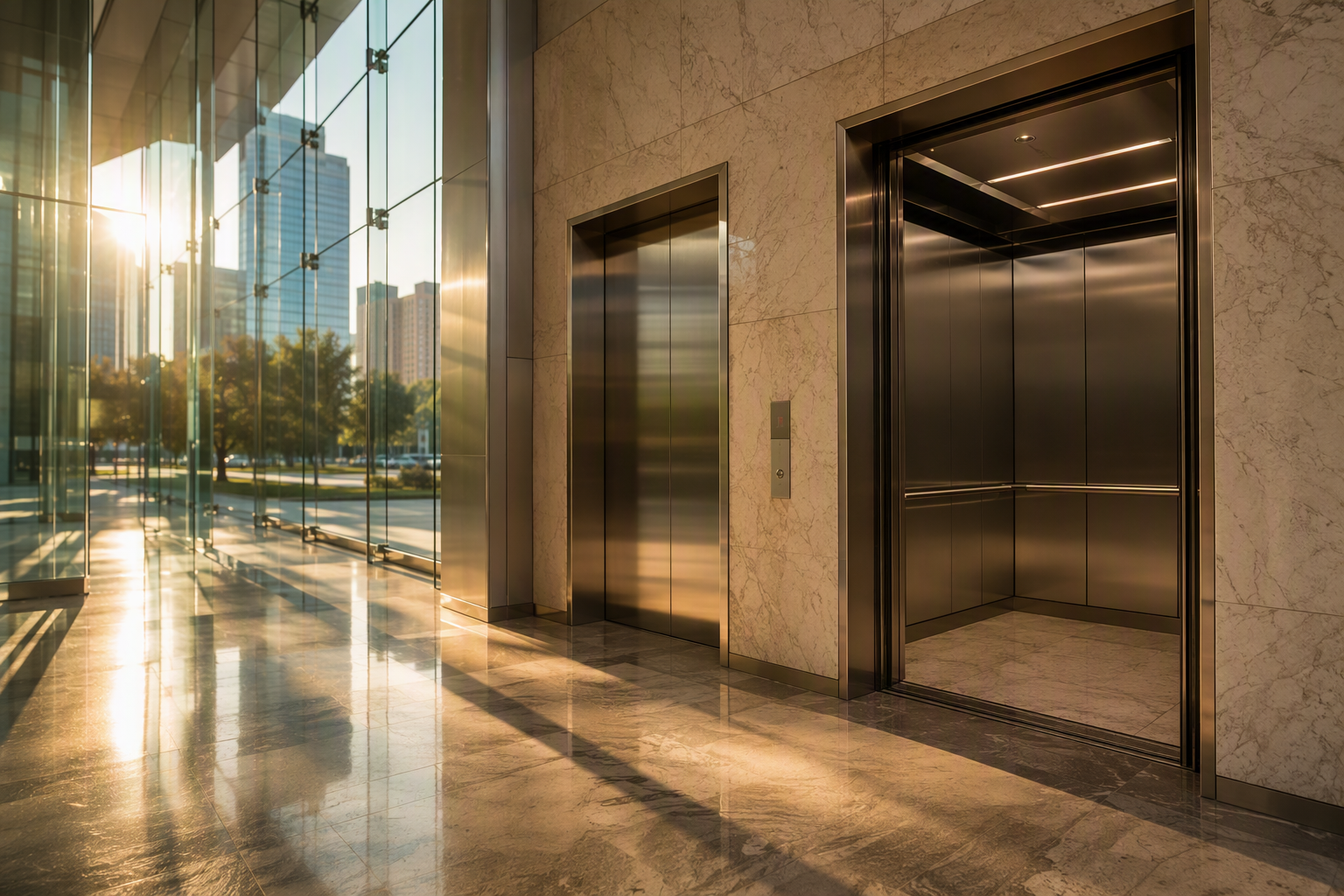
Elevator service in Houston, TX requires more than a wrench and a work order. With Texas-specific inspection mandates, evolving federal accessibility standards, and a commercial real estate market that demands near-constant uptime, building owners and property managers face real complexity. AmeriTex Elevator serves the Greater Houston area with code-compliant maintenance, modernization, and repair services tailored to local regulatory requirements and the demands of the Texas climate.
What Are the Most Important Elevator Industry Trends Shaping 2025 and 2026?
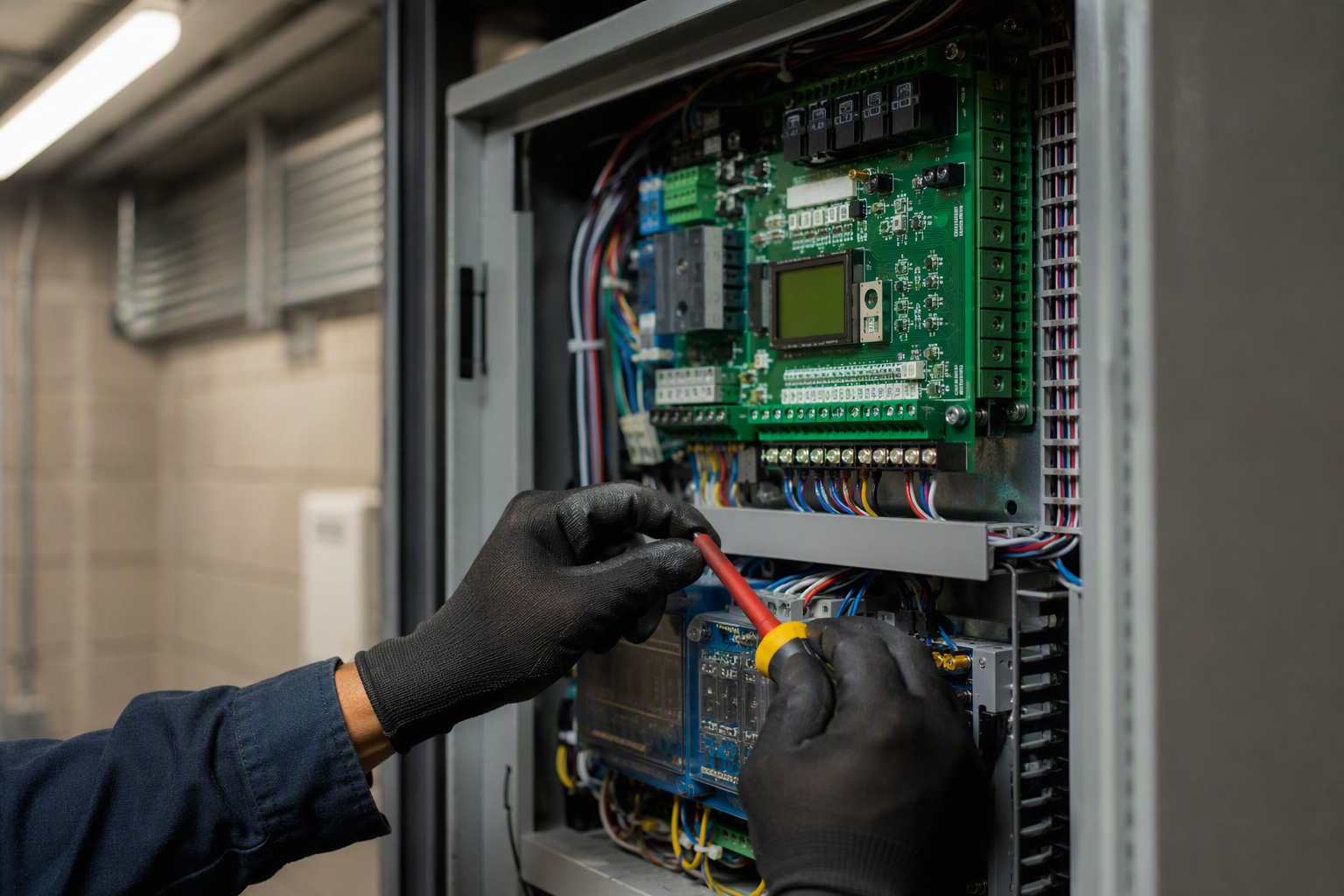
The elevator industry in recent years has been shaped by three converging forces: stricter code enforcement, aging equipment infrastructure, and a growing emphasis on predictive maintenance over reactive repair.
Across commercial real estate, demand for elevator modernization has grown as buildings constructed in the 1970s through 1990s reach the end of their original equipment lifecycles. Hydraulic systems, relay-logic controls, and aging cab interiors are increasingly being replaced with microprocessor controls, energy-efficient machines, and ADA-compliant cab configurations.
Federal accessibility requirements under the Americans with Disabilities Act (ADA) continue to drive retrofits in older structures. Elevator controls, door timing, cab signage, and floor buttons must meet specific dimensional and operational criteria — requirements that affect a significant portion of Houston’s older commercial and multifamily building stock.
Workplace safety enforcement from OSHA also plays a role in how elevator contractors approach maintenance protocols, particularly for equipment in industrial, warehouse, and construction settings where personnel lifts and freight elevators are common.
What Elevator Codes and Regulations Apply in Texas?

Texas elevator regulation falls under the Texas Department of Insurance (TDI), which oversees elevator inspections through its Elevator Safety Program. Elevators in Texas must be inspected at regulated intervals and must carry a current Certificate of Inspection to legally operate.
The governing technical standard for elevator safety in Texas — as in most of the United States — is the ASME A17.1 Safety Code for Elevators and Escalators. This code establishes requirements for design, construction, operation, inspection, testing, maintenance, alteration, and repair of elevators and escalators. Texas generally adopts updates to the ASME A17.1 code through the state’s rulemaking process, meaning that building owners must stay current with both state adoption timelines and the underlying ASME standard.
For existing installations, the companion standard ASME A17.3, Safety Code for Existing Elevators and Escalators, establishes retrofit and upgrade requirements based on installation date and equipment type.
Houston-area building owners should also be aware that some municipalities within the Greater Houston region may have additional local ordinances governing elevator permits, contractor licensing, and inspection scheduling. AmeriTex Elevator works within this multi-layered compliance environment to help clients maintain lawful operation.
How Often Do Elevators in Texas Need to Be Inspected?
Under Texas law, conveyances — including passenger elevators, freight elevators, escalators, and accessibility lifts — must be inspected periodically by a licensed elevator inspector. The TDI Elevator Safety Program sets the inspection cycle, and a valid Certificate of Inspection must be posted in or near the elevator cab at all times.
Beyond the mandatory state inspection, the ASME A17.1 Safety Code for Elevators and Escalators outlines recommended maintenance and testing intervals, including monthly, annual, and five-year safety test requirements depending on equipment type. Full-load safety tests and governor/safeties tests each carry distinct intervals and documentation requirements.
Compliance is not a one-time event. Building owners should work with a qualified elevator contractor to establish a maintenance schedule that satisfies both the mandatory inspection cycle and the preventive maintenance requirements that keep equipment operating safely between inspections.
What Types of Elevator Services Are Available for Houston Buildings?
AmeriTex Elevator provides a comprehensive range of elevator services for commercial, multifamily, industrial, and institutional buildings across the Greater Houston area:
- Preventive Maintenance: Scheduled service visits to lubricate, adjust, test, and document elevator components in accordance with ASME maintenance standards.
- Modernization: Upgrading aging control systems, machines, cabs, doors, and safety devices to current code requirements and performance expectations.
- Repair Services: Diagnosis and correction of mechanical, electrical, and hydraulic failures affecting elevator reliability and safety.
- Code Compliance Consulting: Assessment of existing equipment against current Texas and ASME requirements, with a written summary of deficiencies and recommended remediation.
- New Installation: Coordinating and executing elevator installations in new construction or major renovation projects.
- ADA Accessibility Upgrades: Modifications to elevator controls, cab interiors, and door operations to meet ADA requirements.
- Emergency Repair Response: AmeriTex Elevator maintains availability for emergency calls to address sudden equipment failures that affect building operations or occupant safety.
What Should Building Owners Do Immediately When an Elevator Breaks Down?
- Ensure no occupants are trapped. If anyone is inside a stalled elevator cab, contact emergency services (911) immediately — do not attempt to force doors open or extract occupants without trained personnel.
- Post the elevator out of service. Place clear signage at all landings indicating the elevator is not in use and directing occupants to stairs or an alternative accessible route.
- Document the failure. Note the time, floor level of the cab, any error codes displayed, and a description of what occurred immediately before the failure.
- Contact your elevator service contractor. Provide the documentation gathered in step three and request dispatch for emergency repair service.
- Notify your building management and insurance carrier if the failure involves a personal injury, property damage, or an extended service disruption affecting tenants.
- Do not restore service until cleared by a qualified technician. Restoring a failed elevator without professional inspection creates liability and safety risk.
How Does Elevator Modernization Compare to Full Replacement?
This is among the most common questions building owners ask when equipment begins to underperform or generate frequent repair calls. The answer depends on the age of the equipment, the type of drive system, the availability of replacement parts, and the current code compliance status of the installation.
Modernization — replacing specific components such as the controller, machine, or cab interior while retaining the hoistway and structural elements — is typically less disruptive and less costly than a complete tear-out and replacement. It also allows the scope of work to be phased, which can be valuable for occupied buildings where extended elevator downtime is operationally problematic.
Full replacement becomes the preferred option when the hoistway dimensions are inadequate for current code requirements, when the original equipment type is no longer supportable, or when the cumulative cost of component replacement approaches or exceeds the cost of new installation.
A qualified elevator contractor can provide a written assessment comparing the two paths for a specific installation — including estimated scope, timeline, and the code compliance outcome of each approach.
What Markets and Building Types Does AmeriTex Elevator Serve in the Houston Area?
AmeriTex Elevator serves a broad cross-section of the Houston commercial and residential real estate market, including:
- Office buildings and corporate campuses
- Multifamily residential communities and high-rise condominiums
- Healthcare facilities, medical office buildings, and hospitals
- Retail centers and mixed-use developments
- Industrial facilities and distribution centers requiring freight elevator service
- Educational institutions including universities and school districts
- Government and municipal buildings requiring strict code compliance documentation
- Hospitality properties including hotels and event venues
Houston’s growth as one of the largest metropolitan areas in the United States means that elevator demand is sustained across all of these sectors. AmeriTex Elevator’s local presence allows the company to respond to the specific needs of the Houston market — including the effects of heat, humidity, and the building density of central Houston’s commercial core.
How Should Building Owners Evaluate and Select an Elevator Service Contractor?
Selecting an elevator service provider is a compliance and liability decision, not just a purchasing decision. The following criteria are worth evaluating:
- Licensure: Verify that the contractor holds a current Texas elevator contractor license as required by TDI.
- Code familiarity: The contractor should demonstrate working knowledge of current ASME A17.1 and A17.3 requirements as adopted in Texas.
- Maintenance documentation: Ask whether the contractor provides written maintenance logs, inspection records, and deficiency reports — documentation that protects building owners in the event of an incident.
- Emergency availability: Confirm that the contractor has a process for responding to after-hours and emergency calls.
- Local market experience: A contractor with established history in the Houston market understands local permit processes, inspection schedules, and the particular challenges of the Gulf Coast environment.
- Contract transparency: Review maintenance agreements carefully for scope of coverage, exclusions, and terms for repair work outside the contract scope.
Schedule a Free Consultation with AmeriTex Elevator
Whether the priority is maintaining code compliance, reducing unplanned downtime, or planning a modernization project, AmeriTex Elevator is available to help Houston-area building owners and property managers make informed decisions about their vertical transportation equipment.
Contact AmeriTex Elevator to schedule a free, no-obligation consultation with a qualified elevator professional serving the Greater Houston area.
Call AmeriTex Elevator: 866-679-4313
AmeriTex Elevator — Certified Elevator Service for Houston, TX and the Surrounding Region.
Need elevator service you can rely on? AmeriTex Elevator is ready to help.