OEM vs. Independent Elevator Service: Pros and Cons — A Complete Decision Guide

Selecting the right elevator service provider is one of the most consequential maintenance decisions a building owner or facilities manager will make. The choice between an OEM service contract and an independent elevator service company affects annual operating costs, equipment longevity, regulatory compliance, and day-to-day tenant satisfaction. This guide breaks down every key factor so decision-makers can choose with confidence.
—
What Is the Difference Between OEM and Independent Elevator Service?
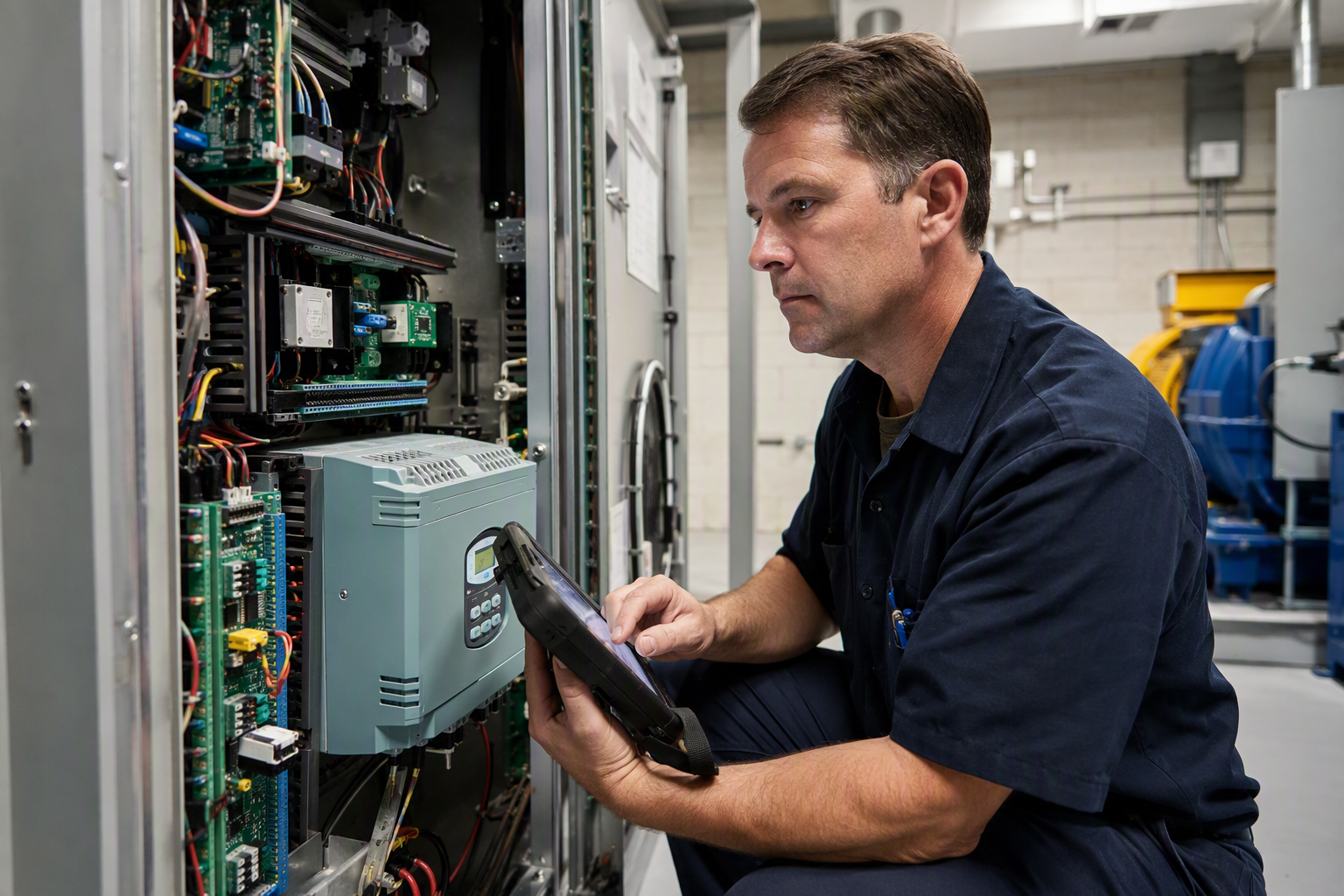
An OEM elevator service provider is the original manufacturer of the elevator — companies such as Otis, KONE, Schindler, or Thyssenkrupp — offering maintenance and repair contracts directly through their own branded service divisions. Because they built the equipment, they control proprietary software, diagnostic tools, and replacement parts for their own systems.
An independent elevator service company is a third-party firm that is not affiliated with any single manufacturer. Independent providers are trained and certified to work across multiple equipment brands and can service OEM units as well as legacy or multi-brand portfolios. Independent companies often offer broader service terms, more customizable contracts, and competitive pricing because they operate in an open market without manufacturer restrictions.
—
OEM vs. Independent Elevator Service: Full Comparison Tables
Table 1 — Core Service Characteristics
| Factor | OEM Service | Independent Service |
|---|---|---|
| Equipment Brand Coverage | Single brand (their own) | Multi-brand; cross-platform |
| Proprietary Parts Access | Direct access; may restrict third parties | Sourced through approved aftermarket or OEM supply channels |
| Proprietary Diagnostic Tools | Full access to manufacturer software | Limited access; relies on industry-standard tools and training |
| Contract Flexibility | Standardized contracts; limited customization | Flexible, negotiable terms tailored to building needs |
| Mixed-Brand Buildings | Requires multiple vendors | Single vendor for entire portfolio |
| Pricing Structure | Typically higher; manufacturer sets rates | Competitive; market-driven pricing |
| Local Responsiveness | Varies by regional dispatch center | Often locally owned; direct community presence |
| Warranty Alignment | Directly supports active manufacturer warranty | May affect some warranty terms during warranty period |
Table 2 — Compliance and Safety Standards
| Compliance Area | OEM Service | Independent Service |
|---|---|---|
| ASME A17.1 Safety Code for Elevators and Escalators | Fully equipped to meet code requirements | Fully equipped to meet code requirements |
| ADA Accessibility Guidelines | Addressed through manufacturer service programs | Addressed through certified technician training |
| OSHA Workplace Safety Standards | Covered under OEM safety protocols | Covered under independent company safety protocols |
| State/Local Inspection Requirements | Supported; OEM documentation readily available | Supported; independent companies maintain required records |
| Modernization Code Compliance | Focused on own brand upgrades | Can recommend and implement cross-brand modernization solutions |
Table 3 — Pros and Cons Summary
| OEM Service | Independent Service | |
|---|---|---|
| Pros |
|
|
| Cons |
|
|
—
When Should a Building Owner Choose OEM Elevator Service?
OEM service is most advantageous in three specific situations:
- Active manufacturer warranty period: During the initial warranty window, maintaining OEM service often preserves warranty coverage for parts and labor defects. Switching to an independent provider during this window could affect warranty claims on certain components.
- Highly proprietary systems: Some newer elevator models rely on closed software platforms where independent technicians have limited diagnostic access. If a building’s equipment falls into this category, OEM service may be necessary until the technology opens to the broader service market.
- Single-brand new installations: For a newly constructed building with a single brand of elevator still under its initial service agreement, staying with the OEM during the startup period ensures the most direct line to manufacturer support.
—
When Does Independent Elevator Service Provide Greater Value?
Independent elevator service becomes the stronger choice in several common real-world scenarios:
- Post-warranty equipment: Once manufacturer warranties expire, there is no contractual reason to remain with the OEM, and independent providers can deliver equivalent or superior service at more competitive rates.
- Mixed-brand portfolios: Buildings with multiple elevator brands — common in large commercial complexes, hospitals, or multi-property portfolios — benefit significantly from a single independent vendor who can service all units under one contract.
- Budget-constrained properties: Independent providers operate in a competitive market, which creates pricing incentives that OEM service divisions do not face in the same way.
- Desire for unbiased modernization guidance: Independent companies are not financially incentivized to recommend one brand’s upgrade path over another, which can result in more objective equipment assessments.
- Legacy or discontinued equipment: When an OEM discontinues parts support for older models, independent providers with broad parts networks often become the only practical service option.
—
How Does OEM vs. Independent Service Affect Elevator Safety Compliance?
Both OEM and qualified independent providers are required to adhere to the same regulatory framework. The ASME A17.1 Safety Code for Elevators and Escalators establishes the foundational safety, inspection, and maintenance standards for elevator systems in the United States, and these obligations apply equally regardless of whether the servicing party is the original manufacturer or an independent firm.
Similarly, ADA accessibility requirements mandate that elevators serving the public meet specific operational standards, and OSHA standards govern worker safety during elevator maintenance and repair activities — frameworks that all certified elevator companies must follow.
The critical distinction is competence, not affiliation. Building owners should verify that any provider — OEM or independent — can demonstrate current knowledge of applicable codes and local inspection requirements for the 2026 code cycle.
—
Can Independent Elevator Companies Access OEM Parts?
Parts availability is one of the most frequently cited concerns about independent elevator service. The answer depends on the equipment and the manufacturer’s parts distribution model:
- Commodity and non-proprietary parts (motors, cables, safety components conforming to ASME standards) are widely available through established elevator parts distributors, and independent companies source these routinely.
- Proprietary electronic components and software tied to newer closed platforms may only be available directly through the OEM. In these cases, an independent provider may need to subcontract or coordinate with the OEM for those specific components.
- Legacy and discontinued parts for older systems are often more reliably sourced by independent specialists who have developed aftermarket supply channels, since OEMs may reduce or eliminate parts support for discontinued product lines.
Reputable independent providers are transparent about parts sourcing and will clearly communicate when a component requires OEM supply channels.
—
How Do OEM and Independent Service Contracts Differ in Structure?
Contract structure is a meaningful differentiator between the two service models:
- OEM contracts are typically standardized templates with limited negotiation room. Coverage tiers (basic, full-maintenance, comprehensive) are defined by the manufacturer, and exit clauses can be restrictive.
- Independent contracts are generally more customizable. Building owners can negotiate coverage scope, response priorities, escalation terms, and contract length. This flexibility allows contracts to be structured around a specific building’s usage patterns and budget constraints.
Before signing any service agreement — OEM or independent — building owners should review terms for: parts and labor coverage scope, after-hours call coverage terms, contract termination provisions, and documentation and reporting obligations required for regulatory inspections.
—
What Happens to Compliance When Switching from OEM to Independent Service?
Switching service providers does not automatically create a compliance gap, but proper transition management is essential. A structured transition process helps maintain continuous compliance:
- Request a full maintenance records package from the outgoing OEM provider, including inspection reports, repair history, and any open deficiency notices.
- Schedule a pre-transition assessment with the incoming independent provider to document the current condition of all equipment.
- Confirm ASME A17.1 maintenance log continuity to ensure required maintenance records remain uninterrupted for state and local inspection purposes.
- Notify the relevant state elevator inspection authority if your jurisdiction requires reporting of a change in maintenance contractor.
- Review ADA operational compliance during the transition period to confirm all accessibility functions remain fully operational.
- Verify OSHA-compliant lockout/tagout documentation is transferred and understood by incoming technicians for each unit in the building.
—
Is Independent Elevator Service Appropriate for High-Rise Buildings?
High-rise and high-traffic buildings are served effectively by both OEM and independent providers, provided the independent company has appropriate expertise in high-rise elevator systems, including machine room-less (MRL) configurations, destination dispatch technology, and high-speed systems.
For complex high-rise portfolios, independent providers with multi-brand experience can offer a unified service approach across an entire building system. The key qualification criteria remain the same: demonstrated technical competency, compliance with ASME A17.1, and clear documentation practices.
—
How Should Building Owners Evaluate and Vet an Independent Elevator Service Company?
Not all independent providers offer the same level of service. A rigorous evaluation process protects building owners from substandard performance:
- Verify state licensure and local certification requirements for elevator service contractors in the applicable jurisdiction.
- Confirm ASME and code familiarity — ask specifically about the provider’s approach to compliance with the current ASME A17.1 Safety Code.
- Request references from comparable properties — buildings of similar size, use type, and equipment brand.
- Review the proposed contract in detail — assess coverage scope, documentation practices, and escalation procedures.
- Assess parts sourcing transparency — confirm the provider discloses when OEM-sourced parts are required and how that process is managed.
- Evaluate communication and reporting practices — regular written reporting supports inspection readiness and facilities management needs.
—
What Are the Long-Term Cost Implications of Choosing OEM vs. Independent Service?
Long-term cost outcomes depend on equipment type, building use, and contract negotiation, but several structural cost factors apply generally across the industry:
- OEM contracts can include automatic price escalation clauses tied to proprietary parts costs and manufacturer pricing decisions, which are outside the building owner’s control.
- Independent providers compete in an open market, creating downward price pressure that may benefit owners who rebid service contracts periodically.
- For older equipment beyond warranty, OEM parts pricing can be significantly higher than equivalent aftermarket components that meet ASME standards.
- Single-vendor independent contracts for multi-elevator buildings consolidate administrative overhead and may reduce total cost of ownership compared to maintaining multiple OEM relationships.
Building owners are advised to conduct a comprehensive contract review and competitive assessment at each renewal cycle rather than allowing agreements to auto-renew without evaluation.
—
Why Choose AmeriTex Elevator as Your Independent Elevator Service Partner?
AmeriTex Elevator is a certified independent elevator service company serving building owners and facilities managers who need reliable, compliant, and professionally managed elevator maintenance and repair programs. As an independent provider, AmeriTex Elevator is not tied to any single manufacturer’s agenda — the focus is entirely on the performance, safety, and compliance of the equipment in each client’s building.
AmeriTex Elevator services a broad range of elevator brands and system types, supports compliance with the ASME A17.1 Safety Code for Elevators and Escalators, and helps building owners navigate the full range of maintenance, modernization, and inspection requirements.
For building owners evaluating whether independent service is the right fit for their property, an objective assessment from an experienced independent provider is the most practical starting point.
—
Get an Expert, No-Cost Evaluation of Your Elevator Service Options
Contact AmeriTex Elevator for a free elevator assessment. An experienced service professional will review your equipment, current service agreement, and compliance status — and provide clear, unbiased guidance on whether OEM or independent service best fits your building’s needs.
Call AmeriTex Elevator today: 866-679-4313
Need elevator service you can rely on? AmeriTex Elevator is ready to help.