Elevator Inspection Checklist: A Complete Comparison and Decision Guide
Elevator inspections are not optional — they are a legal and safety imperative governed by national codes and enforced at the state and local level. Whether you manage a commercial high-rise, a residential mid-rise, or a healthcare facility, understanding what belongs on an elevator inspection checklist, how different inspection types compare, and how to select a qualified service provider can mean the difference between full compliance and costly liability. This guide covers every dimension of the topic so building owners and facility managers can make confident, informed decisions.
What Does a Standard Elevator Inspection Checklist Cover?
A thorough elevator inspection checklist addresses every subsystem that affects passenger safety and reliable operation. While specific requirements vary by jurisdiction, most checklists align with the framework established by the ASME A17.1 Safety Code for Elevators and Escalators, which is the foundational standard adopted — in whole or with amendments — by most U.S. states and many international jurisdictions.
Core Checklist Categories
| Checklist Category | Key Items Inspected | Why It Matters |
|---|---|---|
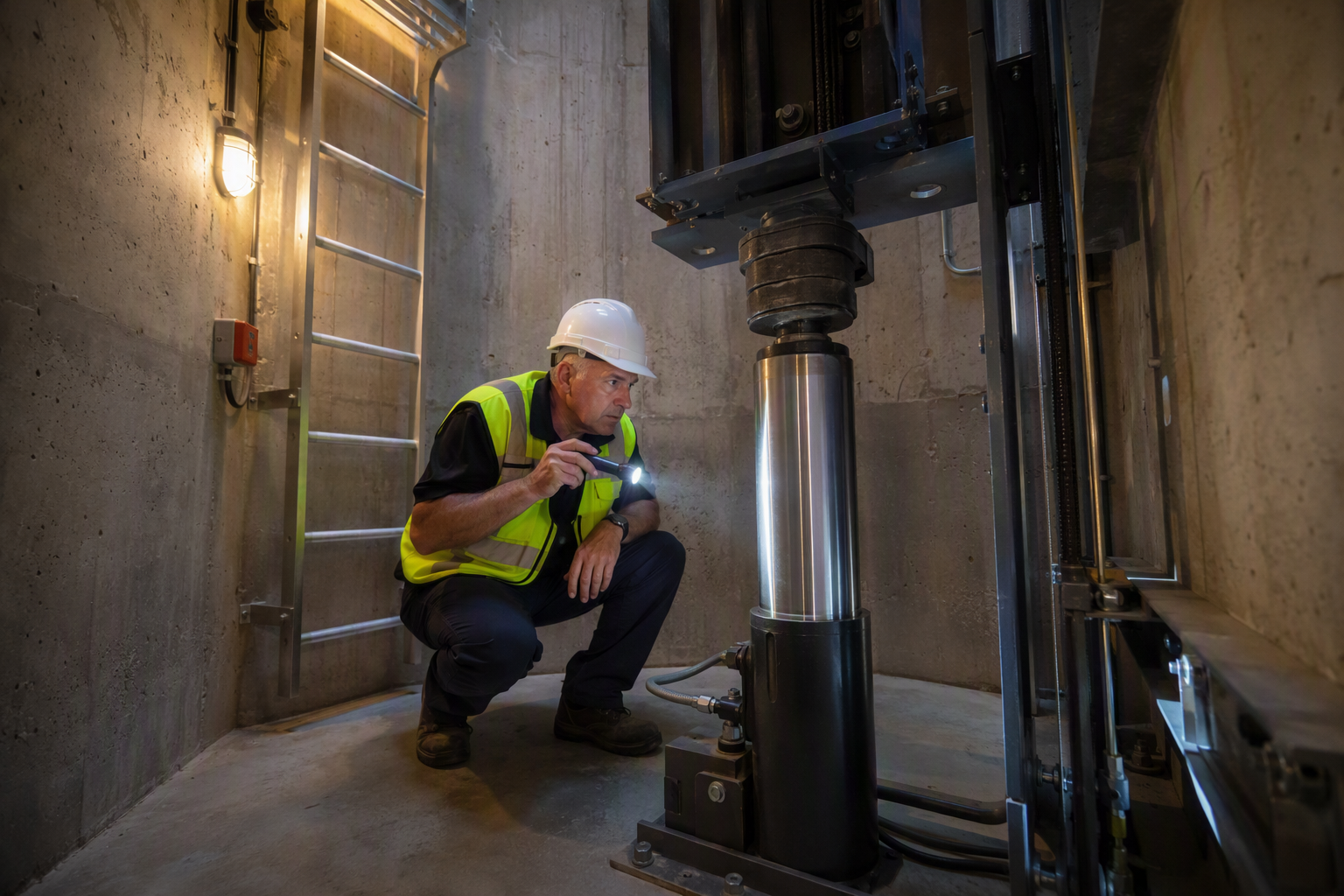
| Hoistway & Machine Room | Pit condition, clearances, lighting, sump pump, fire protection, guarding | Structural integrity and technician safety |
| Traction / Hydraulic Drive System | Sheaves, wire ropes or chains, hydraulic fluid levels, cylinder integrity | Primary means of vertical travel; failure here is catastrophic |
| Safety Devices | Governor, safeties, buffers, overspeed protection, oil buffers | Last line of defense against uncontrolled movement |
| Doors & Entrances | Door reopening device, closing force, interlock function, sill condition | Most common source of passenger injury |
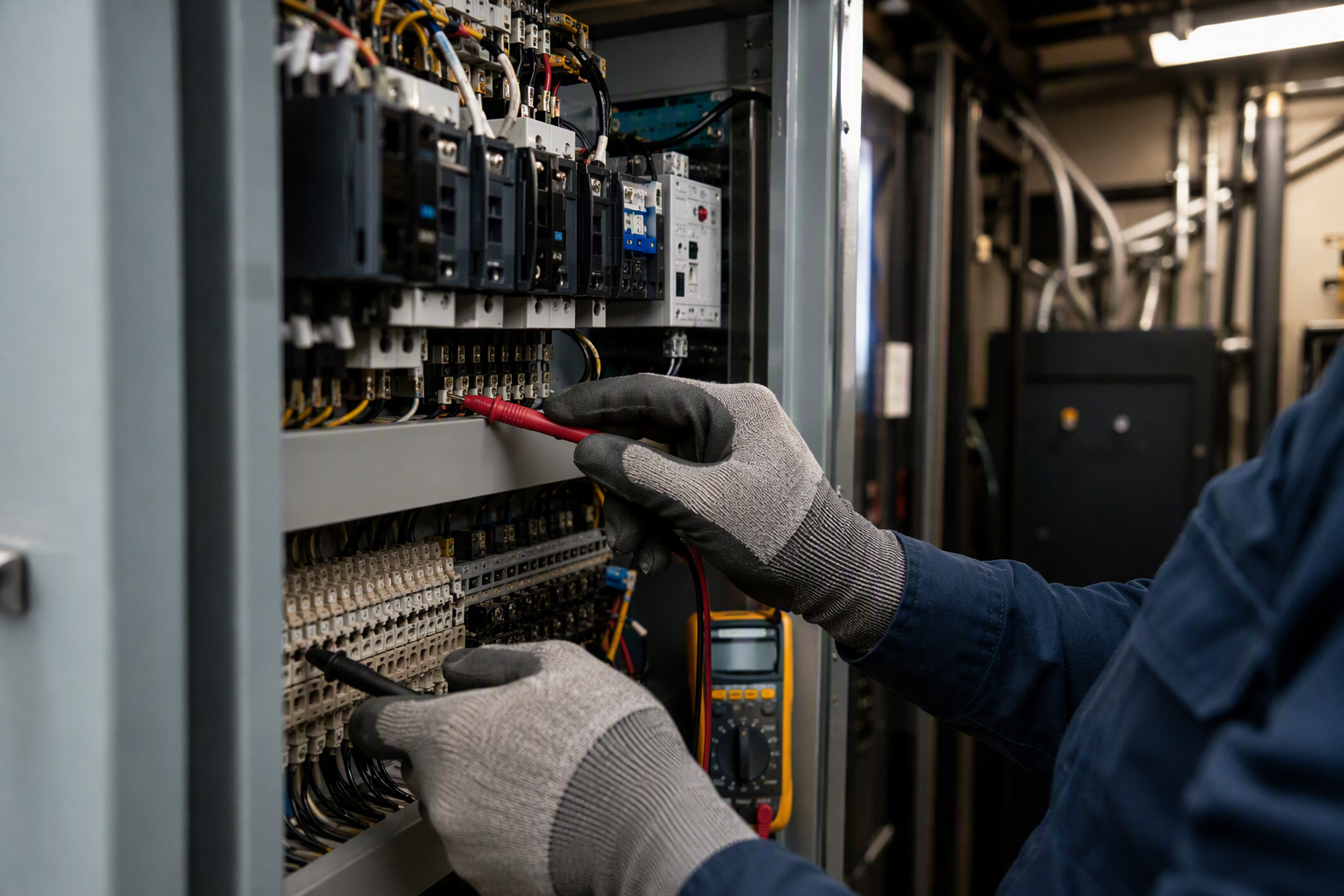
| Electrical & Controls | Wiring insulation, control panel, emergency lighting, alarm system | Prevents electrical fires and entrapment incidents |
| Cab & Fixtures | Operating panel, emergency phone, capacity posting, ventilation, flooring | Passenger safety and ADA compliance |
| Accessibility Compliance | Button height, Braille labels, audible signals, floor leveling | Required under the Americans with Disabilities Act (ADA) |
| Documentation & Permits | Current inspection certificate, maintenance logs, load test records | Regulatory compliance and liability protection |
How Do Different Types of Elevator Inspections Compare?
Not all elevator inspections are created equal. Building owners frequently confuse routine maintenance visits with statutory inspections or one-time condition assessments. The table below clarifies the distinctions.
| Inspection Type | Who Conducts It | Frequency | Primary Purpose | Output | Required by Code? |
|---|---|---|---|---|---|
| Periodic Maintenance Inspection | Licensed elevator mechanic / service company | Monthly or quarterly | Prevent failures, lubricate, adjust components | Maintenance log entry | Indirectly (maintenance required under ASME A17.1) |
| Periodic Safety Test (Statutory) | State-licensed elevator inspector (third-party or AHJ) | Annually or biennially per jurisdiction | Verify code compliance and safety device function | Official inspection certificate | Yes — required in all U.S. jurisdictions |
| Category 1 Full-Load Safety Test | Licensed elevator mechanic + witness inspector | Annually (per ASME A17.1) | Test safeties and buffers under rated load | Load test report | Yes |
| Category 5 Full-Speed Safety Test | Licensed elevator mechanic + witness inspector | Every 5 years (per ASME A17.1) | Governor and safety at full rated speed | Load test report | Yes |
| Pre-Purchase / Condition Assessment | Independent elevator consultant or service company | One-time (at transaction) | Identify deficiencies before acquisition | Written condition report with cost estimates | No — voluntary |
| Post-Modernization Acceptance Inspection | AHJ inspector | One-time (after major work) | Verify upgraded components meet current code | New inspection certificate | Yes |
What Are the Pros and Cons of Each Inspection Approach?
| Approach | Pros | Cons | Best For |
|---|---|---|---|
| In-House Maintenance Program | Familiarity with equipment; faster response; relationship-based service | May lack independence; conflicts of interest possible; not a substitute for statutory inspection | Ongoing preventive care |
| OEM (Manufacturer) Service Contract | Proprietary parts access; factory-trained technicians | Often higher cost; less flexible; may not cover older equipment | New elevators under warranty |
| Independent Certified Service Company | Competitive pricing; multi-brand expertise; unbiased assessment | Must vet credentials carefully | Most buildings seeking value and flexibility |
| Third-Party Inspector Only | Fully independent; legally required for statutory inspections | Does not perform repairs; limited to observation and reporting | Compliance verification |
What Steps Should a Building Owner Take to Prepare for an Elevator Inspection?
Preparing properly for a statutory elevator inspection reduces the risk of failed items, citation notices, and elevator shutdowns. Follow these steps in order:
- Gather all documentation. Compile the current inspection certificate, prior inspection reports, maintenance logs, load test records, and any permits for recent work. Inspectors will request these on arrival.
- Confirm the inspection certificate is current. A lapsed certificate can trigger an immediate order to cease operation. Contact your local Authority Having Jurisdiction (AHJ) if you are unsure of your renewal date.
- Verify machine room access. Clear the machine room of stored items, confirm adequate lighting is functional, and ensure the room is locked to unauthorized personnel.
- Check pit conditions. The pit must be dry, clean, and properly lit. A water-logged or cluttered pit is one of the most common citation items.
- Test the emergency phone. Dial out from the cab emergency phone and confirm it connects to a monitored line. Non-functional emergency phones are a code violation.
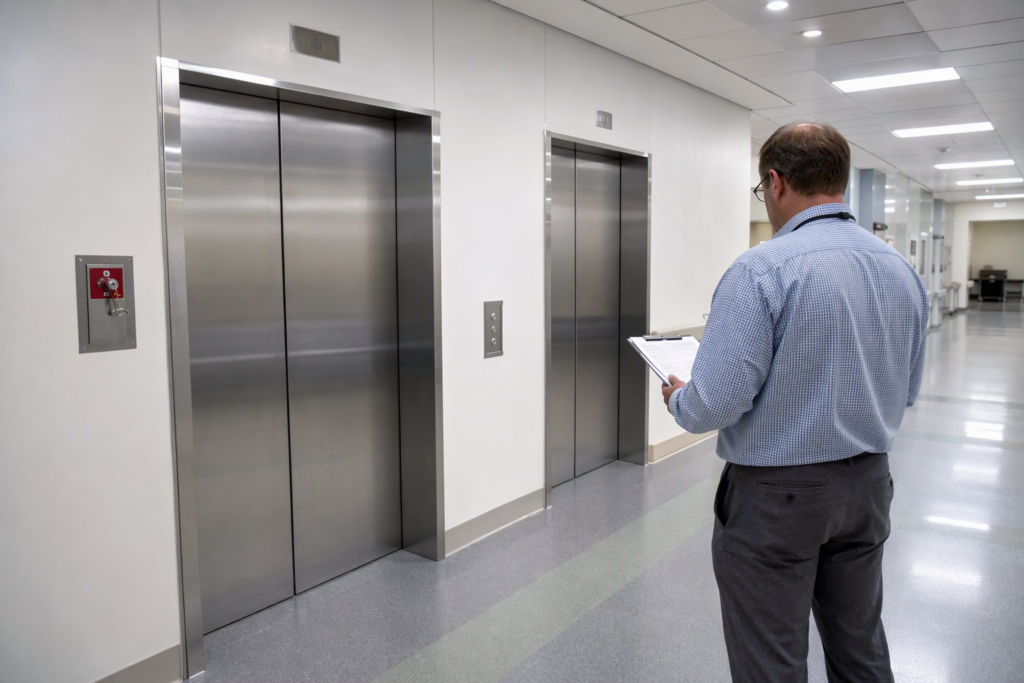
- Inspect door operation yourself. Walk each floor and manually test that doors open and close smoothly, that the reopening device responds to obstruction, and that sills are free of debris.
- Review ADA compliance items. Confirm Braille signage is intact, buttons are illuminated, and audible floor announcements function if required by your jurisdiction under the Americans with Disabilities Act.
- Schedule a pre-inspection walk-through with your service company. An independent elevator service company such as AmeriTex Elevator can identify deficiencies before the official inspector arrives, allowing corrective action without a formal citation.
What Are the Most Commonly Failed Items on an Elevator Inspection?
Inspection failures delay certificate renewal and, in serious cases, result in elevator shutdowns that disrupt building operations. The most frequently cited deficiencies include:
- Non-functional or unmonitored emergency telephone
- Pit flooding, standing water, or excessive debris
- Door interlock failures or worn door reopening devices
- Expired or missing load test documentation
- Inadequate or burned-out machine room lighting
- Missing or illegible capacity and certificate postings in the cab
- Deteriorated wire ropes approaching discard criteria defined in ASME A17.1
- ADA non-compliance (missing Braille, improper button height, leveling outside tolerance)
How Does Elevator Inspection Frequency Differ by Jurisdiction?
The ASME A17.1 Safety Code for Elevators and Escalators establishes the national baseline for inspection intervals, but individual states and municipalities adopt their own editions and amendments. As of 2026, most jurisdictions require a full periodic inspection at least annually, while some states permit a biennial cycle for low-traffic installations. Category 5 full-speed safety tests are universally required on a five-year interval under ASME A17.1. Building owners should consult their local AHJ or a qualified elevator service company to confirm the exact schedule applicable to their equipment and location.
What Is the ROI of Proactive Elevator Inspections Versus Reactive Repairs?
The financial case for proactive inspection and maintenance is well-established in facilities management, even without citing specific internal figures. Consider the comparison qualitatively:
| Factor | Proactive Inspection Program | Reactive / Breakdown-Only Service |
|---|---|---|
| Component Lifespan | Extended — wear identified early and corrected before failure | Shortened — components run to failure, accelerating degradation |
| Downtime Risk | Low — issues addressed on maintenance schedule | High — unplanned outages disrupt tenants and operations |
| Repair Cost Profile | Predictable, lower per-incident cost | Unpredictable, higher emergency labor and parts cost |
| Compliance Risk | Low — documentation is current and deficiencies are pre-corrected | High — lapsed certificates and citations possible |
| Liability Exposure | Reduced — documented due diligence supports defense | Elevated — gaps in maintenance records are problematic in litigation |
| Tenant / Occupant Confidence | High — reliable, well-maintained equipment | Low — frequent outages erode trust |
What OSHA Requirements Apply to Elevator Inspections in the Workplace?
While elevator-specific code authority rests primarily with state and local AHJs under ASME A17.1, OSHA regulations apply to elevator-related work environments — particularly hoistway work, machine room access, and the safety of elevator maintenance personnel. OSHA’s General Duty Clause requires employers to provide workplaces free from recognized hazards, which includes ensuring that elevators used by employees are properly maintained and inspected. Facilities managers should ensure that any elevator service company working on their property complies with applicable OSHA lockout/tagout and confined space protocols when performing pit or machine room work.
How Should Building Owners Choose Between an OEM and an Independent Elevator Service Company?
The decision between an OEM service contract and an independent certified elevator service company involves several practical trade-offs:
- Equipment age: OEM contracts are typically strongest for newer equipment under warranty. Older equipment may be better served by an independent company with multi-brand expertise.
- Proprietary diagnostics: Some manufacturers restrict diagnostic software access to their own technicians — a factor worth clarifying before signing a contract.
- Contract flexibility: Independent companies generally offer more customizable service agreements, allowing building owners to tailor the scope to their actual needs.
- Price competitiveness: Independent service providers often deliver comparable or superior service at a more competitive cost than OEM service contracts.
- Multi-unit portfolios: Property managers overseeing multiple buildings with mixed-brand equipment typically benefit from a single independent provider capable of servicing all makes and models.
AmeriTex Elevator is an independent certified elevator service company equipped to service a wide variety of elevator makes and models. For building owners evaluating their service options, AmeriTex Elevator provides unbiased condition assessments free from manufacturer affiliation.
What Documentation Should Be on File After a Completed Elevator Inspection?
After every statutory inspection, the following documents should be retained and made accessible:
- Current inspection certificate (posted in the elevator cab as required by most jurisdictions)
- Inspector’s written report, including any deficiencies noted and their disposition
- Load test reports for Category 1 and Category 5 tests
- Maintenance log covering the period since the last inspection
- Permits for any repairs or modifications completed during the cycle
- Correspondence with the AHJ regarding any extensions or variances
What Are the Consequences of Failing an Elevator Inspection?
Failing a statutory elevator inspection carries consequences that escalate with the severity of the deficiency:
- Correction notice: Minor deficiencies typically result in a written notice with a deadline for remediation and re-inspection.
- Conditional certificate: Some jurisdictions issue a conditional certificate allowing continued operation while non-critical items are corrected.
- Order to cease operation: Imminent hazard findings — such as failed safety devices, severe rope deterioration, or door interlock failure — can trigger an immediate shutdown order.
- Fines and penalties: Operating an elevator without a valid certificate or ignoring a correction order can result in civil penalties assessed by the AHJ.
- Increased liability: An elevator shutdown that strands passengers or a documented uncorrected deficiency that leads to injury creates significant legal exposure for the building owner.
How Does AmeriTex Elevator Support the Inspection Process?
AmeriTex Elevator supports building owners and facility managers at every stage of the inspection lifecycle — from routine maintenance visits that keep equipment in peak operating condition, to pre-inspection walk-throughs that identify and correct deficiencies before the statutory inspector arrives, to post-inspection remediation of cited items. As an independent elevator service company, AmeriTex Elevator provides objective assessments without the constraints of a manufacturer affiliation, making it a trusted partner for compliance-driven facilities management.
AmeriTex Elevator also assists clients in understanding the specific code edition adopted by their local jurisdiction and in maintaining complete, organized documentation that simplifies every future inspection cycle.
Elevator Inspection Checklist: Quick-Reference Summary
| Decision Factor | Recommended Action |
|---|---|
| Applicable code standard | Confirm your jurisdiction’s adopted edition of ASME A17.1 |
| Inspection frequency | At minimum annual; confirm exact interval with local AHJ |
| Pre-inspection preparation | Audit documentation, pit, machine room, doors, and emergency phone |
| Service provider type | Independent certified company offers best flexibility and value for most buildings |
| ADA compliance | Verify against ADA requirements at every inspection cycle |
| Workplace safety | Confirm service company follows OSHA lockout/tagout protocols |
| Documentation retention | Keep all inspection certificates, test reports, and maintenance logs on file |
| Failed inspection response | Engage a qualified service company immediately to remediate cited items |
Get Expert Help with Your Elevator Inspection Checklist
Navigating elevator inspection requirements, code compliance, and documentation can be complex. AmeriTex Elevator brings certified expertise to buildings of every type and size, helping facility managers stay ahead of compliance deadlines, correct deficiencies before they become citations, and maintain elevators that perform reliably for every passenger.
Contact AmeriTex Elevator for a free elevator assessment. Call 866-679-4313 to schedule your consultation today.
Need elevator service you can rely on? AmeriTex Elevator is ready to help.