Elevator Certificate of Compliance: Requirements, Process & What Building Owners Must Know
An elevator certificate of compliance — sometimes called an operating permit, inspection certificate, or annual operating certificate depending on the state — is one of the most consequential documents a building owner or property manager must maintain. It is not simply a bureaucratic checkbox. It is the documented proof that a licensed third-party inspector has examined the equipment, found it conforming to current safety standards, and authorized it for continued public use.
This guide covers the full topic cluster: what the certificate is, how it is obtained, how long it remains valid, what triggers re-inspection, how jurisdiction affects requirements, what happens when a certificate lapses, and how a qualified elevator service provider such as AmeriTex Elevator supports the compliance lifecycle from inspection preparation through corrective action and documentation.
What Is an Elevator Certificate of Compliance?
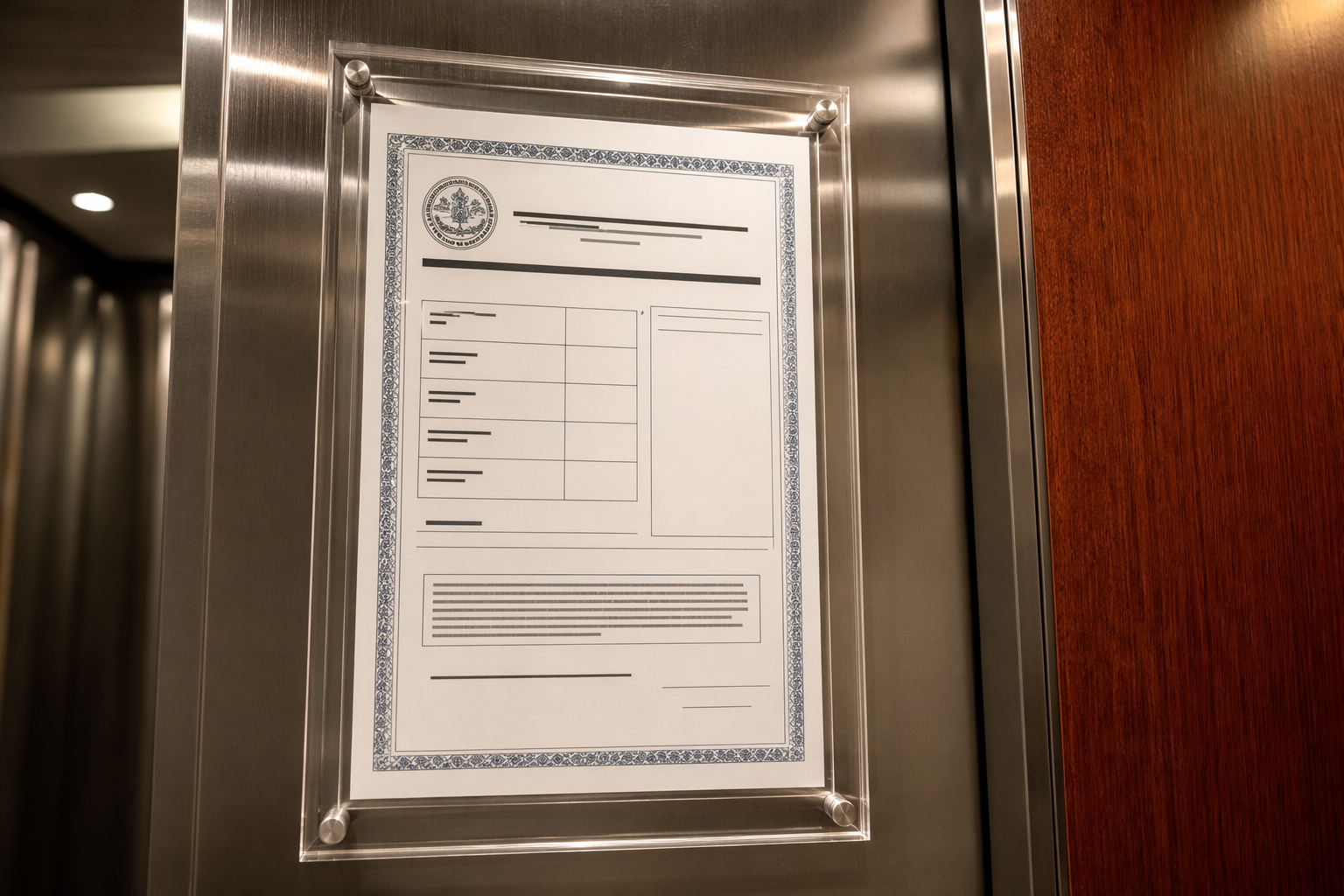
An elevator certificate of compliance is an official document issued by a state or municipal elevator inspection authority — or by an approved third-party inspection agency authorized by that authority — after a vertical transportation unit successfully passes a periodic safety inspection. The certificate identifies the specific unit (by unit number, location, and equipment type), the date of inspection, the inspector’s credentials, the code edition applied, and the certificate’s expiration date.
The governing technical standard across most U.S. jurisdictions is the ASME A17.1 Safety Code for Elevators and Escalators, which is updated on a periodic cycle and adopted — with or without local amendments — by states and municipalities. Some jurisdictions also reference ASME A17.3, the Safety Code for Existing Elevators and Escalators, which addresses retrofit and modernization requirements for older equipment.
Accessibility-related compliance — particularly for buildings subject to the Americans with Disabilities Act — runs parallel to the mechanical inspection process. Buildings with public elevator access must also satisfy requirements under the Americans with Disabilities Act (ADA), and a certificate of compliance does not by itself certify full ADA conformance.
Who Is Required to Have an Elevator Certificate of Compliance?

In virtually every U.S. state, any building that offers elevator service to tenants, employees, customers, or the public is required by law to hold a current, posted certificate for each unit. This includes:
- Commercial office buildings
- Multi-family residential buildings above a jurisdiction-defined number of stories
- Retail and hospitality properties
- Healthcare facilities
- Government and municipal buildings
- Industrial facilities where elevators or dumbwaiters are used
- Construction hoists and temporary platforms in many jurisdictions
Single-family private residences are generally exempt in most states, though that exemption varies. Building owners should verify requirements with their state elevator safety division or a qualified elevator service provider.
Workplace safety obligations under OSHA add a parallel layer of responsibility for employers in buildings where workers use or maintain elevator equipment — particularly in industries such as construction, warehousing, and manufacturing.
How Is an Elevator Certificate of Compliance Obtained?
The process to obtain or renew an elevator certificate of compliance follows a defined sequence. While specific procedures vary by jurisdiction, the general pathway is consistent across most states.
- Schedule a periodic inspection. The building owner or their designated elevator service company contacts the state elevator safety authority or an approved third-party inspection agency to schedule the required periodic inspection. Inspection intervals are set by the jurisdiction — commonly annual for traction and hydraulic elevators, though the specific cycle for each equipment category is defined in the adopted edition of ASME A17.1.
- Prepare the equipment. Before the inspection, the elevator service provider performs a pre-inspection maintenance check to identify and correct any observable deficiencies — worn components, lubrication issues, door timing irregularities, safety device function, and code-required documentation such as the maintenance control program (MCP).
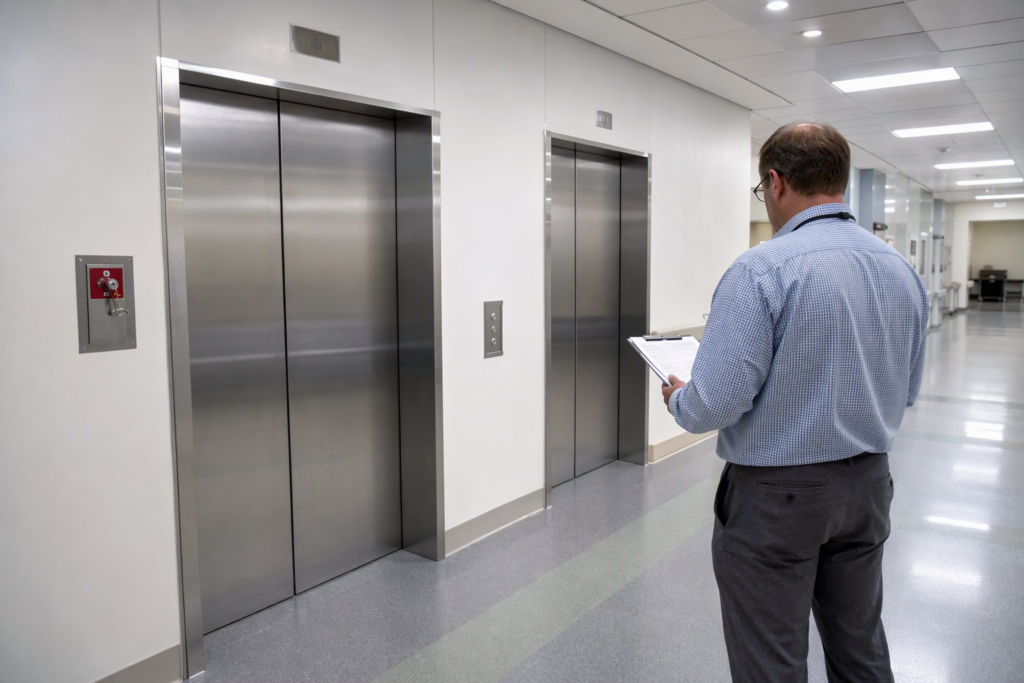
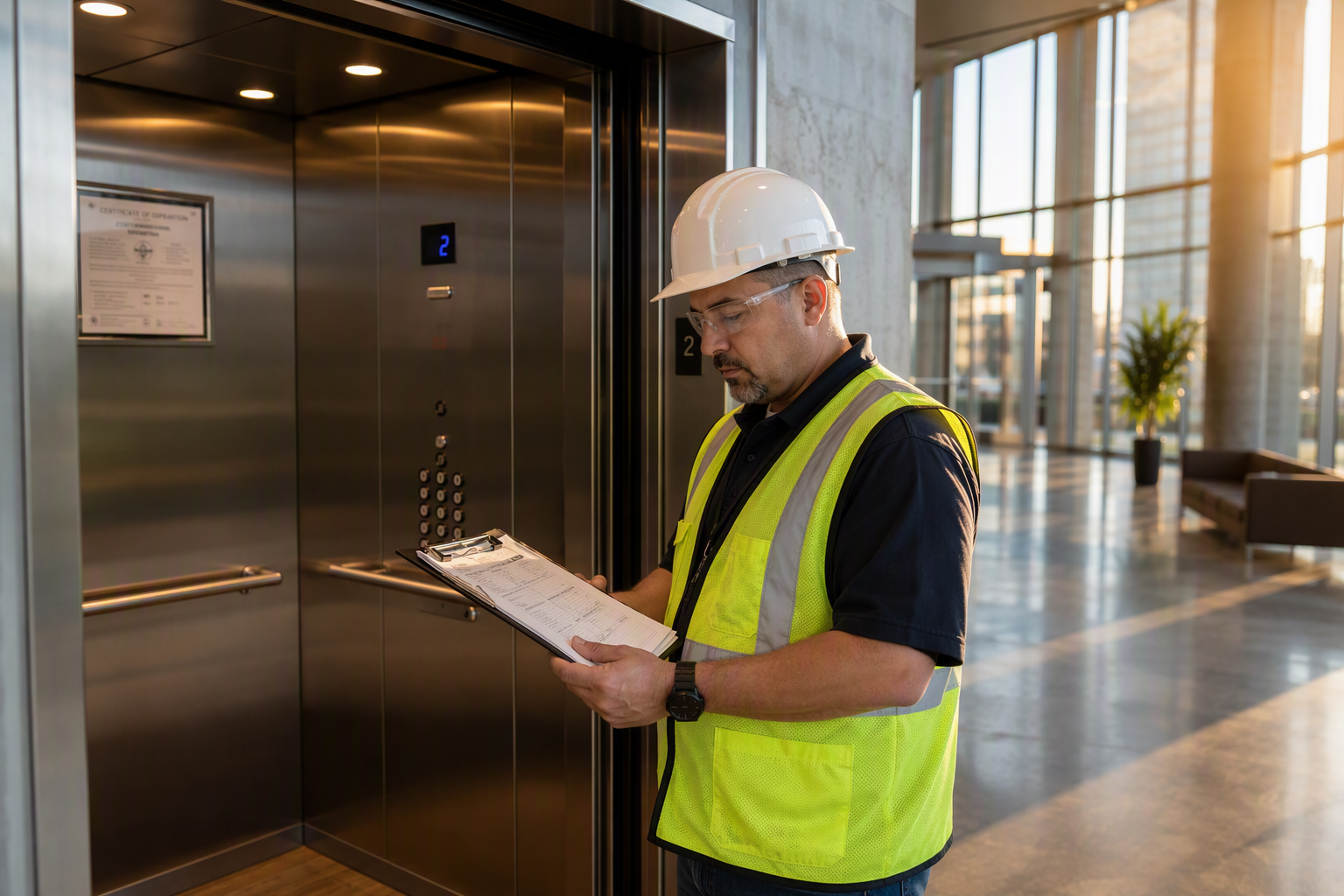
- Conduct the inspection. A licensed elevator inspector examines the equipment against the applicable code edition. The inspection covers mechanical systems, safety devices, electrical systems, fire service operation, door operations, machine room conditions, pit conditions, and emergency lighting and communications.
- Address any violations or deficiencies. If the inspector identifies items that do not comply with the code, the owner receives a written notice of violation. All violations must be corrected within the timeframe set by the authority — which may vary depending on whether the deficiency is classified as immediately hazardous or non-imminent.
- Pass reinspection (if required). For units with cited violations, a follow-up inspection confirms that corrective work has been completed properly by a licensed elevator mechanic.
- Receive and post the certificate. Once the unit passes inspection — either in the initial examination or after corrections — the authority or approved agency issues the certificate. Most jurisdictions require the certificate to be posted inside or immediately adjacent to the elevator car in a conspicuous location.
What Does an Inspector Examine During an Elevator Inspection?
Inspectors follow the checklist methodology established in the adopted edition of ASME A17.1 along with any jurisdiction-specific amendments. Key inspection areas include:
- Machine room equipment: motor, drive, controller, and oil containment for hydraulic units
- Hoistway conditions: clearances, guarding, pit ladder, pit lighting, and stop switch
- Safety devices: governor, safeties, buffers, and final limit switches
- Door systems: door open protection, restrictor, and closing force
- Car interior: illumination, emergency lighting, emergency communications system, capacity posting, and certificate posting
- Fire service operation: Phase I recall and Phase II firefighter service per local fire code requirements
- Seismic operation (in applicable jurisdictions): seismic switches and derail protection
- Maintenance control program documentation: the written MCP required under ASME A17.1 and maintenance log records
How Long Is an Elevator Certificate of Compliance Valid?
Certificate validity periods are set by each state or municipal jurisdiction, not by a single federal standard. In many states the certificate is issued on an annual cycle, meaning it must be renewed each year following a successful periodic inspection. Some jurisdictions use a two-year cycle for certain equipment types or low-rise residential buildings. Newly installed elevators typically require an acceptance inspection and certificate before the unit is placed in service for the first time — this initial certificate is separate from the ongoing periodic certificate cycle.
Building owners and property managers should track certificate expiration dates proactively. AmeriTex Elevator’s data-driven approach to maintenance planning includes monitoring inspection due dates as part of the ongoing service relationship, helping building owners avoid lapses that can result in operating violations.
What Happens If an Elevator Certificate of Compliance Lapses or Is Denied?
Operating an elevator without a current, valid certificate of compliance is a violation of state elevator safety law in virtually every jurisdiction. Consequences can include:
- Fines and penalties: States and municipalities impose per-day or per-occurrence monetary penalties for operating without a valid certificate. Fine structures vary significantly by jurisdiction.
- Ordered shutdown: Elevator safety authorities have the power to issue an immediate shutdown order — taking the unit out of service — until compliance is achieved and a new certificate is issued.
- Increased liability exposure: In the event of an elevator-related injury, the absence of a current certificate can significantly affect an owner’s legal liability position.
- Insurance complications: Commercial property and liability insurers may deny or limit coverage for incidents involving equipment that was operating without current certification.
- Building code violations: In some jurisdictions, an expired elevator certificate may trigger broader building code non-compliance findings.
How Do Jurisdiction and State Law Affect Certificate Requirements?
While the ASME A17.1 standard provides the national technical baseline, elevator inspection and certification law in the United States is governed at the state level, and in some cases at the county or municipal level. This creates meaningful variation across the country in:
- The edition of ASME A17.1 that has been adopted (states vary in how current their adopted edition is)
- Whether inspections must be performed by state employees or may be performed by approved third-party inspection agencies
- Inspection fee structures and payment processes
- Timelines for correcting cited violations
- Permit application and renewal procedures
- Whether the certificate must be physically posted inside the car or may be maintained in a building file
Working with a service provider such as AmeriTex Elevator that understands the specific requirements of the local jurisdiction reduces the risk of procedural errors that can delay certificate issuance.
What Is a Maintenance Control Program and Why Does It Matter for Compliance?
A Maintenance Control Program (MCP) is a written document — required under current editions of ASME A17.1 — that specifies the maintenance procedures, intervals, and components for a specific elevator unit. The MCP must be kept in the machine room and made available to inspectors. Inspectors verify both that the MCP exists and that the maintenance log demonstrates it is being followed.
An MCP that is missing, incomplete, or unsupported by maintenance records can result in a cited violation that delays or prevents certificate issuance. AmeriTex Elevator supports building owners in developing, maintaining, and documenting MCPs as part of a comprehensive maintenance service relationship.
How Does ADA Compliance Interact with an Elevator Certificate of Compliance?
The elevator certificate of compliance addresses mechanical and operational safety under elevator-specific codes. ADA compliance under the Americans with Disabilities Act addresses accessibility — cab dimensions, door timing, control button height and Braille marking, floor indicators, and emergency communication accessibility for individuals with hearing impairments, among other requirements.
A unit can hold a current certificate of compliance while still having ADA deficiencies, and vice versa. Building owners subject to ADA requirements should address both compliance frameworks as distinct but parallel obligations. Alterations or modernizations to elevator equipment may trigger ADA path-of-travel obligations that require additional accessibility upgrades beyond the elevator itself.
What Typically Drives the Cost of Elevator Inspection and Certificate Renewal?
The direct cost of obtaining or renewing an elevator certificate of compliance is driven by several factors that vary by jurisdiction and building situation:
- Jurisdiction inspection fees: State or municipal elevator safety authorities charge inspection fees that vary widely by location and equipment type.
- Third-party inspection agency fees: In jurisdictions that use approved third-party inspectors, agency fees apply in addition to or in place of government fees.
- Pre-inspection maintenance and repair: The most variable cost component is often the corrective work needed to bring the equipment into compliance before or after inspection. The scope and cost of this work depend entirely on equipment age, maintenance history, and any code changes since the last inspection cycle.
- Reinspection fees: Units that fail initial inspection and require a follow-up examination incur additional fees.
- Equipment age and code modernization: Older equipment may require safety upgrades to conform to code editions adopted since the original installation, adding to the compliance cost picture.
What Are the 2025–2026 Trends Affecting Elevator Certificate of Compliance Requirements?
Several qualitative trends are shaping elevator compliance requirements and enforcement through 2025 and 2026:
Increasing third-party inspection models: More jurisdictions are moving toward or expanding approved third-party inspection agency programs to reduce state inspector backlogs and accelerate inspection scheduling. This can benefit building owners who need timely certificate renewals but requires working with agencies approved for the specific jurisdiction.
Digital certificate and records management: A growing number of state elevator safety authorities are transitioning to online permit portals, digital certificate issuance, and electronic records submission. Building owners and service providers who adapt to these digital workflows encounter fewer administrative delays.
Stricter MCP enforcement: Following the broader adoption of ASME A17.1 editions that formalized Maintenance Control Program requirements, inspectors in many jurisdictions are placing greater scrutiny on MCP documentation — treating incomplete records as a citable deficiency rather than an advisory item.
Seismic and fire service re-inspection cycles: In seismic zones and jurisdictions with updated fire service requirements, older equipment is facing compliance modernization timelines that intersect with the periodic certificate cycle, creating complex compliance planning needs.
Workforce and scheduling pressure: Industry-wide, the licensed inspector and licensed mechanic workforce continues to face demand pressure, which can affect inspection wait times and the speed of corrective work completion. Proactive scheduling — rather than waiting until a certificate is near expiration — is increasingly important.
How Should Building Owners Prepare for an Elevator Inspection?
- Review the prior inspection report. Identify any items that were cited in the previous cycle and confirm that all corrective actions were completed and documented.
- Confirm the Maintenance Control Program is current and on-site. Verify the MCP is in the machine room and that the maintenance log reflects all service visits since the last inspection.
- Schedule a pre-inspection service visit. Engage the elevator service provider to perform a thorough maintenance review — addressing observable deficiencies before the inspector arrives.
- Ensure machine room access and conditions. Confirm the machine room is accessible, properly lit, free of storage and debris, and that all required clearances are maintained.
- Test emergency systems. Verify that emergency lighting, emergency communication, and fire service operations are functional.
- Confirm scheduling with the inspector or agency. Ensure that a qualified mechanic — often required to be present during the inspection in many jurisdictions — is available for the inspection appointment.
- Gather all required documentation. Assemble certificates of insurance, prior inspection records, permits for any recent alterations, and the current MCP for inspector review.
How Does AmeriTex Elevator Support the Certificate of Compliance Process?
AmeriTex Elevator operates as a data-driven elevator service provider that supports building owners through every stage of the compliance lifecycle. This includes pre-inspection maintenance to identify and correct deficiencies before they become inspection violations, Maintenance Control Program development and documentation, corrective work following inspection citations, modernization planning for equipment approaching code compliance thresholds, and coordination with inspection agencies and jurisdictional authorities.
By approaching certificate of compliance management as an ongoing, documented process rather than an annual event, AmeriTex Elevator helps building owners avoid the operational disruptions, financial penalties, and liability exposures associated with compliance lapses.
Frequently Asked Questions: Elevator Certificate of Compliance
What is the difference between an elevator inspection certificate and a certificate of compliance?
In most jurisdictions these terms refer to the same document — the official authorization issued after a passing periodic safety inspection. Some states use “operating permit,” “operating certificate,” or “certificate of inspection” as the formal term. Regardless of the local name, the document serves the same legal function: it confirms the unit has been inspected, found compliant with applicable code requirements, and is authorized for continued operation.
Where must the elevator certificate of compliance be posted?
Most state elevator safety laws require the certificate to be posted inside the elevator car in a conspicuous location visible to passengers. Some jurisdictions accept posting in a framed holder mounted near the elevator entrance on the main landing floor. Building owners should verify the specific posting requirement for their jurisdiction, as failure to post a valid certificate — even when one has been issued — can itself constitute a violation.
How often does an elevator need to be inspected to maintain a valid certificate?
Inspection frequency is set by each jurisdiction’s adopted elevator safety law and the applicable edition of ASME A17.1. Annual inspection is the most common cycle for standard passenger and freight elevators, but intervals can vary by equipment type and jurisdiction. Some states inspect certain low-use residential elevators on a different cycle. Building owners should confirm the required interval with their state elevator safety authority or their service provider.
Can an elevator operate while waiting for a certificate renewal?
This depends entirely on jurisdiction rules. In many states, if a certificate expires before the renewal inspection is completed, the unit must be taken out of service. Some jurisdictions provide a short administrative grace period; others do not. Proactive scheduling — initiating the inspection process well before expiration — is the only reliable way to avoid a lapse in authorized operation.
Who is qualified to inspect an elevator for certificate purposes?
Inspectors must be licensed by the state or, in jurisdictions using third-party programs, certified by a recognized certification body and approved by the state authority. Inspector qualifications are separate from elevator mechanic licensing. A licensed elevator mechanic who performs maintenance and repairs is not automatically qualified to perform the periodic inspection that results in certificate issuance — these are distinct roles regulated under most state elevator safety laws.
What happens if an elevator fails inspection?
When an elevator fails inspection, the inspector issues a written notice identifying the specific code violations. The equipment may be allowed to continue operating pending correction of non-hazardous violations, or it may be ordered out of service immediately if the violations present an imminent hazard. Once corrective work is completed by a licensed elevator mechanic, a reinspection is scheduled. A new certificate is issued only after the unit passes reinspection.
Does a new elevator installation require a certificate of compliance?
Yes. Newly installed elevators require an acceptance inspection before they can be placed in service. The acceptance inspection is typically more comprehensive than the periodic inspection — covering all equipment, code compliance of the installation, and documentation — and is conducted by the state inspector or an approved third-party inspector. The initial certificate of compliance is issued upon passing acceptance inspection, after which the unit enters the normal periodic inspection cycle.
Do elevator modernizations require a new certificate of compliance?
Yes. Any alteration to an elevator that affects safety components — including modernization of the control system, drive system, door operator, safety devices, or structural components — triggers an alteration inspection under ASME A17.1 and applicable state law. Work performed without the required permits and subsequent inspection can result in the existing certificate being invalidated and create significant liability exposure for the building owner.
Is an elevator certificate of compliance the same as an ADA compliance certificate?
No. These are entirely separate compliance frameworks. The elevator certificate of compliance confirms that the unit meets mechanical and operational safety requirements under elevator-specific codes. ADA compliance under the Americans with Disabilities Act addresses accessibility requirements. There is no single “ADA certificate” issued for elevators; ADA compliance is evaluated as part of broader facility accessibility assessments and is not documented through the elevator inspection process.
What records should building owners keep related to elevator certificates of compliance?
Best practice — and in many jurisdictions, legal requirement — is to maintain a complete records file that includes: all historical inspection reports and certificates, maintenance logs and MCP documentation, records of any alterations or repairs including permits and inspection sign-offs, violation notices and documentation of corrective actions, and contact and contract records for elevator service providers. These records are critical in the event of an enforcement action, insurance claim, or personal injury litigation.
How can a building owner verify that their elevator certificate is current and valid?
Most state elevator safety authorities maintain an online database where certificate status can be verified by unit number, building address, or permit number. Building owners and property managers should check this database periodically — not only when the next inspection is approaching — because administrative errors or processing delays can occasionally result in a certificate not being issued or recorded even after a passing inspection.
Get Expert Elevator Compliance Support
Maintaining a current elevator certificate of compliance protects building occupants, limits owner liability, satisfies insurer requirements, and keeps vertical transportation assets operating legally. The complexity of the process — varying by jurisdiction, equipment type, code edition, and inspection cycle — makes working with a knowledgeable, data-driven service provider a practical necessity rather than a convenience.
Contact AmeriTex Elevator for a free elevator assessment. Call 866-679-4313 to speak with an elevator compliance specialist about your building’s inspection status, upcoming certificate renewals, or corrective work needs.
Need elevator service you can rely on? AmeriTex Elevator is ready to help.