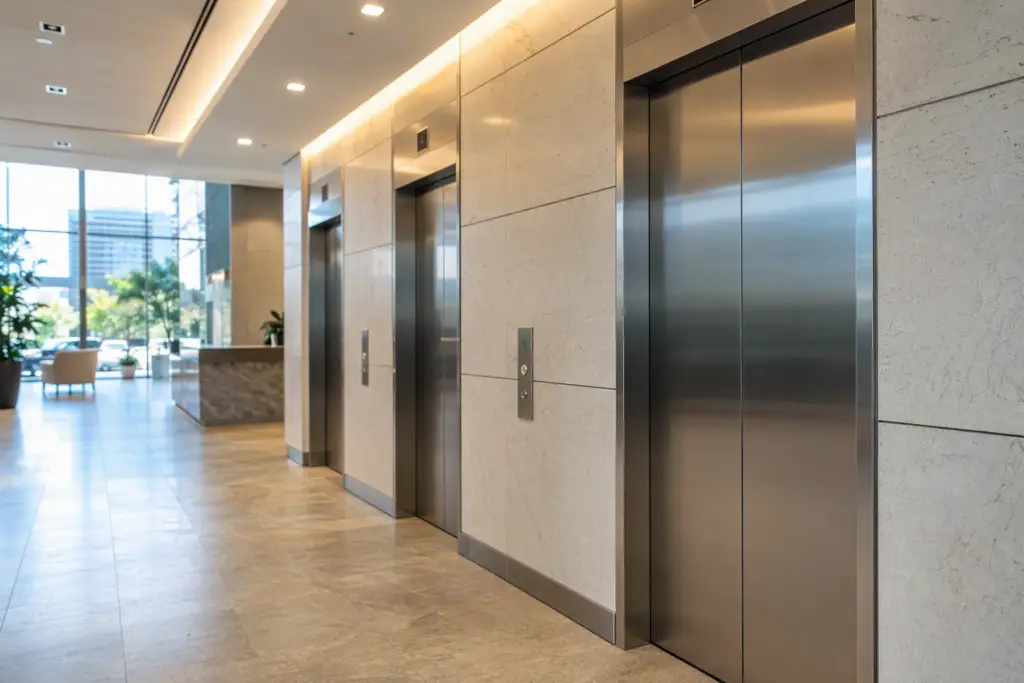
Office Building Elevator Inspection Schedule for Healthcare Facilities
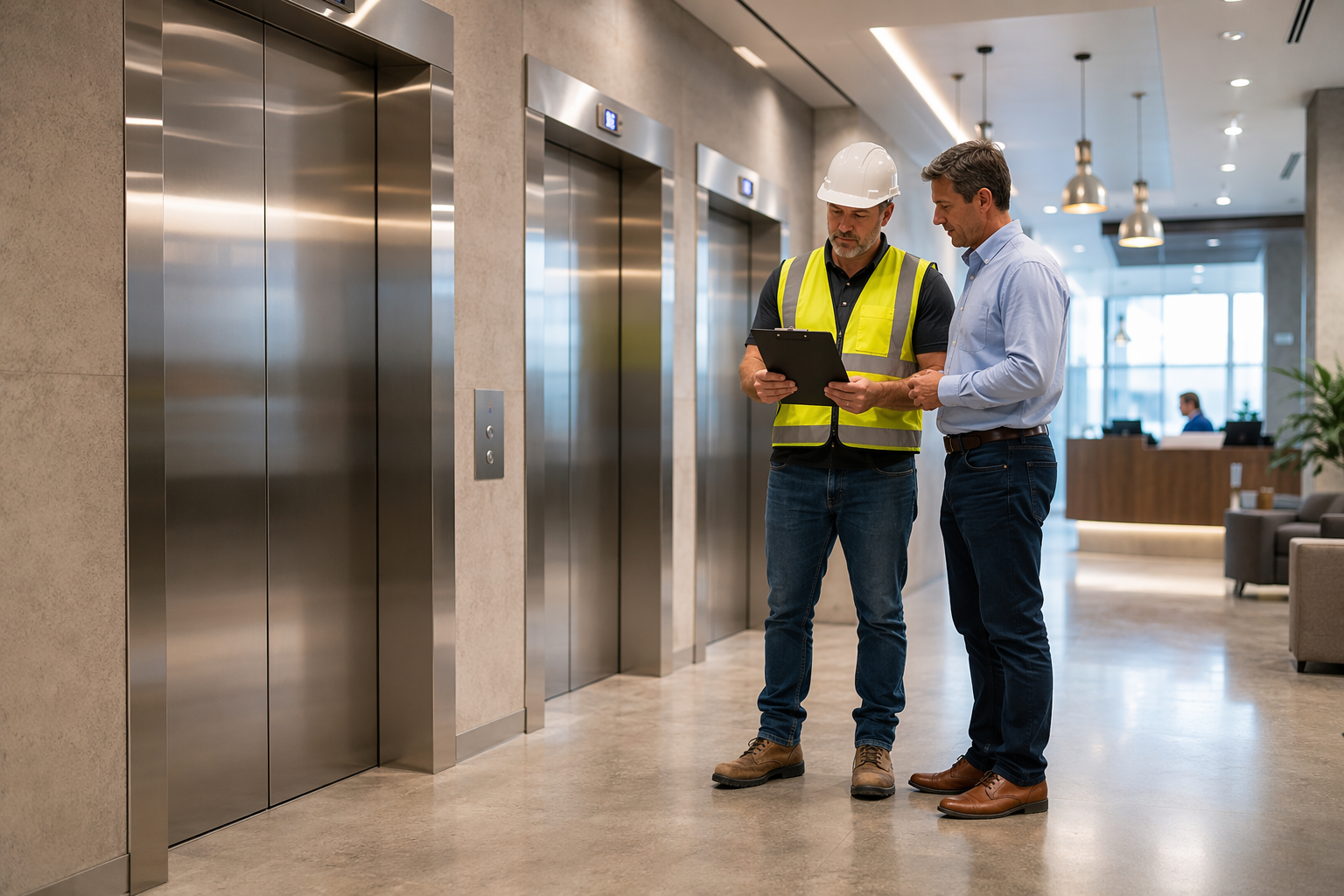
Healthcare office buildings—medical office parks, outpatient surgery centers, specialty clinics, and hospital-adjacent professional towers—carry a patient-care obligation that makes elevator reliability far more than a convenience issue. A missed inspection or unplanned shutdown can delay a wheelchair-dependent patient’s appointment, compromise ADA access, and trigger regulatory scrutiny. Understanding the full inspection schedule, the compliance framework, and what to expect from a qualified inspector is essential for every healthcare facilities manager across Houston, Dallas, Austin, San Antonio, Los Angeles, and San Diego.
What Does an Office Building Elevator Inspection Schedule Look Like for Healthcare Facilities?
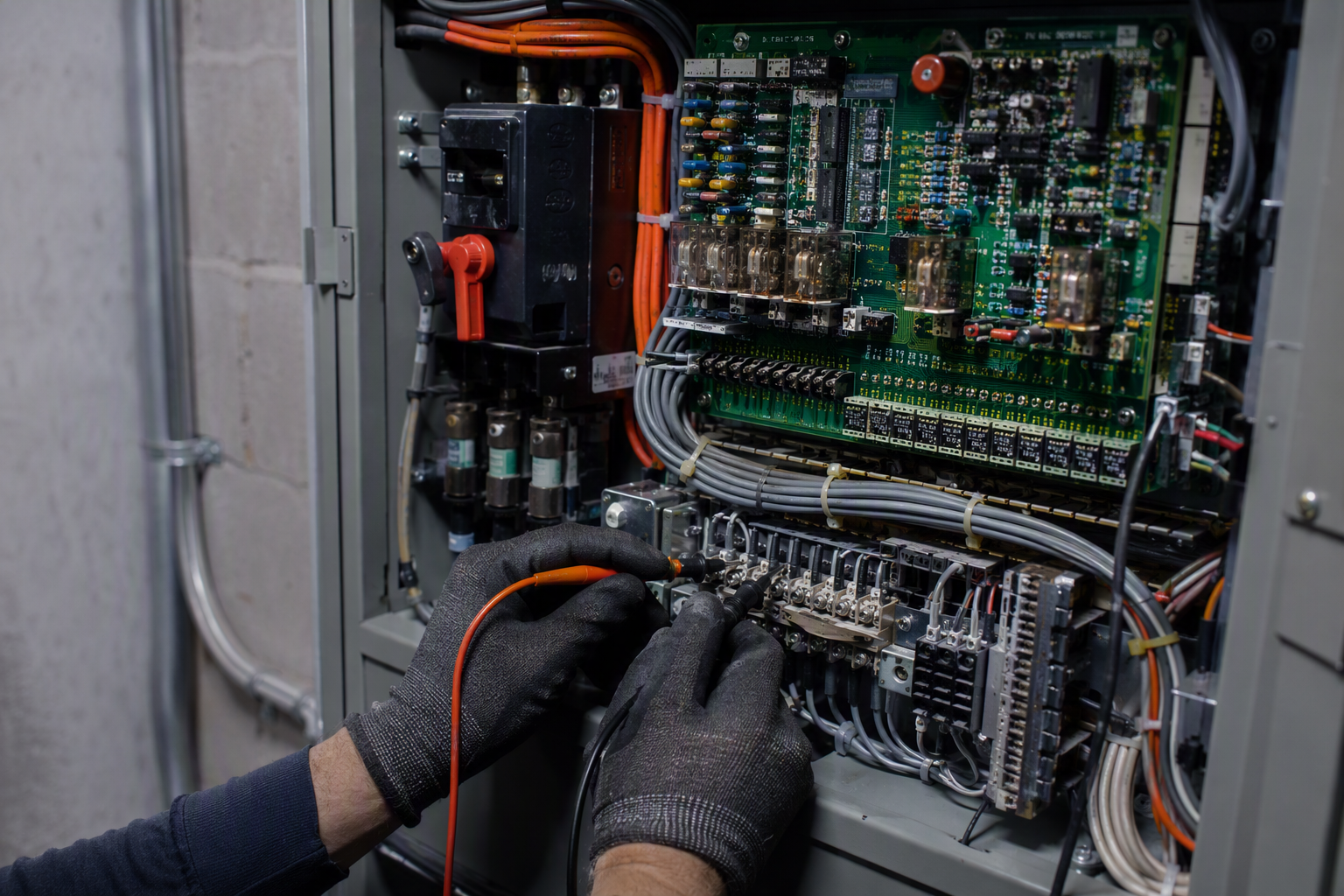
A compliant inspection schedule for a healthcare office building typically consists of three tiers:
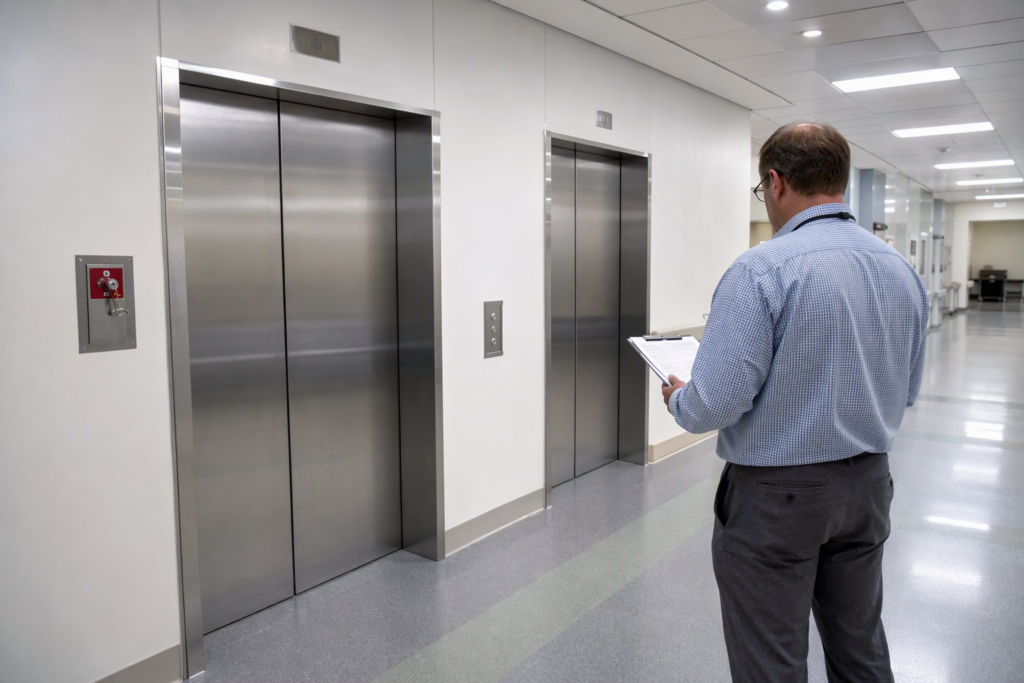
- Annual Inspection & Witnessing: A licensed third-party inspector, often working alongside your elevator maintenance contractor, witnesses a full operational test covering safety devices, hoistway, machine room, and cab. This is required by state authorities in Texas and California and is grounded in the ASME A17.1/CSA B44 Safety Code for Elevators and Escalators.
- Periodic Maintenance Visits: Monthly or quarterly visits performed by a certified elevator technician to lubricate, adjust, and test components before failures occur. In a healthcare setting, these visits are especially important because equipment runs at high-cycle volumes.
- Category Tests: ASME A17.1 requires Category 1 tests (no-load safety tests) and Category 5 tests (full-load safety tests at defined intervals) for hydraulic and traction elevators. Category 5 tests are typically required every five years and must be witnessed by an authorized inspector.
AmeriTex Elevator helps healthcare facility teams in Texas and California build a written inspection calendar that satisfies all three tiers and keeps certificates current with the relevant state elevator authority.
Which Codes and Standards Govern Healthcare Elevator Inspections?
Healthcare office buildings sit at the intersection of several overlapping compliance frameworks:
- ASME A17.1/CSA B44 Safety Code for Elevators and Escalators: The foundational national standard adopted by Texas and California. It specifies inspection intervals, test categories, inspector qualifications, and safety device requirements. The 2019 edition remains the reference edition widely adopted at the state level; facilities managers should verify the edition currently enforced in their jurisdiction.
- Americans with Disabilities Act (ADA): Requires elevators in multi-story healthcare buildings to provide accessible service to individuals with disabilities. ADA compliance is reviewed during inspections and includes cab dimensions, door timing, control height, tactile buttons, and audible signals.
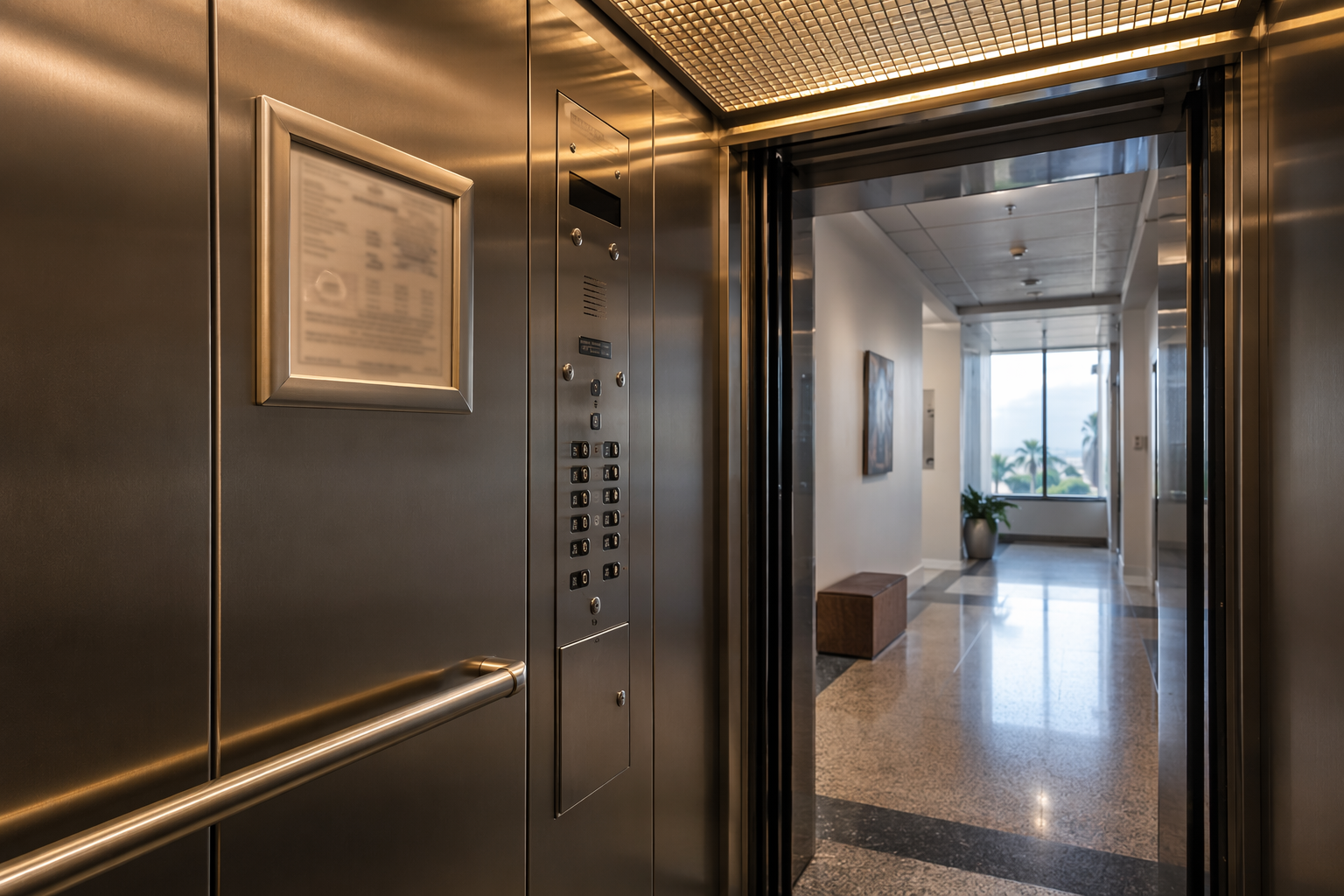
- Texas Department of Insurance (TDI) Elevator Safety Program: Texas requires annual inspections and maintains the Certificate of Inspection for all regulated elevators. Healthcare buildings must display this certificate in or near the elevator cab.
- California DOSH Elevator Unit: The California Division of Occupational Safety and Health regulates elevator inspections statewide. Permits must be renewed annually following a passed inspection.
- The Joint Commission & CMS Conditions of Participation: Healthcare facilities seeking accreditation or Medicare/Medicaid certification must demonstrate that building systems, including vertical transport, are maintained in a safe and functional condition. While these standards do not replace ASME requirements, they create a documentation burden that elevates the importance of a complete inspection paper trail.
- OSHA General Duty Clause: Employers—including healthcare real estate owners and operators—must provide a workplace free from recognized hazards. A lapsed elevator inspection can be cited as a General Duty violation if an incident occurs.
How Often Should Healthcare Office Buildings Schedule Elevator Inspections?
At a minimum, once per year for the state-mandated Certificate of Inspection inspection. However, the operational reality of healthcare facilities—high daily call volume, heavy mobility equipment such as wheelchairs and hospital beds, and patients with limited ability to use stairs—makes a more aggressive schedule prudent. Most healthcare facilities managers working with AmeriTex Elevator establish monthly maintenance visits layered on top of the mandatory annual inspection and the five-year Category 5 test cycle.
What Happens If a Healthcare Elevator Fails Its Inspection?
- Receive the inspection report: The inspector documents every deficiency, categorized by severity—some require immediate shutdown, others allow continued operation pending correction.
- Remove the elevator from service if ordered: State authorities in both Texas and California can require immediate removal from service for critical safety violations. Do not operate a condemned elevator.
- Contact your elevator service provider immediately: Rapid mobilization for repairs is essential in a healthcare environment where ADA-required access cannot be interrupted for extended periods.
- Complete all required corrections: Address deficiencies in the order specified on the inspection report, beginning with life-safety items.
- Schedule a re-inspection: A follow-up inspection by the same authorized inspector or the authority having jurisdiction (AHJ) confirms that corrections were made properly.
- Update your compliance documentation: File the corrected inspection report and new Certificate of Inspection in your building’s safety management plan—a Joint Commission requirement.
- Notify building tenants and administration: Healthcare tenants have an obligation to their patients; timely communication supports continuity of care planning.
What Are the ADA-Specific Inspection Points for Healthcare Elevator Cabs?
Under the ADA, elevator inspections in healthcare office buildings should verify:
- Door clear-opening width sufficient for wheelchair and mobility device passage
- Door dwell time (the time doors remain open) long enough for patients with mobility impairments
- Call button height within the ADA-specified reach range
- Raised and Braille characters on controls and floor designations
- Audible and visible signals at landings
- Cab floor dimensions adequate for turning radius
- Handrail presence on at least one cab wall where required
- Consistent, level stopping at each floor to prevent trip-and-fall hazards for patients
How Do Inspection Requirements Differ Between Hydraulic and Traction Elevators in Medical Buildings?
Both types fall under ASME A17.1, but certain test procedures differ:
- Hydraulic elevators require periodic testing of the pressure relief valve, lowering valve, and cylinder integrity. In California, underground hydraulic cylinders may be subject to additional environmental review.
- Traction elevators (common in mid- and high-rise medical office towers) require safeties, governors, and buffers to be tested as part of Category 1 and Category 5 tests. Machine room temperature and ventilation are also inspected, as overheating can affect drive components during high-cycle healthcare use.
- MRL (Machine Room-Less) traction elevators, increasingly found in newer medical office construction, have inspection points located in the hoistway and cab area; inspectors must account for the distinct access requirements of these systems.
What Should a Healthcare Facilities Manager Look for When Choosing an Elevator Inspector or Service Provider?
Not all elevator service companies understand the specific demands of healthcare environments. Key factors include:
- State licensure in Texas or California for elevator inspection and maintenance
- Familiarity with Joint Commission Environment of Care (EC) documentation requirements
- Ability to produce compliant inspection reports in a format accepted by the state authority having jurisdiction
- Experience servicing high-cycle, heavy-load applications common in medical buildings
- Coverage in the healthcare markets you operate in—Houston, Dallas, Austin, San Antonio, Los Angeles, and San Diego
AmeriTex Elevator serves healthcare facility clients across all six of these markets, providing inspection coordination, maintenance programs, and repair services tailored to the compliance demands of the medical sector.
How Long Does an Elevator Inspection Take in a Healthcare Office Building?
A standard annual inspection typically requires the elevator to be taken out of service for a defined window, which can range from under an hour for a straightforward cab inspection to several hours for a full Category 5 load test. Healthcare facilities managers are advised to coordinate outages during low-census periods or early morning hours, and to ensure that any patients requiring elevator access are notified and accommodated via an alternative plan. Inspectors will require access to the machine room, pit, and hoistway, so coordinating with building security and clinical operations ahead of time is critical.
Does a Passed Inspection Guarantee the Elevator Is Safe Between Annual Visits?
No. A Certificate of Inspection confirms that the elevator met applicable safety standards on the day of the inspection. Mechanical wear, component degradation, and high-cycle demand in healthcare environments can create hazards between annual inspections. This is precisely why a documented preventive maintenance program—separate from the annual inspection—is considered an industry best practice and is frequently required by healthcare accreditation bodies. AmeriTex Elevator’s maintenance programs are structured to catch developing issues before they become safety events or regulatory deficiencies.
Questions Your Inspector Will Ask
Being prepared for the following questions can streamline your inspection process and demonstrate a culture of compliance to your inspector and any accreditation surveyors who review your records:
- “Where is the current Certificate of Inspection?” It must be posted in or adjacent to the elevator cab as required by state law.
- “When was the last Category 1 and Category 5 test performed, and do you have the documentation?” Inspectors expect a complete test history, not just the most recent certificate.
- “Who is your elevator maintenance contractor, and how often do they perform maintenance visits?” A documented maintenance log signals proactive management.
- “Have any out-of-service events, door issues, or entrapments occurred since the last inspection?” In Texas and California, certain incidents must be reported to the state authority; undisclosed incidents can complicate your inspection.
- “Is the machine room locked and accessible only to authorized personnel?” ASME A17.1 and OSHA both address machine room access control.
- “Are there any known deficiencies or pending repairs from the last maintenance visit?” Transparency speeds the inspection and demonstrates good-faith compliance management.
- “What is the current load rating, and has the elevator ever been used to transport loads exceeding that rating?” In healthcare settings, heavy medical equipment transport is common.
- “Is emergency lighting and communication functional in the cab?” ADA and ASME both require in-cab emergency communications—critical in a healthcare environment where a trapped patient may require immediate medical attention.
How Can Healthcare Facilities in Texas and California Stay Ahead of Inspection Deadlines?
Proactive compliance management involves three practical steps:
- Build a master elevator compliance calendar that tracks certificate expiration dates, Category test due dates, and scheduled maintenance visits for every elevator in the portfolio.
- Establish a relationship with a single certified service provider who can track deadlines on your behalf and initiate the inspection coordination process well in advance of expiration—particularly important for multi-building healthcare campuses in cities like Houston or Los Angeles where elevator counts can be large.
- Integrate elevator compliance into your Joint Commission Environment of Care documentation so that survey readiness is continuous rather than reactive.
AmeriTex Elevator works with healthcare facilities managers across Houston, Dallas, Austin, San Antonio, Los Angeles, and San Diego to build compliance programs that treat inspection scheduling as an ongoing operational function, not a one-time event.
What Documentation Should a Healthcare Facility Maintain for Elevator Compliance?
- Current and prior Certificates of Inspection for each elevator
- Category 1 and Category 5 test reports with inspector signatures
- Maintenance logs from each periodic maintenance visit
- Repair records and parts replacement documentation
- Incident or entrapment reports and any reports submitted to the state authority
- Vendor contracts and technician qualification documentation
- ADA compliance assessments and any corrective action records
This documentation package is often reviewed during Joint Commission surveys and by state elevator authorities following any incident. Maintaining organized, complete records is as important as the inspections themselves.
Schedule Your Healthcare Elevator Assessment Today
A lapsed inspection or undocumented deficiency in a healthcare office building is not just a regulatory risk—it is a patient safety and ADA access issue. Whether your facility is located in Houston, Dallas, Austin, San Antonio, Los Angeles, or San Diego, AmeriTex Elevator provides the expertise, state compliance knowledge, and service continuity that healthcare environments demand.
Contact AmeriTex Elevator for a free elevator assessment: 866-679-4313
Need elevator service you can rely on? AmeriTex Elevator is ready to help.