Hospital Elevator Requirements and Maintenance: Who to Contact
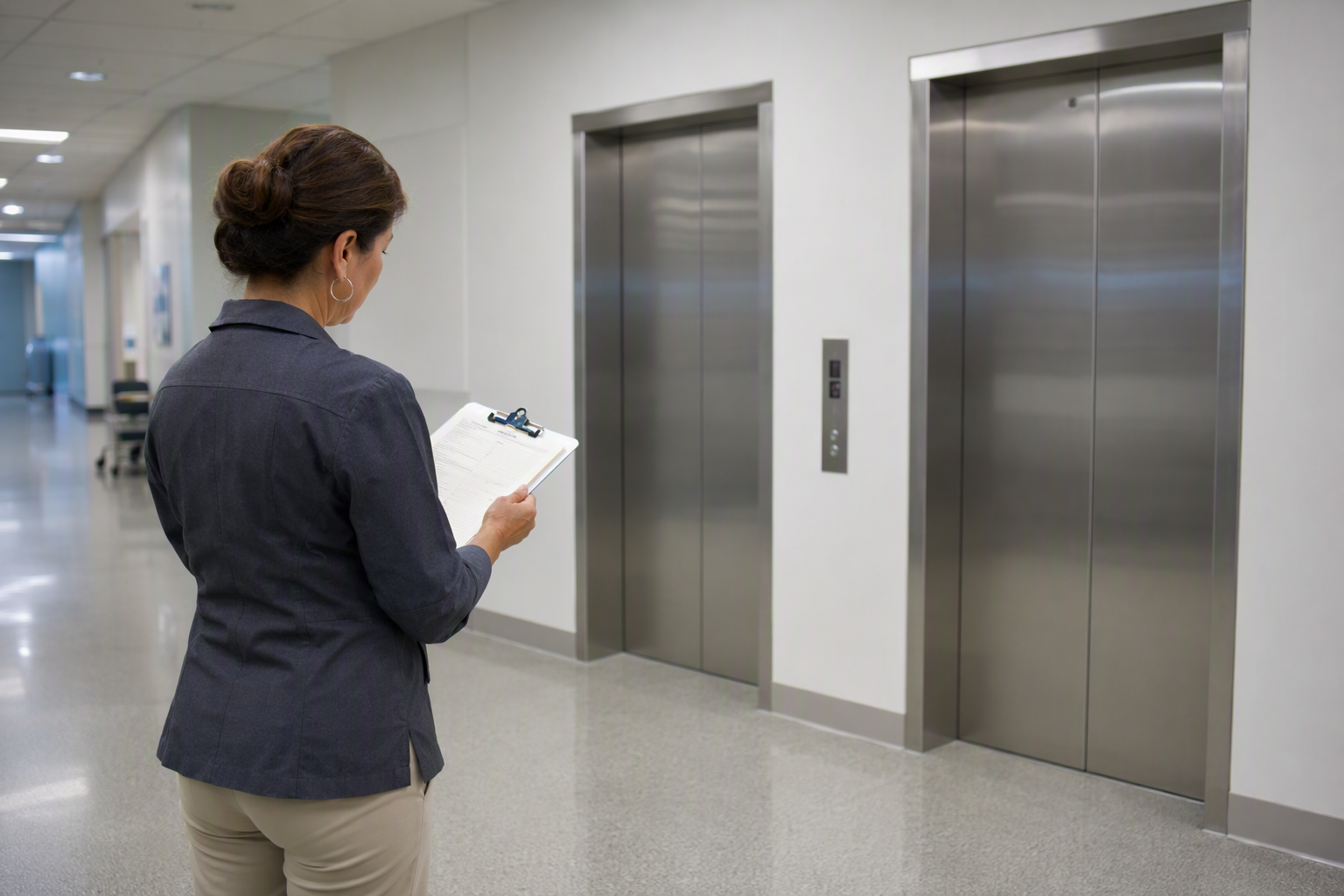
Hospitals depend on elevators around the clock. A failed elevator in a clinical setting does not just inconvenience visitors — it can delay patient transport, obstruct emergency response, and expose a facility to regulatory liability. Understanding who to contact, what compliance standards apply, and how to maintain hospital elevators correctly is essential for any healthcare facilities manager, safety officer, or hospital administrator.
What Are the Core Compliance Requirements for Hospital Elevators?
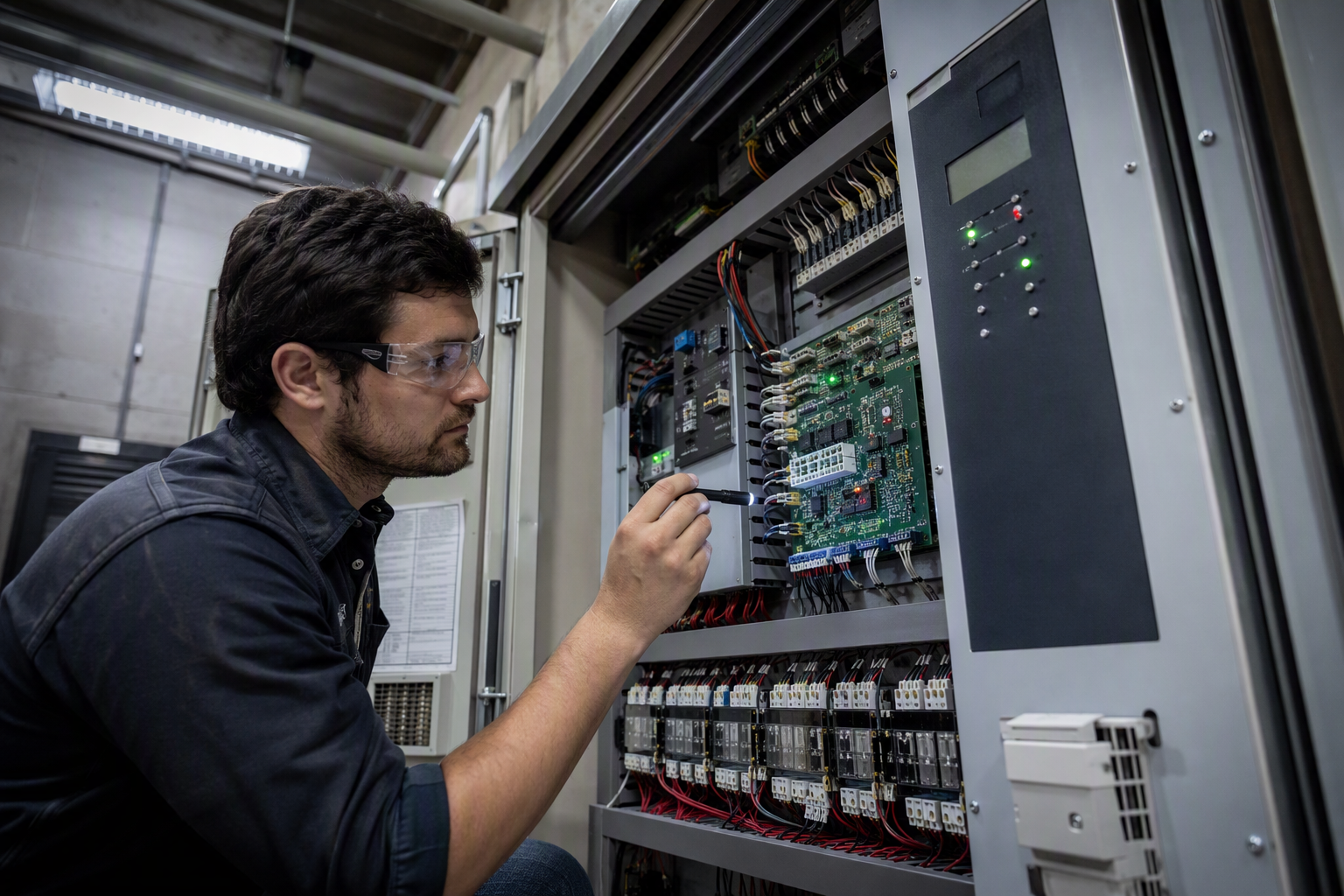
Hospital elevators must meet a layered set of federal, state, and industry-specific standards. In 2026, the primary frameworks governing healthcare elevator installations and maintenance include:
- ASME A17.1 Safety Code for Elevators and Escalators: The foundational national standard governing elevator design, installation, inspection, testing, and maintenance across all building types, including hospitals. ASME A17.3 addresses existing installations.
- Americans with Disabilities Act (ADA): Requires that elevators in multi-story healthcare facilities meet specific dimensional, control, and accessibility requirements so patients, visitors, and staff with disabilities can use them safely.
- The Joint Commission (TJC) Standards: Accredited hospitals must demonstrate ongoing life-safety compliance, which includes elevator maintenance documentation and corrective action records as part of Environment of Care (EC) standards.
- State Elevator Safety Acts: Texas (regulated through the Texas Department of Insurance) and California (regulated through the Division of Occupational Safety and Health — Cal/OSHA) each have their own elevator inspection and permitting requirements that overlay the ASME national code.
- OSHA: Governs the safety of elevator maintenance workers on-site and establishes general duty requirements for safe equipment in workplace environments, including hospitals.
- NFPA 101 Life Safety Code: Specifies fire-rated elevator lobbies, phase-one and phase-two emergency recall, and related life-safety features applicable to healthcare occupancies.
- FGI Guidelines for Design and Construction of Hospitals: Used by healthcare architects and engineers, these guidelines define elevator quantity, capacity, and configuration for hospital projects.
When a hospital operates across multiple markets — such as a health system with facilities in Houston, Dallas, Austin, San Antonio, Los Angeles, or San Diego — the service partner must be fluent in both the national code baseline and the specific state inspection authority for each location.
Why Do Hospitals Require a Specialized Elevator Service Provider?
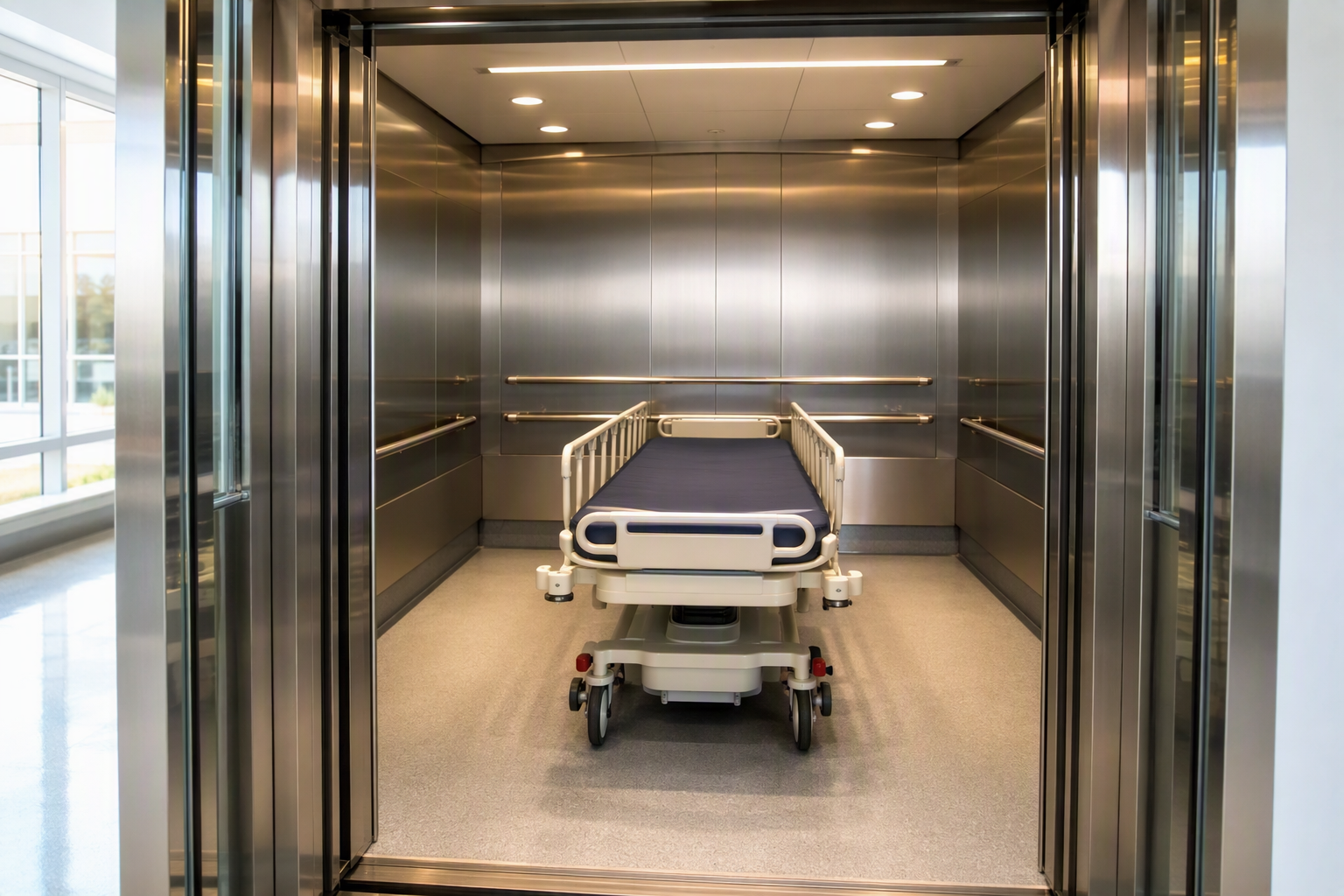
Healthcare environments place demands on elevators that most commercial buildings do not. Hospital elevators must accommodate bariatric transport equipment, oversized patient beds, medical carts, and high-frequency use by clinical staff. The consequence of unplanned downtime is measured in patient safety terms, not just inconvenience.
A generalist elevator company may lack familiarity with hospital-grade equipment requirements, the documentation expectations of Joint Commission surveys, or the nuances of emergency recall testing in a clinical setting. AmeriTex Elevator serves healthcare clients across Texas and California with maintenance programs designed around the operational realities of hospital environments — including the need for after-hours coordination and detailed service records that satisfy regulatory audits.
What Types of Elevators Are Typically Found in Hospitals?
Hospital elevator inventories typically include several distinct unit types, each with specific maintenance considerations:
- Patient/Bed Elevators: Oversized cabs designed to accommodate hospital beds with attendants. Cab dimensions, door width, and weight capacity must meet clinical transport needs.
- Service/Freight Elevators: Used for supply chain movement, linen transport, and waste removal — often running on separate shafts from public-facing units.
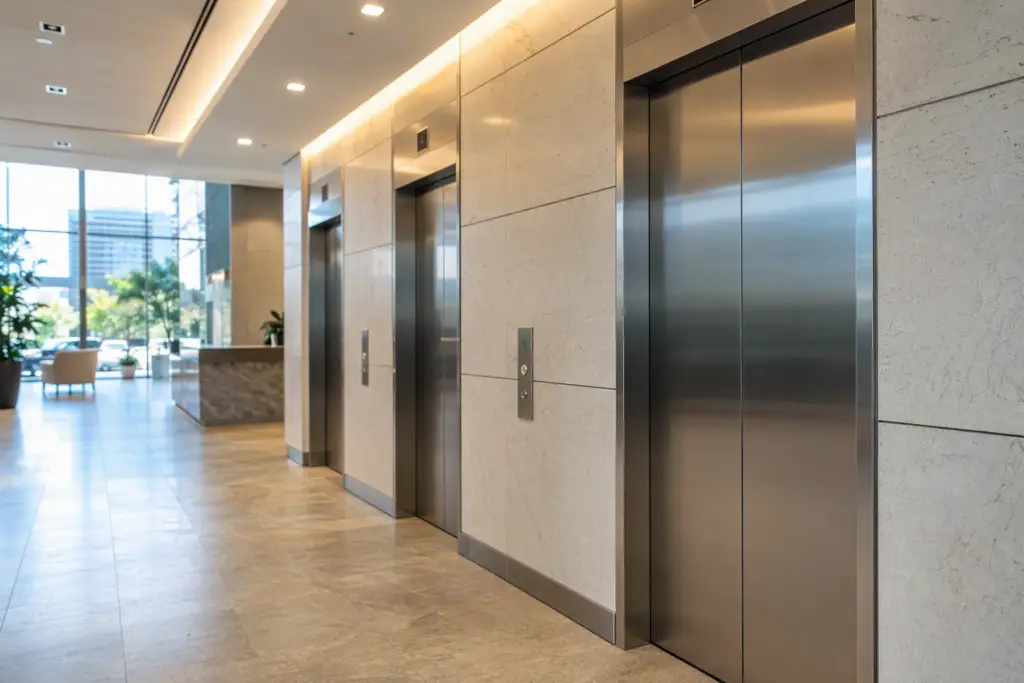
- Public Passenger Elevators: Visitor and staff elevators subject to full ADA compliance, including audible signals, Braille controls, and minimum cab dimensions.
- Dumbwaiters and Pneumatic Tube Adjuncts: Smaller vertical conveyances used in pharmacy, laboratory, and dietary departments — also governed under ASME standards.
What Is the Required Inspection Frequency for Hospital Elevators?
Under the ASME A17.1 Safety Code for Elevators and Escalators, elevators must undergo periodic inspections and tests at intervals defined by the code and enforced by the applicable state authority. In Texas, the Department of Insurance coordinates elevator inspection scheduling and certificate issuance. In California, the Department of Industrial Relations (DIR) and local inspection jurisdictions enforce inspection cycles under Cal/OSHA authority.
Hospitals should not wait for an inspection notice to discover deficiencies. A proactive preventive maintenance contract with a qualified provider keeps equipment in continuous compliance between mandated inspections and reduces the likelihood of citation-level findings during Joint Commission surveys or state reviews.
How Should a Hospital Respond to an Elevator Outage or Safety Incident?
When an elevator in a hospital goes out of service, especially one used for patient transport, the response must be immediate and methodical. The following protocol is recommended:
- Remove the unit from service immediately. Post signage and restrict access to prevent use of a potentially unsafe elevator.
- Contact the elevator service provider. Notify the maintenance contractor and confirm they have the unit’s service history on file to expedite diagnosis.
- Activate the facility’s vertical transport contingency plan. Identify alternative elevators or patient transport pathways and notify clinical operations leadership.
- Document the incident. Record the time of failure, observable symptoms, and any passenger involvement — this documentation is required for both internal reporting and potential regulatory inquiry.
- Coordinate with the state inspection authority if a safety device activated. In Texas and California, certain safety-related shutdowns may require an inspection before the unit can be returned to service.
- Obtain a written return-to-service confirmation. Before reopening the elevator, receive written documentation from the service technician confirming the fault has been corrected and the unit is safe for use.
- Update the maintenance log. File all service records in the equipment maintenance file accessible during Joint Commission or state surveys.
What Should Hospitals Look for When Selecting an Elevator Service Company?
Not all elevator service providers are suited for healthcare environments. When evaluating vendors, hospital facilities teams should consider the following criteria:
- State licensure in the relevant jurisdiction (Texas or California, as applicable)
- Demonstrated familiarity with ASME A17.1 and A17.3 code requirements
- Experience maintaining hospital-grade equipment configurations
- Ability to produce documentation formatted for Joint Commission Environment of Care standards
- Presence in the specific market served — a provider with a local team in Houston, Dallas, Austin, San Antonio, Los Angeles, or San Diego is better positioned to respond quickly than a distant national contractor
- Transparent service records and reporting practices
AmeriTex Elevator operates across all of these markets and brings familiarity with both Texas and California regulatory environments to each client engagement.
Does ADA Apply Differently in Hospital Settings?
The Americans with Disabilities Act applies to hospitals as places of public accommodation and as employers. Elevator accessibility requirements under ADA are not relaxed in clinical settings — in fact, they carry heightened significance given that hospitals serve patients with mobility impairments, visual disabilities, and other conditions. ADA elevator requirements address door timing, landing signals, car controls, floor designation, and more.
Hospitals undergoing renovation or expansion must also consider ADA’s “path of travel” obligations, which can trigger upgrades to existing elevator features when alterations are made to areas served by those elevators.
What Is the Difference Between a Maintenance Contract and a Full-Service Agreement for Hospital Elevators?
Hospitals are often offered tiered elevator service contracts. A basic maintenance contract typically covers scheduled preventive maintenance visits and lubrication. A full-service agreement extends coverage to parts replacement, emergency callbacks, and major component repair or replacement within the contract scope.
For healthcare facilities, a comprehensive agreement is strongly advisable given the criticality of continuous operation. Facilities managers should clarify exactly which components are included and excluded, what documentation is provided after each visit, and how emergency service is dispatched.
What Modernization Upgrades Are Relevant for Aging Hospital Elevators?
Many hospital buildings in Houston, Dallas, San Antonio, Austin, Los Angeles, and San Diego were constructed decades ago and house elevator systems that no longer meet current code or operational expectations. Common modernization upgrades for hospital elevators include:
- Controller and drive system replacement for improved reliability and energy efficiency
- Door operator upgrades to reduce entrapment risk and improve cycle reliability
- Emergency lighting and communication system updates to meet current ASME and fire code requirements
- Cab expansion or configuration changes to accommodate contemporary bariatric transport equipment
- Accessibility upgrades to achieve full ADA compliance in older installations
AmeriTex Elevator provides modernization assessments that identify code compliance gaps and prioritize upgrades by risk level and regulatory urgency.
How Does Elevator Maintenance Affect Joint Commission Survey Outcomes?
The Joint Commission’s Environment of Care (EC) standards require hospitals to manage equipment and utilities — including vertical transport — through documented maintenance programs. Surveyors may request maintenance logs, inspection certificates, and corrective action records during on-site visits. Gaps in documentation, overdue inspections, or uncorrected deficiencies can result in findings that require a formal plan of correction.
Partnering with a provider like AmeriTex Elevator that maintains organized, retrievable service records gives hospital facilities teams the documentation infrastructure needed to respond confidently during surveys.
Questions Your Inspector Will Ask
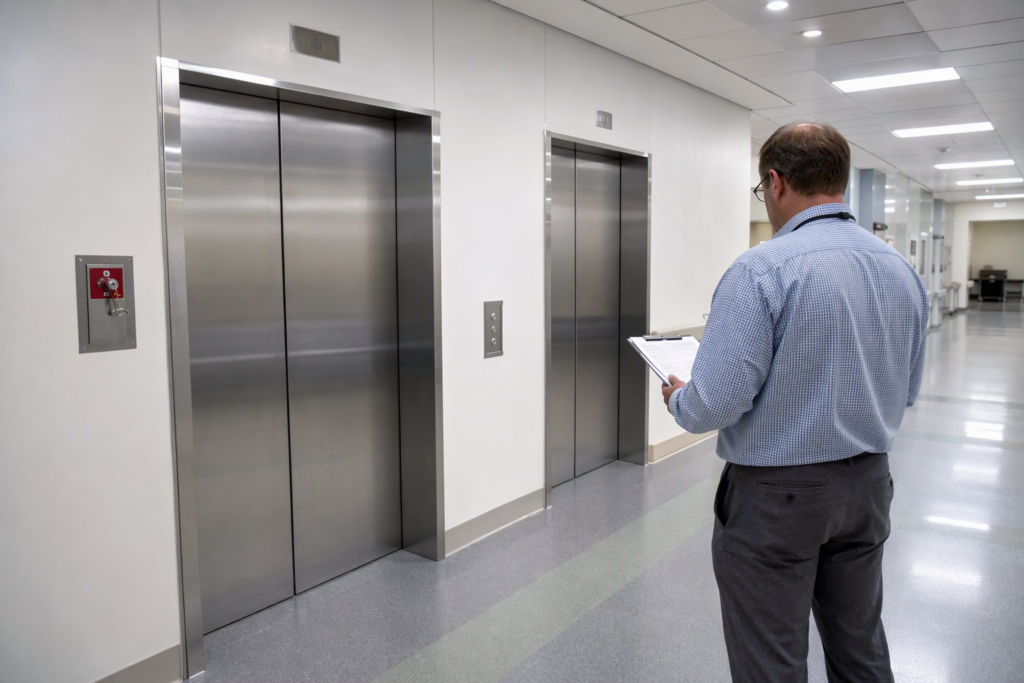
Whether the inspection is conducted by a state elevator inspector, a Joint Commission surveyor, or an internal safety officer, hospital elevator systems are routinely evaluated on the following points. Facilities managers should be prepared to answer each:
- When was the last annual inspection conducted, and is the current certificate of inspection posted in or near the elevator cab as required?
- Has the required periodic testing (Category 1 and Category 5 tests under ASME A17.1) been completed and documented?
- Are all safety devices — including governors, buffers, and safeties — tested at the intervals specified by the applicable code edition?
- Is there a current, active preventive maintenance agreement in place with a licensed elevator contractor?
- Are maintenance logs current and available for review, showing dates, technician information, and work performed?
- Have any open deficiencies from the previous inspection been corrected and documented?
- Does the emergency communication system in each cab connect to a continuously monitored location, as required under ASME A17.1?
- Has Phase I emergency recall (firefighters’ service) been tested within the required interval?
- Are ADA-required features — including audible signals, Braille markings, and door timing — functional and intact?
- Is the machine room access controlled, properly illuminated, and free of storage that could impede maintenance access?
What Markets Does AmeriTex Elevator Serve for Healthcare Facilities?
AmeriTex Elevator provides elevator maintenance, inspection coordination, modernization, and repair services for healthcare facilities in Houston TX, Dallas TX, Austin TX, San Antonio TX, Los Angeles CA, and San Diego CA. Each of these markets operates under a distinct state inspection authority and local amendment structure, and AmeriTex Elevator maintains working knowledge of the regulatory requirements in each jurisdiction.
Healthcare systems managing facilities across multiple markets benefit from a single service partner who can standardize documentation practices and compliance procedures across locations rather than managing separate vendors in each city.
Schedule a Free Hospital Elevator Assessment
Hospital elevator compliance is not a one-time checkbox — it is an ongoing operational requirement that affects patient safety, regulatory standing, and facility reputation. Whether a hospital needs a full maintenance program review, a pre-survey documentation audit, or guidance on modernization options, AmeriTex Elevator is available to help.
Contact AmeriTex Elevator for a free elevator assessment: 866-679-4313
Serving healthcare facilities in Houston, Dallas, Austin, San Antonio, Los Angeles, and San Diego.
Need elevator service you can rely on? AmeriTex Elevator is ready to help.