How Long Does a Full Elevator Modernization Project Take — And Will My Elevator Be Out of Service the Whole Time?
A full elevator modernization project typically ranges from four weeks to six months from initial assessment to final inspection, with the elevator out of service for only a portion of that window. Factors including equipment lead times, permit processing by local Authorities Having Jurisdiction (AHJs), the scope of components being replaced, and building-specific constraints all influence the final timeline. Understanding each phase helps building owners in Texas and California plan around the disruption intelligently.
What exactly is elevator modernization, and how is it different from routine maintenance?
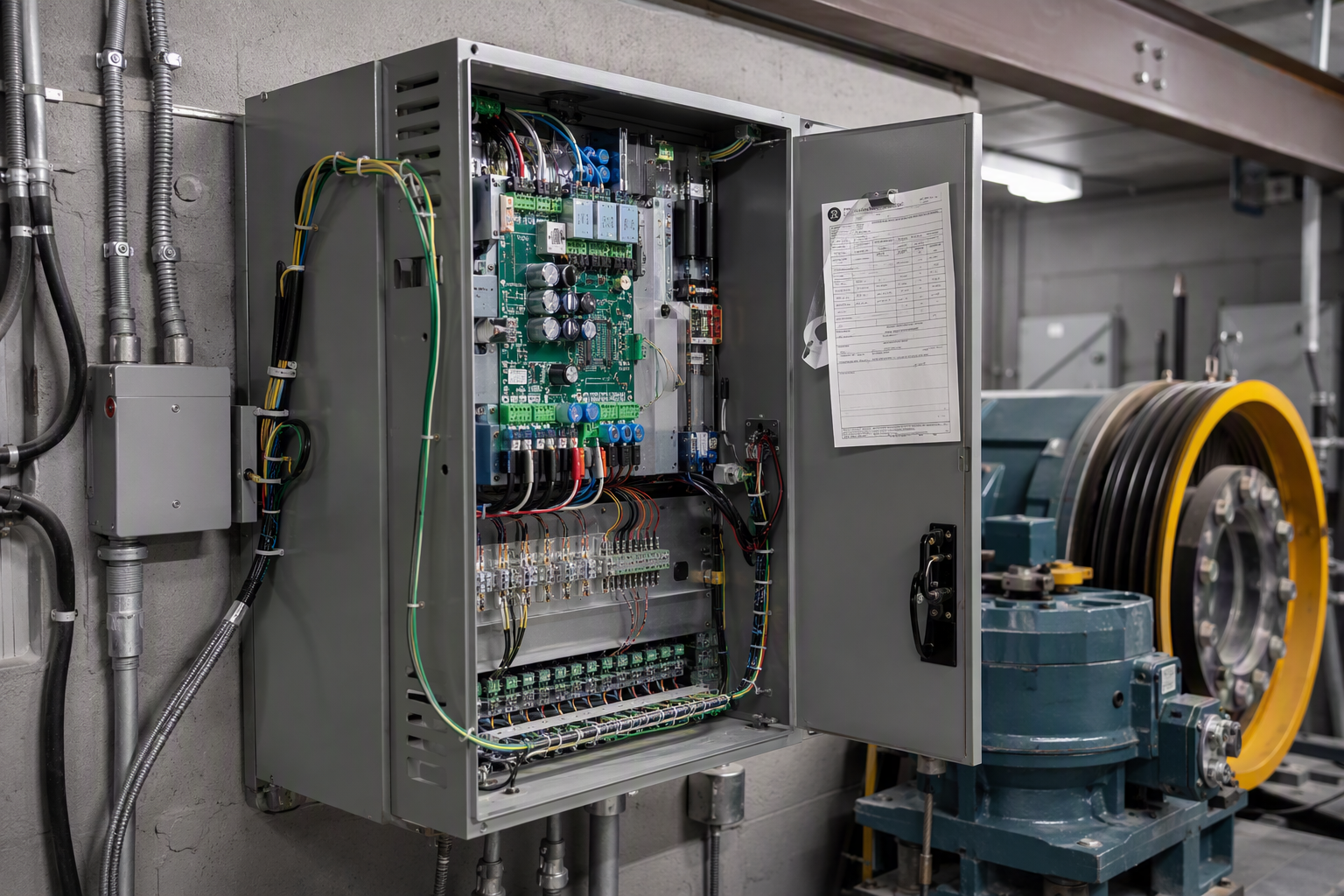
Elevator modernization is the partial or complete replacement of a vertical transportation system’s major mechanical, electrical, and safety components — while retaining the existing hoistway and structural shaft.
Routine maintenance keeps existing equipment operating within its current performance parameters: lubricating components, adjusting door operators, replacing wear items, and logging safety checks. Modernization, by contrast, upgrades the system itself. A modernization project may replace the drive machine, controller, door operator, cab interior, safety devices, and signal fixtures simultaneously or in phases. The result is a system that meets current ASME A17.1 Safety Code for Elevators and Escalators requirements and often qualifies for ADA accessibility improvements at the same time. Maintenance contracts are ongoing; modernization is a capital project with a defined start, middle, and end.
How long does a full elevator modernization project take from start to finish?
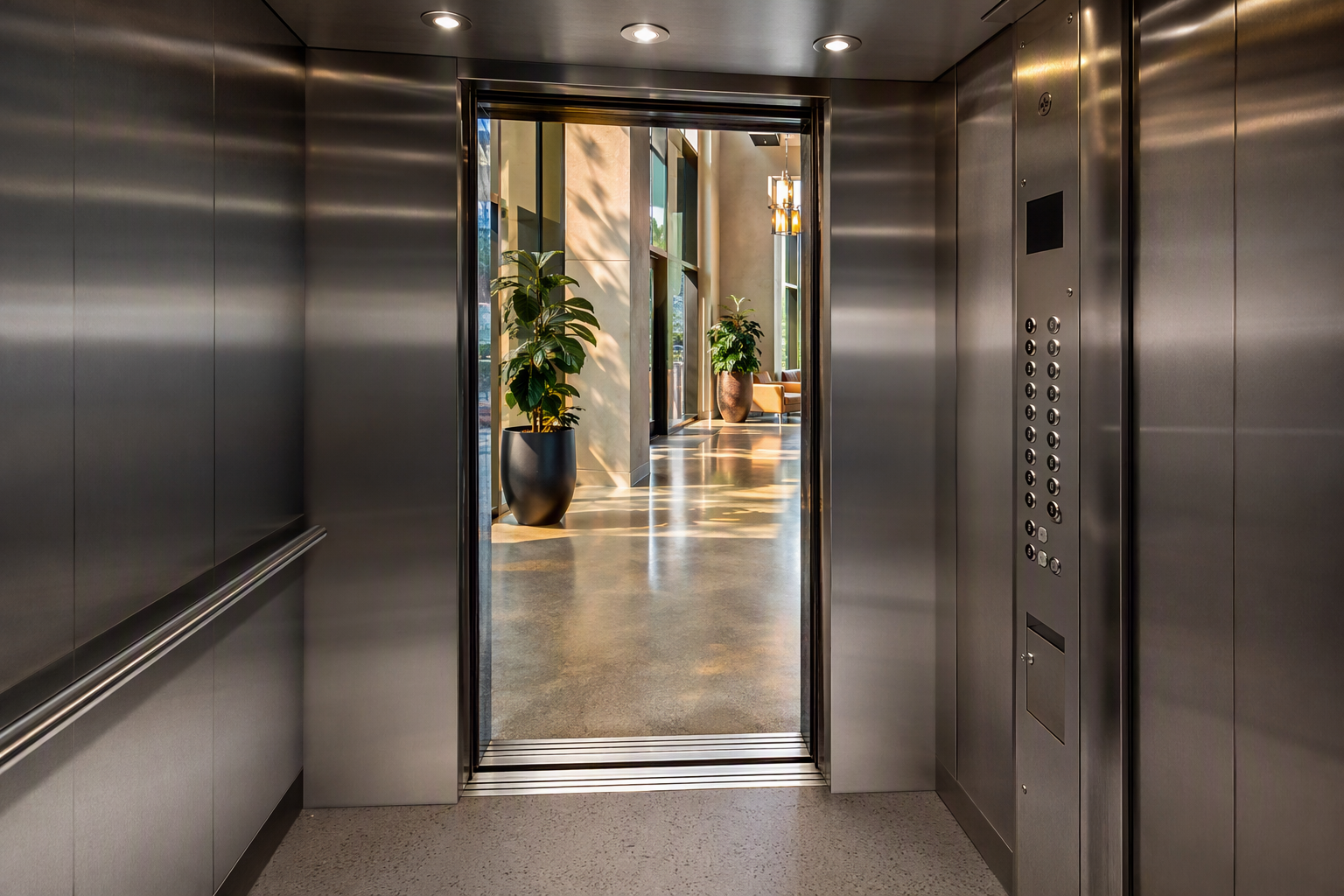
The total duration from initial site assessment to final AHJ inspection and return to full service commonly falls between four weeks and six months, with the majority of commercial mid-rise projects landing in the eight-to-sixteen-week range.
That range sounds wide because the variables are real. A traction elevator in a Dallas high-rise requiring a full machine room controller replacement, new drive, and cab renovation is a fundamentally different project from a hydraulic elevator in a San Antonio low-rise that only needs a new power unit and updated controls. Equipment procurement is frequently the single longest phase: custom cab panels, specialty drive systems, and proprietary controller hardware can carry lead times of four to twelve weeks depending on the manufacturer and current supply conditions. Permit processing by Texas Department of Insurance (TDI) or California’s Division of Occupational Safety and Health (Cal/OSHA Elevator Unit) adds additional calendar time that is largely outside the contractor’s control.
Building owners should budget conservatively and always confirm lead times before finalizing move-in, event, or lease schedules that depend on elevator availability.
Will my elevator be completely out of service during the entire modernization?
No — in most projects, the elevator is out of service only during the active installation phase, which is typically a fraction of the total project timeline.
The planning, engineering, permitting, and equipment procurement phases require no downtime at all. For a project with a fourteen-week total timeline, the elevator might be offline for only three to six weeks during the physical installation window. Phased modernization programs — where a building has two or more elevator units — allow contractors to stagger the work so at least one car remains available at all times. Even for single-elevator buildings, many contractors schedule intensive work during nights, weekends, or known low-traffic periods to reduce the operational impact on tenants. AmeriTex Elevator coordinates closely with building managers in Houston, Dallas, Austin, San Antonio, Los Angeles, and San Diego to develop project schedules that match each building’s occupancy patterns.
What are the main phases of an elevator modernization project?
A modernization project moves through six distinct phases, each with its own typical duration and stakeholder requirements.
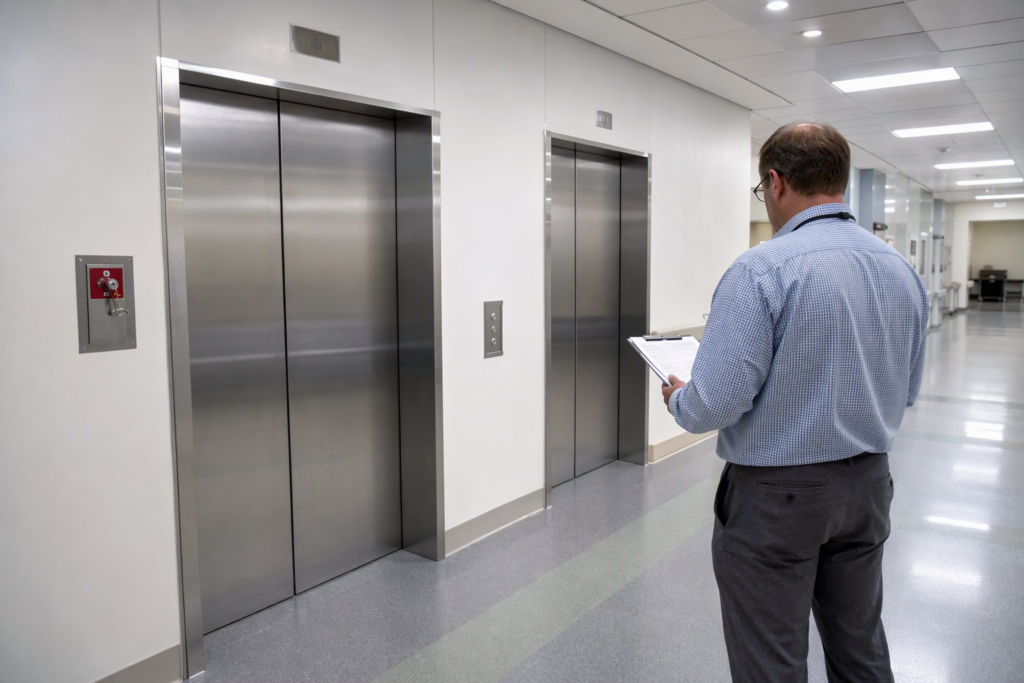
- Site Assessment and Scope Definition (1–3 weeks): A qualified elevator contractor inspects the existing installation, reviews maintenance records, identifies code deficiencies, and defines which components will be replaced. This phase produces a detailed scope of work and equipment specification.
- Engineering and Design (1–4 weeks): Engineering drawings are prepared for the replacement controller, drive system, and any structural modifications. For ADA cab improvements, interior layout drawings are produced. These documents are required for permit submission.
- Permit Application and AHJ Approval (2–8 weeks): In Texas, permits are administered through the Texas Department of Insurance Elevator Safety Program. In California, permits are processed through the Cal/OSHA Elevator Unit. Processing times vary by jurisdiction and workload; some municipalities have additional local requirements layered on top of state programs.
- Equipment Procurement (4–12 weeks): Controllers, drive machines, door operators, cab materials, and safety components are ordered. This phase often runs concurrently with permitting to compress the overall schedule.
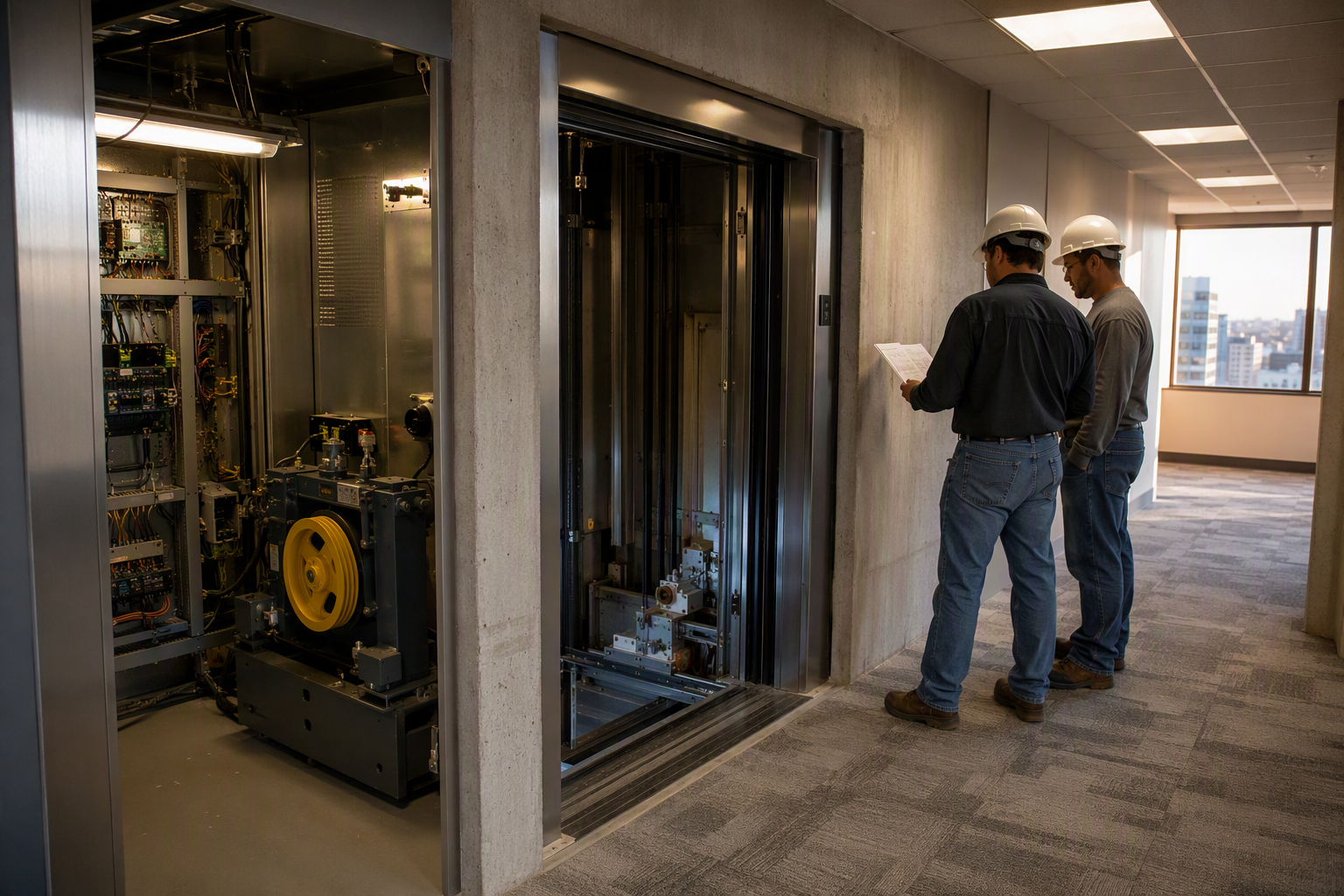
- Physical Installation (2–8 weeks): This is the only phase requiring the elevator to be taken out of service. Technicians remove old equipment, install new components, wire and integrate systems, and perform pre-inspection testing.
- Final Inspection and Commissioning (1–2 weeks): The AHJ inspector tests the modernized system against applicable code requirements. Upon passing, the elevator receives a new Certificate of Operation and is returned to service.
What factors make a modernization project take longer than expected?
Several variables routinely extend timelines beyond initial estimates, and understanding them helps owners set realistic expectations.
Equipment lead times are the most common culprit — particularly for custom-sized controller cabinets, non-standard drive motors, and specialty cab finishes. Permit review backlogs at the state or local AHJ level can add weeks that neither the owner nor the contractor controls. Discovery of pre-existing code violations or structural deficiencies during installation — concealed in older hoistways — can expand the scope mid-project. Buildings with asbestos-containing materials in the machine room or hoistway require abatement work governed by OSHA standards before modernization work can proceed, adding both time and cost. Finally, single-elevator buildings present scheduling challenges because any installation delay directly extends tenant inconvenience.
What components are typically replaced during a full elevator modernization?
A full modernization addresses virtually every major system except the structural hoistway itself.
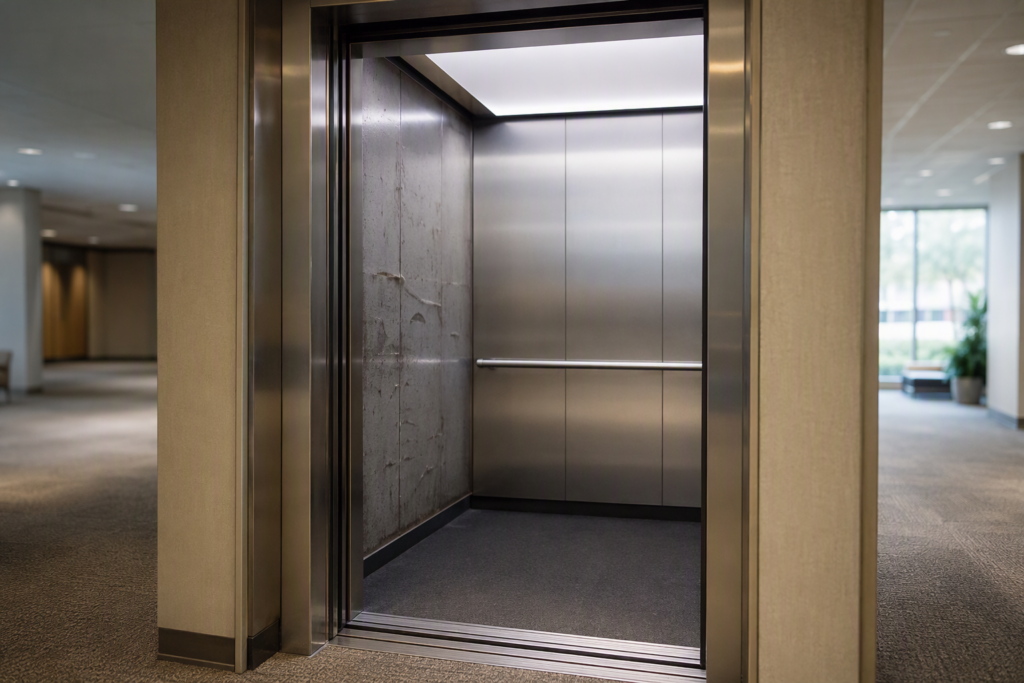
Common replacement components include: the main drive machine (traction motor or hydraulic power unit), motor controller and dispatching logic, door operators and door hardware, guide rails and brackets (if worn beyond tolerance), safeties and governors, buffers, cab enclosure and interior finishes, landing fixtures and hall call buttons, position indicators, and lighting systems. Cab lighting upgrades frequently incorporate LED systems that reduce energy consumption. Many modernizations also add or upgrade emergency communications systems to comply with current ASME A17.1 requirements for two-way communication. ADA-compliant controls, Braille signage, and cab dimensions are addressed when the scope and permit allow.
How does elevator type (traction vs. hydraulic) affect the modernization timeline?
Hydraulic elevator modernizations tend to be shorter in duration because the primary replacement item — the power unit — is a self-contained package, while traction elevator modernizations often involve more complex machine room and overhead work.
A hydraulic power unit replacement in a low-rise building can sometimes be completed in one to two weeks of active installation time once equipment is on-site. Traction elevator modernizations, particularly in mid- and high-rise buildings, involve replacing overhead machinery, controllers, traveling cables, and governor systems — work that is more intricate and requires more installation days. Additionally, older traction elevators in Texas and California high-rises may be subject to additional seismic retrofit requirements in California that have no parallel in Texas projects, further affecting scope and schedule in Los Angeles and San Diego markets.
What is a typical elevator modernization project timeline by scope?
| Scope of Modernization | Elevator Type | Procurement Lead Time | Active Installation | Total Project Duration |
|---|---|---|---|---|
| Controls & Controller Only | Hydraulic or Traction | 4–8 weeks | 1–2 weeks | 6–12 weeks |
| Controls + Drive Machine | Traction | 6–12 weeks | 2–4 weeks | 10–18 weeks |
| Full Hydraulic Modernization | Hydraulic | 4–8 weeks | 1–3 weeks | 8–14 weeks |
| Full Traction Modernization | Traction | 8–14 weeks | 3–8 weeks | 14–24 weeks |
| Full Modernization + Cab Renovation | Traction or Hydraulic | 8–16 weeks | 4–8 weeks | 14–26 weeks |
| Full Mod + Seismic Upgrade (CA) | Traction | 10–16 weeks | 5–10 weeks | 18–28 weeks |
| Note: Timelines are general benchmarks. Actual durations depend on AHJ permit processing, equipment availability, building conditions, and project-specific scope. These figures are not guarantees of performance. | ||||
What permits and inspections are required for elevator modernization in Texas?
In Texas, elevator modernization work must be permitted through the Texas Department of Insurance (TDI) Elevator Safety Program, which administers elevator safety under the Texas Occupations Code, Chapter 754.
Before any modernization work begins, the contractor must submit engineering plans and a permit application to TDI or the applicable local jurisdiction if the municipality has its own elevator inspection program. Cities including Houston and Dallas maintain local inspection programs that work in conjunction with state oversight. Upon completion of installation, a TDI-approved or locally authorized inspector performs a full acceptance inspection. The elevator must pass load testing and operational testing against applicable ASME A17.1 requirements before a new Certificate of Operation is issued. Operating an elevator without a valid certificate is a violation of Texas law. Owners should confirm which authority — state or local — has jurisdiction for their specific building address before submitting permit applications.
What permits and inspections are required for elevator modernization in California?
In California, elevator modernization is regulated by the Cal/OSHA Elevator, Ride, and Tramway Unit under the California Labor Code and Title 8 of the California Code of Regulations.
Contractors must hold a valid California Elevator Mechanic certification, and the modernization work must be permitted before installation begins. Engineering drawings stamped by a licensed engineer may be required for certain scope items. Upon completion, a Cal/OSHA elevator inspector — or a QEI (Qualified Elevator Inspector) accepted by Cal/OSHA — performs the acceptance inspection. The elevator must comply with applicable editions of ASME A17.1 and ASME A17.3 (the Safety Code for Existing Installations) as adopted by California. For buildings in seismically active zones served by AmeriTex Elevator — particularly in the Los Angeles and San Diego markets — seismic design requirements may also apply to certain machine room and guide rail work.
How do ADA requirements factor into an elevator modernization?
A modernization project that alters the cab, controls, or door systems triggers accessibility requirements under the Americans with Disabilities Act for facilities subject to ADA Title III (public accommodations) or Title II (state and local government entities).
When an elevator undergoes alteration, the altered elements must comply with the 2010 ADA Standards for Accessible Design to the maximum extent feasible. This typically means ensuring cab dimensions meet minimum requirements, installing accessible control buttons at appropriate heights, providing Braille and raised character signage at hall stations and cab controls, and ensuring door timing and reopening device performance meet accessibility standards. Building owners should address ADA items proactively during a modernization rather than treating them as an afterthought — retrofitting after the fact is far more costly. AmeriTex Elevator incorporates ADA compliance review into the initial scope definition process so that accessibility items are priced and planned from the outset.
Can modernization work be phased to reduce downtime in multi-elevator buildings?
Yes — phased modernization is one of the most effective strategies for minimizing tenant disruption in buildings with two or more elevator units.
In a phased approach, one elevator is taken out of service and modernized while the remaining unit or units continue operating. Once the first car is complete, inspected, and returned to service, the next car begins its modernization cycle. This approach extends the overall project calendar — since cars are done sequentially rather than simultaneously — but ensures that building occupants always have vertical access. The trade-off between total project duration and daily operational impact is a building management decision that should be made during the initial planning phase. For large buildings with three or more elevators, group-controller upgrades may need to be sequenced carefully so that dispatching logic remains coherent throughout the modernization process.
What should building owners do to prepare for an elevator modernization?
Preparation before the project begins directly affects how smoothly the installation phase proceeds and how quickly the elevator returns to service.
- Gather existing documentation: Collect original as-built drawings, previous permit records, maintenance logs, and the current Certificate of Operation. This documentation accelerates the engineering and permitting phase.
- Notify tenants and occupants early: Communicate the project schedule, anticipated downtime windows, and any temporary access accommodations — such as temporary lift equipment for mobility-impaired residents — well in advance of work beginning.
- Confirm ADA accommodation plans: Buildings with residents or tenants who rely on the elevator for mobility access must have a written accommodation plan in place before taking the elevator out of service.
- Clear and prepare the machine room: Machine rooms frequently accumulate stored items over the years. The space must be cleared and accessible before contractor work begins.
- Confirm insurance and contractor credentials: Verify that the modernization contractor holds all required state licenses and carries appropriate liability and workers’ compensation insurance.
- Coordinate with your property manager and legal counsel: Review lease language for elevator service obligations before scheduling extended downtime, particularly in commercial or retail properties.
How does equipment procurement affect the modernization schedule, and how can owners shorten it?
Equipment procurement is almost always the phase with the greatest scheduling variability, and it is the phase where proactive planning yields the most time savings.
Controllers and drive systems sourced from domestic manufacturers may carry lead times of six to ten weeks under normal supply conditions; custom or non-standard configurations take longer. Cab interiors with specialty panels, stone flooring, or custom metalwork can add additional fabrication time. Owners can compress total project duration by working with a contractor who initiates the equipment order immediately upon scope finalization — sometimes before permits are fully approved — using a phased purchase order that is contingent on permit issuance. This parallel-path approach, where permitting and procurement run concurrently rather than sequentially, can shorten total calendar time by four to eight weeks on a complex project. AmeriTex Elevator routinely evaluates this parallel-path strategy during the initial project planning discussion for clients in its Texas and California service markets.
What happens during the final inspection, and what can cause an elevator to fail?
The final acceptance inspection is a systematic evaluation of the modernized installation against the applicable code standard — typically ASME A17.1 — conducted by an authorized inspector from the AHJ.
The inspector will verify that the new equipment matches the approved engineering drawings, test all safety devices (including safeties, buffers, and interlocks), perform a load test, verify door performance and timing, test emergency lighting and communication systems, and confirm that all required labels and certificates are in place. Common reasons an elevator fails final inspection include: safety devices that do not activate within code-specified parameters, door reopening devices that fail the obstruction test, emergency lighting systems with insufficient duration, and as-installed conditions that differ from permitted drawings. A thorough contractor performs pre-inspection testing before the inspector arrives to identify and correct deficiencies in advance, minimizing the likelihood of a failed inspection that would reset the return-to-service date.
How does elevator modernization differ from a full replacement, and when is each appropriate?
Modernization retains the existing hoistway and structural shaft while replacing mechanical, electrical, and safety systems; full replacement removes the entire installation including the hoistway structure and is typically only warranted when the shaft itself is structurally compromised or when a building is undergoing major reconstruction.
For the overwhelming majority of aging elevators — including the large installed base of older traction and hydraulic systems in Houston commercial buildings, Dallas high-rises, and California mixed-use properties — modernization is both technically sufficient and substantially more economical than full replacement. The decision between the two paths should be based on a professional condition assessment that evaluates the structural integrity of the hoistway, the availability of replacement parts for existing equipment, current and anticipated code compliance gaps, and the remaining useful life of non-replaced components. A qualified elevator contractor can prepare a comparative analysis that quantifies the long-term cost of each approach.
What are the long-term code compliance benefits of modernization?
Modernization addresses accumulated code compliance gaps that develop as an aging elevator falls progressively further behind successive editions of ASME A17.1 and ASME A17.3.
ASME A17.3 — the Safety Code for Existing Elevators and Escalators — establishes retroactive requirements that apply to installations already in service. Both Texas and California have adopted versions of these codes with state-specific amendments. An elevator that was code-compliant when installed in the 1980s or 1990s may now have multiple open deficiencies in areas such as door protective devices, firefighters’ emergency operation, car enclosure requirements, and pit safety stop switches. Modernization brings these systems into alignment with current requirements, reduces liability exposure for building owners, and frequently results in lower insurance risk profiles. ADA accessibility compliance, addressed simultaneously, further reduces legal exposure under federal accessibility law.
How should building owners evaluate and compare elevator modernization contractors?
Selecting a modernization contractor on price alone is a well-documented path to project delays, inspection failures, and long-term service problems.
Building owners should evaluate contractors on the following criteria: state licensing in good standing (Texas TDI contractor registration; California Elevator Mechanic and contractor licensing), demonstrated experience with the specific elevator type and drive system being modernized, clarity and completeness of the written scope of work, references from comparable building types in the local market, the ability to supply engineering drawings stamped for permit submission, and the contractor’s relationships with equipment manufacturers that affect lead times. Owners should request itemized proposals that separate engineering, equipment, labor, permit fees, and inspection costs so that bids are genuinely comparable. AmeriTex Elevator serves building owners across Houston, Dallas, Austin, San Antonio, Los Angeles, and San Diego with comprehensive modernization scoping that produces detailed, transparent proposals.
What questions should a building owner ask before signing an elevator modernization contract?
Asking the right questions before signing protects building owners from scope gaps, schedule overruns, and post-installation disputes.
- What specific components are included in this scope, and which are explicitly excluded?
- What is the current lead time for the controller and drive components specified, and what happens if lead times extend after contract signing?
- Who is responsible for preparing and submitting permit applications, and are permit fees included in the contract price?
- What is the contingency plan if the AHJ inspector requires additional work before issuing the Certificate of Operation?
- Does the scope address all known ASME A17.3 retroactive requirements and ADA obligations for this installation?
- What warranty is provided on equipment and labor, and who handles warranty claims if a manufacturer goes out of business?
- Is the contractor licensed and insured in this state, and can documentation be provided before work begins?
How does a modernized elevator affect building value and operating costs?
A modernized elevator system consistently delivers measurable improvements in energy consumption, maintenance frequency, and tenant satisfaction — all of which translate to building value in competitive Texas and California real estate markets.
Modern drive systems with variable-voltage, variable-frequency (VVVF) controls use substantially less energy than older single-speed or two-speed motor systems by matching motor output to actual load demand. Updated door operators reduce the single most common cause of elevator service calls — door-related malfunctions — which lowers maintenance labor costs. A modernized cab and updated fixtures improve the tenant experience in ways that support occupancy and lease renewal rates. For building owners seeking LEED or similar sustainability certifications, energy-efficient elevator drives and LED lighting contribute to certification points. From a liability and insurance standpoint, a fully code-compliant installation with documented AHJ acceptance represents a substantially lower risk profile than an aging system with open compliance deficiencies.
Need elevator service you can rely on? AmeriTex Elevator is ready to help.