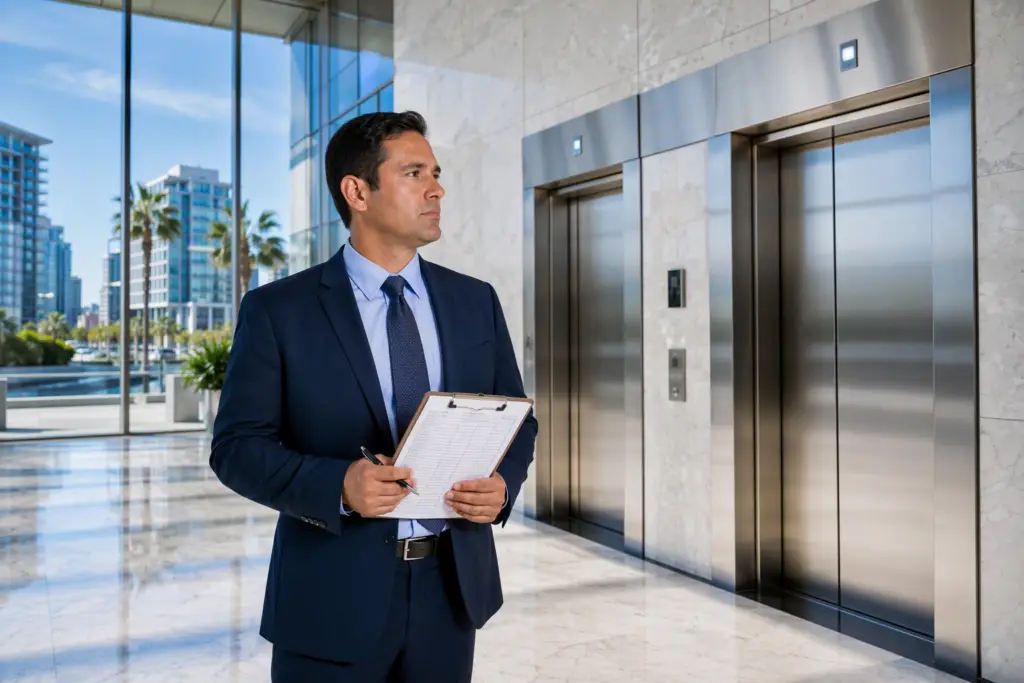
How to Reduce Elevator Downtime in a Hotel or Apartment Building Without Disrupting Tenants or Guests
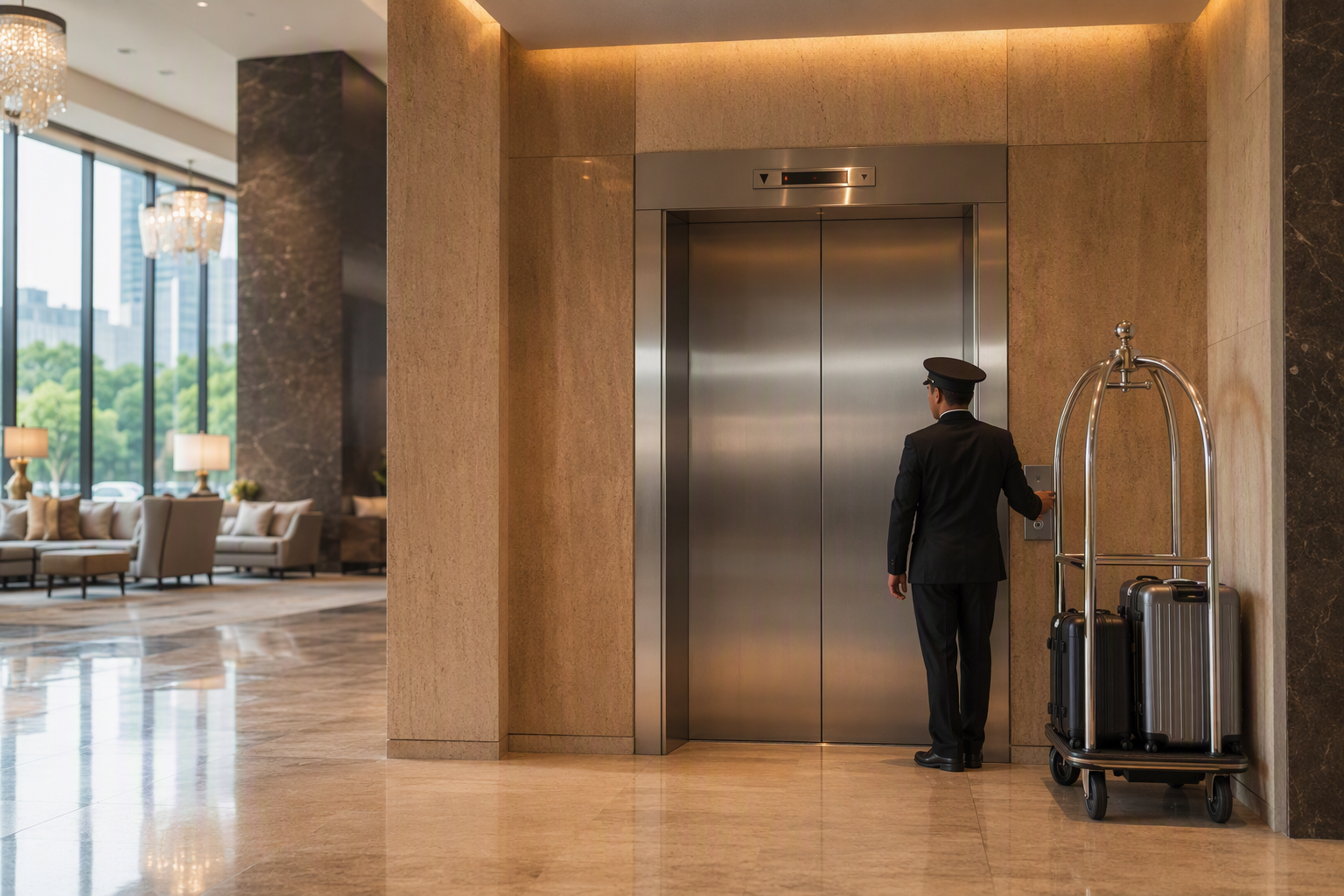
Elevator downtime in a residential or hospitality property is more than an inconvenience — it affects accessibility compliance, tenant satisfaction, lease renewals, and in some cases, life safety. Whether a property sits in Houston, Dallas, Austin, San Antonio, Los Angeles, or San Diego, building managers face the same challenge: keeping elevators running reliably without construction zones disrupting daily life. This guide covers the full landscape of that challenge, from compliance codes to maintenance scheduling, equipment decisions, and vendor selection.
—
What Causes the Most Elevator Downtime in Hotels and Apartment Buildings?
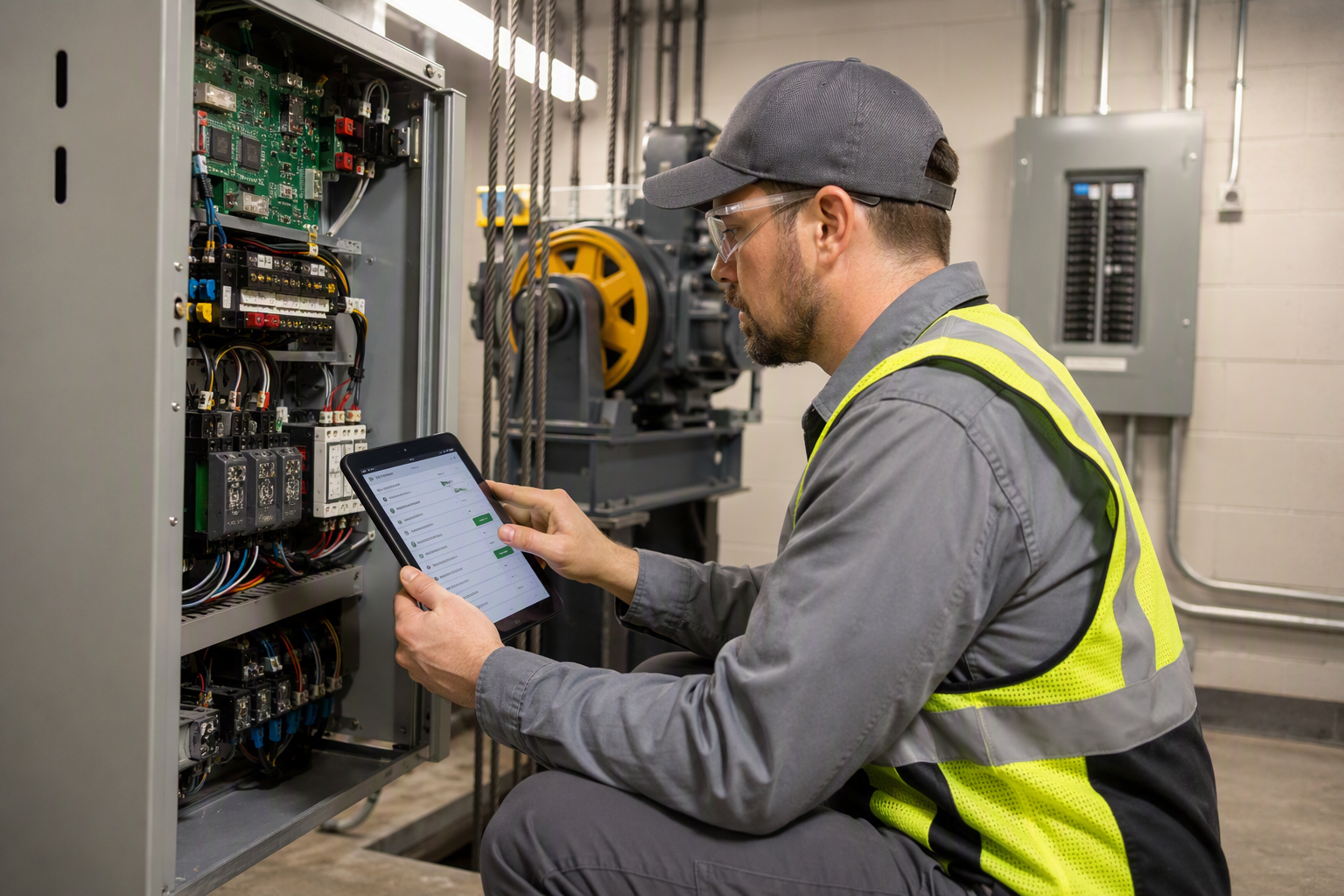
Unplanned elevator outages in multi-tenant buildings typically trace back to a handful of root causes:
- Deferred maintenance: When routine lubrication, adjustment, and inspection tasks are skipped or delayed, minor wear accelerates into component failure.
- Aging mechanical and electrical components: Door operators, hoist machines, controllers, and rope assemblies have defined service lives. When replacements are deferred, failure rates increase.
- Inadequate modernization: Older control systems lack self-diagnostic capabilities, making it harder to detect faults before they cause shutdowns.
- Environmental factors: In coastal California markets such as Los Angeles and San Diego, salt air accelerates corrosion. In Texas markets, heat stress on electrical components is a documented operational concern.
- Entrapment-triggered shutdowns: Safety systems correctly shut down an elevator when they detect a fault. Without preventive maintenance, these safety shutdowns happen more frequently and unpredictably.
Understanding the cause is the first step. The second step is building a maintenance and modernization strategy designed to address each risk before it becomes an outage.
—
What Compliance Standards Apply to Elevators in Hotels and Apartment Buildings in Texas and California?
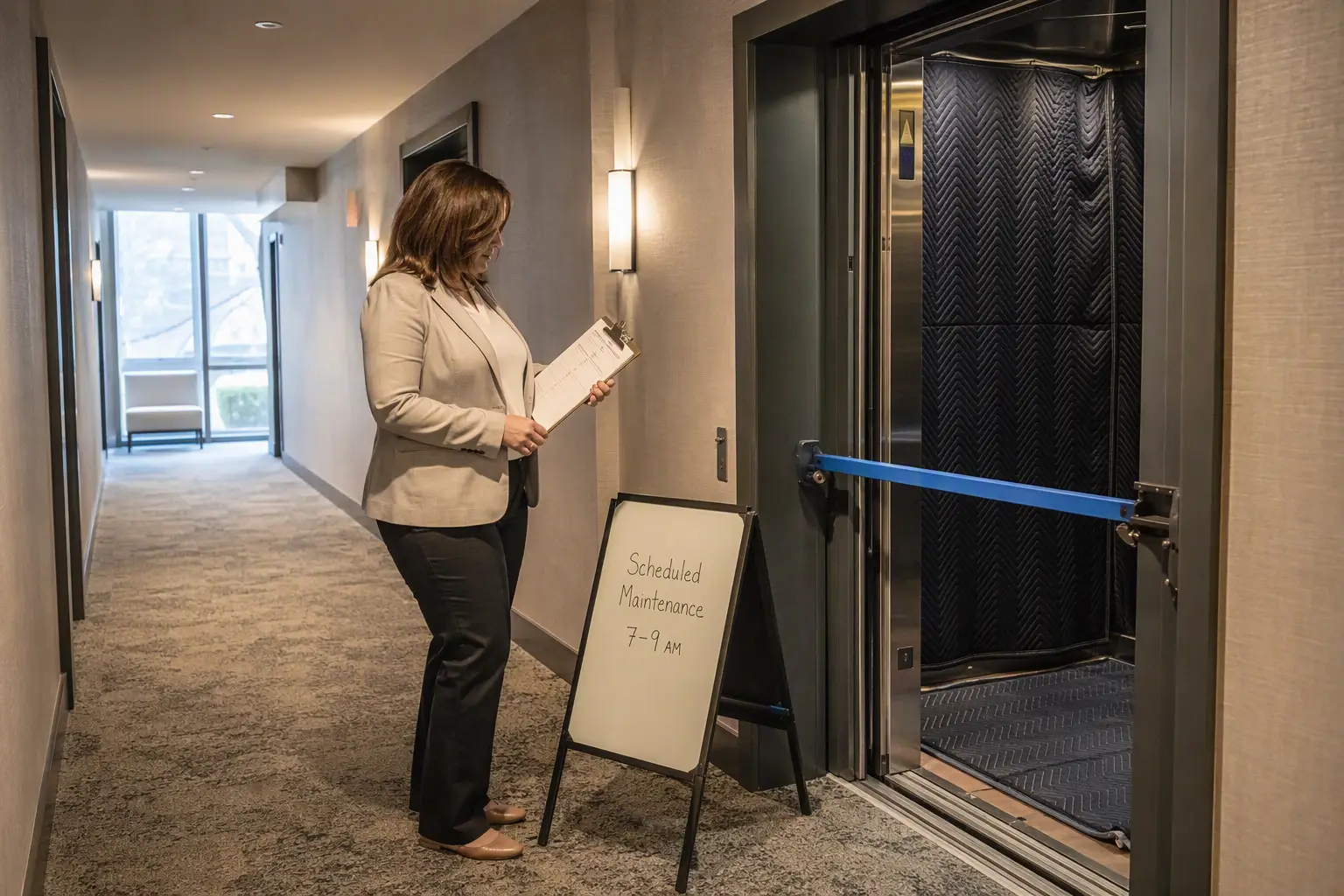
Elevator compliance in Texas and California draws from both federal and state frameworks. Building owners and property managers should be familiar with the following in 2026:
- ASME A17.1 Safety Code for Elevators and Escalators: The foundational safety code governing design, construction, operation, inspection, testing, and maintenance of elevators. Both Texas and California adopt editions of this code as the basis for their state elevator safety programs.
- ASME A17.3 Safety Code for Existing Elevators and Escalators: Applies specifically to existing installations and governs when and how existing equipment must be brought up to current safety requirements — directly relevant for older hotel towers and mid-century apartment buildings.
- Americans with Disabilities Act (ADA): Requires that elevators providing access to upper floors in public accommodations and commercial facilities meet specific dimensional, control, and signage requirements. Hotels are public accommodations under ADA Title III. Apartment buildings with four or more units and an elevator must comply with Fair Housing Act accessibility requirements, which parallel ADA standards.
- Texas Department of Insurance (TDI) — Elevator Safety Program: In Texas, elevator inspections are administered through TDI. All elevators in hotels and apartment buildings must be inspected and hold a valid certificate of operation.
- California Division of Occupational Safety and Health (Cal/OSHA) — Elevator Unit: In California, the Elevator, Ride, and Tramway Unit regulates elevator safety. Periodic inspections are required to maintain a valid permit to operate.
- OSHA standards: Apply to elevator service workers and set requirements for lockout/tagout, confined space entry, and fall protection during maintenance and repair operations.
Failure to maintain a valid certificate or permit of operation can result in mandatory shutdown by the authority having jurisdiction (AHJ) — an unplanned outage that building managers have no control over. Proactive compliance is the most reliable way to stay operational.
—
How Does a Preventive Maintenance Program Actually Reduce Downtime?
Preventive maintenance (PM) shifts elevator service from reactive to proactive. A well-structured PM contract covering a hotel or apartment building typically includes:
- Scheduled lubrication of all moving components on defined intervals
- Adjustment and alignment of door operators, safety edges, and door tracks — door system failures are among the most common causes of service interruptions
- Testing and calibration of safety devices including overspeed governors, safeties, and buffers
- Inspection of hoisting ropes or belts for wear and elongation
- Controller diagnostics and software updates on modern systems
- Review of maintenance records to identify recurring fault patterns before they become failures
Scheduling matters as much as scope. Service visits should be timed for early morning hours, overnight windows, or mid-week periods when elevator demand in the building is lowest. In a hotel, that typically means before breakfast service. In an apartment building, early weekday mornings tend to work well. AmeriTex Elevator coordinates maintenance scheduling directly with property managers to minimize visibility and disruption for residents and guests.
—
What Is the Step-by-Step Process for Scheduling Low-Disruption Elevator Maintenance?
- Audit current elevator usage patterns. Review floor call logs or speak with building staff to identify the lowest-traffic hours across a typical week.
- Notify building management at least 48–72 hours in advance. Property managers can alert tenants or guests through posted notices, in-app notifications, or front desk communication before any planned service window.
- Coordinate multi-elevator sequencing. In buildings with more than one elevator, stagger maintenance so at least one car remains in service at all times. Never take all cars offline simultaneously.
- Post clear, professional signage at each landing. Signage should indicate which elevator is temporarily out of service, the expected completion time, and the location of the nearest available car or accessible stairway.
- Establish a communication channel with the service technician on-site. Building management should have direct contact with the technician during the service window so they can relay status updates to guests or tenants.
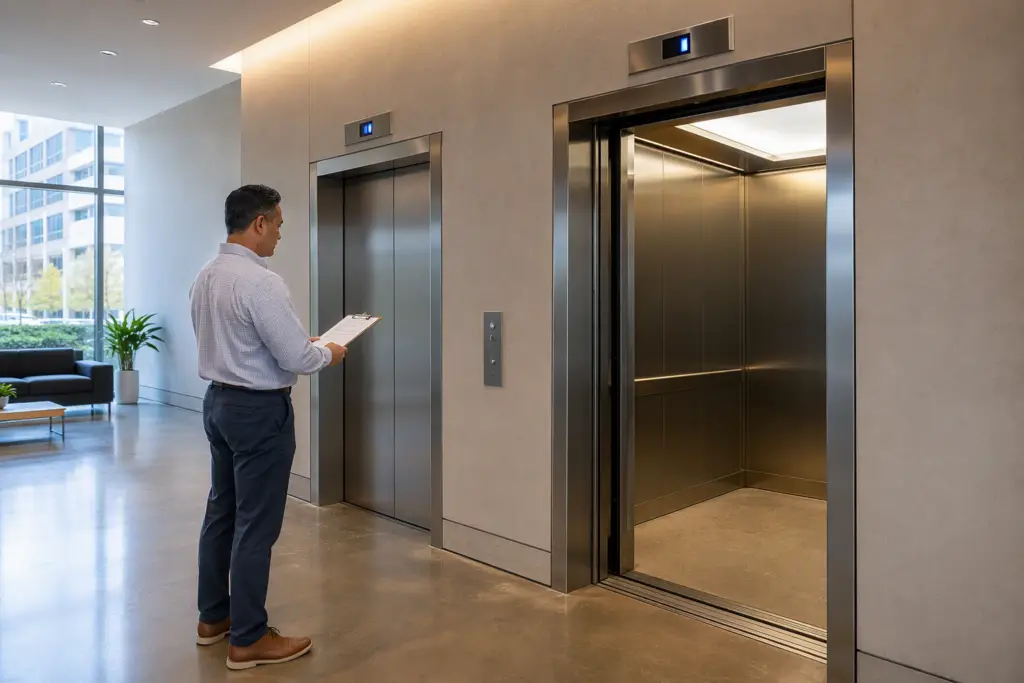
- Conduct a post-service test run before returning the elevator to service. Confirm all safety devices function correctly, door operation is smooth, and the elevator responds normally across all floors before opening to occupants.
- Document the maintenance visit in the elevator log. Texas TDI and California’s elevator inspection authorities require maintenance records to be kept and made available at inspection.
—
When Is Modernization a Better Strategy Than Ongoing Repairs?
There is a threshold at which continued repair of aging elevator components costs more in labor, parts, and unplanned downtime than a targeted modernization project. Common indicators that modernization should be evaluated include:
- Frequent callback visits for the same recurring fault
- Obsolete controllers for which replacement parts are no longer manufactured
- Hoist machine or rope systems approaching end of rated service life
- Door operator failures occurring multiple times per year
- ADA compliance gaps that require physical modifications regardless of maintenance status
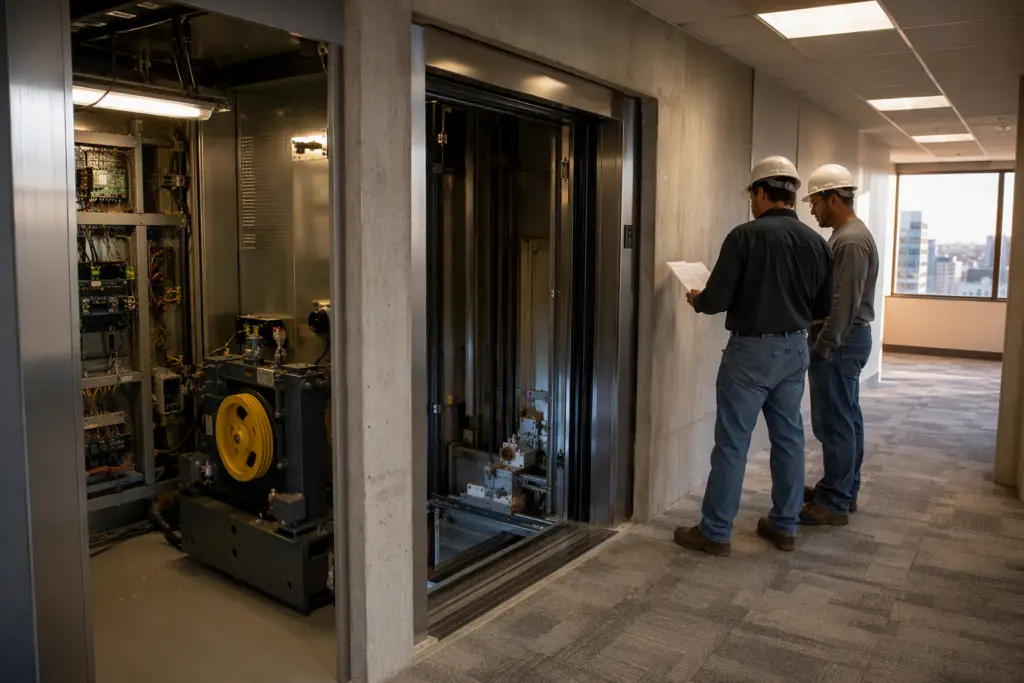
Modernization projects can be phased to minimize disruption. For example, a controller replacement can often be completed during a planned weekend outage, while machine room upgrades can be sequenced across multiple service windows. AmeriTex Elevator works with property owners to develop modernization scopes that align with building occupancy calendars and budget planning cycles.
—
How Does Elevator Downtime Affect ADA Compliance in Multi-Tenant Buildings?
Under the Americans with Disabilities Act, elevators in facilities covered by Title III — which includes hotels — must be maintained in operable condition. Extended or recurring outages affecting accessible routes can create liability exposure. While the ADA recognizes that temporary outages for maintenance occur, a property that routinely experiences extended elevator unavailability without implementing a corrective plan may face complaints or enforcement action.
For apartment communities, the Fair Housing Act imposes parallel obligations for accessible unit access. Residents with mobility impairments who rely on elevators as their primary means of floor access are particularly affected by extended outages. Documenting maintenance response, communicating transparently with affected residents, and shortening mean time to repair are all practices that support both compliance and resident relations.
—
What Remote Monitoring Technology Can Reduce Unplanned Outages?
Modern elevator systems increasingly support remote monitoring and diagnostic platforms that transmit fault codes and performance data in real time. For hotel and apartment building operators, this technology offers meaningful advantages:
- Early fault detection: Anomalies in door operation, motor performance, or safety device behavior can be flagged before they cause a shutdown.
- Faster dispatch: When a fault does occur, technicians arrive with diagnostic data already in hand, reducing troubleshooting time on-site.
- Performance trend analysis: Data logged over time reveals which components are trending toward failure, allowing proactive parts ordering and scheduling.
- Entrapment response: Connected systems can immediately alert building management and the service company when an entrapment occurs, improving response coordination.
Retrofitting remote monitoring to existing elevators is feasible on many systems. Building owners considering this option should ask their service provider whether the existing controller architecture supports connectivity upgrades.
—
What Are the Unique Elevator Demands of the Healthcare Setting Within Hotels or Apartment Buildings?
Some hotels and apartment communities serve populations with above-average medical needs — senior living communities, extended-stay medical hotels near hospital campuses in Houston or Los Angeles, or assisted living facilities operating within an apartment-style structure. In these settings, elevator reliability is not merely a convenience issue; it directly affects resident safety and care delivery.
Properties in this category should consider:
- Specifying hospital-duty or bariatric cab configurations that accommodate stretchers, wheelchairs, and medical equipment
- Ensuring cab dimensions and door widths meet or exceed ADA minimums, and consulting with their AHJ about any applicable healthcare occupancy requirements
- Increasing PM frequency to account for higher-than-typical utilization cycles
- Establishing priority service agreements that position their property for faster technician dispatch when an outage does occur
—
Questions Your Inspector Will Ask
Whether a Texas TDI inspector or a California elevator unit inspector arrives at a hotel or apartment building, property managers should be prepared to answer the following:
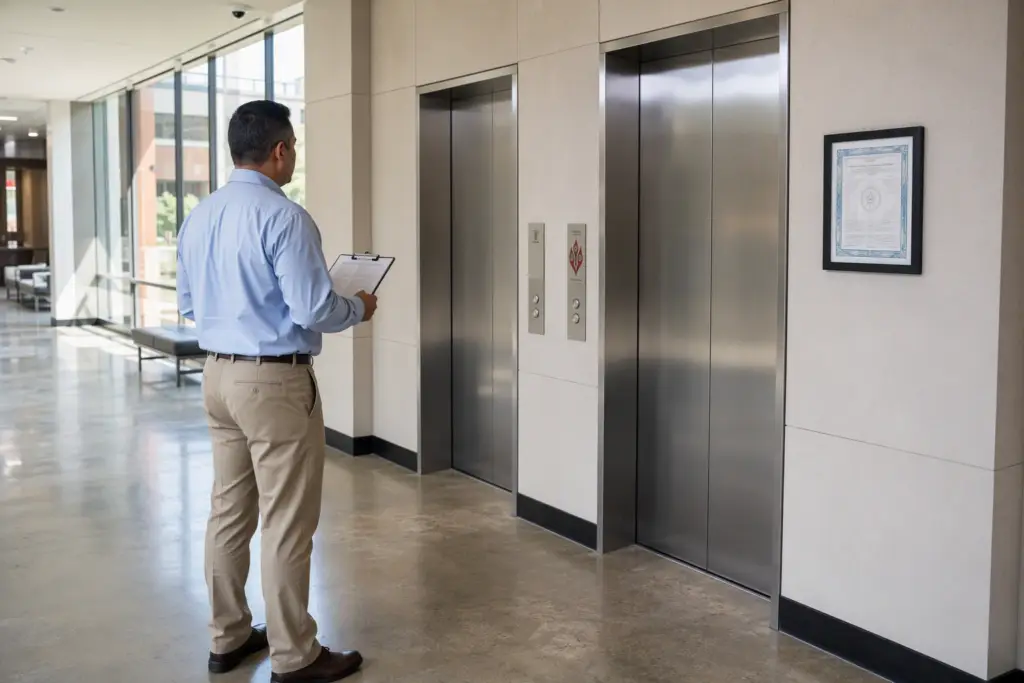
- Is the current certificate or permit of operation posted in the elevator cab?
- Where is the maintenance log, and does it reflect visits at code-required intervals?
- When was the last periodic inspection and test conducted, and by whom?
- Have all required five-year full-load safety tests been completed and documented under ASME A17.1?
- Have any alterations or repairs been made since the last inspection, and were they permitted?
- Do the cab controls, emergency lighting, and communication systems function correctly?
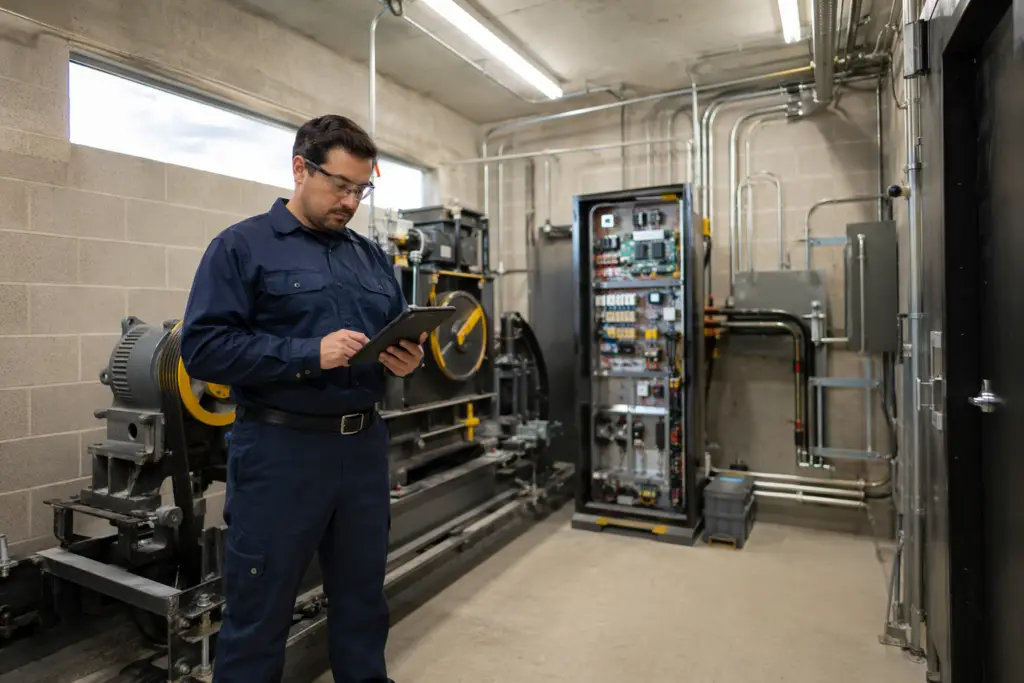
- Is the machine room clean, properly secured, and free of non-elevator storage?
- Are all safety device test records available for review?
A building that cannot answer these questions confidently is a building that faces inspection risk. Maintaining complete records and working with a qualified service provider is the most straightforward way to walk into any inspection ready.
—
How Do You Choose the Right Elevator Service Partner for a Hotel or Apartment Building?
Not all elevator service companies are equally equipped to handle the demands of a multi-tenant residential or hospitality property. When evaluating vendors, property managers should look for:
- State licensing in Texas (TDI compliance) or California (Cal/OSHA Elevator Unit requirements), as applicable
- Demonstrated experience servicing the specific equipment brands and vintages installed in the building
- Transparent maintenance contracts that specify the scope, frequency, and documentation of all service visits
- Clear communication protocols for planned and emergency service events
- Local presence in the specific market — a company operating in Houston, Dallas, Austin, San Antonio, Los Angeles, or San Diego can respond more effectively than a national provider dispatching from a distant hub
AmeriTex Elevator serves multi-tenant residential and hospitality properties across Texas and California markets, providing full-service maintenance, repair, and modernization programs built around minimizing disruption and maintaining continuous compliance. AmeriTex Elevator’s service teams are familiar with the inspection requirements and AHJ expectations in each of the markets they serve, from Houston to San Diego.
—
What Should a Building Manager Do When an Elevator Goes Down Unexpectedly?
- Verify no passenger entrapment has occurred. Communicate with anyone who may be inside the cab via the emergency phone and contact emergency services if entrapment is confirmed.
- Take the elevator out of service. Prevent further use by placing signage at all landings and, if possible, locking out access at the controller.
- Contact the elevator service provider immediately. Have the elevator ID number, building address, and a brief description of observed symptoms ready to communicate.
- Notify building management and affected tenants or guests. Provide realistic estimates of the service window and direct people to available alternatives.
- Document the event. Note the time of the outage, observed symptoms, and all subsequent actions for the maintenance log.
- After repair, request a written service report. The report should describe what failed, what corrective action was taken, and any follow-up work recommended.
—
Can Modernization Projects Be Completed Without Taking a Building Fully Offline?
In most multi-elevator buildings, yes. Experienced elevator contractors phase modernization projects so that at least one elevator remains in service throughout the project timeline. Single-elevator buildings present a greater challenge; in those cases, project scheduling around lower-occupancy periods — such as between hotel checkout and check-in cycles, or during a period of planned low occupancy — is the most practical mitigation. AmeriTex Elevator works with property managers early in the planning process to develop project timelines that account for building occupancy, ADA access obligations, and local authority approval timelines.
—
Get Expert Elevator Support for Your Property
Reducing elevator downtime without disrupting tenants or guests is a solvable problem — but it requires the right maintenance program, the right compliance posture, and the right service partner. AmeriTex Elevator provides elevator maintenance, repair, and modernization services across Houston, Dallas, Austin, San Antonio, Los Angeles, and San Diego, with programs designed specifically for multi-tenant residential and hospitality properties.
Contact AmeriTex Elevator for a free elevator assessment: 866-679-4313
Need elevator service you can rely on? AmeriTex Elevator is ready to help.