
How to Budget for Elevator Maintenance and Repairs in Your 2027 Operating Budget: A Property Manager’s Complete Guide
Elevator costs are among the most significant and frequently underestimated line items in a commercial or multifamily property’s operating budget. Whether you manage a high-rise in Houston, a mixed-use development in Austin, a commercial tower in Dallas, a retail center in San Antonio, a Class A office building in Los Angeles, or a multifamily complex in San Diego, a disciplined, code-informed budgeting framework protects both your bottom line and your liability exposure heading into 2027.
What Should Be the First Step When Building an Elevator Budget for 2027?
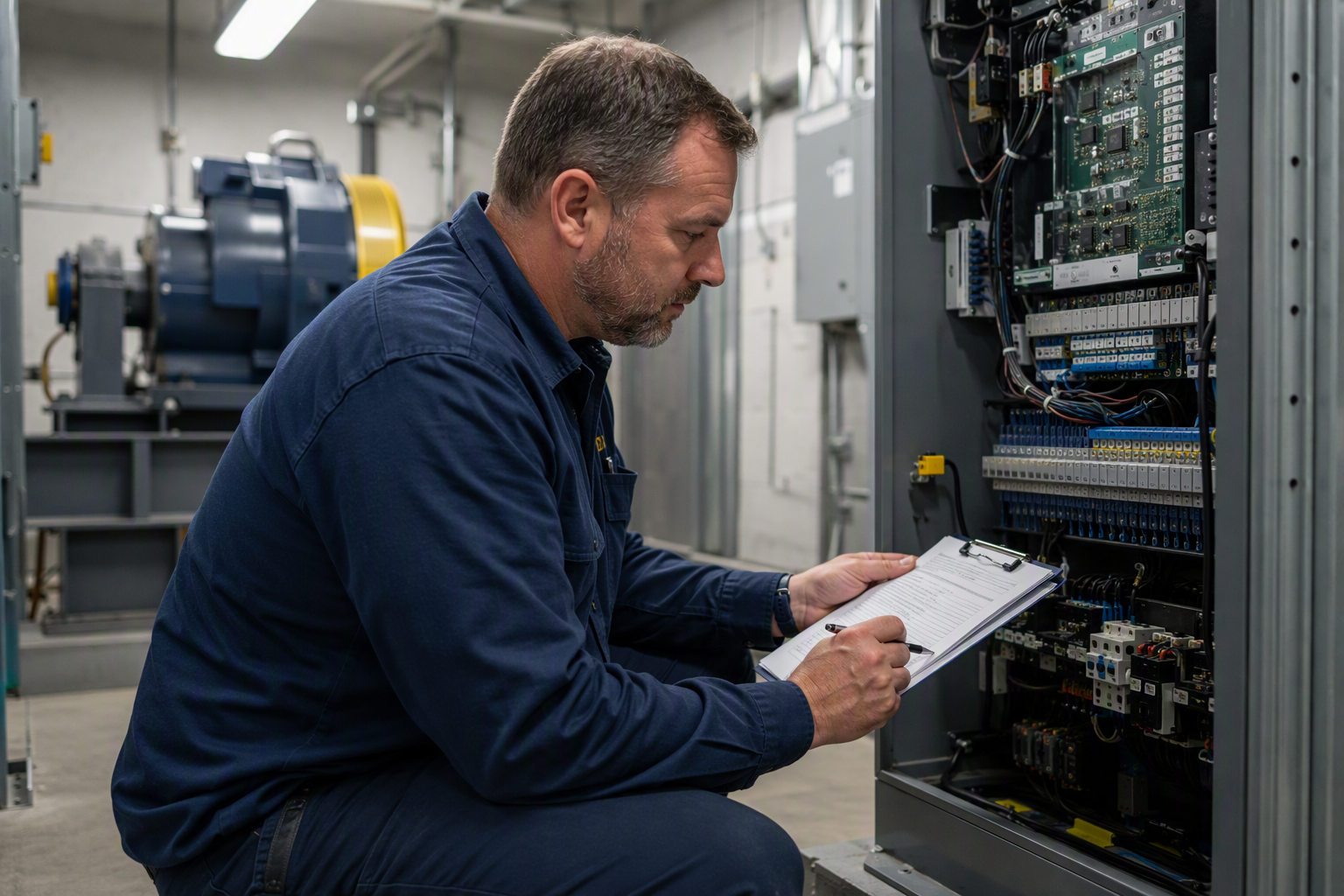
The first step is completing a full condition assessment of every elevator unit on your property before finalizing any budget figures.
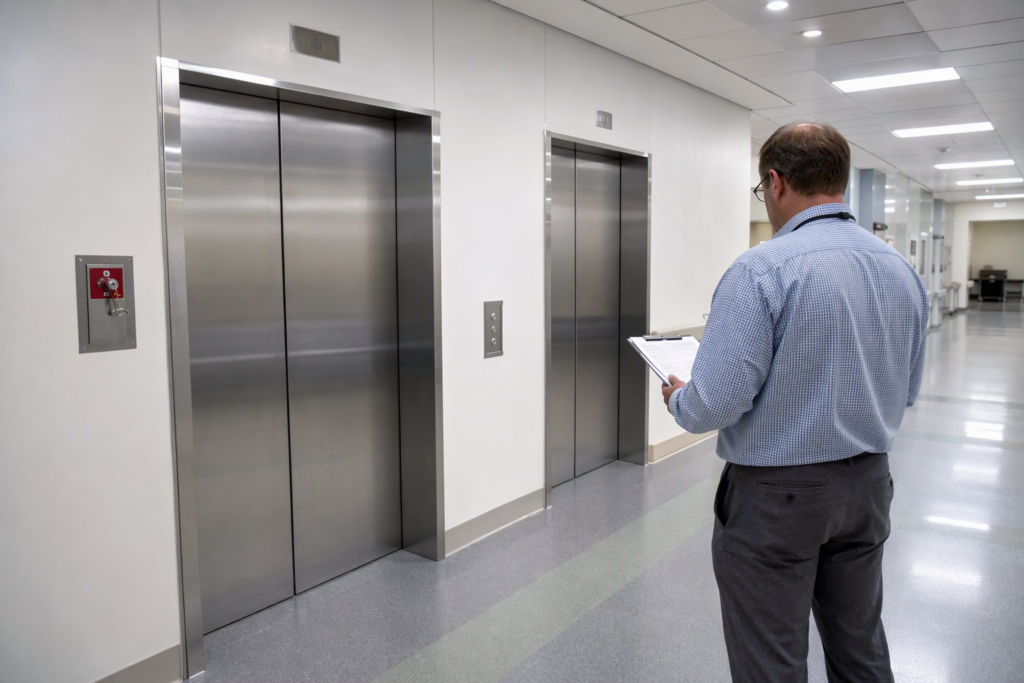
A condition assessment gives property managers a factual baseline: the age and type of each unit, the current state of mechanical and electrical components, any outstanding violations, and the remaining useful life of major systems. Without this audit, budget figures are guesses rather than projections. Property managers in Houston, Dallas, Austin, San Antonio, Los Angeles, and San Diego can request a free elevator assessment from AmeriTex Elevator to establish this baseline before the 2027 budget cycle closes.
The assessment should document the drive system (hydraulic, traction, machine-room-less), cab condition, control system generation, door operator performance, safety device status, and any open inspection violations. Each of these categories drives a distinct budget line item.
What Are the Core Budget Categories for Elevator Maintenance?
The four core elevator budget categories are: preventive maintenance contracts, statutory inspections and permits, component repair and replacement, and a capital reserve for major modernization.
Most property managers structure elevator budgets around these four pillars. Operating expenses — maintenance contracts, routine repairs, and inspection fees — belong in the OpEx budget. Large-scale modernization or drive-system replacement belongs in the CapEx or reserve fund. Blending these two categories is a common budgeting error that creates year-over-year variance and surprises boards and ownership groups.
- Preventive Maintenance (PM) Contract: A recurring, scheduled service agreement covering lubrication, adjustment, cleaning, and minor parts replacement on a defined visit cadence.
- Statutory Inspections & Permits: State-mandated periodic inspections by a licensed third-party inspector or the authority having jurisdiction (AHJ), plus associated permit fees.
- Component Repairs: Unscheduled repairs to doors, controllers, motors, hydraulic cylinders, safety devices, and cab interiors.
- Capital Reserve / Modernization Reserve: Funds set aside annually to cover future drive-system replacement, control modernization, or full cab renovation — typically planned on a 20–25 year equipment life cycle.
What Do Texas and California Require for Elevator Inspections, and What Do Those Inspections Cost?
Both Texas and California require periodic elevator inspections by qualified inspectors under state-administered programs, and associated permit and inspection fees must be treated as non-negotiable budget line items.
In Texas, elevator safety is administered by the Texas Department of Insurance (TDI), which oversees inspection intervals, licensing of inspectors, and certificate-of-operation requirements. Property managers in Houston, Dallas, Austin, and San Antonio must maintain a current certificate of operation for each conveyance, which requires passing a periodic inspection. Violations identified during inspection must be corrected and re-inspected before the certificate is renewed.
In California, the Division of Occupational Safety and Health (Cal/OSHA) Elevator Unit administers the state’s elevator safety program under the California Elevator Safety Construction Act. Local jurisdictions may also have authority having jurisdiction (AHJ) responsibilities. Property managers in Los Angeles and San Diego must budget for annual Cal/OSHA permits and periodic inspections, as well as any city-level permit fees that apply.
At the federal level, ASME A17.1 Safety Code for Elevators and Escalators sets the design, construction, and safety baseline. ASME A17.3 Safety Code for Existing Elevators and Escalators governs retroactive requirements for equipment already in service. Both Texas and California reference ASME A17.1 and A17.3 in their state programs. Budget for permit and inspection fees as fixed annual costs — failure to renew a certificate of operation can result in mandatory shutdown of the unit and significant liability exposure.
How Does Elevator Age and Type Affect Annual Maintenance Budget Requirements?
Older hydraulic and traction elevators typically require larger annual maintenance budgets than newer machine-room-less (MRL) systems because aging components fail more frequently and replacement parts may require longer lead times.
| Equipment Type | Typical Age Range | Relative PM Cost Level | Repair Frequency Risk | Modernization Urgency | Key Budget Driver |
|---|---|---|---|---|---|
| Hydraulic (In-ground) | 20–40 years | Moderate–High | High | Near-term (plan within 5 years) | Hydraulic cylinder, seal replacement, leak risk |
| Hydraulic (Holeless / Roped) | 0–20 years | Moderate | Moderate | Mid-term | Pump unit, valve, jack assembly |
| Geared Traction | 20–50 years | High | High | Near-term | Gearbox, motor, sheave, ropes, controller |
| Gearless Traction | 10–40 years | Moderate–High | Moderate | Mid-term | Motor, ropes, controller, door operator |
| Machine-Room-Less (MRL) | 0–15 years | Lower | Lower | Long-term | Controller software, door operator, drive |
Property managers should apply a higher contingency percentage to hydraulic in-ground units and older geared traction systems. The risk of a single major failure — such as a hydraulic cylinder replacement or gearbox overhaul — can easily exceed several years of routine maintenance contract costs if not reserved for in advance.
What Is a Preventive Maintenance Contract and What Should It Cover?
A preventive maintenance (PM) contract is a structured service agreement between a property manager and a licensed elevator contractor that defines the scope, frequency, and terms of routine maintenance visits.
A well-structured PM contract should, at minimum, include lubrication of all moving components, adjustment of door operators and safety devices, cleaning of the machine room and pit, testing of safety and electrical circuits, and a written service report after each visit. Contract language that limits the contractor’s parts and labor obligations — sometimes called “oil and grease” or “lubrication-only” contracts — provides minimal protection and typically results in higher repair invoices when components fail between visits.
Property managers should compare full-coverage contracts (parts, labor, and limited modernization) against comprehensive contracts (parts and labor excluding major components) and oil-and-grease contracts. The appropriate level depends on equipment age, risk tolerance, and capital reserve strength. AmeriTex Elevator works with property managers across Texas and California to structure maintenance agreements appropriate for each building’s specific equipment profile and budget constraints.
How Should Property Managers Structure a Capital Reserve for Elevator Modernization?
Property managers should calculate an annual reserve contribution based on the estimated total modernization cost divided by the remaining useful life of the equipment, adjusted for inflation and local labor rates.
Elevator modernization is not a question of if, but when. Major components — controllers, drive systems, hydraulic cylinders, hoist ropes, and cab interiors — have finite useful lives. The failure to reserve for modernization is one of the most common financial planning errors in commercial property management, often resulting in emergency capital calls or deferred maintenance that compounds into code violations.
A practical approach: after the condition assessment, estimate the total cost of a full modernization for each unit, assign an expected timeline to that modernization (based on equipment age and condition), and divide the cost over the remaining years. This annual contribution should be treated as a non-negotiable operating expense, not a discretionary item. Reserve studies — which are required by many lenders and HOAs in California — formalize this calculation and provide defensible documentation for boards, lenders, and ownership groups.
What ADA Compliance Costs Should Be Included in the Elevator Budget?
Property managers must budget for ADA-related upgrades and ongoing compliance maintenance, including accessible controls, cab dimensions, door timing, and audible/visual signals, which can trigger significant capital expenditure if deferred.
The Americans with Disabilities Act (ADA) establishes accessibility requirements for elevators in public accommodations and commercial facilities. For existing buildings, ADA compliance is evaluated under a “readily achievable” barrier removal standard, but that standard does not eliminate the obligation — it only affects the timeline. Common ADA-related elevator items that property managers in Houston, Dallas, Austin, San Antonio, Los Angeles, and San Diego budget for include: Braille and raised-character control panels, accessible cab dimensions, door open timing adjustments, leveling accuracy corrections, and cab communication system upgrades.
ADA complaints and DOJ enforcement actions can result in remediation costs that significantly exceed the cost of proactive compliance. Property managers should conduct a periodic ADA accessibility audit of each elevator and budget remediation items into the appropriate budget year.
What Is a Reasonable Contingency Percentage for Unplanned Elevator Repairs?
Property managers should include a contingency line in their elevator budget to absorb unplanned repairs that fall outside the preventive maintenance contract scope, with the appropriate percentage increasing with equipment age.
Even the most comprehensive PM contract will not eliminate all unplanned repair costs. Door operators, controller boards, hydraulic valves, and safety switches can fail between scheduled visits. The appropriate contingency level depends on equipment age, contract coverage type, and the building’s tolerance for downtime. Newer equipment under full-coverage contracts warrants a smaller contingency; aging hydraulic or geared traction systems under limited contracts warrant a larger buffer.
Rather than naming a specific dollar figure that may not apply across all markets and equipment types, property managers should work with their elevator service contractor to review the prior three-to-five years of repair invoices and use that historical spend — normalized for any extraordinary events — as the basis for the contingency estimate. If historical data is unavailable (for example, at a new property acquisition), requesting a detailed condition report from a qualified contractor like AmeriTex Elevator provides the factual basis needed to set a defensible contingency figure.
How Does Building Use Type Affect Elevator Maintenance Costs?
High-traffic buildings such as hospitals, hotels, and mixed-use retail generate significantly more elevator wear than low-traffic residential or office buildings, requiring more frequent maintenance visits and higher parts budgets.
Door operator cycles are the primary driver of component wear. A residential building with light daily usage places far less mechanical stress on a door operator than a hotel or hospital with continuous traffic. Property managers should evaluate the actual or estimated trip count and door cycle frequency for each unit, and ensure the PM contract visit cadence matches the usage intensity. An elevator in a high-rise Houston office building serving hundreds of occupants per day should not be on the same maintenance schedule as a two-stop unit in a low-rise Austin professional building.
Use type also affects the risk profile of downtime. A single-elevator residential building or a hospital with limited vertical access points has a much higher downtime cost — both financial and reputational — than a multi-elevator building where one unit going offline is manageable. Budget the maintenance and contingency accordingly.
What Permits and Regulatory Fees Must Be Budgeted Annually in Texas?
Texas property managers must budget annually for TDI-administered conveyance permits and associated inspection fees for each elevator unit in operation.
The Texas Department of Insurance regulates conveyances statewide. Each elevator must have a current certificate of operation, which requires an annual or periodic inspection by a TDI-licensed inspector. Property managers in Houston, Dallas, Austin, and San Antonio should request the current fee schedule from TDI and include those fees as fixed line items in the 2027 operating budget. Failure to maintain a current certificate can result in mandatory shutdown and civil penalties.
In addition to state fees, some municipalities in Texas may assess local permit or inspection fees. Property managers should confirm with local AHJs whether city-level fees apply in their specific market. Compliance with ASME A17.1 and A17.3 is embedded in the Texas regulatory framework, and violations identified during TDI inspections must be corrected at the property manager’s expense within the timeframe specified in the citation.
What Permits and Regulatory Fees Must Be Budgeted Annually in California?
California property managers in Los Angeles and San Diego must budget for annual Cal/OSHA Elevator Unit permits and periodic inspection fees, which are mandatory for every permitted conveyance in the state.
The Cal/OSHA Elevator Unit issues permits to operate for elevators, escalators, and related equipment throughout California. The annual permit fee is assessed per unit and varies based on equipment type and jurisdiction. Property managers must renew permits annually and ensure that required periodic inspections are completed on schedule. Units that fail inspection must be taken out of service until violations are corrected and a re-inspection is passed.
Los Angeles and San Diego also have active local AHJ involvement in some circumstances. Property managers should verify whether city-level inspection requirements apply in addition to the state program. Compliance with ASME A17.1 Safety Code for Elevators and Escalators underlies California’s regulatory standards, meaning any equipment deficiencies identified against ASME A17.1 benchmarks will be captured during the Cal/OSHA inspection process.
How Should Property Managers Evaluate and Compare Elevator Service Contractors Before Signing a 2027 Contract?
Property managers should evaluate elevator contractors on the basis of state licensure, contract scope transparency, local parts availability, inspection documentation quality, and demonstrated familiarity with the specific equipment types in their building.
Contractor selection is one of the highest-leverage decisions in elevator budget management. A contractor with strong local parts inventory and familiarity with the AHJ in Houston, Dallas, Austin, San Antonio, Los Angeles, or San Diego will resolve issues faster and at lower total cost than a contractor who must source parts remotely or is unfamiliar with local inspection processes.
Key evaluation criteria include:
- State licensure: Confirm the contractor holds the appropriate license under TDI (Texas) or the California Contractors State License Board as applicable.
- Contract transparency: Confirm exactly which parts, labor categories, and failure modes are covered versus excluded.
- Documentation: A quality contractor provides written service reports after every visit, including parts replaced, adjustments made, and any items noted for future attention.
- Equipment familiarity: Ask specifically about experience with your unit’s manufacturer and drive system.
- Local presence: Contractors with technicians based in your market will respond to calls faster than those dispatching from a distant hub.
AmeriTex Elevator operates across Houston, Dallas, Austin, San Antonio, Los Angeles, and San Diego, providing property managers with a single point of contact for multi-market portfolios while maintaining local market expertise in each city.
What Are the Most Common Elevator Repairs That Property Managers Fail to Budget For?
The most commonly under-budgeted elevator repair categories are door operator replacements, controller board failures, hydraulic system repairs, and rope or belt replacements — all of which can carry significant parts and labor costs when they occur.
Door-related issues are the most frequent source of service calls on virtually every elevator type. Door operators, rollers, gibs, clutch assemblies, and electronic door sensors all wear with use and eventually fail. Because door components are high-cycle items, even well-maintained elevators will require door system work over a multi-year budget horizon.
Controller boards and solid-state drive components present a different budgeting challenge: they tend to fail suddenly rather than gradually, and proprietary components for older systems can carry long lead times and high costs. Property managers with elevators running on older or discontinued control systems should specifically reserve for controller replacement or modernization.
Hydraulic system maintenance — including fluid replacement, valve servicing, and jack inspection — is often deferred longer than it should be, resulting in larger repair events. Environmental regulations in California governing hydraulic fluid containment add a compliance dimension that should be budgeted explicitly for properties in Los Angeles and San Diego.
How Do Property Managers Handle Elevator Downtime Costs in the Budget?
Property managers should treat elevator downtime as a financial risk with both direct costs (emergency repair premiums, temporary accessibility accommodations) and indirect costs (tenant complaints, ADA liability, and lease default risk) that belong in the risk management section of the operating budget.
Downtime in a single-elevator building or a building with ADA-dependent occupants is a compliance emergency, not just a maintenance inconvenience. The ADA requires that when an accessible elevator is out of service, a building owner must take steps to provide alternative accessible service or notify users of the situation. Extended downtime without accommodation can constitute an ADA violation independent of the mechanical failure itself.
From a pure financial standpoint, emergency repair call-outs — especially after hours or on weekends — typically carry premium labor rates. A contingency fund that only accounts for parts costs but not premium labor will be insufficient. Property managers should ensure their PM contract clearly defines standard versus emergency service rates and budget the contingency fund accordingly.
What Is the Right Budget Process for a Multi-Elevator or Multi-Property Portfolio?
Portfolio-level elevator budgeting requires a unit-by-unit condition matrix, a consolidated reserve model, and a prioritized capital queue that sequences modernization spending across the portfolio based on risk and remaining useful life.
Property managers overseeing multiple buildings — whether in a single city or across Texas and California — should resist the temptation to apply a flat per-unit budget across all elevators. A 40-year-old hydraulic unit in a San Antonio office building and a five-year-old MRL unit in a Los Angeles residential tower have fundamentally different cost profiles. A flat budget will under-reserve for the former and over-reserve for the latter, producing inaccurate financials across the portfolio.
Best practice is to maintain a living elevator asset register — a database of every unit with make, model, year of installation, drive type, contract type, last inspection date, and next major capital event. This register becomes the source of truth for annual budget construction and the basis for board or ownership presentations on the capital plan.
How Should Property Managers Plan for ASME Code Compliance Upgrades in 2027?
Property managers should review their elevators against the current edition of ASME A17.3 for existing elevators to identify any retroactive safety device requirements that may generate compliance-driven capital expenditure in 2027.
ASME A17.3 Safety Code for Existing Elevators and Escalators establishes retroactive requirements that existing equipment must meet on a defined compliance timeline. These requirements — which can include door reopening devices, emergency lighting, communication systems, and seismic protection features in California — are not optional and are typically enforced during periodic inspections by the AHJ. Property managers who have not recently reviewed their equipment against the current A17.3 edition risk unexpected compliance expenditures surfacing during a 2027 inspection.
In California, seismic requirements add an additional layer of code compliance planning. Los Angeles and San Diego properties should confirm that elevators meet applicable seismic protection standards — a technical area where working with an experienced local contractor like AmeriTex Elevator is particularly valuable for navigating the intersection of ASME standards and California-specific requirements.
What Should Property Managers Do Immediately If an Elevator Fails Inspection?
When an elevator fails a statutory inspection, property managers must follow a specific sequence of actions to minimize downtime, avoid penalties, and restore the unit to legal operation as quickly as possible.
- Remove the elevator from service immediately if the AHJ or inspector issues a shutdown order. Operating a condemned unit is a serious violation and significantly increases liability.
- Secure the written inspection report from the inspector documenting every cited deficiency, the applicable code reference, and the correction deadline.
- Notify affected tenants and building users of the outage, the estimated timeline for repair, and any alternative accessible route in compliance with ADA obligations.
- Contact your licensed elevator contractor immediately to review the citation list and obtain a scope of work and timeline for each deficiency.
- Prioritize repairs by compliance deadline, not by convenience or cost, to avoid escalating violations or penalties.
- Document all repair work with written reports, parts receipts, and technician sign-offs to support the re-inspection process.
- Schedule the re-inspection with the AHJ as soon as the contractor confirms all cited deficiencies have been corrected.
- Update your budget and reserve model to reflect the actual repair costs and any capital items identified during the inspection that need to be reserved for in 2027 and beyond.
How Can Property Managers Use an Elevator Assessment to Strengthen the 2027 Budget Presentation?
A formal written elevator assessment from a licensed contractor provides the documented evidence that ownership groups, boards, and lenders need to approve capital reserve contributions and maintenance budget increases without pushback.
Budget requests for elevator maintenance and capital reserves are frequently challenged by ownership groups or boards who view elevator costs as discretionary or inflated. A third-party condition assessment — signed by a licensed contractor, itemizing each unit’s condition, remaining useful life, and projected capital events — transforms a budget request from an opinion into a documented recommendation backed by technical evidence.
For properties financed by institutional lenders or subject to HOA governance in California, a formal reserve study that includes elevator assets may be required or strongly encouraged. Even where not required, presenting ownership with a formal assessment significantly improves the likelihood of reserve fund approval and reduces the risk of under-funded capital accounts creating emergency situations in future years.
What OSHA Requirements Affect Elevator Maintenance Budgets?
OSHA regulations governing elevator maintenance and inspection activities affect how property managers contract for service, what safety standards technicians must follow, and what documentation must be maintained on-site.
OSHA standards apply to the working conditions of elevator technicians performing maintenance, repair, and inspection work. While OSHA does not administer elevator operational safety (that function falls to ASME A17.1/A17.3 and state programs in Texas and California), OSHA requirements do affect the practices of contractors working in elevator pits, machine rooms, and hoistways. Property managers have a general duty to ensure the worksite — including elevator machine rooms and pits — meets OSHA requirements for housekeeping, lighting, access, and hazard control.
Machine room conditions that violate OSHA standards — such as inadequate lighting, improper storage, or blocked access — can trigger citations during an elevator inspection and generate remediation costs that belong in the property maintenance budget rather than the elevator-specific budget. Property managers should include machine room and pit condition in their annual facility walkthrough checklist.
How Often Should a Property Manager Renegotiate or Rebid the Elevator Maintenance Contract?
Property managers should review and, if warranted, rebid the elevator maintenance contract every three to five years to ensure competitive pricing, appropriate coverage scope, and alignment with the current condition and age of the equipment.
Long-term maintenance contracts with automatic renewal provisions can lock property managers into coverage terms and pricing structures that no longer reflect either market rates or the current condition of the equipment. As elevators age, the scope of what a comprehensive contract covers becomes more important — and more expensive — to maintain. A contract that was appropriate for new equipment may provide inadequate coverage for the same unit ten years later.
When rebidding, property managers should distribute a standardized scope-of-work document that defines required visit frequency, specific systems to be covered, documentation requirements, and response time expectations for emergency calls. Comparing bids on a standardized scope prevents the common error of selecting the lowest bid on a narrower coverage contract — a decision that typically results in higher total cost over the contract term. Property managers across Texas and California who contact AmeriTex Elevator for a free assessment receive a clear, written scope of work they can use as a baseline for any competitive bid process.
What Final Budget Structure Is Recommended for a 2027 Elevator Operating Plan?
A sound 2027 elevator operating plan combines a fixed OpEx section for contracted maintenance and inspections, a variable OpEx contingency for unplanned repairs, and a CapEx or reserve contribution for future modernization — all grounded in a current condition assessment.
The recommended budget structure for property managers heading into 2027:
- OpEx — Fixed: PM contract fees (all units), annual permit and inspection fees (state and local), ADA compliance maintenance items identified in the prior year’s accessibility audit.
- OpEx — Variable / Contingency: Unplanned repair calls, parts failures outside contract scope, emergency labor premiums, re-inspection fees following citation corrections.
- CapEx / Reserve Contribution: Annual contribution toward major component replacement and full modernization, calculated from the condition assessment and normalized over the remaining useful life of each unit.
- Compliance Reserve: Funds set aside for ASME A17.3 retroactive compliance items and, for California properties, seismic upgrade requirements as applicable.
Presenting this structure to ownership groups or boards with supporting documentation from a qualified elevator contractor demonstrates fiscal discipline and reduces the risk of being caught short by unplanned events. Working with a regionally experienced partner — one that understands both the Texas TDI framework and the California Cal/OSHA Elevator Unit program — provides property managers with a consistent methodology across multi-state portfolios.
Need elevator service you can rely on? AmeriTex Elevator is ready to help.