Elevator Inspection Requirements and Timelines in Los Angeles, California
Understanding elevator inspection requirements in Los Angeles is essential for building owners, property managers, facility directors, and commercial real estate operators. California enforces some of the most comprehensive elevator safety regulations in the country, and Los Angeles — as a dense urban environment with thousands of vertical transportation units — applies these rules rigorously. This page covers every dimension of the inspection process: governing agencies, required timelines, what inspectors evaluate, what happens when an elevator fails, and how to stay ahead of compliance obligations in 2026 and beyond.
What Agency Governs Elevator Inspections in Los Angeles?
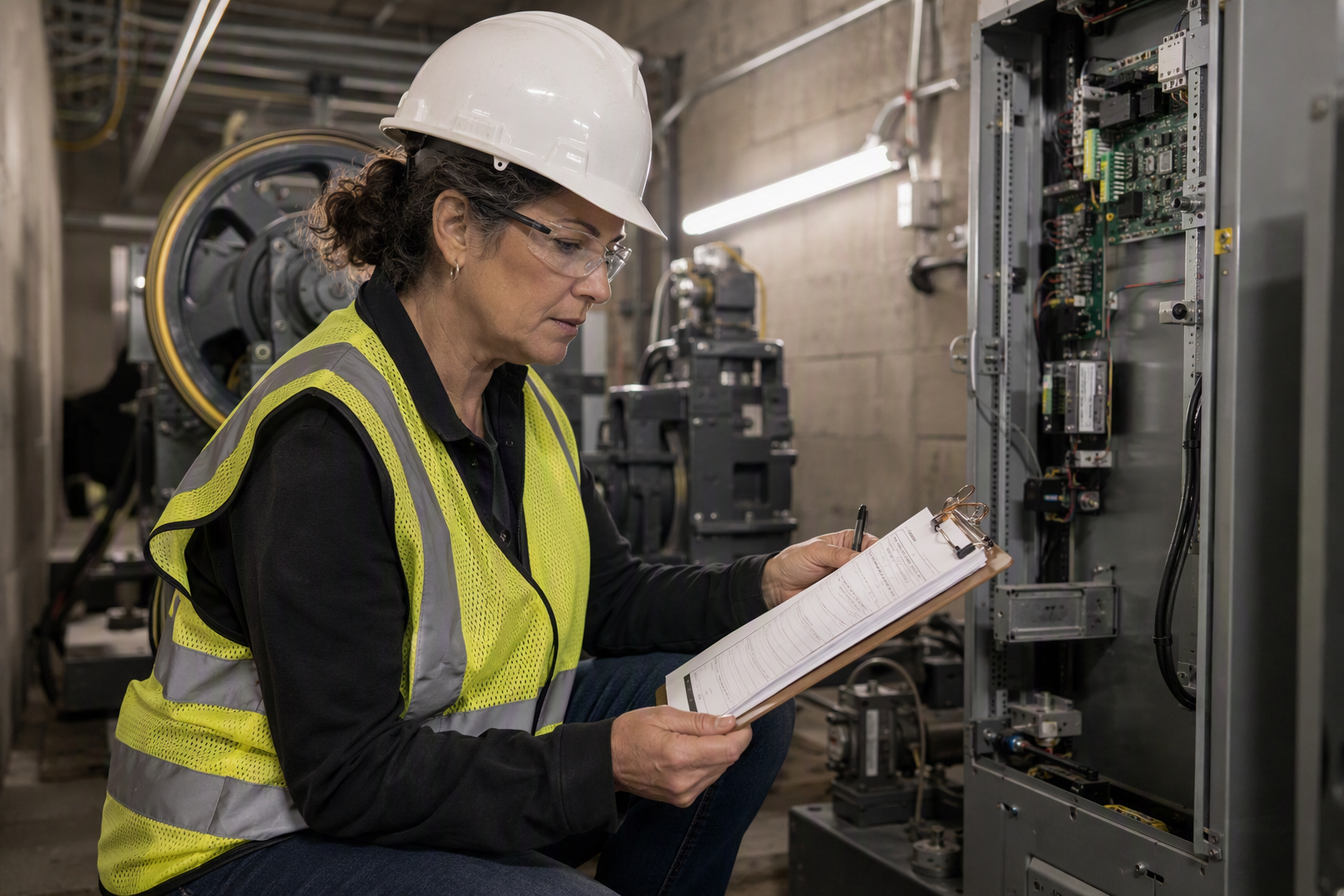
Elevator safety in California falls under the authority of Cal/OSHA’s Elevator, Ride, and Tramway Unit (ERTU), which is a division of the California Department of Industrial Relations. At the local level in Los Angeles, the Los Angeles Department of Building and Safety (LADBS) coordinates with state authorities and has its own permitting and inspection oversight role for elevators in buildings subject to city jurisdiction.
Cal/OSHA ERTU is responsible for issuing permits to operate, approving equipment installations, licensing elevator mechanics, and overseeing the periodic inspection program that applies to all conveyances in the state — including passenger elevators, freight elevators, escalators, moving walkways, dumbwaiters, and platform lifts.
The foundational safety code applied in California is the ASME A17.1 Safety Code for Elevators and Escalators for new installations, and ASME A17.3 Safety Code for Existing Elevators and Escalators for equipment already in service. California adopts and enforces these standards as the baseline for all conveyance safety compliance.
How Often Are Elevators Required to Be Inspected in Los Angeles?
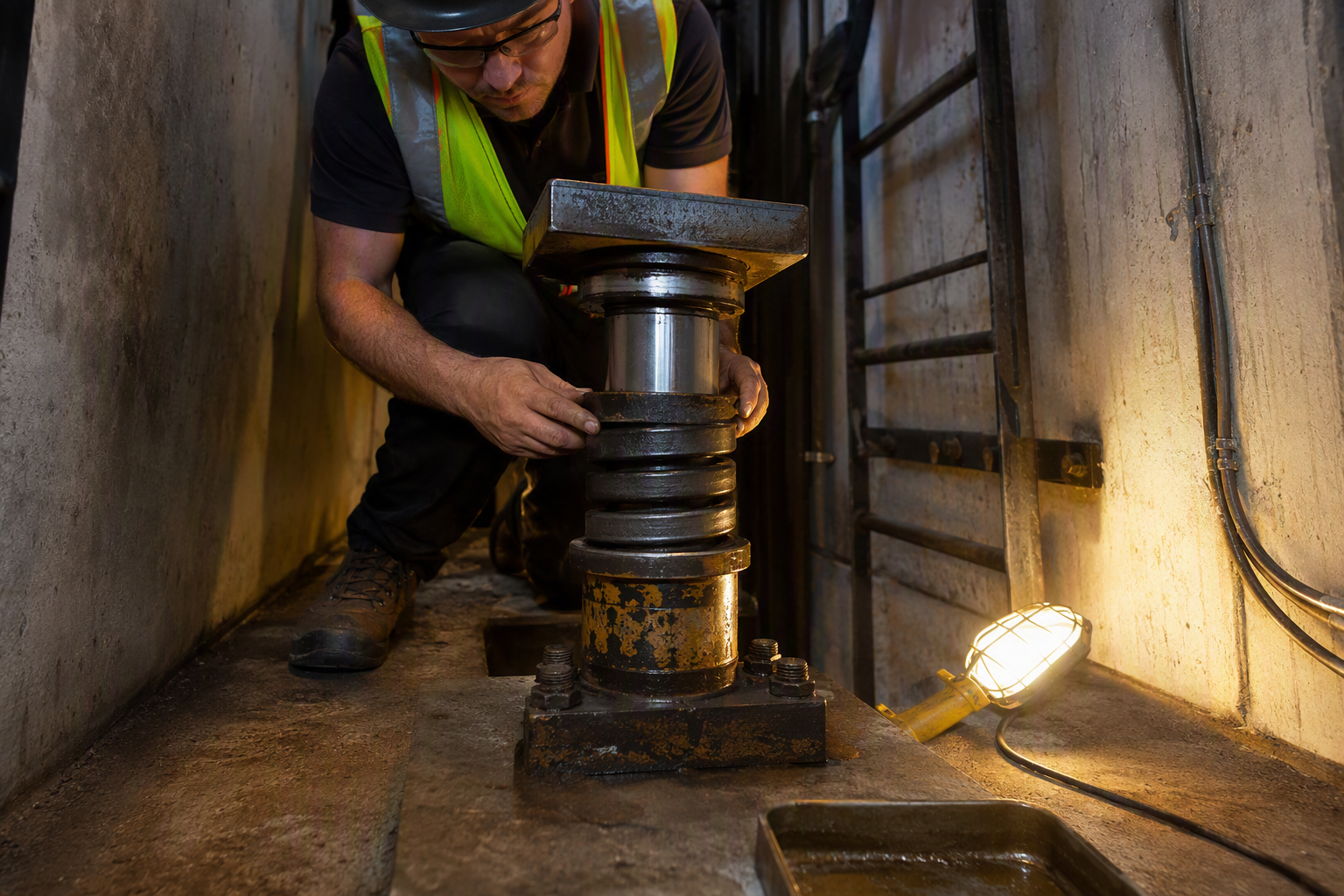
California state law requires that permitted elevators undergo a periodic inspection at least once every 12 months. This annual inspection must be conducted by a Qualified Elevator Inspector (QEI) — a designation defined under ASME QEI-1, the Standard for the Qualification of Elevator Inspectors — or by a Cal/OSHA-authorized inspector.
In addition to the annual periodic inspection, periodic tests are required on a separate schedule depending on the equipment type and its drive system. These include:
- Category 1 tests — required annually for most hydraulic and traction elevator safety systems, covering items such as safeties, governor, and buffers under no-load or rated-load conditions.
- Category 5 tests — a full-load, full-speed safety test required every five years for traction elevators. This is the most comprehensive test and must be witnessed by an authorized inspector.
The specific test categories and intervals are defined within ASME A17.1 and enforced by Cal/OSHA ERTU. Building owners are responsible for scheduling both the maintenance contractor to perform the tests and a qualified inspector to witness them.
What Does a Los Angeles Elevator Inspection Cover?
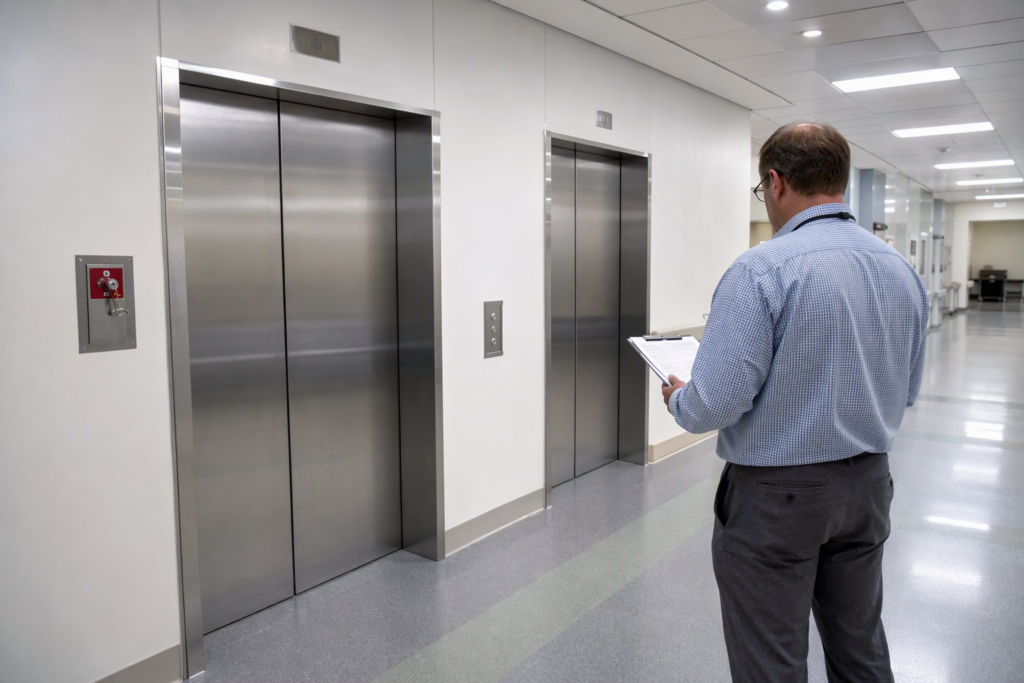
A periodic elevator inspection in Los Angeles evaluates the full conveyance system against applicable code requirements. While the exact checklist varies by equipment type, a standard inspection of a traction passenger elevator typically includes the following areas:
- Machine room conditions — lighting, ventilation, access control, fire suppression compatibility
- Hoistway and pit conditions — cleanliness, lighting, drainage, pit ladder, stop switch
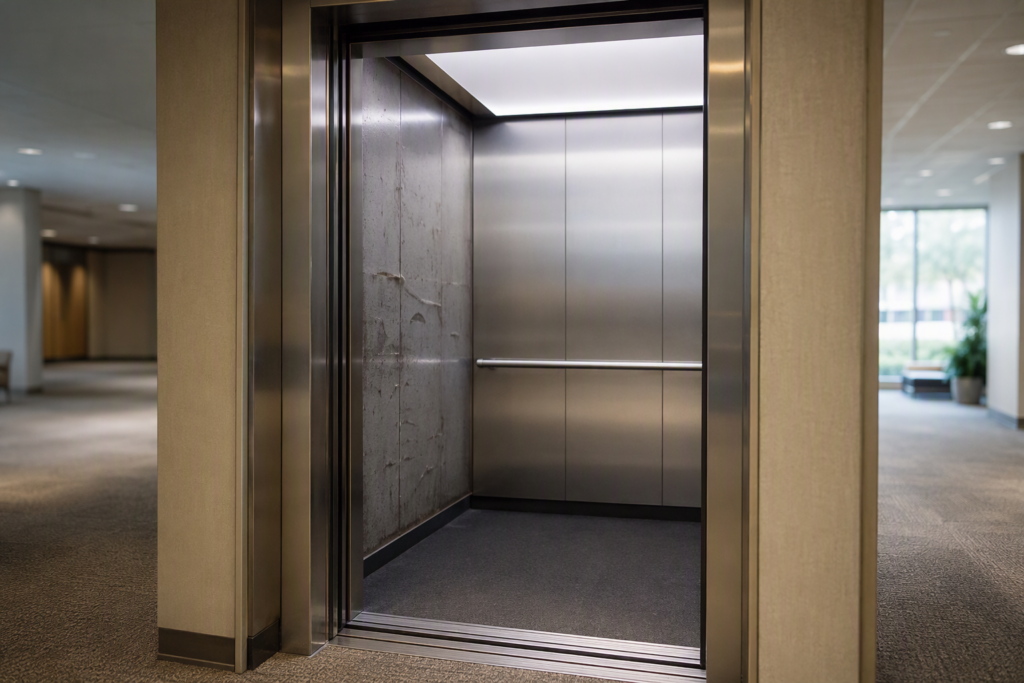
- Car enclosure — ceiling, walls, flooring, emergency lighting, ventilation, load capacity posting
- Door systems — door reopening devices, closing force, speed, and interlocks
- Safety devices — governor, safeties, oil buffers, terminal stopping devices
- Electrical systems — main line disconnect, ground fault protection, emergency communication
- Drive and control systems — brake condition, leveling accuracy, emergency power operation
- Firefighters’ emergency operation — Phase I and Phase II recall function
- Signage and posting — certificate of operation, maximum occupancy, emergency instructions
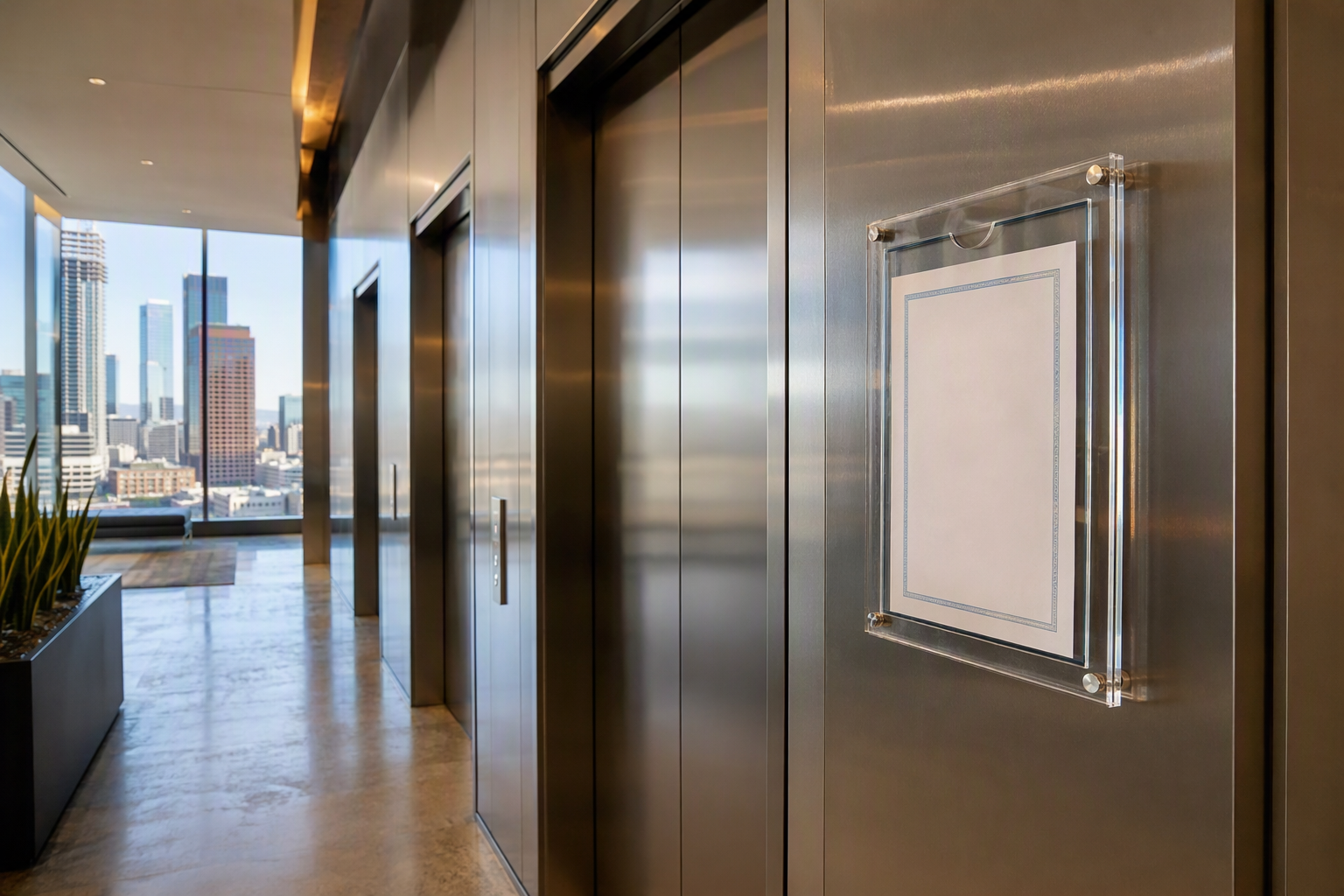
Inspectors also verify that the current Permit to Operate is valid and posted inside the cab. An expired or missing permit is itself a violation that can result in the elevator being placed out of service.
What Happens If an Elevator Fails Inspection in Los Angeles?
When an elevator fails a periodic inspection, Cal/OSHA ERTU has authority to issue a notice of violation and, in serious cases, to order the elevator removed from service immediately. The severity of the response depends on the nature of the deficiency:
- Minor violations — The inspector notes deficiencies and issues a correction order with a defined deadline. The elevator typically remains in service while repairs are completed, subject to re-inspection.
- Serious or imminent hazard violations — The elevator is shut down and tagged out of service. Operation is prohibited until the hazard is corrected and a follow-up inspection confirms compliance.
- Re-inspection request — After corrections are made, the building owner or their elevator contractor must request a re-inspection from Cal/OSHA ERTU or the authorized third-party inspector. The unit cannot return to service until the inspector signs off.
- Documentation — All repair records, inspection reports, and test results must be retained and made available to inspectors upon request. California code requires that maintenance logs and test certificates be kept on-site.
- Permit reinstatement — Once compliance is confirmed, a new or renewed Permit to Operate is issued and must be posted in the cab before the elevator resumes service.
Operating an elevator without a valid Permit to Operate in California can expose building owners to significant civil liability and regulatory penalties.
What Are the ADA Requirements That Affect Elevator Inspections in Los Angeles?
While the Americans with Disabilities Act (ADA) is a federal civil rights law — not a safety inspection trigger — its requirements intersect with the elevator inspection process in important ways. Buildings subject to ADA must ensure that elevators providing access between floors meet accessibility standards, including:
- Minimum car dimensions adequate for wheelchair users
- Accessible controls at the correct mounting height with Braille and raised characters
- Door timing that accommodates individuals with mobility impairments
- Audible and visual signals for floor arrival
- Two-way emergency communication accessible to individuals with hearing or speech impairments
When building owners undertake modernization work or alterations that trigger ADA path-of-travel requirements, the elevator must be evaluated for ADA conformance as part of the project scope. AmeriTex Elevator assists clients in identifying ADA gaps during the assessment process and provides guidance on remediation options aligned with both ADA Standards for Accessible Design and California’s own accessibility code requirements.
What Are OSHA’s Workplace Safety Obligations Related to Elevators?
For freight elevators, construction hoists, and conveyances in industrial or warehouse settings, OSHA workplace safety standards may apply in addition to Cal/OSHA elevator-specific requirements. OSHA’s general industry and construction standards address employer duties to maintain equipment in safe operating condition and to train workers who operate or work near vertical transportation equipment.
In Los Angeles, building owners and employers bear concurrent obligations under both OSHA federal standards and California’s elevator-specific regulatory framework. When both apply, the more protective standard governs.
What Is the Process for Getting a New Elevator Permitted and Inspected in Los Angeles?
- Plan submission — Before installation begins, the elevator contractor submits construction drawings and equipment specifications to Cal/OSHA ERTU for plan approval.
- Permit to install — Once plans are approved, Cal/OSHA issues a Permit to Install. Work cannot begin without this permit.
- Construction and installation — Installation is carried out by a California-licensed elevator mechanic under the supervision of a certified elevator contractor.
- Acceptance inspection — Upon completion, a full acceptance inspection and witness test is conducted by a Cal/OSHA inspector or authorized QEI. This covers all safety devices, systems, and performance parameters defined under ASME A17.1.
- Permit to Operate — If the elevator passes acceptance inspection, Cal/OSHA issues a Permit to Operate. This document must be posted inside the cab before the elevator can carry passengers.
- Ongoing annual inspection cycle begins — The 12-month periodic inspection clock starts from the date of the Permit to Operate.
How Do Elevator Inspection Requirements Differ for Hydraulic vs. Traction Elevators in California?
Both hydraulic and traction elevators in California are subject to annual periodic inspections and are evaluated against ASME A17.1 standards. However, the periodic test requirements differ in meaningful ways:
- Hydraulic elevators require pressure tests on the hydraulic system, inspection of the underground jack (where applicable), and evaluation of the lowering valve as part of the Category 1 test cycle. Environmental compliance regarding underground hydraulic cylinders is also a factor in California, where leak detection and containment requirements apply.
- Traction elevators require the five-year Category 5 safety test, which involves a full-load, full-speed engagement of the car safeties — a physically demanding test that requires advance planning, out-of-service time, and a licensed contractor to perform under inspector witness.
- Machine-room-less (MRL) traction elevators present unique access considerations for inspectors and require that all control and drive components be reachable per code requirements — an issue that sometimes surfaces during periodic inspections of older MRL installations.
What Records Must Los Angeles Building Owners Maintain for Elevator Compliance?
California code requires that specific documentation be maintained on-site and available for inspector review at all times. Required records include:
- Current Permit to Operate (posted in cab)
- Most recent periodic inspection report
- Category test certificates (Category 1 annually; Category 5 every five years for traction units)
- Maintenance logs documenting all service visits, repairs, adjustments, and parts replacements
- Records of any modernization work and associated permit documentation
Gaps in documentation are frequently cited during inspections and can themselves constitute violations independent of the physical condition of the equipment. Building owners are advised to establish a systematic record-keeping protocol — ideally through their elevator service provider — so that all documentation is organized, current, and accessible.
What Typically Drives Elevator Inspection Failures in Los Angeles?
While no fabricated statistics are presented here, common deficiency categories observed across California’s elevator inspection program — consistent with the requirements of ASME A17.1 and A17.3 — include:
- Door system deficiencies — door reopening device failures, excessive door closing force, worn rollers and gibs
- Pit and machine room housekeeping violations — accumulation of water, debris, or unauthorized storage
- Expired or missing Permit to Operate — failure to renew the annual operating permit before expiration
- Inoperative or non-compliant emergency lighting or communication — a common finding in older buildings
- Firefighters’ emergency operation malfunctions — Phase I or Phase II recall systems that fail to operate correctly
- Overdue Category 5 tests — building owners unaware that the five-year test window has passed
Proactive maintenance programs significantly reduce the likelihood of inspection failures. AmeriTex Elevator’s maintenance assessments are designed to identify these deficiency categories before an inspector arrives, allowing building owners to remediate issues on their own schedule rather than under a compliance deadline.
What Are the Industry Trends Shaping Elevator Compliance in Los Angeles for 2025–2026?
Several meaningful developments are shaping how building owners and elevator service providers approach compliance in the Los Angeles market heading into 2026:
- Remote monitoring adoption — Building owners are increasingly deploying IoT-based monitoring systems that provide real-time data on elevator performance, door cycles, fault codes, and system health. This data supports more predictive maintenance approaches and can provide documentation useful during inspections.
- Modernization pressure on aging equipment — A significant portion of the Los Angeles elevator inventory consists of units installed decades ago. As ASME A17.3 retrofitting requirements evolve, older equipment faces increasing compliance pressure, driving modernization activity.
- Emergency communication upgrades — The transition from analog telephone lines to VoIP and cellular-based emergency communication systems in elevator cabs has created a wave of upgrade requirements, as many older systems no longer function reliably.
- Increased enforcement activity — California’s regulatory environment continues to prioritize elevator safety, and property owners in Los Angeles should anticipate consistent enforcement of inspection and permit renewal requirements.
- Energy efficiency and sustainability — Modernization projects are increasingly evaluated not just for code compliance but for energy performance, particularly as California’s building energy standards continue to tighten.
How Can Building Owners Prepare for an Elevator Inspection in Los Angeles?
- Confirm permit status — Verify that the current Permit to Operate is valid, correctly posted inside the cab, and has not lapsed.
- Review maintenance logs — Ensure that service records are complete and on-site. Gaps in the log should be reconciled with the maintenance contractor.
- Check Category test due dates — Confirm when the last Category 1 and Category 5 tests were performed and whether any tests are overdue.
- Perform a pre-inspection walkthrough — Walk the pit, machine room, and cab with the maintenance contractor to identify visible deficiencies before the inspector arrives.
- Test emergency systems — Verify that emergency lighting, two-way communication, and firefighters’ emergency operation are all functional.
- Coordinate availability — Ensure that an authorized representative and the elevator contractor are available on the day of inspection to provide access and answer inspector questions.
- Address known deficiencies in advance — Any items flagged during the previous inspection should be fully corrected and documented before the next inspection cycle.
Why Work with a California-Based Elevator Service Provider Like AmeriTex Elevator?
Navigating elevator inspection requirements in Los Angeles demands a service partner that understands California’s specific regulatory framework — from Cal/OSHA’s ERTU permitting process to the Category 1 and Category 5 test schedules defined under ASME A17.1, and the accessibility obligations established by the ADA.
AmeriTex Elevator is a California-based elevator service provider that takes a data-driven approach to maintenance and compliance. Rather than reactive service calls, AmeriTex applies systematic assessment protocols to help building owners understand the current condition of their equipment, identify upcoming compliance obligations, and build a prioritized remediation plan — before a violation notice forces the issue.
Building owners across Los Angeles work with AmeriTex Elevator to:
- Assess equipment condition against current California and ASME code requirements
- Develop maintenance programs that reduce inspection failure risk
- Coordinate Category 1 and Category 5 testing with qualified inspectors
- Support modernization planning for aging conveyances
- Ensure documentation and record-keeping systems are inspection-ready
Quick Reference: Los Angeles Elevator Inspection Summary
| Requirement | Detail |
|---|---|
| Governing Agency | Cal/OSHA Elevator, Ride, and Tramway Unit (ERTU); LADBS (local) |
| Applicable Safety Code (New Installations) | ASME A17.1 Safety Code for Elevators and Escalators |
| Applicable Safety Code (Existing Equipment) | ASME A17.3 Safety Code for Existing Elevators and Escalators |
| Periodic Inspection Frequency | At least once every 12 months |
| Category 1 Test Frequency | Annual (most elevator types) |
| Category 5 Test Frequency | Every 5 years (traction elevators) |
| Inspector Qualification | QEI-certified per ASME QEI-1 or Cal/OSHA authorized inspector |
| Required Cab Posting | Valid Permit to Operate at all times |
| Accessibility Standard | ADA Standards for Accessible Design |
Get Expert Elevator Compliance Support in Los Angeles
Elevator inspection requirements in Los Angeles are non-negotiable — an out-of-service elevator disrupts building operations, creates liability exposure, and signals deferred maintenance to tenants and regulators alike. AmeriTex Elevator provides structured, data-informed assessments that help building owners understand exactly where their equipment stands against current California and ASME code requirements.
Contact AmeriTex Elevator for a free elevator assessment: 866-679-4313
Need elevator service you can rely on? AmeriTex Elevator is ready to help.