Elevator Maintenance and Inspection Requirements for Apartment and Multifamily Buildings in Texas: Complete FAQ
Texas apartment and multifamily building owners are legally required to maintain elevators in safe operating condition, pass annual inspections conducted by TDI-licensed inspectors, comply with ASME A17.1 and A17.3 safety codes, and hold a valid Certificate of Inspection at all times. Buildings that fail to meet these requirements face shutdown orders, civil penalties, and significant liability exposure. The sections below answer every key question property managers and building owners need to understand about Texas elevator compliance in 2026.
What Law Governs Elevator Safety in Texas Apartment Buildings?
The Texas Elevator Safety Act, codified in Texas Occupations Code Chapter 754, is the primary law governing elevator safety in Texas, administered and enforced by the Texas Department of Insurance (TDI) Elevator Safety Program.
Under Chapter 754, the Texas Department of Insurance has authority to license elevator inspectors, issue Certificates of Inspection, investigate accidents, and shut down elevators that pose an imminent safety hazard. The law applies to passenger and freight elevators in commercial and residential buildings, including apartment complexes and multifamily housing. Property owners bear direct legal responsibility for maintaining compliant equipment and facilitating required inspections. Violations can result in civil penalties and mandatory equipment shutdown orders.
Which ASME Safety Codes Apply to Apartment Elevators in Texas?
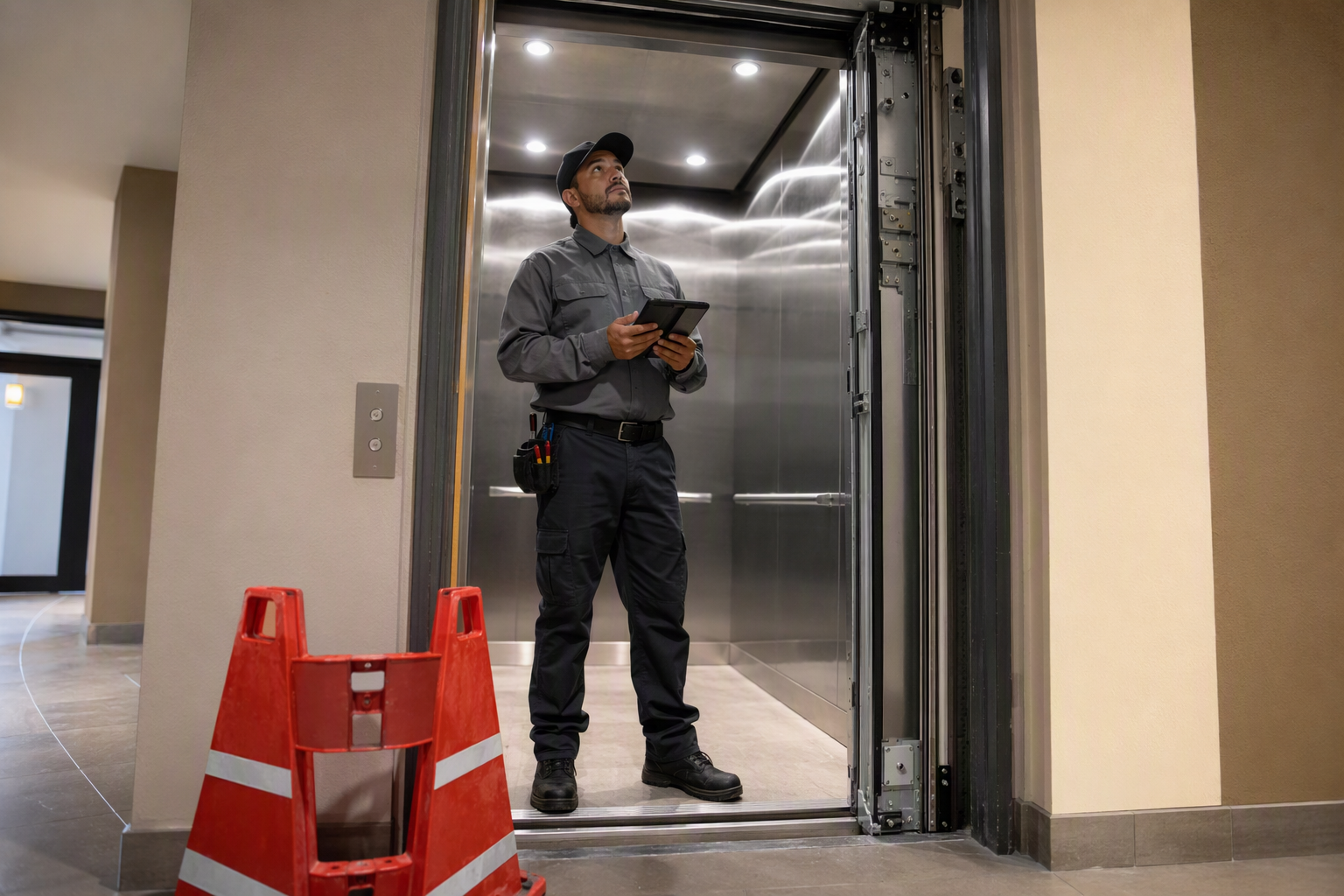
Texas apartment elevators must comply with ASME A17.1 Safety Code for Elevators and Escalators for new installations and alterations, and ASME A17.3 Safety Code for Existing Elevators and Escalators for in-service equipment.
ASME A17.1 establishes minimum design, construction, and installation requirements. When a building installs a new elevator or makes a significant alteration to an existing one, the work must conform to the edition of A17.1 adopted by TDI at the time of the permit. ASME A17.3 governs the ongoing safety of existing installations, requiring that older equipment meet specified safety standards even if it was originally built to an earlier code edition. Together, these two codes form the technical backbone of Texas elevator compliance for residential properties.
How Often Must Elevators in Texas Apartment Buildings Be Inspected?
Texas requires that elevators in apartment and multifamily buildings undergo a full safety inspection at least once every twelve months by a TDI-licensed elevator inspector.
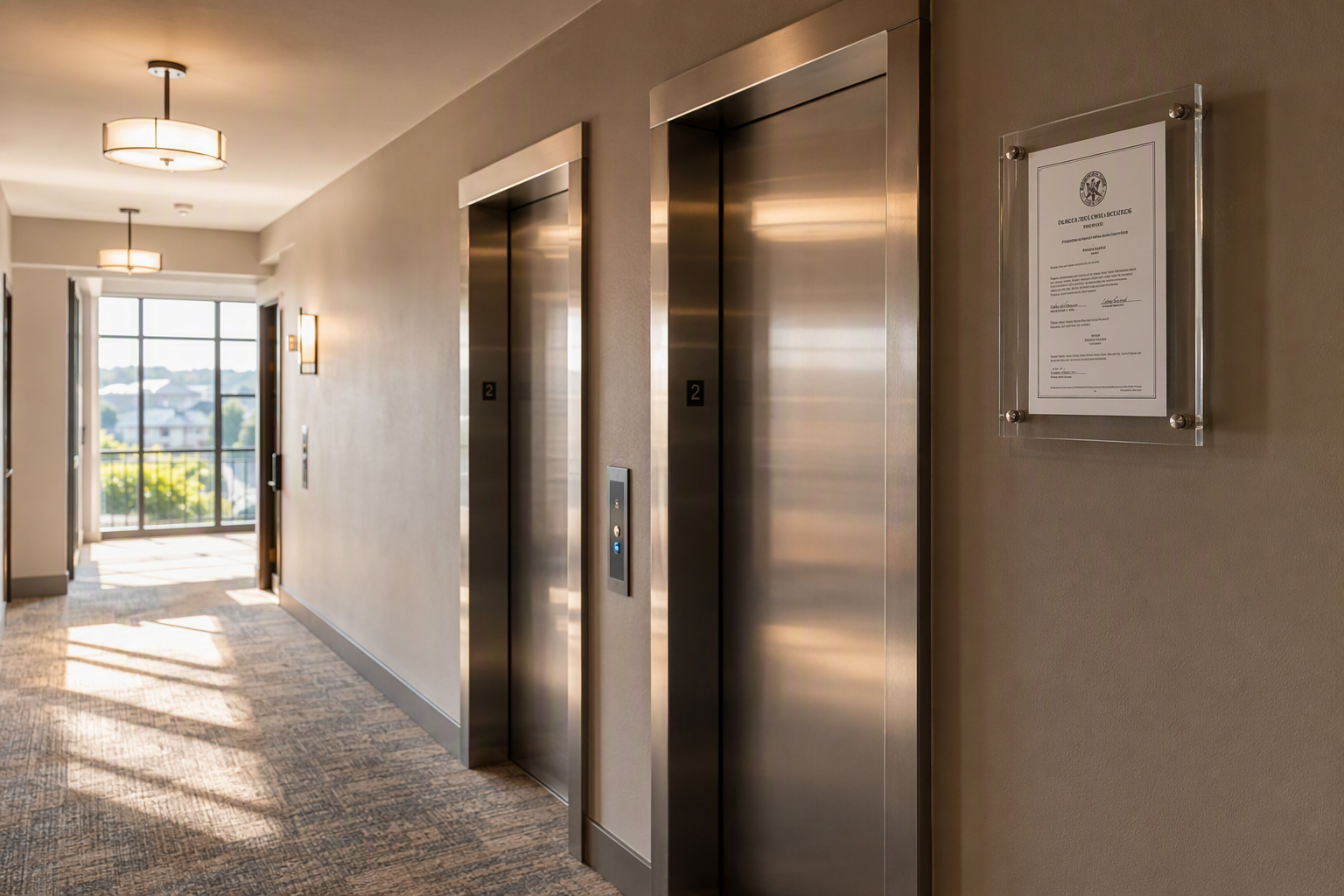
The annual inspection is not optional; it is a statutory requirement under the Texas Elevator Safety Act. After a successful inspection, the building receives a Certificate of Inspection that must be posted in or near the elevator. The certificate is valid for one year, after which the inspection cycle begins again. If an elevator fails inspection, it cannot legally remain in passenger service until the cited deficiencies are corrected and a re-inspection confirms compliance. TDI also has authority to conduct unannounced inspections at any time if a safety complaint is filed.
What Does a Texas Annual Elevator Inspection Cover?
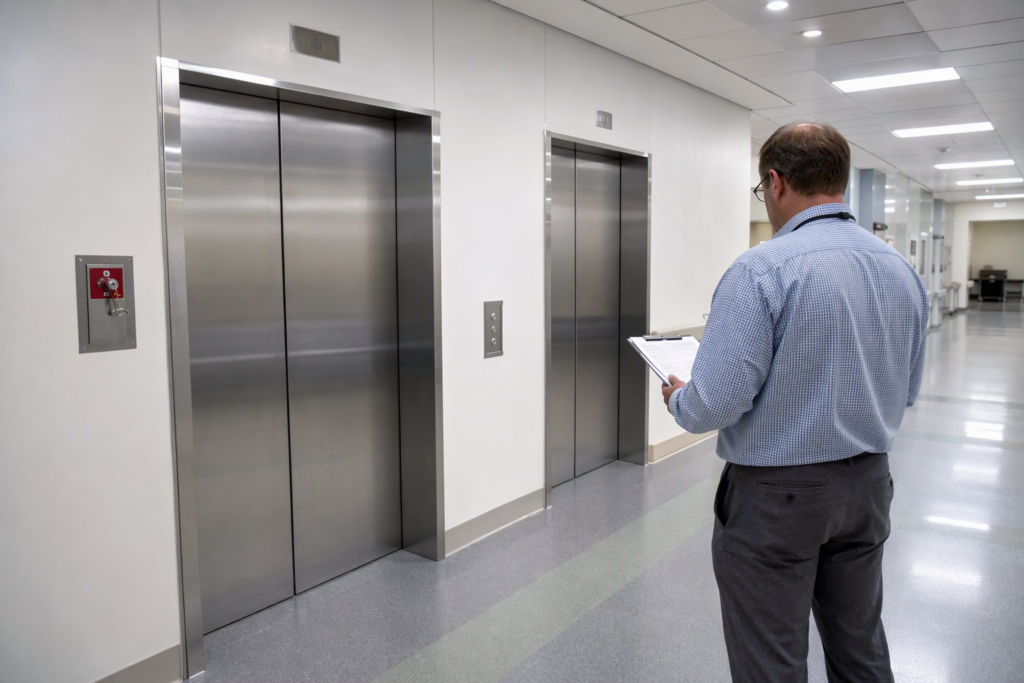
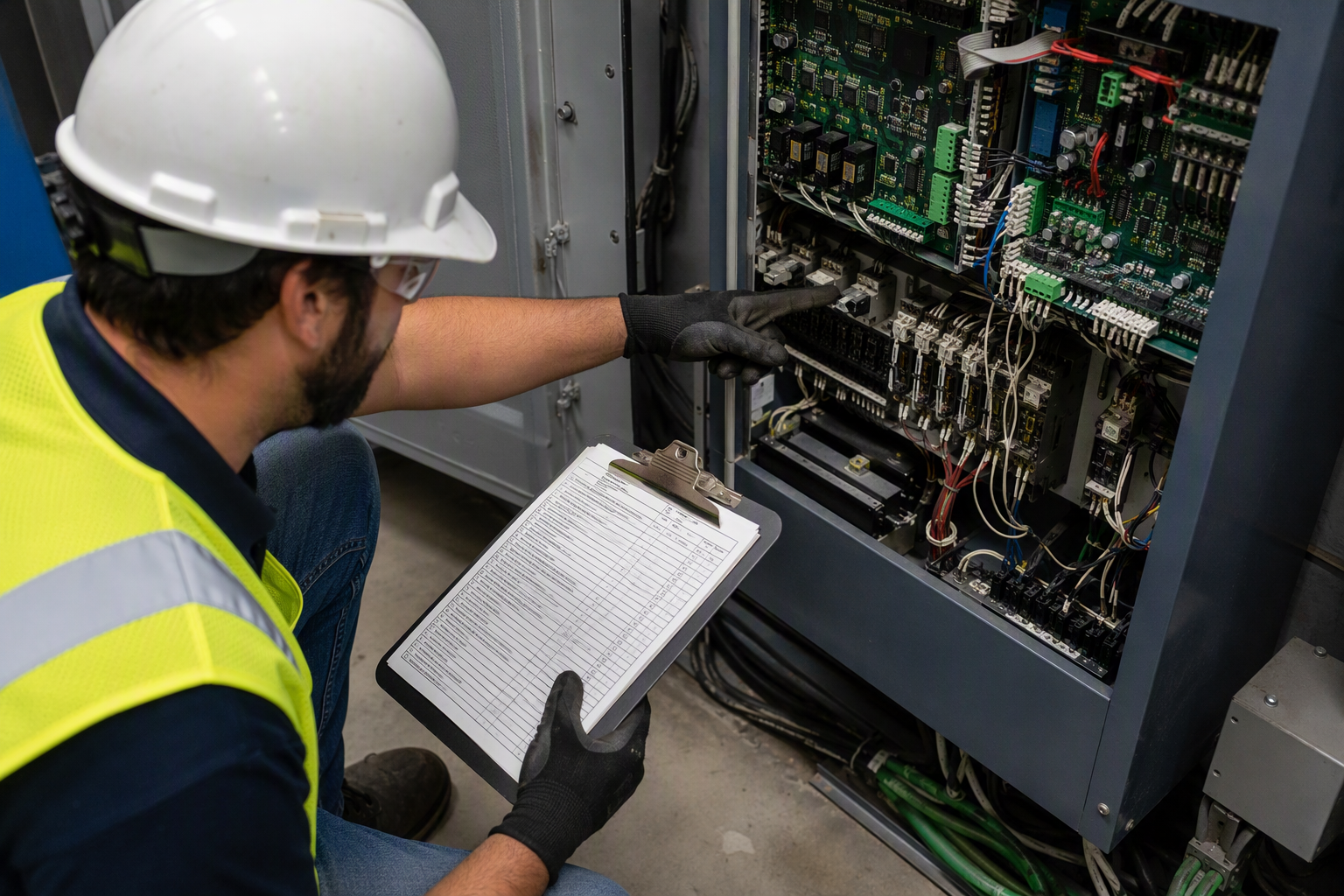
A Texas annual elevator inspection evaluates every major safety system and component, including the machine room, hoistway, car, doors, safety devices, electrical systems, and emergency communications, against applicable ASME A17.1 and A17.3 requirements.
Inspectors verify that door reopening devices function correctly, governor and safety mechanisms are in proper working order, pit and machine room conditions meet code, lighting and ventilation are adequate, and all required signage is posted. Emergency stop switches, buffer conditions, suspension ropes or belts, and the controller are all examined. Hydraulic systems receive additional scrutiny for cylinder integrity and fluid containment. The inspector documents all findings and issues either a Certificate of Inspection upon passing or a written report of deficiencies requiring correction.
What Is a Periodic Test and How Does It Differ from the Annual Inspection?
Periodic tests are scheduled functional and load tests of specific safety devices — such as safeties, buffers, and pressure relief valves — required by ASME A17.1 and A17.3 at intervals ranging from one to five years depending on the test type, and they go beyond the scope of a standard annual inspection.
ASME A17.1 defines several categories of tests including Category 1 (annual no-load tests of safeties and governors) and Category 5 (full-load, full-speed tests performed at five-year intervals for traction elevators). Hydraulic elevators have their own test categories for relief valve settings and cylinder pressure. These periodic tests must be witnessed by a licensed elevator inspector, and the results are logged in the equipment’s maintenance records. Property owners who rely solely on annual inspections without scheduling required periodic tests are out of compliance, even if their certificate is current.
What Are the Ongoing Maintenance Requirements for Apartment Elevators in Texas?
Texas law requires that elevator owners maintain equipment in safe operating condition at all times, which in practice means establishing a documented, routine maintenance program that addresses lubrication, adjustments, parts replacement, and safety device testing between inspections.
While Texas Occupations Code Chapter 754 does not prescribe a specific maintenance frequency in calendar days, ASME A17.1 and A17.3 maintenance provisions make clear that neglecting routine upkeep constitutes a code violation. A comprehensive maintenance program for a multifamily building typically includes monthly visual and operational checks, quarterly mechanical servicing, semi-annual or annual lubrication of hoisting machinery, and immediate response to any reported malfunction. All maintenance activities should be performed by or under the direct supervision of a licensed elevator mechanic and documented in a permanent maintenance log. AmeriTex Elevator provides maintenance programs for apartment communities in Houston, Dallas, Austin, and San Antonio that are structured around these ASME requirements.
Who Is Qualified to Perform Elevator Maintenance and Repairs in Texas?
In Texas, elevator maintenance and repair work must be performed by individuals who hold a valid elevator mechanic license issued by the Texas Department of Insurance.
TDI licenses elevator mechanics, inspectors, and contractors separately. A licensed elevator mechanic must hold and display their license while performing work. Elevator contractors — the companies that employ mechanics — must also hold a TDI contractor license. Building owners who hire unlicensed individuals to service their elevators risk voiding their Certificate of Inspection, facing TDI penalties, and assuming full liability for any resulting injury. When selecting a maintenance provider, property managers should verify that the company and its technicians hold current TDI licenses. AmeriTex Elevator operates with the required state licensing across its Texas service areas.
What ADA Requirements Apply to Elevators in Multifamily Buildings?
The Americans with Disabilities Act (ADA) requires that elevators in most multifamily buildings covered by the ADA meet accessibility standards for cab dimensions, door timing, floor designation buttons, Braille signage, and audible signals.
The ADA Standards for Accessible Design specify minimum elevator car dimensions, reach ranges for controls, tactile characters and Braille on call buttons and within the cab, and the requirement that hoistway entrances be usable by people using mobility devices. While purely residential buildings are not always directly covered by the ADA in the same way as commercial properties, multifamily communities that include commercial or common areas open to the public, or that receive federal funding, must meet ADA standards. Fair Housing Act accessibility requirements also intersect with elevator design in buildings of four or more stories. Owners should confirm their specific obligations with legal counsel, but maintaining ADA-compliant elevator features is both a legal risk-management strategy and a resident satisfaction consideration.
What Happens If an Elevator Fails a Texas Safety Inspection?
If a Texas elevator fails its annual inspection, TDI or the licensed inspector will issue a written notice of deficiency, the elevator must be taken out of passenger service immediately or by a specified deadline, and it cannot return to service until the deficiencies are corrected and a re-inspection confirms compliance.
The severity and urgency of the required shutdown depends on whether the deficiency represents an imminent hazard or a less critical violation. An imminent hazard — such as a failed door interlock or broken rope — results in immediate mandatory shutdown. Less critical findings may allow a correction period before shutdown takes effect. Property owners are responsible for notifying residents, posting the elevator as out of service, and arranging for emergency egress accommodations if needed. Rapid response from a licensed elevator contractor is essential to minimize disruption and restore service. AmeriTex Elevator serves apartment communities across Houston, Dallas, Austin, and San Antonio with inspection-failure remediation and re-inspection coordination.
What Records Must Apartment Building Owners Keep for Elevator Compliance?
Texas apartment building owners must maintain a permanent record of all inspections, test results, maintenance activities, repairs, and alterations for each elevator, and must make these records available to TDI inspectors upon request.
Required documentation includes the current Certificate of Inspection (posted in the elevator), periodic test reports signed by the inspector, maintenance logs, repair invoices, and any alteration permits. Many property managers maintain both a physical binder in the machine room and a digital backup. ASME A17.1 and A17.3 also specify that a complete maintenance record be kept at or near the equipment. Gaps in documentation are a common inspection finding that can delay certificate renewal, so establishing a systematic record-keeping protocol from the outset protects owners during both routine inspections and any post-accident investigations.
What Are the Most Common Elevator Violations Found in Texas Apartment Buildings?
The most frequently cited deficiencies in Texas residential elevator inspections include door interlock failures, inadequate machine room conditions, missing or expired emergency lighting, overdue periodic tests, improperly functioning safeties, and incomplete maintenance records.
Door-related issues are among the most common because door interlocks, closers, and reopening devices are high-use, high-wear components that degrade quickly without regular adjustment and lubrication. Machine room violations often involve improper storage, inadequate lighting, or ventilation deficiencies. Many apartment owners are surprised to learn that required Category 1 or Category 5 tests have not been completed by their maintenance provider, placing them out of compliance despite passing their last visual inspection. Proactive maintenance programs that address these known risk areas reduce the likelihood of inspection failures and the associated costs of emergency repairs.
What Is the Process for Getting a New Elevator Certificate of Inspection in Texas?
To obtain a Certificate of Inspection for a new elevator or after a lapse, the building owner must arrange for a TDI-licensed inspector to perform a complete inspection, correct any cited deficiencies, and receive written approval from TDI confirming issuance of the certificate.
- Confirm that all installation or alteration work has been completed by a TDI-licensed elevator contractor and that required permits are closed.
- Schedule an inspection with a TDI-licensed elevator inspector — either a state inspector or a licensed third-party inspector authorized by TDI.
- Ensure the machine room, hoistway, pit, and cab are fully accessible and clean on the day of inspection.
- Have all maintenance logs, permits, and test documentation available for the inspector’s review.
- If deficiencies are cited, engage a licensed elevator contractor to make all required corrections as quickly as possible.
- Schedule and pass the re-inspection to confirm all deficiencies have been resolved.
- Post the issued Certificate of Inspection in the elevator as required by Texas law.
How Do Maintenance Requirements Differ Between Hydraulic and Traction Elevators in Apartment Buildings?
Hydraulic and traction elevators have distinct maintenance requirements under ASME A17.1 and A17.3, with hydraulic systems requiring additional attention to cylinder integrity, hydraulic fluid condition, and single-bottom cylinder corrosion, while traction systems require rope, sheave, and brake inspections.
| Maintenance Area | Hydraulic Elevator | Traction Elevator |
|---|---|---|
| Primary drive system | Hydraulic pump, cylinder, fluid | Hoist ropes, sheaves, motor |
| Key periodic test (ASME A17.1) | Pressure relief valve, cylinder pressure test | Category 1 (annual), Category 5 (5-year) |
| Fluid/lubricant management | Hydraulic fluid monitoring and leak prevention | Machine gear oil, rope lubricant |
| Environmental concern | Underground cylinder corrosion, fluid spill containment | Machine room heat management |
| Common residential use | Low-rise buildings (2–5 stories) | Mid- to high-rise buildings |
| Pit requirements | Minimum pit depth per ASME A17.1; sump pump often required | Minimum pit depth per ASME A17.1; buffer conditions critical |
Hydraulic elevators common in lower-rise apartment buildings require periodic inspection of the jack unit for corrosion, particularly in older single-bottom cylinder installations. Texas has seen significant attention to underground cylinder replacements as aging systems reach end of life. Traction elevators require more frequent attention to rope stretch and wear, brake adjustment, and sheave groove condition. Both types require functioning door systems, pit lighting, and emergency communications regardless of drive type.
What Emergency Communication Requirements Apply to Apartment Elevators?
ASME A17.1 requires that every elevator car be equipped with a means of two-way communication — typically a phone or intercom — that allows trapped passengers to reach a responsible party capable of summoning help, and this system must function even during a power outage.
For apartment buildings, the emergency phone must connect to a location that is monitored continuously or to a monitoring service that can dispatch help. A phone that rings to an unmonitored line or voicemail does not meet the requirement. Battery backup for the communication system is required to ensure functionality during power failures. Inspectors test the emergency phone as part of the annual inspection, and a non-functional communication system is cause for immediate out-of-service action. ADA requirements add that the emergency communication system must be accessible to individuals who are deaf or hard of hearing, typically addressed through visual indicators.
What Are the Machine Room Requirements for Texas Apartment Buildings?
ASME A17.1 requires that elevator machine rooms in apartment buildings be dedicated spaces accessible only to authorized personnel, maintained at appropriate temperature and humidity, equipped with adequate lighting and a means of disconnect, and free from storage of non-elevator-related materials.
Machine rooms must have a working light providing sufficient illumination for maintenance activities, a dedicated disconnect switch accessible without crossing the beam of a moving elevator component, and ventilation or climate control adequate to prevent overheating of elevator equipment. Storing maintenance supplies, holiday decorations, or other building items in the machine room is a code violation frequently cited during inspections. The machine room door must be self-closing, self-locking, and marked with appropriate signage restricting access. Compliance with these requirements is part of every annual inspection.
How Should Apartment Building Owners Respond to an Elevator Entrapment?
When a passenger is trapped in an elevator, the building owner or manager must immediately contact a licensed elevator contractor for rescue, notify emergency services if the situation presents a health risk, and never attempt to rescue passengers without trained professionals.
- Maintain calm communication with the trapped passenger through the emergency phone or through the hoistway door.
- Confirm that the passenger is not injured and does not require immediate emergency medical services.
- Call emergency services (911) immediately if the passenger reports a medical emergency, difficulty breathing, or the situation poses a health risk.
- Contact your licensed elevator maintenance contractor and request an emergency response for passenger rescue.
- Do not attempt to open hoistway doors from the landing or move the elevator manually unless trained and licensed to do so.
- Document the incident including time, duration, parties involved, and actions taken.
- Report the accident to TDI as required if any injury occurred, and preserve all maintenance records and the elevator in its post-incident condition until a TDI investigation is complete.
Texas law requires that elevator accidents resulting in injury be reported to TDI. Failure to report is itself a violation. AmeriTex Elevator provides emergency service to apartment communities across its Texas service areas.
What Are the Penalties for Non-Compliance with Texas Elevator Safety Requirements?
Non-compliance with the Texas Elevator Safety Act can result in civil penalties assessed by TDI, mandatory shutdown orders, and significant civil liability to injured parties if a safety violation contributed to an accident.
TDI has authority to assess administrative penalties for violations of Chapter 754 and associated rules. Operating an elevator without a valid Certificate of Inspection, continuing to operate after a shutdown order, or failing to report an accident are among the violations that attract penalties. Beyond regulatory penalties, a property owner whose negligent maintenance contributed to a passenger injury faces substantial civil litigation exposure. Courts and juries routinely examine maintenance records, inspection history, and contractor credentials when evaluating negligence claims. A proactive, documented maintenance program is the most effective risk management tool available to apartment building owners.
When Does an Elevator Modernization Trigger Additional Code Compliance in Texas?
Under ASME A17.3, any alteration to an existing elevator triggers a requirement that the altered components, and in some cases related systems, be brought into compliance with the current adopted edition of ASME A17.1, and TDI requires an alteration permit and inspection before the modernized elevator returns to service.
Modernization projects common in older apartment buildings — such as controller upgrades, door operator replacement, cab interior renovation, or drive system conversion — each carry specific code implications. Even a cosmetic cab renovation can trigger requirements for updated lighting or emergency power. Owners planning any alteration should consult with a licensed elevator contractor before beginning work to understand the full scope of code upgrades required. Attempting to avoid permit requirements by characterizing alterations as maintenance is a common mistake that creates significant legal exposure. A properly permitted and inspected modernization project resets the compliance clock and often results in improved reliability and energy efficiency.
How Should a Texas Apartment Building Owner Select an Elevator Maintenance Company?
Property owners should select an elevator maintenance company that holds a current TDI contractor license, employs licensed elevator mechanics, has demonstrated experience with residential elevator systems, and provides a written maintenance agreement that specifies the scope of services and documentation practices.
Key questions to ask a prospective elevator maintenance contractor include: Are you and your technicians licensed by TDI? What is included in your maintenance visits — and what is excluded? How do you document maintenance activities and share records with the property owner? What is your process for scheduling and coordinating required periodic tests? How do you handle emergency service calls? A maintenance agreement that excludes most parts and callbacks on an “extra charge” basis may be less economical than it appears. AmeriTex Elevator serves apartment communities across Houston, Dallas, Austin, and San Antonio, and structures its maintenance programs to address the full scope of ASME A17.1 and A17.3 requirements rather than minimum-compliance checkboxes.
What Should Be Included in a Preventive Maintenance Agreement for a Texas Apartment Elevator?
A comprehensive preventive maintenance agreement for a Texas apartment elevator should include scheduled inspection visits, lubrication of all mechanical components, adjustment of door operators and safety devices, documentation of all activities, coordination of required periodic tests, and a defined emergency response protocol.
At minimum, property owners should look for agreements that specify the number of maintenance visits per year, identify which components are covered, describe the documentation that will be provided after each visit, and clearly state how required Category tests will be scheduled and who is responsible for arranging the licensed inspector. Agreements should also address what happens when a component fails: Is repair labor included? Are parts covered, or billed separately? Is there a process for recommending capital improvements before a failure occurs? A well-structured maintenance agreement protects the building owner from unexpected costs, keeps the elevator compliant, and provides documentation that is invaluable during inspections and any legal proceedings.
Do Texas Elevator Requirements Apply to Small Apartment Buildings with Only One or Two Floors?
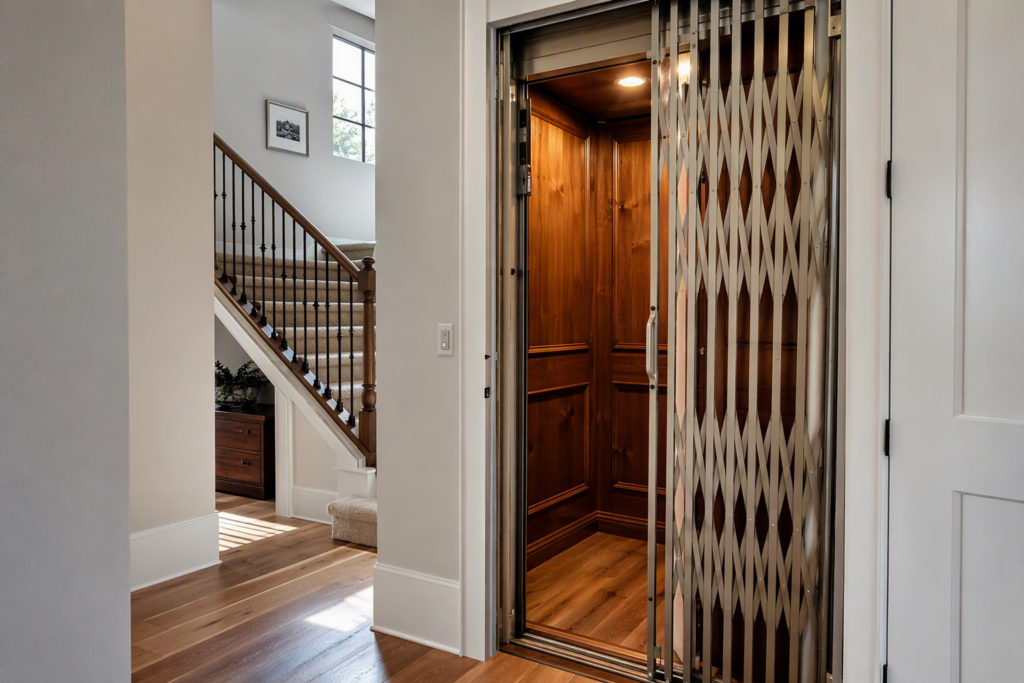
Texas Occupations Code Chapter 754 applies to most power-operated elevators regardless of building height; however, certain limited-use limited-application (LULA) elevators and residential elevators in single-family homes may be subject to different or reduced requirements.
Apartment buildings that install standard passenger elevators — even in two-story buildings to serve residents with mobility limitations — are subject to the full requirements of the Texas Elevator Safety Act and ASME A17.1/A17.3. LULA elevators, a category defined in ASME A17.1 for lower-capacity, lower-speed installations, are subject to a specific subset of ASME requirements but are still inspectable equipment under TDI’s authority. Private residence elevators serving only a single dwelling unit are generally excluded from TDI’s commercial jurisdiction. When in doubt about which category an installation falls into, building owners should confirm directly with TDI or consult with a licensed elevator contractor before proceeding.
How Can Apartment Building Owners Stay Current with Changing Elevator Codes in Texas?
Building owners should monitor TDI’s Elevator Safety Program communications, maintain an ongoing relationship with a licensed elevator contractor who tracks code updates, and review new editions of ASME A17.1 and A17.3 as they are adopted by Texas.
ASME publishes updated editions of A17.1 on a regular cycle, and Texas adopts new editions through a rule-making process administered by TDI. There is often a lag between ASME publication and state adoption, meaning the edition in effect in Texas may differ from the most recently published ASME standard. A knowledgeable elevator maintenance partner tracks these changes and advises property owners when an adopted code change requires equipment modifications or new test procedures. Staying ahead of code changes — rather than reacting after an inspection finding — avoids the disruption and cost of emergency compliance corrections. AmeriTex Elevator monitors code developments across its Texas markets so that client properties remain in continuous compliance.
Need elevator service you can rely on? AmeriTex Elevator is ready to help.