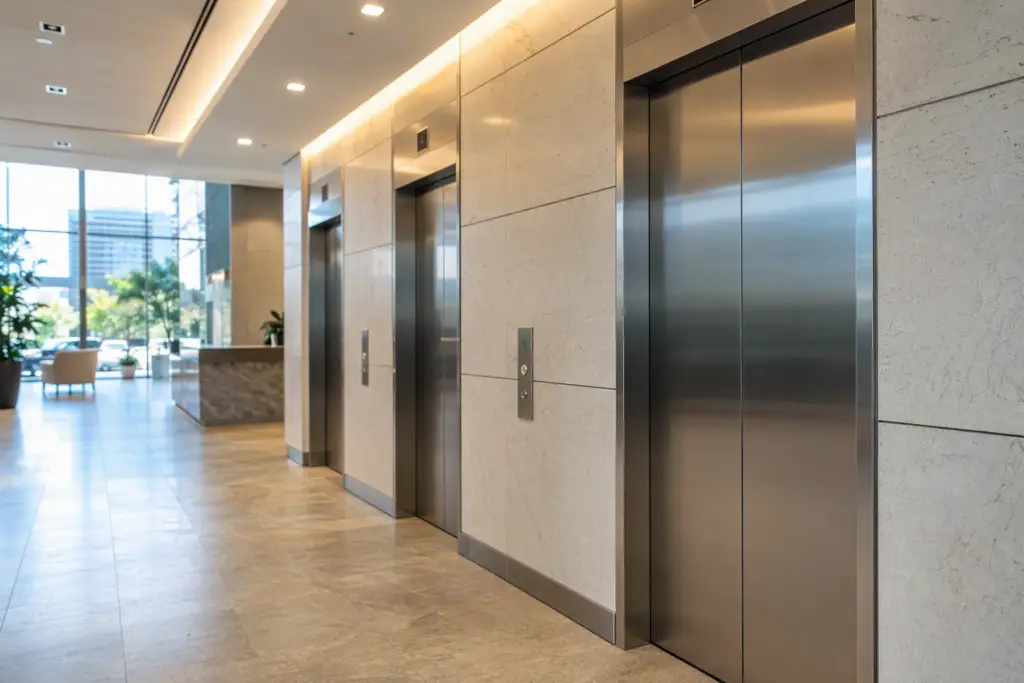
Elevator Maintenance and Compliance Requirements for Hospitals and Healthcare Facilities
Direct Answer: Hospitals and healthcare facilities in Texas and California must comply with ASME A17.1 Safety Code for Elevators and Escalators, federal ADA accessibility standards, and state-specific inspection and licensing requirements enforced by the Texas Department of Insurance or California’s Division of Occupational Safety and Health (Cal/OSHA), with maintenance intervals and emergency protocols that are more rigorous than those applied to standard commercial buildings.
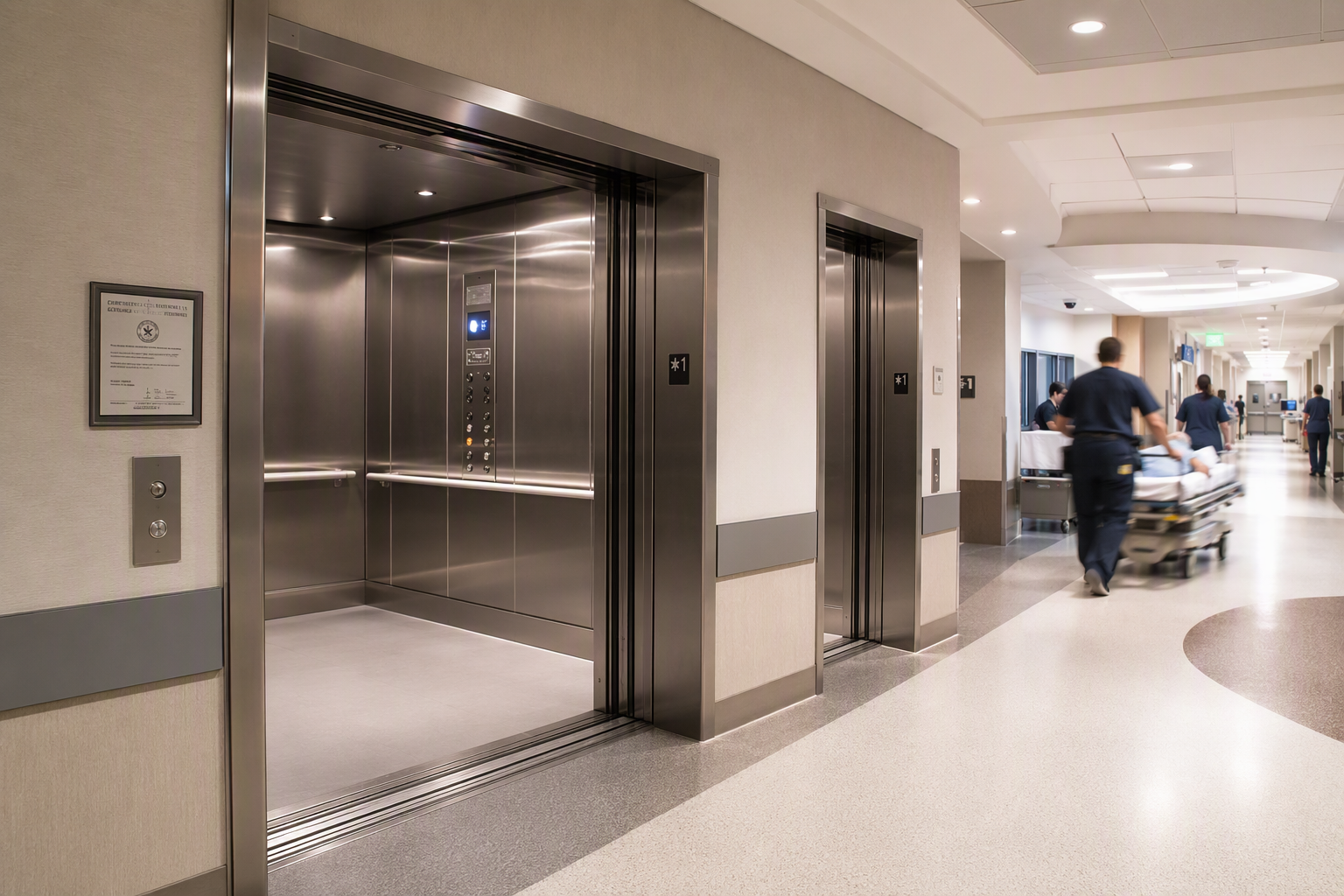
Healthcare environments place extraordinary demands on vertical transportation. Elevators in hospitals, surgical centers, and long-term care facilities carry patients on gurneys, medical staff under time pressure, heavy equipment carts, and visitors around the clock. A single unplanned outage can delay critical patient transport. That is why elevator compliance in healthcare is not a checkbox exercise — it is a patient safety imperative. The sections below cover every dimension of compliance, maintenance, inspection, and operational readiness that healthcare facility managers in Houston, Dallas, Austin, San Antonio, Los Angeles, and San Diego need to understand in 2026.
What Federal Codes Govern Elevator Compliance in Healthcare Facilities?
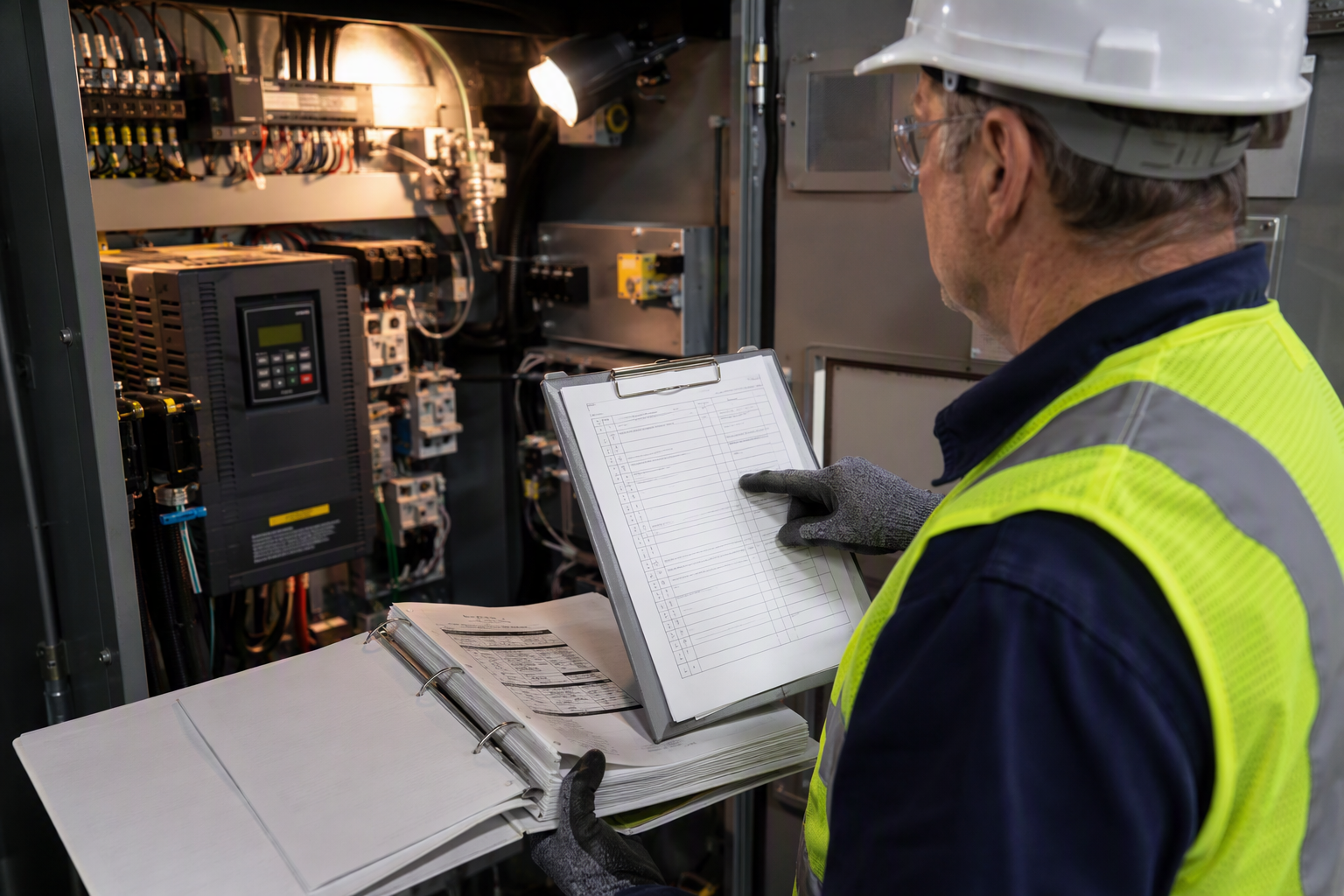
Two federal frameworks form the foundation of healthcare elevator compliance regardless of which state a facility operates in.
ASME A17.1 Safety Code for Elevators and Escalators is the primary safety standard for new elevator installations. It covers design, construction, operation, inspection, testing, and maintenance requirements. Most state authorities having jurisdiction (AHJs) adopt ASME A17.1 as their baseline code. For existing installations, ASME A17.3 Safety Code for Existing Elevators and Escalators establishes the retroactive requirements that bring older equipment into acceptable safety compliance.
Americans with Disabilities Act (ADA) mandates that elevators in multi-story healthcare facilities be accessible to individuals with disabilities. Requirements address cab dimensions, door timing, control panel height, tactile signage, audible signals, and more. In a hospital environment, ADA compliance is especially critical because patients, visitors, and staff may have temporary or permanent mobility limitations.
OSHA standards apply to the safety of workers who operate, maintain, and inspect elevators. Healthcare facilities employing in-house maintenance staff must ensure that personnel are trained and that elevator machinery spaces meet applicable hazard requirements.
What State-Level Requirements Apply in Texas?
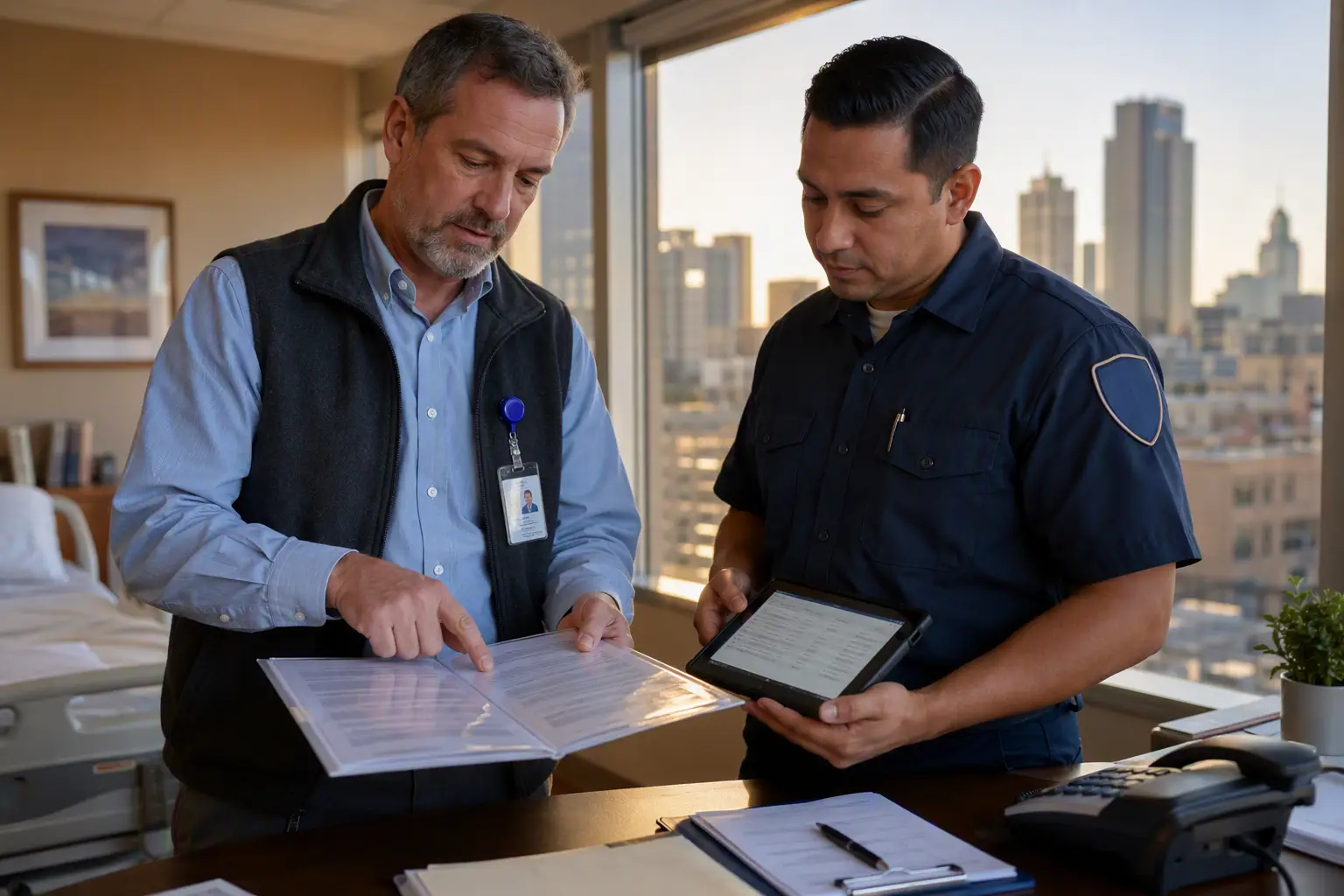
In Texas, the Texas Department of Insurance (TDI) administers elevator safety through its Elevator Safety Program. All elevators in Texas — including those in hospitals and healthcare campuses — must be registered, inspected by a licensed elevator inspector, and issued a current Certificate of Compliance before they may operate. Inspections are required at intervals set by TDI under the Texas Elevator Safety Act. Healthcare facilities with high utilization and 24-hour operation should be aware that inspection findings are taken seriously by accrediting bodies such as The Joint Commission, which conducts facility surveys and may review elevator compliance documentation.
AmeriTex Elevator works with hospitals and healthcare systems across Houston, Dallas, Austin, and San Antonio to maintain documentation, coordinate state inspections, and keep equipment in continuous compliance with TDI requirements.
What State-Level Requirements Apply in California?
In California, elevator safety is regulated under the California Elevator Safety Construction Code, which is enforced by the Division of Occupational Safety and Health (Cal/OSHA) through its Elevator, Ride, and Tramway Unit. All conveyances must be permitted, periodically inspected, and issued a current Permit to Operate. California adopts and amends ASME A17.1 as the underlying technical standard. Healthcare facilities in Los Angeles and San Diego also operate under local building department oversight and must coordinate inspections with the appropriate AHJ.
How Do Healthcare Facility Elevators Differ from Standard Commercial Elevators?
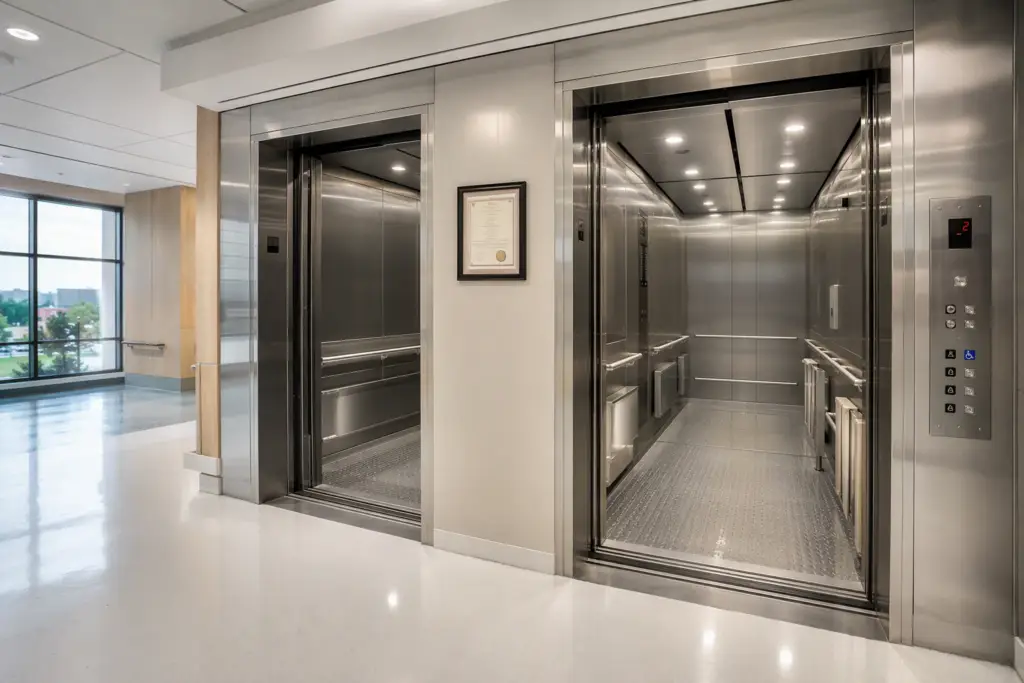
Healthcare elevators carry heavier loads, operate more frequently, and must accommodate specialized equipment that standard commercial elevators are not designed for. Key differences include:
- Larger cab dimensions — Hospital elevators are typically sized to accommodate stretchers, hospital beds, and large medical equipment carts. Cab depth and width specifications exceed those of typical office building elevators.
- Higher duty cycles — Continuous 24/7 operation means wear on doors, drive systems, buffers, and guide rails accelerates more rapidly than in a facility that closes at night.
- Infection control surfaces — Cab interiors in healthcare settings require materials and finishes that can be regularly sanitized without degradation.
- Emergency power connectivity — Hospitals in Texas and California must ensure that designated elevators remain operational during a power failure. Emergency power systems must be integrated and tested according to applicable fire and life safety codes.
- Fireman’s Service operation — ASME A17.1 requires Phase I and Phase II firefighter emergency operation on elevators in buildings with fire alarm systems. In hospitals, proper functioning of this feature is life-critical.
What Are the Required Inspection and Testing Intervals for Hospital Elevators?
Inspection and testing intervals for hospital elevators in Texas and California are determined by state AHJs in alignment with ASME A17.1 and A17.3 schedules. Generally, periodic inspections occur annually, while certain safety devices such as governors, safeties, and buffers require testing on intervals specified by the applicable code edition adopted in each state. Hydraulic elevators have their own pressure test schedules. Healthcare facilities should not rely on default commercial intervals alone — the high duty cycle of hospital elevators means that a proactive maintenance program with more frequent preventive visits is standard practice in the industry.
AmeriTex Elevator structures maintenance agreements for healthcare clients around the specific usage patterns and risk profiles of hospital environments, ensuring that critical safety components are evaluated more frequently than minimum code intervals require.
What ADA Requirements Specifically Apply to Hospital and Healthcare Facility Elevators?
Under the ADA, elevators serving multiple floors in healthcare facilities must meet accessibility standards covering:
- Minimum interior cab dimensions to accommodate wheelchairs and mobility devices
- Door reopening devices that prevent closing on an obstruction
- Door timing — doors must remain open long enough for individuals with mobility limitations to enter and exit safely
- Hall call and car call buttons at accessible heights with raised characters and Braille
- Visual and audible floor indicators
- Lever-style or other operable controls that do not require tight grasping or twisting
- Sufficient illumination inside the cab
Hospitals undergoing renovation or new construction must ensure that any elevator work is reviewed for ADA compliance as a condition of building permits in both Texas and California.
What Is a Preventive Maintenance Program and Why Is It Mandatory for Healthcare?
A preventive maintenance (PM) program is a scheduled, documented regimen of inspections, lubrication, adjustments, and component replacements performed before failures occur. ASME A17.1 references maintenance responsibilities, and state AHJs in Texas and California expect documentation of ongoing maintenance as part of compliance records.
For healthcare facilities, a PM program is not simply a code expectation — it is a patient safety necessity. Elevator downtime in a hospital can mean delayed transport for a patient heading to surgery or imaging. A properly structured PM program for healthcare elevators typically includes door operator adjustments, drive system inspections, safety device testing, hydraulic fluid analysis (for hydraulic units), rope and sheave inspections (for traction units), and controller diagnostics.
What Happens During an Elevator Emergency in a Hospital Setting?
When an elevator malfunction or entrapment occurs in a healthcare facility, a clear protocol protects both patients and staff. The following steps represent industry-standard practice:
- Immediately contact the elevator service provider’s dispatch line to report the malfunction and any entrapment.
- If patients are in the cab, notify clinical staff and hospital security to assist from outside the elevator.
- Do not attempt to force doors open or evacuate passengers without a trained elevator technician present, unless directed by emergency services in a life-threatening situation.
- Activate the elevator’s emergency call system (required by ASME A17.1) to establish communication with the trapped occupants.
- Keep entrapped individuals calm by maintaining verbal communication through the intercom.
- Once the technician arrives, follow their direction for safe extraction and equipment assessment.
- Document the incident in the facility’s maintenance and safety log and report to the AHJ if required by state regulations.
- Do not return the elevator to service until the cause of the malfunction has been identified and corrected.
How Should Healthcare Facilities Manage Elevator Modernization and Capital Planning?
Elevator systems in healthcare facilities have a finite service life. Drive machines, controllers, hydraulic systems, and cab finishes all have expected replacement timelines. When components reach end-of-life, facilities face a choice between continued repair and full modernization.
Modernization in a healthcare setting requires careful coordination to minimize service disruption. Facilities typically phase modernization across multiple elevators so that vertical transportation remains available throughout the project. Any modernization project must comply with the current adopted edition of ASME A17.1 in the applicable state and must be permitted and inspected by the AHJ before the modernized equipment is returned to service.
AmeriTex Elevator assists healthcare facility managers in Texas and California with capital planning assessments that identify equipment age, condition, compliance gaps, and recommended modernization timelines — allowing facilities to budget proactively rather than respond to crises.
What Documentation Must a Healthcare Facility Maintain for Elevator Compliance?
Regulatory agencies, accrediting bodies, and insurance carriers may all request elevator compliance documentation during audits or surveys. Healthcare facilities should maintain:
- Current Certificate of Compliance (Texas) or Permit to Operate (California) posted in or near each elevator
- Inspection reports from all state-required periodic and acceptance inspections
- Records of all preventive maintenance visits, including dates, technician identification, and work performed
- Records of any repairs, parts replacements, or corrective actions taken following inspections
- Emergency procedure documentation posted in elevator machine rooms
- Test records for firefighter emergency service, emergency lighting, and emergency communication systems
- ADA compliance documentation for any accessibility-related modifications
Questions Your Inspector Will Ask
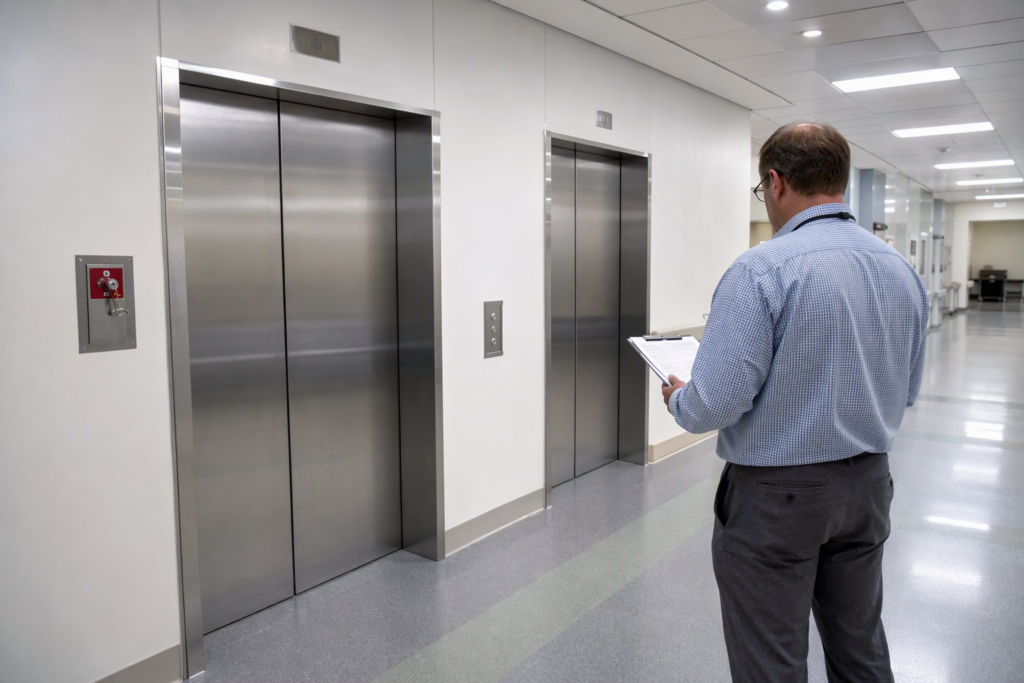
When a state elevator inspector visits a hospital or healthcare facility, they will typically review the following areas. Facility managers should be prepared to answer these questions and provide supporting documentation:
- Is the current Certificate of Compliance or Permit to Operate posted in the elevator cab?
- When was the last periodic inspection conducted, and what deficiencies were noted?
- Have all deficiencies from the previous inspection been corrected and documented?
- What is your current preventive maintenance schedule, and who performs it?
- Has Phase I and Phase II firefighter emergency service been tested recently, and are test records available?
- Is the emergency two-way communication system operational in each cab?
- Have any modifications or repairs been made to the elevator since the last inspection, and were they permitted?
- Is the elevator machine room secured, properly illuminated, and free of storage not related to elevator equipment?
- Are emergency procedures posted in the machine room?
- For hydraulic elevators: when was the hydraulic fluid last tested or changed, and is there a drip pan in place?
How Should Healthcare Facilities Choose an Elevator Service Provider?
Selecting an elevator service company for a hospital or healthcare campus requires evaluating factors beyond price alone. Facilities should consider whether the provider has demonstrated experience maintaining high-duty-cycle elevators, whether technicians are licensed in the applicable state, whether the provider can furnish documentation that meets accreditation standards, and whether the company maintains parts inventory adequate to reduce downtime in a critical environment.
AmeriTex Elevator serves healthcare clients across Texas and California markets including Houston, Dallas, Austin, San Antonio, Los Angeles, and San Diego. The company’s service programs are structured to meet the documentation, compliance, and operational continuity requirements that healthcare environments demand.
What Are the Consequences of Non-Compliance for Healthcare Facilities?
Non-compliance with elevator safety requirements carries consequences that extend beyond regulatory fines. In Texas, TDI can order an elevator taken out of service until deficiencies are corrected. In California, Cal/OSHA can issue citations and require immediate shutdown of non-compliant conveyances. Beyond state enforcement, healthcare facilities face:
- Accreditation risk — bodies such as The Joint Commission review life safety compliance, and elevator deficiencies can affect survey outcomes
- Liability exposure — an injury connected to a known compliance deficiency significantly increases legal and financial risk
- Operational disruption — a shut-down elevator in a hospital is not a minor inconvenience; it is a patient care and safety event
- Reputational consequences — regulatory actions against healthcare facilities are often public records
Get Expert Elevator Compliance Support for Your Healthcare Facility
Elevator compliance in hospitals and healthcare facilities is complex, high-stakes, and continuous. Whether your facility needs a compliance assessment, a structured preventive maintenance program, inspection coordination, or modernization planning, AmeriTex Elevator provides the services and documentation support that healthcare environments require across Texas and California.
Contact AmeriTex Elevator for a free elevator assessment: 866-679-4313
Need elevator service you can rely on? AmeriTex Elevator is ready to help.